
 A SCHOLARLY BOOK REPOSITORY
16 start with E start with E
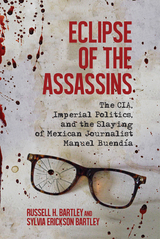
Authors Russell and Sylvia Bartley shed new light on the U.S.-instigated “dirty wars” that ravaged all of Latin America in the 1960s, ’70s, and ’80s and reveal—for the first time—how Mexican officials colluded with Washington in its proxy contra war against the Sandinista government of Nicaragua. They draw together the strands of a clandestine web linking:
- the assassination of prominent Mexican journalist Manuel Buendía
- the torture and murder of U.S. Drug Enforcement Administration agent Enrique Camarena
- the Iran-Contra scandal
- a major DEA sting against key CIA-linked Bolivian, Panamanian, and Mexican drug traffickers
- CIA-orchestrated suppression of investigative journalists
- criminal collusion of successive U.S. and Mexican administrations that has resulted in the unprecedented power of drug kingpins like “El Chapo” Guzmán.
Best books for public & secondary school libraries from university presses, American Library Association
Why human rights don’t work
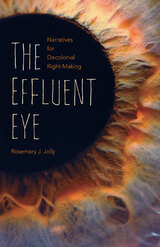
In The Effluent Eye, Rosemary J. Jolly argues for the decolonization of human rights, attributing their failure not simply to state and institutional malfeasance but to the very concept of human rights as anthropocentric—and, therefore, fatally shortsighted. In an engaging mix of literary and cultural criticism, Indigenous and Black critique, and substantive forays into the medical humanities, Jolly proposes right-making in the demise of human rights.
Using what she calls an “effluent eye,” Jolly draws on “Fifth Wave” structural public health to confront the concept of human rights—one of the most powerful and widely entrenched liberal ideas. She builds on Indigenous sovereignty work from authors such as Robin Wall Kimmerer, Leanne Betasamosake Simpson, and Mark Rifkin as well as the littoral development in Black studies from Christine Sharpe, Saidiya Hartman, and Tiffany Lethabo King to engage decolonial thinking on a range of urgent topics such as pandemic history and grief; gender-based violence and sexual assault; and the connections between colonial capitalism and substance abuse, the Anthropocene, and climate change.
Combining witnessed experience with an array of decolonial texts, Jolly argues for an effluent form of reading that begins with the understanding that the granting of “rights” to individuals is meaningless in a world compromised by pollution, poverty, and successive pandemics.
Retail e-book files for this title are screen-reader friendly.

Such reportage, argues anthropologist Leigh Binford, sustains the perception that the lives of Third World people are only newsworthy when some great tragedy strikes. He critiques the practices of journalists and human rights organizations for their dehumanizing studies of "subjects" and "victims." Binford suggests that such accounts objectify the people involved through statistical analyses and bureaucratic body counts while the news media sensationalize the motives and personalities of the perpetrators.
In relating the story of this tragic event, Binford restores a sense of history and social identity to the fallen people of this Salvadoran village. Drawing on interviews he conducted with El Mozote-area residents, he offers a rich ethnographic and personal account of their lives prior to the tragedy. He provides an overview of the history and culture of the area and tells how such a massacre could have happened, why it was covered up, and why it could happen again.
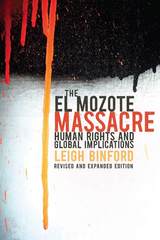
Almost two decades later, the consequences of the massacre continue to reverberate through the country’s legal and socioeconomic systems. The El Mozote Massacre, 2nd Edition brings together new evidence to address reconstruction, historical memory, and human rights issues resulting from what may be the largest massacre in modern Latin American history.
With a multitude of additions, including three new chapters, an extended chronology, discussion of the hearing and ruling of the Inter-American Court of Human Rights in 2012, and evidence gathered throughout half a dozen field trips made by the author, Binford presents a current perspective on the effects of this tragic moment in history. Thanks to geographically expanded fieldwork, Binford offers critical discussion of postwar social, economic, religious, and social justice in El Mozote, and adds important new regional, national, and global contexts.
The El Mozote Massacre, 2nd Edition maintains the crucial presence of the massacre in human rights discussions for El Salvador, Latin America, and the world.
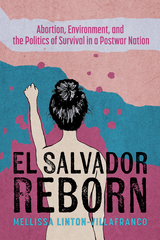
El Salvador Reborn examines the nation’s efforts to reshape its identity after the Peace Accords amid declining Cold War tensions. The book explores the criminalization of abortion and environmental activism in postwar El Salvador by focusing on two key organizations, Agrupación Ciudadana por la Despenalización del Aborto and Foro del Agua, highlighting their political strategies during a critical moment in El Salvador’s formation.
Author Mellissa Linton-Villafranco critically analyzes the political shift under the right-wing party, which sought to redefine notions of life and sovereignty. Historically associated with death squads, the right repositioned itself as a pro-life force by criminalizing abortion, amending the constitution to declare life begins at conception, and imposing penalties of up to thirty years. These measures marginalized women’s autonomy, creating a repressive legal environment centered on fetal rights. In response, feminist groups mobilized through protests, online campaigns, transnational alliances, and public art, advocating for reproductive justice that encompasses gender-based violence, health, and environmental sustainability.
Linton-Villafranco makes the case for a holistic conception of life that integrates land, body, and community sovereignty, weaving reproductive justice with environmental activism to promote a broader, interconnected understanding of life and rights in El Salvador.
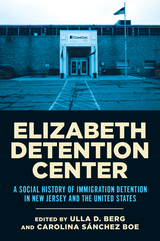
The United States detains and deports several hundred thousand migrants every year. Many spend significant amounts of time in immigration detention as they await adjudication of their immigration cases. The Elizabeth Detention Center in New Jersey is located in a converted warehouse, managed by a private, for-profit prison company. Over three decades, migrants and asylum seekers have been brought to EDC directly from Newark Airport or have been transferred to the site from elsewhere in the United States, including from the US-Mexico border region.
Through a longitudinal, site-specific study unique in its kind, this volume unites the voices and perspectives of formerly detained migrants, scholars, journalists, lawyers, and social and faith movement leaders, who share their experiences of Elizabeth Detention Center and reconstruct its social history and its location in New Jersey's political economy and in the changing legal landscapes of immigration detention in the United States.
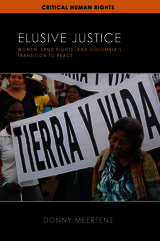
Drawing on decades of research, Elusive Justice demonstrates how these women continue to face numerous adverse circumstances, including geographical isolation, encroaching capitalist enterprises, and a dearth of social and institutional support. Donny Meertens contends that women's advocacy organizations must have a prominent role in overseeing these transitional policies in order to create a more just society. By bringing together the underresearched topic of property repayment and the pursuit of gender justice in peacebuilding, these findings have broad significance elsewhere in the world.
Characters with disabilities are often overlooked in fiction, but many occupy central places in literature by celebrated authors like Chinua Achebe, Salman Rushdie, J. M. Coetzee, Anita Desai, Jhumpa Lahiri, Edwidge Danticat, and others. These authors deploy disability to do important cultural work, writes Christopher Krentz in his innovative study, Elusive Kinship. Such representations not only relate to the millions of disabled people in the global South, but also make more vivid such issues as the effects of colonialism, global capitalism, racism and sexism, war, and environmental disaster.
Krentz is the first to put the fields of postcolonial studies, studies of human rights and literature, and literary disability in conversation with each other in a book-length study. He enhances our appreciation of key texts of Anglophone postcolonial literature of the global South, including Things Fall Apart and Midnight’s Children. In addition, he uncovers the myriad ways fiction gains energy, vitality, and metaphoric force from characters with extraordinary bodies or minds.
Depicting injustices faced by characters with disabilities is vital to raising awareness and achieving human rights. Elusive Kinship nudges us toward a fuller understanding of disability worldwide.
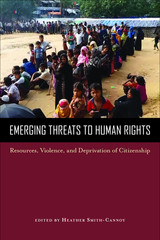
As widespread environmental degradation threatens the basic human rights of a large proportion of the world’s population, we are also confronting the worst migration crisis in the modern era. Emerging Threats to Human Rights searches among the interrelated causes of these overlapping crises. The editor and contributors to this timely anthology assess how environmental resources, state violence, and the deprivation of nationality/citizenship are linked to gain a better understanding of how human rights abuses intersect with patterns of migration.
As some refugees flee violence at home, they arrive in an asylum country only to experience violence at the hands of the native population. Likewise, those denied citizenship rights in their country become vulnerable to human traffickers and other rights violations when they flee.
Bringing together scholars of resource dilemmas, violence, and citizenship as well as lawyers and human rights practitioners, Emerging Threats to Human Rights begins by identifying the core causes of human rights violations confronting our world today. Chapters also consider whether and to what extent these emerging threats to human rights serve as drivers of displacement.

Leading writer Boris Kagarlitsky offers an ambitious account of 1000 years of Russian history. Encompassing all key periods in Russia's dramatic development, the book covers everything from early settlers, through medieval decline, Ivan the Terrible - the 'English Tsar', Peter the Great, the Crimean War and the rise of capitalism, the revolution, the Soviet period, finally ending with the return of capitalism after 1991.
Setting Russia within the context of the 'World System', as outlined by Wallerstein, this is a major work of historical Marxist theory that is set to become a future classic.

The failure of attempts to tackle global poverty have bred cynicism and 'compassion fatigue'. Eradicating Extreme Poverty provides an urgently needed fresh approach which will re-energise action on this issue.
Rejecting traditional 'top-down' approaches, Xavier Godinot and his colleagues start from the experiences, capabilities and strategies of the poor themselves. They argue that the first step is a close connection with poor communities followed by a commitment to take action alongside them. Life-stories from Burkina Faso, France, Peru and the Philippines are used to show that the poor must be involved in their own liberation.
After decades of failed development policies, this book outlines a radical new approach which will enliven debate amongst policy-makers, researchers, students and academics.
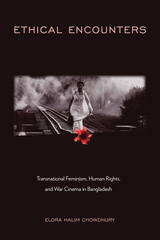
Ethical Encounters is an exploration of the intersection of feminism, human rights, and memory to illuminate how visual practices of recollecting violent legacies in Bangladeshi cinema can conjure a global cinematic imagination for the advancement of humanity.
By examining contemporary, women-centered Muktijuddho cinema—features and documentaries that focus on the Bangladesh Liberation War of 1971—Elora Chowdhury shows how these films imagine, disrupt, and reinscribe a gendered nationalist landscape of trauma, freedom, and agency. Chowdhury analyzes Bangladeshi feminist films including Meherjaan, and Itihaash Konna (Daughters of History), as well as socially-engaged films by activist-filmmakers including Jonmo Shathi (Born Together), and Shadhinota (A Certain Liberation), to show how war films of Bangladesh can generate possibilities for gender justice.
Chowdhury argues that justice-driven films are critical to understanding and negotiating the layered meanings and consequences of catastrophic human suffering yet at the same time they hint at subjectivities and identities that are not reducible to the politics of suffering. Rather, they are key to creating an alternative and disruptive archive of feminist knowledge—a sensitive witnessing, responsible spectatorship, and just responsibility across time, and space.
Drawing on Black and transnational feminist critiques, Chowdhury explores questions around women’s place, social roles, and modes of participation in war as well as the visual language through which they become legible as victims/subjects of violence and agents of the nation. Ethical Encounters illuminates the possibilities of film as a site to articulate an ethics that acknowledges a founding violence of the birth of a nation, recuperates it even if in fragments, and imagines differently the irreconcilable relationship between humanity, liberty, and justice.
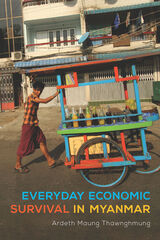
Thawnghmung conducted in-depth interviews and surveys of 372 individuals from all walks of life and across geographical locations in Myanmar between 2008 and 2015. To frame her analysis, she provides context from countries with comparable political and economic situations. Her findings will be welcomed by political scientists and policy analysts, as well by journalists and humanitarian activists looking for substantive, reliable information about everyday life in a country that remains largely in the shadows.
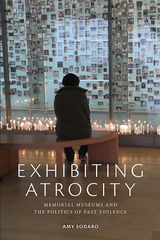
Today, nearly any group or nation with violence in its past has constructed or is planning a memorial museum as a mechanism for confronting past trauma, often together with truth commissions, trials, and/or other symbolic or material reparations. Exhibiting Atrocity documents the emergence of the memorial museum as a new cultural form of commemoration, and analyzes its use in efforts to come to terms with past political violence and to promote democracy and human rights.
Through a global comparative approach, Amy Sodaro uses in-depth case studies of five exemplary memorial museums that commemorate a range of violent pasts and allow for a chronological and global examination of the trend: the U.S. Holocaust Memorial Museum in Washington, DC; the House of Terror in Budapest, Hungary; the Kigali Genocide Memorial Centre in Rwanda; the Museum of Memory and Human Rights in Santiago, Chile; and the National September 11 Memorial Museum in New York. Together, these case studies illustrate the historical emergence and global spread of the memorial museum and show how this new cultural form of commemoration is intended to be used in contemporary societies around the world.
Download open access ebook.
In this readable and compelling history of extradition in America, Christopher Pyle remedies that ignorance. Using American constitutional law and drawing on a wealth of historical cases, he describes the collision of law and politics that occurs when a foreign country demands the surrender of individuals held to be terrorists by some and freedom fighters by others. He shows how U.S. policymakers have attempted to substitute deportation for extradition and turn the surrender of a foreign national (or even an American citizen) into a political rather than a judicial process.
Beginning with the New England Puritans' refusal to surrender the "regicides" who had signed the death warrant of Charles I, he traces the attitudes and ideologies that have shaped American extradition practice, culminating in the efforts by the Reagan and Bush administrations to turn the legal extradition process into an executive tool of state policy. Along the way we meet such luminaries as James Madison and John Stuart Mill, William Rehnquist and Oliver North, as well as pirates and fugitive slaves, anarchists and refugees, drug lords and runaway sailors.
Woven throughout this story is the author's belief that current developments in extradition law ignore or actually violate the principles of individual liberty, due process, and humanity on which we claim our country was built. As he remarks in the Introduction, "Extradition involves the surrender of human beings -- persons under the protection of our Constitution -- to foreign regimes, many of which are unjust. This reality was well understood in the eighteenth and nineteenth centuries, when the United States was a refuge for the victims of European oppression, but it has been disregarded frequently in the twentieth century as we have sought to stem the tide of immigration and develop advantageous economic and political relations with autocratic regimes of every stripe."
READERS
Browse our collection.
PUBLISHERS
See BiblioVault's publisher services.
STUDENT SERVICES
Files for college accessibility offices.
RECENTLY PUBLISHED



UChicago Accessibility Resources
home | accessibility | search | about | contact us
BiblioVault ® 2001 - 2026
The University of Chicago Press