
 A SCHOLARLY BOOK REPOSITORY
541 start with F start with F
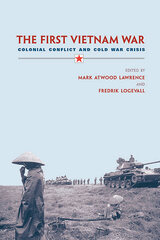
How did the conflict between Vietnamese nationalists and French colonial rulers erupt into a major Cold War struggle between communism and Western liberalism? To understand the course of the Vietnam wars, it is essential to explore the connections between events within Vietnam and global geopolitical currents in the decade after the Second World War.
In this illuminating work, leading scholars examine various dimensions of the struggle between France and Vietnamese revolutionaries that began in 1945 and reached its climax at Dien Bien Phu. Several essays break new ground in the study of the Vietnamese revolution and the establishment of the political and military apparatus that successfully challenged both France and the United States. Other essays explore the roles of China, France, Great Britain, and the United States, all of which contributed to the transformation of the conflict from a colonial skirmish to a Cold War crisis.
Taken together, the essays enable us to understand the origins of the later American war in Indochina by positioning Vietnam at the center of the grand clash between East and West and North and South in the middle years of the twentieth century.


Among the environmental challenges facing us is alleviating the damage to marine ecosystems caused by pollution and overfishing. Coming to grips with contemporary problems, this book argues, depends on understanding how people have historically generated, perceived, and responded to environmental change. This work explores interactions between society and environment in China’s most important marine fishery, the Zhoushan Archipelago off the coast of Zhejiang and Jiangsu, from its nineteenth-century expansion to the exhaustion of the most important fish species in the 1970s.
This history of Zhoushan’s fisheries illuminates long-term environmental processes and analyzes the intersections of local, regional, and transnational ecological trends and the array of private and state interests that shaped struggles for the control of these common-pool natural resources. What institutions did private and state actors use to regulate the use of the fishery? How did relationships between social organizations and the state change over time? What types of problems could these arrangements solve and which not? What does the fate of these institutions tell us about environmental change in late imperial and modern China? Answering these questions will give us a better understanding of the relationship between past ecological changes and present environmental challenges.
For much of the twentieth century, large companies employing many workers formed the bedrock of the U.S. economy. Today, as David Weil’s groundbreaking analysis shows, large corporations have shed their role as direct employers of the people responsible for their products, in favor of outsourcing work to small companies that compete fiercely with one another. The result has been declining wages, eroding benefits, inadequate health and safety conditions, and ever-widening income inequality.
“Authoritative…[The Fissured Workplace] shed[s] important new light on the resurgence of the power of finance and its connection to the debasement of work and income distribution.”
—Robert Kuttner, New York Review of Books
“The kinds of workplace fissuring discussed here—subcontracting, franchising, and global supply chains—have been the subjects of a number of studies detailing the employment effects that Weil describes. The Fissured Workplace is unusual in bringing this research together into an integrated, detailed, and decidedly policy-oriented analysis…It makes a convincing case that the better regulation of fissured workplaces is a first step towards reversing the erosion of pay and conditions at the bottom of the labor market.”
—Virginia Doellgast, Times Higher Education
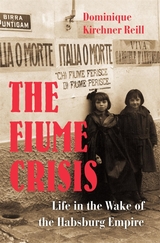
Recasting the birth of fascism, nationalism, and the fall of empire after World War I, Dominique Kirchner Reill recounts how the people of Fiume tried to recreate empire in the guise of the nation.
The Fiume Crisis recasts what we know about the birth of fascism, the rise of nationalism, and the fall of empire after World War I by telling the story of the three-year period when the Adriatic city of Fiume (today Rijeka, in Croatia) generated an international crisis.
In 1919 the multicultural former Habsburg city was occupied by the paramilitary forces of the flamboyant poet-soldier Gabriele D’Annunzio, who aimed to annex the territory to Italy and became an inspiration to Mussolini. Many local Italians supported the effort, nurturing a standard tale of nationalist fanaticism. However, Dominique Kirchner Reill shows that practical realities, not nationalist ideals, were in the driver’s seat. Support for annexation was largely a result of the daily frustrations of life in a “ghost state” set adrift by the fall of the empire. D’Annunzio’s ideology and proto-fascist charisma notwithstanding, what the people of Fiume wanted was prosperity, which they associated with the autonomy they had enjoyed under Habsburg sovereignty. In these twilight years between the world that was and the world that would be, many across the former empire sought to restore the familiar forms of governance that once supported them. To the extent that they turned to nation-states, it was not out of zeal for nationalist self-determination but in the hope that these states would restore the benefits of cosmopolitan empire.
Against the too-smooth narrative of postwar nationalism, The Fiume Crisis demonstrates the endurance of the imperial imagination and carves out an essential place for history from below.
Liam O'Flaherty, Kate O'Brien, Elizabeth Bowen, Sean O'Faolain, and Frank O'Connor--theirs were among the most distinctive voices in Irish fiction in the twentieth century. Born within a few years of each other near the turn of the century, they represented the first literary generation to come of age in the shadow of Ireland's twin monuments, Joyce's Ulysses and the poetry of William Butler Yeats, and their work has too long remained in that shadow.
Raised in different parts of Ireland and in widely differing milieux, all five lived through the turmoil of the revolution and civil war that gave birth to the Irish Republic and on into the disappointments of the thirties and forties. As their talents matured, each developed a unique vision of Ireland, comic or homely, angry or despairing. Despite its diversity, their fiction shares a sense of disillusionment, loneliness, and radical detachment from both culture and self.
John Hildebidle offers the first serious critical assessment of these writers. He examines the common themes and concerns that run through their work, among them family, war, the Troubles, myth, death, and exile. As he demonstrates, all five authors saw in the Ireland that grew out of the events of 1916-1923 a nation that stifled the creative energies and bright hopes of its youth, and their fiction can be seen as responding in diverse ways to that reality. Hildebidle's perceptive analysis of their works should do much to win these authors a place in the canon of modern fiction in English.
The extensive annotated bibliography includes writings by and about not only these five authors but also the Irish fiction writers who succeeded them.
In Japan today, Zen monastic life is practiced substantially as it was practiced in medieval Japan or Sung dynasty China. More than twenty-one thousand Zen temples are active. This book examines the Zen monastery as a major institution in medieval Japanese society. Focusing on the Five Mountains network of officially sponsored Zen monasteries, it describes the transmission of Rinzai and Soto Zen to Japan, traces the patterns of secular patronage, and discusses in detail the Zen monastic environment, the monastic rule, the community, and the economy.
This is the first detailed study in any Western language of the social and institutional development of Zen Buddhism. Martin Collcutt’s illustrated text should be valuable to those interested in medieval Japanese history as well as students of Zen practice and Zen-related culture.

Medical care prices in the United States are not only the most expensive in the world, but there are wide variations in what physicians are paid. Doctors at the frontlines of medical care who manage complex conditions argue that they receive disproportionately lower fees than physicians performing services such as minor surgeries and endoscopies. Fixing Medical Prices goes to the heart of the U.S. medical pricing process: to a largely unknown yet influential committee of medical organizations affiliated with the American Medical Association that advises Medicare. Medicare’s ready acceptance of this committee’s recommendations typically sets off a chain reaction across the entire American health care system.
For decades, the U.S. policymaking structure for pricing has reflected the influence of physician organizations. What Miriam Laugesen’s rich analysis shows is how these organizations navigate the arcane and complex work of this advisory committee. Contradicting the story of a profession in political decline, Fixing Medical Prices demonstrates that the power of physician organizations has simply become more subtle.
Laugesen’s investigation into the exorbitant cost of American medical care will be of interest to those who follow the politics of health care policy, the influence of interest groups on rate setting, and the medical profession’s past and future role in our health care system.
In a new perspective on the formation of national identity in Central Europe, Nancy Wingfield analyzes what many historians have treated separately--the construction of the Czech and German nations--as a larger single phenomenon.
Czech and German nationalism worked off each other in dynamic ways. As external conditions changed, Czech and German nationalists found new uses for their pasts and new ways to stage them in public spaces for their ongoing national projects. These grassroots confrontations transformed public culture by reinforcing the centrality of nationality to everyday life and by tying nationalism to the exercise of power. The battles in the public sphere produced a cultural geography of national conflict associated with the unveiling of Joseph II statues that began in 1881, the Badeni Language Ordinances of 1897, the 1905 debate over a Czech-language university in Moravia, and the celebration of the emperor's sixtieth jubilee in 1908. The pattern of impassioned national conflict would be repeated for the duration of the monarchy and persist with even more violence into the First Czechoslovak Republic.
Numerous illustrations show how people absorbed, on many levels, visual clues that shaped how they identified themselves and their groups. This nuanced analysis is a valuable contribution to our understanding of Central European history, nationalism, and the uses of collective memory.

Michel Winock’s biography situates Gustave Flaubert’s life and work in France’s century of great democratic transition. Flaubert did not welcome the egalitarian society predicted by Tocqueville. Wary of the masses, he rejected the universal male suffrage hard won by the Revolution of 1848, and he was exasperated by the nascent socialism that promoted the collective to the detriment of the individual. But above all, he hated the bourgeoisie. Vulgar, ignorant, obsessed with material comforts, impervious to beauty, the French middle class embodied for Flaubert every vice of the democratic age. His loathing became a fixation—and a source of literary inspiration.
Flaubert depicts a man whose personality, habits, and thought are a stew of paradoxes. The author of Madame Bovary and Sentimental Education spent his life inseparably bound to solitude and melancholy, yet he enjoyed periodic escapes from his “hole” in Croisset to pursue a variety of pleasures: fervent friendships, society soirées, and a whirlwind of literary and romantic encounters. He prided himself on the impersonality of his writing, but he did not hesitate to use material from his own life in his fiction. Nowhere are Flaubert’s contradictions more evident than in his politics. An enemy of power who held no nostalgia for the monarchy or the church, he was nonetheless hostile to collectivist utopias.
Despite declarations of the timelessness and sacredness of Art, Flaubert could not transcend the era he abominated. Rejecting the modern world, he paradoxically became its celebrated chronicler and the most modern writer of his time.
Finalist, 2006 National Book Critics Circle Awards, Biography Category | A New York Times Notable Book of 2006 | A Publishers Weekly Best Book of 2006
In this riveting landmark biography, Frederick Brown illuminates the life and career of the author of Madame Bovary. He describes Flaubert’s fraught relationship with his longtime mistress Louise Colet, his liaisons with many other women, and his friendships with luminaries such as Turgenev and Zola. Here too is Brown’s description of Flaubert’s meticulous compositional habits, his painstaking search for the sentence that is deeply, rhythmically right.
Brown brings his subject remarkably and fully to life, illuminating not only the novelist but also his milieu—the Paris and Normandy of the revolution of 1848 and of the Second Empire—with arresting clarity and a deepening sense of Flaubert’s time and place. Flaubert is a sophisticated, thorough, and utterly absorbing re-creation of the life and times of the man who is arguably the architect of the modern novel.
Distinguished by its unconventional approach and extraordinary range, this beautifully written book offers new insights into the works—and times—of poets writing between the death of Shakespeare and the execution of Charles I. Well over a hundred original readings provide illuminating discussions of the “canonical” poets such as Milton, Herbert, and Jonson, as well as enlightening reevaluations of many “minor” poets, including Herrick, Waller, and Lovelace. The discussion is organized around five themes: Counselors and Kings, Poets, Life and Death, The Commonwealth, and Men and Women. This organization allows Hammond to use shared references and images in the works to reveal previously unsuspected connections between poems of very different schools, and to illustrate in considerable depth how seventeenth-century poetry reflects the political, social, religious, and sexual experience of the uncertain pre-Restoration years. The book has a subtle, almost musical structure; each chapter quietly picks up the threads of discussion in previous chapters. The result is a seamlessly woven narrative that guides the reader lightly, never intruding on the reading of the poetry itself.
Seventeenth-century poets betray a reluctance to separate life from art; many of their poems are about apparently trivial or unfamiliar things—the “fleeting things” of the title. Gerald Hammond has used his rare knowledge of the period to unlock images and references that have previously been overlooked or misunderstood, creating a fresh view of the poetry—and poets—of this fascinating period.
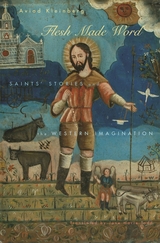
In the fourth century a new narrative genre captured the imagination of the faithful—the moving accounts of the lives of Christian saints. Willing to die gruesome deaths or endure constant suffering, saints conveyed a powerful message: God was still present in the world. He continues to manifest His powers and communicate His messages through His special friends—the saints. What kind of Christianity do we find in these stories? In this original and provocative work, Aviad Kleinberg argues that the saints’ stories of medieval Europe were more than edifying entertainment; they retain an alternative theology, often quite different from the formal theology of the Church. By telling and retelling the story of virtue and salvation, by expanding the religious imagination of the West, they were shaping and reshaping Christianity itself.
In this study of stories from the fourth through the fourteenth centuries, we meet the tender Perpetua bidding farewell to her infant son, Simeon Stylites turning himself into a rotting corpse, Francis of Assisi finding joy in suffering, and Fra Ginepro playing the fool, for Christ. We meet holy anchorites, headstrong virgins, fearless dragon slayers, and scheming politicians. Kleinberg unveils the inner contradictions, the subversive ideas, and the deadly power games that lay behind the making of the Western imagination. People, ideas, and passions—often relegated to the back pews—take center stage in this daring book. This is a story of how stories change lives.

Who gets to speak for China? During the interwar years, when American condescension toward “barbarous” China yielded to a fascination with all things Chinese, a circle of writers sparked an unprecedented public conversation about American-Chinese relations. Hua Hsu tells the story of how they became ensnared in bitter rivalries over which one could claim the title of America’s leading China expert.
The rapturous reception that greeted The Good Earth—Pearl Buck’s novel about a Chinese peasant family—spawned a literary market for sympathetic writings about China. Stories of enterprising Americans making their way in a land with “four hundred million customers,” as Carl Crow said, found an eager audience as well. But on the margins—in Chinatowns, on Ellis Island, and inside FBI surveillance memos—a different conversation about the possibilities of a shared future was taking place.
A Floating Chinaman takes its title from a lost manuscript by H. T. Tsiang, an eccentric Chinese immigrant writer who self-published a series of visionary novels during this time. Tsiang discovered the American literary market to be far less accommodating to his more skeptical view of U.S.-China relations. His “floating Chinaman,” unmoored and in-between, imagines a critical vantage point from which to understand the new ideas of China circulating between the world wars—and today, as well.

The use of perspective in Renaissance painting caused a revolution in the history of seeing, allowing artists to depict the world from a spectator’s point of view. But the theory of perspective that changed the course of Western art originated elsewhere—it was formulated in Baghdad by the eleventh-century mathematician Ibn al Haithan, known in the West as Alhazen. Using the metaphor of the mutual gaze, or exchanged glances, Hans Belting—preeminent historian and theorist of medieval, Renaissance, and contemporary art—narrates the historical encounter between science and art, between Arab Baghdad and Renaissance Florence, that has had a lasting effect on the culture of the West.
In this lavishly illustrated study, Belting deals with the double history of perspective, as a visual theory based on geometrical abstraction (in the Middle East) and as pictorial theory (in Europe). How could geometrical abstraction be reconceived as a theory for making pictures? During the Middle Ages, Arab mathematics, free from religious discourse, gave rise to a theory of perspective that, later in the West, was transformed into art when European painters adopted the human gaze as their focal point. In the Islamic world, where theology and the visual arts remained closely intertwined, the science of perspective did not become the cornerstone of Islamic art. Florence and Baghdad addresses a provocative question that reaches beyond the realm of aesthetics and mathematics: What happens when Muslims and Christians look upon each other and find their way of viewing the world transformed as a result?

In his application of statistical methods to history, Mr. Molho offers a new approach to the study of Florentine politics.
Scholars have long recognized that Florence’s deficit-financing of its wars of independence against the Visconti of Milan had far-reaching economic, political, and social effects, but this is the first document-based history to provide concrete support for that general knowledge.
Focusing on the governmental and fiscal agencies of Florence as well as a number of memoirs and account hooks written by Florentine citizens, Mr. Molho has gathered and statistically reconstructed much archival material on Florentine taxation, public income, and expenses.
He concludes that between 1423 and 1433 Florence underwent a prolonged and vast fiscal crisis that affected both the fiscal structure of the city and its constitutional and institutional framework. His work thus sheds new light on Cosimo de’ Medici’s rise to power in 1434.
“For every problem there is a solution—simple, neat, and wrong.” H. L. Mencken made this observation years ago, and it is quoted at the beginning of Fred Blakey’s study of Florida’s phosphate industry. Few people would disagree that there is a real environmental crisis facing the world today. The cause is unrestrained growth of the population, of economies, and of the exploitation of natural resources. The author points out that this viewpoint is foreign to a people who have equated growth with progress, and bigness with goodness. Only recently have Americans conceded that their resources are not inexhaustible.
Blakey tells us that we have been bombarded with solutions to a problem that professionals view as not yet fully understood nor adequately defined. Americans face the problem not only of pollution, but of management, of values, of their very way of life. If the earth is to provide the materials for the survival of man’s society, then a prudent society must provide for an intimate understanding of the earth. Phosphorus, the topic of this study, is an element necessary for all forms of life. Long before carbon, nitrogen, or oxygen supplies become critically short, the supply of phosphorus will be exhausted. When this happens, Blakey assures us, life will end, and he demonstrates that we are losing ever-increasing amounts of this vital element every year.
This work presents a microscopic view of the ecological problems and prospects in the conservation and use of the mineral. Specifically, it is a history of the Florida phosphate industry. If the record of the Florida phosphate industry is any guide, then ecological disaster need not occur, but enlightened use of phosphorus and all other natural resources would seem to be imperative. The author tells us it is necessary to redefine some of our traditional priorities, beliefs, and values. Failure to do this indicates a willingness to continue to accept solutions that are “simple, neat—and wrong.”

Flourishing Fasts is the first book in any language to explore the history of the Zhaijiao, commonly translated as “vegetarian sects,” that originated in southeastern China during the Ming and Qing dynasties and are still active in contemporary Taiwan. Combining historical analysis and ethnographic fieldwork, Nikolas Broy reveals the entangled nature of the Zhaijiao—and other Chinese sectarian groups—within their socioreligious environment. Conventionally considered nonconformist dissenters or lay Buddhists, the Zhaijiao in fact embody one intersection of the “Three Teachings” of Buddhism, Daoism, and Confucianism and manifest aspects of local religious life and universal salvationist teachings. Not limited to everyday religious rites such as worshiping local gods, conducting initiation festivals, and performing ritual services for nonmembers, the Zhaijiao also serve as institutions around which social and political life are centered—for example through mobilizing local resources for public enterprises or articulating property rights vis-à-vis the state.
In this wide-ranging discussion that covers practices, religious symbols and teachings, mythological narratives, moral values, architecture, and material culture over more than four hundred years, Broy situates the Zhaijiao at the very core of local societies and shows how they actively engage in political, economic, legal, and cultural affairs.

Josef van Ess is the world's most distinguished scholar of classical kalam, the Muslim theology that was the precursor to, and foundation for, modern Islam. This book makes available, for the first time in English, the fruit of van Ess's thirty-five years of work in the field. A lucid and authoritative introduction to classical Islam, it opens a window on the intellectual world that gave rise to Muslim theology.
A sustained look at important issues in early kalam, The Flowering of Muslim Theology discusses the emergence of theology in the classical period and offers acute and illuminating comparisons with the Christian (and Jewish) traditions. Van Ess looks at the issue of heresy, at early ideas about straying from true belief. In a substantial and original instance of Koranic exegesis, he considers a problem much debated among classical theologians: whether it is possible to see God. He examines the different ways in which early Muslim thinkers appropriated atomism, a natural philosophy that was originally materialistic and atheistic, for their own theological purposes. He explores the explosive mix of theology and political thought, in an analysis of the development of ideas about the role and authority of a ruler. And he considers the relationship, or contradiction, between faith and knowledge: the enduring question of how one can know whether something is right or true.
A work of intellectual history enlivened by vivid examples, The Flowering of Muslim Theology gives a wider audience rare insight into Islam's rich classical past.
One of the world's leading evolutionary biologists here reexamines the evolutionary history of flowering plants. This important book is the first to interpret the phylogeny of flowering plants in the light of modern knowledge about genetics, developmental biology, and ecology.
Mr. Stebbins is concerned with the evolution of genera, families, and other higher taxa; his analysis is based upon a unified theory that identifies the same fundamental processes at work in the origin of both species and the broader taxonomic categories. He shows, however, that subspecific evolution depends primarily on the natural selection of vegetative characters, whereas the emphasis at the transspecific level is on reproductive characters.
Major changes in evolutionary direction are interpreted as resulting from an interaction of environmental change and the inherent capacity of the organism to alter preferentially in some ways and not in others. The author facilitates this discussion by examining reversibility in certain simple evolutionary trends.
After reviewing basic principles and exploring major patterns of evolution in flowering plants, Mr. Stebbins turns to their actual history. On the basis of a detailed analysis he concludes that the most primitive forms are not represented in any extant category and are not found in the fossil record. His work gives definitive weight to the researches of others who have postulated a monophyletic origin of the angiosperms from a single, extinct group.
Although this beautifully illustrated volume will prove indispensable to botanists, it will be of great interest also to any student of evolutionary theory, theoretical biology, and ecology.

Telling stories: that sounds innocuous enough. But for the first chronicle in the Japanese vernacular, A Tale of Flowering Fortunes (Eiga monogatari), there was more to worry about than a good yarn. The health of the community was at stake. Flowering Tales is the first extensive literary study of this historical tale, which covers about 150 years of births, deaths, and happenings in late Heian society, a golden age of court literature in women’s hands. Takeshi Watanabe contends that the blossoming of tales, marked by the Tale of Genji, inspired Eiga’s new affective history: an exorcism of embittered spirits whose stories needed to be retold to ensure peace.
Tracing the narrative arcs of politically marginalized figures, Watanabe shows how Eiga’s female authors adapted the discourse and strategies of the Tale of Genji to rechannel wayward ghosts into the community through genealogies that relied not on blood but on literary resonances. These reverberations, highlighted through comparisons to contemporaneous accounts in courtiers’ journals, echo through shared details of funerary practices, political life, and characterization. Flowering Tales reanimates these eleventh-century voices to trouble conceptions of history: how it ought to be recounted, who got to record it, and why remembering mattered.

The forensic entomologist turns a dispassionate, analytic eye on scenes from which most people would recoil--human corpses in various stages of decay, usually the remains of people who have met a premature end through accident or mayhem. To Lee Goff and his fellow forensic entomologists, each body recovered at a crime scene is an ecosystem, a unique microenvironment colonized in succession by a diverse array of flies, beetles, mites, spiders, and other arthropods: some using the body to provision their young, some feeding directly on the tissues and by-products of decay, and still others preying on the scavengers.
Using actual cases on which he has consulted, Goff shows how knowledge of these insects and their habits allows forensic entomologists to furnish investigators with crucial evidence about crimes. Even when a body has been reduced to a skeleton, insect evidence can often provide the only available estimate of the postmortem interval, or time elapsed since death, as well as clues to whether the body has been moved from the original crime scene, and whether drugs have contributed to the death.
An experienced forensic investigator who regularly advises law enforcement agencies in the United States and abroad, Goff is uniquely qualified to tell the fascinating if unsettling story of the development and practice of forensic entomology.
A leading scientist dispels all the current mysteries about flying saucers in a new book which tells in so many words how to make them in the kitchen sink. Flying saucers or their equivalents have been observed for centuries. Many of them are caused, says Dr. Menzel, by conditions in the atmosphere—conditions which he has simulated in his laboratory; photographs of some of his experiments are among the book's many illustrations.
Dr. Menzel docs much more than debunk. He describes all the varied phenomena that have been misinterpreted as flying saucers, from the aurora borealis and the rainbow to radar mirages, and tells what causes them. He shows how our perceptions of these natural phenomena have been unconsciously distorted by fears, superstitions, and religious beliefs. He uncovers the intentional hoaxes and the practical jokes that have misled the public. He goes into the international repercussions of flying-saucer scares. All in all, this is one of the most fascinating accounts ever written about what the minds of men can fabricate about the real world.
It is admirably written science for the citizen, as well as being topical and controversial. The subject matter of the book was featured in recent articles in Look.
When, at the end of the First World War, Marshal Ferdinand Foch, soldier and popular hero, assumed the role of self-appointed peacemaker, he proved himself a source of embarrassment and irritation. Challenging Georges Clemenceau's right to negotiate the peace settlement, Foch attempted to arrange a peace which, according to him, would provide France with security, but which, according to his civilian superior, would have lost France's urgently needed allies.
French internal conflict in civil-military relations during the Versailles Peace Conference was thus primarily between Clemenceau and Foch, both inspired by the most patriotic of motives.
Foch versus Clemenceau gives a vivid account of the diplomatic maneuvers among France, its allies, and Germany during the period of the Conference. It sketches the Rhineland separatist movement in 1919--with Dorten's abortive, even amusing putsch, the Palatine-Rhineland Rebellion--as incidental background to the momentous struggle between Foch and his field commanders on the one hand and the President of the Council, Clemenceau, on the other over their differing conceptions of a realizable peace which could guarantee France's security.
Here is a brief but comprehensive tour of the physiology of vision, guided by one of the grand masters of the discipline. Offering first a solid grounding in structure and function, the book emphasizes those areas that the author considers to be of most significance in current research. Much attention is given to the role of vision in circadian timekeeping, the development of the visual system, the effect of aging on the eye, and the provocative questions of perception and illusion.
An eminently readable text, Focus on Vision will more than satisfy the needs of students in ophthalmology, optometry, physiological optics, biology, psychology, and art. It is fully illustrated and contains lists of references and further reading. The questions at the end of each chapter may be used to test understanding or simply to excite discussion.
Although Richard Hooker (1554–1600) is now known principally as the author of the Laws of Ecclesiastical Polity, in his lifetime the Tractates and Sermons brought him greater notoriety. Hooker’s views on justification, the perseverance of faith, and the relationship of the Church of Rome to the reformed Church of England were widely reported, and texts of the tracts were extensively circulated in manuscript.
Thanks to the meticulous editing of Laetitia Yeandle, Curator of Manuscripts at the Folger Shakespeare Library, the contemporary impact of these debates can now be appreciated for the first time. These tracts provide a unique perspective on the turbulent world of late Elizabethan theology. In addition, they lay the doctrinal foundations of the Laws of Ecclesiastical Polity itself and—with the excellent commentary of Egil Grislis, Professor of Theology at the University of Manitoba in Winnipeg, enable us to trace the intellectual formation of sixteenth-century England’s most innovative and provocative theologian.
The volume includes a newly discovered letter; three newly attributed sermon fragments; and analysis by P. F. Forte of Hooker’s distinctive preaching style.
The writings of Richard Hooker are of central interest to those studying English Renaissance thought and literature. In this, the third volume of a much-needed critical edition of the Works of Richard Hooker, are the posthumous books of the Laws of Ecclesiastical Polity. Hooker planned the Laws in eight books, but he died shortly after publication of Book Five. Books Six, Seven, and Eight, which contain his analysis of jurisdiction, episcopacy, and the royal supremacy, are here transcribed from versions that have the most authority. The volume also includes Hooker’s autograph notes toward those texts (brought to light by P. G. Stanwood in the course of his research) and the contemporary notes by George Cranmer and Edwin Sandys on a lost draft of Book Six. Mr. Stanwood’s introduction lays to rest all doubts about the authenticity of the last three books as we have them, doubts current since publication of Walton’s Life of Hooker in 1662.
This edition, sponsored by the Folger Library, is providing authoritative texts to serve as a basis for the scholarly reappraisal of Richard Hooker’s writings that is presently underway.
Richard Hooker is the first major voice of Anglican theology, and his defense of the Elizabethan Church against the attacks of the Puritans set the prevailing tone of Anglicanism for centuries to follow. Through his eloquent treatise on ecclesiastical law the medieval political thought of Thomas Aquinas became a part of the English political heritage, to be used by such writers as Locke, Burke, and Coleridge. The Laws of Ecclesiastical Polity is also a primary statement in English of a theory of natural law. Finally, we must turn to Hooker if we are to understand the intellectual background of the Renaissance, for he luminously sets forth the ethical, political, and religious assumptions of his age.
The Folger Library has answered a long-felt need in sponsoring this critical, old-spelling edition of Hooker’s Works, prepared with all the expertise modern scholarship can bring to bear. Six scholars share the editorial responsibility, consulting their eighteen-member Board of Advisers as necessary. The texts for the edition are based on fresh transcriptions of the earliest and most authoritative documents, in many cases manuscripts written or corrected by Hooker himself or contemporary transcripts of these. The critical apparatus for each text records substantive variants among the authoritative documents as well as departures in accidentals from the copy text. The aim of the apparatus is to enable the interested reader to reconstruct the authority underlying the text.
The Preface and Books I–V of the Laws of Ecclesiastical Polity, Volumes I and II of this edition, represent all of Hooker’s work published in his lifetime. These volumes were prepared by Georges Edelen, Professor of English at Indiana University, and W. Speed Hill, Associate Professor of English, Herbert H. Lehman College, City University of New York.
We turn to Richard Hooker to understand the intellectual background of the Renaissance. He sets forth in his writing the ethical, political, and religious assumptions of his age. This magnificent old-spelling edition of Hooker’s works has long been needed, and is being greeted with universal admiration.
Volume Four presents the text of the first and only major attack on the Laws of Ecclesiastical Polity—namely, A Christian Letter, 1599—with Hooker’s marginal notes made on his own copy of the Letter; and the more extensive essays which he left in manuscript, written in preparation for a published reply. The importance of these notes and essays lies in their expansion of some of the more controversial points made in the Laws, and in the light they shed on Hooker, his personality, method, and sources.
John Booty’s Introduction and substantial commentary place Hooker’s arguments firmly in their historical and theological contexts.
An incisive look at Hmong religion in the United States, where resettled refugees found creative ways to maintain their traditions, even as Christian organizations deputized by the government were granted an outsized influence on the refugees’ new lives.
Every year, members of the Hmong Christian Church of God in Minneapolis gather for a cherished Thanksgiving celebration. But this Thanksgiving takes place in the spring, in remembrance of the turbulent days in May 1975 when thousands of Laotians were evacuated for resettlement in the United States. For many Hmong, passage to America was also a spiritual crossing. As they found novel approaches to living, they also embraced Christianity—called kev cai tshiab, “the new way”—as a means of navigating their complex spiritual landscapes.
Melissa May Borja explores how this religious change happened and what it has meant for Hmong culture. American resettlement policies unintentionally deprived Hmong of the resources necessary for their time-honored rituals, in part because these practices, blending animism, ancestor worship, and shamanism, challenged many Christian-centric definitions of religion. At the same time, because the government delegated much of the resettlement work to Christian organizations, refugees developed close and dependent relationships with Christian groups. Ultimately the Hmong embraced Christianity on their own terms, adjusting to American spiritual life while finding opportunities to preserve their customs.
Follow the New Way illustrates America’s wavering commitments to pluralism and secularism, offering a much-needed investigation into the public work done by religious institutions with the blessing of the state. But in the creation of a Christian-inflected Hmong American animism we see the resilience of tradition—how it deepens under transformative conditions.

This is the first systematic study of patterns of social mobility in Ireland. It covers a recent period—the 1960s—when Ireland was undergoing rapid economic growth and modernization. The author thus was able to test the widely accepted hypothesis that growth weakens class barriers. To his surprise he found that it did not. Social mobility increased somewhat, but among mobile men the better jobs still went to those from advantaged social class origins. Despite economic development and demographic change, the underlying link between social origins and career destinations remained unchanged.
In chapters on education, life cycle, religion, and farming, Michael Hout shows how inequality persists in contemporary Ireland. In the last chapter he reviews evidence from other countries and concludes that governments must take action against class barriers in education and employment practices if inequality is to be reduced. Economic growth creates jobs, he argues, but economic growth alone cannot allocate those jobs fairly.

Food and the City explores the physical, social, and political relations between the production of food and urban settlements. Its thirteen essays discuss the multiple scales and ideologies of productive landscapes—from market gardens in sixteenth-century Paris to polder planning near mid-twentieth century Amsterdam to opportunistic agriculture in today’s Global South—and underscore the symbiotic connection between productive landscape and urban form across times and geographies.
The physical proximity of fruit and vegetable production to urban consumers in pre-revolutionary Paris, or the distribution of fish in Imperial Edo, was an essential factor in shaping both city and surroundings. Colonial expansion and modernist planning stressed the essential relation between urbanism and food production, at the scales of both the garden and agriculture. This volume offers a variety of perspectives—from landscape and architectural history to geography—to connect the garden, market, city, and beyond through the lenses of modernism, technology, scale, social justice, and fashion. Essays on the Fascist new settlements in Ethiopia, Le Corbusier’s Radiant Farm and views on rural France, the urban farms in Israel, and the desakota landscape of the Pearl River Delta, to name a few, will appeal to those concerned with urban, landscape, and architectural studies.

What was a carpetbagger? Albion W. Tourgée was called one, and he wrote, “To the southern mind it meant a scion of the North, a son of an ‘abolitionist,’ a creature of the conqueror, a witness to their defeat, a mark of their degradation: to them he was hateful, because he recalled all of evil or of shame they had ever known … To the Northern mind, however, the word had no vicarious significance. To their apprehension, the hatred was purely personal, and without regard to race or nativity. They thought (foolish creatures!) that it was meant to apply solely to those, who, without any visible means of support, lingering in the wake of a victorious army, preyed upon the conquered people.”
Tourgée’s novel, originally published in 1879 anonymously as A Fool’s Errand, By One of the Fools, is not strictly autobiographical, though it draws on Tourgée’s own experiences in the South. In the story Comfort Servosse, a Northerner of French ancestry, moves to a Southern state for his health and in the hope of making his fortune. These were also Tourgée’s motives for moving South. Servosse is caught up in a variety of experiences that make apparent the deep misunderstanding between North and South, and expresses opinions on the South’s intolerance, the treatment of the Negro, Reconstruction, and other issues that probably are the opinions of Tourgée himself. “Reconstruction was a failure,” he said, “so far as it attempted to unify the nation, to make one people in fact of what had been one only in name before the convulsion of Civil War. It was a failure, too, so far as it attempted to fix and secure the position and rights of the colored race.”
Though the discussion of sectional and racial problems is an important element in the book, A Fool’s Errand has merit as a dramatic narrative—with its love affair, and its moments of pathos, suffering, and tragedy. This combination of tract and melodrama made it a bestseller in its day. Total sales have been estimated as 200,000, a remarkable record in the l880’s for a book of this kind.
Though Tourgée later disavowed his early optimism about the role national education could play in remedying the race problem in the South, calling this a “genuine fool’s notion,” he might have been less pessimistic had he been alive in 1960, when the student sit-in movement began in the South. At any rate, today in what has been called the second phase of the modern revolution in race relations in this country, Tourgée’s novel about the first phase has an added relevance and interest for thinking American readers.


The remarkable story of how confession became a defining rite for American Catholics—and then, beginning in the 1970s, all but disappeared.
For generations, American Catholics went faithfully to confession, admitting their sins to a priest and accepting through him God’s forgiveness. The sacrament served as a distinctive marker of Catholic identity, shaping parishioners’ views of their relationship to God, their neighbors, and the wider world. But starting in the 1970s, many abandoned confession altogether. Focusing on the experiences of both laypeople and priests, James M. O’Toole reconstructs the history of confession’s steady rise—and dramatic fall—among American Catholics.
In the early United States, the Catholic Church grew rapidly—and with it, confession’s centrality. Although the sacrament was practiced unevenly for much of the nineteenth century, frequent confession became common by the early twentieth. Both priests and parishioners understood confession as a ritual crucial for the soul, while on a social level, it established Catholic distinctiveness within a largely Protestant country. Today, however, even faithful Catholics seldom confess. The reasons for this change, O’Toole reveals, include the emergence of psychology and other forms of counseling; the Church’s stance against contraception, which alienated many parishioners; and a growing sense of confession’s inability to confront social problems like structural racism, poverty, and sexism. Meanwhile, increasing recognition of sexual abuse within the Church further undermined trust in clergy as confessors.
Sensitively attuned to the historical importance of confession, For I Have Sinned also suggests that, if the sacrament no longer serves the needs of US Catholics, the Church and its members might find new ways to express their ideals in the twenty-first century.

Imagine beetles ejecting defensive sprays as hot as boiling water; female moths holding their mates for ransom; caterpillars disguising themselves as flowers by fastening petals to their bodies; termites emitting a viscous glue to rally fellow soldiers--and you will have entered an insect world once beyond imagining, a world observed and described down to its tiniest astonishing detail by Thomas Eisner. The story of a lifetime of such minute explorations, For Love of Insects celebrates the small creatures that have emerged triumphant on the planet, the beneficiaries of extraordinary evolutionary inventiveness and unparalleled reproductive capacity.
To understand the success of insects is to appreciate our own shortcomings, Eisner tells us, but never has a reckoning been such a pleasure. Recounting exploits and discoveries in his lab at Cornell and in the field in Uruguay, Australia, Panama, Europe, and North America, Eisner time and again demonstrates how inquiry into the survival strategies of an insect leads to clarifications beyond the expected; insects are revealed as masters of achievement, forms of life worthy of study and respect from even the most recalcitrant entomophobe. Filled with descriptions of his ingenious experiments and illustrated with photographs unmatched for their combination of scientific content and delicate beauty, Eisner's book makes readers participants in the grand adventure of discovery on a scale infinitesimally small, and infinitely surprising.
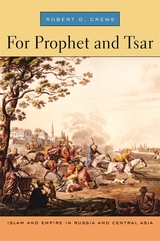
Russia occupies a unique position in the Muslim world. Unlike any other non-Islamic state, it has ruled Muslim populations for over five hundred years. Though Russia today is plagued by its unrelenting war in Chechnya, Russia’s approach toward Islam once yielded stability. In stark contrast to the popular “clash of civilizations” theory that sees Islam inevitably in conflict with the West, Robert D. Crews reveals the remarkable ways in which Russia constructed an empire with broad Muslim support.
In the eighteenth century, Catherine the Great inaugurated a policy of religious toleration that made Islam an essential pillar of Orthodox Russia. For ensuing generations, tsars and their police forces supported official Muslim authorities willing to submit to imperial directions in exchange for defense against brands of Islam they deemed heretical and destabilizing. As a result, Russian officials assumed the powerful but often awkward role of arbitrator in disputes between Muslims. And just as the state became a presence in the local mosque, Muslims became inextricably integrated into the empire and shaped tsarist will in Muslim communities stretching from the Volga River to Central Asia.
For Prophet and Tsar draws on police and court records, and Muslim petitions, denunciations, and clerical writings—not accessible prior to 1991—to unearth the fascinating relationship between an empire and its subjects. As America and Western Europe debate how best to secure the allegiances of their Muslim populations, Crews offers a unique and critical historical vantage point.

In 1645 the Japanese samurai Musashi Miamoto wrote A Book of Five Rings, which described the attitudes necessary for individual success. Though he was a swordsman, his book was not limited to combat but addressed the much broader question of how to achieve excellence in life through study, discipline, and planning. It is still avidly read in Japan today. Arthur Kornberg’s book is a modern-day Book of Five Rings that replaces the medium of swordsmanship with that of biochemistry, particularly enzymology. As Kornberg describes his successive research problems, the challenges they presented, and the ultimate accomplishments that resulted, he provides us with a primer in the strategies needed to do scientific work of great significance. Moreover, these strategies are played out in the context of solving some of the great biochemical problems of the twentieth century.
The ability to manipulate and alter DNA fired a revolution that forever changed the nature of biology. Arthur Kornberg is a primary architect of that revolution, arguably one of the two or three most important biologists of this time. Prior to Kornberg, genetic information and later DNA were imbued by biologists with an almost vitalistic aura. Kornberg demonstrated that DNA is a molecule synthesized by enzymes, like all other chemical constituents of the cell. More important, he trained a school of scientists who focused on and discovered many of the enzymatic activities that act on DNA. It is these enzymes in particular that allow modern “genetic engineering.”
For the Love of Enzymes does not describe a single lucky or hard-won accomplishment. Rather, it is the story of thirty years of decisive campaigns, nearly all of which led to insights of major significance. In relating his story, Kornberg never avoids the difficult question of “why”: why he felt classical nutritional studies had reached a plateau, why he turned to enzymology as a discipline in which the important answers would be found, and why he believes the study of enzymes will grow ever more important as we face the new scientific frontier of brain function.
This book will challenge students of biology and chemistry at all levels who want to do important work rather than simply follow popular trends. It will also delight and inform readers who wish to understand how “real” science is done, and to learn of the values that guide one of our greatest researchers.
This is the fourth revised and enlarged edition of the standard guide to the Foraminifera, the order of small marine Protozoa whose living and fossilized forms have attracted both scientific and economic interest during the past century. Research on the Foraminifera has developed rapidly in the last few years, because of their value to the petroleum industry and in general geologic correlation.
The classification in this volume is that of the earlier editions, with such changes as could be made by new evidence which has come to light. It is based upon the known geologic history of the genera, the phylogenetic characters as distinguished through study of much fossil material from all continents, and a study of the ontogeny in many microspheric specimens which show relationships more definitely than megalospheric specimens of the same species.
Fifty families, including about seven hundred and fifty genera, are systematically described and illustrated in the text and Key. A comprehensive bibliography, listing titles and authors of the most important works on the Foraminifera, is arranged according to geologic age and geographic distribution,morphology and technique, classification and nomenclature, and general bibliographical references. An index to family and generic names, both valid and invalid, is included.
Read supplementary material prepared by Geremie Barmé
Read the Bldg Blog interview with Mary Beard about the Wonders of the World series(Part I and Part II)
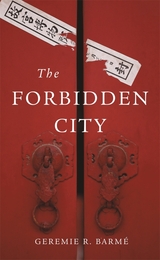
The Forbidden City (Zijin Cheng) lying at the heart of Beijing formed the hub of the Celestial Empire for five centuries. Over the past century it has led a reduced life as the refuge for a deposed emperor, as well as a heritage museum for monarchist, republican, and socialist citizens, and it has been celebrated and excoriated as a symbol of all that was magnificent and terrible in dynastic China’s legacy.
The Forbidden City’s vermilion walls have fueled literary fantasies that have become an intrinsic part of its disputed and documented history. Mao Zedong even considered razing the entire structure to make way for the buildings of a new socialist China. The fictions surrounding the Forbidden City have also had an international reach, and writers like Franz Kafka, Elias Canetti, Jorge Luis Borges, and Mervyn Peake have all succumbed to its myths. The politics it enshrined have provided the vocabulary of power that is used in China to the present day, though it is now better known as a film set or the background of displays of opera, rock, and fashion.
Geremie Barmé peels away the veneer of power, secrecy, inscrutability, and passions of imperial China, to provide a new and original history of the culture, politics, and architecture of the Forbidden City. Designed to overawe the visitor with the power of imperial China, the Forbidden City remains one of the true wonders of the world.


In this masterful work, both an illumination of Kant’s thought and an important contribution to contemporary legal and political theory, Arthur Ripstein gives a comprehensive yet accessible account of Kant’s political philosophy. Ripstein shows that Kant’s thought is organized around two central claims: first, that legal institutions are not simply responses to human limitations or circumstances; indeed the requirements of justice can be articulated without recourse to views about human inclinations and vulnerabilities. Second, Kant argues for a distinctive moral principle, which restricts the legitimate use of force to the creation of a system of equal freedom. Ripstein’s description of the unity and philosophical plausibility of this dimension of Kant’s thought will be a revelation to political and legal scholars.
In addition to providing a clear and coherent statement of the most misunderstood of Kant’s ideas, Ripstein also shows that Kant’s views remain conceptually powerful and morally appealing today. Ripstein defends the idea of equal freedom by examining several substantive areas of law—private rights, constitutional law, police powers, and punishment—and by demonstrating the compelling advantages of the Kantian framework over competing approaches.

Many legal theorists maintain that laws are effective because we internalize them, obeying even when not compelled to do so. In a comprehensive reassessment of the role of force in law, Frederick Schauer disagrees, demonstrating that coercion, more than internalized thinking and behaving, distinguishes law from society’s other rules.
Reinvigorating ideas from Jeremy Bentham and John Austin, and drawing on empirical research as well as philosophical analysis, Schauer presents an account of legal compliance based on sanction and compulsion, showing that law’s effectiveness depends fundamentally on its coercive potential. Law, in short, is about telling people what to do and threatening them with bad consequences if they fail to comply. Although people may sometimes obey the law out of deference to legal authority rather than fear of sanctions, Schauer challenges the assumption that legal coercion is marginal in society. Force is more pervasive than the state’s efforts to control a minority of disobedient citizens. When people believe that what they should do differs from what the law commands, compliance is less common than assumed, and the necessity of coercion becomes apparent.
Challenging prevailing modes of jurisprudential inquiry, Schauer makes clear that the question of legal force has sociological, psychological, political, and economic dimensions that transcend purely conceptual concerns. Grappling with the legal system’s dependence on force helps us understand what law is, how it operates, and how it helps organize society.

The United States faces a growing crisis in care. The number of people needing care is growing while the ranks of traditional caregivers have shrunk. The status of care workers is a critical concern.
Evelyn Nakano Glenn offers an innovative interpretation of care labor in the United States by tracing the roots of inequity along two interconnected strands: unpaid caring within the family; and slavery, indenture, and other forms of coerced labor. By bringing both into the same analytic framework, she provides a convincing explanation of the devaluation of care work and the exclusion of both unpaid and paid care workers from critical rights such as minimum wage, retirement benefits, and workers' compensation. Glenn reveals how assumptions about gender, family, home, civilization, and citizenship have shaped the development of care labor and been incorporated into law and social policies. She exposes the underlying systems of control that have resulted in women—especially immigrants and women of color—performing a disproportionate share of caring labor. Finally, she examines strategies for improving the situation of unpaid family caregivers and paid home healthcare workers.
This important and timely book illuminates the source of contradictions between American beliefs about the value and importance of caring in a good society and the exploitation and devalued status of those who actually do the caring.

Who speaks for America in world affairs? In this insightful new book, Tony Smith finds that, often, the answer is interest groups, including ethnic ones. This seems natural in a country defined by ethnic and cultural diversity and a democratic political system. And yet, should not the nation's foreign policy be based on more general interests? On American national interests?
In exploring this question, Smith ranges over the history of ethnic group involvement in foreign affairs; he notes the openness of our political system to interest groups; and he investigates the relationship between multiculturalism and U.S. foreign policy. The book has three major propositions. First, ethnic groups play a larger role in the formulation of American foreign policy than is widely recognized. Second, the negative consequences of ethnic group involvement today outweigh the benefits this activism at times confers on America in world affairs. And third, the tensions of a pluralist democracy are particularly apparent in the making of foreign policy, where the self-interested demands of a host of domestic actors raise an enduring problem of democratic citizenship--the need to reconcile general and particular interests.
Much has been written about the Office of Strategic Services (OSS)--the forerunner of the CIA--and the exploits of its agents during World War II. Virtually unknown, however, is the work of the extraordinary community of scholars who were handpicked by "Wild Bill" Donovan and William L. Langer and recruited for wartime service in the OSS's Research and Analysis Branch (R&A). Known to insiders as the "Chairborne Division," the faculty of R&A was drawn from a dozen social science disciplines and challenged to apply its academic skills in the struggle against fascism. Its mandate: to collect, analyze, and disseminate intelligence about the enemy.
Foreign Intelligence is the first comprehensive history of this extraordinary behind-the-scenes group. The R&A Branch assembled scholars of widely divergent traditions and practices--Americans and recent European émigrés; philosophers, historians, and economists; regionalists and functionalists; Marxists and positivists--all engaged in the heady task of translating the abstractions of academic discourse into practical politics. Drawing on extensive, newly declassified archival sources, Barry M. Katz traces the careers of the key players in R&A, whose assessments helped to shape U.S. policy both during and after the war. He shows how these scholars, who included some of the most influential theorists of our time, laid the foundation of modern intelligence work. Their reports introduced the theories and methods of academic discourse into the workings of government, and when they returned to their universities after the war, their wartime experience forever transformed the world of scholarship.
Authoritative, probing, and wholly original, Foreign Intelligence not only sheds new light on this overlooked aspect of the U.S. intelligence record, it also offers a startling perspective on the history of intellectual thought in the twentieth century.
The rise of the House of Saud in the mid-eighteenth century led to the creation of two successive Saudi states which were supported by two key groups, the religious Wahhabi and the dynastic Saudi. The central objective in the relationship between these groups was to convert the population to Wahhabism, with the Saudi dynasty providing the military and political power to wage wars of occupation and proselytism. The major conclusion of this book is that this relationship ceased to exist when Ibn Saud came out of exile in 1902 to establish the third Saudi state.
Jacob Goldberg's Saudi perspective, unlike the British perspective of earlier studies, focuses on the marked changes in the years from 1902 to the disappearance of the Ottomans in 1918. Ibn Saud had spent his formative years in exile in Kuwait, witnessing the international politics and intrigues of that region. When he returned to head the new Saudi state, his goal was the reinstatement of the House of Saud in Arabia and the restoration of its former dynastic dominions, but not the propagation of the Wahhabi doctrine. Territorial ambitions were modified by considerations of realpolitik. This pragmatic reversal accounts, in part, for the ability of the new state to survive.
By focusing on the roots of Saudi foreign policy, the author highlights the distinctive characteristics that make Saudi Arabia inherently different from other Middle Eastern states.
In May 1829, strange reports surfaced from the Ariège department in the French Pyrenees, describing male peasants, bizarrely dressed in women’s clothes, gathering in the forests at night to chase away state guards and charcoal-makers. This was the raucous War of the Demoiselles, a protest against the national French Forest Code of 1827, which restricted peasants’ rights to use state and private forests.
Peter Sahlins unravels the fascinating story of this celebrated popular uprising, and in his telling captures the cultural, historical, and political currents that swept the countryside during France’s July 1830 Revolution. Sahlins explains how and why the Ariège peasants drew on the practices and rituals of folk culture, as well as on a revolutionary tradition, to defend their inherited rights to the forest. To explore these rights and their expression, he delves into the history of forest management, of peasant conflicts with the state, and of popular culture—particularly the disputed history of Carnival and of local rituals of justice.
Sahlins also sheds new light on the French revolutionary tradition and the “Three Glorious Days” of July 1830. The drama and symbolism of the War of the Demoiselles have inspired nearly a dozen plays, novels, films, and even a comic book. Using the concepts of anthropology and cultural studies as transport, Sahlins moves from this rich event to the wider worlds of peasant society in France. Focusing on the years from 1829 to 1832 but drawing on sources since the sixteenth century, his book should captivate social, cultural, and political historians of both early modern and modern Europe.


Intellectuals since the Industrial Revolution have been obsessed with whether, when, and why capitalism will collapse. This riveting account of two centuries of failed forecasts of doom reveals the key to capitalism’s durability.
Prophecies about the end of capitalism are as old as capitalism itself. None have come true. Yet, whether out of hope or fear, we keep looking for harbingers of doom. In Foretelling the End of Capitalism, Francesco Boldizzoni gets to the root of the human need to imagine a different and better world and offers a compelling solution to the puzzle of why capitalism has been able to survive so many shocks and setbacks.
Capitalism entered the twenty-first century triumphant, its communist rival consigned to the past. But the Great Recession and worsening inequality have undermined faith in its stability and revived questions about its long-term prospects. Is capitalism on its way out? If so, what might replace it? And if it does endure, how will it cope with future social and environmental crises and the inevitable costs of creative destruction? Boldizzoni shows that these and other questions have stood at the heart of much analysis and speculation from the early socialists and Karl Marx to the Occupy Movement. Capitalism has survived predictions of its demise not, as many think, because of its economic efficiency or any intrinsic virtues of markets but because it is ingrained in the hierarchical and individualistic structure of modern Western societies.
Foretelling the End of Capitalism takes us on a fascinating journey through two centuries of unfulfilled prophecies. An intellectual tour de force and a plea for political action, it will change our understanding of the economic system that determines the fabric of our lives.

An on-the-ground account of the dramatic 2019 Hong Kong protests, showing how they represent the latest stage of a decades-old decolonization struggle.
Long known for its glamour and affluence, Hong Kong shocked the world in 2019 when millions of its citizens took to the streets in protest. For more than six months, Hong Kongers braved the police’s often violent suppression. At the forefront were young adults fighting not just for universal suffrage but for their vision of a good society, a just economy, rule of law, and a future of self-determination.
Forever Hong Kong takes readers deep inside this improbable decolonization struggle in one of the global centers of capitalism, providing granular insight into a movement that had been gestating for decades. Caught between the relentlessly encroaching Chinese party-state and the kingpins of international commerce—for whom political complacency is the foundation of a stable and profitable business environment—are Hong Kongers themselves. They have inherited an island long under British and now Chinese rule, while maintaining a strong, distinct identity to be defended at all costs.
Offering a reflective history, a vivid ethnography, and a piercing analysis of political economy, Ching Kwan Lee tells the story of her native city at a pivotal moment of geopolitical rivalry between China and the West. Her novel analysis of how colonized subjects have transformed into agents of history breaks new ground for the study of decolonization worldwide.

A Choice Outstanding Academic Title of the Year
The idea of world literature has garnered much attention recently as a discipline that promises to move humanistic study beyond postcolonial theory and antiquated paradigms of “national” literary traditions. In Forget English! Aamir Mufti scrutinizes the claims made on behalf of world literature by its advocates. The notion of a borderless, egalitarian global literature has obvious appeal, he notes, but behind it lurks the continuing dominance of English as a literary language and a cultural system of international reach.
“Mufti’s historical perspective and insightful analyses of India’s anglophone novel generate constant echoes with the realities of anglophone writings in other cultures.”
—Eva Shan Chou, Times Higher Education
“Mufti’s book is in one sense a quarrel with Salman Rushdie’s overly enthusiastic celebration of English-language ‘postcolonial’ South Asian literature, but more important, the book extends, qualifies, and enriches Edward Said’s work on Orientalism, demonstrating that despite its promise, world literature does not eliminate the dominant role of the Anglophone book market in shaping South Asian literature…Mufti’s book is both accessible and theoretically informed.”
—K. Tölölyan, Choice
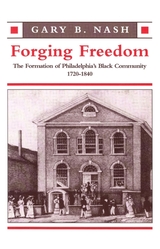
This book is the first to trace the good and bad fortunes, over more than a century, of the earliest large free black community in the United States. Gary Nash shows how, from colonial times through the Revolution and into the turbulent 1830s, blacks in the City of Brotherly Love struggled to shape a family life, gain occupational competence, organize churches, establish neighborhoods and social networks, advance cultural institutions, educate their children in schools, forge a political consciousness, and train black leaders who would help abolish slavery. These early generations of urban blacks—many of them newly emancipated—constructed a rich and varied community life.
Nash’s account includes elements of both poignant triumph and profound tragedy. Keeping in focus both the internal life of the black community and race relations in Philadelphia generally, he portrays first the remarkable vibrancy of black institution-building, ordinary life, and relatively amicable race relations, and then rising racial antagonism. The promise of a racially harmonious society that took form in the postrevolutionary era, involving the integration into the white republic of African people brutalized under slavery, was ultimately unfulfilled. Such hopes collapsed amid racial conflict and intensifying racial discrimination by the 1820s. This failure of the great and much-watched “Philadelphia experiment” prefigured the course of race relations in America in our own century, an enduringly tragic part of this country’s past.

In the early stages of the Second World War, the vast crescent of British-ruled territories stretching from India to Singapore appeared as a massive Allied asset. It provided scores of soldiers and great quantities of raw materials and helped present a seemingly impregnable global defense against the Axis. Yet, within a few weeks in 1941-42, a Japanese invasion had destroyed all this, sweeping suddenly and decisively through south and southeast Asia to the Indian frontier, and provoking the extraordinary revolutionary struggles which would mark the beginning of the end of British dominion in the East and the rise of today's Asian world.
More than a military history, this gripping account of groundbreaking battles and guerrilla campaigns creates a panoramic view of British Asia as it was ravaged by warfare, nationalist insurgency, disease, and famine. It breathes life into the armies of soldiers, civilians, laborers, businessmen, comfort women, doctors, and nurses who confronted the daily brutalities of a combat zone which extended from metropolitan cities to remote jungles, from tropical plantations to the Himalayas. Drawing upon a vast range of Indian, Burmese, Chinese, and Malay as well as British, American, and Japanese voices, the authors make vivid one of the central dramas of the twentieth century: the birth of modern south and southeast Asia and the death of British rule.
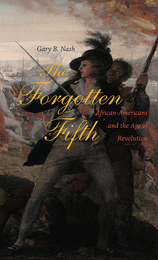
As the United States gained independence, a full fifth of the country's population was African American. The experiences of these men and women have been largely ignored in the accounts of the colonies' glorious quest for freedom. In this compact volume, Gary B. Nash reorients our understanding of early America, and reveals the perilous choices of the founding fathers that shaped the nation's future.
Nash tells of revolutionary fervor arousing a struggle for freedom that spiraled into the largest slave rebellion in American history, as blacks fled servitude to fight for the British, who promised freedom in exchange for military service. The Revolutionary Army never matched the British offer, and most histories of the period have ignored this remarkable story. The conventional wisdom says that abolition was impossible in the fragile new republic. Nash, however, argues that an unusual convergence of factors immediately after the war created a unique opportunity to dismantle slavery. The founding fathers' failure to commit to freedom led to the waning of abolitionism just as it had reached its peak. In the opening decades of the nineteenth century, as Nash demonstrates, their decision enabled the ideology of white supremacy to take root, and with it the beginnings of an irreparable national fissure. The moral failure of the Revolution was paid for in the 1860s with the lives of the 600,000 Americans killed in the Civil War.
The Forgotten Fifth is a powerful story of the nation's multiple, and painful, paths to freedom.

Winner of the Margaret W. Rossiter History of Women in Science Prize
A new history uncovers the crucial role women played in the great transformations of medical science and health care that accompanied the Italian Renaissance.
In Renaissance Italy women played a more central role in providing health care than historians have thus far acknowledged. Women from all walks of life—from household caregivers and nurses to nuns working as apothecaries—drove the Italian medical economy. In convent pharmacies, pox hospitals, girls’ shelters, and homes, women were practitioners and purveyors of knowledge about health and healing, making significant contributions to early modern medicine.
Sharon Strocchia offers a wealth of new evidence about how illness was diagnosed and treated, whether by noblewomen living at court or poor nurses living in hospitals. She finds that women expanded on their roles as health care providers by participating in empirical work and the development of scientific knowledge. Nuns, in particular, were among the most prominent manufacturers and vendors of pharmaceutical products. Their experiments with materials and techniques added greatly to the era’s understanding of medical care. Thanks to their excellence in medicine urban Italian women had greater access to commerce than perhaps any other women in Europe.
Forgotten Healers provides a more accurate picture of the pursuit of health in Renaissance Italy. More broadly, by emphasizing that the frontlines of medical care are often found in the household and other spaces thought of as female, Strocchia encourages us to rethink the history of medicine.

As the Korean war (1950–1953) drew to a close and South Korea began to rebuild, American GI Roger Marshutz (1929–2007) was stationed in Pusan to photograph U.S. reconstruction efforts. In his spare time, Marshutz also wandered the streets, documenting the daily life of Korean civilians.
The Forgotten Home Front: Roger Marshutz’s Photographs of Pusan, South Korea, 1952–1954 offers both an official and unofficial look at U.S.-South Korean relations, as well as a portrait of a country in the midst of enormous political, economic, and cultural transformation.

In 1894, on the eve of the French conquest of Morocco, a young Muslim mystic named Muḥammad al-Kattānī decided to abandon his life of asceticism to preach Islamic revival and jihad against the French. Ten years later, al-Kattānī mobilized a socially diverse coalition of Moroccans who called for resistance against French colonization.
In 1909, he met a violent death at the hands of the same Moroccan anti-colonialists he had empowered through his activism. Today, the government of Morocco regards al-Kattānī’s story as subversive, and he has virtually disappeared from the narratives of the early Moroccan anti-colonialism and nationalism. Despite this silencing, al-Kattānī’s remarkable personal transformation and sacrifice is at the heart of the events that, although ultimately failing to prevent French rule, gave birth to Moroccan nationalism and to modern concepts of Moroccan political power and authority.
Forgotten Saints draws on a diverse collection of previously unknown primary sources to narrate the vivid story of al-Kattānī and his virtual disappearance from accounts of modern Moroccan history.

In September 1945, after the fall of the atomic bomb--and with it, the Japanese empire--Asia was dominated by the British. Governing a vast crescent of land that stretched from India through Burma and down to Singapore, and with troops occupying the French and Dutch colonies in southern Vietnam and Indonesia, Britain's imperial might had never seemed stronger.
Yet within a few violent years, British power in the region would crumble, and myriad independent nations would struggle into existence. Christopher Bayly and Tim Harper show how World War II never really ended in these ravaged Asian lands but instead continued in bloody civil wars, anti-colonial insurrections, and inter-communal massacres. These years became the most formative in modern Asian history, as Western imperialism vied with nascent nationalist and communist revolutionaries for political control.
Forgotten Wars, a sequel to the authors' acclaimed Forgotten Armies, is a panoramic account of the bitter wars of the end of empire, seen not only through the eyes of the fighters, but also through the personal stories of ordinary people: the poor and bewildered caught up in India's Hindu-Muslim massacres; the peasant farmers ravaged by warfare between British forces and revolutionaries in Malaya; the Burmese minorities devastated by separatist revolt. Throughout, we are given a stunning portrait of societies poised between the hope of independence and the fear of strife. Forgotten Wars vividly brings to life the inescapable conflicts and manifold dramas that shaped today's Asia.
Immanuel Kant’s claim that the categorical imperative of morality is based in practical reason has long been a source of puzzlement and doubt, even for sympathetic interpreters. Kant’s own explanations, which mainly concern his often-criticized formula of universal law, are laconic and obscure, leading interpreters to dismiss them in favor of less ambitious claims involving his other famous formulas.
In The Form of Practical Knowledge, Stephen Engstrom provides an illuminating new interpretation of the categorical imperative, arguing that we have exaggerated and misconceived Kant’s break with tradition: Kant never departs from the classical conception of practical reason as a capacity for knowledge of the good. His distinctive contribution is the idea that morality’s imperatives express the form of such knowledge.
By developing an account of practical knowledge that situates Kant’s ethics within his broader epistemology and rethinks numerous topics in his moral psychology and in his account of practical reason (including desire, intention, choice, will, as well as pleasure, happiness, and the good), Engstrom’s work promises to deepen and to reshape our understanding of Kantian ethics.
Despite their importance during the French Revolution, the Paris middle classes are little known. This book focuses on the family organization and the political role of the Paris commercial middle classes, using as a case study the Faubourg St. Marcel and particularly the parish of St. Médard.
David Garrioch argues that in the late seventeenth and early eighteenth centuries the commercial middle classes were steadfastly local in their family ties and outlook. He shows, too, that they took independent political action in defense of their local position. This gradually changed during the eighteenth century, and the Revolution greatly accelerated the process of integration, at the same time broadening the composition of what may now be termed the Parisian bourgeoisie.
Central to Garrioch's argument is the idea that family, politics, and power are intimately connected. He shows the centrality of kinship to local politics in the first half of the eighteenth century, and the way new family structures were related to changes in the nature of politics even before the Revolution. Among the many important issues considered are birth control, the role of women, the importance of lineage, the spatial limits of middle-class lives, and the language and secularization of politics.

Here is the history of the disintegration of the Russian Empire, and the emergence, on its ruins, of a multinational Communist state. In this revealing account, Richard Pipes tells how the Communists exploited the new nationalism of the peoples of the Ukraine, Belorussia, the Caucasus, Central Asia, and the Volga-Ural area--first to seize power and then to expand into the borderlands.
The Formation of the Soviet Union acquires special relevance in the post-Soviet era, when the ethnic groups described in the book once again reclaimed their independence, this time apparently for good.
In a 1996 Preface to the Revised Edition, Pipes suggests how material recently released from the Russian archives might supplement his account.
James Engell has prepared the first broad treatment of eighteenth- and early-nineteenth century British criticism to appear in a generation, presenting the views of scores of writers on a variety of questions, many of which remain live issues today.
While offering major reevaluations of Dryden, Hume, and Johnson, Engell demonstrates that eighteenth-century criticism cannot be represented by just a few major critics or by generalizations about Augustan taste, neoclassical rules, or “common sense.” He presents a complex and highly varied body of theoretical writing and practical application by dozens of critics including Rymer, Addison, Welsted, Ramsay, Hurd, Gerard, Newbery, Campbell, Blair, Beattie, Jeffrey, and Hazlitt. He also analyzes the continued relevance of their critical work, drawing connections with modern writers such as Eliot, Frye, Saussure, Barthes, Culler, Bakhtin, and Lévi-Strauss.
Engell concludes with a stimulating essay on the nature and function of the critical process itself. For students and scholars conversant with modern critical theory, Forming the Critical Mind will offer some surprising and interesting comparisons.
The largest unmet health need in this country—and potentially the most costly—is for dental care; meeting this need would strain existing personnel and facilities beyond capacity. This book reports an experiment in delivering dental care by means that are not traditional but preserve the high standards that have been achieved by American dentistry.
At the Forsyth Dental Center in Boston, Massachusetts, graduate dental hygienists received additional training in the administration of local anesthesia, drilling decayed teeth, and filling them. The program was designed to prepare dental auxiliaries to undertake restorative treatment under the direct supervision of a dentist who assumes ultimate responsibility for planning treatment, assessing the quality of performance, and assuring the patient's well-being.
The Forsyth experiment yielded information on the competence of auxiliaries trained in this fashion, on patient acceptance, on the efficiency of various patterns of practice, and on the potential economic effects of delivering care in this way. The results of the study are bound to stir controversy, but they cannot be ignored by anyone who cares about a major problem in health care.

The eleventh-century monk Ekkehard IV’s Fortune and Misfortune at Saint Gall, part of the chronicles of the famous Swiss abbey, is a treasure trove of medieval monastic life. Saint Gall’s records span its humble beginnings in the early seventh century to the late Middle Ages, with Ekkehard’s contribution covering the 880s to 972, near the end of the monastery’s two-century-long golden age. Its unforgettable tales, sometimes at odds with the historical record, contain sharp flashes of Ekkehard’s signature humor—when, for instance, a spying abbot from a neighboring monastery is caught hiding in the latrine. Ekkehard also shows how the abbey’s role as a spiritual haven could be compromised by worldly ties, including close associations with the powerful Carolingian and Ottonian courts. He bears witness to the struggles of the tenth-century church reform movement, when Emperor Otto I dispatched investigators to uncover Saint Gall’s deviations from the Rule of Saint Benedict.
This volume publishes the Latin text alongside its first complete English translation.
READERS
Browse our collection.
PUBLISHERS
See BiblioVault's publisher services.
STUDENT SERVICES
Files for college accessibility offices.
RECENTLY PUBLISHED





UChicago Accessibility Resources
home | accessibility | search | about | contact us
BiblioVault ® 2001 - 2026
The University of Chicago Press