
 A SCHOLARLY BOOK REPOSITORY
541 start with F start with F


Fossil Invertebrates introduces readers to the biosphere as it was hundreds of millions of years ago, when seas teemed with animal forms both familiar and strange: ammonites and corals, mollusks and sponges, crinoids and trilobites. On land, terrestrial forms were beginning to make their mark, leaving behind traces such as burrows and track ways and other fossil evidence of the important transition to life on land. The plates in this book capture the incredibly detailed impressions and casts of ancient life, contrasting them with forms, such as the horseshoe crab and the chambered nautilus, that persist today virtually unchanged.
The shells and hard exoskeletons of invertebrates make them excellent candidates for fossilization, and the amateur fossil collectors are more likely to uncover an invertebrate fossil than any other kind. The fossilized remains of invertebrates dominate university collections and museum holdings worldwide and their study continues to yield important insights into the nature of evolutionary change and the impact of climate change on biodiversity, as great explosions of diversity were succeeded by mass extinctions. Paul D. Taylor and David N. Lewis, both of the Natural History Museum, London, have written a comprehensive and accessible resource, one that provides undergraduates and amateur fossil enthusiasts with a means to understand and interpret this rich fossil record.
Fossils, far from being mere dry bones, provide the key to understanding the stuff of history: past climates, evolution, and extinction. In this lively introduction, Richard Fortey offers an engaging and lucid explanation of how fossils are a product of our endlessly evolving habitat. The story begins with the Precambrian era, more than 600 million years ago. As Fortey traces the history of life from the dawn of the Precambrian to the present, he paints a vivid picture of the emergence of the plants and animals that we would recognize today. Unlike so many works on fossils that focus on dinosaurs, this book covers a broad range of animals and plants and does justice to the numerical superiority of invertebrate fossils.
The scope of the book is wide, including not only a history of paleontology but a review of those parts of general geology that are needed to appreciate the wealth of information contained in the fossil record: stratigraphy, measurements of paleotemperatures and radiometric ages, turbidites, reefs, sandstones, and so on. But the main emphasis of the book is on what paleontology is really about, how the paleontologist tries to figure out the ways in which fossil animals lived, and how geological processes such as plate tectonics have interacted with the history of life.
Fossils attempts to survey the contemporary paleontological scene in order to communicate the excitement of investigating the past. A primary goal of the book is to inspire and instruct the amateur fossil collector; hence, the specimens illustrated—many of which are presented in full color—are ones that are not too difficult for the amateur to collect. To aid the neophyte, the author has appended notes on the occurrence, significance, and preparation of each specimen. Of particular interest to the amateur are the discussions on how to collect fossils and on the economic and practical importance of fossils and their enclosing sediments. In striking a perfect balance between detail and generalization, Richard Fortey has written a book that will appeal to amateur and professional alike.

Table of Contents:
Introduction
Part One: The Perceptual Revolution or the Sense of Smell on Trial
1. Air and the Threat of the Putrid
2. The Extremes of Olfactory Vigilance
3. Social Emanations
4. Redefining the Intolerable
5. The New Calculus of Olfactory Pleasure
Part Two: Purifying Public Space
6. The Tactics of Deodorization
7. Odors and the Physiology of the Social Order
8. Policy and Pollution
Part Three: Smells, Symbols, and Social Representations
9. The Stench of the Poor
10. Domestic Atmospheres
11. The Perfumes of Intimacy
12. The Intoxicating Flask
13. "Laughter in a Bead of Sweat"
14. The Odors of Paris
Conclusion
Notes
Index
Reviews of this book:
[This book] is not only serious, but interesting and important; one of those studies that profoundly alters our understanding of both social life and history.
--Joan W. Scott, New York Times Book Review
Reviews of this book:
At once encyclopedic and impressionistic, The Foul and the Fragrant is...a masterful exposition of odors and the perception of odors from 1750 to the "Pasteurian revolution" of the late nineteenth century...It is an important and, at times, fascinating voyage...Exploring with imagination and audacity the changing role of smell in the anxieties and antagonisms of the modern world, Corbin reminds us that social history, too long sanitized and too often abstract, must make room for the senses.
--Michael Burns, Los Angeles Times Book Review
Reviews of this book:
The story has never been told more brilliantly, nor with such verve and perceptiveness. That alone would make Corbin's book worth reading, but one may read it as well for a deeper understanding of the roots of modern urban anxieties about the unwholesome...Corbin's book is a tour de force.
--Simon Schama, New Republic

What effects do laws have? Do individuals drive more cautiously, clear ice from sidewalks more diligently, and commit fewer crimes because of the threat of legal sanctions? Do corporations pollute less, market safer products, and obey contracts to avoid suit? And given the effects of laws, which are socially best? Such questions about the influence and desirability of laws have been investigated by legal scholars and economists in a new, rigorous, and systematic manner since the 1970s. Their approach, which is called economic, is widely considered to be intellectually compelling and to have revolutionized thinking about the law.
In this book Steven Shavell provides an in-depth analysis and synthesis of the economic approach to the building blocks of our legal system, namely, property law, tort law, contract law, and criminal law. He also examines the litigation process as well as welfare economics and morality. Aimed at a broad audience, this book requires neither a legal background nor technical economics or mathematics to understand it. Because of its breadth, analytical clarity, and general accessibility, it is likely to serve as a definitive work in the economic analysis of law.
The author's purpose is to understand the philosophical foundations of Hegel's social theory by articulating the normative standards at work in his claim that the three central social institutions of the modern era--the nuclear family, civil society, and the constitutional state--are rational or good. Its central question is: what, for Hegel, makes a rational social order rational? In addressing this question the book aspires to be faithful to Hegel's texts and to articulate a compelling theory of rational social institutions; its aim is not only to interpret Hegel correctly but also to demonstrate the richness and power that his vision of the rational social order possesses.
Frederick Neuhouser's task is to understand the conceptions of freedom on which Hegel's theory rests and to show how they ground his arguments in defense of the modern social world. In doing so, the author focuses on Hegel's most important and least understood contribution to social philosophy, the idea of "social freedom."
Neuhouser's strategy for making sense of social freedom is to show its affinities with Rousseau's conception of the general will. The main idea that Hegel appropriates from Rousseau is that rational social institutions must satisfy two conditions: first, they must furnish the basic social preconditions of their members' freedom; and, second, all social members must be able subjectively to affirm their freedom-conditioning institutions as good and thus to regard the principles that govern their social participation as coming from their own wills.
In this volume, Michael Jensen and his collaborators present the foundations of an integrated theory of organizations. The theory assumes that organizations are equilibrium systems that, like markets, can be influenced, but cannot be told what to do; that human beings are rational and self-interested for the most part; and that information is costly to produce and transfer among agents. The theory also treats business organizations as entities existing in a system of markets (including financial, product, labor, and materials markets) that must be considered in the formulation of organizational strategy.
Jensen argues that the cost of transferring information makes it necessary to decentralize some decision rights in organizations and in the economy. This decentralization in turn requires organizations to solve the control problem that results when self-interested persons do not behave as perfect agents.
Capitalist economies solve these control problems through the institution of alienable decision rights. But because organizations must suppress the alienability of decision rights, they must devise substitute mechanisms that perform its functions. Jensen argues that three critical systems, which he calls the organizational rules of the game, are necessary to substitute for alienability in organizations: (1) a system for allocating decision rights among agents in the firm, (2) a system for measuring and evaluating performance in the firm, and (3) a system for rewarding and punishing individuals for their performance. These concepts offer a major competitive advantage for organizations.
Combining principles of individual rational choice with a sociological conception of collective action, James Coleman recasts social theory in a bold new way. The result is a landmark in sociological theory, capable of describing both stability and change in social systems.
This book provides for the first time a sound theoretical foundation for linking the behavior of individuals to organizational behavior and then to society as a whole. The power of the theory is especially apparent when Coleman analyzes corporate actors, such as large corporations and trade unions. He examines the creation of these institutions, collective decision making, and the processes through which authority is revoked in revolts and revolutions.
Coleman discusses the problems of holding institutions responsible for their actions as well as their incompatibility with the family. He also provides a simple mathematical analysis corresponding to and carrying further the verbal formulations of the theory. Finally, he generates research techniques that will permit quantitative testing of the theory.
From a simple, unified conceptual structure Coleman derives, through elegant chains of reasoning, an encompassing theory of society. It promises to be the most important contribution to social theory since the publication of Talcott Parsons' Structure of Social Action in 1936.
In the wake of Jean Piaget’s work on children’s understanding of reality, it is generally accepted that by age two, children assume that an object hidden in a box will remain there unchanged until someone tampers with it. Eugene Subbotsky persuasively demonstrates that many children—and some adults—will often accept mysterious disappearances and creations, perceiving them not as tricks or illusions but as actual occurrences. His analysis clearly shows that alongside our everyday belief in object permanence, we also have a set of quasi-magical beliefs that can be activated by appropriate situations and behaviors. The acceptability of these beliefs will vary from culture to culture, and will be widespread among preliterate peoples but less obvious in advanced industrial countries. The author, a Russian psychologist, draws on his own extensive research and examines other taken-for-granted concepts, such as the distinction between animate and inanimate.
Foundations of the Mind, amply illustrated with experimental material, has enormous implications for the study of both child development and the psychology of human beliefs. It attacks our complacent and often culturally biased faith in the nature of reality, and as such will become required reading for all psychologists.
In 1776 the United States government started out on a shoestring and quickly went bankrupt fighting its War of Independence against Britain. At the war’s end, the national government owed tremendous sums to foreign creditors and its own citizens. But lacking the power to tax, it had no means to repay them. The Founders and Finance is the first book to tell the story of how foreign-born financial specialists—immigrants—solved the fiscal crisis and set the United States on a path to long-term economic success.
Pulitzer Prize–winning author Thomas K. McCraw analyzes the skills and worldliness of Alexander Hamilton (from the Danish Virgin Islands), Albert Gallatin (from the Republic of Geneva), and other immigrant founders who guided the nation to prosperity. Their expertise with liquid capital far exceeded that of native-born plantation owners Washington, Jefferson, and Madison, who well understood the management of land and slaves but had only a vague knowledge of financial instruments—currencies, stocks, and bonds. The very rootlessness of America’s immigrant leaders gave them a better understanding of money, credit, and banks, and the way each could be made to serve the public good.
The remarkable financial innovations designed by Hamilton, Gallatin, and other immigrants enabled the United States to control its debts, to pay for the Louisiana Purchase of 1803, and—barely—to fight the War of 1812, which preserved the nation’s hard-won independence from Britain.
Is our Greek and Roman heritage merely allusive and illusory? Or were our founders, and so our republican beginnings, truly steeped in the stuff of antiquity? So far largely a matter of generalization and speculation, the influence of Greek and Roman authors on our American forefathers finally becomes clear in this fascinating book-the first comprehensive study of the founders’ classical reading.
Carl J. Richard begins by examining how eighteenth-century social institutions in general and the educational system in particular conditioned the founders to venerate the classics. He then explores the founders’ various uses of classical symbolism, models, “antimodels,” mixed government theory, pastoralism, and philosophy, revealing in detail the formative influence exerted by the classics, both directly and through the mediation of Whig and American perspectives. In this analysis, we see how the classics not only supplied the principal basis for the U.S. Constitution but also contributed to the founders’ conception of human nature, their understanding of virtue, and their sense of identity and purpose within a grand universal scheme. At the same time, we learn how the classics inspired obsessive fear of conspiracies against liberty, which poisoned relations between Federalists and Republicans.
The shrewd ancients who molded Western civilization still have much to teach us, Richard suggests. His account of the critical role they played in shaping our nation and our lives provides a valuable lesson in the transcendent power of the classics.
As pundits and politicians remind us at every election cycle or turn of the television dial, the United States sees itself as the world’s greatest democracy. But what citizens might also hear, if they knew how to listen, is the grinding of two tectonic plates on which this democracy was established. In the venerable tradition of keen foreign observers of American politics, Anthony King exposes the political paradoxes in our system that we may well be too close to see—founding principles of our great democracy that are distinctly undemocratic.
In an extended essay eloquent in its plainspoken good sense, King begins, on the one hand, with the founding fathers who emphasized moderation, deliberation, checks and balances, and the separation of powers—a system in which “the people” were allowed to play only a limited role. On the other hand were radical democrats who insisted that the people, and only the people, should rule. The result was a political system tangled up in conflicts that persist to this day: unelected and unaccountable Supreme Court justices who exercise enormous personal power; severe restrictions on the kind of person the people can elect as president; popular referendums at the state and local level but none at the federal level, not even to ratify amendments to the Constitution.
In King’s provocative analysis, we see how these puzzles play out in the turmoil of our nation’s public life and political culture—and we glimpse, perhaps, a new way to address them.
The essays in this volume focus on the different aspects of Italian gardens of the sixteenth and seventeenth centuries. This volume is divided into two parts, with the first part concentrating on the decorations in Roman gardens of the sixteenth centuries, especially the fountains and statue collections, their iconographic programs, and their relationship to contemporary and ancient literature.
The second half of the volume considers two particular sites. The first, a Savoy duke’s villa, is considered through the history of its construction and its relationship to contemporary festivity architecture. The second essay considers a secret garden at the Palazzo Barberini in the 1630s. Also included are illustrations and text from three Barberini manuscripts documenting the plants used in this garden.
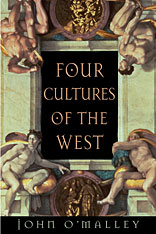
The workings of Western intelligence in our day--whether in politics or the arts, in the humanities or the church--are as troubling as they are mysterious, leading to the questions: Where are we going? What in the world were we thinking? By exploring the history of four "cultures" so deeply embedded in Western history that we rarely see their instrumental role in politics, religion, education, and the arts, this timely book provides a broad framework for addressing these questions in a fresh way.
The cultures considered here originated in the ancient world, took on Christian forms, and manifest themselves today in more secular ways. These are, as John W. O'Malley identifies them: the prophetic culture that proclaims the need for radical change in the structures of society (represented by, for example, Jeremiah, Martin Luther, and Martin Luther King, Jr.); the academic culture that seeks instead to understand those structures (Aristotle, Aquinas, the modern university); the humanistic culture that addresses fundamental human issues and works for the common good of society (Cicero, Erasmus, and Eleanor Roosevelt); and the culture of art and performance that celebrates the mystery of the human condition (Phidias, Michelangelo, Balanchine).
By showing how these cultures, as modes of activity and discourse in which Western intelligence has manifested itself through the centuries and continues to do so, O'Malley produces an essay that especially through the history of Christianity brilliantly illuminates the larger history of the West.

Who was Acorn Whistler, and why did he have to die? A deeply researched analysis of a bloody eighteenth-century conflict and its tangled aftermath, The Four Deaths of Acorn Whistler unearths competing accounts of the events surrounding the death of this Creek Indian. Told from the perspectives of a colonial governor, a Creek Nation military leader, local Native Americans, and British colonists, each story speaks to issues that transcend the condemned man’s fate: the collision of European and Native American cultures, the struggle of Indians to preserve traditional ways of life, and tensions within the British Empire as the American Revolution approached.
At the hand of his own nephew, Acorn Whistler was executed in the summer of 1752 for the crime of murdering five Cherokee men. War had just broken out between the Creeks and the Cherokees to the north. To the east, colonists in South Carolina and Georgia watched the growing conflict with alarm, while British imperial officials kept an eye on both the Indians’ war and the volatile politics of the colonists themselves. They all interpreted the single calamitous event of Acorn Whistler’s death through their own uncertainty about the future. Joshua Piker uses their diverging accounts to uncover the larger truth of an early America rife with violence and insecurity but also transformative possibility.
In his Introduction, Herschel Baker writes, “Although Romance, the dominant genre of secular literature throughout the later Middle Ages, has prompted floods of scholarship and speculation, it still bristles with unanswered problems of origin, development, and even definition.”
Helaine Newstead contributes “Malory and Romance”; A. Bartlett Giamatti, “Spenser: From Magic to Miracle”; Norman Rabkin, “The Holy Sinner and the Confidence Man: Illusion in Shakespeare’s Romances”; and Barbara K. Lewalski, “Milton: Revaluations of Romance.”

Japan and the four little dragons—Taiwan, South Korea, Hong Kong, and Singapore—constitute less than 1 percent of the world’s land mass and less than 4 percent of the world’s population. Yet in the last four decades they have become, with Europe and North America, one of the three great pillars of the modern industrial world order. How did they achieve such a rapid industrial transformation? Why did the four little dragons, dots on the East Asian periphery, gain such Promethean energy at this particular time in history?
Ezra F. Vogel, one of the most widely read scholars on Asian affairs, provides a comprehensive explanation of East Asia’s industrial breakthrough. While others have attributed this success to tradition or to national economic policy, Vogel’s penetrating analysis illuminates how cultural background interacted with politics, strategy, and situational factors to ignite the greatest burst of sustained economic growth the world has yet seen.
Vogel describes how each of the four little dragons acquired the political stability needed to take advantage of the special opportunities available to would-be industrializers after World War II. He traces how each little dragon devised a structure and a strategy to hasten industrialization and how firms acquired the entrepreneurial skill, capital, and technology to produce internationally competitive goods. Vogel brings masterly insight to the underlying question of why Japan and the little dragons have been so extraordinarily successful in industrializing while other developing countries have not. No other work has pinpointed with such clarity how institutions and cultural practices rooted in the Confucian tradition were adapted to the needs of an industrial society, enabling East Asia to use its special situational advantages to respond to global opportunities.
This is a book that all scholars and lay readers with an interest in Asia will want to read and ponder.
A Seminary Co-op Notable Book
“A big picture perspective on the mind, decision-making, and consciousness…Provocative and stimulating.” —Philosophical Psychology
“LeDoux’s aim is to provide a new theory of being human by dividing our evolutionary past into four realms: biological at the bottom, then neurobiological, cognitive and conscious…Along the way are excellent accounts of the evolution of brain structures and cognitive abilities.” —New Scientist
“A rigorously scientific yet eminently readable exploration of what it means to be human.” —Publishers Weekly
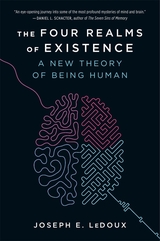
Modern science has largely dispensed with mind-body dualism, yet people still tend to imagine their minds as separate from their physical being. Even researchers persistently presume a “self” somehow distinct from the rest of the organism.
Arguing that the self is a barrier to understanding, leading neuroscientist Joseph LeDoux offers a new framework based on four realms of existence: bodily, neural, cognitive, and conscious. Every living thing, whether bacterium or plant or animal, has a body. Animals alone then supplement such biological existence with a nervous system, which enables quick and precise control of the organism. Certain animals can also think and plan, and thus exist cognitively. Finally, some of the cognitive organisms have inner experiences of and thoughts about the world—the hallmarks of the conscious realm.
These four realms cooperate continuously to create the experience of a being with a past, present, and future. The result, LeDoux shows, is not a self but an “ensemble of being” that subsumes humans’ entire existence, both as individuals and as a species.


A Financial Times Best Book of the Year
A Guardian Best Architecture Book of the Year
“Sharp, revealing, funny.”
—The Guardian
“An original and even occasionally hilarious book about losing ideals and finding them again… [De Graaf] deftly shows that architecture cannot be better or more pure than the flawed humans who make it.”
—The Economist
Architecture, we like to believe, is an elevated art form that shapes the world as it pleases. Four Walls and a Roof turns this fiction on its head, offering a candid account of what it’s really like to work as an architect. Drawing on his own tragicomic experiences in the field, Reinier de Graaf reveals the world of contemporary architecture in vivid snapshots: from the corridors of wealth in London, Moscow, and Dubai to the demolished hopes of postwar social housing in New York and St. Louis. We meet ambitious oligarchs, developers for whom architecture is nothing more than an investment, and layers of bureaucrats, consultants, and mysterious hangers-on who lie between any architect’s idea and the chance of its execution.
“This is a book about power, money and influence, and architecture’s complete lack of any of them… Witty, insightful and funny, it is a (sometimes painful) dissection of a profession that thinks it is still in control.”
—Financial Times
“This is the most stimulating book on architecture and its practice that I have read for years.”
—Architects’ Journal


Fractured Rebellion is the first full-length account of the evolution of China’s Red Guard Movement in Beijing, the nation’s capital, from its beginnings in 1966 to its forcible suppression in 1968. Andrew Walder combines historical narrative with sociological analysis as he explores the radical student movement’s crippling factionalism, devastating social impact, and ultimate failure.
Most accounts of the movement have portrayed a struggle among Red Guards as a social conflict that pitted privileged “conservative” students against socially marginalized “radicals” who sought to change an oppressive social and political system. Walder employs newly available documentary evidence and the recent memoirs of former Red Guard leaders and members to demonstrate that on both sides of the bitter conflict were students from comparable socioeconomic backgrounds, who shared similar—largely defensive—motivations. The intensity of the conflict and the depth of the divisions were an expression of authoritarian political structures that continued to exert an irresistible pull on student motives and actions, even in the midst of their rebellion.
Walder’s nuanced account challenges the main themes of an entire generation of scholarship about the social conflicts of China’s Cultural Revolution, shedding light on the most tragic and poorly understood period of recent Chinese history.
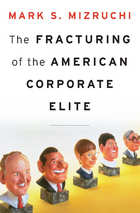
In the aftermath of a financial crisis marked by bank-friendly bailouts and loosening campaign finance restrictions, a chorus of critics warns that business leaders have too much influence over American politics. Mark Mizruchi worries about the ways they exert too little. The Fracturing of the American Corporate Elite advances the surprising argument that American CEOs, seemingly more powerful today than ever, have abrogated the key leadership role they once played in addressing national challenges, with grave consequences for American society.
Following World War II, American business leaders observed an ethic of civic responsibility and enlightened self-interest. Steering a course of moderation and pragmatism, they accepted the legitimacy of organized labor and federal regulation of the economy and offered support, sometimes actively, as Congress passed legislation to build the interstate highway system, reduce discrimination in hiring, and provide a safety net for the elderly and needy. In the 1970s, however, faced with inflation, foreign competition, and growing public criticism, corporate leaders became increasingly confrontational with labor and government. As they succeeded in taming their opponents, business leaders paradoxically undermined their ability to act collectively. The acquisition wave of the 1980s created further pressures to focus on shareholder value and short-term gain rather than long-term problems facing their country.
Today’s corporate elite is a fragmented, ineffectual group that is unwilling to tackle the big issues, despite unprecedented wealth and political clout. Mizruchi’s sobering assessment of the dissolution of America’s business class helps explain the polarization and gridlock that stifle U.S. politics.
The rich and complex texture of working-class neighborhoods in eighteenth-century Paris comes vibrantly alive in this collage of the experiences of ordinary people—men and women, rich and poor, masters and servants, neighbors and colleagues. Exploring three arenas of conflict and solidarity—the home, the workplace, and the street—Arlette Farge offers the reader an intimate social history, bringing long-dead citizens and vanished social groups back to life with sensitivity and perception.
Fragile Lives reconstructs the rhythms of this population's daily existence, the way they met, formed relationships and broke them off, conducted their affairs in the community, and raised their young. Farge follows them into the factory and describes the ways they organized to improve their working conditions, and how they were controlled by the authorities. She shows how these Parisians behaved in the context of collective events, from festive street spectacles to repressive displays of power by the police. As the author examines interwoven lives as revealed in judicial records, we come to know and understand the criminals and the underworld of the time; the situation of women as lovers, wives, or prostitutes; anxieties about food and drink, and the rules of conduct in a “fragile” society. Elegantly written and skillfully translated, Fragile Lives is a book for the curious general reader and for those interested in social and cultural history.

So many women who do everything right to stay healthy still wind up with breast cancer, heart disease, or osteoporosis. In The Fragile Wisdom, Grazyna Jasienska provides an evolutionary perspective on the puzzle of why disease prevention among women is so frustratingly difficult. Modern women, she shows, are the unlucky victims of their own bodies’ conflict of interest between reproductive fitness and life-long health.
The crux of the problem is that women’s physiology has evolved to facilitate reproduction, not to reduce disease risk. Any trait—no matter how detrimental to health in the post-reproductive period—is more likely to be preserved in the next generation if it increases the chance of giving birth to offspring who will themselves survive to reproductive age. To take just one example, genes that produce high levels of estrogen are a boon to fertility, even as they raise the risk of breast cancer in mothers and their daughters.
Jasienska argues that a mismatch between modern lifestyles and the Stone Age physiology that evolution has bequeathed to every woman exacerbates health problems. She looks at women’s mechanisms for coping with genetic inheritance and at the impact of environment on health. Warning against the false hope gene therapy inspires, Jasienska makes a compelling case that our only avenue to a healthy life is prevention programs informed by evolutionary understanding and custom-fitted to each woman’s developmental and reproductive history.
The assimilated assimilator.
Quintus Ennius (239–169 BC), widely regarded as the father of Roman literature, was instrumental in creating a new Roman literary identity and inspired major developments in Roman religion, social organization, and popular culture. Born in the Calabrian town of Rudiae in Magna Graecia, Ennius claimed descent from Messapus, eponymous hero of Messapia, and was uncle to the tragic dramatist Pacuvius. Brought in 204 from Sardinia to Rome in the entourage of Cato, Ennius took up independent residence on the Aventine and, fluent in his native Oscan as well as Greek and Latin, became one of the first teachers to introduce Greek learning to Romans through public readings of Greek and Latin texts. Transcending partisan interests, Ennius cultivated familiar relationships with several of Rome’s most distinguished families, including that of Marcus Fulvius Nobilior, through whose patronage he eventually attained Roman citizenship.
Best known for domesticating Greek epic and drama, Ennius also pursued a wide range of literary endeavors and, with the apparent exception of comedy, found success in all of them. He thus played a major role in setting Latin literature on the assimilationist course that was to be its hallmark throughout the Republican period. His tragedies were long regarded as classics of the genre, and his Annals gave Roman epic its canonical shape and pioneered many of its most characteristic features. Other endeavors included philosophical works in prose and verse, epigrams, didactic poems, dramas on Roman themes (praetextae), and occasional poetry that informed the later development of satire.
This two-volume edition of Ennius, which inaugurates the Loeb series Fragmentary Republican Latin, replaces that of Warmington in Remains of Old Latin, Volume I and offers fresh texts, translations, and annotation that are fully current with modern scholarship.
The assimilated assimilator.
Quintus Ennius (239–169 BC), widely regarded as the father of Roman literature, was instrumental in creating a new Roman literary identity and inspired major developments in Roman religion, social organization, and popular culture. Born in the Calabrian town of Rudiae in Magna Graecia, Ennius claimed descent from Messapus, eponymous hero of Messapia, and was uncle to the tragic dramatist Pacuvius. Brought in 204 from Sardinia to Rome in the entourage of Cato, Ennius took up independent residence on the Aventine and, fluent in his native Oscan as well as Greek and Latin, became one of the first teachers to introduce Greek learning to Romans through public readings of Greek and Latin texts. Transcending partisan interests, Ennius cultivated familiar relationships with several of Rome’s most distinguished families, including that of Marcus Fulvius Nobilior, through whose patronage he eventually attained Roman citizenship.
Best known for domesticating Greek epic and drama, Ennius also pursued a wide range of literary endeavors and, with the apparent exception of comedy, found success in all of them. He thus played a major role in setting Latin literature on the assimilationist course that was to be its hallmark throughout the Republican period. His tragedies were long regarded as classics of the genre, and his Annals gave Roman epic its canonical shape and pioneered many of its most characteristic features. Other endeavors included philosophical works in prose and verse, epigrams, didactic poems, dramas on Roman themes (praetextae), and occasional poetry that informed the later development of satire.
This two-volume edition of Ennius, which inaugurates the Loeb series Fragmentary Republican Latin, replaces that of Warmington in Remains of Old Latin, Volume I and offers fresh texts, translations, and annotation that are fully current with modern scholarship.

Rhetorical remnants.
The Loeb Classical Library series Fragmentary Republican Latin continues with oratory, an important element of Roman life from the earliest times, essential to running public affairs and for advancing individual careers long before it acquired literary dimensions, which happened once orators decided to write up and circulate written versions of their speeches after delivery.
Beginning with Appius Claudius Caecus (340–273 BC), this three-volume edition covers the full range of speech-making—political, juridical, and epideictic (display)—and with the exceptions of Cato the Elder and Cicero includes all individuals for whom speech-making is attested and for whose speeches quotations, descriptive testimonia, or historiographic recreations survive.
Such an overview provides insight into the typical forms and themes of Roman oratory as well as its wide variety of occasions and styles. By including orators from different phases within the Republican period as well as men given high or low rankings by contemporaries and later ancient critics, the collection offers a fuller panorama of Roman Republican oratory than a selection guided simply by an orator’s alleged or canonical quality, or by the amount of evidence available.
This edition includes all the orators recognized by Malcovati and follows her numbering, but the texts have been drawn from the most recent and reliable editions of the source authors and revised in light of current scholarship; additional material has been included with its own separate numbering. Helping to guide readers through the material are faithful translations, informative introductions, and ample annotation.

Rhetorical remnants.
The Loeb Classical Library series Fragmentary Republican Latin continues with oratory, an important element of Roman life from the earliest times, essential to running public affairs and for advancing individual careers long before it acquired literary dimensions, which happened once orators decided to write up and circulate written versions of their speeches after delivery.
Beginning with Appius Claudius Caecus (340–273 BC), this three-volume edition covers the full range of speech-making—political, juridical, and epideictic (display)—and with the exceptions of Cato the Elder and Cicero includes all individuals for whom speech-making is attested and for whose speeches quotations, descriptive testimonia, or historiographic recreations survive.
Such an overview provides insight into the typical forms and themes of Roman oratory as well as its wide variety of occasions and styles. By including orators from different phases within the Republican period as well as men given high or low rankings by contemporaries and later ancient critics, the collection offers a fuller panorama of Roman Republican oratory than a selection guided simply by an orator’s alleged or canonical quality, or by the amount of evidence available.
This edition includes all the orators recognized by Malcovati and follows her numbering, but the texts have been drawn from the most recent and reliable editions of the source authors and revised in light of current scholarship; additional material has been included with its own separate numbering. Helping to guide readers through the material are faithful translations, informative introductions, and ample annotation.

Rhetorical remnants.
The Loeb Classical Library series Fragmentary Republican Latin continues with oratory, an important element of Roman life from the earliest times, essential to running public affairs and for advancing individual careers long before it acquired literary dimensions, which happened once orators decided to write up and circulate written versions of their speeches after delivery.
Beginning with Appius Claudius Caecus (340–273 BC), this three-volume edition covers the full range of speech-making—political, juridical, and epideictic (display)—and with the exceptions of Cato the Elder and Cicero includes all individuals for whom speech-making is attested and for whose speeches quotations, descriptive testimonia, or historiographic recreations survive.
Such an overview provides insight into the typical forms and themes of Roman oratory as well as its wide variety of occasions and styles. By including orators from different phases within the Republican period as well as men given high or low rankings by contemporaries and later ancient critics, the collection offers a fuller panorama of Roman Republican oratory than a selection guided simply by an orator’s alleged or canonical quality, or by the amount of evidence available.
This edition includes all the orators recognized by Malcovati and follows her numbering, but the texts have been drawn from the most recent and reliable editions of the source authors and revised in light of current scholarship; additional material has been included with its own separate numbering. Helping to guide readers through the material are faithful translations, informative introductions, and ample annotation.
Three foundational Roman poets.
The Loeb Classical Library series Fragmentary Republican Latin continues with three highly influential pioneers in the creation and development of Latin poetry.
Livius Andronicus (born ca. 292 BC) was regarded by the Romans as the founder of Latin literature, introducing tragedy and comedy, adapting Homer’s Odyssey into Saturnian verse, and composing a nationally important hymn for Juno. A meeting place for writers and actors was established in the temple of Minerva on the Aventine in recognition of his poetic achievements.
Naevius (born ca. 280–260), though most famous for his comedies, also wrote tragedy and epic. He innovated by incorporating Roman material into his Greek models and writing on Roman subjects independently. The inventor of the fabula praetexta, drama on a Roman theme, he also introduced new topics to Roman tragedy, especially those relating to Troy, and his Punic War, the first epic on a Roman historical subject, was a longtime school text and a favorite of Augustus.
Caecilius (born probably in the 220s), a friend of the older Ennius, excelled at comedy, of which he was Rome’s leading exponent during his career, and was so considered by posterity. Caecilius continued the Naevian practice of inserting Roman allusions into his works and was admired by later critics particularly for his substantive and well-constructed plots, and for his ability to arouse emotion.
The texts are based on the most recent and reliable editions of the source authors and have been revised, freshly translated, and amply annotated in light of current scholarship.
Dilapidated dramas.
The Loeb Classical Library series Fragmentary Republican Latin continues with Marcus Pacuvius (ca. 220–130), deemed by Cicero to be Rome’s greatest tragic poet, together with the fragments of those tragedians of whose work little has survived. Also included are fragments distinguished as dramatic by their meter, but whose genre (tragedy or comedy) can be uncertain.
Pacuvius, a nephew and possibly a pupil of Ennius and an older contemporary of Accius, seems to have had connections with high-ranking politicians and intellectuals, especially those such as Laelius and Scipio who supported Hellenistic culture at Rome; certainly he was remembered as a learned poet, and among his compositions was a fabula praetexta on L. Aemilius Paulus’ victory at Pydna in 168. He tended to treat less obvious aspects of the mythological tradition, perhaps a sign of his own originality, which allowed him to explore in depth issues that seem to have particularly interested him, such as mistaken or false identity ending in final recognition, and noble characters in reduced circumstances. There are also philosophical and cosmological themes, as in plays featuring characters recognized as related who join in overthrowing unjust rulers, raising questions of justice, power, and the role of a good ruler. His works remained in the repertory, were often quoted by orators, and influenced later poets such as Plautus, Terence, Virgil, and Ovid.
The texts are based on the most recent and reliable editions of the source authors and have been revised, freshly translated, and amply annotated in light of current scholarship.

Incomplete but invaluable excerpts from otherwise lost orations.
Cicero (Marcus Tullius, 106–43 BC), Roman advocate, orator, politician, poet, and philosopher, about whom we know more than we do of any other Roman, lived through the stirring era that saw the rise, dictatorship, and death of Julius Caesar in a tottering republic. In Cicero’s political speeches and in his correspondence, we see the excitement, tension, and intrigue of politics and the important part he played in the turmoil of the time.
Although Cicero’s oratory is well attested—of 106 known speeches, fifty-eight survive intact or in large part—the sixteen speeches that survive only in quotations nevertheless fill gaps in our knowledge. These speeches attracted the interest of later authors, particularly Asconius and Quintilian, for their exemplary content, oratorical strategies, or use of language, failing to survive entire not because they were inferior in quality or interest but due to factors contingent on the way Cicero’s speeches were read, circulated, and evaluated in (especially late) antiquity.
The fragmentary speeches fall, like Cicero’s career in general, into three periods: the preconsular, the consular, and the postconsular, and here are presented chronologically, numbered continuously, and their fragments arranged, insofar as possible, in the order in which they would have occurred, followed by unplaced quotations. Each speech receives an introduction and ample notation.
This edition, which completes the Loeb Classical Library edition of Cicero, includes all speeches with attested fragments, together with testimonia. Based upon Crawford’s edition of 1994, the sources have been examined afresh, and newer source-editions substituted where appropriate.

Tantalizing quotations from lost tragedies.
Aeschylus (ca. 525–456 BC), the dramatist who made Athenian tragedy one of the world’s great art forms, witnessed the establishment of democracy at Athens, fought against the Persians at Marathon and probably also at Salamis, and had one of his productions sponsored by the young Pericles. He was twice invited to visit Sicily, and it was there that he died. At Athens he competed for the tragic prize at the City Dionysia about nineteen times between circa 499 and 458, and won it on thirteen occasions; in his later years he was probably victorious almost every time he put on a production, though Sophocles beat him at least once.
Of his total of about eighty plays, seven survive complete. The first volume of this new Loeb Classical Library edition contains fresh texts and translations by Alan H. Sommerstein of Persians (472), on the recent war, the only surviving Greek historical drama; Seven against Thebes (467), the third play of a trilogy, on the conflict between Oedipus’ sons which ends when they kill each other; Suppliants, the first or second play of a trilogy, on the successful appeal by the daughters of Danaus to the king and people of Argos for protection against a forced marriage to their cousins (whom they will later murder, all but one); and Prometheus Bound (of disputed authenticity), on the terrible punishment of Prometheus for giving fire to humans in defiance of Zeus (with whom he will later be reconciled after preventing his overthrow). The second volume contains the complete Oresteia trilogy (458), comprising Agamemnon, Libation-Bearers, and Eumenides, presenting the murder of Agamemnon by his wife, the revenge taken by their son Orestes, the pursuit of Orestes by his mother’s avenging Furies, his trial and acquittal at Athens, Athena’s pacification of the Furies, and the blessings they both invoke upon the Athenian people.
This edition’s third volume offers all the major fragments of lost Aeschylean plays, with brief headnotes explaining what is known, or can be plausibly inferred, about their content, and bibliographies of recent studies.
The master of Old Comedy.
The eleven plays by Aristophanes that have come down to us intact brilliantly illuminate the eventful period spanned by his forty-year career, beginning with the first production in 427 BC. But the Athenians knew much more of his work: over forty plays by Aristophanes were read in antiquity, of which nearly a thousand fragments survive. These provide a fuller picture of the poet’s ever astonishing comic vitality and a wealth of information and insights about his world. Jeffrey Henderson’s new, widely acclaimed Loeb edition of Aristophanes is completed by this volume containing what survives from, and about, his lost plays, hitherto inaccessible to the nonspecialist, and incorporating the enormous scholarly advances that have been achieved in recent years.
Each fragmentary play is prefaced by a summary of what can be inferred about its plot, characters, themes, theatricality, and topical significance. Also included in this edition are the ancient reports about Aristophanes’ life, works, and influence on the later comic tradition.
Ancient Athens’ most successful tragedian.
Sophocles (497/6–406 BC), the second of the three great tragedians of Athens and by common consent one of the world's greatest poets, wrote more than 120 plays. Only seven of these survive complete, but we have a wealth of fragments, from which much can be learned about Sophocles' language and dramatic art. This volume presents a collection of all the major fragments, ranging in length from two lines to a very substantial portion of the satyr play The Searchers. Prefatory notes provide frameworks for the fragments of known plays.
Many of the Sophoclean fragments were preserved by quotation in other authors; others, some of considerable size, are known to us from papyri discovered during the past century. Among the lost plays of which we have large fragments, The Searchers shows the god Hermes, soon after his birth, playing an amusing trick on his brother Apollo; Inachus portrays Zeus coming to Argos to seduce Io, the daughter of its king; and Niobe tells how Apollo and his sister Artemis punish Niobe for a slight upon their mother by killing her twelve children. Throughout the volume, as in the extant plays, we see Sophocles drawing his subjects from heroic legend.
This is the final volume of Lloyd-Jones's Loeb Classical Library edition of Sophocles. In Volumes I and II he gives a faithful and very skillful translation of the seven surviving plays. Volume I contains Oedipus Tyrannus, Ajax, and Electra. Volume II contains Oedipus at Colonus, Antigone, The Women of Trachis, and Philoctetes.
Laughter in stitches.
The era of Old Comedy (ca. 485 – ca. 380 BC), when theatrical comedy was created and established, is best known through the extant plays of Aristophanes, but there were many other poets whose comedies survive only in fragments. This new Loeb edition, the most extensive selection of the fragments available in English, presents the work of more than fifty-five poets, including Cratinus and Eupolis, the other members (along with Aristophanes) of the canonical Old Comic triad.
For each poet and play there is an introduction, and for many there are brief notes and recent bibliography. Also included are a selection of ancient testimonia to Old Comedy, nearly one hundred unattributed fragments (both book and papyri), and descriptions of thirty vase paintings illustrating Old Comic scenes. The texts are based on the monumental edition of Kassel and Austin, updated to reflect the latest scholarship. The complete Loeb Fragments of Old Comedy is in three volumes.
Laughter in stitches.
The era of Old Comedy (ca. 485 – ca. 380 BC), when theatrical comedy was created and established, is best known through the extant plays of Aristophanes, but there were many other poets whose comedies survive only in fragments. This new Loeb edition, the most extensive selection of the fragments available in English, presents the work of more than fifty-five poets, including Cratinus and Eupolis, the other members (along with Aristophanes) of the canonical Old Comic triad.
For each poet and play there is an introduction, and for many there are brief notes and recent bibliography. Also included are a selection of ancient testimonia to Old Comedy, nearly one hundred unattributed fragments (both book and papyri), and descriptions of thirty vase paintings illustrating Old Comic scenes. The texts are based on the monumental edition of Kassel and Austin, updated to reflect the latest scholarship. The complete Loeb Fragments of Old Comedy is in three volumes.
Laughter in stitches.
The era of Old Comedy (ca. 485 – ca. 380 BC), when theatrical comedy was created and established, is best known through the extant plays of Aristophanes, but there were many other poets whose comedies survive only in fragments. This new Loeb edition, the most extensive selection of the fragments available in English, presents the work of more than fifty-five poets, including Cratinus and Eupolis, the other members (along with Aristophanes) of the canonical Old Comic triad.
For each poet and play there is an introduction, and for many there are brief notes and recent bibliography. Also included are a selection of ancient testimonia to Old Comedy, nearly one hundred unattributed fragments (both book and papyri), and descriptions of thirty vase paintings illustrating Old Comic scenes. The texts are based on the monumental edition of Kassel and Austin, updated to reflect the latest scholarship. The complete Loeb Fragments of Old Comedy is in three volumes.

Chronicles of a Caesarean partisan.
Sallust, Gaius Sallustius Crispus (86–35 BC), a Sabine from Amiternum, acted as tribune against Cicero and Milo in 52, joined Caesar after being expelled from the Senate in 50, was restored to the Senate by Caesar and took part in his African campaign as praetor in 46, and was then appointed governor of New Africa (Numidia). Upon his return to Rome he narrowly escaped conviction for malfeasance in office, retired from public life, and took up historiography. Sallust’s last work, the annalistic Histories in five books, is much more expansive than his monographs on Catiline and Jugurtha (LCL 116), treating the whole of Roman history at home and abroad in the post-Sullan age. Although fragmentary, it provides invaluable information and insight about a crucial period of history spanning the period from 78 to around 67 BC.
Although Sallust is decidedly unsubtle and partisan in analyzing people and events, his works are important and significantly influenced later historians, notably Tacitus. Taking Thucydides as his model but building on Roman stylistic and rhetorical traditions, Sallust achieved a distinctive style, concentrated and arresting; lively characterizations, especially in the speeches; and skill at using particular episodes to illustrate large general themes.
For this volume, which completes the Loeb Classical Library edition of Sallust’s works, John T. Ramsey has freshly edited the Histories and the two pseudo-Sallustian Letters to Caesar, supplying ample annotation.
Lost works by ancient Greece’s third great tragedian.
Eighteen of the ninety or so plays composed by Euripides between 455 and 406 BC survive in a complete form and are included in the preceding six volumes of the Loeb Euripides. A further fifty-two tragedies and eleven satyr plays, including a few of disputed authorship, are known from ancient quotations and references and from numerous papyri discovered since 1880. No more than one-fifth of any play is represented, but many can be reconstructed with some accuracy in outline, and many of the fragments are striking in themselves. The extant plays and the fragments together make Euripides by far the best known of the classic Greek tragedians.
This edition, in a projected two volumes, offers the first complete English translation of the fragments together with a selection of testimonia bearing on the content of the plays. The texts are based on the recent comprehensive edition of R. Kannicht. A general Introduction discusses the evidence for the lost plays. Each play is prefaced by a select bibliography and an introductory discussion of its mythical background, plot, and location of the fragments, general character, chronology, and impact on subsequent literary and artistic traditions.
Lost works by ancient Greece’s third great tragedian.
Eighteen of the ninety or so plays composed by Euripides between 455 and 406 BC survive in a complete form and are included in the preceding six volumes of the Loeb Euripides. A further fifty-two tragedies and eleven satyr plays, including a few of disputed authorship, are known from ancient quotations and references and from numerous papyri discovered since 1880. No more than one-fifth of any play is represented, but many can be reconstructed with some accuracy in outline, and many of the fragments are striking in themselves. The extant plays and the fragments together make Euripides by far the best known of the classic Greek tragedians.
This edition, in a projected two volumes, offers the first complete English translation of the fragments together with a selection of testimonia bearing on the content of the plays. The texts are based on the recent comprehensive edition of R. Kannicht. A general Introduction discusses the evidence for the lost plays. Each play is prefaced by a select bibliography and an introductory discussion of its mythical background, plot, and location of the fragments, general character, chronology, and impact on subsequent literary and artistic traditions.
A nation's buildings are a record of the character and aspirations of its people. In a rich blend of social and architectural history, Abbott Lowell Cummings reconstructs, through text and pictures, the framed houses of Massachusetts Bay that reflect the straightforward honesty of our earliest northern settlers and their profound love of craftsmanship.
A substantial number of the nation's seventeenth-century houses have been preserved in Massachusetts, and Cummings provides illustrations for a majority of them. He describes the dwellings in detail, and includes architectural drawings that were especially commissioned for this book. He demonstrates that the builders were far more sophisticated than previously imagined and that, while maintaining their English timber-building traditions, they were astonishingly adaptable to their new environment.
Beyond the houses themselves, Cummings discusses evolutions in pioneer life. The most simple kinds of changes in architecture, Cummings shows, indicated singular changes in family living. Such additions as kitchens and parlors, or the moving of the master bedroom to a second floor, suggest shifts in the private and social lives of families.
The Framed Houses of Massachusetts Bay is a splendid story of innovations— of restless, migratory people and their architectural and social responses to the heavily forested New World. It is the first chapter in the long saga of America's preoccupation with technology as it affected the early American home.
Dr. Ehrhardt considers that New Testament teaching could benefit by being more closely related to its context and background than is often the case. He suggests that the method of the presentation of the Gospel is important, as well as the intention behind it.
In an examination of the background, Dr. Ehrhardt deals principally with two aspects. The first is the fact that the New Testament and the form Christianity took in the first few centuries after the death of Christ were subject to several influences. One of the most important was Greek and Dr. Ehrhardt traces Hellenistic influence in St. Paul's treatment of Christ, in Greek modes of thought in the preaching of the Gospel and the historical tradition in the Book of Acts. He then turns to Jewish and Roman practices and ideas which played a part in forming Church doctrine and ritual, such as ordination and baptism. Secondly, he discusses the daily life of the newly-converted Christians, the problems they met with and the changes that took place.
It is hoped that these essays, many of which aim at giving a fresh, rather than a final view, may prove stimulating by asking unfamiliar questions and offering new solutions.


Can Muslims ever fully be citizens of the West? Can the values of Islam ever be brought into accord with the individual freedoms central to the civic identity of Western nations? Not if you believe what you see on TV. Whether the bearded fanatic, the veiled, oppressed female, or the shadowy terrorist plotting our destruction, crude stereotypes permeate public representations of Muslims in the United States and western Europe. But these "Muslims" are caricatures—distorted abstractions, wrought in the most garish colors, that serve to reduce the diversity and complexity of the Muslim world to a set of fixed objects suitable for sound bites and not much else.
In Framing Muslims: Stereotyping and Representation after 9/11, Peter Morey and Amina Yaqin dissect the ways in which stereotypes depicting Muslims as an inherently problematic presence in the West are constructed, deployed, and circulated in the public imagination, producing an immense gulf between representation and a considerably more complex reality. Crucially, they show that these stereotypes are not solely the province of crude-minded demagogues and their tabloid megaphones, but multiply as well from the lips of supposedly progressive elites, even those who presume to speak "from within," on Muslims' behalf. Based on nuanced analyses of cultural representations in both the United States and the UK, the authors draw our attention to a circulation of stereotypes about Muslims that sometimes globalizes local biases and, at other times, brings national differences into sharper relief.
The decades following the French Revolution saw unprecedented political and social experimentation. As the Napoleonic and Restoration regimes attempted to build a stable order, ordinary city dwellers began to create their own sense of how society operated through everyday activities. Interactions between men and women--in theaters, cafes, and other public settings--helped to fashion new social norms.
In this extensively researched work, Denise Z. Davidson offers a powerful reevaluation of the effects of the French Revolution, especially on women. Arguing against the view that the Revolution forced women from the public realm of informed political discussion, Davidson demonstrates that women remained highly visible in urban public life. Women of all classes moved out of the domestic sphere to participate in the spectacle of city life, inviting frequent commentary on their behavior. This began to change only in the 1820s, when economic and social developments intensified class distinctions and made the bourgeoisie fear the "dangerous classes."
This book provides an important corrective to prevailing views on the ramifications of the French Revolution, while shedding light on how ordinary people understood, shaped, and contested the social transformations taking place around them.

The end of the nineteenth century in France was marked by political scandals, social unrest, dissension, and “decadence.” Yet the fin de siècle was also an era of great social and scientific progress, a time when advantages previously reserved for the privileged began to be shared by the many. Public transportation, electrical illumination, standard time, and an improved water supply radically altered the life of the modest folk, who found time for travel and leisure activities—including sports such as cycling. Change became the nature of things, and people believed that further improvement was not only possible but inevitable.
In this thoroughly engaging history, Eugen Weber describes ways of life, not as recorded by general history, but as contemporaries experienced them. He writes about political atmosphere and public prejudices rather than standard political history. Water and washing, bicycles and public transportation engage him more than great scientific discoveries. He discusses academic painting and poster art, the popular stage and music halls, at greater length than avant-garde and classic theater or opera. In this book the importance of telephones, plumbing, and central heating outranks such traditional subjects as international developments, the rise of organized labor, and the spread of socialism.
Weber does not neglect the darker side of the fin de siècle. The discrepancy between material advance and spiritual dejection, characteristic of our own times, interests him as much as the idea of progress, and he reminds us that for most people the period was far from elegant. In the lurid context of military defeat, political instability, public scandal, and clamorous social criticism, one had also to contend with civic dirt, unsanitary food, mob violence, and the seeds of modern-day scourges: pollution, drugs, sensationalism, debased art, the erosion of moral character. Yet millions of fin de siècle French lived as only thousands had lived fifty years before; while their advance was slow, their right to improvement was conceded.
A panorama of a whole civilization, a world on the verge of cataclysm, unfolds in this magisterial work by the foremost historian of eighteenth-century France. Since Tocqueville’s account of the Old Regime, historians have struggled to understand the social, cultural, and political intricacies of this efflorescence of French society before the Revolution. France in the Enlightenment is a brilliant addition to this historical interest.
France in the Enlightenment brings the Old Regime to life by showing how its institutions operated and how they were understood by the people who worked within them. Daniel Roche begins with a map of space and time, depicting France as a mosaic of overlapping geographical units, with people and goods traversing it to the rhythms of everyday life. He fills this frame with the patterns of rural life, urban culture, and government institutions. Here as never before we see the eighteenth-century French “culture of appearances”: the organization of social life, the diffusion of ideas, the accoutrements of ordinary people in the folkways of ordinary living—their food and clothing, living quarters, reading material. Roche shows us the eighteenth-century France of the peasant, the merchant, the noble, the King, from Paris to the provinces, from the public space to the private home.
By placing politics and material culture at the heart of historical change, Roche captures the complexity and depth of the Enlightenment. From the finest detail to the widest view, from the isolated event to the sweeping trend, his masterly book offers an unparalleled picture of a society in motion, flush with the transformation that will be its own demise.
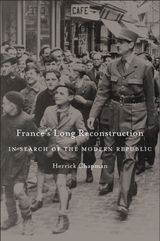
At the end of World War II, France’s greatest challenge was to repair a civil society torn asunder by Nazi occupation and total war. Recovery required the nation’s complete economic and social transformation. But just what form this “new France” should take remained the burning question at the heart of French political combat until the Algerian War ended, over a decade later. Herrick Chapman charts the course of France’s long reconstruction from 1944 to 1962, offering fresh insights into the ways the expansion of state power, intended to spearhead recovery, produced fierce controversies at home and unintended consequences abroad in France’s crumbling empire.
Abetted after Liberation by a new elite of technocratic experts, the burgeoning French state infiltrated areas of economic and social life traditionally free from government intervention. Politicians and intellectuals wrestled with how to reconcile state-directed modernization with the need to renew democratic participation and bolster civil society after years spent under the Nazi and Vichy yokes. But rather than resolving the tension, the conflict between top-down technocrats and grassroots democrats became institutionalized as a way of framing the problems facing Charles de Gaulle’s Fifth Republic.
Uniquely among European countries, France pursued domestic recovery while simultaneously fighting full-scale colonial wars. France’s Long Reconstruction shows how the Algerian War led to the further consolidation of state authority and cemented repressive immigration policies that now appear shortsighted and counterproductive.

A cultivated patrician, a prolific playwright, and a passionate student of local antiquity, Francesco Ignazio Lazzari (1634–1717) was a mainstay of the artistic and intellectual life of Città di Castello, an Umbrian city that maintained a remarkable degree of cultural autonomy during the early modern period. He was also the first author to identify the correct location of the lost villa “in Tuscis” owned by the Roman writer and statesman Pliny the Younger and known through his celebrated description. Lazzari’s reconstruction of this ancient estate, in the form of a large-scale drawing and a textual commentary, adds a unique document to the history of Italian gardens while offering a fascinating perspective on the role of landscape in shaping his native region’s identity.
Published with an English translation for the first time since its creation, this manuscript is framed by the scholarly contributions of Anatole Tchikine and Pierre de la Ruffinière du Prey. At the core of their discussion is the interplay of two distinct ideas of antiquity—one embedded in the regional landscape and garden culture of Umbria and the other conveyed by the international tradition of Plinian architectural reconstructions—that provide the essential context for understanding Lazzari’s work.
Since his death in April 12 Francis Bacon has been acclaimed as one of the very greatest of modern painters. Yet most analyses of Bacon actually neutralize his work by discussing it as an existential expression and as the horrifying communication of an isolated individual—which simply transfers the pain in the paintings back to Bacon himself. This study is the first attempt to account for the pain of the viewer.
It is also, most challengingly, an explanation of what Bacon’s art tells us about ourselves as individuals. For, during this very personal investigation, the author comes to realize that the effect of Bacon’s work is founded upon the way that each of us carves our identity, our “self,” from the inchoate evidence of our senses, using the conventions of representation as tools. It is in his warping of these conventions of the senses, rather than in the superficial distortion of his images, that Bacon most radically confronts “art,” and ourselves as individuals.
Best known as author of The Oregon Trail, Francis Parkman is now increasingly recognized as one of the greatest nineteenth–century American historians. In Pontiac, Pioneers, La Salle and Montcalm and Wolfe, Parkman, more than anyone else, first grasped the tragic element implicit in our pioneer heritage and placed the opening up of the great North American wilderness in broad historical perspective.
Handsome, brilliant, courageous, Parkman drove himself relentlessly. The result was a severe breakdown in his twenties, complicated in later years by other illnesses. This interpretative biography chronicles his triumph over these setbacks and sheds new light on the impressive histories that seem to become ever more contemporary with the passage of time.
These three volumes cover Roosevelt's first administration 1933-1937. The documents relating to foreign affairs during his first administration form a diverse body of information on such issues as war debts, currency stabilization, tariff matters, naval parity, neutrality legislation, diplomatic recognition of Russia, the rise to power of Hitler and Mussolini, the St. Lawrence Waterway Treaty, the Italian-Ethiopian War, the Spanish Civil War, and the "good neighbor" policy.
Foreign affairs has been defined in broad terms by the editor of these volumes, and materials selected relate not only to the President's handling of foreign relations, but also to the domestic background, particularly Roosevelt's efforts to gain support for his policies. Included are press conference transcripts, messages to Congress, speeches, press releases, memoranda to and from executive officers, and correspondence with legislators, ambassadors, heads of state, organizations, and individual citizens. Of the 1,400 documents selected from the papers in the Roosevelt Library at Hyde Park, all but a few are published here for the first time.

The most original and most delightful of the Founding Fathers, Benjamin Franklin was publisher and printer, essayist and author, businessman and “general,” scientist and philologist, politician and diplomat, moralist and sage—and a thoroughly rational patriot who was a major force in winning his country’s independence and securing its life in the Constitution. Born poor in Cotton Mather’s Boston, he was soon at ease in Quaker Philadelphia, and later in royal London, and in elegant Paris. Born with no advantages, he died wealthy and esteemed. He was the quintessential American, almost totally free of the limits of his environment, ready to accept any challenge, to speculate, experiment, and question.
Esmond Wright, the distinguished English scholar of America, sees Franklin as an Old England Man and a reluctant revolutionary; civilized, urbane, devious, and on occasion just a little unscrupulous. For, despite his charm and genius, Franklin was not admired by everybody. His contemporary John Adams thought little of his political abilities, and the Federalist pamphleteer William Cobbett called him a “crafty and lecherous old hypocrite.” In the next century, Mark Twain, Hawthorne, and Melville did not value him; still later, D. H. Lawrence despised the middle-class morality he promoted. Many today deplore his lack of interest in the arts or metaphysics, his lack of passionate commitment, his opportunism, his occasional coarseness. Yet his success in business, his many-faceted public career, his ingenious inventions and world-renowned scientific genius, his splendid prose style, his worldly wisdom, and the attractive personality that shines through his remarks and writings, made Benjamin Franklin the “new man” of the eighteenth-century dream and also vastly appealing to the modern temper. Wright’s new biography presents a fully rounded portrait of this remarkable man for all ages.
This first comprehensive biography of Franklin in fifty years has taken advantage of Yale’s massive edition-in-progress of Franklin’s papers and of the many specialized studies inspired by the correspondence. Franklin of Philadelphia, designed for the general reader, is also a work for scholars, for the author appends a thorough analysis of other interpretations of Franklin’s career and personality.
In a tour de force of intellectual history, Siep Stuurman rediscovers the remarkable early Enlightenment figure François Poulain de la Barre. A dropout from theology studies at the Sorbonne, Poulain embraced the philosophy of Descartes, became convinced of the injustice and absurdity of the subjection of women, and assembled an entirely original social philosophy. His writings challenging male supremacy and advocating gender and racial equality are the most radically egalitarian texts to appear in Europe before the French Revolution.
In exploring Poulain's breakthrough, Stuurman sheds new light on the origins of the Enlightenment, the history of feminism, the emergence of rational Christianity, and the social and political implications of Descartes's philosophy. This groundbreaking work, the first comprehensive study of Poulain, brings to life the men and women of the Radical Enlightenment, who pioneered ideas about equality that would shape humankind to this day. Impeccably researched, cogently argued, and lucidly written, this is truly a masterpiece of scholarship.
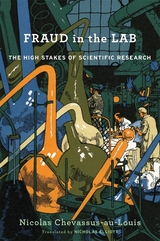
From a journalist and former lab researcher, a penetrating investigation of the explosion in cases of scientific fraud and the factors behind it.
In the 1970s, a scientific scandal about painted mice hit the headlines. A cancer researcher was found to have deliberately falsified his experiments by coloring transplanted mouse skin with ink. This widely publicized case of scientific misconduct marked the beginning of an epidemic of fraud that plagues the scientific community today.
From manipulated results and made-up data to retouched illustrations and plagiarism, cases of scientific fraud have skyrocketed in the past two decades, especially in the biomedical sciences. Fraud in the Lab examines cases of scientific misconduct around the world and asks why this behavior is so pervasive. Nicolas Chevassus-au-Louis points to large-scale trends that have led to an environment of heightened competition, extreme self-interest, and emphasis on short-term payoffs. Because of the move toward highly specialized research, fewer experts are qualified to verify experimental findings. And the pace of journal publishing has exacerbated the scientific rewards system—publish or perish holds sway more than ever. Even when instances of misconduct are discovered, researchers often face few consequences, and falsified data may continue to circulate after an article has been retracted.
Sharp and damning, this exposé details the circumstances that have allowed scientific standards to decline. Fraud in the Lab reveals the intense social pressures that lead to fraud, documents the lasting impact it has had on the scientific community, and highlights recent initiatives and proposals to reduce the extent of misconduct in the future.

Until the early nineteenth century, “risk” was a specialized term: it was the commodity exchanged in a marine insurance contract. Freaks of Fortune tells the story of how the modern concept of risk emerged in the United States. Born on the high seas, risk migrated inland and became essential to the financial management of an inherently uncertain capitalist future.
Focusing on the hopes and anxieties of ordinary people, Jonathan Levy shows how risk developed through the extraordinary growth of new financial institutions—insurance corporations, savings banks, mortgage-backed securities markets, commodities futures markets, and securities markets—while posing inescapable moral questions. For at the heart of risk’s rise was a new vision of freedom. To be a free individual, whether an emancipated slave, a plains farmer, or a Wall Street financier, was to take, assume, and manage one’s own personal risk. Yet this often meant offloading that same risk onto a series of new financial institutions, which together have only recently acquired the name “financial services industry.” Levy traces the fate of a new vision of personal freedom, as it unfolded in the new economic reality created by the American financial system.
Amid the nineteenth-century’s waning faith in God’s providence, Americans increasingly confronted unanticipated challenges to their independence and security in the boom and bust chance-world of capitalism. Freaks of Fortune is one of the first books to excavate the historical origins of our own financialized times and risk-defined lives.

Freda Kirchwey—writer, editor, publisher, opinionmaker, feminist, wife, and mother—was a salient figure in twentieth-century America, a beacon for liberals and activists of her era. A journalist with The Nation from 1918 to 1955—owner, editor, and publisher after 1937—she was an advocate of advanced ideas about sexual freedom and birth control and a tireless foe of fascism. The quintessential new woman, she combined a private and highly visible public life.
In this first full-scale biography of Kirchwey, Sara Alpern weaves the strands of gender-related issues with larger social explorations. An early feminist, from a privileged and progressive background, Kirchwey was determined to enjoy both career and marriage, but the early deaths of two of her three sons and strained relations with her husband led to self-doubt about her identity. Yet despite any hidden misgivings, her humanitarianism and outstanding journalistic and critical gifts projected her onto the larger stage of public life. Alpern richly describes Kirchwey’s extraordinary work editing The Nation, one of the longest surviving American liberal journals, and shaping public opinion on domestic and international affairs. Kirchwey focused on large political and international issues—the Spanish Civil War, democracy versus fascism and Nazism, pacifism and collective security, the plight of refugees and Zionism, McCarthyism and censorship, and, finally, the peaceful employment of atomic power.
Freda Kirchwey’s life story introduces a remarkable woman to a new generation struggling with personal and career goals as it recalls the efflorescence of liberalism for an older generation of readers.
Renowned as a great scholar, teacher, and legal historian, Frederic William Maitland (1850-1906) advanced the cause of legal history, opposing the idea that legal history was law and not history, yet believing in the advantage of legal training.
He was Downing Professor of Law at Cambridge, helped to found the Selden Society, and himself edited Henry de Bracton's Notebook and four Year Books of Edward II. With Sir Frederick Pollock he wrote the brilliant work that is still a standard, The History of English Law before the Time of Edward I. He edited Memoranda de Parliamento, and wrote Domesday Book and Beyond, Township and Borough, and Roman Canon Law as well as many papers on legal history and law. His lectures on Equity, on The Forms of Action at Common Law, and on Constitutional History of England were published after his death.
C. H. S. Fifoot has written this biography of Maitland with care and devotion in a style that is lucid and eloquent. He traces the origin and development of Maitland's works, using them to reveal the man himself and his qualities of mind and spirit. Mr. Fifoot places his subject in the context not only of his age, but also of his family and friends. He has drawn on Maitland's letters as well as unpublished letters of his friends, private papers, manuscripts, and recollections, much of which would otherwise have perished. The many quotations of Maitland he has incorporated are delightful and revealing.
Whether flying a kite in Franklin Park, gardening in the Fens, or jogging along the Riverway, today’s Bostonians are greatly indebted to the legacy of Frederick Law Olmsted. The man who dreamed of an “emerald necklace” of parks for Boston completed his plans in 1895, yet his invigorating influence shapes the city to this day, despite the encroachment of highways and urban sprawl. Cynthia Zaitzevsky’s book is the first fully illustrated account of Olmsted’s work: the process of “getting the plan” of a park, supervising its construction, adding the necessary “furniture” of bridges and other structures, and selecting plants, shrubs, and trees.
Frederick Law Olmsted’s stellar career in landscape architecture began with his design for Central Park in New York City. Public concern for open spaces led Boston to commission Olmsted to design peaceful “country parks” for the mental and physical refreshment of those who lived in the expanding city. He planned the system of five parks and connecting parkways extending out from the original Boston Common and Public Garden, as well as harbor and riverfront improvements—a vast set of projects involving 2,000 acres of open land. He and his firm also designed many smaller parks, playgrounds, and suburban subdivisions.
This book will be invaluable to anyone interested in landscape architecture, city planning, the history of Boston, or the nineteenth-century urban park movement and its current revival.

One individual’s contribution to a large collective project—such as voting in a national election or contributing to a public television fund-raising campaign—often seems negligible. A striking proposition of contemporary economics and political science is that it would be an exercise of reason, not a failure of it, not to contribute to a collective project if the contribution is negligible, but to benefit from it nonetheless.
But Richard Tuck wonders whether this phenomenon of free riding is a timeless aspect of human nature or a recent, historically contingent one. He argues for the latter, showing that the notion would have seemed strange to people in the nineteenth century and earlier and that the concept only became accepted when the idea of perfect competition took hold in economics in the early twentieth century.
Tuck makes careful distinctions between the prisoner’s dilemma problem, threshold phenomena such as voting, and free riding. He analyzes the notion of negligibility, and shows some of the logical difficulties in the idea—and how the ancient paradox of the sorites illustrates the difficulties.
Tuck presents a bold challenge to the skeptical account of social cooperation so widely held today. If accepted, his argument may over time encourage more public-spirited behavior.
Does America have a free press? Many who answer yes appeal to First Amendment protections that shield the press from government censorship. But in this comprehensive history of American press freedom as it has existed in theory, law, and practice, Sam Lebovic shows that, on its own, the right of free speech has been insufficient to guarantee a free press.
Lebovic recovers a vision of press freedom, prevalent in the mid-twentieth century, based on the idea of unfettered public access to accurate information. This “right to the news” responded to persistent worries about the quality and diversity of the information circulating in the nation’s news. Yet as the meaning of press freedom was contested in various arenas—Supreme Court cases on government censorship, efforts to regulate the corporate newspaper industry, the drafting of state secrecy and freedom of information laws, the unionization of journalists, and the rise of the New Journalism—Americans chose to define freedom of the press as nothing more than the right to publish without government censorship. The idea of a public right to all the news and information was abandoned, and is today largely forgotten.
Free Speech and Unfree News compels us to reexamine assumptions about what freedom of the press means in a democratic society—and helps us make better sense of the crises that beset the press in an age of aggressive corporate consolidation in media industries, an increasingly secretive national security state, and the daily newspaper’s continued decline.
This study is the first major attempt to estimate what would happen in Canada if all trade restrictions between that country and the United States were removed.
In an intensive and far-reaching examination, the authors begin by confronting the generally held assumption that the lowering or eliminating of tariff protection would be disastrous for Canadian manufacturing. On the contrary, their findings lead them to conclude that, given present wage and exchange rates, the Canadian industrial complex would benefit substantially. The basis for this conclusion is a detailed analysis of the growth prospects—in the event of free trade—of five Canadian regions along with thirteen similarly definable regions in the United States. Sixteen manufacturing sectors (food, paper, textiles, etc.) are covered.
The second part of the study explores resulting general equilibrium pressures on wages and exchange. The probability, the authors believe, is that the Canadian dollar would rise to parity, and Canadian wages would reach the U.S. average level although they would remain below wage rates in contiguous areas of the U.S. North. The adjustments would necessarily be of a long-term nature and would be contingent on an effective reorganization of Canadian industry.
The historical effects of protection on Canada are then considered. Inefficiencies in Canadian production are estimated by comparing recent Canadian costs with costs which would exist in a free-trade situation. (The auto industry is singled out for special treatment, and an analysis of recent developments in that industry is appended.) The conclusion is that Canadian per capita real income is 10 to 11 percent lower because of protection. Higher Canadian prices explain about 4 percent of this figure, and lower money incomes 6 to 7 percent.
Finally, the authors discuss the possible structure and implications of various alternative forms of economic integration (Free Trade Area, Customs Union, Common Currency Area); various means of staging tariff reductions; and proposals for adjustment assistance. The techniques they suggest, although focusing specifically on Canada and the United States, are applicable to other countries considering similar programs.

Winner of the PROSE Award
An NRC Handelsblad Best Book of the Year
“Ambitious and impressive…At a time when the very survival of both freedom and democracy seems uncertain, books like this are more important than ever.”
—The Nation
“Helps explain how partisans on both the right and the left can claim to be protectors of liberty, yet hold radically different understandings of its meaning…This deeply informed history of an idea has the potential to combat political polarization.”
—Publishers Weekly
“Ambitious and bold, this book will have an enormous impact on how we think about the place of freedom in the Western tradition.”
—Samuel Moyn, author of Not Enough
“Brings remarkable clarity to a big and messy subject…New insights and hard-hitting conclusions about the resistance to democracy make this essential reading for anyone interested in the roots of our current dilemmas.”
—Lynn Hunt, author of History: Why It Matters
For centuries people in the West identified freedom with the ability to exercise control over the way in which they were governed. The equation of liberty with restraints on state power—what most people today associate with freedom—was a deliberate and dramatic rupture with long-established ways of thinking. So what triggered this fateful reversal? In a masterful and surprising reappraisal of more than two thousand years of Western thinking about freedom, Annelien de Dijn argues that this was not the natural outcome of such secular trends as the growth of religious tolerance or the creation of market societies. Rather, it was propelled by an antidemocratic backlash following the French and American Revolutions.
The notion that freedom is best preserved by shrinking the sphere of government was not invented by the revolutionaries who created our modern democracies—it was first conceived by their critics and opponents. De Dijn shows that far from following in the path of early American patriots, today’s critics of “big government” owe more to the counterrevolutionaries who tried to undo their work.
Is there a moment in history when a work receives its ideal interpretation? Or is negotiation always required to preserve the past and accommodate the present? The freedom of interpretation, Charles Rosen suggests in these sparkling explorations of music and literature, exists in a delicate balance with fidelity to the identity of the original work.
Rosen cautions us to avoid doctrinaire extremes when approaching art of the past. To understand Shakespeare only as an Elizabethan or Jacobean theatergoer would understand him, or to modernize his plays with no sense of what they bring from his age, deforms the work, making it less ambiguous and inherently less interesting. For a work to remain alive, it must change character over time while preserving a valid witness to its earliest state. When twentieth-century scholars transformed Mozart’s bland, idealized nineteenth-century image into that of a modern revolutionary expressionist, they paradoxically restored the reputation he had among his eighteenth-century contemporaries. Mozart became once again a complex innovator, challenging to perform and to understand.
Drawing on a variety of critical methods, Rosen maintains that listening or reading with intensity—for pleasure—is the one activity indispensable for full appreciation. It allows us to experience multiple possibilities in literature and music, and to avoid recognizing only the revolutionary elements of artistic production. By reviving the sense that works of art have intrinsic merits that bring pleasure, we justify their continuing existence.

In the long decade between the mid-1950s and the late ’60s, jazz was changing more than its sound. The age of Max Roach’s Freedom Now Suite, John Coltrane’s A Love Supreme, and Charles Mingus’s The Black Saint and the Sinner Lady was a time when jazz became both newly militant and newly seductive, its example powerfully shaping the social dramas of the Civil Rights movement, the Black Power movement, and the counterculture. Freedom Is, Freedom Ain’t is the first book to tell the broader story of this period in jazz—and American—history.
The story’s central figures are jazz musicians like Coltrane and Mingus, who rewrote the conventions governing improvisation and composition as they sought to infuse jazz with that gritty exuberance known as “soul.” Scott Saul describes how these and other jazz musicians of the period engaged in a complex cultural balancing act: utopian and skeptical, race-affirming and cosmopolitan, they tried to create an art that would make uplift into something forceful, undeniable in its conviction, and experimental in its search for new possibilities. Freedom Is, Freedom Ain’t considers these musicians and their allies as a cultural front of the Civil Rights movement, a constellation of artists and intellectuals whose ideas of freedom pushed against a Cold War consensus that stressed rational administration and collective security. Capturing the social resonance of the music’s marriage of discipline and play, the book conveys the artistic and historical significance of the jazz culture at the start, and the heart, of the Sixties.
In the 1950s, the exclusion of women and of black and Latino men from higher-paying jobs was so universal as to seem normal to most Americans. Today, diversity in the workforce is a point of pride. How did such a transformation come about?
In this bold and groundbreaking work, Nancy MacLean shows how African-American and later Mexican-American civil rights activists and feminists concluded that freedom alone would not suffice: access to jobs at all levels is a requisite of full citizenship. Tracing the struggle to open the American workplace to all, MacLean chronicles the cultural and political advances that have irrevocably changed our nation over the past fifty years.
Freedom Is Not Enough reveals the fundamental role jobs play in the struggle for equality. We meet the grassroots activists—rank-and-file workers, community leaders, trade unionists, advocates, lawyers—and their allies in government who fight for fair treatment, as we also witness the conservative forces that assembled to resist their demands. Weaving a powerful and memorable narrative, MacLean demonstrates the life-altering impact of the Civil Rights Act and the movement for economic advancement that it fostered.
The struggle for jobs reached far beyond the workplace to transform American culture. MacLean enables us to understand why so many came to see good jobs for all as the measure of full citizenship in a vital democracy. Opening up the workplace, she shows, opened minds and hearts to the genuine inclusion of all Americans for the first time in our nation’s history.

As the chief human rights official of the Clinton Administration, John Shattuck faced far-flung challenges. Disasters were exploding simultaneously--genocide in Rwanda and Bosnia, murder and atrocities in Haiti, repression in China, brutal ethnic wars, and failed states in other parts of the world. But America was mired in conflicting priorities and was reluctant to act. What were Shattuck and his allies to do?
This is the story of their struggle inside the U.S. government over how to respond. Shattuck tells what was tried and what was learned as he and other human rights hawks worked to change the Clinton Administration's human rights policy from disengagement to saving lives and bringing war criminals to justice. He records his frustrations and disappointments, as well as the successes achieved in moving human rights to the center of U.S. foreign policy.
Shattuck was at the heart of the action. He was the first official to interview the survivors of Srebrenica. He confronted Milosevic in Belgrade. He was a key player in bringing the leaders of genocide in Bosnia and Rwanda to justice. He pushed from the inside for an American response to the crisis of the Haitian boat people. He pressed for the release of political prisoners in China. His book is both an insider's account and a detailed prescription for preventing such wars in the future.
Shattuck criticizes the Bush Administration's approach, which he says undermines human rights at home and around the world. He argues that human rights wars are breeding grounds for terrorism. Freedom on Fire describes the shifting challenges of global leadership in a world of explosive hatreds and deepening inequalities.

Around 1785, a woman was taken from her home in Senegambia and sent to Saint-Domingue in the Caribbean. Those who enslaved her there named her Rosalie. Her later efforts to escape slavery were the beginning of a family's quest, across five generations and three continents, for lives of dignity and equality. Freedom Papers sets the saga of Rosalie and her descendants against the background of three great antiracist struggles of the nineteenth century: the Haitian Revolution, the French Revolution of 1848, and the Civil War and Reconstruction in the United States.
Freed during the Haitian Revolution, Rosalie and her daughter Elisabeth fled to Cuba in 1803. A few years later, Elisabeth departed for New Orleans, where she married a carpenter, Jacques Tinchant. In the 1830s, with tension rising against free persons of color, they left for France. Subsequent generations of Tinchants fought in the Union Army, argued for equal rights at Louisiana's state constitutional convention, and created a transatlantic tobacco network that turned their Creole past into a commercial asset. Yet the fragility of freedom and security became clear when, a century later, Rosalie's great-great-granddaughter Marie-José was arrested by Nazi forces occupying Belgium.
Freedom Papers follows the Tinchants as each generation tries to use the power and legitimacy of documents to help secure freedom and respect. The strategies they used to overcome the constraints of slavery, war, and colonialism suggest the contours of the lives of people of color across the Atlantic world during this turbulent epoch.

For many of the 200,000 black soldiers sent to Europe with the American Expeditionary Forces in World War I, encounters with French civilians and colonial African troops led them to imagine a world beyond Jim Crow. They returned home to join activists working to make that world real. In narrating the efforts of African American soldiers and activists to gain full citizenship rights as recompense for military service, Adriane Lentz-Smith illuminates how World War I mobilized a generation.
Black and white soldiers clashed as much with one another as they did with external enemies. Race wars within the military and riots across the United States demonstrated the lengths to which white Americans would go to protect a carefully constructed caste system. Inspired by Woodrow Wilson’s rhetoric of self-determination but battered by the harsh realities of segregation, African Americans fought their own “war for democracy,” from the rebellions of black draftees in French and American ports to the mutiny of Army Regulars in Houston, and from the lonely stances of stubborn individuals to organized national campaigns. African Americans abroad and at home reworked notions of nation and belonging, empire and diaspora, manhood and citizenship. By war’s end, they ceased trying to earn equal rights and resolved to demand them.
This beautifully written book reclaims World War I as a critical moment in the freedom struggle and places African Americans at the crossroads of social, military, and international history.
READERS
Browse our collection.
PUBLISHERS
See BiblioVault's publisher services.
STUDENT SERVICES
Files for college accessibility offices.
RECENTLY PUBLISHED



UChicago Accessibility Resources
home | accessibility | search | about | contact us
BiblioVault ® 2001 - 2026
The University of Chicago Press