
 A SCHOLARLY BOOK REPOSITORY
148 start with F start with F
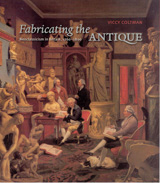
Looking at the theoretical foundations of neoclassicism, Coltman contends this reinvention of ancient material culture was more than a fabrication of style. Based in the strong emphasis on classical education during this time, neoclassicism, Coltman claims, could be more accurately described as a style of thought translated into material possessions. Fabricating the Antique is a new take on both well-known collections of ancient art and newly cataloged artifacts. This book also covers how these objects—once removed from their original context—were received, preserved, and displayed. Art historians, classicists, and archaeologists alike will benefit from this important examination of British eighteenth-century history.
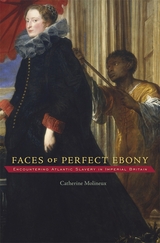
Though blacks were not often seen on the streets of seventeenth-century London, they were already capturing the British imagination. For two hundred years, as Britain shipped over three million Africans to the New World, popular images of blacks as slaves and servants proliferated in London art, both highbrow and low. Catherine Molineux assembles a surprising array of sources in her exploration of this emerging black presence, from shop signs, tea trays, trading cards, board games, playing cards, and song ballads to more familiar objects such as William Hogarth’s graphic satires. By idealizing black servitude and obscuring the brutalities of slavery, these images of black people became symbols of empire to a general populace that had little contact with the realities of slave life in the distant Americas and Caribbean.
The earliest images advertised the opulence of the British Empire by depicting black slaves and servants as minor, exotic characters who gazed adoringly at their masters. Later images showed Britons and Africans in friendly gatherings, smoking tobacco together, for example. By 1807, when Britain abolished the slave trade and thousands of people of African descent were living in London as free men and women, depictions of black laborers in local coffee houses, taverns, or kitchens took center stage.
Molineux’s well-crafted account provides rich evidence for the role that human traffic played in the popular consciousness and culture of Britain during the seventeenth and eighteenth centuries and deepens our understanding of how Britons imagined their burgeoning empire.
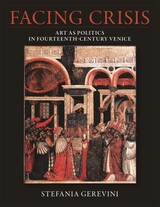
Though Venice emerged as a leading Mediterranean power in the Trecento, the city faced a series of crises during a brief but cataclysmic period coinciding with Andrea Dandolo’s dogeship (1343–1354): earthquakes, disease, fierce military conflicts, and dramatic political and institutional tensions had the republic on edge. It was nevertheless precisely at this time that the government sponsored the ambitious and sumptuous artistic campaigns in San Marco that are at the heart of this book: a reliquary-chapel, a new baptistery, and a folding altarpiece, all masterpieces crafted with unparalleled technical skill, blending Byzantine and Italianate visual forms.
Far from being mere artistic commissions, these works were affirmative political interventions that interrogated the meaning of community, authority, and (shared) political leadership at a time when those notions were unsettled. Looking beyond established concepts of triumph and imperialism, Facing Crisis situates the artistic interactions between Byzantium and Venice into ongoing processes of state formation and attests to the power of images to inform—and transform—political imaginations in troubled times. This study thus offers new insights into how medieval communities across the Mediterranean understood and responded to uncertainty through the visual, and, in doing so, probes the value of “crisis” as a methodological framework.
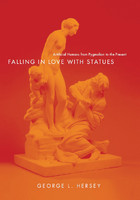
Hersey’s history of statue love begins in Cyprus, home of the legendary sculptor Pygmalion, who famously grew enamored of his own creation. Examining the island’s prehistoric images of Aphrodite—the love goddess who brought Pygmalion’s sculpture to life—Hersey traces the origins of statue love back to the Cypriot followers who adored her terra-cotta likenesses. He goes on to explore ideas about human replicas in the works of Empedocles, Aristotle, Lucretius, and Ovid, whose definitive account of the Pygmalion myth introduced the notion that statues have the potential to induce physical responses in their viewers. Finding avatars of Ovid’s living image in everything from pagan idols and early Christian statuary to eighteenth-century painting to modern action figures and marionettes, Hersey concludes by investigating the concern that these automata will eventually replace humans.
In the process, he narrates a powerful history of artificial life at a moment when—with the development of robot soldiers, ever more sophisticated genetic engineering, and a continually expanding digital universe—it seems more real than ever.

Mermaids, and merfolk more generally, are everywhere you look. Merfolk devotees march in themed parades and practice mermaid-ing—swimming with a mermaid tail. There’s mermaid fiction and mermaid virtual reality; mermaid art and #mermaid trends. You may not know it, but transgenerational merfolk fan communities stretch around the world—from sea to shining sea. And their popularity is only growing.
In Fan Phenomena: Mermaids, Matthieu Guitton assembles a star-studded cast of scholars and popular culture insiders to decode the mermaid phenomenon. The book explores how merfolk have evolved in popular culture and what it is that grants them their privileged status among fantasy creatures. Illustrated throughout with fan photographs and stills from a plethora of films and TV shows, this new addition to the Fan Phenomena series promises to both fascinate and delight readers—earthbound and ocean-going alike.
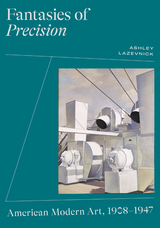
Redefining the artistic movement that helped shape American modernism
In the early decades of the twentieth century, a loose contingent of artists working in and around New York City gave rise to the aesthetic movement known as precisionism, primarily remembered for its exacting depictions of skyscrapers, factories, machine parts, and other symbols of a burgeoning modernity. Although often regarded as a singular group, these artists were remarkably varied in their subject matter and stylistic traits. Fantasies of Precision excavates the surprising ties that connected them, exploring notions of precision across philosophy, technology, medicine, and many other fields.
Bookended by discussions of the landmark First Biennial Exhibition of Painting at the Whitney Museum in 1932, this study weaves together a series of interconnected chapters illuminating the careers of Charles Sheeler, Georgia O’Keeffe, and Charles Demuth. Built on a theoretical framework of the writing of modernist poets Marianne Moore and William Carlos Williams, Fantasies of Precision outlines an “ethos of precision” that runs through the diverse practices of these artists, articulating how the broad range of enigmatic imagery they produced was underpinned by shared strategies of restraint, humility, and slowness.
Questioning straightforward modes of art historical classification, Ashley Lazevnick redefines the concept that designated the precisionist movement. Through its cross-disciplinary approach and unique blend of historiography and fantasy, Fantasies of Precision offers a comprehensive reevaluation of one of the defining movements of artistic modernism.
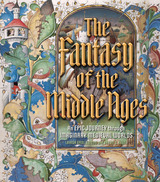
From the soaring castles of Sleeping Beauty to the bloody battles of Game of Thrones, from Middle-earth in The Lord of the Rings to mythical beasts in Dungeons & Dragons, and from Medieval Times to the Renaissance Faire, the Middle Ages have inspired artists, playwrights, filmmakers, gamers, and writers for centuries. Indeed, no other historical era has captured the imaginations of so many creators.
This volume aims to uncover the many reasons why the Middle Ages have proven so applicable to a variety of modern moments from the eighteenth through the twenty-first century. These “medieval” worlds are often the perfect ground for exploring contemporary cultural concerns and anxieties, saying much more about the time and place in which they were created than they do about the actual conditions of the medieval period. With over 140 color illustrations, from sources ranging from thirteenth-century illuminated manuscripts to contemporary films and video games, and a preface by Game of Thrones costume designer Michele Clapton, The Fantasy of the Middle Ages will surprise and delight both enthusiasts and scholars.
This title is published to accompany an exhibition on view at the J. Paul Getty Museum at the Getty Center from June 21 to September 11, 2022.
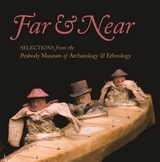
Since its founding in 1886, the Peabody Museum of Archaeology and Ethnology at Harvard University has been collecting, caring for, exhibiting, and researching objects produced by human cultures around the world. This handsomely illustrated, highly portable volume presents a selection of more than 90 objects in honor of the museum’s 150th anniversary in 2016–2017. Dating from Paleolithic times to the present and originating from the Arctic Circle to South Pacific, these selections represent but a fraction of the 1.4 million pieces in the museum’s collections. They range in character from the sacred to the profane, the utilitarian to the highly decorative, the deeply symbolic to the outrageously whimsical.
Chosen by the museum’s curators and staff, the works presented in Far & Near provide a tantalizing glimpse into the wonders of the collections of the Peabody Museum and reflect the skilled artistry of human hands and the endless creativity of the human mind.
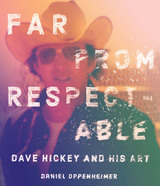
Finalist, 2021 Writers’ League of Texas Book Award
Regarded as both a legend and a villain, the critic Dave Hickey has inspired generations of artists, art critics, musicians, and writers. His 1993 book The Invisible Dragon became a cult hit for its potent and provocative critique of the art establishment and its call to reconsider the role of beauty in art. His next book, 1997’s Air Guitar, introduced a new kind of cultural criticism—simultaneously insightful, complicated, vulnerable, and down-to-earth—that propelled Hickey to fame as an iconoclastic thinker, loved and loathed in equal measure, whose influence extended beyond the art world.
Far from Respectable is a focused, evocative exploration of Hickey’s work, his impact on the field of art criticism, and the man himself, from his Huck Finn childhood to his drug-fueled periods as both a New York gallerist and Nashville songwriter to, finally, his anointment as a tenured professor and MacArthur Fellow. Drawing on in-person interviews with Hickey, his friends and family, and art world comrades and critics, Daniel Oppenheimer examines the controversial writer’s distinctive takes on a broad range of subjects, including Norman Rockwell, Robert Mapplethorpe, academia, Las Vegas, basketball, country music, and considers how Hickey and his vision of an “ethical, cosmopolitan paganism” built around a generous definition of art is more urgently needed than ever before.
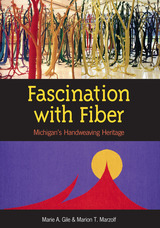
"A premiere work offering a rich chronicle of weaving in Michigan. Colorful stories tell of Michigan's textile people, places, and events, and show the important role that this state played in preserving and progressing the culture of cloth locally and nationally. I came away with a new sense of pride and joy at being a part of this rich human history and inspired to continue exploring within this great tradition!"
---Chris Triola, Fiber Artist
"Fascination with Fiber is a well-documented history, with consequence! The authors reveal surprising continuity in relationships, with results that are far-reaching. Readers will be moved beyond border as they come to realize the extensive influences generated in Michigan."
---Gerhardt Knodel, Director, Cranbrook Academy of Art
Fascination with Fiber is the first complete look at Michigan's rich tradition of handweaving, from pioneer log cabin days to the contemporary era of digital computer-aided looms.
Michigan has been at the center of handweaving and fiber arts and crafts since early settlers brought their skills with them from countries where handicrafts and weaving were traditionally strong. The textiles they produced in their new country, from linens to coverlets to rugs, took on a distinctly American expression. In the twentieth century, the formation of guilds, craft communities, and formal art programs created a revival of interest in handweaving as an opportunity for artistic expression so that by latter part of the century the state played a vital role in the national fiber movement.
Weavers and historians themselves, authors Marie A. Gile and Marion T. Marzolf focus on the people and forces that have kept the craft of handweaving alive in Michigan and indeed throughout the country for over two centuries: a passionate group of individuals and weaving communities enlivened through shared necessity, opportunity, and creativity.
Gile and Marzolf base their book on oral histories, interviews, and documentary and artifact research. With its tales of colorful characters such as Mary Atwater, the gun-toting weaver from Montana who helped organize the handweaving industry; to the formation of the Michigan League of Handweavers in 1959; and the "Fascination with Fiber" exhibit that opened in 2004; Fascination with Fiber brings the story of handweaving in Michigan to life like no other book.
Marie A. Gile is Textile Specialist and Research Associate at Michigan State University Museum in Lansing. She has been a weaver and fiber artist for twenty-five years. Marion T. Marzolf is Professor Emerita in the Department of Journalism and Communication at the University of Michigan. Since retiring in 1995, she has taught basic weaving, has served as president of the Michigan League of Handweavers, and has exhibited in galleries statewide.
Much of what we assume to be individual preference, Davis shows, really reflects deeper social and cultural forces. Ours is an ambivalent social world, characterized by tensions over gender roles, social status, and the expression of sexuality. Predicting what people will wear becomes a risky gamble when the link between private self and public persona can be so unstable.
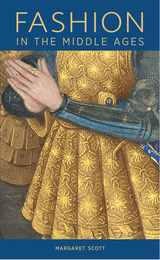
From the costly velvets and furs worn by kings to the undyed wools and rough linens of the peasantry, the clothing worn by the various classes in the Middle Ages played an integral role in medieval society. In addition to providing clues to status, profession, and/or geographic origin, textiles were a crucial element in the economies of many countries and cities.
Much of what is known about medieval fashion is gleaned from the pages of manuscripts, which serve as a rich source of imagery. This volume provides a detailed look at both the actual fabrics and composition of medieval clothing as well as the period’s attitude toward fashion through an exploration of illuminated manuscripts in the collection of the J. Paul Getty Museum. The last portion of the book is dedicated to the depiction of clothing in biblical times and the ancient world as seen through a medieval lens. Throughout, excerpts from literary sources of the period help shed light on the perceived role and function of fashion in daily life.
At a point when fashion studies are expanding and the fashion industry is at a crucial point of change, Fashion Knowledge makes a valuable contribution to the field. The book explores current issues in fashion research, with a focus on the relationship between theory and practice. This edited collection assembles academic essays and intellectual activism next to visual essays and artistic interventions, proposing a different concept for fashion research that eschews the traditional logic of academic fashion studies. It features acclaimed designers, artists, curators, and theorists whose work investigates the multi-faceted debates on the rise of practice-based research in fashion. Contributors look at new forms of fashion knowledge that are forming along with shifting practices, shedding light on the entanglement of fashion and politics in both contemporary and historical moments.
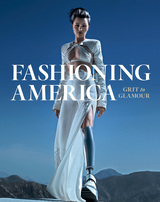
With nearly one hundred illustrations of garments and accessories that span two centuries of design, Fashioning America celebrates the achievements of a wide array of makers—especially immigrants, Native Americans, and Black Americans. Incorporating essays by fashion historians, curators, and journalists, this volume takes a fresh look at the country’s fashion history while exploring its close relationship with Hollywood and media in general, illuminating the role that American designers have played in shaping global visual culture and demonstrating why American fashion has long resonated around the world.
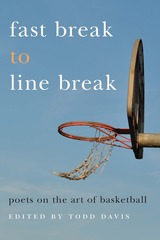
If baseball is the sport of nostalgic prose, basketball’s movement, myths, and culture are truly at home in verse. In this extraordinary collection of essays, poets meditate on what basketball means to them: how it has changed their perspective on the craft of poetry; how it informs their sense of language, the body, and human connectedness; how their love of the sport made a difference in the creation of their poems and in the lives they live beyond the margins. Walt Whitman saw the origins of poetry as communal, oral myth making. The same could be said of basketball, which is the beating heart of so many neighborhoods and communities in this country and around the world. On the court and on the page, this “poetry in motion” can be a force of change and inspiration, leaving devoted fans wonderstruck.
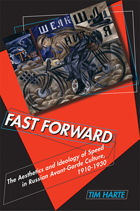
Although modernism arrived somewhat late in Russia, the increased tempo of life at the start of the twentieth century provided Russia’s avant-garde artists with an infusion of creative dynamism and crucial momentum for revolutionary experimentation. In Fast Forward Tim Harte presents a detailed examination of the images and concepts of speed that permeated Russian modernist poetry, visual arts, and cinema. His study illustrates how a wide variety of experimental artistic tendencies of the day—such as “rayism” in poetry and painting, the effort to create a “transrational” language (zaum’) in verse, and movements seemingly as divergent as neo-primitivism and constructivism—all relied on notions of speed or dynamism to create at least part of their effects.
Fast Forward reveals how the Russian avant-garde’s race to establish a new artistic and social reality over a twenty-year span reflected an ambitious metaphysical vision that corresponded closely to the nation’s rapidly changing social parameters. The embrace of speed after the 1917 Revolution, however, paradoxically hastened the movement’s demise. By the late 1920s, under a variety of historical pressures, avant-garde artistic forms morphed into those more compatible with the political agenda of the Russian state. Experimentation became politically suspect and abstractionism gave way to orthodox realism, ultimately ushering in the socialist realism and aesthetic conformism of the Stalin years.
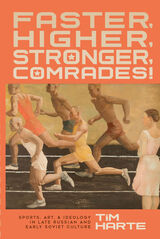
With interdisciplinary analysis of literature, painting, and film, Faster, Higher, Stronger, Comrades! traces how physical fitness had an even broader impact on culture and ideology in the Soviet Union than previously realized. From prerevolutionary writers and painters glorifying popular circus wrestlers to Soviet photographers capturing unprecedented athleticism as a means of satisfying their aesthetic ideals, the nation's artists embraced sports in profound, inventive ways. Though athletics were used for doctrinaire purposes, Tim Harte demonstrates that at their core, they remained playful, joyous physical activities capable of stirring imaginations and transforming everyday realities.
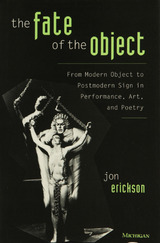
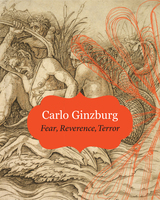
Fear, Reverence, Terror invites us to look at images slowly, with the help of a few examples: Picasso’s Guernica, the “Lord Kitchener Wants You” World War I recruitment poster, Jacques-Louis David’s Marat, the frontispiece of Thomas Hobbes’s Leviathan, and a cup of gilded silver with scenes from the conquest of the New World. Are these political images, Carlo Ginzburg asks? Yes, because every image is, in a sense, political—an instrument of power. Tacitus once wrote, unforgettably, that we are enslaved by lies of which we ourselves are the authors. Is it possible to break this bond? Fear, Reverence, Terror will answer this question.
A Feast for the Eyes is the first book-length study of the court banquets of northwestern Europe in the fourteenth and fifteenth centuries. Christina Normore draws on an array of artworks, archival documents, chroniclers’ accounts, and cookbooks to re-create these events and reassess the late medieval visual culture in which banquets were staged. Feast participants, she shows, developed sophisticated ways of appreciating artistic skill and attending to their own processes of perception, thereby forging a court culture that delighted in the exercise of fine aesthetic judgment.
Challenging modern assumptions about the nature of artistic production and reception, A Feast for the Eyes yields fresh insight into the long history of multimedia work and the complex relationships between spectacle and spectators.
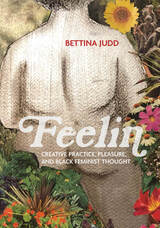
How creativity makes its way through feeling—and what we can know and feel through the artistic work of Black women
Feeling is not feelin. As the poet, artist, and scholar Bettina Judd argues, feelin, in African American Vernacular English, is how Black women artists approach and produce knowledge as sensation: internal and complex, entangled with pleasure, pain, anger, and joy, and manifesting artistic production itself as the meaning of the work. Through interviews, close readings, and archival research, Judd draws on the fields of affect studies and Black studies to analyze the creative processes and contributions of Black women—from poet Lucille Clifton and musician Avery*Sunshine to visual artists Betye Saar, Joyce J. Scott, and Deana Lawson.
Feelin: Creative Practice, Pleasure, and Black Feminist Thought makes a bold and vital intervention in critical theory’s trend toward disembodying feeling as knowledge. Instead, Judd revitalizes current debates in Black studies about the concept of the human and about Black life by considering how discourses on emotion as they are explored by Black women artists offer alternatives to the concept of the human. Judd expands the notions of Black women’s pleasure politics in Black feminist studies that include the erotic, the sexual, the painful, the joyful, the shameful, and the sensations and emotions that yet have no name. In its richly multidisciplinary approach, Feelin calls for the development of research methods that acknowledge creative and emotionally rigorous work as productive by incorporating visual art, narrative, and poetry.
Building from the resonance of felt, the fabric, in both Tibetan culture and in Beuys’s art, Thompson takes as his point of departure Deleuze and Guattari’s discussion in A Thousand Plateaus of felt as smooth space that is “in principle infinite, open, and unlimited in every direction,” its structure determined by chance as opposed to the planned, woven nature of most fabrics. Felt is thus seen as an alternative to the model of the network: felt’s anarchic form is not reducible to the regularity of the net, grid, or mesh, and the more it is pulled, tweaked, torn, and agitated, the greater its structural integrity.
Felt thus invents its methodology from the material that represents its object of inquiry and from this advances a reading of the avant-garde. At the same time, Thompson demonstrates that it is sometimes the failures of thought, the disappointing meetings, even the untimely deaths that open portals through which life flows into art and allows new conjunctions of life, art, and thought. Thompson explores both the well-known engagement of Fluxus artists with Eastern spirituality and the more elusive nature of Beuys’s own late interest in Tibetan culture, arriving at a sense of how such noncausal interactions—interhuman intrigue—create culture and shape contemporary art history.
In Feminism and Popular Culture, Rebecca Munford and Melanie Waters consider why the twenty-first century media landscape is so haunted by the ghosts of these traditional figures that feminism otherwise laid to rest. Why, over fifty years since Betty Friedan’s critique, does the feminine mystique exert such a strong spectral presence, and how has it been reimagined to speak to the concerns of a postfeminist audience?
To answer these questions, Munford and Waters draw from a rich array of examples from contemporary film, fiction, music, and television, from the shadowy cityscapes of Homeland to the haunted houses of American Horror Story. Alongside this comprehensive analysis of today’s popular culture, they offer a vivid portrait of feminism’s social and intellectual history, as well as an innovative application of Jacques Derrida’s theories of “hauntology.” Feminism and Popular Culture thus not only considers how contemporary media is being visited by the ghosts of feminism’s past, it raises vital questions about what this means for feminism’s future.
Recently rediscovered in Italy and abroad, the works of Carla Lonzi tend to fall under the remit of art history or feminist theory. Art historians focus on the texts written in the 1960s, when Lonzi was still actively working as a critic, whereas feminist scholars engage with her more openly political interventions, published after her declared embrace of a separatist feminism. In 1970 Lonzi decided to leave the art world for good and dedicate herself to her newly founded feminist collective, Rivolta Femminile. While recognizing the break in Lonzi’s life and work, this anthology maps the overall arc of her intellectual and political production, giving equal weight to her seminal contributions to art criticism and her trailblazing feminist writings. A comprehensive collection of texts from the most influential and iconic figure of Italian second-wave feminism, Feminism in Revolt seeks to shed light on Lonzi’s versatile approach to literary genres and compositions by juxtaposing essayistic texts, poems, diary excerpts, and manifestos.
Popular films can do more than merely entertain us; they can contribute to our understanding of human nature and the ethical theory that informs it. Feminist Ethics in Film explores a varied group of cinematic narratives from the perspective of care-based ethics. The interpersonal relationships they portray disclose important dimensions of care that have been overlooked in less contextualized discussions. In particular, the book examines the relationships between care and community, autonomy, family, and self transformation. Interpreting films from the perspective of the feminist ethics of care both expands our knowledge of this burgeoning area of philosophy and adds depth to our appreciation of the films.

Feminist Visual Solidarities and Kinships considers global feminist coalitional practices in the contemporary visual arts through three key frameworks: transnational solidarity, archives, and kinships and care. The edited volume features emerging and established scholars and artists whose diverse perspectives inspire connections as well as critical points of divergence over the meanings of “feminism,” “transnationalism,” and “art.” Representing grassroots activism, artistic practice, and scholarly and curatorial inquiry, the diversity of approaches, writing styles, and chapter lengths depart from conventional modes of academic writing and provide pedagogical opportunities for students and scholars to use these contributions in a variety of learning environments not limited to the traditional classroom.
This book offers readers a concise look at over a century of femmes fatales on both the silver screen and the TV screen. Starting with ethnically exoticized silent film vamps like Theda Bara and Pola Negri, it examines classic film noir femmes fatales like Barbara Stanwyck in Double Indemnity, as well as postmodern revisions of the archetype in films like Basic Instinct and Memento. Finally, it explores how contemporary film and television creators like Fleabag and Killing Eve’s Phoebe Waller-Bridge have appropriated the femme fatale in sympathetic and surprising ways.
Analyzing not only the films themselves, but also studio press kits and reviews, The Femme Fatale considers how discourses about the pleasures and dangers of female performance are projected onto the figure of the femme fatale. Ultimately, it is a celebration of how “bad girl” roles have provided some of Hollywood’s most talented actresses opportunities to fully express their on-screen charisma.
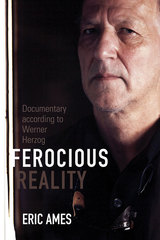
Over the course of his career Werner Herzog, known for such visionary masterpieces as Aguirre: The Wrath of God (1972) and The Enigma of Kaspar Hauser (1974), has directed almost sixty films, roughly half of which are documentaries. And yet, in a statement delivered during a public appearance in 1999, the filmmaker declared: “There are deeper strata of truth in cinema, and there is such a thing as poetic, ecstatic truth. It is mysterious and elusive, and can be reached only through fabrication and imagination and stylization.” Ferocious Reality is the first book to ask how this conviction, so hostile to the traditional tenets of documentary, can inform the work of one of the world’s most provocative documentarians.
Herzog, whose Cave of Forgotten Dreams was perhaps the most celebrated documentary of 2010, may be the most influential filmmaker missing from major studies and histories of documentary. Examining such notable films as Lessons of Darkness (1992) and Grizzly Man (2005), Eric Ames shows how Herzog dismisses documentary as a mode of filmmaking in order to creatively intervene and participate in it. In close, contextualized analysis of more than twenty-five films spanning Herzog’s career, Ames makes a case for exploring documentary films in terms of performance and explains what it means to do so. Thus his book expands the field of cinema studies even as it offers an invaluable new perspective on a little studied but integral part of Werner Herzog’s extraordinary oeuvre.
What might become of anthropology if it were to suspend its sometime claims to be a social science? What if it were to turn instead to exploring its affinities with art and literature as a mode of engaged creative practice carried forward in a world heterogeneously composed of humans and other than humans? Stuart McLean claims that anthropology stands to learn most from art and literature not as “evidence” to support explanations based on an appeal to social context or history but as modes of engagement with the materiality of expressive media—including language—that always retain the capacity to disrupt or exceed the human projects enacted through them.
At once comparative in scope and ethnographically informed, Fictionalizing Anthropology draws on an eclectic range of sources, including ancient Mesopotamian myth, Norse saga literature, Hesiod, Lucretius, Joyce, Artaud, and Lispector, as well as film, multimedia, and performance art, along with the concept of “fabulation” (the making of fictions capable of intervening in and transforming reality) developed in the writings of Bergson and Deleuze. Sharing with proponents of anthropology’s recent “ontological turn,” McLean insists that experiments with language and form are a performative means of exploring alternative possibilities of collective existence, new ways of being human and other than human, and that such experiments must therefore be indispensable to anthropology’s engagement with the contemporary world.
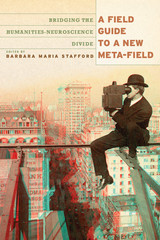
Barbara Stafford is a pioneering art historian whose research has long helped to bridge the divide between the humanities and cognitive sciences. In A Field Guide to a New Meta-Field, she marshals a distinguished group of thinkers to forge a ground-breaking dialogue between the emerging brain sciences, the liberal arts, and social sciences.
Stafford’s book examines meaning and mental function from this dual experimental perspective. The wide-ranging essays included here—from Frank Echenhofer’s foray into shamanist hallucinogenic visions to David Bashwiner’s analysis of emotion and danceability—develop a common language for implementing programmatic and institutional change. Demonstrating how formerly divided fields are converging around shared issues, A Field Guide to a New Meta-Field maps a high-level, crossdisciplinary adventure from one of our leading figures in visual studies.

Field research—the collection of information outside a lab or workplace setting—requires skills and knowledge not typically taught in the classroom. Fieldwork demands exploratory inquisitiveness, empathy to encourage interviewees to trust the researcher, and sufficient aptitude to work professionally and return home safely. The Field Researcher’s Handbook provides a practical guide to planning and executing fieldwork and presenting the results.
Based on his experience conducting field research in more than fifty countries and teaching others a holistic approach to field research, David J. Danelo introduces the skills new researchers will need in the field, including anthropology, travel logistics planning, body language recognition, interview preparation, storytelling, network development, and situational awareness. His time as a combat veteran in the US Marine Corps further enhances his knowledge of how to be observant and operate safely in any environment. Danelo also discusses ethical considerations and how to recognize personal biases. This handbook is intended for researchers in a variety of academic disciplines but also for government, think-tank, and private-sector researchers.
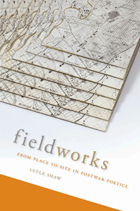
Fieldworks offers a historical account of the social, rhetorical, and material attempts to ground art and poetry in the physicality of a site.
Arguing that place-oriented inquiries allowed poets and artists to develop new, experimental models of historiography and ethnography, Lytle Shaw draws out the shifting terms of this practice from World War II to the present through a series of illuminating case studies. Beginning with the alternate national genealogies unearthed by William Carlos Williams in Paterson and Charles Olson in Gloucester, Shaw demonstrates how subsequent poets sought to ground such inquiries in concrete social formations—to in effect live the poetics of place: Gary Snyder in his back-to-the-land familial compound, Kitkitdizze; Amiri Baraka in a black nationalist community in Newark; Robert Creeley and the poets of Bolinas, California, in the capacious “now” of their poet-run town. Turning to the work of Robert Smithson—who called one of his essays an “appendix to Paterson,” and who in turn has exerted a major influence on poets since the 1970s—Shaw then traces the emergence of site-specific art in relation both to the poetics of place and to the larger linguistic turn in the humanities, considering poets including Clark Coolidge, Bernadette Mayer, and Lisa Robertson.
By putting the poetics of place into dialog with site-specificity in art, Shaw demonstrates how poets and artists became experimental explicators not just of concrete locations and their histories, but of the discourses used to interpret sites more broadly. It is this dual sense of fieldwork that organizes Shaw’s groundbreaking history of site-specific poetry.
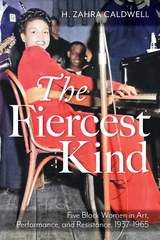
Artists fighting racism and sexism from the end of the Great Depression through the Civil Rights era
In 1943, the production of the Columbia Pictures film The Heat’s On halted for three days due to an on-set protest by featured performer Hazel Scott. Appalled by the racially demeaning and stereotypical depictions of Black women extras and dancers, Scott—one of the top African American performers of the era—forced the studio to relent. But her protest of Hollywood racism angered powerful white men in the industry, and despite her rising career, she was soon banished from American film.
Scott was far from the only Black woman in a creative field to use her professional success as leverage against prejudice. In The Fiercest Kind, cultural historian H. Zahra Caldwell explores the biographical narratives of five Black women at the top of their artistic crafts in the mid-20th century to understand how they pushed back against racism and sexism. From 1937–1965, pianist Hazel Scott, dancer Katherine Dunham, cartoonist Jackie Ormes, multihyphenate fine artist (graphic artist, painter, and sculptor) Elizabeth Catlett, and singer Lena Horne were among the most popular and nationally known Black women in their respective fields, spanning film, television, print media, and fine art. Generating creative works at the end of the Great Depression through the Civil Rights era, they used their professional and personal lives to confront seemingly insurmountable repression through what Caldwell defines as “layered resistance.”
A Black feminist practice, layered resistance consists of four tactics: claiming and adapting cultural spaces for Black women; strategically crafting positive images of Black womanhood that directly challenge white supremacy; combining performance and/or visual representation with social and political activism; and choosing unconventional lifestyles that defy rigid gender and racial norms. These artists also lived in, worked in, and supported important Black spaces such as Harlem and Black Chicago. Using a methodology that combines textual analysis, archival research, and oral history, Caldwell understands this strategy within larger movements for Black freedom and equality that spanned the twentieth century and continue to the present day.

What was cinema in modern China? It was, this book tells us, a dynamic entity, not strictly tied to one media technology, one mode of operation, or one system of aesthetic code. It was, in Weihong Bao’s term, an affective medium, a distinct notion of the medium as mediating environment with the power to stir passions, frame perception, and mold experience. In Fiery Cinema, Bao traces the permutations of this affective medium from the early through the mid-twentieth century, exploring its role in aesthetics, politics, and social institutions.
Mapping the changing identity of cinema in China in relation to Republican-era print media, theatrical performance, radio broadcasting, television, and architecture, Bao has created an archaeology of Chinese media culture. Within this context, she grounds the question of spectatorial affect and media technology in China’s experience of mechanized warfare, colonial modernity, and the shaping of the public into consumers, national citizens, and a revolutionary collective subject. Carrying on a close conversation with transnational media theory and history, she teases out the tension and affinity between vernacular, political modernist, and propagandistic articulations of mass culture in China’s varied participation in modernity.
Fiery Cinema advances a radical rethinking of affect and medium as a key insight into the relationship of cinema to the public sphere and the making of the masses. By centering media politics in her inquiry of the forgotten future of cinema, Bao makes a major intervention into the theory and history of media.


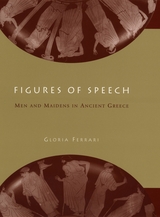
Ferrari begins by developing a theoretical perspective on visual representation, arguing that artistic images give us access to how their subjects were imagined rather than to the way they really were. For instance, Ferrari's examinations of the many representations of women working wool reveal that these images constitute powerful metaphors—metaphors, she argues, which both reflect and construct Greek conceptions of the ideal woman and her ideal behavior.
From this perspective, Ferrari studies a number of icons representing blameless femininity and ideal masculinity to reevaluate the rites of passage by which girls are made ready for marriage and boys become men. Representations of the nude male body in Archaic statues known as kouroi, for example, symbolize manhood itself and shed new light on the much-discussed institution of paiderastia. And, in Ferrari's hands, imagery equating maidens with arable land and buried treasure provides a fresh view of Greek ideas of matrimony.
Innovative, thought-provoking, and insightful throughout, Figures of Speech is a powerful demonstration of how the study of visual images as well as texts can reshape our understanding of ancient Greek culture.



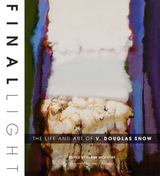
A nationally recognized artist, Snow chose to stay in Utah where, when not teaching at the University of Utah, he roamed the southern Utah desert gaining inspiration from the red rock formations, especially the Cockscomb outside his studio near Capitol Reef National Park. Snow said, “Every artist probably wonders if he or she made the right decision to dig in to a certain place.” He dug into the landscape in and around Southern Utah and never regretted it. Just as “Tennessee Williams’s South, William Faulkner’s Mississippi, [or] John Steinbeck’s West Coast, formed their work,” the desert lands of the Colorado Plateau formed Snow’s. Their sense of place, “without provincialism,” said Snow “is what gives their art its enduring power.” Final Light will appeal to art historians and art lovers, especially those interested in abstract expressionism and the art of Utah, the West, and the Southwest.
Chosen by 15 Bytes, Utah's art magazine, as the most exceptional art book for 2014.
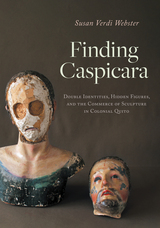
An examination of sculpture and authorship in eighteenth-century Quito that documents Caspicara as a participant in the innovative artistic production of the city’s workshops and its widespread commerce of polychrome sculptures.
Who is Caspicara? Nothing is known of Caspicara’s life, and not a single sculpture has been documented as his work. Yet traditional histories laud him as a prolific Indigenous sculptor in eighteenth-century Quito who created exquisite polychrome figures and became a national artistic icon. Drawing on extensive archival, historical, and object research, Susan Verdi Webster peels away layers of historiographical fabrication to reveal what we do and do not know about Caspicara and his work.
Rather than being a solitary master, Caspicara collaborated with other, largely Indigenous artists in Quito’s protoindustrial workshops, manufacturing sculptures now credited to him alone. The high quality of Quito sculptures produced by anonymous artists turned the city into a hub of wide-ranging commerce in religious icons. The art world and post-independence Ecuadorians have lionized the one named sculptor, Caspicara, according to the Western model of the artist-genius, amplifying the market for works bearing his name and creating a national hero on par with European masters. Lost in this process were the artists themselves. Webster returns to their world, detailing their methods and labor and, for the first time, documenting a sculpture made by Caspicara.
“[A] spirited and deeply researched project…. [Benkemoun’s] affection for her subject is infectious. This book gives a satisfying treatment to a woman who has been confined for decades to a Cubist’s limited interpretation.” — Joumana Khatib, The New York Times
Merging biography, memoir, and cultural history, this compelling book, a bestseller in France, traces the life of Dora Maar through a serendipitous encounter with the artist’s address book.
In search of a replacement for his lost Hermès agenda, Brigitte Benkemoun’s husband buys a vintage diary on eBay. When it arrives, she opens it and finds inside private notes dating back to 1951—twenty pages of phone numbers and addresses for Balthus, Brassaï, André Breton, Jean Cocteau, Paul Éluard, Leonor Fini, Jacqueline Lamba, and other artistic luminaries of the European avant-garde.
After realizing that the address book belonged to Dora Maar—Picasso’s famous “Weeping Woman” and a brilliant artist in her own right—Benkemoun embarks on a two-year voyage of discovery to learn more about this provocative, passionate, and enigmatic woman, and the role that each of these figures played in her life.
Longlisted for the prestigious literary award Prix Renaudot, Finding Dora Maar is a fascinating and breathtaking portrait of the artist.
This work received support from the French Ministry of Foreign Affairs and the Cultural Services of the French Embassy in the United States through their publishing assistance program.


"[Taylor] describes changing definitions of art as much as he describes art itself, and he shows how the shifting forms of patronage affected the forms of art. He analyzes artists' associations . . . and he shows how museums and schools have expanded the audience for art. In short, he places artists and their work in cultural context. This treatment of the social history of art is the most original and intriguing aspect of Taylor's sketch."—Journal of American History
"This is a brilliantly subtle book. It builds with one insight after another, and suddenly the reader finds that a whole new way of looking at American art is being proposed. . . . After decades of thinking and looking and teaching, Dr. Taylor has written it all down. This work will become a classic interpretation almost overnight."—Peter Marzio, director, Corcoran Gallery of Art
"Interest in American art is unlikely to abate. . . . Mr. Taylor's short book is an invaluable guide through this activity and to its traditions."—Neil Harris, Wall Street Journal

Pompeii is the most famous archaeological site in the world, visited by more than two million people each year. Yet it is also one of the most puzzling, with an intriguing and sometimes violent history, from the sixth century BCE to the present day.
Destroyed by Vesuvius in 79 CE, the ruins of Pompeii offer the best evidence we have of life in the Roman Empire. But the eruptions are only part of the story. In The Fires of Vesuvius, acclaimed historian Mary Beard makes sense of the remains. She explores what kind of town it was—more like Calcutta or the Costa del Sol?—and what it can tell us about “ordinary” life there. From sex to politics, food to religion, slavery to literacy, Beard offers us the big picture even as she takes us close enough to the past to smell the bad breath and see the intestinal tapeworms of the inhabitants of the lost city. She resurrects the Temple of Isis as a testament to ancient multiculturalism. At the Suburban Baths we go from communal bathing to hygiene to erotica.
Recently, Pompeii has been a focus of pleasure and loss: from Pink Floyd’s memorable rock concert to Primo Levi’s elegy on the victims. But Pompeii still does not give up its secrets quite as easily as it may seem. This book shows us how much more and less there is to Pompeii than a city frozen in time as it went about its business on 24 August 79.

Wrongful convictions haunt the American criminal justice system, as revealed in recent years by DNA and other investigative tools. And every wrongfully convicted person who walks free, exonerated after years or decades, carries part of that story. From those facts, artist Julie Green posed a seemingly simple question: When you have been denied all choice, what do you choose to eat on the first day of freedom?
In the small details of life at such pivotal moments, a vast new landscape of the world can emerge, and that is the core concept of First Meal. Partnering with the Center on Wrongful Convictions at Northwestern University’s Pritzker School of Law, Green and her coauthor, award-winning journalist Kirk Johnson, have created a unique melding of art and narration in the portraits and stories of twenty-five people on the day of their release.
Food and punishment have long been intertwined. The tradition of offering a condemned person a final meal before execution, for example, has been explored by psychologists, filmmakers, and others—including Green herself in an earlier series of criminal-justice themed paintings, The Last Supper. First Meal takes on that issue from the other side: food as a symbol of autonomy in a life restored. Set against the backdrop of a flawed American legal system, First Meal describes beauty, pain, hope and redemption, all anchored around the idea—explored by writers from Marcel Proust to Michael Pollan—that food touches us deeply in memory and emotion.
In Green’s art, state birds and surreal lobsters soar over places where wrongful convictions unfolded, mistaken witnesses shout their errors, glow-in-the-dark skylines evoke homecoming. Johnson’s essays take us inside those moments—from the courtrooms where things went wrong to the pathways of faith and resilience that kept people sane through their years of injustice. First Meal seeks to inform and spread awareness, but also celebrate the humanity that unites us, and the idea that gratitude and euphoria—even as it mixes with grief and the awareness of loss—can emerge in places we least expect.
"This exceptionally wide-ranging history is chock-a-block with anecdotes, factoids, odd juxtapositions, and useful insights. Most impressive. . . . For anyone interested in learning about late 19th- and early 20th- century imaginative thought, this engagingly written book is a good place to start."—Washington Post Book World
"The First Moderns brilliantly maps the beginning of a path at whose end loom as many diasporas as there are men."—Frederic Morton, The Los Angeles Times Book Review
"In this truly exciting study of the origins of modernist thought, poet and teacher Everdell roams freely across disciplinary lines. . . . A brilliant book that will prove useful to scholars and generalists for years to come; enthusiastically recommended."—Library Journal, starred review
"Everdell has performed a rare service for his readers. Dispelling much of the current nonsense about 'postmodernism,' this book belongs on the very short list of profound works of cultural analysis."—Booklist
"Innovative and impressive . . . [Everdell] has written a marvelous, erudite, and readable study."-Mark Bevir, Spectator
"A richly eclectic history of the dawn of a new era in painting, music, literature, mathematics, physics, genetics, neuroscience, psychiatry and philosophy."—Margaret Wertheim, New Scientist
"[Everdell] has himself recombined the parts of our era's intellectual history in new and startling ways, shedding light for which the reader of The First Moderns will be eternally grateful."—Hugh Kenner, The New York Times Book Review
"Everdell shows how the idea of "modernity" arose before the First World War by telling the stories of heroes such as T. S. Eliot, Max Planck, and Georges Serault with such a lively eye for detail, irony, and ambiance that you feel as if you're reliving those miraculous years."—Jon Spayde, Utne Reader
Samuel Quiccheberg’s Inscriptiones, first published in Latin in 1565, is an ambitious effort to demonstrate the pragmatic value of curiosity cabinets, or Wunderkammern, to princely collectors in sixteenth-century Europe and, by so doing, inspire them to develop their own such collections. Quiccheberg shows how the assembly and display of physical objects offered nobles a powerful means to expand visual knowledge, allowing them to incorporate empirical and artisanal expertise into the realm of the written word. But in mapping out the collectability of the material world, Quiccheberg did far more than create a taxonomy. Rather, he demonstrated how organizing objects made their knowledge more accessible; how objects, when juxtaposed or grouped, could tell a story; and how such strategies could enhance the value of any single object.
Quiccheberg’s descriptions of early modern collections provide both a point of origin for today’s museums and an implicit critique of their aims, asserting the fundamental research and scholarly value of collections: collections are to be used, not merely viewed. The First Treatise on Museums makes Quiccheberg’s now rare publication available in an English translation. Complementing the translation are a critical introduction by Mark A. Meadow and a preface by Bruce Robertson.
For centuries, anatomy was a fundamental component of artistic training, as artists such as Leonardo da Vinci and Michelangelo sought to skillfully portray the human form. In Europe, illustrations that captured the complex structure of the body—spectacularly realized by anatomists, artists, and printmakers in early atlases such as Andreas Vesalius’s De humani corporis fabrica libri septem of 1543—found an audience with both medical practitioners and artists.
Flesh and Bones examines the inventive ways anatomy has been presented from the sixteenth through the twenty-first century, including an animated corpse displaying its own body for study, anatomized antique sculpture, spectacular life-size prints, delicate paper flaps, and 3-D stereoscopic photographs. Drawn primarily from the vast holdings of the Getty Research Institute, the over 150 striking images, which range in media from woodcut to neon, reveal the uncanny beauty of the human body under the skin.
This volume is published to accompany an exhibition on view at the Getty Research Institute at the Getty Center from February 22 to July 10, 2022.
In Flickers of Film, Jason Sperb offers nuanced and unexpected answers to these questions, examining the benefits of certain types of film nostalgia, while also critiquing how Hollywood’s nostalgic representations of old technologies obscure important aspects of their histories. He interprets this affection for the prehistory and infancy of digital technologies in relation to an industry-wide anxiety about how the digital has grown to dominate Hollywood, pushing it into an uncertain creative and economic future. Yet he also suggests that Hollywood’s nostalgia for old technologies ignores the professionals who once employed them, as well as the labor opportunities that have been lost through the computerization and outsourcing of film industry jobs.
Though it deals with nostalgia, Flickers of Film is strikingly cutting-edge, one of the first studies to critically examine Pixar’s role in the film industry, cinematic representations of videogames, and the economic effects of participatory culture. As he takes in everything from Terminator: Salvation to The Lego Movie, Sperb helps us see what’s distinct about this recent wave of self-aware nostalgic films—how Hollywood nostalgia today isn’t what it used to be.
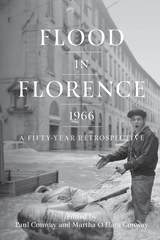


The use of perspective in Renaissance painting caused a revolution in the history of seeing, allowing artists to depict the world from a spectator’s point of view. But the theory of perspective that changed the course of Western art originated elsewhere—it was formulated in Baghdad by the eleventh-century mathematician Ibn al Haithan, known in the West as Alhazen. Using the metaphor of the mutual gaze, or exchanged glances, Hans Belting—preeminent historian and theorist of medieval, Renaissance, and contemporary art—narrates the historical encounter between science and art, between Arab Baghdad and Renaissance Florence, that has had a lasting effect on the culture of the West.
In this lavishly illustrated study, Belting deals with the double history of perspective, as a visual theory based on geometrical abstraction (in the Middle East) and as pictorial theory (in Europe). How could geometrical abstraction be reconceived as a theory for making pictures? During the Middle Ages, Arab mathematics, free from religious discourse, gave rise to a theory of perspective that, later in the West, was transformed into art when European painters adopted the human gaze as their focal point. In the Islamic world, where theology and the visual arts remained closely intertwined, the science of perspective did not become the cornerstone of Islamic art. Florence and Baghdad addresses a provocative question that reaches beyond the realm of aesthetics and mathematics: What happens when Muslims and Christians look upon each other and find their way of viewing the world transformed as a result?
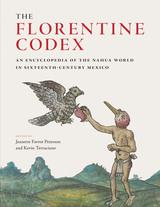
Honorable Mention, 2021 LASA Mexico Humanities Book Prize, Latin American Studies Association, Mexico Section
In the sixteenth century, the Franciscan friar Bernardino de Sahagún and a team of indigenous grammarians, scribes, and painters completed decades of work on an extraordinary encyclopedic project titled General History of the Things of New Spain, known as the Florentine Codex (1575–1577). Now housed in the Biblioteca Medicea Laurenziana in Florence and bound in three lavishly illustrated volumes, the codex is a remarkable product of cultural exchange in the early Americas.
In this edited volume, experts from multiple disciplines analyze the manuscript’s bilingual texts and more than 2,000 painted images and offer fascinating, new insights on its twelve books. The contributors examine the “three texts” of the codex—the original Nahuatl, its translation into Spanish, and its painted images. Together, these constitute complementary, as well as conflicting, voices of an extended dialogue that occurred in and around Mexico City. The volume chapters address a range of subjects, from Nahua sacred beliefs, moral discourse, and natural history to the Florentine artists’ models and the manuscript’s reception in Europe. The Florentine Codex ultimately yields new perspectives on the Nahua world several decades after the fall of the Aztec empire.

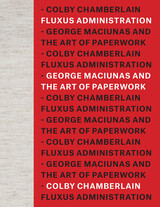
Though widely recognized as the founder of the legendary Fluxus movement, George Maciunas has long been a puzzling figure in the history of twentieth-century art. Many have questioned whether he should be considered an artist at all. In Fluxus Administration, critic and art historian Colby Chamberlain reveals the consistent artistic practice hidden behind Maciunas’s varied work in architecture, music, performance, publication, graphic design, film, and real estate as an attempt to create models for community through structures of bureaucracy.
In this deeply researched study, Chamberlain traces how Maciunas’s art insinuated itself into settings as unlikely as the routes of the postal service, the fine print of copyright law, the zoning strictures of urban planning, and the corridors of hospitals. These shifting frames of reference expand our understanding of where an artistic practice can operate and what forms it might assume. In particular, Chamberlain draws on media theory to highlight Maciunas’s ingeniously crafted paperwork, much of which is beautifully reproduced here for the first time.
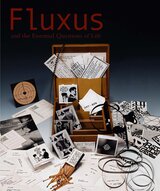
Fluxus—from the Latin, meaning “to flow”—was a radical, international network of artists, composers, and designers in the 1960s and 1970s noted for blurring the boundaries between what we term “art” and what makes up everyday life. Following the work of American Fluxus founder George Maciunus, Fluxus and the Essential Questions of Life presents a variety of objects that express the Fluxus mission, while empowering readers to challenge the presumptions we bring to the concept and practice of art making.
Based on a large-scale traveling exhibition first organized at Dartmouth College’s Hood Museum of Art, this book chronicles the movement in the form of an art self-help book, playfully providing answers to fourteen key questions such as “Art—what is it good for?” and “What am I?” via Fluxus works. Featuring over eighty color and black-and-white illustrations, accompanied by essays from curator Jacquelynn Baas, Fluxus scholars Hannah Higgins and Jacob Proctor, and Fluxus artist Ken Friedman, this book will make an original contribution to our understanding of this provocative moment in modern art.

While today the Fluxus collective is recognized for its radical neo-avant-garde works of performance, publishing, and relational art and its experimental, interdisciplinary approach, it was not taken seriously in its own time. With Fluxus Forms, Natilee Harren captures the magnetic energy of Fluxus activities and collaborations that emerged at the intersections of art, music, performance, and literature. The book offers insight into the nature of art in the 1960s as it traces the international development of the collective’s unique intermedia works—including event scores and Fluxbox multiples—that irreversibly expanded the boundaries of contemporary art.
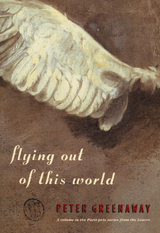
As guest curator, Greenaway selected from the Louvre's collection of European prints and drawings ninety-one masterpieces that illustrate the human longing for flight. Greenaway's text, a compilation of brief commentaries that combine description, allusion, and interpretation, illuminate the images as depictions of flight desired and denied. Including works by Redon, Goya, Brueghel, Michelangelo, Mantegna, Rubens, Poussin, and Delacroix, this volume offers a combination of literary and visual art, of sight and insight.
A pursuit through the Bible, classical mythology, cosmology, theology, etymology, ornithology, and meteorology, Flying out of This World is not just an illustrated history of imagined flight, but a meditation on its meaning as a metaphor for the human condition, caught between a weighty body and a soaring spirit.
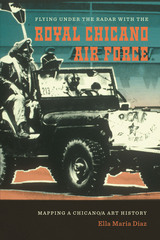
Winner, National Association for Chicana and Chicano Studies Book Award, 2019
The Royal Chicano Air Force produced major works of visual art, poetry, prose, music, and performance during the second half of the twentieth century and first decades of the twenty-first. Materializing in Sacramento, California, in 1969 and established between 1970 and 1972, the RCAF helped redefine the meaning of artistic production and artwork to include community engagement projects such as breakfast programs, community art classes, and political and labor activism. The collective’s work has contributed significantly both to Chicano/a civil rights activism and to Chicano/a art history, literature, and culture.
Blending RCAF members’ biographies and accounts of their artistic production with art historical, cultural, and literary scholarship, Flying under the Radar with the Royal Chicano Air Force is the first in-depth study of this vanguard Chicano/a arts collective and activist group. Ella Maria Diaz investigates how the RCAF questioned and countered conventions of Western art, from the canon taught in US institutions to Mexican national art history, while advancing a Chicano/a historical consciousness in the cultural borderlands. In particular, she demonstrates how women significantly contributed to the collective’s output, navigating and challenging the overarching patriarchal cultural norms of the Chicano Movement and their manifestations in the RCAF. Diaz also shows how the RCAF’s verbal and visual architecture—a literal and figurative construction of Chicano/a signs, symbols, and texts—established the groundwork for numerous theoretical interventions made by key scholars in the 1990s and the twenty-first century.
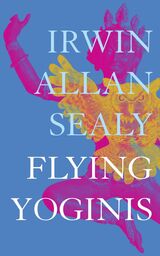
Irwin Allan Sealy—master chronicler of the Indian imagination—sets off on a singular quest: to follow in the wake of the yoginis, those fierce, flying, shape-shifting female adepts of yoga whose images were carved in stone a thousand years ago across India and who now sit, displaced, in American museums.
Part travelogue, part philosophical musing, part cultural excavation, Flying Yoginis is a meditation on art, power, devotion, and the subversive energy of women who step out of line. With wit and wonder, Sealy traces their transcontinental journey from lost temples near Kanchipuram to glass-walled galleries in Kansas City and Minneapolis—finding along the way unexpected kinship with rebels and visionaries, from Rosa Parks to Carson McCullers. Blending the spiritual with the personal, the mythic with the mundane, Sealy offers a dazzling, genre-defying reflection on how the sacred persists, how memory travels, and how history is always being rewritten by those bold enough to reclaim it.

Suzi Parron, in cooperation with Donna Sue Groves, documented the massive public art project known as the barn quilt trail in her 2012 book Barn Quilts and the American Quilt Trail Movement. The first of these projects began in 2001, when Groves and community members created a series of twenty painted quilt squares in Adams County, Ohio. Since then, barn quilts have spread throughout forty-eight states and several Canadian provinces.
In Following the Barn Quilt Trail, Parron brings readers along as she, her new love, Glen, their dog Gracie, and their converted bus Ruby, leave the stationary life behind. Suzi and Glen follow the barn quilt trail through thirty states across thirteen thousand miles as Suzi collects the stories behind the brightly painted squares. With plentiful color photographs, this endearing hybrid of memoir and travelogue is for quilt lovers, Americana and folk art enthusiasts, or anyone up for a good story.
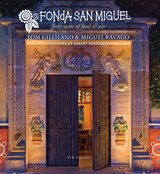
“Walking through the old wooden doors at Fonda San Miguel is like a journey back to colonial Mexico. . . . World-class Mexican art and antiques decorate the interior, and famed Mexican chefs have taught and cooked here. Acclaimed as one of the best Mexican restaurants in the country serving authentic interior food . . .” —USA Today
“The stately yet bright and colorful hacienda decor and standout Mexican-interior cooking . . . will transport you straight to Guanajuato.” —Vogue
“It anchors the city as its premier Mexican restaurant institution.” —The Daily Meal, which named Fonda San Miguel one of “America’s 50 Best Mexican Restaurants”
Updated and reissued to celebrate the restaurant’s four decades of success, Fonda San Miguel presents more than one hundred recipes. The selections include many of Fonda’s signature dishes—Ceviche Veracruzano, Enchiladas Suizas, Cochinita Pibil, Pescado Tikin Xik, and Carne Asada—as well as a delicious assortment of dishes from Mexico’s diverse regional cuisines. Supplementary sections contain tips on buying and cooking with the various chiles and other ingredients, along with information on basic preparation techniques, equipment, and mail-order sources. Full-color photographs illustrate special dishes, and representative works from the impressive Fonda San Miguel art collection are also featured, along with notes on the artists.
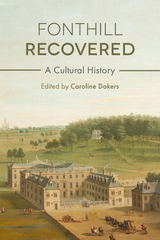
Fonthill Recovered draws on new research to explore the rich cultural history of this place where little remains today—a tower, a stable block, the ruins of what was once a kitchen, and an indentation in a field. The first half of the book traces the occupation of Fonthill from the Bronze Age to the twenty-first century. Some of the owners surpassed Beckford in terms of their wealth and political power—and even, in one case, their sexual proclivities. They include Charles I’s Chancellor of the Exchequer and the richest British commoner of the nineteenth century. The second half of the book consists of essays on specific topics, examining such crucial areas as the complex history of the designed landscape, the sources of the Beckfords’ wealth and their extensive art collection, and the recent appearance of the Abbey in a video game.
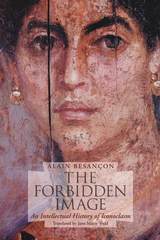
Philosophers and theologians have long engaged in intense debate and introspection over the representation of the deity, its possibilities and its proscriptions. The Forbidden Image traces the dual strains of “iconophilia” and iconoclasm, the privileging and prohibition of religious images, over a span of two and a half millennia in the West.
Alain Besançon’s work begins with a comprehensive examination of the status of the image in Greek, Judaic, Islamic, and Christian thought. The author then addresses arguments regarding the moral authority of the image in European Christianity from the medieval through the early modern periods. Besançon completes The Forbidden Image with an examination of how iconophilia and iconoclasm have been debated in the modern period.
“Even the reader who has heard something of the Byzantine quarrels about images and their theological background will be surprised by a learned and convincing interpretation of the works of Mondrian, Kandinsky, and Malevich in terms of religiously inspired iconoclasm. . . . This is an immensely rich and powerful masterpiece.”—Leszek Kolakowski, Times Literary Supplement
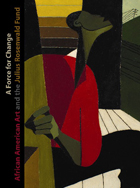
Considering canonical artists such as Rodin and Klee, seminal authors such as Kafka and Döblin, and largely neglected thinkers in aesthetics and art history such as those associated with Empathy Aesthetics, Maskarinec unpacks the manifold anthropological and aesthetic concerns and historical lineage embedded in the idea of form as the precarious achievement of uprightness.
The Forces of Form in German Modernism makes a decisive contribution to our understanding of modernism and to contemporary discussions about form, empathy, materiality, and human embodiment.

Developed through artistic research in the Weltkulturen Museum’s Weltkulturen Labor research lab, Foreign Exchange raises questions about the relationship between the museum’s educational and scientific aims and global trade. Together, essays by anthropologists, art historians, artists, and curators form an extended conversation around the historical accumulation and commodification of artifacts and, in particular, the representation of the human body in ethnographic photographs. Rounding out the volume are many previously unpublished photographs of works discussed. Contributing authors and artist include Peggy Buth, Minerva Cuevas, Gabriel Gbadamosi, David Lau, Tom McCarthy, David Weber-Krebs, and Luke Willis-Thompson.

But Wood shows that over the course of the fifteenth and early sixteenth centuries, emerging replication technologies—such as woodcut, copper engraving, and movable type—altered the relationship between artifacts and time. Mechanization highlighted the artifice, materials, and individual authorship necessary to create an object, calling into question the replica’s ability to represent a history that was not its own. Meanwhile, print catalyzed the new discipline of archaeological scholarship, which began to draw sharp distinctions between true and false claims about the past. Ultimately, as forged replicas lost their value as historical evidence, they found a new identity as the intentionally fictional image-making we have come to understand as art.
Forging a Mexican People shows how illustrated print culture helped to construct and deconstruct versions of “a people” in postrevolutionary Mexico.
Through meticulous research, Pablo Zavala uncovers the ways photographers, graphic artists, writers, and activists used print culture to challenge hegemonic conceptions of state-guided narratives and forge alternative collective subjectivities. This book offers a fresh perspective on the sociopolitical landscape of postrevolutionary Mexico, revealing how cultural artifacts simultaneously crafted and reflected the people vis-à-vis different political and social categories. By examining print culture, editorial practices, and related processes such as the creation, consumption, and distribution of said culture, Zavala’s research contributes to scholarship that has recently reexamined the construction of nationalism by moving away from the focus on state formation and addressing the horizontal and aesthetic dimensions in products by cultural producers from nonstate and grassroots political sectors.
Zavala examines the conceptual parameters of el pueblo by analyzing El Universal Ilustrado, El Machete, the Taller de Gráfica Popular, the protest graphic art used in Mexico City’s 1968 popular student movement, and graphic art used in California’s Chicano farmworkers’ struggle. Based on in-depth archival research, the work includes primary sources that have never been digitized, offering readers unique insights into the visual manifestations of Mexico’s postrevolutionary identity and their enduring significance.



Considering race as form across literature, theory, painting, and photography, Cécile Bishop’s Forms of Blackness explores the formal devices that make blackness both visible and recognizable. In keeping with black Francophone theorists like Édouard Glissant and Frantz Fanon, Bishop uses the ambiguities these aesthetic forms carry to explore a range of identity concepts like opacity, formlessness, and doubleness. Bishop puts blackness-as-race and blackness-as-form in dialogue, showing how race disrupts the concept of artistic autonomy and how the aesthetic challenges race as a self-evident visual phenomenon. Thought together, form does not isolate blackness from race but rather calls attention to the material substrate that turns race into a phenomenon that can be experienced through sense perception. Moving between careful analysis and experimental modes of critique, Forms of Blackness offers a new way of thinking about the politics of visibility and offers a pressing invitation to question the ways we interpret what we see.

From the signing of the Treaty of Waitangi between Indigenous and settler cultures to the emergence of the first-ever state-funded Māori television network, New Zealand has been a hotbed of Indigenous concerns. Given its history of colonization, coping with biculturalism is central to New Zealand life. Much of this “bicultural drama” plays out in the media and is molded by an anxiety surrounding the ongoing struggle over citizenship rights that is seated within the politics of recognition. The Fourth Eye brings together Indigenous and non-Indigenous scholars to provide a critical and comprehensive account of the intricate and complex relationship between the media and Māori culture.
Examining the Indigenous mediascape, The Fourth Eye shows how Māori filmmakers, actors, and media producers have depicted conflicts over citizenship rights and negotiated the representation of Indigenous people. From nineteenth-century Māori-language newspapers to contemporary Māori film and television, the contributors explore a variety of media forms including magazine cover stories, print advertisements, commercial images, and current Māori-language newspapers to illustrate the construction, expression, and production of indigeneity through media.
Focusing on New Zealand as a case study, the authors address the broader question: what is Indigenous media? While engaging with distinct themes such as the misrepresentation of Māori people in the media, access of Indigenous communities to media technologies, and the use of media for activism, the essays in this much-needed new collection articulate an Indigenous media landscape that converses with issues that reach far beyond New Zealand.
Contributors: Sue Abel, U of Auckland; Joost de Bruin, Victoria U of Wellington; Suzanne Duncan, U of Otago; Kevin Fisher, U of Otago; Allen Meek, Massey U; Lachy Paterson, U of Otago; Chris Prentice, U of Otago; Jay Scherer, U of Alberta; Jo Smith, Victoria U of Wellington; April Strickland; Stephen Turner, U of Auckland.
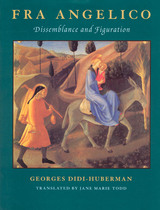
A Florentine painter who took Dominican vows, Fra Angelico (1400-1455) approached his work as a largely theological project. For him, the problems of representing the unrepresentable, of portraying the divine and the spiritual, mitigated the more secular breakthroughs in imitative technique. Didi-Huberman explores Fra Angelico's solutions to these problems—his use of color to signal approaching visibility, of marble to recall Christ's tomb, of paint drippings to simulate (or stimulate) holy anointing. He shows how the painter employed emptiness, visual transformation, and displacement to give form to the mystery of faith.
In the work of Fra Angelico, an alternate strain of Renaissance painting emerges to challenge rather than reinforce verisimilitude. Didi-Huberman traces this disruptive impulse through theological writings and iconographic evidence and identifies a widespread tradition in Renaissance art that ranges from Giotto's break with Byzantine image-making well into the sixteenth century. He reveals how the techniques that served this ultimately religious impulse may have anticipated the more abstract characteristics of modern art, such as color fields, paint spatterings, and the absence of color.
The book Fragile Identities investigates among other things the chances and also the possible endangerments of such a fragile self and asks for the resurging urgency of a contemporary concept of subjectivity. The publication combines international artistic and scholarly contributions, discussions and project documentations in relation to the second annual theme of the cx centre for interdisciplinary studies at the Academy of Fine Arts Munich.
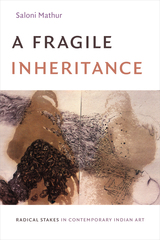
Sheriff begins her inquiry with an appraisal of Fragonard criticism, followed by an extensive and thoroughly original reading of selected works by Fragonard and of the eroticism encoded in them. Art and eroticism converge in a discussion of execution, in which Sheriff explores the changing conception of execution and elucidates its complex rhetorical and cultural underpinnings. Drawing on analytic methods from contemporary critical theory and an understanding of each work's cultural milieu, Sheriff pays particular attention throughout to the relation between beholder and work of art, which she views as manifest in the artist's preoccupation with the play between the real and the fictive. Scholars and students of art history, eighteenth-century culture and history, critical theory, literary criticism, and all those drawn to the work of this great French painter will find this work essential reading.
More than an introduction to the postmodern, The Frame and the Mirror advances our understanding of the contemporary world by relating its features to the peculiar characteristics of collage. Ultimately, Brockelman shows how collage demands that we reinterpret modernity, conceiving of it as suspended between a loss of certainty and a new kind of knowledge about the human condition. In doing so, his work challenges many of the claims made in the name of postmodernism—and offers in their place a new and ironic view of the cultural space in which contemporary and historical events occur.
Framing the Audience explores the cultural politics of the Great Depression and World War II through the prism of art appreciation. Isadora Helfgott interrogates the ideological and political motivations for breaking down barriers between fine art and popular culture. She charts the impact that changes in art appreciation had on the broader political, social, cultural, and artistic landscape.
Framing the Audience argues that efforts to expand the social basis of art became intertwined with—and helped shape—broader debates about national identity and the future of American political economy. Helfgott chronicles artists’ efforts toinfluence the conditions of artistic production and display. She highlights the influence of the Federal Art Project, the impact of the Museum of Modern Art as an institutional home for modernism in America and as an organizer of traveling exhibitions, and the efforts by LIFE and Fortune magazines to integrate art education into their visual record of modern life. In doing so, Helfgott makes critical observations about the changing relationship between art and the American public.
READERS
Browse our collection.
PUBLISHERS
See BiblioVault's publisher services.
STUDENT SERVICES
Files for college accessibility offices.
RECENTLY PUBLISHED



UChicago Accessibility Resources
home | accessibility | search | about | contact us
BiblioVault ® 2001 - 2026
The University of Chicago Press