
 A SCHOLARLY BOOK REPOSITORY
17 start with F start with F
"A premiere work offering a rich chronicle of weaving in Michigan. Colorful stories tell of Michigan's textile people, places, and events, and show the important role that this state played in preserving and progressing the culture of cloth locally and nationally. I came away with a new sense of pride and joy at being a part of this rich human history and inspired to continue exploring within this great tradition!"
---Chris Triola, Fiber Artist
"Fascination with Fiber is a well-documented history, with consequence! The authors reveal surprising continuity in relationships, with results that are far-reaching. Readers will be moved beyond border as they come to realize the extensive influences generated in Michigan."
---Gerhardt Knodel, Director, Cranbrook Academy of Art
Fascination with Fiber is the first complete look at Michigan's rich tradition of handweaving, from pioneer log cabin days to the contemporary era of digital computer-aided looms.
Michigan has been at the center of handweaving and fiber arts and crafts since early settlers brought their skills with them from countries where handicrafts and weaving were traditionally strong. The textiles they produced in their new country, from linens to coverlets to rugs, took on a distinctly American expression. In the twentieth century, the formation of guilds, craft communities, and formal art programs created a revival of interest in handweaving as an opportunity for artistic expression so that by latter part of the century the state played a vital role in the national fiber movement.
Weavers and historians themselves, authors Marie A. Gile and Marion T. Marzolf focus on the people and forces that have kept the craft of handweaving alive in Michigan and indeed throughout the country for over two centuries: a passionate group of individuals and weaving communities enlivened through shared necessity, opportunity, and creativity.
Gile and Marzolf base their book on oral histories, interviews, and documentary and artifact research. With its tales of colorful characters such as Mary Atwater, the gun-toting weaver from Montana who helped organize the handweaving industry; to the formation of the Michigan League of Handweavers in 1959; and the "Fascination with Fiber" exhibit that opened in 2004; Fascination with Fiber brings the story of handweaving in Michigan to life like no other book.
Marie A. Gile is Textile Specialist and Research Associate at Michigan State University Museum in Lansing. She has been a weaver and fiber artist for twenty-five years. Marion T. Marzolf is Professor Emerita in the Department of Journalism and Communication at the University of Michigan. Since retiring in 1995, she has taught basic weaving, has served as president of the Michigan League of Handweavers, and has exhibited in galleries statewide.

With essays that problematize issues such as ethical fashion’s self-appointed morality, the first-world notion that the environment should take priority over human development, the conflict between business profit and ethics, the unintended agendas involved in consuming green cosmetics or ethical culinary trends, and the discursive strategies of denial of the extreme cruelty in the procurement of animal skin and fur for use in fashion, Fashion and Ethics applies its uncompromising scrutiny to all areas of fashion. Throughout, the volume forces readers to confront the question: Does ethical fashion go deep enough into challenging unethical behavior or is it just a charade of good intentions?
The premier text to illustrate the impact of war on textiles, bodies, costume, art, and design, Fashion and War in Popular Culture will be warmly welcomed by scholars of fashion design and theory, historians of fashion, and those interested in theories of warfare and military science.
Tied to the Fashion Cities Africa exhibition at the Brighton Museum, the book gives much needed attention to four key African fashion scenes: Nairobi, Lagos, Casablanca, and Johannesburg—one from each region of the continent. Filled with interviews of leading African fashion designers, stylists, and commentators, alongside hundreds of exclusive street-style images, Fashion Cities Africa is a landmark book that should be celebrated in fashion houses the world over.
Despite the hard-earned successes of body positive, antiracist, and disability rights activists calling for diverse representation, the fashion industry has been slow to evolve. In Fashion Education: The Systemic Revolution, fashion educators share their experiences navigating, resisting, and transforming the narrow beauty and body ideals that have defined pedagogy within the discipline. The volume examines their challenges and successes, as well as practical strategies for countering narrow fashion education curricula. Educators share ways to radically redesign courses and decenter white supremacy, fatphobia, ableism, transphobia, and misogyny. Together, the chapters illuminate the critical role of fashion education in systematically eliminating body oppression and building a more inclusive profession.
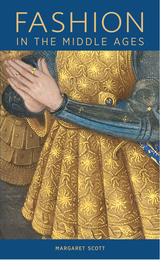
From the costly velvets and furs worn by kings to the undyed wools and rough linens of the peasantry, the clothing worn by the various classes in the Middle Ages played an integral role in medieval society. In addition to providing clues to status, profession, and/or geographic origin, textiles were a crucial element in the economies of many countries and cities.
Much of what is known about medieval fashion is gleaned from the pages of manuscripts, which serve as a rich source of imagery. This volume provides a detailed look at both the actual fabrics and composition of medieval clothing as well as the period’s attitude toward fashion through an exploration of illuminated manuscripts in the collection of the J. Paul Getty Museum. The last portion of the book is dedicated to the depiction of clothing in biblical times and the ancient world as seen through a medieval lens. Throughout, excerpts from literary sources of the period help shed light on the perceived role and function of fashion in daily life.
At a point when fashion studies are expanding and the fashion industry is at a crucial point of change, Fashion Knowledge makes a valuable contribution to the field. The book explores current issues in fashion research, with a focus on the relationship between theory and practice. This edited collection assembles academic essays and intellectual activism next to visual essays and artistic interventions, proposing a different concept for fashion research that eschews the traditional logic of academic fashion studies. It features acclaimed designers, artists, curators, and theorists whose work investigates the multi-faceted debates on the rise of practice-based research in fashion. Contributors look at new forms of fashion knowledge that are forming along with shifting practices, shedding light on the entanglement of fashion and politics in both contemporary and historical moments.
Fashion Projects was founded in New York in 2005 as a zine. It gradually morphed into a larger journal straddling the academic and general interest worlds, with international distribution and an ardent readership. It served as a platform to highlight the importance of fashion within current critical discourses through long-form interviews with a range of curators, critics, artists, and designers. This book collects the best articles from the journal, most issues of which are now unavailable.
From exploring the rise of digital fashion media with Penny Martin (the founding editor-in-chief of SHOWstudio) to the continued importance of connoisseurship with Harold Koda (former curator-in-chief of the Met’s Costume Institute), the anthology records the increasing centrality of fashion to contemporary critical discourse. The book is an index of a particular time within the fashion studies landscape and the attendant fields of fashion writing, fashion curation, and critical fashion practice during which the field witnessed a meteoric rise.


With nearly one hundred illustrations of garments and accessories that span two centuries of design, Fashioning America celebrates the achievements of a wide array of makers—especially immigrants, Native Americans, and Black Americans. Incorporating essays by fashion historians, curators, and journalists, this volume takes a fresh look at the country’s fashion history while exploring its close relationship with Hollywood and media in general, illuminating the role that American designers have played in shaping global visual culture and demonstrating why American fashion has long resonated around the world.
The Female Economy explores that lost world of women's dominance, showing how independent, often ambitious businesswomen and the sometimes imperious consumers they served gradually vanished from the scene as custom production gave way to a largely unskilled modern garment industry controlled by men. Wendy Gamber helps overturn the portrait of wage-earning women as docile souls who would find fulfillment only in marriage and motherhood. She combines labor history, women's history, business history, and the history of technology while exploring topics as wide-ranging as the history of pattern-making and the relationship between entrepreneurship and marriage.
A volume in the series The Working Class in American History, edited by David Brody, Alice Kessler-Harris, David Montgomery, and Sean Wilentz, and in the series Women in American History, edited by Anne Firor Scott, Nancy A. Hewitt, and Stephanie Shaw


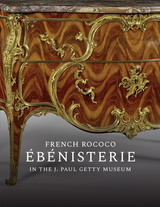
The first comprehensive catalogue of the Getty Museum’s significant collection of French Rococo ébénisterie furniture.
This catalogue focuses on French ébénisterie furniture in the Rococo style dating from 1735 to 1760. These splendid objects directly reflect the tastes of the Museum’s founder, J. Paul Getty, who started collecting in this area in 1938 and continued until his death in 1976.
The Museum’s collection is particularly rich in examples created by the most talented cabinet masters then active in Paris, including Bernard van Risenburgh II (after 1696–ca. 1766), Jacques Dubois (1694–1763), and Jean-François Oeben (1721–1763). Working for members of the French royal family and aristocracy, these craftsmen excelled at producing veneered and marquetried pieces of furniture (tables, cabinets, and chests of drawers) fashionable for their lavish surfaces, refined gilt-bronze mounts, and elaborate design. These objects were renowned throughout Europe at a time when Paris was considered the capital of good taste.
The entry on each work comprises both a curatorial section, with description and commentary, and a conservation report, with construction diagrams. An introduction by Anne-Lise Desmas traces the collection’s acquisition history, and two technical essays by Arlen Heginbotham present methodologies and findings on the analysis of gilt-bronze mounts and lacquer.
The free online edition of this open-access publication is available at www.getty.edu/publications/rococo/ and includes zoomable, high-resolution photography. Also available are free PDF, EPUB, and Kindle/MOBI downloads of the book, and JPG downloads of the main catalogue images.

From Submarines to Suburbs surveys the development, strategy, and effect of these campaigns over a span of twenty pivotal years. Cynthia Lee Henthorn takes a close look at how pre-fabricated suburban houses, high-tech kitchens, and miracle products developed from war-related industries were promoted as the hygienic solutions for establishing this better America, one led by the captains of free enterprise.
As Henthorn demonstrates, wartime advertising and marketing strategies tying consumer prosperity to war were easily adapted in the Cold War era, when a symbiotic relationship between military standing and standards of living intensified in a culture dependent on defense spending. Were the efforts to engineer a better America successful? Using documentary evidence in the form of numerous advertisements, From Submarines to Suburbs stands as a significant contribution to understanding how today’s “better” America evolved.

The role of modernist interior design in the construction of Italian nationalism
Along with the rise of Mussolini’s fascist regime, the interwar years in Italy also saw the widespread development of its modernist interior design and furnishing practices. While the regime’s politics were overtly manifest in monumental government architecture, Furnishing Fascism examines the subtler yet effective role of household goods and decor in the cultivation of Italy’s exclusionary sense of national identity.
Presenting a fresh look at the work of various architects and designers, including iconic figures such as Gio Ponti and Carlo Enrico Rava, Ignacio G. Galán explores how seemingly neutral products of everyday life contributed to the propagation of fascist ideology. Through extensive promotion in popular magazines and department stores, on the film sets of Cinecittà Studios, and throughout the country’s colonial territories, Italy’s modernist design practices were part of a larger political project that aimed to produce a totalizing image of cultural hegemony.
Interweaving design theory, architectural history, and media scholarship, Furnishing Fascism reexamines the period’s so-called minor arts to reveal the political entanglement of modernism in early twentieth-century Italy and offers valuable insight into the complications of cultural production under the auspices of authoritarian power.
Retail e-book files for this title are screen-reader friendly with images accompanied by short alt text and/or extended descriptions.
READERS
Browse our collection.
PUBLISHERS
See BiblioVault's publisher services.
STUDENT SERVICES
Files for college accessibility offices.
RECENTLY PUBLISHED




UChicago Accessibility Resources
home | accessibility | search | about | contact us
BiblioVault ® 2001 - 2026
The University of Chicago Press