
 A SCHOLARLY BOOK REPOSITORY
13 start with F start with F

In Faith and Meaning, one of Appalachian religion's most eloquent spokesmen reveals a people devoted to and thoughtful about their religion, and profoundly influenced by it. Loyal Jones's three decades of conversations and interviews, supplemented by documents such as sermons, testimonies, and articles of faith, articulate Southern Upland views on basic issues of the human condition—faith, God, the world, the Word, and the devil—as well as on community issues such as racial integration and women in the church. In their own voices these people describe their beliefs, their churches, and their lives, exposing a deep conviction tempered with humanity and humor.
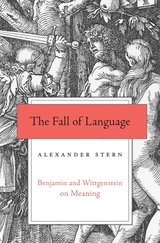
In the most comprehensive account to date of Walter Benjamin’s philosophy of language, Alexander Stern explores the nature of meaning by putting Benjamin in dialogue with Wittgenstein.
Known largely for his essays on culture, aesthetics, and literature, Walter Benjamin also wrote on the philosophy of language. This early work is famously obscure and considered hopelessly mystical by some. But for Alexander Stern, it contains important insights and anticipates—in some respects surpasses—the later thought of a central figure in the philosophy of language, Ludwig Wittgenstein.
As described in The Fall of Language, Benjamin argues that “language as such” is not a means for communicating an extra-linguistic reality but an all-encompassing medium of expression in which everything shares. Borrowing from Johann Georg Hamann’s understanding of God’s creation as communication to humankind, Benjamin writes that all things express meanings, and that human language does not impose meaning on the objective world but translates meanings already extant in it. He describes the transformations that language as such undergoes while making its way into human language as the “fall of language.” This is a fall from “names”—language that responds mimetically to reality—to signs that designate reality arbitrarily.
While Benjamin’s approach initially seems alien to Wittgenstein’s, both reject a designative understanding of language; both are preoccupied with Russell’s paradox; and both try to treat what Wittgenstein calls “the bewitchment of our understanding by means of language.” Putting Wittgenstein’s work in dialogue with Benjamin’s sheds light on its historical provenance and on the turn in Wittgenstein’s thought. Although the two philosophies diverge in crucial ways, in their comparison Stern finds paths for understanding what language is and what it does.
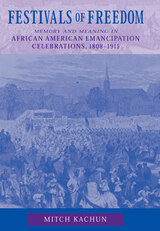
Excluded from July Fourth and other American nationalist rituals for most of this period, black activists used these festivals of freedom to encourage community building and race uplift. Kachun demonstrates that, even as these annual rituals helped define African Americans as a people by fostering a sense of shared history, heritage, and identity, they were also sites of ambiguity and conflict. Freedom celebrations served as occasions for debate over black representations in the public sphere, struggles for group leadership, and contests over collective memory and its meaning.
Based on extensive research in African American newspapers and oration texts, this book retraces a vital if often overlooked tradition in African American political culture and addresses important issues about black participation in the public sphere. By illuminating the origins of black Americans' public commemorations, it also helps explain why there have been increasing calls in recent years to make the "Juneteenth" observance of emancipation an American—not just an African American—day of commemoration.
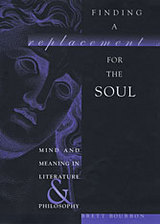
Approaching the study of literature as a unique form of the philosophy of language and mind—as a study of how we produce nonsense and imagine it as sense—this is a book about our human ways of making and losing meaning. Brett Bourbon asserts that our complex and variable relation with language defines a domain of meaning and being that is misconstrued and missed in philosophy, in literary studies, and in our ordinary understanding of what we are and how things make sense. Accordingly, his book seeks to demonstrate how the study of literature gives us the means to understand this relationship.
The book itself is framed by the literary and philosophical challenges presented by Joyce’s Finnegans Wake and Wittgenstein’s Philosophical Investigations. With reference to these books and the problems of interpretation and meaning that they pose, Bourbon makes a case for the fundamental philosophical character of the study of literature, and for its dependence on theories of meaning disguised as theories of mind. Within this context, he provides original accounts of what sentences, fictions, non-fictions, and poems are; produces a new account of the logical form of fiction and of the limits of interpretation that follow from it; and delineates a new and fruitful domain of inquiry in which literature, philosophy, and science intersect.
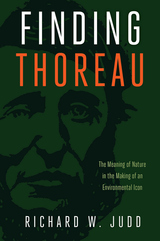
In his 1862 eulogy for Henry David Thoreau, Ralph Waldo Emerson reflected that his friend “dedicated his genius with such entire love to the fields, hills, and waters of his native town, that he made them known and interesting to all reading Americans, and to people over the sea.” Finding Thoreau traces the reception of Thoreau's work from the time of his death to his ascendancy as an environmental icon in the 1970s, revealing insights into American culture's conception of the environment.
Moving decade by decade through this period, Richard W. Judd unveils a cache of commentary from intellectuals, critics, and journalists to demonstrate the dynamism in the idea of nature, as Americans defined and redefined the organic world around them amidst shifting intellectual, creative, and political forces. This book tells the captivating story of one writer's rise from obscurity to fame through a cultural reappraisal of the work he left behind.

Divided into four parts, the papers collected in Volume II explore language in use; semantics and pragmatics; text and discourse; and language in society.
Divided into four parts, the papers collected in Volume III explore the organization of linguistic knowledge; the foundations of constructing grammar; construction grammar analyses; and constructions and language in use.
The meaning of any linguistic expression resides not only in the words, but also in the ways that those words are conveyed. In her new study, Miako N. P. Rankin highlights the crucial interrelatedness of form and meaning at all levels in order to consider specific types of American Sign Language (ASL) expression. In particular, Form, Meaning, and Focus in American Sign Language considers how ASL expresses non-agent focus, similar to the meaning of passive voice in English.
Rankin’s analyses of the form-meaning correspondences of ASL expressions of non-agent focus reveals an underlying pattern that can be traced across sentence and verb types. This pattern produces meanings with various levels of focus on the agent. Rankin has determined in her meticulous study that the pattern of form-meaning characteristic of non-agent focus in ASL is used prolifically in day-to-day language. The recognition of the frequency of this pattern holds implications regarding the acquisition of ASL, the development of curricula for teaching ASL, and the analysis of ASL discourse in effective interpretation.

The first book to explore the history of college fight songs as a culturally important phenomenon, From Dixie to Rocky Top zeroes in on the US South, where college football has forged a powerful, quasi-religious sense of meaning and identity throughout the region.
Tracing the story of Southeastern Conference (SEC) fight songs from the late nineteenth to the early twenty-first century, author Carrie Tipton places this popular repertory within the broader commercial music industry and uses fight songs to explore themes of authorship and copyright; the commodification of school spirit; and the construction of race, gender, and regional identity in Southern football culture.
This book unearths the history embedded in SEC football’s music traditions, drawing from the archives of the seventeen universities currently or formerly in the conference. Alongside rich primary sources, Tipton incorporates approaches and literature from sports history, Southern and American history, Southern and American studies, and musicology.
Chronicling iconic Southern fight songs’ origins, dissemination, meanings, and cultural reception over a turbulent century, From Dixie to Rocky Top weaves a compelling narrative around a virtually unstudied body of popular music.
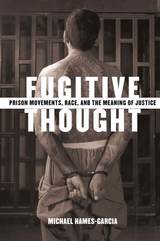
Looks to the philosophy and experience of prisoners to reinvigorate our concepts of justice, solidarity, and freedom
In Fugitive Thought, Michael Hames-García argues that writings by prisoners are instances of practical social theory that seek to transform the world. Unlike other authors who have studied prisons or legal theory, Hames-García views prisoners as political and social thinkers whose ideas are as valuable as those of lawyers and philosophers.
As key moral terms like “justice,” “solidarity,” and “freedom” have come under suspicion in the post–Civil Rights era, political discussions on the Left have reached an impasse. Fugitive Thought reexamines and reinvigorates these concepts through a fresh approach to philosophies of justice and freedom, combining the study of legal theory and of prison literature to show how the critiques and moral visions of dissidents and participants in prison movements can contribute to the shaping and realization of workable ethical conceptions. Fugitive Thought focuses on writings by black and Latina/o lawyers and prisoners to flesh out the philosophical underpinnings of ethical claims within legal theory and prison activism.
Investigations of Maya architecture have been among the chief vehicles for contemplating a great art tradition, the hieroglyphic writing system, and evaluating issues of comparative sociology. The powerful attraction of Maya architecture as an evocation of lost worlds, as a medium for the carved glyph and idol, and as a yardstick for measuring evolutionary complexity, makes it appropriate that attention be given to the buildings themselves, rather than simply treating them as media for the investigation of other issues, as valuable as these might be. The articles in this volume are of special value and importance in making architecture itself the focus of attention. At the same time that they give appropriate attention to the great architectural achievements of the Maya, they do not ignore the often evanescent residences of commoners. Rather than privileging cross-cultural comparisons or the anthropology of prehistoric peoples, however, structures remain at the forefront. In this, we reaffirm Maya architecture as one of the world’s great building traditions, allow for meaningful interdisciplinary exchange between archaeology, art history, and anthropology, and provide new ways of appreciating Maya culture, from a unique perspective.
The contributions presented here will surely mark a significant stage in the study of Maya architecture and the society that built it. These articles represent the advances that have been achieved in our understandings of the past, point toward avenues for further studies, and note the distance we have yet to travel in fully appreciating and understanding this ancient American culture and its material remains.
READERS
Browse our collection.
PUBLISHERS
See BiblioVault's publisher services.
STUDENT SERVICES
Files for college accessibility offices.
RECENTLY PUBLISHED






UChicago Accessibility Resources
home | accessibility | search | about | contact us
BiblioVault ® 2001 - 2025
The University of Chicago Press