
 A SCHOLARLY BOOK REPOSITORY
6 start with F start with F
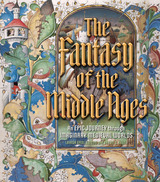
From the soaring castles of Sleeping Beauty to the bloody battles of Game of Thrones, from Middle-earth in The Lord of the Rings to mythical beasts in Dungeons & Dragons, and from Medieval Times to the Renaissance Faire, the Middle Ages have inspired artists, playwrights, filmmakers, gamers, and writers for centuries. Indeed, no other historical era has captured the imaginations of so many creators.
This volume aims to uncover the many reasons why the Middle Ages have proven so applicable to a variety of modern moments from the eighteenth through the twenty-first century. These “medieval” worlds are often the perfect ground for exploring contemporary cultural concerns and anxieties, saying much more about the time and place in which they were created than they do about the actual conditions of the medieval period. With over 140 color illustrations, from sources ranging from thirteenth-century illuminated manuscripts to contemporary films and video games, and a preface by Game of Thrones costume designer Michele Clapton, The Fantasy of the Middle Ages will surprise and delight both enthusiasts and scholars.
This title is published to accompany an exhibition on view at the J. Paul Getty Museum at the Getty Center from June 21 to September 11, 2022.
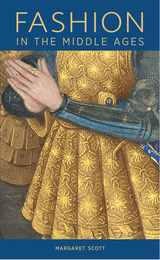
From the costly velvets and furs worn by kings to the undyed wools and rough linens of the peasantry, the clothing worn by the various classes in the Middle Ages played an integral role in medieval society. In addition to providing clues to status, profession, and/or geographic origin, textiles were a crucial element in the economies of many countries and cities.
Much of what is known about medieval fashion is gleaned from the pages of manuscripts, which serve as a rich source of imagery. This volume provides a detailed look at both the actual fabrics and composition of medieval clothing as well as the period’s attitude toward fashion through an exploration of illuminated manuscripts in the collection of the J. Paul Getty Museum. The last portion of the book is dedicated to the depiction of clothing in biblical times and the ancient world as seen through a medieval lens. Throughout, excerpts from literary sources of the period help shed light on the perceived role and function of fashion in daily life.
A fresh look at the relationship between theology and rhetoric.
Focusing on the Incarnation-the only dogma original to Christianity, in which God becomes man and history-this book offers a wide-ranging and theoretically sophisticated investigation of the relationship between Christian discourse and literature from Roman antiquity to the fourteenth century through a look at texts by Cicero, Quintilian, Martianus Capella, Tertullian, Saint Augustine, Alain of Lille, Guillaume de Machaut, and others.
Alexandre Leupin asks if it is possible to go beyond the dialectics of the Incarnated God and the Devil without harking back to the beautiful but partially obsolete truths of paganism and sophistry. Employing a method inspired by psychoanalysis, Leupin repudiates the sophistry and relativism of postmodern theory while calling into question old commonplaces that have been invalidated by modernity. He does so by attending to the larger and deeper structures hidden within the discourses of theology, rhetoric, literature, and psychoanalysis. The result is an innovative perspective on the Middle Ages, an original and promising view of the problems of Western literature in relation to theology and rhetoric. Alexandre Leupin is Gregorie Professor in French studies at Louisiana State University. He is the author of many books, including, in English translation, Barbarolexis: Medieval Literature and Sexuality (1989).David Laatsch is a Ph.D. candidate in the French department of Louisiana State University.

As Professor Dumézil and others have shown, some Indo-European peoples, after their conversion to Christianity, have reordered an earlier mythology to constitute the epic of their origins. For instance, Celtic mythology became history in one case and a source of fiction in another; and from the two texts, Welsh and Irish, by comparison one can reconstruct the original myth.
The Scandinavian nations provide a unique case, for here the pre-Christian texts are still read and have preserved much of the area's mythology in its original form. In addition, we have the work of Saxo and other known writers who composed and signed human transpositions of this mythology purporting to be history. This permits Professor Dumézil to make observations of a rare kind, for knowing something of the author's personality facilitates an understanding of the process of transposition itself.
Professor Dumézil shows how Saxo began by wanting only to tell the story of Denmark and its rulers as nobly as he could—and then later on to extend that narrative back in time. This led him to the only extant Scandinavian literature—that centered on Iceland—that he reordered and reinterpreted to the greater glory of Denmark.
In order to provide a content for the reign of the third king of the Danish Skoldunger dynasty, Hadingus, Saxo simply reworked a Scandinavian account of the career of the god Njördr. In this light Professor Dumézil reads The Saga of Hadingus as a fascinating substitution of a psychological and completely personal narrative for a story of purely social value.
This book contains six appendixes including two that consider the relationship between myth and folklore. They complement Professor Dumézil's careful exegeses and imaginative scholarship to make this the most important, specialized work on Scandinavian mythology available in English.
From Topic to Tale was first published in 1987. Minnesota Archive Editions uses digital technology to make long-unavailable books once again accessible, and are published unaltered from the original University of Minnesota Press editions.
The transition from the Middle Ages to the Renaissance has been discussed since the 1940s as a shift from a Latinate culture to one based on a vernacular language, and, since the 1960s, as a shift from orality to literacy. From Topic to Tale focuses on this multifaceted transition, but it poses the problem in different terms: it shows how a rhetorical tradition was transformed into a textual one, and ends ultimately in a discussion of the relationship between discourse and society.
The rise of French vernacular literacy in the twelfth century coincided with the emergence of logic as a powerful instrument of the human mind. With logic come a new concern for narrative coherence and form, a concern exemplified by the work of Chretien de Troyes. Many brilliant poetic achievements crystallized in the narrative art of Chretien, establishing an enduring tradition of literary technique for all of Europe. Eugene Vance explores the intellectual context of Chretien's vernacular literacy, and in particular, the interaction between the three "arts of language" (grammar, logic, and rhetoric) compromising the trivium. Until Vance, few critics have studied the contribution of logic to Chretiens poetics, nor have they assessed the ethical bond between rationalism and the new heroic code of romance.
Vance takes Chretien de Troyes' great romance, Yvain ou le chevalier au lion,as the centerpiece of the Twelfth-Century Renaissance. It is also central to his own thesis, which shows how Chretien forged a bold new vision of humans as social beings situated between beasts and angels and promulgated the symbolic powers of language, money, and heraldic art to regulate the effects of human desire. Vance's reading of the Yvain contributes not only to the intellectual history of the Middle Ages, but also to the continuing dialogue between contemporary critical theory and medieval culture.
Eugene Vance is professor of French and comparative literature at Emory University and principal editor of a University of Nebraska series, Regents Studies in Medieval Culture. Wlad Godzich is director of the Center for Humanistic Studies at the University of Minnesota and co-editor of the series Theory and History of Literature.
READERS
Browse our collection.
PUBLISHERS
See BiblioVault's publisher services.
STUDENT SERVICES
Files for college accessibility offices.
RECENTLY PUBLISHED


UChicago Accessibility Resources
home | accessibility | search | about | contact us
BiblioVault ® 2001 - 2026
The University of Chicago Press