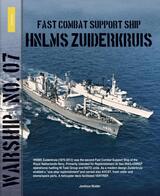
front cover of Fast Combat Support Ship HNLMS Zuiderkruis
Fast Combat Support Ship HNLMS Zuiderkruis
Jantinus Mulder
Amsterdam University Press, 2023
HNLMS Zuiderkruis (1975-2012) was the second Fast Combat Support Ship of the Royal Netherlands Navy. It was primarily intended for Replenishment At Sea, fueling task groups and NATO units. As a modern design Zuiderkruis enabled a “one stop replenishment” and also carried AVCAT, fresh water and spare parts. A helicopter deck facilitated vertical replenishment.
[more]

front cover of The First Fleets
The First Fleets
Colonial Navies of the British Atlantic World, 1630–1775
Benjamin C. Schaffer
University of Alabama Press, 2025

A revealing study on the little-known and misunderstood provincial navies established by North American British colonists

In The First Fleets, Benjamin C. Schaffer reveals how, contrary to widespread beliefs, the American colonies had a long tradition of independent naval defense decades before the Revolution. He demonstrates that Anglo-American governments established and maintained significant provincial naval forces and that the history of provincial navies illuminates broader aspects of colonial history and the colonies’ ultimate break with the British Crown.

Based on meticulous research, Schaffer recounts the sea-borne threats that American colonies faced from the French, Spanish, pirates, and others. He reviews colonial governance and the relationships between colonial governments and Great Britain. Highlighting Britain’s scant naval power in North America, Schaffer demonstrates how the vulnerable coastal colonies undertook their own self-defense.

Schaffer’s readable study offers many fascinating episodes from colonial history. Establishing a navy was controversial in pacifist-minded, Quaker-dominated Pennsylvania. South Carolina deployed its scout-boat navy to pursue enslaved Africans who fled colonial capture. The first paper money issued in North America was an initiative to pay for a naval expedition against French Quebec in 1690. These and other episodes show the intimate connection between these little-known provincial navies and the major sociopolitical developments of their day.

The First Fleets will be of great interest to historians and readers of early American history, particularly colonial maritime and naval activities. Readers interested in the political and military dynamics of pre-Revolutionary America, as well as enthusiasts of naval history and maritime trade, will find The First Fleets both a valuable resource and an engrossing narrative.


[more]

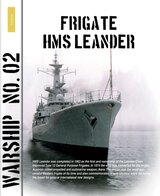
front cover of Frigate HMS Leander
Frigate HMS Leander
Jantinus Mulder
Amsterdam University Press, 2023
HMS Leander was completed in 1963 as the first ship of the Leander Class Improved Type 12 General Purpose Frigates. In 1974, she joined the 3rd Frigate Squadron, which included other Leander-class frigates. The design was the most successful Western frigate of its time and led to several new international designs.
[more]

front cover of Frigate HNLMS Jacob van Heemskerck
Frigate HNLMS Jacob van Heemskerck
Rindert van Zinderen-Bakker
Amsterdam University Press, 2023
The ships of the Jacob van Heemskerck class of the Royal Netherlands Navy were constructed as specialized air defense frigates. The two ships that were built served for about twenty years in the R.N.N. Since 2005, both ships are in service as the Almirante Latorre class in the Chilean Navy.
[more]

logo for Amsterdam University Press
Frigate USS Clark
Rindert van Zinderen-Bakker
Amsterdam University Press, 2023
The ships of the Oliver Hazard Perry-class were designed in the United States in the mid-1970’s as general-purpose escort vessels. They were inexpensive enough to be bought in large quantities and replace older ships. Meant to protect amphibious landing forces, supply and replenishment groups, and merchant convoys from submarines, they also became part of battleship-centric groups and aircraft battle/strike groups.
[more]

front cover of Frigate USS Clark
Frigate USS Clark
Rindert van Zinderen-Bakker
Amsterdam University Press, 2023
The ships of the Oliver Hazard Perry-class were designed in the United States in the mid-1970’s as general-purpose escort vessels. They were inexpensive enough to be bought in large quantities and replace older ships. Meant to protect amphibious landing forces, supply and replenishment groups, and merchant convoys from submarines, they also became part of battleship-centric groups and aircraft battle/strike groups.
[more]

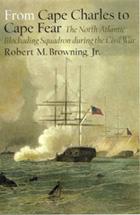
front cover of From Cape Charles to Cape Fear
From Cape Charles to Cape Fear
The North Atlantic Blockading Squadron during the Civil War
Robert M. Browning Jr.
University of Alabama Press, 2003

Examines naval logistics, tactics, and strategy employed by the Union blockade off the Atlantic coast of the Confederacy.

[more]

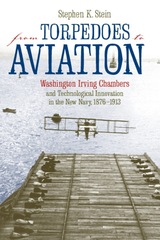
front cover of From Torpedoes to Aviation
From Torpedoes to Aviation
Washington Irving Chambers & Technological Innovation in the New Navy 1876 to 1913
Stephen K. Stein
University of Alabama Press, 2007

The central figure in the modernization of the U.S. Navy.

The career of Washington Irving Chambers spans a formative period in the development of the United States Navy: He entered the Naval Academy in the doldrum years of obsolete, often rotting ships, and left after he had helped like-minded officers convince Congress and the public of the need to adopt a new naval strategy built around a fleet of technologically advanced battleships. He also laid the groundwork for naval aviation and the important role it would play in the modern navy.

This work covers Chambers’s early naval career, his work at the new Office of Naval Intelligence, his participation in the Greeley Relief Expedition, and a survey for the projected isthmian canal through Nicaragua, before becoming the key advocate for naval modernization. As such, Chambers worked as a pioneering torpedo designer, supervised construction of the Maine, modernized the New York Navy Yard, and became a member of the first permanent faculty at the Naval War College.

During his long career, Chambers not only designed torpedoes, but also several warships, including a prototype Dreadnought-style battleship and a host of small devices that ranged from torpedo guidance systems to the first catapult for launching airplanes from ships. At the close of his career, Chambers purchased the navy’s first aircraft and founded its air arm. Working with Glenn Curtiss, Chambers guided a coalition of aviation enthusiasts and pioneers who popularized naval aviation and demonstrated its capabilities. Chambers arranged the first take-off and landing of an airplane from a ship and other demonstrations of naval aviation. Combined with his tireless advocacy for modernization, these contributions secured a place in naval and aviation history for the innovator.

[more]


Send via email Share on Facebook Share on Twitter