
 A SCHOLARLY BOOK REPOSITORY
18 start with F start with F

This book is the first history of the techniques, systems, and technologies used to evacuate wounded from the battlefield. Historically, the word ambulance described those facilities that provided temporary assistance to the wounded, thus distinguishing them from stationary hospitals where military personnel received more permanent care. Americans and British, however, applied the term to the two-to four-wheeled transport conveyances that carried wounded from the battlefield to the war hospitals.
With the aid of fifty-four illustrations, John S. Haller traces the histories of both meanings of the word from the Napoleonic era through the Great War and its aftermath. He concentrates on the development of British and American evacuation procedures and technology with a focus on hand conveyances and wheeled vehicles. His intent is not to cover all aspects of medical evacuation but to accurately recount the common medical evacuation problems, incongruities, and controversies that existed for warring nations.
In Fatal Words, Steven Cushing explains how miscommunication has led to dozens of aircraft disasters, and he proposes innovative solutions for preventing them. He examines ambiguities in language when aviation jargon and colloquial English are mixed, when a word is used that has different meanings, and when different words are used that sound alike. To remedy these problems, Cushing proposes a visual communication system and a computerized voice mechanism to help clear up confusing language.
Fatal Words is an accessible explanation of some of the most notorious aircraft tragedies of our time, and it will appeal to scholars in communications, linguistics, and cognitive science, to aviation experts, and to general readers.

It was in production for nineteen years. 756 aircraft were completed, including the prototypes and pre-production models. The assembly lines were finally closed in 1977. The Fiat G.91 enjoyed a long service life that extended over 35 years. It was widely used by Portugal in the Portuguese Colonial War in Africa.
Although introductions to courses in finance exist for a variety of fields, Robert W. Kaps provides the first text to address the subject from an aviation viewpoint. Relying on his vast experience—twenty-plus years in the airline industry and more than thirty years in aviation—Kaps seeks not only to prepare students for careers in the aviation field but also to evoke in these students an excitement about the business. Specifically, he shows students how airlines, airports, and aviation are financed. Each chapter contains examples and illustrations and ends with suggested readings and references.
Following his discussion of financial management and accounting procedures, Kaps turns to financial management and sources of financial information. Here he discusses types of business organizations, corporate goals, business ethics, maximizing share price, and sources of financial information.
Kaps also covers debt markets, financial statements, air transport sector revenue generation, and air transport operating cost management, including cost administration and labor costs, fuel, and landing fees and rentals. He describes in depth air transport yield management systems and airport financing, including revenues, ownership, operations, revenue generation, funding, allocation of Air Improvement Program funds, bonds, and passenger facility charges.
Kaps concludes with a discussion of the preparation of a business plan, which includes advice about starting and running a business. He also provides two typical business plan outlines. While the elements of fiscal management in aviation follow generally accepted accounting principles, many nuances are germane only to the airline industry. Kaps provides a basic understanding of the principles that are applicable throughout the airline industry.
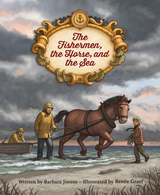
This beautifully illustrated children’s book based on a true story recounts a dramatic rescue on Lake Michigan and introduces young readers to Lester Smith and his family, who founded Port Washington’s long-running and beloved Smith Bros. Fish Shanty. Educational materials including definitions, an illustrated map of Lake Michigan, and short biographies of the story’s featured characters supplement this engaging story for elementary-age readers.

The C.X is a little-known member of the Dutch Fokker stable. Just like the D.XXI this biplane served in the air forces of two little neutral countries on the eve of World War II. Both fought gallantly in a war of David versus Goliath proportions, and the complete operational history of the type spans a total of 25 years. In retrospect, the C.X was the last fighting biplane type built by Fokker and the company's last pre-war military type to survive.



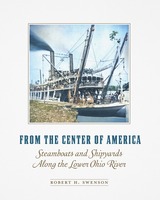
Charting the legacy of mid-America's shipyards and iconic steamboats
Before the railroad stitched together the American landscape, the dominant mode of transportation in the United States was by steamboat. These grand vessels, their iconic paddlewheels churning the country’s rivers, have long captured the national imagination as symbols of innovation and adventure.
In the heart of America, four major rivers converge—the Cumberland and Tennessee with the Ohio; then the Ohio with the Mississippi. These three confluences, which author Robert Swenson christens the Four Rivers Reach, played a unique role in the development of the steamboats that dominated American continental transport for almost 100 years. Between 1825 and 1936, the river towns of Smithland, Paducah, Metropolis, Mound City, and Cairo launched 295 wood-hulled, steam-powered vessels. Drawing from a wealth of archival sources, Swenson presents detailed histories of these steamboats over a span of 110 years, accompanied by nearly one hundred illustrations and photographs.
The book focuses on distinct events in steamboat history, tracing the impact of these shipyards on the economies and communities of the river towns where they were built. It reveals how the availability of steamboats along this sixty-mile Reach affected migration, politics, and the US economy of the nineteenth century. Steamboats built at the Four Rivers Reach played pivotal roles in the forced relocation of Native Americans from southern Appalachia to Oklahoma, the outcome of the Civil War, and the Montana gold rush. From the Center of America demonstrates how steamboat building shaped the culture, people, and economy of this region—and how, in turn, the area and its steamships influenced the growth of the young United States.

The first comprehensive history and overview of U.S. nuclear waste law and regulation, Fuel Cycle to Nowhere traces sixty years of nuclear weapons programs, the growth of nuclear power, and their waste legacies, the rise of environmentalism, and the responses of federal agencies. Richard and Jane Stewart expertly analyze the changing policies for storing low-level waste, transuranic waste, spent nuclear fuel, and high-level waste and for regulating their transport by rail and by truck. They also chronicle "a tale of two repositories"--one, the Waste Isolation Pilot Plant in New Mexico, known as WIPP, the world's only operating deep geologic nuclear waste disposal facility, which emerged from a contentious but ultimately successful struggle between federal and state interests; the other, Yucca Mountain, mandated top down by Congress and a failure.
Fuel Cycle to Nowhere provides the critical information and analysis on the waste disposal issues and solutions that the commission, Congress, the administration, journalists, policymakers, and the public so urgently need.
This book is a project of the Consortium for Risk Evaluation with Stakeholder Participation (CRESP), a Vanderbilt University-led, multi-university consortium supported as a cooperative agreement by the U.S. Department of Energy, Office of Environmental This book is a project of the Consortium for Risk Evaluation with Stakeholder Participation (CRESP), a Vanderbilt University-led, multi-university consortium supported as a cooperative agreement by the U.S. Department of Energy, Office of Environmental Management to support safe, effective, publicly credible, risk informed management of existing and future nuclear waste from government and civilian sources through independent strategic analysis, review, applied research and education.
READERS
Browse our collection.
PUBLISHERS
See BiblioVault's publisher services.
STUDENT SERVICES
Files for college accessibility offices.
RECENTLY PUBLISHED




UChicago Accessibility Resources
home | accessibility | search | about | contact us
BiblioVault ® 2001 - 2026
The University of Chicago Press