
 A SCHOLARLY BOOK REPOSITORY
17 start with G start with G
The prehistoric agricultural systems of the New World provided the foundations for a diverse set of complex social developments ranging from the puebloan societies of the American Southwest to the archaic state polities of Mesoamerica and the Andean region. From the tropical forests of Central America to the arid environments or northern New Mexico, Native American farmers made use of a distinctive set of cultigens and cropping systems that supported—with varying degrees of success—growing populations and expanding economies. Lacking most domesticated animals, so important to the mixed agricultural systems of the Old World, Precolumbian farmers developed intensive and resilient systems of agricultural production. These systems supported large societies of people who altered the landscapes they inhabited and generated a unique archaeological record of the evolution of farming in the New World.

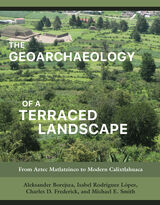
Working at a settlement in the Toluca Valley of central Mexico, the authors used fieldwalking, excavation, soil and artifact analyses, maps, aerial photos, land deeds, and litigation records to reconstruct the changing landscape through time. Exploiting the methodologies and techniques of several disciplines, they bring context to eight centuries of the region’s agrarian history, exploring the effects of the Aztec and Spanish Empires, reform, and revolution on the physical shape of the Mexican countryside and the livelihoods of its people. Accessible to specialists and nonspecialists alike, this well-illustrated and well-organized volume provides a step-by-step guide that can be applied to the study of terraced landscapes anywhere in the world.
The four authors share an interest in terraced landscapes and have worked together and on their own on a variety of archaeological projects in Mesoamerica, the Mediterranean, Poland, and the United Kingdom.
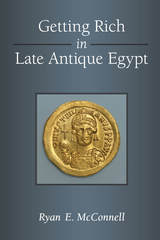
Ryan E. McConnell connects the family’s rise in wealth and status to its role in tax collection on behalf of the Byzantine state, rather than a reliance on productive surpluses. Close analysis of low- and high-level accounts from the Apion estate, as well as documentation from comparable Roman and Byzantine Egyptian estates, corroborate this conclusion. Additionally, McConnell offers a third way into the ongoing debate over whether the Apions’ relationship with the state was antagonistic or cooperative, concluding that the relationship was that of parties in a negotiation, with each side seeking to maximize its own benefit. The application of modern economic concepts—as well as comparisons to the economies of Athens, Rome, Ptolemaic Egypt, and Early Modern France—further illuminate the structure and function of the estate in Late Antique Egypt.
Getting Rich in Late Antique Egypt will be a valuable resource for philologists, archaeologists, papyrologists, and scholars of Late Antiquity. It will also interest scholars of agricultural, social, and economic history.
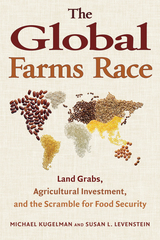
The debate over large-scale land acquisition is typically polarized, with critics lambasting it as a form of “neocolonialism,” and proponents lauding it as an elixir for the poor yields, inefficient technology, and unemployment plaguing global agriculture. The Global Farms Race instead offers diverse perspectives, featuring contributions from agricultural investment consultants, farmers’ organizations, international NGOs, and academics. The book addresses historical context, environmental impacts, and social effects, and covers all the major geographic areas of investment.
Nearly 230 million hectares of farmland—an area equivalent to the size of Western Europe—have been sold or leased since 2001, with most of these transactions occurring since 2008. As the deals continue to increase, it is imperative for anyone concerned with food security to understand them and their consequences. The Global Farms Race is a critical resource to develop that understanding.
Highlighting the critical role of midwestern farmers in the creation of the American Century
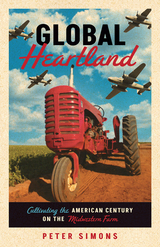
Though often left out of the story of the making of the American Century, the farmers of the Midwest were at its center, fueling the nation’s growing power in the midtwentieth century. In Global Heartland, Peter Simons explores how, after decades of slipping to the margins of an urbanizing economy, these farmers assumed renewed strategic and cultural importance as they produced essential sustenance for overseas troops and food rations for a domestic population.
During the mid-1900s, once-isolationist midwestern farmers came to see the continental interior not as an insulated space but as an environmentally rich landscape that mandated them to accept a larger stake in global affairs. Simons traces this transformation from an older agrarian internationalism rooted in religion and ties to family abroad to illuminate the increasing influence of the U.S. agricultural community during the Cold War. Examining regional political parties, Lend-Lease programs, wartime mass media, and farmer-led relief programs, and interspersing this history with vignettes revisiting the Mercy Wheat campaign of 1947, the postwar International Farm Youth Exchange, and the Flying Farmers organization, Simons offers an enlightening consideration of midwestern farmers’ involvement in America’s international ascent.
Unique in its focus on farmers and their work rather than the more common attention to food or agricultural commodities, Global Heartland complicates and expands ideas of the farm industry’s role in American history.
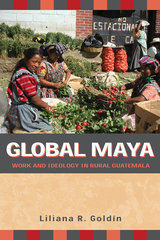
For more than a decade, Liliana Goldín observed in highland towns both the intensification of various forms of production and their growing links to wider markets. In this first book to compare economic ideology across a range of production systems, she examines how people make a living and how they think about their options, practices, and constraints. Drawing on interviews and surveys—even retellings of traditional narratives—she reveals how contemporary Maya respond to the increasingly globalized yet locally circumscribed conditions in which they work.
Goldín presents four case studies: cottage industries devoted to garment production, vegetable growing for internal and border markets reached through direct commerce, crops grown for export, and wage labor in garment assembly factories. By comparing generational and gendered differences among workers, she reveals not only complexities of change but also how these complexities arereflected in changing attitudes, understandings, and aspirations that characterize people’s economic ideology. Further, she shows that as rural people take on diverse economic activities, they also reinterpret their views on such matters as accumulation, cooperation, competition, division of labor, and community solidarity.
Global Maya explores global processes in local terms, revealing the interplay of traditional values, household economics, and the inescapable conditions of demographic growth, a shrinking land base, and a global economy always looking for cheap labor. It offers a wealth of new insights not only for Maya scholars but also for anyone concerned with the effects of globalization on the Third World.
Grain Storage was first published in 1969. Minnesota Archive Editions uses digital technology to make long-unavailable books once again accessible, and are published unaltered from the original University of Minnesota Press editions.
The deterioration or spoilage of stored grain is a problem of serious dimension, both from the standpoint of the financial balance sheet of those engaged in commercial grain enterprises and as a formidable factor in the worldwide fight against hunger. In this useful book the authors present practical information, in non-technical language, about the causes and methods of preventing the deterioration of stored grains and seeds.
The emphasis is on the role of fungi but material also is included on problems with insects, mites, and rodents in connection with grain storage. The fungi are of prime importance since not until recently have they been recognized as a major cause of loss of quality in grains and seeds. Even today many of those who deal with grains, from warehouses to management personnel, fail to realize that fungi may play a decisive role in their operations.
The book will be of special interest and value to grain merchants and processors, grain elevator managers and operators, grain inspectors, agronomists and agricultural economists concerned with crop production, and many others in agricultural or food processing fields.
Grass Productivity is a prodigiously documented textbook of scientific information concerning every aspect of management "where the cow and grass meet." Andre Voisin's "rational grazing" method maximizes productivity in both grass and cattle operations.
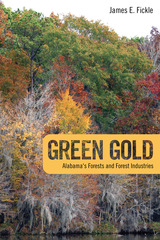
Green Gold is a thorough and valuable compilation of information on Alabama’s timber and forest products industry, the largest manufacturing industry in the state.
Alabama has the third-largest commercial forest in the nation, after only Georgia and Oregon. Fully two-thirds of the state’s land supports the growth of over fifteen billion trees on twenty-two million acres, which explains why Alabama looks entirely green from space. Green Gold presents the story of human use of and impact on Alabama’s forests from pioneer days to the present, as James E. Fickle chronicles the history of the industry from unbridled greed and exploitation through virtual abandonment to revival, restoration, and enlightened stewardship.
As the state’s largest manufacturing industry, forest products have traditionally included naval stores such as tar, pitch, and turpentine, especially in the southern longleaf stands; sawmill lumber, both hardwood and pine; and pulp and paper milling. Green Gold documents all aspects of the industry, including the advent of “scientific forestry” and the development of reforestation practices with sustained yields. Also addressed are the historical impacts of Native Americans and of early settlers who used axes, saws, and water- and steam-powered sawmills to clear and utilize forests. Along with an account of railroad logging and the big mills of the lumber bonanza days of the late nineteenth and early twentieth centuries, the book also chronicles the arrival of professional foresters to the state, who began to deal with the devastating legacy of “cut out and get out” logging and to fight the perennial curse of woods arson. Finally, Green Gold examines the rise of the tree farm movement, the rebirth of large-scale lumbering, the advent of modern environmental concerns, and the movement toward the “Fourth Forest” in Alabama.
A Copublication with the Alabama Forestry Foundation
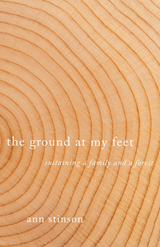
The Ground at My Feet is a memoir about loss and grief as well as a portrait of a family, a region, and an industry. Combining personal story and research, Stinson weaves essays, poems, history, and science into a rich and layered account of life in a family forest in the Pacific Northwest. She maps interactions between the land and its people over two centuries: the Cowlitz peoples, homesteaders, and several generations of logging families who have worked the property. She follows her family’s logs as they become lumber for fence boards and suburban homes, touring a local cedar mill and traveling with her father to visit mills in Japan.
Stinson adds a landowner’s voice to conversations about the human tendency to demand more of the land than it can sustain. With its uniquely personal view of the Pacific Northwest’s timber and forestry heritage, The Ground at My Feet is an engaging addition to the literature of the landscape and ecology of the West.
Normal0falsefalsefalseMicrosoftInternetExplorer4
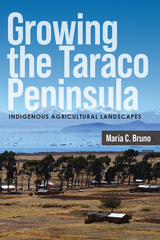
Beginning with the first small-scale communities of the Formative period (1500 BCE–500 CE) through the development of the Tiwanaku state (500–1100 CE), Bruno draws upon ethnographic insights from modern-day Indigenous farming practices on the peninsula as well as archaeological evidence from excavations at four sites to explore the landscapes and human-plant relationships that Taraco communities created through their agricultural practices. Through evaluation of environmental data on climate and land-use dynamics—rainfall, lake level, and soil character and distribution—she proposes a new hypothesis of how raised-field agriculture may have emerged in the region. With a detailed analysis of foodways at the Kala Uyuni site, her study reveals how Indigenous Taraco communities sustainably incorporated crops and wild plants into their daily and special-occasion meals, connecting the agricultural landscapes to local and regional social and political dynamics.
Bringing together several indicators of the region’s long-term history and demonstrating that shifts in agriculture do not neatly correspond to the changes traditionally highlighted by archaeological culture histories, Growing the Taraco Peninsula reveals Indigenous landscape creation through farming on the Taraco peninsula as a critical example of sustainability. This valuable contribution to Andean archaeology is also of interest to scholars, students, and the general reader concerned about the environment, sustainable farming, sustainability, Andean history, and the Indigenous peoples of the Americas.
READERS
Browse our collection.
PUBLISHERS
See BiblioVault's publisher services.
STUDENT SERVICES
Files for college accessibility offices.
RECENTLY PUBLISHED




UChicago Accessibility Resources
home | accessibility | search | about | contact us
BiblioVault ® 2001 - 2026
The University of Chicago Press