
 A SCHOLARLY BOOK REPOSITORY
12 start with G start with G
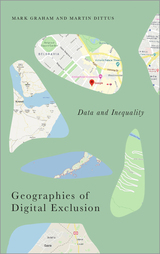
Today's urban environments are layered with data and algorithms that fundamentally shape how we perceive and move through space. But are our digitally dense environments continuing to amplify inequalities rather than alleviate them? This book looks at the key contours of information inequality, and who, what and where gets left out.
Platforms like Google Maps and Wikipedia have become important gateways to understanding the world, and yet they are characterized by significant gaps and biases, often driven by processes of exclusion. As a result, their digital augmentations tend to be refractions rather than reflections: they highlight only some facets of the world at the expense of others.
This doesn't mean that more equitable futures aren't possible. By outlining the mechanisms through which our digital and material worlds intersect, the authors conclude with a roadmap for what alternative digital geographies might look like.

During the Great Migration, Black Americans sought new lives in midwestern small towns only to confront the pervasive efforts of white residents determined to maintain their area’s preferred cultural and racial identity. Jennifer Sdunzik explores this widespread phenomenon by examining how it played out in one midwestern community. Sdunzik merges state and communal histories, interviews and analyses of population data, and spatial and ethnographic materials to create a rich public history that reclaims Black contributions and history. She also explores the conscious and unconscious white actions that all but erased Black Americans--and the terror and exclusion used against them--from the history of many midwestern communities.
An innovative challenge to myth and perceived wisdom, The Geography of Hate reveals the socioeconomic, political, and cultural forces that prevailed in midwestern towns and helps explain the systemic racism and endemic nativism that remain entrenched in American life.

Historian Gilad Margalit eloquently fills a tragic gap in the historical record with this sweeping examination of the plight of Gypsies in Germany before, during, and since the era of the Third Reich.
Germany and Its Gypsies reveals the painful record of the official treatment of the German Gypsies, a people whose future, in the shadow of Auschwitz, remains uncertain. Margalit follows the story from the heightened racism of the nineteenth century to the National Socialist genocidal policies that resulted in the murder of most German Gypsies, from the shifting attitudes in the two Germanys in 1945 through reunification and up to the present day.
Drawing upon a rich variety of sources, Margalit considers the pivotal historic events, legal arguments, debates, and changing attitudes toward the status of the German Gypsies and shines a vitally important light upon the issue of ethnic groups and their victimization in society. The result is a powerful and unforgettable testament.
The volume's European-themed topics explore why three communities of medieval people turned to mob violence, and the ways exclusion from formal institutions fueled peasant rough justice in Russia. Essays on Latin America examine how lynching in the United States influenced Brazilian debates on race and informal justice, and how shifts in religious and political power drove lynching in twentieth-century Mexico. Finally, scholars delve into English Canadians' use of racist and mob violence to craft identity; the Communist Party's Depression-era campaign against lynching in the United States; and the transnational links that helped form--and later emanated from--Wisconsin's notoriously violent skinhead movement in the late twentieth century.
Contributors: Brent M. S. Campney, Amy Chazkel, Stephen P. Frank, Dean J. Kotlowski, Michael J. Pfeifer, Gema Santamaría, Ryan Shaffer, and Hannah Skoda.
Digital freelance platforms promise workers flexibility, independence, and access to a global labor market. But what does organizing and positioning oneself in this environment look like? Global Platform Work focuses on the everyday lives of graphic designers in India who use gig platforms to connect to a global client base. Drawing on interviews, observations, and photo diaries, Anna Oechslen describes how important it is for gig workers to constantly put themselves in a positive light, build relationships, and adapt to an ever-changing work environment. In doing so, she formulates gig work as making and sustaining relationships and sheds light on everyday practices that common understandings of work often leave unconsidered.
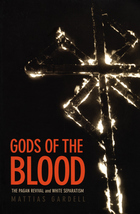
Gods of the Blood details the trends that have converged to fuel militant paganism in the United States: anti-government sentiments inflamed by such events as Ruby Ridge and Waco, the rise of the white power music industry (including whitenoise, dark ambient, and hatecore), the extraordinary reach of modern communications technologies, and feelings of economic and cultural marginalization in the face of globalization and increasing racial and ethnic diversity of the American population. Gardell elucidates how racist pagan beliefs are formed out of various combinations of conspiracy theories, anti-Semitism, warrior ideology, populism, beliefs in racial separatism, Klandom, skinhead culture, and tenets of national socialism. He shows how these convictions are further animated by an array of thought selectively derived from thinkers including Nietzche, historian Oswald Spengler, Carl Jung, and racist mystics. Scrupulously attentive to the complexities of racist paganism as it is lived and practiced, Gods of the Blood is a fascinating, disturbing, and important portrait of the virulent undercurrents of certain kinds of violence in America today.
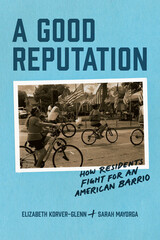
Neighborhoods have the power to form significant parts of our worlds and identities. A neighborhood’s reputation, however, doesn’t always match up to how residents see themselves or wish to be seen. The distance between residents’ desires and their environment can profoundly shape neighborhood life.
In A Good Reputation, sociologists Elizabeth Korver-Glenn and Sarah Mayorga delve into the development and transformation of the reputation of Northside, a predominantly Latinx barrio in Houston. Drawing on two years of ethnographic research and in-depth interviews with residents, developers, and other neighborhood stakeholders, the authors show that people’s perceptions of their neighborhoods are essential to understanding urban inequality and poverty. Korver-Glenn and Mayorga’s empirically detailed account of disputes over neighborhood reputation helps readers understand the complexity of high-poverty urban neighborhoods, demonstrating that gentrification is a more complicated and irregular process than existing accounts of urban inequality would suggest. Offering insightful theoretical analysis and compelling narrative threads from understudied communities, A Good Reputation will yield insights for scholars of race and ethnicity, urban planning, and beyond.
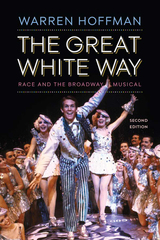
Now in a new second edition, The Great White Way is the first book to reveal the racial politics, content, and subtexts that have haunted musicals for almost one hundred years from Show Boat (1927) to Hamilton (2015). This revised edition includes a new introduction and conclusion, updated chapters, as well as a brand-new chapter that looks at the blockbuster musicals The Book of Mormon and Hamilton.
Musicals mirror their time periods and reflect the political and social issues of their day. Warren Hoffman investigates the thematic content of the Broadway musical and considers how musicals work on a structural level, allowing them to simultaneously present and hide their racial agendas in plain view of their audiences. While the musical is informed by the cultural contributions of African Americans and Jewish immigrants, Hoffman argues that ultimately the history of the American musical is the history of white identity in the United States.
Presented chronologically, The Great White Way shows how perceptions of race altered over time and how musicals dealt with those changes. Hoffman focuses first on shows leading up to and comprising the Golden Age of Broadway (1927–1960s), then turns his attention to the revivals and nostalgic vehicles that defined the final quarter of the twentieth century. He offers entirely new and surprising takes on shows from the American musical canon—Show Boat (1927), Oklahoma! (1943), Annie Get Your Gun (1946), The Music Man (1957), West Side Story (1957), A Chorus Line (1975), and 42nd Street (1980), among others. In addition to a new chapter on Hamilton and The Book of Mormon, this revised edition brings The Great White Way fully into the twenty-first century with an examination of jukebox musicals and the role of off-Broadway and regional theaters in the development of the American musical.
New archival research on the creators who produced and wrote these shows, including Leonard Bernstein, Jerome Robbins, Stephen Sondheim, and Edward Kleban, will have theater fans and scholars rethinking forever how they view this popular American entertainment.
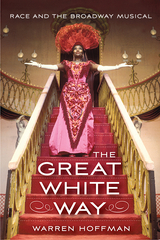
Broadway musicals are one of America’s most beloved art forms and play to millions of people each year. But what do these shows, which are often thought to be just frothy entertainment, really have to say about our country and who we are as a nation?
The Great White Way is the first book to reveal the racial politics, content, and subtexts that have haunted musicals for almost one hundred years from Show Boat (1927) to The Scottsboro Boys (2011). Musicals mirror their time periods and reflect the political and social issues of their day. Warren Hoffman investigates the thematic content of the Broadway musical and considers how musicals work on a structural level, allowing them to simultaneously present and hide their racial agendas in plain view of their audiences. While the musical is informed by the cultural contributions of African Americans and Jewish immigrants, Hoffman argues that ultimately the history of the American musical is the history of white identity in the United States.
Presented chronologically, The Great White Way shows how perceptions of race altered over time and how musicals dealt with those changes. Hoffman focuses first on shows leading up to and comprising the Golden Age of Broadway (1927–1960s), then turns his attention to the revivals and nostalgic vehicles that defined the final quarter of the twentieth century. He offers entirely new and surprising takes on shows from the American musical canon—Show Boat (1927), Oklahoma! (1943), Annie Get YourGun (1946), The Music Man (1957), West Side Story (1957), A Chorus Line (1975), and 42nd Street (1980), among others.
New archival research on the creators who produced and wrote these shows, including Leonard Bernstein, Jerome Robbins, Stephen Sondheim, and Edward Kleban, will have theater fans and scholars rethinking forever how they view this popular American entertainment.
Illuminates how borough residents, urban planners, and politicians used environmental policy to cement a racially restrictive landscape.
Though it was once home to the world’s largest landfill, today Staten Island boasts thousands of acres of parklands, dozens of public-private conservation arrangements, and four ecological zoning districts. In this book, Patrick D. Nugent details the political forces that gave rise to this wealth of greenery in a famously dense city. He demonstrates how postwar economic and political trajectories intersected in the 1960s with the rising consciousness of environmentalism to create a distinctive laboratory in Staten Island, where white communities and politicians heeded the rising call for the preservation of green space—but often as a tool to maintain racial segregation. Ecological zoning, public-private park management, conservation easement, environmental litigation, and other strategies created a lush, discriminatory landscape. Nugent refers to these policies as greenlining.
The Greenlining of Staten Island shows that the political and environmental history of Staten Island is key to understanding how environmentalism has been used to reinforce racial discrimination, not just in New York City, but nationwide. By the mid-1970s, conservationists had embraced urban planning that preserved low-density housing districts and bolstered the sprawling and segregated landscape that took shape in metropolitan America over the coming decades. In exploring the gap between the modern environmental movement’s ambitious goals and its tangible outcomes, Nugent excavates important lessons for contemporary city dwellers debating zoning reform and planning for climate change’s impending effects.
READERS
Browse our collection.
PUBLISHERS
See BiblioVault's publisher services.
STUDENT SERVICES
Files for college accessibility offices.
RECENTLY PUBLISHED





UChicago Accessibility Resources
home | accessibility | search | about | contact us
BiblioVault ® 2001 - 2026
The University of Chicago Press