
 A SCHOLARLY BOOK REPOSITORY
4 start with G start with G
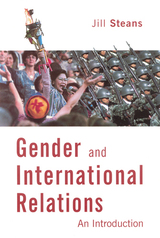
Until relatively recently, little had been written about gender issues in international relations despite the increased importance of the study of gender in other areas of the social sciences. Gender and International Relations fills that gap, providing a clear and accessible guide to the study of gender issues, feminist theories, and international relations. Steans illustrates how gender is central to nationalisms and political identity, the state, citizenship and conceptions of political community, security, and global political economy and development. Drawing on feminist scholarship from across the social sciences, she demonstrates the uses of feminism as critique. She also introduces readers to contemporary theoretical debates in international relations using concrete concerns and easily understandable issues to ground the discussion.
The book does not construct a single feminist theory of international relations nor does it advance a particular perspective of how gender can best be understood in an international or global context. Rather, the book argues that feminist theories have collectively produced insights crucial to the study of international relations and that these insights can be used to challenge conventional approaches to the discipline.

Until relatively recently, little had been written about gender issues in international relations despite the increased importance of the study of gender in other areas of the social sciences. Gender and International Relations fills that gap, providing a clear and accessible guide to the study of gender issues, feminist theories, and international relations. Steans illustrates how gender is central to nationalisms and political identity, the state, citizenship and conceptions of political community, security, and global political economy and development. Drawing on feminist scholarship from across the social sciences, she demonstrates the uses of feminism as critique. She also introduces readers to contemporary theoretical debates in international relations using concrete concerns and easily understandable issues to ground the discussion.
The book does not construct a single feminist theory of international relations nor does it advance a particular perspective of how gender can best be understood in an international or global context. Rather, the book argues that feminist theories have collectively produced insights crucial to the study of international relations and that these insights can be used to challenge conventional approaches to the discipline.

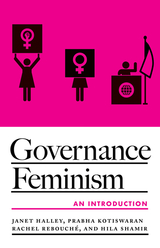
Describing and assessing feminist inroads into the state
Feminists walk the halls of power. Governance Feminism: An Introduction shows how some feminists and feminist ideas—but by no means all—have entered into state and state-like power in recent years. Being a feminist can qualify you for a job in the United Nations, the World Bank, the International Criminal Court, the local prosecutor’s office, or the child welfare bureaucracy. Feminists have built institutions and participate in governance.
The authors argue that governance feminism is institutionally diverse and globally distributed. It emerges from grassroots activism as well as statutes and treaties, as crime control and as immanent bureaucracy. Conflicts among feminists—global North and South; left, center, and right—emerge as struggles over governance. This volume collects examples from the United States, Israel, India, and from transnational human rights law.
Governance feminism poses new challenges for feminists: How shall we assess our successes and failures? What responsibility do we shoulder for the outcomes of our work? For the compromises and strange bedfellows we took on along the way?
Can feminism foster a critique of its own successes? This volume offers a pathway to critical engagement with these pressing and significant questions.
READERS
Browse our collection.
PUBLISHERS
See BiblioVault's publisher services.
STUDENT SERVICES
Files for college accessibility offices.
RECENTLY PUBLISHED




UChicago Accessibility Resources
home | accessibility | search | about | contact us
BiblioVault ® 2001 - 2026
The University of Chicago Press