front cover of A Generation of Change
A Generation of Change
A Profile of America's Older Population
Jacob S. Siegel
Russell Sage Foundation, 1993
A Generation of Change is an exceptional study of the nation's elderly, a population that has undergone profound changes in the years since World War II. As modern medicine extends the average life span and the baby boom generation begins to approach middle age, the number of older Americans is expected to more than double in the next century. Currently, 75 percent of U.S. health care expenditures go toward the elderly. But as national trends toward early retirement and low birthrate continue, an aging American population could face crises in meeting their financial and physical needs. According to Jacob S. Siegel in A Generation of Change, astute public planning must be informed by an understanding of the demographic, social, and economic characteristics of the older population, as it is today and as it will be in the coming years. Siegel employs census and survey data from 1950 through the mid-1980s to describe a population constantly shifting in its ethnic and gender composition, geographic distribution, marital and living arrangements, health, employment, and economic status. Surprisingly, there is tremendous disparity in the quality of life among the elderly. Although their average poverty rate is below that of the general population, there are dramatic levels of poverty among older women, who are far more likely than men to live alone or in institutions. As the elderly progress from the "young old" to the "aged old"—those over 85—sharp differences emerge as income and employment decrease and degrees of chronic illness increase. In addition, residential location influences the quality of health care and public assistance available to the elderly, an effect that may account for the marked migration of older people to Florida and Arizona. Siegel analyzes the full range of characteristics for this heterogenous population and, through comparisons with other age groups as well as with the elderly of the previous decades, portrays the crucial influence of social and economic conditions over the life course on the quality of later life. With our elderly population growing more numerous and long lived, accurate information about them is increasingly essential. A Generation of Change will serve as a valuable resource for policymakers seeking more effective solutions in critical areas such as housing, long-term health care, and the funding of Social Security and retirement programs. A Volume in the Russell Sage Foundation Census Series
[more]

front cover of Golden Years?
Golden Years?
Social Inequality in Later Life
Deborah Carr
Russell Sage Foundation, 2019
Thanks to advances in technology, medicine, Social Security, and Medicare, old age for many Americans is characterized by comfortable retirement, good health, and fulfilling relationships. But there are also millions of people over 65 who struggle with poverty, chronic illness, unsafe housing, social isolation, and mistreatment by their caretakers. What accounts for these disparities among older adults? Sociologist Deborah Carr’s Golden Years? draws insights from multiple disciplines to illuminate the complex ways that socioeconomic status, race, and gender shape the nearly every aspect of older adults’ lives. By focusing on an often-invisible group of vulnerable elders, Golden Years? reveals that disadvantages accumulate across the life course and can diminish the well-being of many.
 
Carr connects research in sociology, psychology, epidemiology, gerontology, and other fields to explore the well-being of older adults. On many indicators of physical health, such as propensity for heart disease or cancer, black seniors fare worse than whites due to lifetimes of exposure to stressors such as economic hardships and racial discrimination and diminished access to health care. In terms of mental health, Carr finds that older women are at higher risk of depression and anxiety than men, yet older men are especially vulnerable to suicide, a result of complex factors including the rigid masculinity expectations placed on this generation of men. Carr finds that older adults’ physical and mental health are also closely associated with their social networks and the neighborhoods in which they live. Even though strong relationships with spouses, families, and friends can moderate some of the health declines associated with aging, women—and especially women of color—are more likely than men to live alone and often cannot afford home health care services, a combination that can be isolating and even fatal. Finally, social inequalities affect the process of dying itself, with white and affluent seniors in a better position to convey their end-of-life preferences and use hospice or palliative care than their disadvantaged peers.
 
Carr cautions that rising economic inequality, the lingering impact of the Great Recession, and escalating rates of obesity and opioid addiction, among other factors, may contribute to even greater disparities between the haves and the have-nots in future cohorts of older adults. She concludes that policies, such as income supplements for the poorest older adults, expanded paid family leave, and universal health care could ameliorate or even reverse some disparities.
 
A comprehensive analysis of the causes and consequences of later-life inequalities, Golden Years? demonstrates the importance of increased awareness, strong public initiatives, and creative community-based programs in ensuring that all Americans have an opportunity to age well.
 
[more]

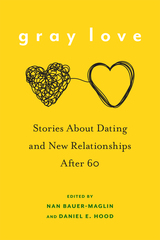
front cover of Gray Love
Gray Love
Stories About Dating and New Relationships After 60
nan Bauer-Maglin
Rutgers University Press, 2023
Gray Love narrates stories about the most common themes – searching for and (perhaps) finding love. Forty-five men and women between ages 60 and 94 from diverse backgrounds talk about dating, starting or ending a relationship, embracing life alone or enjoying a partnered one. The longing for connection as old age encroaches is palpable here, with more and more senior singles searching online. Those who find new partners explore issues that most relationships encounter at any age, as well as some that are unique to elder relationships. These include having had previous partners and a complicated and deep personal history; family and friends’ reactions to an older person’s dating; alternative models to marriage (such as sharing space or living apart); having more than one partner at the same time; one’s aging body, appearance, and sexuality; and the pressure of time and the specter of illness and death.
[more]

front cover of Gray Matters
Gray Matters
Finding Meaning in the Stories of Later Life
Ellyn Lem
Rutgers University Press, 2020
Winner of the 2021 Excellence in Research and Scholarly Activity Award from the University of Wisconsin-Milwaukee
Finalist for the 2021 American Book Fest Best Book Awards


Aging is one of the most compelling issues today, with record numbers of seniors over sixty-five worldwide. Gray Matters: Finding Meaning in the Stories of Later Life examines a diverse array of cultural works including films, literature, and even art that represent this time of life, often made by people who are seniors themselves. These works, focusing on important topics such as housing, memory loss, and intimacy, are analyzed in dialogue with recent research to explore how “stories” illuminate the dynamics of growing old by blending fact with imagination. Gray Matters also incorporates the life experiences of seniors gathered from over two hundred in-depth surveys with a range of questions on growing old, not often included in other age studies works. Combining cultural texts, gerontology research, and observations from older adults will give all readers a fuller picture of the struggles and pleasures of aging and avoids over-simplified representations of the process as all negative or positive. 
[more]

logo for University of Illinois Press
The Graying of America
An Encyclopedia of Aging, Health, Mind, and Behavior (2d ed.)
Donald H. Kausler and Barry C. Kausler
University of Illinois Press, 2001
This second edition of The Graying of America greatly expands and updates the most comprehensive reference book on aging that is readily accessible to the lay reader.
 
Featuring nontechnical language, user-friendly indexes, and more than 150 new entries, the second edition covers new topics such as acupuncture, wheelchairs, adjusting to bifocals, preparing for traveling, improving communication with physicians, and avoiding eye strain in computer use. Among other updates are more detailed coverage of health problems including arthritis, diabetes, osteoporosis, and various kinds of cancer, as well as advice on reducing the stress of caring for a family member with Alzheimer's disease. In addition to discussing hundreds of common ailments and conditions, Kausler and Kausler provide constructive guidance on regular physical activity, mental stimulation, and other behaviors that promote "successful aging."
 
[more]

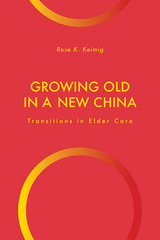
front cover of Growing Old in a New China
Growing Old in a New China
Transitions in Elder Care
Rose K. Keimig
Rutgers University Press, 2021
Growing Old in a New China: Transitions in Elder Care is an accessible exploration of changing care arrangements in China. Combining anthropological theory, ethnographic vignettes, and cultural and social history, it sheds light on the growing movement from home-based to institutional elder care in urban China. The book examines how tensions between old and new ideas, desires, and social structures are reshaping the experience of caring and being cared for. Weaving together discussions of family ethics, care work, bioethics, aging, and quality of life, this book puts older adults at the center of the story. It explores changing relationships between elders and themselves, their family members, caregivers, society, and the state, and the attempts made within and across these relational webs to find balance and harmony. The book invites readers to ponder the deep implications of how and why we care and the ways end-of-life care arrangements complicate both living and dying for many elders.
 
[more]

front cover of Growing Older in World Cities
Growing Older in World Cities
New York, London, Paris, and Tokyo
Victor G. Rodwin
Vanderbilt University Press, 2006
Population aging often provokes fears of impending social security deficits, uncontrollable medical expenditures, and transformations in living arrangements, but public policy could also stimulate social innovations. These issues are typically studied at the national level; yet they must be resolved where most people live--in diverse neighborhoods in cities.


New York, London, Paris, and Tokyo are the four largest cities among the wealthiest, most developed nations of the world. The essays commissioned for this volume compare what it is like to grow older in these cities with respect to health care, quality of life, housing, and long-term care. The contributors look beyond aggregate national data to highlight the importance of how local authorities implement policies.

[more]


Send via email Share on Facebook Share on Twitter