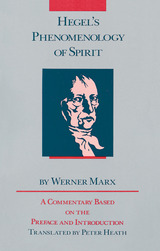
front cover of Hegel's Phenomenology of Spirit
Hegel's Phenomenology of Spirit
A Commentary Based on the Preface and Introduction
Werner Marx
University of Chicago Press, 1988
Hegel's classic Phenomenology of Spirit is considered by many to be the most difficult text in all of philosophical literature. In interpreting the work, scholars have often used the Phenomenology to justify the ideology that has tempered their approach to it, whether existential, ontological, or, particularly, Marxist. Werner Marx deftly avoids this trap of misinterpretation by rendering lucid the objectives that Hegel delineates in the Preface and Introduction and using these to examine the whole of the Phenomenology. Marx considers selected materials from Hegel's text in order both to clarify Hegel's own view of it and to set the stage for an examination of post-Hegelian philosophy.

The primary focus of Marx's book is on the account. Hegel gives of the phenomenological journey from natural consciousness to philosophical wisdom (or absolute knowledge, as Hegel calls it). In showing that Hegel's many statements concerning consciousness 'finding itself' or 'knowing itself' in its world can be understood as discovering the rationality of the conditioning world, Marx offers a solution to several sets of interrelated problems that have troubled students of Hegel. His book contains valuable analyses of the relation between Hegel's thought and that of Descartes and Kant as well as that of Karl Marx, and it also sheds considerable light on the question of the internal unity or coherence of the Phenomenology.
[more]

front cover of Hieroglyphs without Mystery
Hieroglyphs without Mystery
An Introduction to Ancient Egyptian Writing
By Karl-Theodor Zauzich
University of Texas Press, 1992

Marveling over the tomb treasures of Ramses II and Tutankhamen that have toured U.S. and European museums in recent years, visitors inevitably wonder what the mysterious hieroglyphs that cover their surfaces mean. Indeed, everyone who is fascinated by ancient Egypt sooner or later wishes for a Rosetta stone to unlock the secrets of hieroglyphic writing.

Hieroglyphs without Mystery provides the needed key. Written for ordinary people with no special language skills, the book quickly demonstrates that hieroglyphic writing can be read, once a few simple principles are understood. Zauzich explains the basic rules of the writing system and the grammar and then applies them to thirteen actual inscriptions taken from objects in European and Egyptian museums. By following his explanations and learning the most commonly used glyphs, readers can begin to decode hieroglyphs themselves and increase their enjoyment of both museum objects and ancient Egyptian sites.

Even for the armchair traveler, learning about hieroglyphs opens a sealed door into ancient Egyptian culture. In examining these inscriptions, readers will gain a better understanding of Egyptian art, politics, and religion, as well as language.

This book was originally published in Germany in 1980 as Hieroglyphen ohne Geheimnis.
[more]

front cover of The Hindu Temple
The Hindu Temple
An Introduction to Its Meaning and Forms
George Michell
University of Chicago Press, 1988
For more than 1500 years, from the Indian subcontinent to the islands of the Indonesian archipelago, the temple has embodied and symbolized the Hindu worldview at its deepest level and inspired the greatest architectural and artistic achievements in Hindu Asia. In The Hindu Temple, considered the standard introduction to the subject, George Michell explains the cultural, religious, and architectural significance of the temple. He illustrates his points with a profusion of photographs, building plans, and drawings of architectural details, making the book a useful guide for travelers to Asia as well as an illuminating text for students of architecture, religion, and Asian civilizations.

Michell's discussion of the meaning and forms of the temple in Hindu society encompasses the awe-inspiring rock-cut temples at Ellora and Elephanta, the soaring superstructures and extraordinary sexual exhibitionism of the sculptures at Khajuraho, and the colossal mortuary temple of Angkor Vat, as well as the tiny iconic shrines that many Hindus wear around their necks and the simple shrines found under trees or near ponds.

[more]

front cover of History and Philosophy of the Humanities
History and Philosophy of the Humanities
An Introduction
Michiel Leezenberg
Amsterdam University Press, 2019
The humanities include disciplines as diverse as literary theory, linguistics, history, film studies, theology, and philosophy. Do these various fields of study have anything in common that distinguishes them from, say, physics or sociology? The tripartite division between the natural sciences, the social sciences and the humanities may seem self-evident, but it only arose during the course of the 19th century and is still contested today.

'History and Philosophy of the Humanities: An Introduction' presents a reasoned overview of the conceptual and historical backgrounds of the humanities. In four sections, it discusses:
- the most influential views on scientific knowledge from Aristotle to Thomas Kuhn;
- the birth of the modern humanities and its relation to the natural and social sciences;
- the various methodological schools and conceptual issues in the humanities;
- several themes that set the agenda for current debates in the humanities: critiques of modernity; gender, sexuality and identity; and postcolonialism.

Thus, it provides students in the humanities with a comprehensive understanding of the backgrounds of their own discipline, its relation to other disciplines, and the state of the art of the humanities at large.
[more]

front cover of History and Philosophy of the Humanities
History and Philosophy of the Humanities
An Introduction
Michiel Leezenberg
Amsterdam University Press, 2018
The humanities include disciplines as diverse as literary theory, linguistics, history, film studies, theology, and philosophy. Do these various fields of study have anything in common, which distinguishes them from e.g. physics or sociology? The tripartite division between the natural sciences, the social sciences and the humanities may seem self-evident, but it has arisen only in the course of the 19th century, and has been contested ever since.History and Philosophy of the Humanities: An Introduction presents a reasoned overview of the conceptual and historical backgrounds of the humanities. In four sections, it discusses:- The most influential views on scientific knowledge from Aristotle to Thomas Kuhn;- The birth of the modern humanities;- The various methodological schools and conceptual issues in the humanities;- Some themes that set the agenda for current debates in the humanities: critiques of modernity; gender, sexuality and identity; and post-colonialism.Thus, it provides students in the various disciplines of the humanities with a comprehensive understanding of the backgrounds of their field, its relation with other disciplines, and the state of the art in the humanities at large. Intended readership: advanced undergraduate and graduate students.
[more]

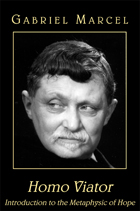
front cover of Homo Viator
Homo Viator
Introduction to the Metaphysic of Hope
Gabriel Marcel
St. Augustine's Press, 2010

logo for American Library Association
How to Manage Processing in Archives and Special Collections
An Introduction
Pam Hackbart-Dean
American Library Association, 2013

front cover of Hungarians and Europe in the Early Middle Ages
Hungarians and Europe in the Early Middle Ages
An Introduction to Early Hungarian History
András Róna-Tas
Central European University Press, 1999
Lavishly illustrated, the book contains seventy five historical maps and colour plates which visualize the historical background of Hungary and introduces its early history to a broader readership. The early history of Hungarians is embedded into the history of Eurasia and special attention is given to the relationship of the Hungarians with the Khazars and the Bulghar-Turks. The first part deals with methods and sources which can be used for elucidating the ancient history of the Hungarians, relying on research into linguistics, archaeology, anthropology and natural history. The second part traces how the Hungarians came into the Carpathian Basin and answers such questions as: who are the Magyars, from where did they come and how did they conquer the land? It reconstructs and examines their early political and social structure, the economy, and religion, and compares the Hungarian medieval process with the ethnogenetic processes of the Germanic, Slavic and Turkic people.
[more]

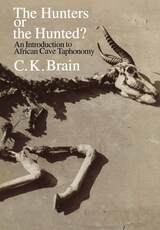
front cover of The Hunters or the Hunted?
The Hunters or the Hunted?
An Introduction to African Cave Taphonomy
C. K. Brain
University of Chicago Press, 1981
"Amongst scientists involved [in taphonomy], C. K. Brain stands out as the pioneer; this impressive book is a statement of his investigations. . . . The Hunters or the Hunted? is a very important book for paleoanthropology. It presents the first thorough analysis of the Sterkfontein Valley assemblages, contributes significantly to the resolution of lingering controversies and, by placing the old information in a fresh perspective, enables new and more sophisticated questions to be asked not only of the South African material but of similar assemblages elsewhere. Another contribution is that it reinforces the recent change in feelings as to what constitutes data, for the value of looking at fossil and contemporary bones as closely as this is clear. Brain urges the necessity of recovering fossils with a high regard for subtle detail. I hope excavators of any vertebrate fossil site will be persuaded to follow his advice and pay more attention to these features of bone accumulations that have been previously neglected; for taphonomy can be a powerful tool in elucidating the problems of fossil assemblages, especially when handled with the care and caution that Brain brings to the subject."—Andrew Hill, Nature
[more]


Send via email Share on Facebook Share on Twitter