
 A SCHOLARLY BOOK REPOSITORY
37 start with H start with H
A hard-hitting look at race, class, and black gentrification in this emblematic community.
Harlem brings to mind a kaleidoscope of images-the jazz clubs and cultural ferment of the 1920s and 1930s, the urban decay of the 1960s and 1970s, and the revitalization of the past twenty years, with artists, writers, professionals, and even an ex-president moving to a community often seen as the capital of black America. Integral to the ongoing transformation of Harlem has been the return of the African-American middle class to what had become an overwhelmingly poor area. In this lively book, Monique M. Taylor explores the stresses created by this influx, the surprising ways class differences manifest themselves and are managed, and what we can learn from examining a community in which race and class are so closely intertwined.
Harlem between Heaven and Hell is told through a look at history, literature, redevelopment strategies, community activism, and extensive interviews with black professionals-married and single, with children and without, long-term residents and recent arrivals. In their voices we hear of the cultural legacy, political commitments, economic considerations, and desire for community that drew them to Harlem. They tell us of the complexities of gentrification and their own role in it: the trepidation and distrust that often greeted their arrival, the challenges of renovating Harlem’s historic brownstones in the face of entrenched neighborhood decay, learning and shaping the social mores of the area. Two key questions underlie these accounts: What does it mean when blacks move in alongside blacks of a different social class? How can a neighborhood successfully balance racial and class diversity in the face of rapid change? Taylor places this intraracial class conflict within the context of America’s changing race relations, showing how the feelings and issues that have arisen-to oppose, embrace, or participate in gentrification-reveal unsettled questions surrounding race, racism, class, and culture in a changing urban landscape. Through her incisive description of the everyday ways race and class are experienced, she has created a vivid exploration of black middle-class identity in the post-civil rights era.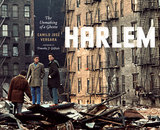
Photographer Camilo José Vergara has been chronicling the neighborhood for forty-three years, and Harlem: The Unmaking of a Ghetto is an unprecedented record of urban change. Vergara began his documentation of Harlem in the tradition of such masters as Helen Levitt and Aaron Siskind, and he later turned his focus on the neighborhood’s urban fabric, both the buildings that compose it and the life and culture embedded in them. By repeatedly returning to the same locations over the course of decades, Vergara is able to show us a community that is constantly changing—some areas declining, as longtime businesses give way to empty storefronts, graffiti, and garbage, while other areas gentrify, with corporate chain stores coming in to compete with the mom-and-pops. He also captures the ever-present street life of this densely populated neighborhood, from stoop gatherings to graffiti murals memorializing dead rappers to impersonators honoring Michael Jackson in front of the Apollo, as well as the growth of tourism and racial integration.
Woven throughout the images is Vergara’s own account of his project and his experience of living and working in Harlem. Taken together, his unforgettable words and images tell the story of how Harlem and its residents navigated the segregation, dereliction and slow recovery of the closing years of the twentieth century and the boom and racial integration of the twenty-first century. A deeply personal investigation, Harlem will take its place with the best portrayals of urban life.
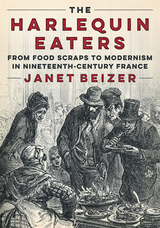
How representations of the preparation, sale, and consumption of leftovers in nineteenth-century urban France link socioeconomic and aesthetic history
The concept of the “harlequin” refers to the practice of reassembling dinner scraps cleared from the plates of the wealthy to sell, replated, to the poor in nineteenth-century Paris. In The Harlequin Eaters, Janet Beizer investigates how the alimentary harlequin evolved in the nineteenth and early twentieth centuries from the earlier, similarly patchworked Commedia dell’arte Harlequin character and can be used to rethink the entangled place of class, race, and food in the longer history of modernism.
By superimposing figurations of the edible harlequin taken from a broad array of popular and canonical novels, newspaper articles, postcard photographs, and lithographs, Beizer shows that what is at stake in nineteenth-century discourses surrounding this mixed meal are representations not only of food but also of the marginalized people—the “harlequin eaters”—who consume it at this time when a global society is emerging. She reveals the imbrication of kitchen narratives and intellectual–aesthetic practices of thought and art, presenting a way to integrate socioeconomic history with the history of literature and the visual arts. The Harlequin Eaters also offers fascinating background to today’s problems of food inequity as it unpacks stories of the for-profit recycling of excess food across class and race divisions.
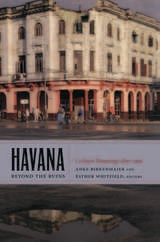
Contributors
Emma Álvarez-Tabío Albo
Eric Felipe-Barkin
Anke Birkenmaier
Velia Cecilia Bobes
Mario Coyula-Cowley
Elisabeth Enenbach
Sujatha Fernandes
Jill Hamberg
Patricio del Real
Cecelia Lawless
Jacqueline Loss
Orlando Luis Pardo Lazo
Antonio José Ponte
Nicolás Quintana
Jose Quiroga
Laura Redruello
Rafael Rojas
Joseph L. Scarpaci
Esther Whitfield
The role of American hospital expansions in health disparities and medical apartheid
Health Colonialism considers how U.S. urban development policies contribute to the uneven and unjust distribution of health care in this country. Here, Shiloh Krupar investigates the racially inequitable effects of elite U.S. hospitals on their surrounding neighborhoods and their role in consolidating frontiers of land primed for redevelopment.
Naming this frontier “medical brownfields,” Krupar shows how hospitals leverage their domestic real estate empires to underwrite international prospecting for patients and overseas services and specialty clinics. Her pointed analysis reveals that decolonizing health care efforts must scrutinize the land practices of nonprofit medical institutions and the liberal foundations of medical apartheid perpetuated by globalizing American health care.
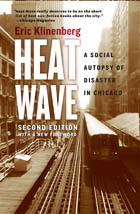
On Thursday, July 13, 1995, Chicagoans awoke to a blistering day in which the temperature would reach 106 degrees. The heat index, which measures how the temperature actually feels on the body, would hit 126 degrees by the time the day was over. Meteorologists had been warning residents about a two-day heat wave, but these temperatures did not end that soon. When the heat wave broke a week later, city streets had buckled; the records for electrical use were shattered; and power grids had failed, leaving residents without electricity for up to two days. And by July 20, over seven hundred people had perished-more than twice the number that died in the Chicago Fire of 1871, twenty times the number of those struck by Hurricane Andrew in 1992—in the great Chicago heat wave, one of the deadliest in American history.
Heat waves in the United States kill more people during a typical year than all other natural disasters combined. Until now, no one could explain either the overwhelming number or the heartbreaking manner of the deaths resulting from the 1995 Chicago heat wave. Meteorologists and medical scientists have been unable to account for the scale of the trauma, and political officials have puzzled over the sources of the city's vulnerability. In Heat Wave, Eric Klinenberg takes us inside the anatomy of the metropolis to conduct what he calls a "social autopsy," examining the social, political, and institutional organs of the city that made this urban disaster so much worse than it ought to have been.
Starting with the question of why so many people died at home alone, Klinenberg investigates why some neighborhoods experienced greater mortality than others, how the city government responded to the crisis, and how journalists, scientists, and public officials reported on and explained these events. Through a combination of years of fieldwork, extensive interviews, and archival research, Klinenberg uncovers how a number of surprising and unsettling forms of social breakdown—including the literal and social isolation of seniors, the institutional abandonment of poor neighborhoods, and the retrenchment of public assistance programs—contributed to the high fatality rates. The human catastrophe, he argues, cannot simply be blamed on the failures of any particular individuals or organizations. For when hundreds of people die behind locked doors and sealed windows, out of contact with friends, family, community groups, and public agencies, everyone is implicated in their demise.
As Klinenberg demonstrates in this incisive and gripping account of the contemporary urban condition, the widening cracks in the social foundations of American cities that the 1995 Chicago heat wave made visible have by no means subsided as the temperatures returned to normal. The forces that affected Chicago so disastrously remain in play in America's cities, and we ignore them at our peril.
For the Second Edition Klinenberg has added a new Preface showing how climate change has made extreme weather events in urban centers a major challenge for cities and nations across our planet, one that will require commitment to climate-proofing changes to infrastructure rather than just relief responses.
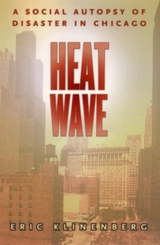
Heat waves in the United States kill more people during a typical year than all other natural disasters combined. Until now, no one could explain either the overwhelming number or the heartbreaking manner of the deaths resulting from the 1995 Chicago heat wave. Meteorologists and medical scientists have been unable to account for the scale of the trauma, and political officials have puzzled over the sources of the city's vulnerability. In Heat Wave, Eric Klinenberg takes us inside the anatomy of the metropolis to conduct what he calls a "social autopsy," examining the social, political, and institutional organs of the city that made this urban disaster so much worse than it ought to have been.
Starting with the question of why so many people died at home alone, Klinenberg investigates why some neighborhoods experienced greater mortality than others, how the city government responded to the crisis, and how journalists, scientists, and public officials reported on and explained these events. Through a combination of years of fieldwork, extensive interviews, and archival research, Klinenberg uncovers how a number of surprising and unsettling forms of social breakdown—including the literal and social isolation of seniors, the institutional abandonment of poor neighborhoods, and the retrenchment of public assistance programs—contributed to the high fatality rates. The human catastrophe, he argues, cannot simply be blamed on the failures of any particular individuals or organizations. For when hundreds of people die behind locked doors and sealed windows, out of contact with friends, family, community groups, and public agencies, everyone is implicated in their demise.
As Klinenberg demonstrates in this incisive and gripping account of the contemporary urban condition, the widening cracks in the social foundations of American cities that the 1995 Chicago heat wave made visible have by no means subsided as the temperatures returned to normal. The forces that affected Chicago so disastrously remain in play in America's cities, and we ignore them at our peril.
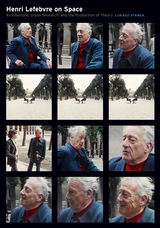
Countering the prevailing view, which reduces Lefebvre’s theory of space to a projection of his philosophical positions, Stanek argues that Lefebvre’s work grew out of his concrete, empirical engagement with everyday practices of dwelling in postwar France and his exchanges with architects and planners. Stanek focuses on the interaction between architecture, urbanism, sociology, and philosophy that occurred in France in the 1960s and 1970s, which was marked by a shift in the processes of urbanization at all scales, from the neighborhood to the global level. Lefebvre’s thinking was central to this encounter, which informed both his theory of space and the concept of urbanization becoming global.
Stanek offers a deeper and clearer understanding of Lefebvre’s thought and its implications for the present day. At a time when cities are increasingly important to our political, spatial, and architectural world, this reassessment proposes a new empirical, and practical, interpretation of Lefebvre’s ideas on urbanism.
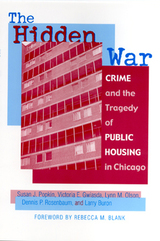
Since the late 1970s, the high-rise developments of the Chicago Housing Authority (CHA) have been dominated by gang violence and drugs, creating a sense of hopelessness among residents. Despite a lengthy war on crime, costing hundreds of millions of dollars, the CHA has been unable to reduce the violence that makes life intolerable. Focusing on three developments—Rockwell Gardens, Henry Horner Homes, and Harold Ickes Homes—Sue Popkin and her co-authors interview residents, community leaders, and CHA staff. The Hidden War chronicles the many failed efforts of the CHA to combat crime and improve its developments, offering a vivid portrait of what life is like when lived among bullets, graffiti, and broken plumbing.
Most families living in these developments are headed by African American single mothers. The authors reveal the dilemmas facing women and children who are often victims or witnesses of violent crime, and yet are dependent on the perpetrators and their drug-dominant economy. The CHA—plagued by financial scandals, managerial incompetence, and inconsistent funding—is no match for thegang-dominated social order. Even well-intentioned initiatives such as the recent effort to demolish and “revitalize” the worst developments seem to be ineffective at combating crime, while the drastic changes leave many vulnerable families facing an uncertain future. The Hidden War sends a humbling message to policy makers and prognosticators who claim to know the right way to “solve poverty.”
The Hipster Economy gives hipsterism the serious analysis it deserves, through which he reveals the importance of hipster aesthetics, based on authenticity, for today’s consumption-based economy.
Since being authentic has become an aspiration and an imperative, the notion of authenticity shapes the consumption habits of individuals in the most diverse contexts such as food and drinks, clothing, music, tourism, and the digital sphere. It even transforms urban areas and their local economies. In this book, Alessandro Gerosa analyzes this complex set of related phenomena to argue that the quest for authenticity has been a driver of Western societies from the emersion of capitalism and industrial society to today.
The Hipster Economy provides a historically and sociologically grounded explanation of the value of authenticity in the contemporary economy and society, through which it shows why and how authenticity has become a fundamental value orienting consumers' taste in late modern capitalism. In clear and convincing writing, Gerosa proposes a novel conceptualization of the aesthetic regime of consumption and an analysis of how the hipster economy impacts the urban space.
Washington, D.C. has long been known as a frustrating and sometimes confusing city for its residents to call home. The monumental core of federal office buildings, museums, and the National Mall dominates the city’s surrounding neighborhoods and urban fabric. For much of the postwar era, Washingtonians battled to make the city their own, fighting the federal government over the basic question of home rule, the right of the city’s residents to govern their local affairs.
In Historic Capital, urban historian Cameron Logan examines how the historic preservation movement played an integral role in Washingtonians’ claiming the city as their own. Going back to the earliest days of the local historic preservation movement in the 1920s, Logan shows how Washington, D.C.’s historic buildings and neighborhoods have been a site of contestation between local interests and the expansion of the federal government’s footprint. He carefully analyzes the long history of fights over the right to name and define historic districts in Georgetown, Dupont Circle, and Capitol Hill and documents a series of high-profile conflicts surrounding the fate of Lafayette Square, Rhodes Tavern, and Capitol Park, SW before discussing D.C. today.
Diving deep into the racial fault lines of D.C., Historic Capital also explores how the historic preservation movement affected poor and African American residents in Anacostia and the U Street and Shaw neighborhoods and changed the social and cultural fabric of the nation’s capital. Broadening his inquiry to the United States as a whole, Logan ultimately makes the provocative and compelling case that historic preservation has had as great an impact on the physical fabric of U.S. cities as any other private or public sector initiative in the twentieth century.

Home Team Away calls for a rethinking of sport fandom that is divorced from an attachment to location. As the first comprehensive account of the European football fandom in China, this book explores how the Chinese middle-class is formed through the cross-cultural, digital consumption of the Big-Five leagues. Yuan Gong captures the embodied experiences of fans and fan clubs, fan discourses and activities unfolding on digital platforms on Weibo, Weixin, and Hupu, combining fieldwork in Shanghai and virtual ethnography. Delving into participants’ various forms of fan engagement as readers, activists, producers, consumers, and digital citizens, Gong argues that Chinese fans’ decisions to follow and engage with European football result from their material conditions, ideological contestation, and technology appropriation as a new demographic bloc arising during China’s transition to authoritarian digital capitalism. By engaging with their home team away, the Chinese middle-class perform as citizens with a global vision despite the resurgence of the nationalist and anti-Western sentiments.
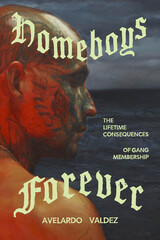
Violence, addiction, imprisonment . . . we don’t have to look hard to see the negative consequences of gang involvement. But what does it look like to spend a life—from adolescence to adulthood—in gangs? Sociologist Avelardo Valdez and his research team have been following the lives of Mexican American men in San Antonio, Texas, over a remarkable twenty years, watching and listening as they navigate adolescent delinquency and gang involvement, advance into a life of crime, and—sometimes—attempt to break from gang life and build lives in conventional society.
When gang affiliation exploded in the 1990s, adolescent street gang membership surged in the Mexican American community of Westside San Antonio. Valdez was quick to begin investigating how young men embedded in a system with little support for lasting change turned to gang violence, drug use, and other risky behaviors. The honesty of these men’s accounts draws our attention to the economic, political, and sociocultural context of impoverished communities in San Antonio. Being constantly written off as troublemakers and criminals eroded the self-respect that these young men once had. They were once lithe, active, and full of self-confidence, but after a lifetime of constant harassment and entanglements with the legal system, they now have a perpetual look of exhaustion and defeat.
Encouraging readers to question who is at fault when young men become involved in gangs and other delinquent behaviors, Homeboys Forever is a humanizing account of marginalized youth who struggle to overcome the systemic inequities that have led to a lifetime of heartbreaking consequences.
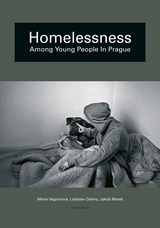
Young homeless people describe a life in which they lose their privacy, the possibility to satisfy their basic needs, and, often, their self-respect in order to survive. The latter half of the book considers what happens when these young people return to society and how they navigate difficulties as they attempt to leave their past behind. Often, the struggle is not solely one of coping with the stigma of their experience; rather, they must face the legacies that linger long after their lives have turned a corner: drug addiction, criminal records, and accumulated debt.
Based on interviews with homeless people in Prague, Homelessness as an Alternative Existence of Young People paints an authentic picture of this social group and documents the often unseen social consequences of the transformation to capitalism from communism.
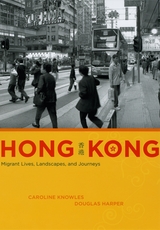
In 1997 the United Kingdom returned control of Hong Kong to China, ending the city’s status as one of the last remnants of the British Empire and initiating a new phase for it as both a modern city and a hub for global migrations. Hong Kong is a tour of the city’s postcolonial urban landscape, innovatively told through fieldwork and photography.
Caroline Knowles and Douglas Harper’s point of entry into Hong Kong is the unusual position of the British expatriates who chose to remain in the city after the transition. Now a relatively insignificant presence, British migrants in Hong Kong have become intimately connected with another small minority group there: immigrants from Southeast Asia. The lives, journeys, and stories of these two groups bring to life a place where the past continues to resonate for all its residents, even as the city hurtles forward into a future marked by transience and transition. By skillfully blending ethnographic and visual approaches, Hong Kong offers a fascinating guide to a city that is at once unique in its recent history and exemplary of our globalized present.

Hot Towns is about the vast, current national relocation of one million Americans a year. Successful, accomplished, and well-financed people of all ages are moving to communities they view as choice—places distinguished by fine climate, physical beauty, abundant natural recreation resources, and minimal social problems and low crime. Towns in this elite roster include Santa Fe, Aspen, Boulder, Bozeman, Chapel Hill, East Hampton, and many others.
These American boom towns, Peter Wolf writes, have grown in jobs and population at two to three times the national average. But warning signs of deterioration are already evident: overbuilding, failing natural resources, rising taxes, and traffic congestion are all taking a toll on these communities. Rapid migration can enhance or swamp America’s fastest growing and most desirable communities
Wolf examines the choices that people in these areas can make to both effectively accommodate growth and yet ensure their economic futures. A wise town undergoing growth will realize that what must be preserved is not the growth in-and-for itself, but the qualities which attract people in the first place. Wolf demonstrates how it is possible—even during a town’s rapid expansion—to enhance the quality of residents’ lives, to incorporate aesthetics and design into town evolution, to protect what is precious in nature, and to preserve the best that has already been built.
Wolf concludes with a practical checklist for the residents of hot towns, allowing them to evaluate how their communities are coping with growth.

Winner of the Jackie Kirk Award
Winner of the AESA Critics’ Choice Award
“Blazes new trails in the study of the lives of girls, challenging all of us who care about justice and gender equity not only to create just and inclusive educational institutions but to be unapologetically feminist in doing so. Seamlessly merging research with the stories and voices of girls and those who educate them, this book reminds us that we should do better and inspires the belief that we can. It is the blueprint we’ve been waiting for.”
—Brittney C. Cooper, author of Eloquent Rage
“Nuamah makes a compelling and convincing case for the development of the type of school that can not only teach girls but also transform them…An essential read for all educators, policymakers, and parents invested in a better future.”
—Joyce Banda, former President of the Republic of Malawi
This bold and necessary book points out a simple and overlooked truth: most schools never had girls in mind to begin with. That is why the world needs what Sally Nuamah calls “feminist schools,” deliberately designed to provide girls with achievement-oriented identities. And she shows how these schools would help all students, regardless of their gender.
Educated women raise healthier families, build stronger communities, and generate economic opportunities for themselves and their children. Yet millions of disadvantaged girls never make it to school—and too many others drop out or fail. Upending decades of advice and billions of dollars in aid, Nuamah argues that this happens because so many challenges girls confront—from sexual abuse to unequal access to materials and opportunities—go unaddressed. But it isn’t enough just to go to school. What you learn there has to prepare you for the world where you’ll put that knowledge to work.
A compelling and inspiring scholar who has founded a nonprofit to test her ideas, Nuamah reveals that developing resilience is not a gender-neutral undertaking. Preaching grit doesn’t help girls; it actively harms them. Drawing on her deep immersion in classrooms in the United States, Ghana, and South Africa, Nuamah calls for a new approach: creating feminist schools that will actively teach girls how and when to challenge society’s norms, and allow them to carve out their own paths to success.
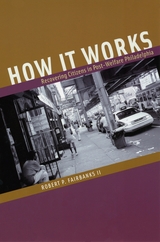
Of the some sixty thousand vacant properties in Philadelphia, half of them are abandoned row houses. Taken as a whole, these derelict homes symbolize the city’s plight in the wake of industrial decline. But a closer look reveals a remarkable new phenomenon—street-level entrepreneurs repurposing hundreds of these empty houses as facilities for recovering addicts and alcoholics. How It Works is a compelling study of this recovery house movement and its place in the new urban order wrought by welfare reform.
To find out what life is like in these recovery houses, Robert P. Fairbanks II goes inside one particular home in the Kensington neighborhood. Operating without a license and unregulated by any government office, the recovery house provides food, shelter, company, and a bracing self-help philosophy to addicts in an area saturated with drugs and devastated by poverty. From this starkly vivid close-up, Fairbanks widens his lens to reveal the intricate relationships the recovery houses have forged with public welfare, the formal drug treatment sector, criminal justice institutions, and the local government.
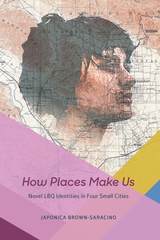
Taking us into communities in Ithaca, New York; San Luis Obispo, California; Greenfield, Massachusetts; and Portland, Maine; Brown-Saracino shows how LBQ migrants craft a unique sense of self that corresponds to their new homes. How Places Make Us demonstrates that sexual identities are responsive to city ecology. Despite the fact that the LBQ residents share many demographic and cultural traits, their approaches to sexual identity politics and to ties with other LBQ individuals and heterosexual residents vary markedly by where they live. Subtly distinct local ecologies shape what it feels like to be a sexual minority, including the degree to which one feels accepted, how many other LBQ individuals one encounters in daily life, and how often a city declares its embrace of difference. In short, city ecology shapes how one “does” LBQ in a specific place. Ultimately, Brown-Saracino shows that there isn’t one general way of approaching sexual identity because humans are not only social but fundamentally local creatures. Even in a globalized world, the most personal of questions—who am I?—is in fact answered collectively by the city in which we live.
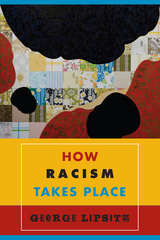
White identity in the United States is place bound, asserts George Lipsitz in How Racism Takes Place. An influential scholar in American and racial studies, Lipsitz contends that racism persists because a network of practices skew opportunities and life chances along racial lines. That is, these practices assign people of different races to different spaces and therefore allow grossly unequal access to education, employment, transportation, and shelter.
Revealing how seemingly race-neutral urban sites contain hidden racial assumptions and imperatives, Lipsitz examines the ways in which urban space and social experience are racialized and emphasizes that aggrieved communities do not passively acquiesce to racism. He recognizes the people and communities that have reimagined segregated spaces in expressive culture as places for congregation.
How Racism Takes Place not only exposes the degree to which this white spatial imagining structures our society but also celebrates the black artists and activists who struggle to create a just and decent society.
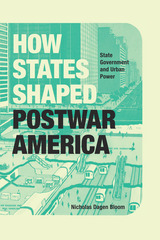
The history of public policy in postwar America tends to fixate on developments at the national level, overlooking the crucial work done by individual states in the 1960s and ’70s. In this book, Nicholas Dagen Bloom demonstrates the significant and enduring impact of activist states in five areas: urban planning and redevelopment, mass transit and highways, higher education, subsidized housing, and the environment. Bloom centers his story on the example set by New York governor Nelson Rockefeller, whose aggressive initiatives on the pressing issues in that period inspired others and led to the establishment of long-lived state polices in an age of decreasing federal power. Metropolitan areas, for both better and worse, changed and operated differently because of sustained state action—How States Shaped Postwar America uncovers the scope of this largely untold story.
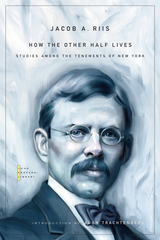
Since 1959 The John Harvard Library has been instrumental in publishing essential American writings in authoritative editions.
Jacob Riis’s pioneering work of photojournalism takes its title from Rabelais’s Pantagruel: “One half of the world knoweth not how the other half liveth; considering that no one has yet written of that Country.” An anatomy of New York City’s slums in the 1880s, it vividly brought home to its first readers through the powerful combination of text and images the squalid living conditions of “the other half,” who might well have inhabited another country. The book pricked the conscience of its readers and raised the tenement into a symbol of intransigent social difference. As Alan Trachtenberg makes clear in his introduction, it is a book that still speaks powerfully to us today of social injustice.
Except for the modernization of spelling and punctuation, the John Harvard Library edition of How the Other Half Lives reproduces the text of the first published book version of November 1890. For this edition, prints have been made from Riis’s original photographs now in the archives of the Museum of the City of New York. Endnotes aid the contemporary reader.
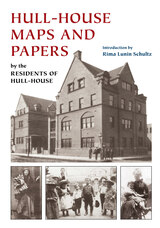
Inspired by their Progressive Era faith in social science solutions to society’s problems, the residents of Hull-House collaborated on this work of sociology based on their experiences as residents of Chicago’s Near West Side. The contributors to this book believed that an enlightened citizenry could be mobilized for reform, and that by publishing maps with explicit information about the wages and conditions of the working poor in Chicago’s Nineteenth Ward they would educate the public and inspire reforms.
In addition to Jane Addams’s own prefatory note and paper on the role of social settlements in the labor movement, contributors provided detailed, real-world analyses of the Chicago Jewish ghetto, garment workers and the sweatshops, child labor, immigrant neighborhoods in the vicinity of Hull-House, and local charities. This edition also contains eight color reproductions of the original Hull-House neighborhood maps. The year 2006 marks the one hundred and eleventh anniversary of the publication of Hull-House Maps and Papers, and the volume remains a dramatic statement about the residents’ shared values as well as a major influence on subsequent social surveys.
In Human Targets, Rios takes us to the streets of California, where we encounter young men who find themselves in much the same situation as fifteen-year-old Victor. We follow young gang members into schools, homes, community organizations, and detention facilities, watch them interact with police, grow up to become fathers, get jobs, get rap sheets—and in some cases get killed. What is it that sets apart young people like Rios who succeed and survive from the ones who don’t? Rios makes a powerful case that the traditional good kid/bad kid, street kid/decent kid dichotomy is much too simplistic, arguing instead that authorities and institutions help create these identities—and that they can play an instrumental role in providing young people with the resources for shifting between roles. In Rios’s account, to be a poor Latino youth is to be a human target—victimized and considered an enemy by others, viewed as a threat to law enforcement and schools, and burdened by stigma, disrepute, and punishment. That has to change.
This is not another sensationalistic account of gang bangers. Instead, the book is a powerful look at how authority figures succeed—and fail—at seeing the multi-faceted identities of at-risk youths, youths who succeed—and fail—at demonstrating to the system that they are ready to change their lives. In our post-Ferguson era, Human Targets is essential reading.
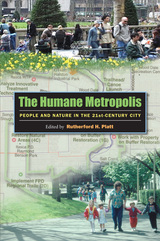
This book explores the prospects for a more humane metropolis through a series of essays and case studies that consider why and how urban places can be made greener and more amenable. Its point of departure is the legacy of William H. Whyte (1917-1999), one of America's most admired urban thinkers. From his eyrie high above Manhattan in the offices of the Rockefeller Brothers Fund, Whyte laid the foundation for today's "smart growth" and "new urbanist" movements with books such as The Last Landscape (1968). His passion for improving the habitability of cities and suburbs is reflected in the diverse grassroots urban design and regreening strategies discussed in this volume.
Topics examined in this book include urban and regional greenspaces, urban ecological restoration, social equity, and green design. Some of the contributors are recognized academic experts, while others offer direct practical knowledge of particular problems and initiatives. The editor's introduction and epilogue set the individual chapters in a broader context and suggest how the strategies described, if widely replicated, may help create more humane urban environments.
In addition to Rutherford H. Platt, contributors to the volume include Carl Anthony, Thomas Balsley, Timothy Beatley, Eugenie L. Birch, Edward J. Blakely, Colin M. Cathcart, Steven E. Clemants, Christopher A. De Sousa, Steven N. Handel, Peter Harnik, Michael C. Houck, Jerold S. Kayden, Albert LaFarge, Andrew Light, Charles E. Little, Anne C. Lusk, Thalya Parilla, Deborah E. Popper, Frank J. Popper, Mary V. Rickel, Cynthia Rosenzweig, Robert L. Ryan, Laurin N. Sievert, Andrew G. Wiley-Schwartz, and Ann Louise Strong.
Included in the back of the book is a DVD of a 22-minute film created by Ted White, which serves as a companion to the text.
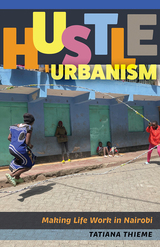
Exploring hustle as a social, cultural, and economic phenomenon in contemporary Nairobi
In Nairobi’s underserved neighborhoods, “hustle” has emerged as both a vital survival strategy and a way of life for youth. Exploring the multiple meanings and manifestations of the hustle economy across different scenarios of provisioning, distribution, exchange, learning, and mobilizing, Hustle Urbanism draws on more than a decade of ethnographic engagement to center the logics, perspectives, and inventive strategies of a group of youth who constantly navigate job scarcity, inadequate basic services, and climate-induced harms.
Tatiana Thieme shows how young people develop tools of resistance against the legacies of colonial violence and uneven urban development while carving out spaces of opportunity for themselves and their peers. The stories she includes bring thick ethnographic detail and longitudinal perspective to the lives and livelihoods of youth whose diverse skill sets and knowledges span from circular economies and eco-activism to hip hop and local leadership. Filling a significant gap in both existing scholarship and popular discussion, Hustle Urbanism offers critical theorization of precarious urban environments and the affirmative modes of making life work in the city against the odds.
While Thieme cautions against fetishizing hustle as a form of social and economic uplift, she calls for a greater recognition of the ingenuity and skill involved in hustle urbanism, arguing that studying hustle narratives and practices opens up timely empirical and theoretical questions about overlapping urban struggles and possibilities that coexist in the everyday city.
Retail e-book files for this title are screen-reader friendly with images accompanied by short alt text and/or extended descriptions.
READERS
Browse our collection.
PUBLISHERS
See BiblioVault's publisher services.
STUDENT SERVICES
Files for college accessibility offices.
RECENTLY PUBLISHED




UChicago Accessibility Resources
home | accessibility | search | about | contact us
BiblioVault ® 2001 - 2025
The University of Chicago Press