
 A SCHOLARLY BOOK REPOSITORY
In recent years, globalization and the expansion of information technologies have reshaped managerial practices, forcing multinational firms to adjust business practices to different environments and domestic companies to adjust to their foreign competitors. In International Differences in the Business Practices and Productivity of Firms, a distinguished group of contributors examines the phenomenon of widespread differences in managerial practices across firms, establishments within firms, and countries.
This volume brings together eight studies that combine qualitative and quantitative insider analysis of business practices such as the use of teams, incentive pay, lean manufacturing, and quality control, revealing the elements that determine which practices are adopted and why. International Differences in the Business Practices and Productivity of Firms offers a much-needed model for measuring the productivity and performance of international firms in a fast-paced global economy.
United States monetary policy has traditionally been modeled under the assumption that the domestic economy is immune to international factors and exogenous shocks. Such an assumption is increasingly unrealistic in the age of integrated capital markets, tightened links between national economies, and reduced trading costs. International Dimensions of Monetary Policy brings together fresh research to address the repercussions of the continuing evolution toward globalization for the conduct of monetary policy.
In this comprehensive book, the authors examine the real and potential effects of increased openness and exposure to international economic dynamics from a variety of perspectives. Their findings reveal that central banks continue to influence decisively domestic economic outcomes—even inflation—suggesting that international factors may have a limited role in national performance. International Dimensions of Monetary Policy will lead the way in analyzing monetary policy measures in complex economies.

International Economic Relations was first published in 1934. Minnesota Archive Editions uses digital technology to make long-unavailable books once again accessible, and are published unaltered from the original University of Minnesota Press editions.
Questioning the quality of current data and analytical procedures, this ambitious volume proposes innovative research designs and methods for data enhancement, and offers new data on trade prices and service transactions for future studies. Leading researchers address the measurement of international trade flows and prices, including the debate over measurement of computer prices and national productivity; compare international levels of manufacturing output; and assess the extent to which the United States has fallen into debt to the rest of the world.

This volume makes available the first English version of L’Économie mondiale et les frappes monétaires en France, 1493–1680, Frank C. Spooner’s original and distinguished contribution to economic and monetary history. Generously illustrated with maps and graphs, and abridged by the author, this study introduces the English-reading audience to the methodological approaches of the modern school of French economic history. In this edition, Spooner covers an additional forty-five years not included in his original work: the period 1680–1725 which marks the prelude to the great monetary reform and consolidation of France in 1726.
In addition to bringing the reader up to date on his continuing research, he presents a number of important conclusions concerning this economic era. Drawing from his vast insight into French monetary history and his thorough technical knowledge of French coinage and minds of the period, the author maps the historical and spatial perspectives of the two and a half centuries when France experienced successive periods of inflation as bullion, copper, and credit emerged into the forefront of economic affairs. To illustrate the way in which the sequence of these periods affected the structure of the French economy, he discusses how the relative supply and demand of the metals used in varying degrees as a medium of exchange increased the demand for the metal and influenced the credit system. Credit thus made a special contribution in coordinating and adjusting the various inconsistencies in the production and circulation of the different metals.
Throughout his study, Spooner attributes an important role to money as a significant factor in economic change and development in early modern Europe and focuses on the relationship between the supply of money and the level and pattern of economic activity.


International Exposure demonstrates the wealth of desires woven into the fabric of European history: desires about empire and nation, about self and other, about plenty and dearth. By documenting the diverse meanings of pornography, senior scholars from across disciplines show the ways that sexuality became central to the individual, to the nation, and to the transnational character of modern society.
The ten essays in the volume engage a rich array of topics, including obscenity in the German states, censorship in France’s Third Republic, “she-male” internet porn, the rise of incestuous longings in England, the place of the Hungarian video revolution in the global market, and the politics of pornography in Russia. Taken together, the essays illustrate the latest approaches to content, readership, form, and delivery in modern European pornography.
A substantial discussion of the broad history and state of the field complements the ten in-depth case studies that examine a wide range of sources from literature to magazines, video to the internet. By tackling the highbrow and lowdown of the pornographic form, this volume lays the groundwork for the next surge of studies in the field.

After a guided tour by the editor and a historical exploration, some of the world's leading theorists and policy analysts examine the benefits and pitfalls of capital movements and controls. In the second portion, papers examine the recent experiences of Argentina and Mexico, with Charles Calomiris—whose proposals for a new world financial architecture have elicited wide attention—contributing a response. The volume concludes with a roundtable discussion of the report of the International Financial Institutions Advisory Commission, in which the chair of the commission, Allan H. Meltzer, both comments on the report and responds to questions about it.
The material presented here will become a standard reference for analysts, policymakers, and the interested general public.
Contributors:
Leonardo Auernheimer, Matthew Bishop, Michael D. Bordo, Charles Calomiris, Guillermo A. Calvo, Augustin Carstens, Michael P. Dooley, Pablo E. Guidotti, T. Britton Harris, John P. Lipsky, Guillermo Ortiz Martinez, Allan H. Meltzer, Andrew Powell, Rene Stulz, Carl E. Walsh

Tax clinics, a government-funded initiative to help people who may not be able to afford professional advice and representation with their tax affairs, have existed in the United States since the early 1990s. Now they are being established throughout the world, particularly in Australia, the UK, and Ireland. This practical handbook explores the benefits that a clinical tax education can have and equips readers with the tools needed to start a clinical tax project. It investigates the ways in which tax clinics can both educate and remedy tax positions for local communities in supporting those without access to the tax profession to understand their tax liabilities. It also explores the higher education setting, in which community tax projects rely on students for their success, offering them the benefits of an alternative learning environment in tax and experience in the tax profession while studying. Beyond identifying the practical benefits, this handbook uses learning from tax clinics to uncover the burdens and impacts of tax policy on more marginalized taxpayers, and how policymakers can tailor tax systems to overcome them.

During the 1970s and 1980s, American manufacturing enterprises saw their technological dominance challenged by increasingly tough competition from abroad. This book investigates business responses to those challenges. On average, F. M. Scherer shows, 308 U.S. companies reacted to rising imports of high-technology products by cutting back research and development expenditures as a percentage of sales. The cutbacks were particularly large in industries protected by voluntary trade restraint agreements and other trade barriers.
Using statistical data and eleven in-depth case studies, Scherer finds that company responses to new high-technology competition from abroad were highly diverse. Aggressive reactions predominated in firms producing color film, wet shavers, medical imaging apparatus, fiber optics, and earth-moving equipment. But the efforts of U.S. manufacturers in other lines such as color television, VCRs, and facsimile machines, were too meager to repel technologically innovative overseas challengers. Exploring why reactions differed so much from case to case, Scherer finds systematic explanations in such variables as the multinationality of enterprises, domestic market structure, links to academic science bases, and the educational background of top managers. He concludes by offering proposals to improve the competitiveness of American high-technology companies.


This book moves scholarly debates beyond the old question of whether or not international institutions matter in order to examine how they matter, even in a world of power politics. Power politics and international institutions are often studied as two separate domains, but this is in need of rethinking because today most states strategically use institutions to further their interests. Anders Wivel, T.V. Paul, and the international group of contributing authors update our understanding of how institutions are viewed among the major theoretical paradigms in international relations, and they seek to bridge the divides. Empirical chapters examine specific institutions in practice, including the United Nations, International Atomic Energy Agency, and the European Union. The book also points the way to future research. International Institutions and Power Politics provides insights for both international relations theory and practical matters of foreign affairs, and it will be essential reading for all international relations scholars and advanced students.

The Jewish Labor Bund was one of the major political forces in early twentieth-century Eastern Europe. But the decades after the Second World War were years of enormous difficulty for Bundists. Like millions of other European Jews, they faced the challenge of resurrecting their lives, so gravely disrupted by the Holocaust. Not only had the organization lost many members, but its adherents were also scattered across many continents. In this book, David Slucki charts the efforts of the surviving remnants of the movement to salvage something from the wreckage.
Covering both the Bundists who remained in communist Eastern Europe and those who emigrated to the United States, France, Australia, and Israel, the book explores the common challenges they faced—building transnational networks of friends, family, and fellow Holocaust survivors, while rebuilding a once-local movement under a global umbrella. This is a story of resilience and passion—passion for an idea that only barely survived Auschwitz.

























The International Monetary Fund (IMF) has played a critical role in the global economy since the postwar era. But, claims Claudia Kedar, behind the strictly economic aspects of the IMF’s intervention, there are influential interactions between IMF technocrats and local economists—even when countries are not borrowing money.
In The International Monetary Fund and Latin America, Kedar seeks to expose the motivations and constraints of the operations of both the IMF and borrowers. With access to never-before-seen archive materials, Kedar reveals both the routine and behind-the-scenes practices that have depicted International Monetary Fund–Latin American relations in general and the asymmetrical IMF-Argentina relations in particular.
Kedar also analyzes the “routine of dependency” that characterizes IMF-borrower relations with several Latin American countries such as Chile, Peru, and Brazil. The International Monetary Fund and Latin America shows how debtor countries have adopted IMF’s policies during past decades and why Latin American leaders today largely refrain from knocking at the IMF’s doors again.

Movies are both art and commerce, creative expressions of national/cultural interests and preoccupations and part of a global entertainment market. The past century has witnessed a transformation of the movies from popular novelties into highly valued cultural icons and commodities that have promoted national identity and specific political agendas, while also affecting international trade.
This comprehensive history of the international movie industry from its inception in 1895 to the present features nineteen original essays by international scholars who examine the film industries of nineteen countries and six continents. Each chapter in The International Movie Industry focuses on a specific national movie industry’s economic and related social, aesthetic, technological, and political/ideological development within an international context during the last century. The result is a global history of the movie industry over the last one hundred years.
Scholars have studied international organizations (IOs) in many disciplines, thus generating important theoretical developments. Yet a proper assessment and a broad discussion of the methods used to research these organizations are lacking. Which methods are being used to study IOs and in what ways? Do we need a specific methodology applied to the case of IOs? What are the concrete methodological challenges when doing research on IOs? International Organizations and Research Methods: An Introduction compiles an inventory of the methods developed in the study of IOs under the five headings of Observing, Interviewing, Documenting, Measuring, and Combining. It does not reconcile diverging views on the purpose and meaning of IO scholarship, but creates a space for scholars and students embedded in different academic traditions to reflect on methodological choices and the way they impact knowledge production on IOs.
Democracy enjoys unparalleled prestige at the beginning of the twenty-first century as a form of government. Some of the world's most prosperous nations are democracies, and an array of nations in Europe, Africa, and South America have adopted the system. This globalization has also met resistance and provoked concerns about international power exerted by institutions and elites that are beyond the control of existing democratic institutions. In this volume, leading scholars of democracy engage the key questions about how far and how fast democracy can spread, and how international agencies and international cooperation uneasily affect national democracies. At first glance, the efforts of intergovernmental organizations to intervene in a nation's governance seem anything but democratic to that nation. The contributors demonstrate why democracy has been so attractive and so successful, but are also candid about what limits it may reach, and why.
Contributors are Lisa Anderson, Larry Diamond, Zachary Elkins, John R. Freeman, Brian J. Gaines, James H. Kuklinski, Peter F. Nardulli, Melissa A. Orlie, Buddy Peyton, Paul J. Quirk, Wendy Rahn, Bruce Russett, and Beth Simmons.

The Fourth Volume in the Interpreter Education Series
From the moment the World Association of Sign Language Interpreters (WASLI) was established in 2005, an overwhelming wave of requests from around the world arrived seeking information and resources for educating and training interpreters. This new collection provides those answers with an international overview on interpreter training from experts in Austria, Australia, Brazil, Canada, Fiji, Finland, Ireland, Japan, Kenya, Kosovo, the Netherlands, New Zealand, Scotland, Sweden, and the United States. Whether from income-rich or income-poor countries, the 31 contributors presented here provide insights on how sign language interpreter training has developed in each nation, and also how trainers have dealt with the difficulties that they encountered.
Many of the contributors relate the movement away from ad hoc short courses sponsored by Deaf communities. They mark the transition from the early struggles of trainers against the stigmatization of sign languages to full-time degree programs in institutions of higher education funded by their governments. Others investigate how culture, religion, politics, and legislation affect the nurturing of professional sign language interpreters, and they address the challenges of extending training opportunities nationally through the use of new technology. Together, these diverse perspectives offer a deeper understanding and comparison of interpreter training issues that could benefit the programs in every nation.

Each chapter, authored collaboratively by deaf and hearing educators, surveys general interpreter education and training, examines the status of the profession for both deaf and hearing practitioners, and addresses specific challenges faced within the different national frameworks. Contributors also discuss ongoing and future trends, including the impact of the Covid-19 pandemic on educational practices.
This volume disseminates extensive knowledge on sign language translator and interpreter education, covering established programs as well as ad hoc training, and highlighting effective teaching pedagogies and structured classroom strategies. Contributors emphasize a holistic approach to the field, integrating SLTI education, the current profession, future practitioners, and deaf communities. Although the state of the field varies widely around the world depending on the national context, this volume reveals a shared goal of advancing professional standards and improving the provision of service to deaf people worldwide.
In these papers and comments, prominent international economists consider past and present interpretations of the meaning of international policy coordination; conditions necessary for coordination to be beneficial both to the direct participants and the global economy; influential factors for the quantitative impact of coordination; obstacles to coordination; the most—and least—effective methods of coordination; and future directions of the coordination process, including processes associated with greater fixity of exchange rates.
These studies will be readily accessible to policymakers, while offering sophisticated analyses to interested scholars of the global economy.
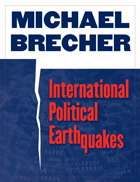
International Political Earthquakes is the masterwork of the preeminent scholar Michael Brecher. Brecher, who came of age before World War II, has witnessed more than seven decades of conflict and has spent his career studying the dynamics of relations among nations throughout the world.
When terrorism, ethnic conflict, military buildup, or other local tensions spark an international crisis, Brecher argues that the structure of global politics determines its potential to develop into open conflict. That conflict, in turn, may then generate worldwide political upheaval. Comparing international crises to earthquakes, Brecher proposes a scale analogous to the Richter scale to measure the severity and scope of the impact of a crisis on the landscape of international politics.
Brecher's conclusions about the causes of international conflict and its consequences for global stability make a convincing case for gradual, nonviolent approaches to crisis resolution.
Michael Brecher is R. B. Angus Professor of Political Science at McGill University.
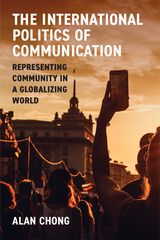
The International Politics of Communication examines this informational dimension of international politics, investigating how information is generated, conveyed through channels, and directed specifically at audiences. While citizens are often portrayed as faithfully loyal supporters and beneficiaries of the modern nation-state—a fiction supported by passports, identification papers, and other notarized credentials—they are subject to the pulls of loyalty from transnational tribal affiliations, mythological and historical narratives of ethnicity, as well as the transcendental claims of religion and philosophy. Increasingly, social media also enchants non-state individuals, providing new virtual communities as the center of loyalties rather than national affiliations. By reinterpreting taken-for-granted concepts in journalism, media, political economy, nationalism, development, and propaganda as information politics, this book prepares serious-minded scholars, citizens, politicians, and social activists everywhere to understand the power plays in international communication and use alternatives to begin transforming power relations.
Margret A. Winzer and Kas Mazurek combine two disciplines in this collection, comparative and international studies and special education, to explore the ways that diverse nations respond to persons who are exceptional. Their learned contributors also explore the changing parameters of special education, employing comparative studies theories and methods to document, explore, discuss, and analyze social and educational inclusion.
International Practices in Special Education: Debates and Challenges travels the world to examine the progress of special education, from inclusive reform in Canada, “education for all” in the United Kingdom, the reform-restructure-renew movement in Poland to the journey from awareness to action in the United States. Chapters describe the challenges and opportunities in the United Arab Emirates; conflicts regarding educational welfare in South Korea; new perspectives on special needs and inclusive education in Japan; facing inclusion in India; making the invisibles visible in Pakistan; problems and prospects in Nigeria; special needs education in Ethiopia; and the developments, prospects, and demands of special education in a rising China. “One step forward, two steps backward” describes Israel’s special education issues. Germany’s special education receives an international perspective; and education policy and pedagogy for students with disabilities in Australia, completes the analyses in this remarkable, comprehensive work of scholarship.
International Propaganda was first published in 1958. Minnesota Archive Editions uses digital technology to make long-unavailable books once again accessible, and are published unaltered from the original University of Minnesota Press editions.
As the principal weapon of the cold war, international propaganda is a matter of grave importance to anyone concerned with international relations. Here, in the first study of its kind, Dr. Martin analyzes the efforts and trends toward the control of such propaganda by means of international law, domestic law, and diplomacy. As a background for his study, he traces the development of international propaganda, discusses its definitions, and describes the propaganda activities of the three giants in the field - the United States, Great Britain, and the Soviet Union.

Based on their successful undergraduate course at the University of Southern California, Abigail E. Ruane and Patrick James provide an introduction to International Relations using J. R. R. Tolkien's fantastically popular trilogy The Lord of the Rings. Because Tolkien's major themes---such as good versus evil and human agency versus determinism---are perennially relevant to International Relations, The Lord of the Rings is well suited for application to the study of politics in our own world. This innovative combination of social science and humanities approaches to illustrate key concepts engages students and stimulates critical thinking in new and exciting ways.
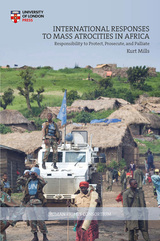
Parallel to this responsibility, two related responsibilities have developed: to prosecute those responsible for the crimes, and to provide humanitarian relief to the victims—what Kurt Mills in this book calls the “responsibility to palliate.” While this rhetoric of protection is well used by the international community, its application in practice has been erratic at best. In International Responses to Mass Atrocities in Africa, Mills develops a typology of responses to mass atrocities, considering four cases in Rwanda, the Democratic Republic of the Congo, Uganda, and Darfur. Putting the cases into historical context and analyzing them according to this typology, Mills investigates the limitations of these responses and calls for such responses to be implemented in a more timely and thoughtful manner. Mills provides critical analysis of the possibilities for the international community to respond to humanitarian crises in the future.

Promoting the rule of law at the national and international levels is at the heart of the United Nations’ mission and is a principle embedded throughout the Charter of the United Nations and most constitutions of nation-states. The 2012 “Declaration on the Rule of Law at the National and International Levels” adopted by the General Assembly reaffirmed that human rights, the rule of law, and democracy were interlinked and mutually reinforcing, and that they belonged to the universal and indivisible core values and principles of the United Nations. To some, the “Rule of Law” has become nothing more than empty rhetoric of individual Western states and intergovernmental bodies such as the UN, The World Bank, and the EU. In addition to conceptual uncertainty and perceived hidden agendas, there is mounting skepticism, particularly among donors, regarding rule of law promotion and its effectiveness in fragile states.
The International Rule of Law Movement critically evaluates rule of law initiatives from a contemporary global perspective. It seeks to fill the gap in knowledge among actors and to explain what has and has not been effective and why. It also proposes better models for promoting justice and the rule of law in fragile states.
Following the 9/11 attacks on New York and Washington, DC, there has been an increasing interest among scholars, students, and the interested public to study and learn about the Islamist-oriented terrorist organizations called Jihadi Salafi Groups (JSGs). Considering that these organizations emerged in highly fragile states, S. Yaqub Ibrahimi asks: how and why is state fragility linked to the emergence of JSGs?
Ibrahimi bases his study on three events: the establishment of al-Qaeda in Afghanistan in 1998, the rise of Islamic State in the post-Saddam Hussein Iraq, and the failed al-Qaeda effort to establish a base in Saudi Arabia in 2003. These case studies contain major aspects and features of the rise of JSGs and, together, explain the contribution of state fragility to the process of the formation and expansion of these terrorist organizations.
International Security in a World of Fragile States stands out as a pivotal work on the interconnection between the root causes of JSGs and state fragility conditions and their amalgamated role in the formation and evolution of these organizations. It contributes to IR and international security debates by developing a comprehensive but readily understandable narrative of the rise of JSGs in Islamic countries, and examining them in an analytical framework in which their root causes are categorized on individual, group, and international levels.
Editors Rachel Rosenstock and Jemina Napier have assembled an international group of renowned linguists and interpreters to examine various aspects of International Sign. Their contributions are divided into three parts: International Sign as a Linguistic System; International Sign in Action—Interpreting, Translation, and Teaching; and International Sign Policy and Language Planning. The chapters cover a range of topics, including the morphosyntactic and discursive structures of interpreted IS, the interplay between conventional linguistic elements and nonconventional gestural elements in IS discourse, how deaf signers who use different signed languages establish communication, Deaf/hearing IS interpreting teams and how they sign depicting verbs, how best to teach foundation-level IS skills, strategies used by IS interpreters when interpreting from IS into English, and explorations of the best ways to prepare interpreters for international events.
The work of the editors and contributors in this volume makes International Sign the most comprehensive, research-based analysis of a young but growing field in linguistics and interpretation.

READERS
Browse our collection.
PUBLISHERS
See BiblioVault's publisher services.
STUDENT SERVICES
Files for college accessibility offices.
RECENTLY PUBLISHED





UChicago Accessibility Resources
home | accessibility | search | about | contact us
BiblioVault ® 2001 - 2025
The University of Chicago Press