
 A SCHOLARLY BOOK REPOSITORY
13 start with I start with I
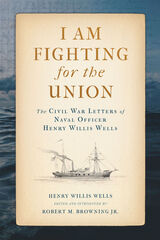
A young officer’s insightful, detailed and steadfast devotion to the Union Navy—told in his own words.
On May 18, 1862, Henry Willis Wells wrote a letter to his mother telling her in clear terms, “I am fighting for the Union.” Since August 1861, when he joined the US Navy as a master’s mate he never wavered in his loyalty. He wrote to his family frequently that he considered military service a necessary and patriotic duty, and the career that ensued was a dramatic one, astutely and articulately documented by Wells in more than 200 letters home, leaving an invaluable account of daily life in the Union Navy.
Wells joined the navy shortly after the war began, initially on board the Cambridge, attached to the North Atlantic Blockading Squadron, which patrolled the waters of the Chesapeake Bay. He witnessed the Battle of Hampton Roads and the fight between the ironclads CSS Virginia and the USS Monitor. Next, the Cambridge assisted in the blockade of Wilmington, North Carolina. In one instance, the warship chased the schooner J. W. Pindar ashore during her attempt to run the blockade, and Confederate forces captured Henry’s boarding party. After a short prison stay in the infamous Libby Prison in Richmond, his Confederate captors paroled Henry. He travelled back to Brookline, and soon thereafter the Navy Department assigned him to the gunboat Ceres, which operated on the sounds and rivers of North Carolina, protecting army positions ashore. Henry was on board during the Confederate attempt to capture Washington, North Carolina. During this April 1863 attack, Henry was instrumental in the town’s defense, commanding a naval battery ashore during the latter part of the fight.
His exceptional service gained him a transfer to a larger warship, the USS Montgomery, again on the blockade of Wilmington. Later the service assigned him to the Gem of the Sea, part of the East Gulf Blockading Squadron. Through his hard work and professionalism, he finally earned his first command. In September 1864, he became the commanding officer of the Rosalie, a sloop used as a tender to the local warships. Later he commanded the schooner Annie, also a tender. At the end of December 1864, however, the Annie suffered a massive explosion, killing all hands, including Wells. He was twenty-three years old when his life and career ended tragically. Wells’s letters document both his considerable achievements and his frustrations. His challenges, triumphs, and disappointments are rendered with candor. I Am Fighting for the Union is a vital and deeply personal account of a momentous chapter in the history of the Civil War and its navies.
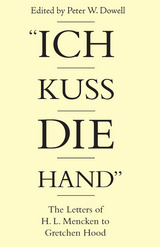
“Ich Kuss Die Hand”: The Letters of H. L. Mencken to Gretchen Hood relates an episode in Mencken's life that has received only passing mention from his biographers. Gretchen Hood's acquaintance with the journalistic life of Washington formed a bond with Mencken, who thought of himself, first and foremost, as an inveterate newspaperman (they playfully entertained the idea of starting their own Washington newspaper), and she had a ready appreciation for his performances as a connoisseur of the Washington political spectacle. Mencken, the amateur musician and music buff, respected her talent and professional background.
His letters indicate that he found in her an intelligent, witty, and charming respondent to his characteristic traits of personality and style. She both flattered his ego and challenged him to exhibit his celebrated manner at its best. On her part, Hood was not simply awestruck by Mencken's attentions but met them with her independent verve. “Nothing scared me,” she later said of her attitude; “ready to take on all comers.” Mencken liked to refer to her as “a licensed outlaw,” a designation that captures his impression of her and describes as well the fashionable unconventionality, which fueled the Mencken vogue.
Mencken wrote Hood over two hundred letters, and she must have written him about the same number. For much of the time they corresponded, they exchanged several letters every month, sometimes as many as four or five a week. As their communications blossomed into a four-year friendship, personal meetings soon supplemented the flow of letters.
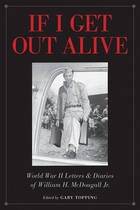
McDougall’s letters to his family offer a rare and detailed look at daily life in Tokyo and in Japanese-occupied Shanghai during the months leading up to the Pearl Harbor attack. After his imprisonment in Sumatra, he began keeping a daily journal of his experiences as a POW. Published here for the first time are the journals he retrieved at the end of World War II.
Written by an articulate and perceptive professional reporter, McDougall's letters and diaries offer an intimate, personal narrative of conditions in wartime East Asia.
"Could you love me so much that if the whole world turned against us, & we were obliged to live alone, given up by society you could live entirely in me? Could I ever become all the world to you?" --John Miller to Sally McDowell, February 21, 1855
"At last I come to tell you that I am yours. And I pray God to bless us not only in each other but to each other, and to grant us His favor and protection in the important step we are about to take.
If even to this hour I have fears and misgivings, and am disturbed by doubts and anxieties you must forgive me. They grow out of a condition of things as painful as it is unalterable, and out of an anxious temper which is, I think, like dear little Allie's ticklishness "constitutional." They are entirely without justification in anything I know or believe of you for I have the very fullest trust in your affection, and every confidence in your high and honorable character. But the cloud that rests upon the past with me does obscure the present to us both and looks portentous for the future. Yet you must take me with it all. Perhaps I may by and by prove to be something else than a burden to you; and at any rate, my affection is of some value to you, isn't it?" --Sally McDowell to John Miller, April 30, 1855
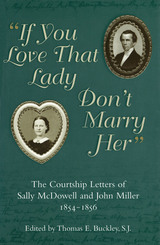
"If You Love That Lady Don't Marry Her" is a fascinating collection of almost five hundred letters between John Miller (1819-1895) and Sally Campbell Preston McDowell (1821-1895). Their correspondence began in early August 1854 and continued until their marriage in November 1856. The oldest daughter of the late Governor James McDowell of Virginia, Sally McDowell owned and managed Colalto, the family plantation. She was considered part of the South's social and political elite. John Miller, a widower with two young children, was a Presbyterian minister in Philadelphia. Son of Samuel Miller, a founder of Princeton Theological Seminary, he was one of the North's most prominent clergymen.
McDowell and Miller literally fell in love by mail, but one major obstacle blocked their marriage: Sally McDowell was a divorced woman. She had been wed to Governor Francis Thomas of Maryland, but his jealousy and cruelty soon drove her from Annapolis. Although an 1846 legislative divorce freed her to remarry legally, it was not socially acceptable to do so, especially not to "a man of the cloth." So when Miller and McDowell announced their plan to marry, social pressure cost him his pulpit and made her the object of extreme criticism from family members and friends. Although Miller was initially determined to wed despite any opposition, he eventually settled for a long-term engagement to preserve McDowell's social position.
Apart from a few brief visits, Miller and McDowell's relationship depended entirely upon letters. Begun in carefully guarded terms, these letters soon evolved into intimate explorations of their deepening love, their respective gender roles, the problems created by divorce, and religious and familial obligations. McDowell provides the unusual feminist perspective of a divorced woman in mid-nineteenth-century America. As she probes her own inner world, her correspondence with Miller becomes a healing experience through which she gradually surmounts the limitations she experiences as a woman, her depression and the fears resulting from her first marriage, and the stigma of divorce. Ultimately her self- revelations lead to their marriage in November 1856, which lasted until their deaths a week apart almost forty years later.
Because of their unique situation, Miller and McDowell committed to paper the private thoughts and feelings that most couples would have expressed in person. Although their personal relationship forms the principal subject of these letters, the couple also discussed such issues as the growing sectional tensions, national and state politics and politicians, literary figures, church meetings and personages, slave management and behavior, and family and community values and attitudes. Eloquently written, these letters offer a unique window on American society on the eve of the Civil War. They also reveal important information about gender roles and relationship in nineteenth-century America. Because no other book like this exists in print, readers everywhere will welcome "If You Love That Lady Don't Marry Her."
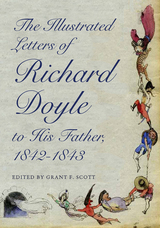
Before he joined the staff of Punch and designed its iconic front cover, illustrator Richard “Dicky” Doyle was a young man whose father (political caricaturist John Doyle) charged him with sending a weekly letter, even though they lived under the same roof. This volume collects the fifty-three illustrated missives in their entirety for the first time and provides an uncommon peek into the intimate but expansive observations of a precocious social commentator and artist.
In a series of vivid manuscript canvases, Doyle observes Victorian customs and society. He visits operas, plays, and parades. He watches the queen visiting the House of Commons and witnesses the state funeral of the Duke of Sussex. He is caught up in the Chartist riots of August 1842 and is robbed during one of the melees. And he provides countless illustrations of ordinary people strolling in the streets and swarming the parks and picture galleries of the metropolis. The sketches offer a fresh perspective on major social and cultural events of London during the early 1840s by a keen observer not yet twenty years old.
Doyle’s epistles anticipate the modern comic strip and the graphic novel, especially in their experimentation with sequential narrative and their ingenious use of space. The letters are accompanied by a full biographical and critical introduction with new material about Doyle’s life.
A classroom staple, Immigrant Voices: New Lives in America, 1773-2000 has been updated with writings that reflect trends in immigration to the United States through the turn of the twenty-first century. New chapters include a selection of letters from Irish immigrants fleeing the famine of the 1840s, writings from an immigrant who escaped the civil war in Liberia during the 1980s, and letters that crossed the U.S.-Mexico border during the late 1980s and early '90s. With each addition editor Thomas Dublin has kept to his original goals, which was to show the commonalities of the U.S. immigrant experience across lines of gender, nation of origin, race, and even time.
Scholars have long recognized that ethnographic method is bound up with the construction of theory in ways that are difficult to teach. The reason, Allaine Cerwonka and Liisa H. Malkki argue, is that ethnographic theorization is essentially improvisatory in nature, conducted in real time and in necessarily unpredictable social situations. In a unique account of, and critical reflection on, the process of theoretical improvisation in ethnographic research, they demonstrate how both objects of analysis, and our ways of knowing and explaining them, are created and discovered in the give and take of real life, in all its unpredictability and immediacy.
Improvising Theory centers on the year-long correspondence between Cerwonka, then a graduate student in political science conducting research in Australia, and her anthropologist mentor, Malkki. Through regular e-mail exchanges, Malkki attempted to teach Cerwonka, then new to the discipline, the basic tools and subtle intuition needed for anthropological fieldwork. The result is a strikingly original dissection of the processual ethics and politics of method in ethnography.
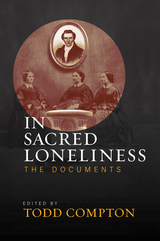
This volume includes many autobiographical writings, diaries, and letters, with Compton providing annotations and introductory material that illuminates these crucial primary sources. This allows readers to take their understanding of this unique group of women to a new level and to drive home that fact that their lives go far beyond the Nauvoo experiment that forever links them to Mormonism’s founding prophet.
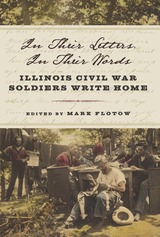
A vital lifeline to home during the Civil War, the letters of soldiers to their families and friends remain a treasure for those seeking to connect with and understand the most turbulent period of American history. Rather than focus on the experiences of a few witnesses, this impressively researched book documents 165 Illinois Civil War soldiers’ and sailors’ lives through the lens of their personal letters. Editor Mark Flotow chose a variety of letter writers who hailed from counties throughout the state, served in different branches of the military at different ranks, and represented the gamut of social experiences and war outcomes.
Flotow provides extensive quotations from the letters. By allowing the soldiers to speak for themselves, he captures what mattered most to them. Illinois soldiers wrote about their reasons for enlisting; the nature of training and duties; necessities like eating, sleeping, marching, and making the best of often harsh and chaotic circumstances; Southern culture; slavery; their opinions of commanding officers and the president; disease, medicine, and hospitals; their prisoner-of-war experiences; and the ways they left the army. Through letters from afar, many soldiers sought to manage their homes and farms, while some single men attempted to woo their sweethearts.
Flotow includes brief biographies for each soldier quoted in the book, weaves historical context and analysis with the letters, and organizes them by topic. Thus, intimate details cited in individual letters reveal their significance for those who lived and shaped this tumultuous era. The result is not only insightful history but also compelling reading.
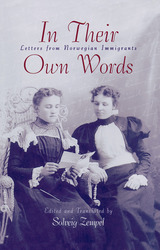
For most Norwegians in the nineteenth century, America was a remote and exotic place until the first immigrants began to write home. Their letters were among the most valuable, accessible, and reliable sources of information about the new world and the journey to it. For many immigrants, writing letters home was their most cherished opportunity to communicate their thoughts and feelings in their native language.
Through vivid translations of letters written to family and friends between 1870 and 1945, In Their Own Words traces the stories of nine Norwegian immigrants: farmer, fisherman, gold miner, politician, unmarried mother, housewife, businessman, railroad worker, contractor. Their common bond was the experience of immigration and acculturation, but their individual experiences were manifested in a wide variety of forms.
Solveig Zempel has thoughtfully selected and translated letters rich in personal description and observation to present each writer’s subjective view of historical events. Often focusing on the minutiae of daily life and the feelings of the individual immigrant, the letters form a complex, intimate, and colorful mosaic of the immigrant world.
In Invisible Walls, Hecht writes of what it was like to live under these circumstances, sharing heartbreaking details of her personal life, including the loss of her daughter's father on the Russian front; the death of her own father after his deportation in 1944; and her fears of perishing coupled with the shame of faring better than most of her family and friends. This new volume adds the first translation of part of Hecht's second book, To Remember is to Heal, a collection of vignettes of encounters and experiences that resulted from the publication of the first.
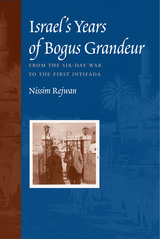
On the eve of the Six-Day War in 1967, Israel was nineteen years old and as much an adolescent as the average nineteen-year-old person. Issues of identity and transition were the talk among Israeli intellectuals, including the writer Nissim Rejwan. Was Israel a Jewish state or a democratic state? And, most frustratingly, who was a Jew? As Nancy Berg's foreword makes clear, these issues became more critical and complex in the two decades after the war as Israel matured into a regional power. Rejwan, an Iraqi-born Jew whose own fate was tied to the answers, addresses the questions of those days in his letters, essays, and remembrances collected in Israel's Years of Bogus Grandeur.
Israel's overwhelming victory in 1967 brought control of the former Palestinian territories; at the same time, Oriental Jews (i.e., those not from Europe) became a majority in the Israeli population. The nation, already surrounded by hostile, recently humiliated Arab neighbors, now had an Arab majority (Jewish, Muslim, Druze, and Christian) within its borders—yet European Jews continued to run the country as their own. Rejwan wrote tirelessly about the second-class status of Arab Israelis (and especially of Arab Jews), encouraging a more inclusive attitude that might eventually help heal the wounds left by the Six-Day War. His studies in sociology at Tel Aviv University informed his work. For his cause, Rejwan lost his job and many of his friends but never his pen. Through Munich, Entebbe, political scandals, economic crises, and the beginning of the Intifada, Rejwan narrates Israel's growing pains with feisty wit and unwavering honesty.
READERS
Browse our collection.
PUBLISHERS
See BiblioVault's publisher services.
STUDENT SERVICES
Files for college accessibility offices.
RECENTLY PUBLISHED




UChicago Accessibility Resources
home | accessibility | search | about | contact us
BiblioVault ® 2001 - 2026
The University of Chicago Press