
 A SCHOLARLY BOOK REPOSITORY
5 start with I start with I
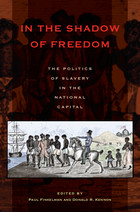
Few images of early America were more striking, and jarring, than that of slaves in the capital city of the world’s most important free republic. Black slaves served and sustained the legislators, bureaucrats, jurists, cabinet officials, military leaders, and even the presidents who lived and worked there. While slaves quietly kept the nation’s capital running smoothly, lawmakers debated the place of slavery in the nation, the status of slavery in the territories newly acquired from Mexico, and even the legality of the slave trade in itself.
This volume, with essays by some of the most distinguished historians in the nation, explores the twin issues of how slavery made life possible in the District of Columbia and how lawmakers in the district regulated slavery in the nation.
Contributors: David Brion Davis, Mary Beth Corrigan, A. Glenn Crothers, Jonathan Earle, Stanley Harrold, Mitch Kachun, Mary K. Ricks, James B. Stewart, Susan Zaeske, David Zarefsky

This enlarged edition of the most significant and celebrated slave narrative completes the Jacobs family saga, surely one of the most memorable in all of American history. John S. Jacobs’s short slave narrative, A True Tale of Slavery, published in London in 1861, adds a brother’s perspective to Harriet A. Jacobs’s autobiography. It is an exciting addition to this now classic work, as John Jacobs presents further historical information about family life so well described already by his sister. Once more, Jean Fagan Yellin, who discovered this long-lost document, supplies annotation and authentication.
This is the standard edition of Incidents in the Life of a Slave Girl, reissued here in the John Harvard Library and updated with a new bibliography.

A landmark account of the origins of American slavery, revealing how ancient Roman ideas were used to defend the establishment of a slave empire in the English Atlantic world.
The period from 1550 to 1700 was critical in the development of slavery across the English Atlantic world. During this time, English discourse about slavery revolved around one central question: How could free persons be made into slaves? John Samuel Harpham shows that English authors found answers to this question in a tradition of ideas that stretched back to the ancient world, where they were most powerfully expressed in Roman law. These ideas, in turn, became the basis for the earliest defenses of American slavery.
The Roman tradition had located the main source of slavery in war: enslavement was the common fate of captives who otherwise faced execution. In early modern England, this account was incorporated into studies of the common law and influential natural rights theories by the likes of Hugo Grotius and John Locke. When Europeans started to publish firsthand accounts of Africa in the sixteenth century, these reports were thus received into a culture saturated with Roman ideas. Over time, English observers started to assert that the common customs of enslavement among the nations of Africa fit within the Roman model. Englishmen had initially expressed reluctance to take part in the Atlantic slave trade. But once assured that the slave trade could be traced back to customs they understood to be legitimate, they proved keen to profit from it.
An eloquent account of the moral logic that propelled the development of an immoral institution, The Intellectual Origins of American Slavery reveals the power of an overlooked tradition of ideas in the history of human bondage.
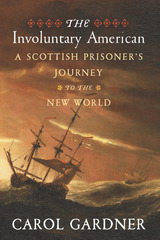
In the winter of 1650–51, one hundred fifty ragged and hungry Scottish prisoners of war arrived at Massachusetts Bay Colony, where they were sold as indentured laborers for 20 to 30 pounds each. Among them was Thomas Doughty, a common foot soldier who had survived the Battle of Dunbar, a forced marched of 100 miles without food or water, imprisonment in Durham Cathedral, and a difficult Atlantic crossing. An ordinary individual who experienced extraordinary events, Doughty was among some 420 Scottish soldiers who were captured during the War of the Three Kingdoms, transported to America, and sold between 1650 and 1651. Their experiences offer a fresh perspective on seventeenth-century life.
The Involuntary American: A Scottish Prisoner’s Journey to the New World by Carol Gardner describes Doughty’s life as a soldier, prisoner of war, exile, servant, lumberman, miller, and ultimately free landowner. It follows him and his peers through critical events: the apex of the Little Ice Age, the War of the Three Kingdoms, the colonization of New England, the burgeoning transatlantic trade in servants and slaves, King Philip’s and King William’s wars, and the Salem witch crisis. Firstperson accounts of individuals who lived through those events—Scottish, English, Puritan, Native American, wealthy, poor, working class, educated or not— provide rich period detail and a variety of perspectives.
The Involuntary American demonstrates how even individuals of humble circumstances were swept into the maelstrom of the First Global Age. It expands our understanding of immigration to the colonies, colonial servitude, the linkages and tensions between Europe, Massachusetts Bay, and America’s northeastern frontier, and of New England society in the early colonial period.

Winner of the National Book Critics Circle Award
“Impeccably researched and seductively readable…tells the story of Sam Sharpe’s revolution manqué, and the subsequent abolition of slavery in Jamaica, in a way that’s acutely relevant to the racial unrest of our own time.” —Madison Smartt Bell, author of All Souls’ Rising
The final uprising of enslaved people in Jamaica started as a peaceful labor strike a few days shy of Christmas in 1831. A harsh crackdown by white militias quickly sparked a full-blown revolt, leaving hundreds of plantation houses in smoking ruins. The rebels lost their daring bid for freedom, but their headline-grabbing defiance triggered a decisive turn against slavery.
Island on Fire is a dramatic day-by-day account of these transformative events. A skillful storyteller, Tom Zoellner uses diaries, letters, and colonial records to tell the intimate story of the men and women who rose up and briefly tasted liberty. He brings to life the rebellion’s enigmatic leader, the preacher Samuel Sharpe, and shows how his fiery resistance turned the tide of opinion in London and hastened the end of slavery in the British Empire.
“Zoellner’s vigorous, fast-paced account brings to life a varied gallery of participants…The revolt failed to improve conditions for the enslaved in Jamaica, but it crucially wounded the institution of slavery itself.” —Fergus M. Bordewich, Wall Street Journal
“It’s high time that we had a book like the splendid one Tom Zoellner has written: a highly readable but carefully documented account of the greatest of all British slave rebellions, the miseries that led to it, and the momentous changes it wrought.” —Adam Hochschild, author of Bury the Chains
READERS
Browse our collection.
PUBLISHERS
See BiblioVault's publisher services.
STUDENT SERVICES
Files for college accessibility offices.
RECENTLY PUBLISHED



UChicago Accessibility Resources
home | accessibility | search | about | contact us
BiblioVault ® 2001 - 2026
The University of Chicago Press