
 A SCHOLARLY BOOK REPOSITORY
8 start with I start with I
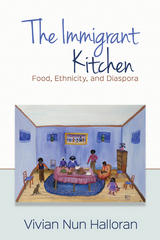
The Immigrant Kitchen describes how these memoirs function as a complex and engaging mass media genre that caters to multiple reading constituencies. Specifically, they entertain readers with personal anecdotes and recollections, teach new culinary skills through recipes, share insight into different cultural mores through ethnographic and reportorial discussions of life in other countries, and attest to the impact that an individual’s legal immigration into the United States continues to have down through the generations of his or her American-born families.
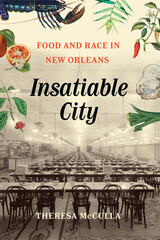
A history of food in the Crescent City that explores race, power, social status, and labor.
In Insatiable City, Theresa McCulla probes the overt and covert ways that the production of food and the discourse about it both created and reinforced many strains of inequality in New Orleans, a city significantly defined by its foodways. Tracking the city’s economy from nineteenth-century chattel slavery to twentieth-century tourism, McCulla uses menus, cookbooks, newspapers, postcards, photography, and other material culture to limn the interplay among the production and reception of food, the inscription and reiteration of racial hierarchies, and the constant diminishment and exploitation of working-class people. The consumption of food and people, she shows, was mutually reinforced and deeply intertwined. Yet she also details how enslaved and free people of color in New Orleans used food and drink to carve paths of mobility, stability, autonomy, freedom, profit, and joy. A story of pain and pleasure, labor and leisure, Insatiable City goes far beyond the task of tracing New Orleans's culinary history to focus on how food suffuses culture and our understandings and constructions of race and power.
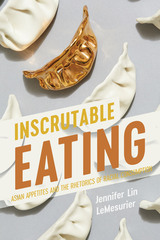
“You are what you eat,” but what if you’re seen as a rat eater, bat lover, or MSG user? In Inscrutable Eating, Jennifer Lin LeMesurier considers how everyday assumptions about Asian food influence the perception of Asian and Asian American identity within the US racial landscape, demonstrating that beliefs about how certain people eat are inseparable from attitudes that support hierarchies around race, gender, and sexuality. Drawing on rhetorical theory, affect theory, and Asian American studies, LeMesurier analyzes messages in US popular culture about Asian eating to develop the concept of gut orientations: rhetorically dominant ways of interacting with food that scale upward to feelings of desire and disgust toward social groups. Looking at examples from fears around MSG to uproar over wet markets as the source of COVID-19, she argues that these “gut” reactions establish certain racial views as common-sense truths rather than cultural biases, reinforcing dominant norms about what belongs on whose plate, or who belongs at what table. In demystifying marginalizing discourse around food and eating, LeMesurier shows how exposing the tacit, felt ideas of consumption is necessary to contest broader forms of discrimination.
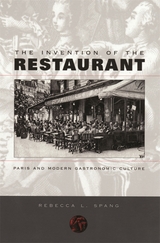
Why are there restaurants? Why would anybody consider eating to be an enjoyable leisure activity or even a serious pastime? To find the answer to these questions, we must accompany Rebecca Spang back to France in the eighteenth century, when a restaurant was not a place to eat but a thing to eat: a quasi-medicinal bouillon that formed an essential element of prerevolutionary France's nouvelle cuisine. This is a book about the French Revolution in taste and of the table--a book about how Parisians invented the modern culture of food, thereby changing their own social life and that of the world.
During the 1760s and 1770s, those who were sensitive and supposedly suffering made public show of their delicacy by going to the new establishments known as "restaurateurs' rooms" and there sipping their bouillons. By the 1790s, though, the table was variously seen as a place of decadent corruption or democratic solidarity. The Revolution's tables were sites for extending frugal, politically correct hospitality, and a delicate appetite was a sign of counter-revolutionary tendencies. The restaurants that had begun as purveyors of health food became symbols of aristocratic greed. In the early nineteenth century, however, the new genre of gastronomic literature worked within the strictures of the Napoleonic police state to transform the notion of restaurants and to confer star status upon oysters and champagne. Thus, the stage was set for the arrival of British and American tourists keen on discovering the mysteries of Frenchness in the capital's restaurants. From restoratives to Restoration, Spang establishes the restaurant at the very intersection of public and private in French culture--the first public place where people went to be private.
Winner of the Louis Gottschalk Prize
Winner of the Thomas J. Wilson Memorial Prize
“Witty and full of fascinating details.”
—Los Angeles Times
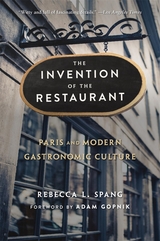
Why are there restaurants? Why would anybody consider eating alongside perfect strangers in a loud and crowded room to be an enjoyable pastime? To find the answer, Rebecca Spang takes us back to France in the eighteenth century, when a restaurant was not a place to eat but a quasi-medicinal bouillon not unlike the bone broths of today.
This is a book about the French revolution in taste—about how Parisians invented the modern culture of food, changing the social life of the world in the process. We see how over the course of the Revolution, restaurants that had begun as purveyors of health food became symbols of aristocratic greed. In the early nineteenth century, the new genre of gastronomic literature worked within the strictures of the Napoleonic state to transform restaurants yet again, this time conferring star status upon oysters and champagne.
“An ambitious, thought-changing book…Rich in weird data, unsung heroes, and bizarre true stories.”
—Adam Gopnik, New Yorker
“[A] pleasingly spiced history of the restaurant.”
—New York Times
“A lively, engrossing, authoritative account of how the restaurant as we know it developed…Spang is…as generous in her helpings of historical detail as any glutton could wish.”
—The Times
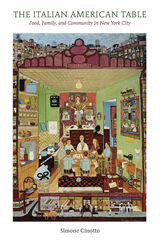
Looking at the historic Italian American community of East Harlem in the 1920s and 30s, Simone Cinotto recreates the bustling world of Italian life in New York City and demonstrates how food was at the center of the lives of immigrants and their children. From generational conflicts resolved around the family table to a vibrant food-based economy of ethnic producers, importers, and restaurateurs, food was essential to the creation of an Italian American identity. Italian American foods offered not only sustenance but also powerful narratives of community and difference, tradition and innovation as immigrants made their way through a city divided by class conflict, ethnic hostility, and racialized inequalities.
READERS
Browse our collection.
PUBLISHERS
See BiblioVault's publisher services.
STUDENT SERVICES
Files for college accessibility offices.
RECENTLY PUBLISHED





UChicago Accessibility Resources
home | accessibility | search | about | contact us
BiblioVault ® 2001 - 2026
The University of Chicago Press