
 A SCHOLARLY BOOK REPOSITORY
18 start with I start with I

Photographs and personal narratives are woven together to show both the unpleasant and the beautiful sides of the struggle for connection between spouses and across generations. Smoller has a gift for capturing people as they interact, whether it's arguing around the kitchen table or dancing cheek to cheek.
Each family's story is different, but all four families share common pain and frustration. A highway patrolman who has early onset Alzheimer's describes what it is like to have Alzheimer's. His wife tells a parallel story of life together after hearing the diagnosis. A daughter gives the following account of her mother: "I though that it would be helpful if mother spent time in my home in Colorado. Before this visit, I was in denial, convinced that she suffered from depression and not Alzheimer's disease. ... On the plane trip to Colorado, I was brought into the stark, cold reality that Mom had Alzheimer's. She did not know where she was or where she was going. Upon arrival, she did not recognize my home, although she had visited me numerous times in the past. She tried sleeping in the bathtub the first night."
Another daughter relates that she was unaware of the onset of Alzheimer's in her mother, because her mother was such a "wonderful actress." Eventually the memory problems were no longer confined to where things belonged in the kitchen, but extended into driving off at random, driving in circles in a parking lot in the middle of the night or as much as 75 miles away from home.
I Can't Remember gives an intimate glimpse into the hearts and minds of caregivers and patients. Supportive social networks are essential for healthy life. This book provides the impetus caregivers need to develop contacts that can provide support. Smoller offers a glimpse of the frustration and losses faced by those who deal with Alzheimer's, as well as the potential to transcend those losses -- even is only for a time -- through love and hope.



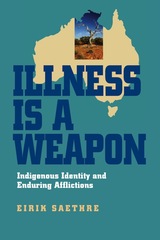
Rarely is disease and suffering understood as a form of protest, and in Illness Is a Weapon, Saethre confronts the stark reality of the current contest between all parties in this struggle. As Saethre explains, "Cursing at nurses, refusing to take medication, and accepting acute illness as unremarkable is simultaneously an act of defiance and a rejection of vulnerability."
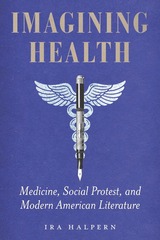
In the United States, a deep suspicion of professional medical expertise is becoming increasingly prominent. Meanwhile, many arguments for health justice take a highly critical view of medical authority, even rejecting it entirely. In the early to mid-twentieth century, alternatively, as medicine rapidly professionalized, Americans came to hold the medical establishment in a particularly high regard, while many saw how it could play a crucial role in progressive politics. In this period, technologies developed, specializations grew, and medical education became standardized. With this process came inequities, as marginalized populations struggled to access the highest levels of care. Literary writers confronting social ills through their work included critiques of this new system in their writing, Ira Halpern argues. Without abandoning professional medicine, they called for alternative systems of care that could better serve diverse populations.
Halpern examines the work of several writers—including Robert Herrick, Wallace Thurman, Frank Slaughter, Charles Chesnutt, Walter White, Ralph Ellison, Charlotte Perkins Gilman, Upton Sinclair, Stephen Crane, and Edith Wharton—to demonstrate how American writing from this period embedded a critical look at healthcare within other elements of progressive politics, from racial protest and women’s rights to disability justice and counter-capitalist viewpoints. Placing this writing into historical context, in terms of medical and scientific developments as well as traditions of social protest, Halpern reveals the efforts of these writers to envision better alternative trajectories for a quickly evolving medical establishment that left too many Americans without reliable care.

In the United States, a deep suspicion of professional medical expertise is becoming increasingly prominent. Meanwhile, many arguments for health justice take a highly critical view of medical authority, even rejecting it entirely. In the early to mid-twentieth century, alternatively, as medicine rapidly professionalized, Americans came to hold the medical establishment in a particularly high regard, while many saw how it could play a crucial role in progressive politics. In this period, technologies developed, specializations grew, and medical education became standardized. With this process came inequities, as marginalized populations struggled to access the highest levels of care. Literary writers confronting social ills through their work included critiques of this new system in their writing, Ira Halpern argues. Without abandoning professional medicine, they called for alternative systems of care that could better serve diverse populations.
Halpern examines the work of several writers—including Robert Herrick, Wallace Thurman, Frank Slaughter, Charles Chesnutt, Walter White, Ralph Ellison, Charlotte Perkins Gilman, Upton Sinclair, Stephen Crane, and Edith Wharton—to demonstrate how American writing from this period embedded a critical look at healthcare within other elements of progressive politics, from racial protest and women’s rights to disability justice and counter-capitalist viewpoints. Placing this writing into historical context, in terms of medical and scientific developments as well as traditions of social protest, Halpern reveals the efforts of these writers to envision better alternative trajectories for a quickly evolving medical establishment that left too many Americans without reliable care.

Contributors to this volume examine historical and contemporary visual practices-Chinese health fairs, documentary films produced by the World Health Organization, illness maps, fashions for nurses, and live surgery on the Internet-in order to delve into the political and epidemiological contexts underlying their creation and dissemination.

The distinguished contributors to this volume discuss the ways HIV/AIDS has changed collective and individual identities, as well as lives, of gay men and lesbians, and how these alterations have changed our perceptions of the epidemic. They cover such topics as the impact of the epidemic on small towns, cultural barriers to AIDS prevention, gay youth and intergenerational relations, and the roles of lesbians in AIDS organizations. This collection provides compelling insights into the new communities among gay men and lesbians and the new kinds of identities and relationships that are emerging from the social and cultural ferment engendered by HIV/AIDS.
Contributors include Barry D. Adam, Lourdes Arguelles, Rafael Miguel Diaz, John H. Gagnon, Gilbert Herdt, Gregory M. Herek, Nan D. Hunter, Peter M. Nardi, John L. Peterson, Anne Rivero, Gayle S. Rubin, Beth E. Schneider, and Nancy E. Stoller.
An examination of early American literature that highlights how racial divides exacerbated—and were exacerbated by—the spread of infection
In April of 1721, the HMS Seahorse arrived in Boston from the West Indies, causing a smallpox epidemic that would plague the city for the next year. Of its 12,000 inhabitants, nearly fifty percent were infected, and 900 people died. Like the coronavirus pandemic that began in 2020, the outbreak also brought to the surface deep divides in the social fabric of colonial New England and laid the groundwork for racialized political inequities that we continue to grapple with today.
In Contagion’s Wake examines a range of American outbreak narratives, both historical and fictional, written between the early 1700s and the early 1900s—from the rise of inoculation through the advent of germ theory. Author Kelly L. Bezio argues that during this period, literature about communicable disease was dominated by white authors, such as Cotton Mather and Edgar Allen Poe, who tended to privilege white suffering and survival while obscuring Black suffering and vulnerability. Black authors, however, such as Olaudah Equiano and Frances E.W. Harper, developed variations on plot structures, metaphors, and imagery that drew upon contagion to represent racial injustice and further the cause of Black liberation.
The diverse texts Bezio analyzes vary extensively in genre and geographical location, and in the illnesses that feature in their pages. Significant disorders from the era, including yellow fever, smallpox, consumption, and cholera, make frequent appearances, as do less culturally dominant diseases such as St. Anthony’s Fire. In Contagion’s Wake contends that representations of communicable disease should not be understood only as within their own historical moment; rather, they function more like a DNA code for our present time.
An examination of early American literature that highlights how racial divides exacerbated—and were exacerbated by—the spread of infection
In April of 1721, the HMS Seahorse arrived in Boston from the West Indies, causing a smallpox epidemic that would plague the city for the next year. Of its 12,000 inhabitants, nearly fifty percent were infected, and 900 people died. Like the coronavirus pandemic that began in 2020, the outbreak also brought to the surface deep divides in the social fabric of colonial New England and laid the groundwork for racialized political inequities that we continue to grapple with today.
In Contagion’s Wake examines a range of American outbreak narratives, both historical and fictional, written between the early 1700s and the early 1900s—from the rise of inoculation through the advent of germ theory. Author Kelly L. Bezio argues that during this period, literature about communicable disease was dominated by white authors, such as Cotton Mather and Edgar Allen Poe, who tended to privilege white suffering and survival while obscuring Black suffering and vulnerability. Black authors, however, such as Olaudah Equiano and Frances E.W. Harper, developed variations on plot structures, metaphors, and imagery that drew upon contagion to represent racial injustice and further the cause of Black liberation.
The diverse texts Bezio analyzes vary extensively in genre and geographical location, and in the illnesses that feature in their pages. Significant disorders from the era, including yellow fever, smallpox, consumption, and cholera, make frequent appearances, as do less culturally dominant diseases such as St. Anthony’s Fire. In Contagion’s Wake contends that representations of communicable disease should not be understood only as within their own historical moment; rather, they function more like a DNA code for our present time.

The medical system delivers cures, answers, and relief from pain to those who seek its help, but it can also offer misinformation, shattered expectations, horrible options, and inhumane consideration of the people it is supposed to serve. As Gilsdorf takes us on a journey across the terrifying landscape of cancer, she discovers that there are oases of unfathomable beauty to be found.
Inside/Outside is compelling, sometimes scary, reading as it puts us inside Gilsdorf’s skin. It ponders a vast array of profound choices most of us will be confronted with in our lives: thinking versus feeling, knowing versus not knowing, hanging on versus letting go, loving versus hating, and the immeasurable territories of life between the poles. Even as it touches on these universal human themes, ultimately Inside/Outside is a story of one person’s courage, hope, and survival in the face of terrifying odds.

In International Surrogacy as Disruptive Industry in Southeast Asia, Andrea Whittaker traces the development of this industry and its movement across Southeast Asia following a sequence of governmental bans in India, Nepal, Thailand, and Cambodia. Through a case study of the industry in Thailand, the book offers a nuanced and sympathetic examination of the industry from the perspectives of the people involved in it: surrogates, intended parents, and facilitators. The industry offers intended parents the opportunity to form much desired families, but also creates vulnerabilities for all people involved. These vulnerabilities became evident in cases of trafficking, exploitation, and criminality that emerged in southeast Asia, leading to greater scrutiny on the industry as a whole. Yet the trade continues in new flexible hybrid forms, involving the circulation of reproductive gametes, embryos, surrogates, and ova donors across international borders to circumvent regulations. The book demonstrates the need for new forms of regulation to protect those involved in international surrogacy arrangements.

By the millennium Americans were spending more than 12 billion dollars yearly on antidepressant medications. Currently, millions of people in the U.S. routinely use these pills. Are these miracle drugs, quickly curing depression? Or is their popularity a sign that we now inappropriately redefine normal life problems as diseases? Are they prescribed too often or too seldom? How do they affect self-images?
David Karp approaches these questions from the inside, having suffered from clinical depression for most of his adult life. In this book he explores the relationship between pills and personhood by listening to a group of experts who rarely get the chance to speak on the matter--those who are taking the medications. Their voices, extracted from interviews Karp conducted, color the pages with their experiences and reactions--humor, gratitude, frustration, hope, and puzzlement. Here, the patients themselves articulate their impressions of what drugs do to them and for them. They reflect on difficult issues, such as the process of becoming committed to medication, quandaries about personal authenticity, and relations with family and friends.
The stories are honest and vivid, from a distraught teenager who shuns antidepressants while regularly using street drugs to a woman who still yearns for a spiritual solution to depression even after telling intimates "I'm on Prozac and it's saving me." The book provides unflinching portraits of people attempting to make sense of a process far more complex and mysterious than doctors or pharmaceutical companies generally admit.

Written by an anthropologist who has direct ties to the Trobriands through marriage and who has been involved in Papua New Guinea's national response to the HIV epidemic since the mid-1990s, Islands of Love, Islands of Risk is an unusual insider ethnography. Katherine Lepani describes in vivid detail the cultural practices of regeneration, from the traditional dance called Wosimwaya to the elaborate exchanges that are part of the mortuary feasts called sagali. Focusing on the sexual freedom of young people, the author reveals the social value of sexual practice. By bringing cultural context and lived experience to the fore, the book addresses the failure of standardized public health programs to bridge the persistent gap between HIV awareness and prevention. The book offers insights on the interplay between global and local understandings of gender, sexuality, and disease and suggests the possibility of viewing sexuality in terms other than risk.
Islands of Love, Islands of Risk illustrates the contribution of ethnographic research methodology in facilitating dialogue between different ways of knowing. As a contemporary perspective on Malinowski's classic accounts of Trobriand sexuality, the book reaffirms the Trobriands' central place in the study of anthropology.
This book is the recipient of the annual Norman L. and Roselea J. Goldberg Prize for the best project in the area of medicine.

Part memoir, part practical guide, part prescription for change, It Shouldn't Be This Way is a unique look at the problems of long-term care. Robert L. Kane, a highly experienced physician and gerontologist, and his sister, Joan C. West, tell the painful story of what happened to their mother after she suffered a debilitating stroke and spent the last years of her life in rehabilitation, assisted-living facilities, and finally a nursing home. Along the way, her adult children encountered some professionals who were kind and considerate but also many frustrations—inadequate care and the need to hire private duty aides, as well as poor communication and lack of coordination throughout the system. The situation, they found, proved far more difficult than it needed to be.
As the authors recount their mother's story, they impart various lessons they learned from each phase of the experience. They alert those who are confronting such situations for the first time about what they will likely face and how to approach the problems. Closing with a broader look at why long-term care is the way it is, they propose steps to make necessary reforms, including the development of national organizations to work for change. Their message to families, care professionals, and policy-makers could not be more urgent.

READERS
Browse our collection.
PUBLISHERS
See BiblioVault's publisher services.
STUDENT SERVICES
Files for college accessibility offices.
RECENTLY PUBLISHED







UChicago Accessibility Resources
home | accessibility | search | about | contact us
BiblioVault ® 2001 - 2025
The University of Chicago Press