
 A SCHOLARLY BOOK REPOSITORY
15 start with I start with I
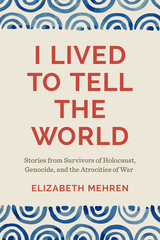
As Americans increasingly question how each of us fits into our nation's cultural tapestry, I Lived to Tell the World presents thirteen inspiring profiles of refugees who have settled in Oregon. They come from Rwanda, Myanmar, Bosnia, Syria, and more-different stories, different conflicts, but similar paths through loss and violence to a new, not always easy, life in the United States. The in-depth profiles are drawn from hours of interviews and oral histories; journalist Elizabeth Mehren worked collaboratively with the survivors to honor the complexity of their experiences and to ensure that the stories are told with, and not just about, them. Mehren also weaves in historical, cultural, and political context alongside these personal stories of resilience.
In the face of global cruelty and hatred, the courage and fortitude of these individuals illuminate the darkness. Their stories inspire readers to reflect on their own experiences and to view newcomers to America with renewed respect. As more states adopt Holocaust and genocide education curricula and as issues around refugees, immigration, and racial justice gain attention, I Lived to Tell the World highlights the purposeful lives led by these Oregonians despite their painful pasts. Their experiences not only humanize the atrocities often seen in headlines, but also convey a universal message of hope.

His personal story interweaves the vast forces of politics and history with intimate details of the shtetl--from the pre-war intricacies of Galician society and the textures of a traditional Jewish education, to the agonizing contradictions of Polish-Jewish relations and the complexities of post-war Jewish politics.
His account of the displaced persons camps where 'transit Jews' awaited their chance to emigrate is a signifigant contribution to a little-known aspect of post-war history.
With his gift for observation and his acute powers of analysis, Mark Verstandig has achieved the rare feat of telling the story of his people through his own history. Part autobiography, part Holocaust literature, part sociological analysis, I Rest my Case is a fine achievement.
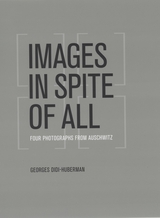
Available today because they were smuggled out of the camp and into the hands of Polish resistance fighters, the photographs show a group of naked women being herded into the gas chambers and the cremation of corpses that have just been pulled out. Georges Didi-Huberman’s relentless consideration of these harrowing scenes demonstrates how Holocaust testimony can shift from texts and imaginations to irrefutable images that attempt to speak the unspeakable. Including a powerful response to those who have criticized his interest in these images as voyeuristic, Didi-Huberman’s eloquent reflections constitute an invaluable contribution to debates over the representability of the Holocaust and the status of archival photographs in an image-saturated world.

In Her Father's Eyes is a moving tale about Jewish life and a father's profound love for his only child. By bridging prewar and wartime periods, the diary also provides a rich context for understanding the history from which the Holocaust emerged.
The collective memories of Nazism that developed in postwar Germany have helped define a new paradigm of memory politics. From Europe to South Africa and from Latin America to Iraq, scholars have studied the German case to learn how to overcome internal division and regain international recognition.
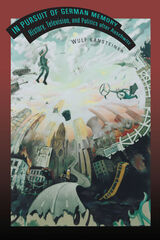
In Pursuit of German Memory: History, Television, and Politics after Auschwitz examines three arenas of German memory politics—professional historiography, national politics, and national public television—that have played key roles in the reinvention of the Nazi past in the last sixty years. Wulf Kansteiner shows that the interpretations of the past proposed by historians, politicians, and television producers reflect political and generational divisions and an extraordinary concern for Germany's image abroad. At the same time, each of these theaters of memory has developed its own dynamics and formats of historical reflection.
Kansteiner’s analysis of the German scene reveals a complex social geography of collective memory. In Pursuit of German Memory underscores the fact that German memories of Nazism, like many other collective memories, combine two seemingly contradictory qualities: They are highly mediated and part of a global exchange of images and story fragments but, at the same time, they can be reproduced only locally, in narrowly circumscribed networks of communication.
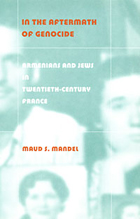
In the Aftermath of Genocide reveals that Armenian and Jewish survivors rarely sought to shed the obvious symbols of their ethnic and religious identities. Mandel shows that following the 1915 genocide and the Holocaust, these communities, if anything, seemed increasingly willing to mobilize in their own self-defense and thereby call attention to their distinctiveness. Most Armenian and Jewish survivors were neither prepared to give up their minority status nor willing to migrate to their national homelands of Armenia and Israel. In the Aftermath of Genocide suggests that the consolidation of the nation-state system in twentieth-century Europe led survivors of genocide to fashion identities for themselves as ethnic minorities despite the dangers implicit in that status.
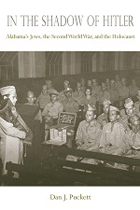
In this extensive study of how southern Jews in the United States responded to the Nazi persecution of European Jews, Dan J. Puckett recounts the divisions between Alabama Jews in the early 1930s. As awareness of the horrors of the Holocaust spread, Jews across Alabama from different backgrounds and from Reform, Conservative, and Orthodox traditions worked to bridge their internal divisions in order to mount efforts to save Jewish lives in Europe. Only by leveraging their collective strength were Alabama’s Jews able to sway the opinions of newspaper editors, Christian groups, and the general public as well as lobby local, state, and national political leaders.
Puckett’s comprehensive analysis is enlivened and illustrated by true stories that will fascinate all readers of southern history. One such story concerns the Altneuschule Torah of Prague and describes how the Nazis, during their brutal occupation of Czechoslovakia, confiscated 1,564 Torahs and sacred Judaic objects from communities throughout Bohemia and Moravia as exhibits in a planned museum to the extinct Jewish race. Recovered after the war by the Czech Memorial Scrolls Trust, the Altneuschule Torah was acquired in 1982 by the Orthodox congregation Ahavas Chesed of Mobile. Ahavas Chesed re-consecrated the scroll as an Alabama memorial to Czech Jews who perished in Nazi death camps.
In the Shadow of Hitler illustrates how Alabama’s Jews, in seeking to influence the national and international well-being of Jews, were changed, emerging from the war period with close cultural and religious cooperation that continues today.
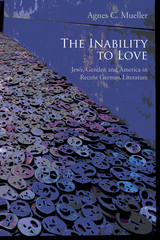
The Inability to Love borrows its title from Alexander and Margarete Mitscherlich’s 1967 landmark book The Inability to Mourn, which discussed German society’s lack of psychological reckoning with the Holocaust. Challenging that notion, Agnes Mueller turns to recently published works by prominent contemporary German, non-Jewish writers to examine whether there has been a thorough engagement with German history and memory. She focuses on literature that invokes Jews, Israel, and the Holocaust. Mueller’s aim is to shed light on pressing questions concerning German memories of the past, and on German images of Jews in Germany at a moment that s ideologically and historically fraught.
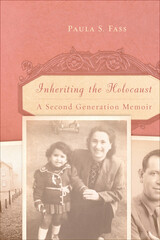
Fass begins her journey through time and relationships when she travels to Poland and locates birth certificates of the murdered siblings she never knew. That journey to recover her family's story provides her with ever more evidence for the perplexing reliability of memory and its winding path toward historical reconstruction. In the end, Fass recovers parts of her family's history only to discover that Poland is rapidly re-imagining the role Jews played in the nation's past.
On October 21, 1996, attorney Michael Hausfeld, with a team of lawyers, filed a class-action complaint against Union Bank of Switzerland, Swiss Bank Corporation, and Credit Suisse on behalf of Holocaust victims. The suit accused the banks of, among other things, acting as the chief financiers for Nazi Germany. Hausfeld wanted to use the suit to prove that the banks not only concealed and refused to return millions of dollars in dormant accounts, but that they acted as a conduit for looted assets and slave labor profits. Such behavior, he charged, violated the code of ethics known as customary international law. On August 12, 1998, the plaintiffs and banks reached a $1.25 billion settlement.
Through interviews with a wide range of people involved in the case and detailed research of documents and court transcripts, Jane Schapiro shows the ways that egos, personalities, and values clash in such a complex and emotionally charged case. Inside a Class Action provides an insider’s view of a major lawsuit from its inception to its conclusion, which will appeal to anyone interested in human rights, reparations, and international law.
In Invisible Walls, Hecht writes of what it was like to live under these circumstances, sharing heartbreaking details of her personal life, including the loss of her daughter's father on the Russian front; the death of her own father after his deportation in 1944; and her fears of perishing coupled with the shame of faring better than most of her family and friends. This new volume adds the first translation of part of Hecht's second book, To Remember is to Heal, a collection of vignettes of encounters and experiences that resulted from the publication of the first.
READERS
Browse our collection.
PUBLISHERS
See BiblioVault's publisher services.
STUDENT SERVICES
Files for college accessibility offices.
RECENTLY PUBLISHED



UChicago Accessibility Resources
home | accessibility | search | about | contact us
BiblioVault ® 2001 - 2025
The University of Chicago Press