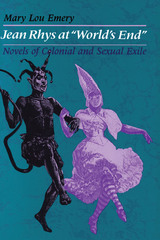
The Caribbean Islands have long been an uneasy meeting place among indigenous peoples, white European colonists, and black slave populations. Tense oppositions in Caribbean culture—colonial vs. native, white vs. black, male conqueror vs. female subject—supply powerful themes and spark complex narrative experiments in the fiction of Dominica-born novelist Jean Rhys. In this pathfinding study, Mary Lou Emery focuses on Rhys's handling of these oppositions, using a Caribbean cultural perspective to replace the mainly European aesthetic, moral, and psychological standards that have served to misread and sometimes devalue Rhys's writing.
Emery considers all five Rhys novels, beginning with Wide Sargasso Sea as the most explicitly Caribbean in its setting, in its participation in the culminating decades of a West Indian literary naissance, and most importantly, in its subversive transformation of European concepts of character. From a sociocultural perspective, she argues persuasively that the earlier novels—Voyage in the Dark, Quartet, After Leaving Mr. Mackenzie, and Good Morning, Midnight—should be read as emergent Caribbean fiction, written in tense dialogue with European modernism. Building on this thesis, she reveals how the apparent passivity, masochism, or silence of Rhys's female protagonists results from their doubly marginalized status as women and as subject peoples. Also, she explores how Rhys's women seek out alternative identities in dreamed of, magically realized, or chosen communities.
These discoveries offer important insights on literary modernism, Caribbean fiction, and the formation of female identity.