
 A SCHOLARLY BOOK REPOSITORY
22 start with K start with K
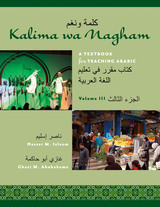
Presenting a new Teaching Arabic as a Foreign Language (TAFL) curriculum that can be used in secondary and postsecondary educational settings, Kalima wa Nagham, volume 3, is a textbook that uniquely and simultaneously introduces Modern Standard Arabic (MSA) and salient aspects of Educated Spoken Arabic (ESA) to students whose proficiency level is at least intermediate high according to ACTFL’s rating scale. Students who fully use this book should be able to develop important language skills—listening, speaking, reading, writing, and expressing deep cultural knowledge—and reach the advanced high proficiency level by the end of the book.
Written by Arabic language teaching practitioners and experienced educators who are certified language testers, Kalima wa Nagham employs a threaded story that introduces language concepts along with music to enhance vocabulary retention and recall. At the core of the textbook are written and oral texts that present students and teachers with examples of Arabic grammatical concepts and important cultural aspects, as well as related vocabulary. These are supplemented by drills and activities that can be used in a classroom setting or pursued individually. Dialogues and pronunciation and listening drills that accompany the lessons are available on the University of Texas Press website. This volume is student-centered in content and methodology, which will enable learners to meet and exceed linguistic and cultural proficiency expectations.
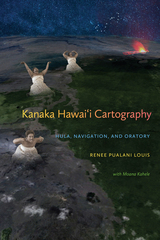
An important symbolic element in Hawai'ian cartography is the storied place name, which reflects Hawai'ian spatial knowledge of the environment. Many Hawai'ian place names performed in daily rituals were a conscious act of locating genealogical connections, recreating cultural landscapes, and regenerating cultural mores. They constitute a critically important body of Hawai'ian cultural knowledge. When Hawai'ian place names were incorporated into Western cartographic maps they were transformed epistemologically. They went from representing place as a repository of cultural knowledge to representing place as an object on the landscape. Hawai'ian spatial knowledge presentation is interactive, multi-sensual, and multi‐ dimensional.
Kanaka Hawai'i Cartography interweaves methodology with personal narrative and performance presentation in a playbill format. Three of the seven chapters are presented as “Acts” in a play. The remaining four chapters serve as intermissions or interludes together with a prologue and an epilogue for setting the stage and providing closure. To help make the topic more accessible, complex terms have been minimized, making academic theory easier for the educated reader to understand. The book will fill an important gap in Indigenous and Native Studies and will be welcomed by anyone interested in traditional Hawai’ian performance cartography.
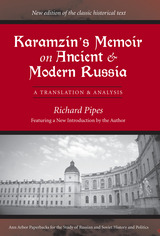
Russian history was typically studied through liberal or socialist lenses until Richard Pipes first published his translation of Karamzin's Memoir. Almost fifty years later, it is still the only English-language edition of this classic work. Still fresh and readable today, the Memoir-in which Alexander I's state historian elaborates his arguments for a strong Russian state-remains the most accessible introduction to the conservatism of Russia's ancien regime. This annotated translation is a "faithful rendition of the letter and spirit of the original," which not only introduces readers to the sweep of Karamzin's ideas, but also weaves together a fascinating version of Russia's rich history. With a new foreword by Richard Pipes, Karamzin's Memoir on Ancient and Modern Russia is a touchstone for anyone interested in Russia's fascinating and turbulent past.
Richard Pipes is Baird Professor of History at Harvard University.
Nikolai M. Karamzin (1766-1826) was a Russian historian, poet, and journalist. He was appointed court historian by Tsar Alexander I.
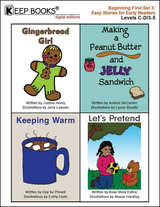
Stories include: Gingerbread Girl, Making a Peanut Butter and Jelly Sandwich, Keeping Warm, & Let’s Pretend.
Age Level: 5-6
Grade Level: Beginning First
Reading level: C-D/3-5
KEEP BOOKS digital editions include text features and design elements that give beginning readers what they need to start reading on their own with high interest titles that they can easily manage.
Agrarian reforms transformed the Mexican countryside in the late twentieth century but without, in many cases, altering fundamental power relationships. This study of the Tehuacán Valley in the state of Puebla highlights different strategies to manipulate the local implementation of federal government programs. With their very differing successes in the struggle to regain and maintain control of land and water rights, these strategies raise important questions about the meaning of the phrase "locally controlled development."
Because Mexico is dependent on irrigation for 45 percent of its cash crop production, national policy has focused on developing vast government controlled and financed irrigation systems. In the Tehuacán Valley, however, the inhabitants have developed a complex irrigation system without government aid or supervision. Yet, in contrast to most parts of Mexico, water rights can be bought and sold as a commodity, leading to accumulation, stratification, and emergence of a regional elite whose power is based on ownership of land and water. The analysis provides an important contribution to the understanding of local control.
The findings of this study will be important to a wide audience involved in the study of irrigation, local agricultural systems, and the interplay between local power structures and the national government in developing countries. The book also presents unique material on gravity-fed, horizontal wells, known as qanat in the Middle East, which had been unknown in the literature on Latin America before this book.
Since 1979, when China emerged from its long isolation and launched the first of its economic reforms, the country has gone from producing low-quality exports to making sophisticated high-technology goods and is now a major player in the world economy. China has become the new engine of global growth.
As China continues to implement its commitments agreed upon with membership into the World Trade Organization (WTO), the environment for multinational corporations is changing rapidly. This book examines some of the changes WTO accession is bringing to the market environment and different sectors of the economy, and the resulting challenges and opportunities for companies doing business in China.
The book draws on extensive field research with Chinese corporate executives, government officials, and representatives of nongovernmental organizations. Based on the findings from these interviews, the authors provide insights and strategies for companies seeking to establish a sustainable competitive advantage in the country's evolving marketplace. Kellogg on China is the outgrowth of a collaborative student-faculty effort through the Global Initiatives in Management program at the Kellogg School of Management.
An epic poem about life in America in the early 20th century, as perceived by a Jewish immigrant.
Kentucky is the first major work in Yiddish literature to present America as its primary theme. The long epic poem paints a rich picture of life in Kentucky just after the Civil War. Written between 1918 and 1922 by Lithuanian-born writer, I. J. Schwartz, it first appeared in the Yiddish journal Zukunft and later, in 1925, was published as a book. Although unknown to English readers until this translation, the book was a primary text for immigrants and potential immigrants in places as remote as Poland and Argentina who received their first impressions of America from its pages. Parts of it were even set to music and sung in choruses around the world.
Explores the representation of slave revolt in video games—and the trouble with making history playable
Kill the Overseer! profiles and problematizes digital games that depict Atlantic slavery and “gamify” slave resistance. In videogames emphasizing plantation labor, the player may choose to commit small acts of resistance like tool-breaking or working slowly. Others dramatically stage the slave’s choice to flee enslavement and journey northward, and some depict outright violent revolt against the master and his apparatus. In this work, Sarah Juliet Lauro questions whether the reduction of a historical enslaved person to a digital commodity in games such as Mission US, Assassin’s Creed, and Freedom Cry ought to trouble us as a further commodification of slavery’s victims, or whether these interactive experiences offer an empowering commemoration of the history of slave resistance.
Forerunners is a thought-in-process series of breakthrough digital works. Written between fresh ideas and finished books, Forerunners draws on scholarly work initiated in notable blogs, social media, conference plenaries, journal articles, and the synergy of academic exchange. This is gray literature publishing: where intense thinking, change, and speculation take place in scholarship.

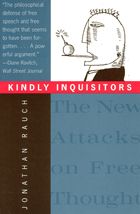
"Fiercely argued. . . . What sets his study apart is his attempt to situate recent developments in a long-range historical perspective and to defend the system of free intellectual inquiry as a socially productive method of channeling prejudice."—Michiko Kakutani, New York Times
"Like no other, this book restates the core of our freedom and demonstrates how great, and disregarded, the peril to that freedom has become."—Joseph Coates, Chicago Tribune
"The philosophical defense of free speech and free thought that seems to have been forgotten. . . . A powerful argument."—Diane Ravitch, Wall Street Journal

In this expanded edition of Kindly Inquisitors, a new foreword by George F. Will strikingly shows the book’s continued relevance, while a substantial new afterword by Rauch elaborates upon his original argument and brings it fully up to date. Two decades after the book’s initial publication, while some progress has been made, the regulation of hate speech has grown domestically—especially in American universities—and has spread even more internationally, where there is no First Amendment to serve as a meaningful check. But the answer to bias and prejudice, Rauch argues, is pluralism—not purism. Rather than attempting to legislate bias and prejudice out of existence or to drive them underground, we must pit them against one another to foster a more vigorous and fruitful discussion. It is this process that has been responsible for the growing acceptance of the moral acceptability of homosexuality over the last twenty years. And it is this process, Rauch argues, that will enable us as a society to replace hate with knowledge, both ethical and empirical.
“It is a melancholy fact that this elegant book, which is slender and sharp as a stiletto, is needed, now even more than two decades ago. Armed with it, readers can slice through the pernicious ideas that are producing the still-thickening thicket of rules, codes, and regulations restricting freedom of thought and expression.”—George F. Will, from the foreword
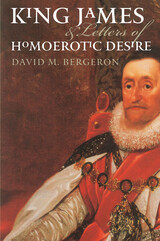
What can we know of the private lives of early British sovereigns? Through the unusually large number of letters that survive from King James VI of Scotland/James I of England (1566-1625), we can know a great deal. Using original letters, primarily from the British Library and the National Library of Scotland, David Bergeron creatively argues that James' correspondence with certain men in his court constitutes a gospel of homoerotic desire. Bergeron grounds his provocative study on an examination of the tradition of letter writing during the Renaissance and draws a connection between homosexual desire and letter writing during that historical period.
King James, commissioner of the Bible translation that bears his name, corresponded with three principal male favorites—Esmé Stuart (Lennox), Robert Carr (Somerset), and George Villiers (Buckingham). Esmé Stuart, James' older French cousin, arrived in Scotland in 1579 and became an intimate adviser and friend to the adolescent king. Though Esmé was eventually forced into exile by Scottish nobles, his letters to James survive, as does James' hauntingly allegorical poem Phoenix. The king's close relationship with Carr began in 1607. James' letters to Carr reveal remarkable outbursts of sexual frustration and passion.
A large collection of letters exchanged between James and Buckingham in the 1620s provides the clearest evidence for James' homoerotic desires. During a protracted separation in 1623, letters between the two raced back and forth. These artful, self-conscious letters explore themes of absence, the pleasure of letters, and a preoccupation with the body. Familial and sexual terms become wonderfully intertwined, as when James greets Buckingham as "my sweet child and wife."
King James and Letters of Homoerotic Desire presents a modern-spelling edition of seventy-five letters exchanged between Buckingham and James. Across the centuries, commentators have condemned the letters as indecent or repulsive. Bergeron argues that on the contrary they reveal an inward desire of king and subject in a mutual exchange of love.
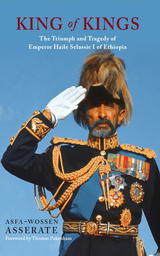
Written by Asfa-Wossen Asserate, Haile Selassie’s grandnephew, this is the first major biography of this final “king of kings.” Asserate, who spent his childhood and adolescence in Ethiopia before fleeing the revolution of 1974, knew Selassie personally and gained intimate insights into life at the imperial court. Introducing him as a reformer and an autocrat whose personal history—with all of its upheavals, promises, and horrors—reflects in many ways the history of the twentieth century itself, Asserate uses his own experiences and painstaking research in family and public archives to achieve a colorful and even-handed portrait of the emperor.

A celebrated writer returns to his hometown of Odessa, pondering a deal with the secret police, pining for a daughter living abroad, and hoping to pen one last homage to his own past. Isaac Babel, the world famous spinner of tales about Cossacks and gangsters, arrives in Odessa to be treated for asthma-and perhaps help a condemned prisoner to escape. Or is it Babel who intends to escape?
For six decades our only record of Babel's visit has been the contents of letters and postcards sent abroad to his mother and sister. In King of Odessa, Robert A. Rosenstone imagines a version of this visit and the novel Babel wrote during those weeks. Babel himself is concerned with more than literary plots as he considers an escape just as he starts an affair with an actress who may be a police spy. He also ruminates on his past-his childhood as a sickly Jewish boy, the horrifying 1905 pogrom, the famous rides with the Cossacks that inspired Red Calvary, and above all his complicated relationships with women. Throughout the novel Rosenstone captures Babel's lively wit, his exhaustion with fame and the Soviet system, and his infectious charm.
This would prove to be Babel's last visit to Odessa. Three years later, he was arrested as a spy and executed. Rosenstone, the acclaimed biographer of writer and activist John Reed, mixes historical facts and fiction with the talent of a gifted storyteller. The result is a captivating exploration of a great writer surrounded by history and on the brink of falling out of it forever.
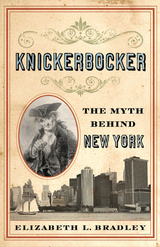
Includes a gallery of images that brings Diedrich Knickerbocker, his myth, time, and place to life Knickerbocker engagingly traces the creation, evolution, and prevalence of Irving's imaginary historian in New York literature and history, art and advertising, from the early nineteenth century to the present day. Who would imagine this satiric character, at once a snob and a champion of the people, would endure for two hundred years? In Elizabeth L. Bradley's words, "Whether you call it 'blood,' style, attitude, or moxie, the little Dutchman could deliver." And, from this engaging work, it is clear that he does.
Bradley's stunning volume offers a surprising and delightful glimpse behind the scenes of New York history, and invites readers into the world of Knickerbocker, the antihero who surprised everyone by becoming the standard-bearer for the city's exceptional sense of self, or what we now call a New York "attitude."

READERS
Browse our collection.
PUBLISHERS
See BiblioVault's publisher services.
STUDENT SERVICES
Files for college accessibility offices.
RECENTLY PUBLISHED


UChicago Accessibility Resources
home | accessibility | search | about | contact us
BiblioVault ® 2001 - 2026
The University of Chicago Press