
 A SCHOLARLY BOOK REPOSITORY
1275 books about China and 8
start with K
1275 books about China and 8
1275 books about China
8 start with K start with K
8 start with K start with K

The Kaiping Mines, 1877–1912
Second Edition
Ellsworth C. Carlson
Harvard University Press, 1971
This study, revised in light of new material that has appeared since the first edition (1957), explores the problems encountered and the adaptations necessary when Western technology and methods were employed in a Chinese environment and demonstrates the impact of Western financial imperialism on Chinese business enterprise.
[more]
Kellogg on China
Strategies for Success
Anuradha Dayal-Gulati and Angela Y. Lee
Northwestern University Press, 2004
An in-depth look at how to do business in China as it becomes a global economic power
Since 1979, when China emerged from its long isolation and launched the first of its economic reforms, the country has gone from producing low-quality exports to making sophisticated high-technology goods and is now a major player in the world economy. China has become the new engine of global growth.
As China continues to implement its commitments agreed upon with membership into the World Trade Organization (WTO), the environment for multinational corporations is changing rapidly. This book examines some of the changes WTO accession is bringing to the market environment and different sectors of the economy, and the resulting challenges and opportunities for companies doing business in China.
The book draws on extensive field research with Chinese corporate executives, government officials, and representatives of nongovernmental organizations. Based on the findings from these interviews, the authors provide insights and strategies for companies seeking to establish a sustainable competitive advantage in the country's evolving marketplace. Kellogg on China is the outgrowth of a collaborative student-faculty effort through the Global Initiatives in Management program at the Kellogg School of Management.
Since 1979, when China emerged from its long isolation and launched the first of its economic reforms, the country has gone from producing low-quality exports to making sophisticated high-technology goods and is now a major player in the world economy. China has become the new engine of global growth.
As China continues to implement its commitments agreed upon with membership into the World Trade Organization (WTO), the environment for multinational corporations is changing rapidly. This book examines some of the changes WTO accession is bringing to the market environment and different sectors of the economy, and the resulting challenges and opportunities for companies doing business in China.
The book draws on extensive field research with Chinese corporate executives, government officials, and representatives of nongovernmental organizations. Based on the findings from these interviews, the authors provide insights and strategies for companies seeking to establish a sustainable competitive advantage in the country's evolving marketplace. Kellogg on China is the outgrowth of a collaborative student-faculty effort through the Global Initiatives in Management program at the Kellogg School of Management.
[more]
Kenya's Engagement with China
Discourse, Power, and Agency
Anita Plummer
Michigan State University Press, 2022
In recent decades, Kenya has witnessed profound changes in its economic, cultural, and environmental landscapes resulting from its interactions with China. University students are competing for scholarships to study in China, coastal artisanal fishers are increasingly worried about Chinese-owned trawlers depleting fish stocks, fishers on Lake Victoria are grappling with the impact of frozen tilapia from China, and unemployed youth are seeking a fair shot at working on one of Kenya’s multimillion-dollar Chinese-funded infrastructure projects. Anita Plummer’s Kenya’s Engagement with China investigates the tension between official Kenyan and Chinese state narratives and individual Kenyans’ reactions to China’s presence to provide insight into how everyday Kenyans exercise their political agency. The competing discourses Plummer uncovers in person, in the news, and online reveal how Kenyans use China to question local power structures, demand policy change, and articulate different visions for their country’s future. This critical text represents the next step in research on Sino-African relations.
[more]
The Khan and the Unicorn
Mongol Empire and Qing Knowledge in the Making of World History
Matthew W. Mosca
Harvard University Press, 2026
The Mongol Empire changed the world, but early chronicles of its conquests, written from regional perspectives and widely dispersed, could not convey its far-reaching significance. The Khan and the Unicorn details how historians from different cultures collectively rediscovered their common past and transformed the scattered records of Chinggis Khan’s conquests into world history. Between the seventeenth and nineteenth centuries, as new empires competed for control of Eurasian lands once ruled by the Mongols, historians encountered a wealth of unfamiliar materials previously unknown to them. Aided by methodological innovations, they created more coherent and multifaceted accounts of Mongol power. Drawing on sources in Chinese, Manchu, Mongolian, and European languages, Matthew Mosca tracks this process of rediscovery from the vantage of Beijing. The Qing court led the transformation by assigning multilingual staff to integrate historical information into pioneering studies. Mosca reconstructs the emergence of a knowledge circuit linking Beijing to other scholarly centers, notably Paris, St. Petersburg, and Tokyo. As conflicting appraisals of the Mongol Empire came into contact, debates flared over how to interpret the collision of nomadic and sedentary societies, often cast as a clash between civilization and barbarism. Whether valorized or villainized, Mongol imperial power came to be recognized as a driving force in world history.
[more]
The King of China
Tilman Rammstedt
Seagull Books, 2019
When Keith Stapperpfennig and his family give their grandfather the trip of a lifetime—an all expenses paid holiday to any destination in the world—the eccentric old man arbitrarily chooses China, and he asks Keith to accompany him. But when Keith loses all the money for the journey at a casino, he goes into hiding—mostly under his desk—and his grandfather—equally uninterested in actually traveling to China—heads down the road to engage in a similar subterfuge.
And it is here that the novel opens, two men in hiding, mere miles apart. But when his grandfather dies unexpectedly, Keith is left to continue the farce alone. With the aid of a guidebook, Keith writes a series of letters home to his brothers and sisters, detailing their imaginary travels and the bizarre sights they see. These start off harmlessly, but before long he starts adding invented details: non-stop dental hygiene shows on television, dog vaccinations at the post office—and the letters get longer and longer. Engaging, strange, and ultimately moving, this hilarious novel from Tilman Rammstedt won him the prestigious Ingeborg Bachmann Prize in 2008 and confirmed him as one of Germany’s most compelling writers.
And it is here that the novel opens, two men in hiding, mere miles apart. But when his grandfather dies unexpectedly, Keith is left to continue the farce alone. With the aid of a guidebook, Keith writes a series of letters home to his brothers and sisters, detailing their imaginary travels and the bizarre sights they see. These start off harmlessly, but before long he starts adding invented details: non-stop dental hygiene shows on television, dog vaccinations at the post office—and the letters get longer and longer. Engaging, strange, and ultimately moving, this hilarious novel from Tilman Rammstedt won him the prestigious Ingeborg Bachmann Prize in 2008 and confirmed him as one of Germany’s most compelling writers.
[more]
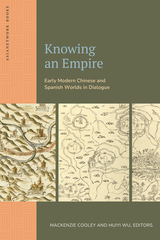
Knowing an Empire
Early Modern Chinese and Spanish Worlds in Dialogue
Edited by Mackenzie Cooley and Huiyi Wu
Lever Press, 2025
Knowing an Empire: Early Modern Chinese and Spanish Worlds in Dialogue unveils how these two vast empires, separated by thousands of miles, developed comparable systems to gather, order, and wield knowledge about their local worlds in the process of empire-building. From the sixteenth to the eighteenth centuries, officials in both empires compiled large quantities of structured data on the climate, topography, natural products, languages, religions, and more of their locales, creating a vision of their empires as diverse yet unified. Through a new methodology of “juxtapositional comparison,” the book reads the difangzhi 地方志 (local gazetteers) of China and the relaciones geográficas of the Spanish world in parallel.
Knowing an Empire does not see the conveyance of information across an empire as a top-down process with an active center as a knowledge-maker. Instead, it amplifies a blend of voices that speak as much to imperial bureaucracy as to the rich local and Indigenous cultures, revealing these two early modern empires as diverse polities whose equilibria were constantly rebalanced among local powers. Comprised of 18 chapters, this edited collection reflects on the historical evolution and inner structures of the imperial epistemologies, as well as the many ways historians today read difangzhi and relaciones geográficas to understand the spatial, natural, and social order in both the Chinese and the Spanish empires. At once a comparative and a connected history, it places Chinese and Spanish imperial knowledge in the globalizing early modern world, highlighting the migration of people, goods, and ideas and revealing how these wide-ranging influences are reflected—or not—in the difangzhi and the relaciones. The book concludes by broadening our scope beyond China and Spain to reflect how other early modern empires, such as the Portuguese, failed to develop such systematized imperial genres.
With contributions from leading scholars across Latin American and Asian Studies, this book synthesizes political, environmental, and socio-economic history with historical anthropology to highlight parallel governance and knowledge structures. The contributors challenge conventional binaries of Western versus Eastern, and colonial versus non-colonial, presenting a nuanced perspective of early modern empires as dynamic, interconnected entities through the shared challenges of scale, diversity, and increasing globalization. Through these dialogues, Knowing an Empire illuminates the complex entanglement of ruling and understanding. This groundbreaking collection offers a highly innovative and dialogic approach to comparative studies of empires, with major implications for Asian, European, Latin American, transnational, and global history.
Knowing an Empire does not see the conveyance of information across an empire as a top-down process with an active center as a knowledge-maker. Instead, it amplifies a blend of voices that speak as much to imperial bureaucracy as to the rich local and Indigenous cultures, revealing these two early modern empires as diverse polities whose equilibria were constantly rebalanced among local powers. Comprised of 18 chapters, this edited collection reflects on the historical evolution and inner structures of the imperial epistemologies, as well as the many ways historians today read difangzhi and relaciones geográficas to understand the spatial, natural, and social order in both the Chinese and the Spanish empires. At once a comparative and a connected history, it places Chinese and Spanish imperial knowledge in the globalizing early modern world, highlighting the migration of people, goods, and ideas and revealing how these wide-ranging influences are reflected—or not—in the difangzhi and the relaciones. The book concludes by broadening our scope beyond China and Spain to reflect how other early modern empires, such as the Portuguese, failed to develop such systematized imperial genres.
With contributions from leading scholars across Latin American and Asian Studies, this book synthesizes political, environmental, and socio-economic history with historical anthropology to highlight parallel governance and knowledge structures. The contributors challenge conventional binaries of Western versus Eastern, and colonial versus non-colonial, presenting a nuanced perspective of early modern empires as dynamic, interconnected entities through the shared challenges of scale, diversity, and increasing globalization. Through these dialogues, Knowing an Empire illuminates the complex entanglement of ruling and understanding. This groundbreaking collection offers a highly innovative and dialogic approach to comparative studies of empires, with major implications for Asian, European, Latin American, transnational, and global history.
[more]
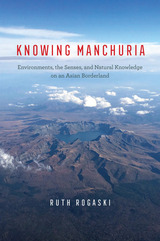
Knowing Manchuria
Environments, the Senses, and Natural Knowledge on an Asian Borderland
Ruth Rogaski
University of Chicago Press, 2022
Making sense of nature in one of the world’s most contested borderlands.
According to Chinese government reports, hundreds of plague-infected rodents fell from the skies over Gannan county on an April night in 1952. Chinese scientists determined that these flying voles were not native to the region, but were vectors of germ warfare, dispatched over the border by agents of imperialism. Mastery of biology had become a way to claim political mastery over a remote frontier. Beginning with this bizarre incident from the Korean War, Knowing Manchuria places the creation of knowledge about nature at the center of our understanding of a little-known but historically important Asian landscape.
At the intersection of China, Russia, Korea, and Mongolia, Manchuria is known as a site of war and environmental extremes, where projects of political control intersected with projects designed to make sense of Manchuria’s multiple environments. Covering more than 500,000 square miles, Manchuria’s landscapes include temperate rainforests, deserts, prairies, cultivated plains, wetlands, and Siberian taiga. With analysis spanning the seventeenth century to the present day, Ruth Rogaski reveals how an array of historical actors—Chinese poets, Manchu shamans, Russian botanists, Korean mathematicians, Japanese bacteriologists, American paleontologists, and indigenous hunters—made sense of the Manchurian frontier. She uncovers how natural knowledge, and thus the nature of Manchuria itself, changed over time, from a sacred “land where the dragon arose” to a global epicenter of contagious disease; from a tragic “wasteland” to an abundant granary that nurtured the hope of a nation.
According to Chinese government reports, hundreds of plague-infected rodents fell from the skies over Gannan county on an April night in 1952. Chinese scientists determined that these flying voles were not native to the region, but were vectors of germ warfare, dispatched over the border by agents of imperialism. Mastery of biology had become a way to claim political mastery over a remote frontier. Beginning with this bizarre incident from the Korean War, Knowing Manchuria places the creation of knowledge about nature at the center of our understanding of a little-known but historically important Asian landscape.
At the intersection of China, Russia, Korea, and Mongolia, Manchuria is known as a site of war and environmental extremes, where projects of political control intersected with projects designed to make sense of Manchuria’s multiple environments. Covering more than 500,000 square miles, Manchuria’s landscapes include temperate rainforests, deserts, prairies, cultivated plains, wetlands, and Siberian taiga. With analysis spanning the seventeenth century to the present day, Ruth Rogaski reveals how an array of historical actors—Chinese poets, Manchu shamans, Russian botanists, Korean mathematicians, Japanese bacteriologists, American paleontologists, and indigenous hunters—made sense of the Manchurian frontier. She uncovers how natural knowledge, and thus the nature of Manchuria itself, changed over time, from a sacred “land where the dragon arose” to a global epicenter of contagious disease; from a tragic “wasteland” to an abundant granary that nurtured the hope of a nation.
[more]
Koxinga and Chinese Nationalism
History, Myth, and the Hero
Ralph C. Croizier
Harvard University Press, 1977
READERS
Browse our collection.
PUBLISHERS
See BiblioVault's publisher services.
STUDENT SERVICES
Files for college accessibility offices.
RECENTLY PUBLISHED




UChicago Accessibility Resources
home | accessibility | search | about | contact us
BiblioVault ® 2001 - 2026
The University of Chicago Press