
 A SCHOLARLY BOOK REPOSITORY
261 books about Empire and 2
start with K
261 books about Empire and 2
261 books about Empire
2 start with K start with K
2 start with K start with K
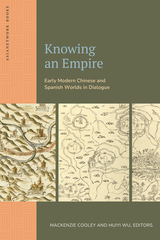
Knowing an Empire
Early Modern Chinese and Spanish Worlds in Dialogue
Edited by Mackenzie Cooley and Huiyi Wu
Lever Press, 2025
Knowing an Empire: Early Modern Chinese and Spanish Worlds in Dialogue unveils how these two vast empires, separated by thousands of miles, developed comparable systems to gather, order, and wield knowledge about their local worlds in the process of empire-building. From the sixteenth to the eighteenth centuries, officials in both empires compiled large quantities of structured data on the climate, topography, natural products, languages, religions, and more of their locales, creating a vision of their empires as diverse yet unified. Through a new methodology of “juxtapositional comparison,” the book reads the difangzhi 地方志 (local gazetteers) of China and the relaciones geográficas of the Spanish world in parallel.
Knowing an Empire does not see the conveyance of information across an empire as a top-down process with an active center as a knowledge-maker. Instead, it amplifies a blend of voices that speak as much to imperial bureaucracy as to the rich local and Indigenous cultures, revealing these two early modern empires as diverse polities whose equilibria were constantly rebalanced among local powers. Comprised of 18 chapters, this edited collection reflects on the historical evolution and inner structures of the imperial epistemologies, as well as the many ways historians today read difangzhi and relaciones geográficas to understand the spatial, natural, and social order in both the Chinese and the Spanish empires. At once a comparative and a connected history, it places Chinese and Spanish imperial knowledge in the globalizing early modern world, highlighting the migration of people, goods, and ideas and revealing how these wide-ranging influences are reflected—or not—in the difangzhi and the relaciones. The book concludes by broadening our scope beyond China and Spain to reflect how other early modern empires, such as the Portuguese, failed to develop such systematized imperial genres.
With contributions from leading scholars across Latin American and Asian Studies, this book synthesizes political, environmental, and socio-economic history with historical anthropology to highlight parallel governance and knowledge structures. The contributors challenge conventional binaries of Western versus Eastern, and colonial versus non-colonial, presenting a nuanced perspective of early modern empires as dynamic, interconnected entities through the shared challenges of scale, diversity, and increasing globalization. Through these dialogues, Knowing an Empire illuminates the complex entanglement of ruling and understanding. This groundbreaking collection offers a highly innovative and dialogic approach to comparative studies of empires, with major implications for Asian, European, Latin American, transnational, and global history.
Knowing an Empire does not see the conveyance of information across an empire as a top-down process with an active center as a knowledge-maker. Instead, it amplifies a blend of voices that speak as much to imperial bureaucracy as to the rich local and Indigenous cultures, revealing these two early modern empires as diverse polities whose equilibria were constantly rebalanced among local powers. Comprised of 18 chapters, this edited collection reflects on the historical evolution and inner structures of the imperial epistemologies, as well as the many ways historians today read difangzhi and relaciones geográficas to understand the spatial, natural, and social order in both the Chinese and the Spanish empires. At once a comparative and a connected history, it places Chinese and Spanish imperial knowledge in the globalizing early modern world, highlighting the migration of people, goods, and ideas and revealing how these wide-ranging influences are reflected—or not—in the difangzhi and the relaciones. The book concludes by broadening our scope beyond China and Spain to reflect how other early modern empires, such as the Portuguese, failed to develop such systematized imperial genres.
With contributions from leading scholars across Latin American and Asian Studies, this book synthesizes political, environmental, and socio-economic history with historical anthropology to highlight parallel governance and knowledge structures. The contributors challenge conventional binaries of Western versus Eastern, and colonial versus non-colonial, presenting a nuanced perspective of early modern empires as dynamic, interconnected entities through the shared challenges of scale, diversity, and increasing globalization. Through these dialogues, Knowing an Empire illuminates the complex entanglement of ruling and understanding. This groundbreaking collection offers a highly innovative and dialogic approach to comparative studies of empires, with major implications for Asian, European, Latin American, transnational, and global history.
[more]
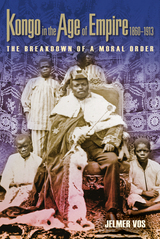
Kongo in the Age of Empire, 1860–1913
The Breakdown of a Moral Order
Jelmer Vos
University of Wisconsin Press, 2015
This richly documented account of the arrival of rubber traders, new Christian missionaries, and the Portuguese colonial state in the Kongo realm is told from the perspective of the kingdom's inhabitants. Jelmer Vos shows that both Africans and Europeans were able to forward differing social, political, and economic agendas as Kongo's sacred city of São Salvador became a vital site for the expansion of European imperialism in Central Africa. Kongo people, he argues, built on the kingdom's long familiarity with Atlantic commerce and cultures to become avid intermediaries in a new system of colonial trade and mission schools.
Vos underlines that Kongo's incorporation in the European state system also had tragic consequences, including the undermining of local African structures of authority—on which the colonial system actually depended. Kongo in the Age of Empire carefully documents the involvement of Kongo's royal court in the exercise of Portuguese rule in northern Angola and the ways that Kongo citizens experienced colonial rule as an increasingly illegitimate extension of royal power.
Vos underlines that Kongo's incorporation in the European state system also had tragic consequences, including the undermining of local African structures of authority—on which the colonial system actually depended. Kongo in the Age of Empire carefully documents the involvement of Kongo's royal court in the exercise of Portuguese rule in northern Angola and the ways that Kongo citizens experienced colonial rule as an increasingly illegitimate extension of royal power.
[more]
READERS
Browse our collection.
PUBLISHERS
See BiblioVault's publisher services.
STUDENT SERVICES
Files for college accessibility offices.
RECENTLY PUBLISHED



UChicago Accessibility Resources
home | accessibility | search | about | contact us
BiblioVault ® 2001 - 2025
The University of Chicago Press