
 A SCHOLARLY BOOK REPOSITORY
9 start with K start with K
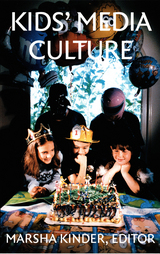
As part of their argument that children’s reactions to mass media are far more complex and dynamic than previously thought, contributors examine the rise of mass media in postwar America. They explore how books, cartoons, and television shows of the 1950s and 1960s—such as Lassie and Dennis the Menace—helped redefine American identity and export an image of a particularly American optimism and innocence worldwide. Other essays take up the controversies surrounding such shows as Sesame Street, My So-Called Life, and Mighty Morphin Power Rangers. After discussing the differences in how children and adults react to such programs, the collection focuses on television in schools and the ways that mass media convey messages about gender and socialization.
Kids’ Media Culture makes clear that children are active, engaged participants in the media culture surrounding them. This volume will be compelling reading for those interested in television and cultural studies as well as anyone interested in children’s education and welfare.
Contributors. Heather Gilmour, Sean Griffin, Heather Hendershot, Henry Jenkins, Yasmin B. Kafai, Jyotsna Kapur, Marsha Kinder, Susan Murray, Elissa Rashkin, Ellen Seiter, Lynn Spigel, Karen Orr Vered
Explores the representation of slave revolt in video games—and the trouble with making history playable
Kill the Overseer! profiles and problematizes digital games that depict Atlantic slavery and “gamify” slave resistance. In videogames emphasizing plantation labor, the player may choose to commit small acts of resistance like tool-breaking or working slowly. Others dramatically stage the slave’s choice to flee enslavement and journey northward, and some depict outright violent revolt against the master and his apparatus. In this work, Sarah Juliet Lauro questions whether the reduction of a historical enslaved person to a digital commodity in games such as Mission US, Assassin’s Creed, and Freedom Cry ought to trouble us as a further commodification of slavery’s victims, or whether these interactive experiences offer an empowering commemoration of the history of slave resistance.
Forerunners is a thought-in-process series of breakthrough digital works. Written between fresh ideas and finished books, Forerunners draws on scholarly work initiated in notable blogs, social media, conference plenaries, journal articles, and the synergy of academic exchange. This is gray literature publishing: where intense thinking, change, and speculation take place in scholarship.
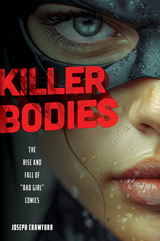
Killer Bodies offers a history of the single most critically derided subgenre in American superhero comics: the “bad girl” comics of the 1990s, which chronicled the blood-soaked adventures of barely dressed and improbably proportioned action heroines for an audience of adolescent boys. While not in any way attempting to rehabilitate the genre, which for the most part amply deserved its reputation as sexist and borderline pornographic, this book situates it within its original cultural context, as the result of a matrix of influences that included third-wave feminism, neopaganism, “girl power,” the rise of the internet, the growing popularity of manga, supermodel beauty ideals, and the mainstreaming of pornography. It explores why and how the figure of the antiheroic, physically aggressive, sexually objectified heroine arose within American comics culture, and the commercial and ideological factors that led to the genre’s rapid rise and equally rapid decline amidst the crisis-racked comics industry of the mid-1990s.
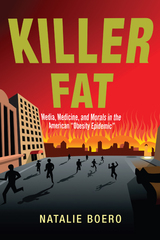
In the past decade, obesity has emerged as a major public health concern in the United States and abroad. At the federal, state, and local level, policy makers have begun drafting a range of policies to fight a war against fat, including body-mass index (BMI) report cards, “snack taxes,” and laws to control how fast food companies market to children. As an epidemic, obesity threatens to weaken the health, economy, and might of the most powerful nation in the world.
In Killer Fat, Natalie Boero examines how and why obesity emerged as a major public health concern and national obsession in recent years. Using primary sources and in-depth interviews, Boero enters the world of bariatric surgeries, Weight Watchers, and Overeaters Anonymous to show how common expectations of what bodies are supposed to look like help to determine what sorts of interventions and policies are considered urgent in containing this new kind of disease.
Boero argues that obesity, like the traditional epidemics of biological contagion and mass death, now incites panic, a doomsday scenario that must be confronted in a struggle for social stability. The “war” on obesity, she concludes, is a form of social control. Killer Fat ultimately offers an alternate framing of the nation’s obesity problem based on the insights of the “Health at Every Size” movement.
Resisting simple ideological readings of film genres, Fedosik unsettles cultural scripts around adoption and reproduction and scrutinizes moments where formulaic genre logic may be troubled by representations of lived experience that transcend common tropes of family formation. She argues that adoption as a reproductive technology is uniquely situated to expose cultural tensions around nontraditional methods of reproduction that are rapidly developing in the post-IVF biocultural landscape. Rapidly changing reproductive technologies, Fedosik asserts, demand a cultural response—and require more expansive reflection on reproductive futurities.
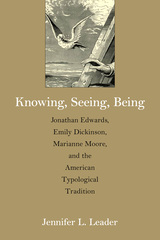
Scholars no longer see Jonathan Edwards as the fire-and-brimstone preacher who deemed his parishioners “sinners in the hands of an angry god.” Edwards now figures as caring and socially conscious and exerts increased influence as a philosopher of the American school of Protestantism. In this study, he becomes the progenitor of an alternative tradition in American letters.
In Knowing, Seeing, Being, Jennifer L. Leader argues that Edwards, the nineteenth-century poet Emily Dickinson, and the twentieth-century poet Marianne Moore share a heretofore underrecognized set of religious and philosophical preoccupations. She contends that they represent an alternative tradition within American literature, one that differs from Transcendentalism and is grounded in Reformed Protestantism and its ways of reading and interpreting the King James Bible and the natural world. According to Leader, these three writers' most significant commonality is the Protestant tradition of typology, a rigorous mode of interpreting scripture and nature through which certain figures or phenomena are read as the fulfillment of prophecy and of God's work. Following from their similar ways of reading, they also share philosophical and spiritual questions about language, epistemology (knowing), perception (seeing), and physical and spiritual ontology (being). In connecting Edwards to these two poets, in exploring each writer's typological imagination, and through a series of insightful readings, this innovative book reevaluates three major figures in American intellectual and literary history and compels a reconsideration of these writers and their legacies.

The nature of knowledge in the curriculum is well-defined for traditional subjects like History and Science, but for newer disciplines like Media and Film Studies, the boundaries are far less clear. Knowledge and Knowing in Media and Film Studies is the first book to explore this question in depth, tracing the epistemological foundations of these subjects and their place in the English school curriculum.
Steve Connolly argues that while both Media and Film Studies have distinct intellectual traditions, their inclusion of craft skills alongside theoretical and factual knowledge has shaped a different set of criteria for what counts as valuable knowledge. Consisting of historical sources and interviews with teachers, this work goes against the assumption that these are novel subjects and shows their deep parallels with more established fields. Essential reading for educators and researchers, the book provides a necessary framework for understanding how knowledge in these disciplines is taught and legitimized in schools today.
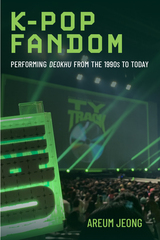
Through an autoethnography of becoming a K-pop deokhu, Jeong connects their experiences to generations of K-pop fans, showing simultaneously how fandom practices have shifted over time and the intricacies of fan labor participation. This personal connection paved the way for participant-observation and co-performer witnessing methodologies in the study, which crucially allowed for collaborating with fans whose communal pursuits have been stigmatized by dominant discourses that denigrate their activities as solely addictive, uncritical, and wasteful. Jeong’s genre-spanning corpus of fan activities and analyzing its contexts and contents represents an important contribution to the making of a fan archive that is also an archive of affective labor.
READERS
Browse our collection.
PUBLISHERS
See BiblioVault's publisher services.
STUDENT SERVICES
Files for college accessibility offices.
RECENTLY PUBLISHED



UChicago Accessibility Resources
home | accessibility | search | about | contact us
BiblioVault ® 2001 - 2026
The University of Chicago Press