
 A SCHOLARLY BOOK REPOSITORY
31 start with L start with L

Labor regimes under communism in East-Central Europe were complex, shifting, and ambiguous. This collection of sixteen essays offers new conceptual and empirical ways to understand their history from the end of World War II to 1989, and to think about how their experiences relate to debates about labor history, both European and global.
The authors reconsider the history of state socialism by re-examining the policies and problems of communist regimes and recovering the voices of the workers who built them. The contributors look at work and workers in Albania, Bulgaria, Czechoslovakia, the German Democratic Republic, Hungary, Poland, Romania, and Yugoslavia. They explore the often contentious relationship between politics and labor policy, dealing with diverse topics including workers’ safety and risks; labor rights and protests; working women’s politics and professions; migrant workers and social welfare; attempts to control workers’ behavior and stem unemployment; and cases of incomplete, compromised, or even abandoned processes of proletarianization. Workers are presented as active agents in resisting and supporting changes in labor policies, in choosing allegiances, and in defining the very nature of work.

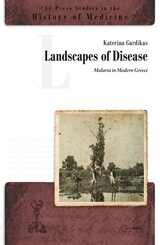
Malaria has existed in Greece since prehistoric times. Its prevalence fluctuated depending on climatic, socioeconomic and political changes. The book focuses on the factors that contributed to the spreading of the disease in the years between independent statehood in 1830 and the elimination of malaria in the 1970s.
By the nineteenth century, Greece was the most malarious country in Europe and the one most heavily infected with its lethal form, falciparum malaria. Owing to pressures on the environment from economic development, agrarian colonization and heightened mobility, the situation became so serious that malaria became a routine part of everyday life for practically all Greek families, further exacerbated by wars. The country’s highly fragmented geography and its variable rainfall distribution created an environment that was ideal for sustaining and spreading of diseases, which, in turn, affected the tolerance of the population to malaria. In their struggle with physical suffering and death, the Greeks developed a culture of avid quinine consumption and were likewise eager to embrace the DDT spraying campaign of the immediate post WW II years, which, overall, had a positive demographic effect.
Linguistic Human Rights (LHR) is a fast growing new area of study combining the principles of national and international law with the study of language as a central dimension of ethnicity. Implementation of these principles is aimed at ensuring that no state or society violates these basic rights.
This path breaking study broadens our knowledge of the important role of language in minority rights and in social and political struggles for LHRs. Exploring the interactions of linguistic diversity, biodiversity, the free market and human rights, the contributors present case studies to highlight such issues as Kurdish satellite TV attempting to create a virtual state on the air through trying to achieve basic LHR’s for Kurds in Turkey; the implementation of LHRs in the Baltic states; language rights activism in Canada; the spread of English as an international language; and the obstacles met in education by Roma and the Deaf in Hungary because of lack of appropriate LHRs.
Language: A Right and a Resource is a valuable multi-disciplinary text which can be used in a variety of different areas of study in the legal profession, linguistics, cultural and political studies.


The Covid pandemic has put all modern societies to a serious test of resilience. The interdisciplinary research on which this book is based examined how four European governments behaved in these circumstances. During the months of the crisis, the team of experts coordinated by the editors of this volume took a close look at the decision-making processes in the Czech Republic, Hungary, Poland, and Slovakia – the so-called Visegrad Four.
The inquiries focused on experiences from the academic, health, economic and social fields. The methods of comparison included surveys, interviews, discourse analysis, for which the adaptive leadership theory provided the conceptual framework.
The conclusions are both academic and practical. Aside the description of the pandemic responses, the research had a formative dimension: how can an adaptive leadership approach better help societies manage the health and societal impacts of similar challenges? The spectrum of emerging anti-democratic tendencies in the region provided the specific context of the exercise. The four states face varying degrees of democratic backsliding as well as illiberal influences that have affected their response to the pandemic, which gives this research on the Visegrad Four a worldwide resonance.


This volume examines the legacy of the East–West divide since the implosion of the communist regimes in Europe. The ideals of 1989 have largely been frustrated by the crises and turmoil of the past decade. The liberal consensus was first challenged as early as the mid-2000s. In Eastern Europe, grievances were directed against the prevailing narratives of transition and ever sharper ethnic-racial antipathies surfaced in opposition to a supposedly postnational and multicultural West. In Western Europe, voices regretting the European Union's supposedly careless and premature expansion eastward began to appear on both sides of the left–right and liberal–conservative divides. The possibility of convergence between Europe's two halves has been reconceived as a threat to the European project.
In a series of original essays and conversations, thirty-three contributors from the fields of European and global history, politics and culture address questions fundamental to our understanding of Europe today: How have perceptions and misperceptions between the two halves of the continent changed over the last three decades? Can one speak of a new East–West split? If so, what characterizes it and why has it reemerged? The contributions demonstrate a great variety of approaches, perspectives, emphases, and arguments in addressing the daunting dilemma of Europe's assumed East–West divide.



No Church is monolithic—this is the preliminary premise of this volume on the public place of religion in a representative number of post-communist countries. The studies confirm that within any religious organization we can expect to find fissures, factions, theological or ideological quarrels, and perhaps even competing interest groups, such as missionary workers, regular clergy versus secular clergy, and sometimes even competing ecclesiastical hierarchies. The main focus of the book rests on the divisions arising within select Christian Churches, as they confront the processes of secularization and atheization. The coverage area includes Russia and the Ukraine, East-Central Europe and South-Eastern Europe. Some chapters focus on individual clergy who challenge the mainstream of their given Church either from a more liberal or from a more conservative perspective, while others deal with the divisive forces impacting the religious organizations.
This festschrift to honor Sabrina Ramet’s seminal contribution to the study of religion in the politics of the communist and post-communist world, brings together several generations of scholars from a variety of countries, both those well established in their fields of study as well as young promising academics.

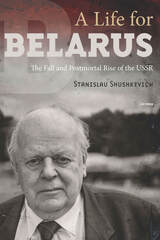
This memoir of the first president of an independent Belarus (1991-1994) tells about the revival of independent Belarus, the difficulties in establishing a democracy and a market economy, a hardened Soviet mentality, and the political immaturity of the intelligentsia and obduracy of the old nomenklatura.
Stanislau Shushkevich, born in 1934, narrates his path from a son of an “enemy of the people” to a doctorate in physics, and then to be the first head of independent Belarus. A series of entertaining essays discuss some major events as well as some minor ones that are barely known. The book describes Shushkevich’s role in hosting the Belavezha Accords, which brought about the end of the Soviet Union, and explores the motivation behind the decision for the de jure dissolution of the empire at a time when the major world leaders were categorically against the division of the USSR into independent states. The author draws particular attention to the role of the Baltic States in the late perestroika period. He also addresses the political passivity of the Soviet intelligentsia and the reasons for the revival of the Soviet Union in Russia and Belarus.
Shushkevich, who lives in Minsk, also provides valuable insights into contemporary Belarus, including an assessment of Lukashenka’s controversial role in recent events.
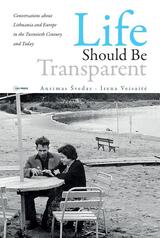
This book of thirteen conversations introduces us to the life of an exceptional person—theatre critic, Germanist, and long-time chair of the Open Lithuania Fund board—Irena Veisaitė. The dialogue between Lithuanian historian Aurimas Švedas and a woman who reflects deeply on her experiences reveals both one individual’s historically dramatic life and the fate of Europe and Lithuania in the twentieth century.
Through the complementary lenses of history and memory, we confront with Veisaitė the horrific events of the Holocaust, which brought about the end of the Lithuanian Jewish world. We also meet an array of world-class cultural figures, see fragments of legendary theatre performances, and hear meaningful words that were spoken or heard decades ago.
This book’s interlocutors do not so much seek to answer the question “What was it like?” but instead repeatedly ask each other: “What, how, and why do we remember? What is the meaning of our experiences? How can history help us to live in the present and create the future? How do we learn to understand and forgive?”
A series of Veisaitė’s texts, statements, and letters, presented at the end of the book suggest further ways of answering these questions.


Until the previous decade, constitutionalism in Eastern Europe was considered to be an outmoded concept of the nineteenth century. Changes in the region, however, have brought back the fundamental question of the need to restrict government power through social self-binding.
This book discusses the mechanisms of such restriction, including different forms of the separation of powers and constitutional review. It relates the theoretical and practical importance of the issue to the present world-wide discontent with majoritarian democracy and the growing disrepute of parliaments. Increasing executive efficiency is, however, a threat to fundamental rights, and the battlecry of efficiency is often only a means to new despotism and inefficiency. A careful re-evaluation of the concept of constitutionalism assists in the search for a useful balance between majoritarianism and rights, and in the avoidance of all forms of public tyranny.
Written in non-technical language and using the most important English, American, French, and German examples of constitutional history, the book also examines East European (in particular, Russian) and Latin American examples, in part to illustrate certain dead-ends in constitutional development. It is intended to be an introduction for all those concerned with liberty.


This tale of great achievements and great disappointments offers a fresh perspective on the interplay between scholarship and political sentiment in the late nineteenth and early twentieth centuries.
Lazăr Șăineanu (1859-1934), linguist and folklorist, was a pioneer in his native Romania, seeking out the popular elements in culture along with high literary ones. He was among the first to publish a study of Yiddish as a genuine language, and he uncovered Turkish features in Romanian language and customs. He also made an index of hundreds of Romanian folktales. Yet when he sought Romanian citizenship and a professorship, he was blocked by powerful figures who thought Jews could not be Romanians and who fancied the origins of Romanian culture to be wholly Latin. Faced with anti-Semitism, some of his friends turned to Zionism. Instead he tried baptism, which brought him only mockery and shame.
Hoping to find a polity to which he could belong, Șăineanu moved with his family to Paris in 1900 and became Lazare Sainéan. There he made innovative studies of French popular speech and slang, culminating in his great work on the language of Rabelais. Once again, he was contributing to the development of a national tongue. Even then, while welcomed by literary scholars, Sainéan was unable to get a permanent university post. Though a naturalized citizen of France, he felt himself a foreigner, an “intruder,” into his old age.


Living the High Life in Minsk looks at the sources of stability and instability in post-Soviet authoritarian states through the case study of President Lukashenka’s firm hold on power in Belarus. In particular, it seeks to understand the role of energy relations, policies, and discourses in the maintenance of this power. The central empirical question Balmaceda seeks to answer is what has been the role of energy policies in the maintenance of Lukashenka’s power in Belarus? In particular, it analyzes the role of energy policies in the management of Lukashenka’s relationship with three constituencies crucial to his hold on power: Russian actors, the Belarusian nomenklatura, and the Belarusian electorate.
In terms of foreign relations, the book focuses on the factors explaining Lukashenka’s ability to project Belarus’ power in its relationship with Russia in such a way as to compensate for its objective high level of dependency, assuring high levels of energy subsidies and rents continuing well beyond the initial worsening of the relationship in c. 2004. In terms of domestic relations, Balmaceda examines Lukashenka’s specific use of those energy rents in such a way as to assure the continuing support of both the Belarusian nomenklatura and the Belarusian electorate.
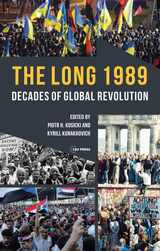


After World War II, Europe witnessed the massive redrawing of national borders and the efforts to make the population fit those new borders. As a consequence of these forced changes, both Lviv and Wrocław went through cataclysmic changes in population and culture. Assertively Polish prewar Lwów became Soviet Lvov, and then, after 1991, it became assertively Ukrainian Lviv. Breslau, the third largest city in Germany before 1945, was in turn "recovered" by communist Poland as Wrocław. Practically the entire population of Breslau was replaced, and Lwów's demography too was dramatically restructured: many Polish inhabitants migrated to Wrocław and most Jews perished or went into exile. The forced migration of these groups incorporated new myths and the construction of official memory projects.
The chapters in this edited book compare the two cities by focusing on lived experiences and "bottom-up" historical processes. Their sources and methods are those of micro-history and include oral testimonies, memoirs, direct observation and questionnaires, examples of popular culture, and media pieces. The essays explore many manifestations of the two sides of the same coin—loss on the one hand, gain on the other—in two cities that, as a result of the political reality of the time, are complementary.
READERS
Browse our collection.
PUBLISHERS
See BiblioVault's publisher services.
STUDENT SERVICES
Files for college accessibility offices.
RECENTLY PUBLISHED



UChicago Accessibility Resources
home | accessibility | search | about | contact us
BiblioVault ® 2001 - 2026
The University of Chicago Press