
 A SCHOLARLY BOOK REPOSITORY
15 start with L start with L
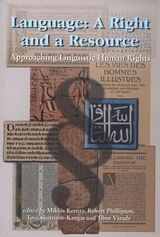
Linguistic Human Rights (LHR) is a fast growing new area of study combining the principles of national and international law with the study of language as a central dimension of ethnicity. Implementation of these principles is aimed at ensuring that no state or society violates these basic rights.
This path breaking study broadens our knowledge of the important role of language in minority rights and in social and political struggles for LHRs. Exploring the interactions of linguistic diversity, biodiversity, the free market and human rights, the contributors present case studies to highlight such issues as Kurdish satellite TV attempting to create a virtual state on the air through trying to achieve basic LHR’s for Kurds in Turkey; the implementation of LHRs in the Baltic states; language rights activism in Canada; the spread of English as an international language; and the obstacles met in education by Roma and the Deaf in Hungary because of lack of appropriate LHRs.
Language: A Right and a Resource is a valuable multi-disciplinary text which can be used in a variety of different areas of study in the legal profession, linguistics, cultural and political studies.

In the immediate decades after World War II, the French National Railways (SNCF) was celebrated for its acts of wartime heroism. However, recent debates and litigation have revealed the ways the SNCF worked as an accomplice to the Third Reich and was actively complicit in the deportation of 75,000 Jews and other civilians to death camps. Sarah Federman delves into the interconnected roles—perpetrator, victim, and hero—the company took on during the harrowing years of the Holocaust.
Grounded in history and case law, Last Train to Auschwitz traces the SNCF’s journey toward accountability in France and the United States, culminating in a multimillion-dollar settlement paid by the French government on behalf of the railways.The poignant and informative testimonies of survivors illuminate the long-term effects of the railroad’s impact on individuals, leading the company to make overdue amends. In a time when corporations are increasingly granted the same rights as people, Federman’s detailed account demonstrates the obligations businesses have to atone for aiding and abetting governments in committing atrocities. This volume highlights the necessity of corporate integrity and will be essential reading for those called to engage in the difficult work of responding to past harms.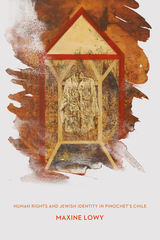
Maxine Lowy draws upon hundreds of first-person testimonials and archival resources to explore Chilean Jewish identity in the wake of Pinochet's coup, exposing the complex and sometimes contradictory development of collective traumatic memory and political sensibilities in an oppressive new context. Latent Memory points to processes of community gestures of moral reparation and signals the pathways to justice and healing associated with Shoah and the Jewish experience. Lowy asks how individuals and institutions may overcome fear, indifference, and convenience to take a stand even under intense political duress, posing questions applicable to any nation emerging from state repression.
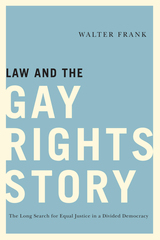
In his gripping new book, Walter Frank offers an in-depth look at the court cases that were pivotal in establishing gay rights. But he also tells the story of those individuals who were willing to make waves by fighting for those rights, taking enormous personal risks at a time when the tide of public opinion was against them. Frank’s accessible style brings complex legal issues down to earth but, as a former litigator, never loses sight of the law’s human dimension and the context of the events occurring outside the courtroom.
Chronicling the past half-century of gay and lesbian history, Law and the Gay Rights Story offers a unique perspective on familiar events like the Stonewall Riots, the AIDS crisis, and the repeal of “Don’t Ask, Don’t Tell.” Frank pays special attention to the constitutional issues surrounding same-sex marriage and closely analyzes the two recent Supreme Court cases addressing the issue. While a strong advocate for gay rights, Frank also examines critiques of the movement, including some coming from the gay community itself. Comprehensive in coverage, the book explains the legal and constitutional issues involved in each of the major goals of the gay rights movement: a safe and healthy school environment, workplace equality, an end to anti-gay violence, relationship recognition, and full integration into all the institutions of the larger society, including marriage and military service. Drawing from extensive archival research and from decades of experience as a practicing litigator, Frank not only provides a vivid history, but also shows where the battle for gay rights might go from here.
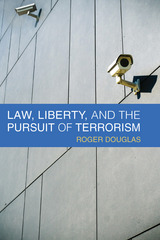
Roger Douglas compares responses to terrorism by five liberal democracies—the United States, the United Kingdom, Canada, Australia, and New Zealand—over the past 15 years. He examines each nation’s development and implementation of counterterrorism law, specifically in the areas of information-gathering, the definition of terrorist offenses, due process for the accused, detention, and torture and other forms of coercive questioning.
Douglas finds that terrorist attacks elicit pressures for quick responses, often allowing national governments to accrue additional powers. But emergencies are neither a necessary nor a sufficient condition for such laws, which may persist even after fears have eased. He argues that responses are influenced by both institutional interests and prior beliefs, and complicated when the exigencies of office and beliefs point in different directions. He also argues that citizens are wary of government’s impingement on civil liberties and that courts exercise their capacity to restrain the legislative and executive branches. Douglas concludes that the worst antiterror excesses have taken place outside of the law rather than within, and that the legacy of 9/11 includes both laws that expand government powers and judicial decisions that limit those very powers.
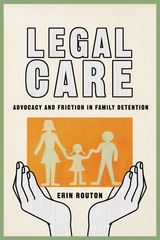
Family detention garnered much public attention when it expanded dramatically in 2014 as significantly increased numbers of migrant groups began arriving and requesting asylum at the Mexico-U.S. border. During this period, the Obama administration designated three detention facilities, two in South Texas, to hold such families while they underwent part of the asylum legal process. One became the largest immigrant detention facility in the country.
In Legal Care anthropologist Erin Routon explores the operations of these facilities through the unique perspectives of volunteer legal advocates. Routon offers a compelling ethnographic account of the hidden labor and emotional resilience of those advocates. Through the lens of “legal care,” Routon reframes legal aid as a form of caregiving, revealing how these advocates resist the structural and legal violence of family detention while supporting asylum-seeking parents and children. Drawing on immersive fieldwork and firsthand narratives, the book exposes the human cost of administrative incarceration and the quiet power of care in spaces designed to exclude.
Timely, urgent, and deeply humane, this work speaks to scholars and practitioners across anthropology, law and society, migration studies, and carceral justice. Routon’s accessible and evocative writing invites readers to reconsider activism and advocacy, offering new language for understanding resistance and solidarity in the face of institutional violence. This book is essential reading for anyone committed to justice, care, and the future of immigration policy in the United States.
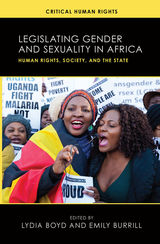
Legislating Gender and Sexuality in Africa details how legal efforts in the continent can often be moralizing enterprises, illuminating how these processes are closely tied to notions of ethics, personhood, and citizenship. The contributors provide new appraisals of recent events, with fresh arguments about the relationships between local and global fights for rights. This interdisciplinary approach will appeal to scholars in African studies, anthropology, history, and gender studies.


How does an inquiry into life as it lives (or dies) amid mass violence look like from the perspective of the “social”? Taking us from Sierra Leone to India to Lebanon, Life, Emergent challenges conventional understandings of biopolitics, weaving a politics of life through the lens of life, not death.
Arguing that the “letting die” element of biopolitics has been overemphasized, Yasmeen Arif zeros in on biopolitics’ other pole: “making live.” She does so by highlighting the various means and the forms of life configured in the aftermath—or afterlives—of violent events in contexts of law, justice, community, and identity. Her analysis of the social repercussions is both global and local in scope. Arif examines the convictions made in the Special Court of Sierra Leone, the first hybrid court of its nature under international criminal law. Next, she explores the making of a justice movement in the context of Hindu–Muslim violence in 2002 in the state of Gujarat, India. From there she revisits the Sikh carnage in Delhi of 1984. Finally, she explores a span of civil violence in Lebanon, and particularly, its effects on the city of Beirut.
This rigorously argued book brings together the various strands of life and the social that each chapter has disentangled—and in doing so it begins to frame a politics of, and in, life.
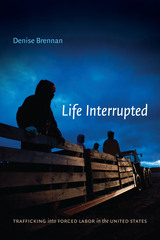
All royalties from this book will be donated to the nonprofit Survivor Leadership Training Fund administered through the Freedom Network.
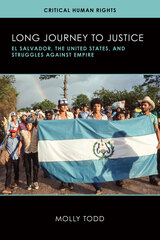
Drawing on two decades of work with former refugees from El Salvador as well as unprecedented access to private archives and oral histories, Molly Todd’s compelling history provides the first in-depth look at “grassroots sistering.” This model of citizen diplomacy emerged in the mid-1980s out of relationships between a few repopulated villages in Chalatenango, El Salvador, and US cities.
Todd shows how the leadership of Salvadorans and left-leaning activists in the US concerned with the expansion of empire as well as the evolution of human rights–related discourses and practices created a complex dynamic of cross-border activism that continues today.
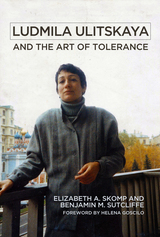
Drawing on interviews with Ulitskaya and sources not readily available to Western scholars, Elizabeth A. Skomp and Benjamin M. Sutcliffe explore the ethical ideals that make Ulitskaya’s novels resonate in today’s Russia—tolerance, sincerity, and diversity—and examine how she uses innovative imagery to personalize history through a focus on body and kinship. This is essential reading for anyone interested in contemporary Russian literature and society.
READERS
Browse our collection.
PUBLISHERS
See BiblioVault's publisher services.
STUDENT SERVICES
Files for college accessibility offices.
RECENTLY PUBLISHED



UChicago Accessibility Resources
home | accessibility | search | about | contact us
BiblioVault ® 2001 - 2026
The University of Chicago Press