
 A SCHOLARLY BOOK REPOSITORY
22 start with L start with L
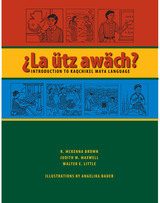
Kaqchikel is one of approximately thirty Mayan languages spoken in Belize, Guatemala, Mexico, and, increasingly, the United States. Of the twenty-two Mayan languages spoken in Guatemala, Kaqchikel is one of the four "mayoritarios," those with the largest number of speakers. About half a million people living in the central highlands between Guatemala City and Lake Atitlán speak Kaqchikel. And because native Kaqchikel speakers are prominent in the field of Mayan linguistics, as well as in Mayan cultural activism generally, Kaqchikel has been adopted as a Mayan lingua franca in some circles.
This innovative language-learning guide is designed to help students, scholars, and professionals in many fields who work with Kaqchikel speakers, in both Guatemala and the United States, quickly develop basic communication skills. The book will familiarize learners with the words, phrases, and structures used in daily communications, presented in as natural a way as possible, and in a logical sequence. Six chapters introduce the language in context (greetings, the classroom, people, the family, food, and life) followed by exercises and short essays on aspects of Kaqchikel life. A grammar summary provides in-depth linguistic analysis of Kaqchikel, and a glossary supports vocabulary learning from both Kaqchikel to English and English to Kaqchikel. These resources, along with sound files and other media on the Internet at ekaq.stonecenter.tulane.edu, will allow learners to develop proficiency in all five major language skills—listening comprehension, speaking, reading, writing, and sociocultural understanding.
The twelfth edition has been significantly revised, clarified, and updated throughout—with particular attention to the chapters on phonetics, phonology, pragmatics, and especially psycholinguistics. The restructured chapter on psycholinguistics makes use of recent research on language in the brain and includes expanded coverage of language processing disorders, introducing students to current models of speech perception and production and cutting-edge research techniques. In addition, exercises have been updated, and icons have been added to the text margins throughout the book, pointing instructors and students to useful and engaging audio files, videos, and other online resources on the accompanying Language Files website, which has also been significantly expanded.
The thirteenth edition has been revised, clarified, and updated throughout to ensure that it remains the most comprehensive and accessible introductory linguistics textbook on the market. The revised chapter on morphology includes a more thorough discussion of allomorphy and adds sections on templatic morphology, suprasegmental morphology, and morphological metathesis to give students a more complete picture of all morphological phenomena. The chapter on language and computers has been updated with new sections on deep learning, artificial neural networks, and on other areas of computational linguistics, providing readers with a better sense of current research and applications in this rapidly developing field. Other additions include new sections on syntactic non-constituents and non-generative rule systems in the syntax chapter and a complete rewrite to the creole languages file in the language contact chapter. We have also adopted the use of the singular they when referring to a generic person whose gender is unknown or irrelevant. Exercises and lists of other readings have been updated throughout.
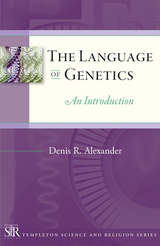
The Language of Genetics: An Introduction is the seventh title published in the Templeton Science and Religion Series, in which scientists from a wide range of fields distill their experience and knowledge into brief tours of their respective specialties. In this volume, Dr. Denis R. Alexander offers readers a basic toolkit of information, explanations, and ideas that can help us grasp something of the fascination and the challenge of the language of genetics.
Alexander surveys the big picture, covering such topics as the birth of the field; DNA: what it is, how it works, and how it was discovered; our genetic history; the role of genes in diseases, epigenetics, and genetic engineering. The book assumes the reader has little scientific background, least of all in genetics, and approaches these issues in a very accessible way, free of specialized or overly technical jargon. In the last chapter, Dr. Alexander explores some of the big questions raised by genetics: what are its implications for notions of human value and uniqueness? Is evolution consistent with religious belief? If we believe in a God of love, then how come the evolutionary process, utterly dependent upon the language of genetics, is so wasteful and involves so much pain and suffering? How far should we go in manipulating the human genome? Does genetics subvert the idea that life has some ultimate meaning and purpose?
Genetics is a rapidly advancing field; it seems new discoveries make headlines every other week. The Language of Genetics is intended to give the general reader the knowledge he or she needs to assess and understand the next big story
in genetics.
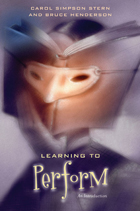
In Learning to Perform Carol Simpson Stern and Bruce Henderson enliven the dialogue between theory and practice for actors and teachers alike. Beginning with an overview of the study of literary and cultural texts through performance, Stern and Henderson then translate literary and performance theory into concrete classroom experience. Learning to Perform presents a dynamic performance methodology that offers the tools students need to develop and refine performance skills, analyze texts, and think and reflect critically on performed texts. By addressing an expanded sense of text that includes cultural as well as literary artifacts, the authors bridge the gap between oral interpretation and the more inclusive field of performance studies that overarches it.


The Life of Texts is designed around particular issues rather than the history of the discipline as such. Each chapter concentrates on a different aspect of 'the life of texts' and introduces the key debates and concepts relevant to its study. The issues discussed range from aesthetics and narrative to intertextuality and intermediality, from reading practices to hermeneutics and semiotics, popular culture to literary canonisation, postcolonial criticism to cultural memory. Key concepts and schools in the field have been highlighted in the text and then collected in a glossary for ease of reference. All chapters are richly illustrated with examples from different language areas.
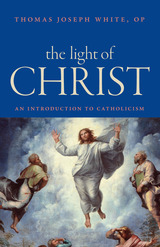
At the same time, The Light of Christ also addresses topics such as evolution, the modern historical study of Jesus and the Bible, and objections to Catholic moral teaching. Touching on the concerns of contemporary readers, Fr. White examines questions such as whether Christianity is compatible with the findings of the modern sciences, do historical Jesus studies disrupt or confirm the teaching of the faith, and does history confirm the antiquity of Catholic claims.
This book serves as an excellent introduction for young professionals with no specialized background in theology who are interested in learning more about Catholicism, or as an introduction to Catholic theology. It will also serve as a helpful text for theology courses in a university context.
As Fr. White states in the book’s introduction: “This is a book that offers itself as a companion. I do not presume to argue the reader into the truths of the Catholic faith, though I will make arguments. My goal is to make explicit in a few broad strokes the shape of Catholicism. I hope to outline its inherent intelligibility or form as a mystery that is at once visible and invisible, ancient and contemporary, mystical and reasonable.”

Until the previous decade, constitutionalism in Eastern Europe was considered to be an outmoded concept of the nineteenth century. Changes in the region, however, have brought back the fundamental question of the need to restrict government power through social self-binding.
This book discusses the mechanisms of such restriction, including different forms of the separation of powers and constitutional review. It relates the theoretical and practical importance of the issue to the present world-wide discontent with majoritarian democracy and the growing disrepute of parliaments. Increasing executive efficiency is, however, a threat to fundamental rights, and the battlecry of efficiency is often only a means to new despotism and inefficiency. A careful re-evaluation of the concept of constitutionalism assists in the search for a useful balance between majoritarianism and rights, and in the avoidance of all forms of public tyranny.
Written in non-technical language and using the most important English, American, French, and German examples of constitutional history, the book also examines East European (in particular, Russian) and Latin American examples, in part to illustrate certain dead-ends in constitutional development. It is intended to be an introduction for all those concerned with liberty.
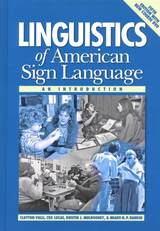
Completely reorganized to reflect the growing intricacy of the study of ASL linguistics, the 5th edition presents 26 units in seven parts. Part One: Introduction presents a revision of Defining Language and an entirely new unit, Defining Linguistics. Part Two: Phonology has been completely updated with new terminology and examples. The third part, Morphology, features units on building new signs, deriving nouns from verbs, compounds, fingerspelling, and numeral incorporation. Part Four: Syntax includes units on basic sentence types, lexical categories, word order, time and aspect, verbs, and the function of space. The fifth part, Semantics, offers updates on the meanings of individual signs and sentences.
Part Six: Language in Use showcases an entirely new section on Black ASL in the unit on Variation and Historical Change. The units on bilingualism and language and ASL discourse have been thoroughly revised and updated, and the Language as Art unit has been enhanced with a new section on ASL in film. Two new readings update Part Seven, and all text illustrations have been replaced by video stills from the expanded video content. Also, signs described only with written explanations in past editions now have both photographic samples in the text and full demonstrations in the video.
*** You can find the supplemental video content on the Gallaudet University Press YouTube channel. ***

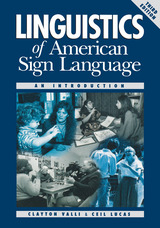
Grounded in the scholarship and reflecting contemporary developments in the field of signed language linguistics, the sixth edition of Linguistics of American Sign Language provides a clear, comprehensive, and fresh introduction to the structure of ASL. Focusing on language in everyday contexts, this new edition treats ASL as a dynamic system shaped by the diversity of its communities.
Organized into two parts, Linguistics of American SignLanguage begins by exploring fundamental concepts of language within communities, addressing language features, registers, variation and historical change, multilingualism, ideologies, and discourse. This first section sets the stage for in-depth analysis into core areas of linguistic study: syntax, phonology, and morphology. New content provides depth, exploring topics such as the representation of signed languages in texts, corpus linguistics, heritage-language signers, and Black ASL. To show how language is used by multilingual and multimodal individuals within their communities, the book pairs discussion with “grounding texts,” videos of ASL within varied authentic settings.
Linguistics of American Sign Language is supported by a companion website that provides access to the grounding texts and supplementary materials, including downloadable resources for hands-on analysis such as annotated videos and readings. Designed for readers with no background in linguistics, each unit opens with guided questions to prompt reflection and concludes with exercises and recommended readings.
Refining the standard for sign language scholarship, the sixth edition of Linguistics of American Sign Language guides readers beyond technical analysis to explore ASL as a vibrant system rooted in community, culture, and language.
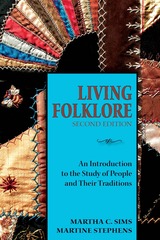
Living Folklore is a comprehensive, straightforward introduction to folklore as it is lived, shared and practiced in contemporary settings. Drawing on examples from diverse American groups and experiences, this text gives the student a strong foundation—from the field's history and major terms to theories and interpretive approaches.
Living Folklore moves beyond genres and classifications, and encourages students who are new to the field to see the study of folklore as a unique approach to understanding people, communities, and day-to-day artistic communication.
This revised edition incorporates new examples, research, and theory along with added discussion of digital and online folklore.
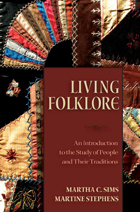
Living Folklore is a comprehensive, straightforward introduction to folklore as it is lived, shared and practiced in contemporary settings. Drawing on examples from diverse American groups and experiences, this text gives the student a strong foundation—from the field’s history and major terms to theories, interpretive approaches, and fieldwork.
Many teachers of undergraduates find the available folklore textbooks too complex or unwieldy for an introductory level course. It is precisely this criticism that Living Folklore addresses; while comprehensive and rigorous, the book is specifically intended to meet the needs of those students who are just beginning their study of the discipline. Its real strength lies in how it combines carefully articulated foundational concepts with relevant examples and a student-oriented teaching philosophy.

Hershkovitz opens the study with a brief history and a definition, characterization, and comparison of primates as a taxonomic unit. Basing his work on nearly all known genera of living primates, the author deals with New World monkeys from comparative anatomical and evolutionary points of view. He examines display characters, pelage, the evolution of color patterns, primate locomotion, cranial and dental morphology, and the central nervous system.
The final and most extensive part of the volume is devoted to the taxonomy and biology of the family Callitrichidae, comprising marmosets and tamarins, and the family Callimiconidae, represented by the callimico alone. Hershkovitz concludes with an exhaustive bibliography of more than 2,500 published works and a gazetteer of essential geographic data.
Volume 1, Introduction to Logic, begins with a historical overview and then offers a thorough introduction to standard propositional and first-order predicate logic. It provides both a syntactic and a semantic approach to inference and validity, and discusses their relationship. Although language and meaning receive special attention, this introduction is also accessible to those with a more general interest in logic.
In addition, the volume contains a survey of such topics as definite descriptions, restricted quantification, second-order logic, and many-valued logic. The pragmatic approach to non-truthconditional and conventional implicatures are also discussed. Finally, the relation between logic and formal syntax is treated, and the notions of rewrite rule, automation, grammatical complexity, and language hierarchy are explained.

This book explores the systematic and formal study of reasoning. It introduces the core systems of logic, discusses a portion of its extensions, and illustrates the application of logic in philosophy and linguistics utilizing classical and contemporary sources. In doing so, it provides the students with a rich set of tools along with first-hand experience regarding their applications in the study of rationality and meaning. With lots of exercises, and study and discussion questions, it provides a complete set of materials for courses for a variety of audiences at different levels.
READERS
Browse our collection.
PUBLISHERS
See BiblioVault's publisher services.
STUDENT SERVICES
Files for college accessibility offices.
RECENTLY PUBLISHED





UChicago Accessibility Resources
home | accessibility | search | about | contact us
BiblioVault ® 2001 - 2026
The University of Chicago Press