
 A SCHOLARLY BOOK REPOSITORY
26 start with L start with L
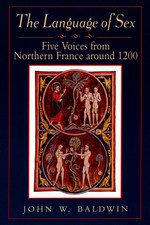
John Baldwin introduces five representative voices from the turn of the twelfth century in northern France: Pierre the Chanter speaks for the theological doctrine of Augustine; the Prose Salernitan Questions, for the medical theories of Galen; Andre the Chaplain, for the Ovidian literature of the schools; Jean Renart, for the contemporary romances; and Jean Bodel, for the emerging voices of the fabliaux. Baldwin juxtaposes their views on a range of essential subjects, including social position, the sexual body, desire and act, and procreation. The result is a fascinating dialogue of how they agreed or disagreed with, ignored, imitated, or responded to each other at a critical moment in the development of European ideas about sexual desire, fulfillment, morality, and gender.
These spokesmen allow us into the discussion of sexuality inside the church and schools of the clergy, in high and popular culture of the leity. This heterogeneous discussion also offers a startling glimpse into the construction of gender specific to this moment, when men and women enjoyed equal status in sexual matters, if nowhere else.
Taken together, these voices extend their reach, encompass their subject, and point to a center where social reality lies. By articulating reality at its varied depths, this study takes its place alongside groundbreaking works by James Brundage, John Boswell, and Leah Otis in extending our understanding of sexuality and sexual behavior in the Middle Ages.
"Superb work. . . . These five kinds of discourse are not often treated together in scholarly writing, let alone compared and contrasted so well."—Edward Collins Vacek, Theological Studies
"[Baldwin] has made the five voices speak to us in a language that is at one and the same time familiar and alien in its resonance and accents. This is a truly exceptional book, interdisciplinary in the real sense of the word, which is surely destined to become a landmark in medieval studies."—Keith Busby, Bryn Mawr Reviews
"[Baldwin's] attempt to 'listen' to these distant voices and translate their language of sex into our own raises challenging methodological questions that will be of great interest to historians and literary scholars alike."—John P. Dalton, Comitatus

Oral histories of many of the last generation of Lowell, MA, textile mill workers preceded by two introductory sections. The first presents the historic setting of economic development and subsequent decline of the textile industry in Lowell. The second is a brief explanation of the production process wherein the last generation of mill workers expended so many of their skills and so much of their energy.


The 400 entries in this volume include all of the Latin inscriptions on stone or metal in the Kelsey Museum of Archaeology at the University of Michigan; they represent the largest, and arguably the most important, collection of Latin inscriptions in the Western Hemisphere. The collection is notable not just for its size but for the fact that almost all the inscriptions were acquired by purchase for their scholarly and educational value to the members of the university community. Because of this, the collection is also an important testimony to a seminal phase in the development of the study of Classics at the University of Michigan. For the first time ever, this project makes the Latin inscriptions of the Kelsey available in one volume and has provided an opportunity to reexamine some texts that have not been edited in over a century. The commentaries for this edition have benefited from a wealth of recent scholarship resulting in some amended readings and reidentification of texts.
Steven L. Tuck is Assistant Professor of Classics at Miami University of Ohio.
The Kelsey Museum Studies series, edited by University of Michigan professors Elaine Gazda, Margaret Cool Root, and John Pedley, is designed to publish unusual material in the Museum's collections, together with reports of current and past archaeological expeditions sponsored by the University of Michigan.
This classic historical resource remains the most complete work on the establishment of Fort Caroline, which heralded the start of permanent settlement by Europeans in North America. America's history was shaped in part by the clash of cultures that took place in the southeastern United States in the 1560s. Indians, French, and Spaniards vied to profit from European attempts to colonize the land Juan Ponce de Leon had named La Florida.
Rene de Goulaine de Laudonniere founded a French Huguenot settlement on the St. Johns River near present-day Jacksonville and christened it Fort Caroline in 1564, but only a year later the hapless colonists were expelled by a Spanish fleet led by Pedro Menendez de Aviles. The Spanish in turn established a permanent settlement at St. Augustine, now the oldest city in the United States, and blocked any future French claims in Florida.
Using documents from both French and Spanish archives, Charles E. Bennett provides the first comprehensive account of the events surrounding the international conflicts of this 16th-century colonization effort, which was the actual "threshold" of a new nation. The translated Laudonniere documents also provide a wealth of information about the natural wonders of the land and the native Timucua Indians encountered by the French. As a tribe, the Timucua would be completely gone by the mid-1700s, so these accounts are invaluable to ethnologists and anthropologists.
With this republication of Laudonniere & Fort Caroline, a new generation of archaeologists, anthropologists, and American colonial historians can experience the New World through the adventures of the French explorers. Visitors to Fort Caroline National Memorial will also find the volume fascinating reading as they explore the tentative early beginnings of a new nation.

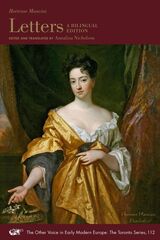
During the seventeenth century, Hortense Mancini, Duchess of Mazarin (1646–99), became an icon of women’s emancipation. In 1668, she shocked Europe when she fled her coercive husband and began a nomadic exile. Her notoriety increased in 1675 with the publication of her memoir—one of the first to appear in French by a woman—and was later magnified by her stint as the royal mistress of Charles II of England and by her establishment of a freethinking salon in London. As a salonnière, an exile, and a litigant fighting for legal separation from her husband, Mancini’s letters were a means of connection, collusion, and survival as well as cultural collaboration. Collected and translated here for the first time, this correspondence charts her struggle for autonomy in her own words.

This volume tells the stories of 62 men and women from Wisconsin who served in the Spanish-American War, World War I, and World War II. Letters from the Front is a vivid social history of wartime as told by those who took part in these foreign conflicts. Most of them are "ordinary" people, uprooted from farms, factories, and offices, who took part in extraordinary events. This work explores how war changed their lives and reveals the emotions they felt in uniform, in remote outposts, in combat, and in prison camps. These letters, diaries, oral histories, newspapers, and contemporary accounts provide a history of adaptation to military life; they also reflect the changes that occurred over the half-century encompassing these confilcts, an era of great technological innovation — and one in which America's vision of itself also changed.

Swedish immigrants tell their own stories in this collection of letters, diaries, and memoirs—a perfect book for those interested in history, immigration, or just the daily lives of early Swedish-American settlers.
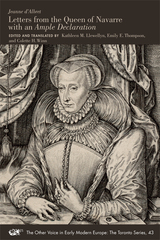
This edition presents in English, for the first time, Jeanne d’Albret’s Letters to the king, his mother, his brother, her own brother-in-law, and the queen of England, together with her Ample Declaration (1568) defending her decampment to the Protestant stronghold of La Rochelle. A historical-biographical introduction situates these writings in the larger context of Reformation politics and examines in detail the specific literary characteristics of her memoir. In her works, Jeanne d’Albret asserts her own position as legal sovereign of Béarn and Navarre and situates herself at the nexus of overlapping political, religious, and familial tensions.

Letter writing was a dominant form of communication for Western-educated elites in colonial Africa, especially in Nigeria. Exposure to the modern world and a growing sense of nationalism were among the factors that led people to begin exchanging letters, particularly in their interactions with British colonial authorities. Through careful textual analysis and broad contextualization, Vaughan reconstructs dominant storylines, including themes such as kinship, social mobility, Western education, modernity, and elite consolidation in colonial and post-colonial Nigeria. Vaughan brings his prodigious skills as an interdisciplinary scholar to bear on this wealth of information, bringing to life a portrait, at once intimate and expansive, of a community during a transformative period in African history.
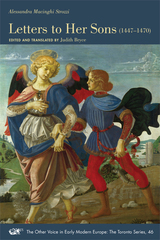
The seventy-three surviving letters written by Florentine widow, Alessandra Macinghi Strozzi (c.1406–1471), to her distant sons first appeared in print well over a century ago, but are here translated into English in their entirety for the first time. Whether for the professional historian or for the general reader interested in Renaissance Florence, they constitute a most precious testimony regarding both private and public life in the mid-fifteenth century, with themes ranging from familial relations, motherhood, marriage, and aspects of material culture to the harsh realities of political exile meted out by the Medici to their perceived opponents, these latter including her husband and, subsequently, her sons.


This comprehensive anthology will be the standard source for the
study of African American public address for years to come.
For Americans of the 19th century, as W. E. B. Du Bois observed, eloquent
speeches were 'the shining lights of civilization' that both expressed
and sought to improve the lives and communities from which they sprang.
Through political speeches, sermons, lectures, oral testimonies, and ceremonial
addresses, African Americans offered diverse responses to the issues and
events of their times, including not only slavery and racial equality but
also women's rights, education, religion, immigration, socialism, war,
Indian policy, and labor organization, among others. The speeches in this
collection are among the most powerful expressions of African American
opinions on these issues and were delivered on occasions and before audiences
where the speakers believed their words might be transformative.
Lift Every Voice is a completely revised, updated, and expanded
version of Philip Foner's 1972 classic Voice of Black America, which Library
Journal hailed as "indispensable.""This well-edited and
richly inclusive work," wrote Benjamin Quarles, "unveils the
full sweep of Black expression as found in platform addresses" by
"men and women who join eloquence with reason in articulating their
grievances and their aspirations and in arousing their listeners with their
ringing and prophetic challenges." This new collection includes over
60 additional texts and revised and expanded introductory essays that provide
historical, biographical, and critical information for each speech.
Containing more than 150 speeches, this anthology represents the most
extensive and diverse collection of African American oratory of the 18th
and 19th centuries ever published. Lift Every Voice makes readily
accessible not only the classic orations of such well-known figures
as Frederick Douglass, Sojourner Truth, and Booker T. Washington but also
dozens of lesser-known but important speeches deserving greater recognition
and study. Many of these speeches are previously unpublished, uncollected,
or long out of print.
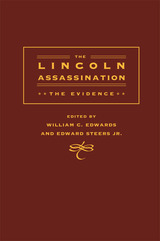
On April 22, 1865, Brevet Colonel H. L. Burnett was assigned to head the investigation into the murder of President Abraham Lincoln and the attempted murder of Secretary of State William H. Seward. Burnett orchestrated the collection of thousands of documents for the Military Commission’s trial of the conspirators. This deep archive of documentary evidence--consisting of letters, depositions, eyewitness accounts, investigative reports, and other documents--provides invaluable insight into the historical, cultural, and judicial context of the investigation. Only a fraction of the information presented in these documents ever made its way into the trial, and most of it has never been readily accessible. By presenting an annotated and indexed transcription of these documents, this volume offers significant new access to information on the events surrounding the assassination and a vast new store of social and political history of the Civil War era.
“With tears in my eyes I think it your duty to hang every rebel caught. I feel as bad as if was my own mother or father & will be one to volunteer to try & shoot every Southern man. May God have mercy on the man’s soul that done such a deed.
With much Respect for our Country,
I remain
Weeping”
--Anonymous letter, New York, April 15, 1865
“I know Booth. He was in the habit of coming to my place to shoot. . . . He shot well, and practiced to shoot with accuracy in every possible position. . . . He was a quick shot; always silent, reticent.”
--Deposition of Benjamin Barker, Pistol Gallery proprietor
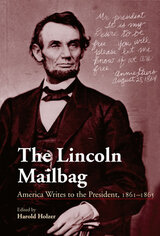
As president, Abraham Lincoln received between two hundred and five hundred letters a day—correspondence from public officials, political allies, and military leaders, as well as letters from ordinary Americans of all races who wanted to share their views with him. Here, and in his critically acclaimed volume Dear Mr. Lincoln, editor Harold Holzer has rescued these voices—sometimes eloquent, occasionally angry, at times poetic—from the obscurity of the archives of the Civil War. The Lincoln Mailbag includes letters written by African Americans, which Lincoln never saw, revealing to readers a more accurate representation of the nation’s mood than even the president knew. This first paperback edition of The Lincoln Mailbag includes a new index and fourteen illustrations, and Holzer’s introduction and annotations provide historical context for the events described and the people who wrote so passionately to their president in Lincoln's America.
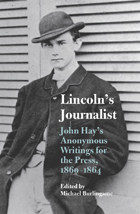
Michael Burlingame presents anonymous and pseudonymous newspaper articles written by Lincoln's assistant personal secretary, John Hay, between 1860 and 1864. In the White House, Hay became the ultimate insider, the man who had the president's ear. "Only an extremely small number of persons ever saw Abraham Lincoln both day and night in public as well as private settings from 1860 to 1864," notes Wayne C. Temple, chief deputy director, Illinois State Archives. "And only one of them had the literary flair of John Milton Hay."
Burlingame takes great pains to establish authorship of the items reproduced here. He convincingly demonstrates that the essays and letters written for the Providence Journal, the Springfield Illinois State Journal, and the St. Louis Missouri Democrat under the pseudonym "Ecarte" are the work of Hay. And he finds much circumstantial and stylistic evidence that Hay wrote as "our special correspondent" for the Washington World and for the St. Louis Missouri Republican. Easily identifiable, Hay's style was "marked by long sentences, baroque syntactical architecture, immense vocabulary, verbal pyrotechnics, cocksure tone (combining acid contempt and extravagant praise), offbeat adverbs, and scornful adjectives."

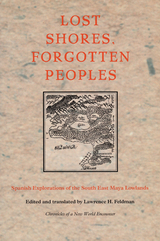
In these narratives—primary documents written by missionaries and conquistadors—vivid details of these little known Mayan cultures are revealed, answering how and why lowlanders were able to evade Spanish conquest while similar civilizations could not. Fascinating tales of the journey from Europe are included, involving unknown islands, lost pilots, life aboard a galleon fleet, political intrigue, cannibals, and breathtaking natural beauty. In short, these forgotten manuscripts—translations of the papers of the past—provide an unforgettable look at an understudied chapter in the age of exploration.
Lost Shores, Forgotten Peoples will appeal to archaeologists, anthropologists, and historians interested in Central America, the Maya, and the Spanish Conquest.

Each of the chapters in this history chronicles a domestic drama around which the lives of ordinary Romans are suddenly and violently altered. You might read the gruesome murder that opens the book—when an Italian noble takes revenge on his wife and her bastard lover as he catches them in delicto flagrante—as straight from the pages of Boccaccio. But this tale, like the other stories Cohen recalls here, is true, and its recounting in this scintillating work is based on assiduous research in court proceedings kept in the state archives in Rome.
Love and Death in Renaissance Italy contains stories of a forbidden love for an orphan nun, of brothers who cruelly exact a will from their dying teenage sister, and of a malicious papal prosecutor who not only rapes a band of sisters, but turns their shambling father into a pimp! Cohen retells each cruel episode with a blend of sly wit and warm sympathy and then wraps his tales in ruminations on their lessons, both for the history of their own time and for historians writing today. What results is a book at once poignant and painfully human as well as deliciously entertaining.
Winner, 1999 Missouri Conference on History Book Award
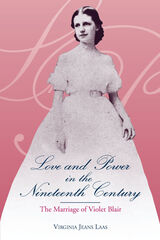
This fascinating biography of a marriage in the Gilded Age closely examines the dynamic flow of power, control, and love between Washington blue blood Violet Blair and New Orleans attorney Albert Janin. Based on their voluminous correspondence as well as Violet’s extensive diaries, it offers a thoroughly intimate portrait of a fifty-four-year union which, in many ways, conformed to societal strictures, yet always created its own definition of itself in order to fit the flux of needs of both husband and wife.
Central to their story is Violet’s fierce determination to maintain her autonomy within the patriarchic institution of marriage. An enduring belle who thought, talked, and acted with the assurance and self-confidence of one whose wishes demanded obedience, she rejected the Victorian ideal of women as silent, submissive consorts. Yet her feminism was a private one, not played out on a public stage but kept to the confines of her own daily life and marriage.
With abundant documentary evidence to draw upon, Laas ties this compelling story to broader themes of courtiship behavior, domesticity, gender roles, extended family bonds, elitism, and societal stereotyping. Deeply researched and beautifully written, Love and Power in the Nineteenth Century has the dual virtue of making an important historical contribution while also appealing to a broad popular audience.
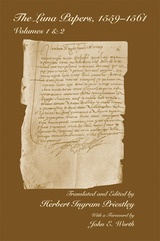
Marks the celebration by the modern city of Pensacola, Florida, of the 450th anniversary of Luna’s fateful colony
The 1559–1561 expedition of Don Tristán de Luna y Arellano to Florida was at the time of Spain’s most ambitious attempt yet to establish a colonial presence in southeastern North America. In June of 159, eleven ships carrying some five hundred soldiers and one thousand additional colonists, including not just Spaniards but also many of Aztec and African descent, sailed north from Veracruz, Mexico, on their way to the bay known then as Ochuse, and later as Pensacola. Finally arriving in mid-August, the colonists quickly sent word of their arrival back to Mexico and unloaded their supplies over the next five weeks, leaving vital food stores onboard the vessels until suitable warehouses could be constructed in the new settlement. When an unexpected hurricane struck on the night of September 19, 1559, however, seven of ten remaining vessels in Luna’s fleet were destroyed, and the expedition was instantaneously converted from a colonial venture to a mission in need of rescue.
Though ultimately doomed to failure by the hurricane that devastated their fleet and food stores, the Luna expedition nonetheless served as an immediate prelude to the successful establishment of a permanent colonial presence at St. Augustine on Florida’s Atlantic coast in 1565, and prefaced the eventual establishment after 1698 of three successive Spanish presidios at the same Pensacola Bay where Luna’s attempt had been made more than a century before.
READERS
Browse our collection.
PUBLISHERS
See BiblioVault's publisher services.
STUDENT SERVICES
Files for college accessibility offices.
RECENTLY PUBLISHED





UChicago Accessibility Resources
home | accessibility | search | about | contact us
BiblioVault ® 2001 - 2026
The University of Chicago Press