
 A SCHOLARLY BOOK REPOSITORY
33 start with L start with L
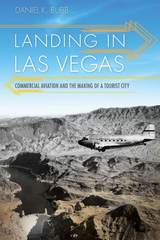
At the beginning of the twentieth century, Las Vegas was a dusty, isolated desert town. By century’s end, it was the country’s fastest-growing city, a world-class travel destination with a lucrative tourist industry hosting millions of visitors a year. This transformation came about in large part because of a symbiotic relationship between airlines, the city, and the airport, facilitated by the economic democratization and deregulation of the airline industry, the development of faster and more comfortable aircraft, and the ambitious vision of Las Vegas city leaders and casino owners. Landing in Las Vegas is a compelling study of the role of fast, affordable transportation in overcoming the vast distances of the American West and binding western urban centers to the national and international tourism, business, and entertainment industries.

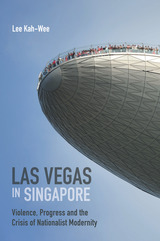
The first history begins in colonial Singapore in the 1880s, when British administrators revised gambling laws in response to the political threat posed by Chinese-run gambling syndicates. Following the tracks of these punitive laws and practices, the book moves into the 1960s when the newly independent city-state created a national lottery while criminalizing both organized and petty gambling in the name of nation-building. The second history shifts the focus to corporate Las Vegas in the 1950s when digital technology and corporate management practices found each other on the casino floor. Tracing the emergence of the specialist casino designer, the book reveals how casino development evolved into a highly rationalized spatial template designed to maximize profits. Today an iconic landmark of Singapore, Marina Bay Sands is also an artifact of these two histories, an attempt by Singapore to normalize what was once criminalized in its nationalist history.
Lee Kah-Wee argues that the historical project of the control of vice is also about the control of space and capital. The result is an uneven landscape where the legal and moral status of gambling is contingent on where it is located. As the current wave of casino expansion spreads across Asia, he warns that these developments should not be seen as liberalization but instead as a continuation of the project of concentrating power by modern states and corporations.
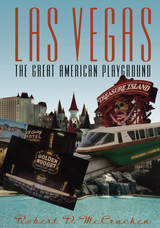
Las Vegas: The Great American Playground, illustrated with many fine historical photographs, traces the city’s history from its first Native American occupants more than 10,000 years ago to its present status as a premier tourist destination. It is the story of a group of colorful, enterprising individuals who made the desert bloom with undreamed-of possibilities.

In the minds of many, Detroit is undergoing a renaissance thanks to gentrifying urbanites who’ve been drawn to the city with the promise of cheap housing and thriving culture. But what happens when gentrification attempts to come to one of the most depopulated neighborhoods in the country—a place where every other property in the neighborhood was a vacant lot and every third house stood empty? To find out, Sharon Cornelissen moved to the Brightmoor neighborhood of Detroit for three years and became the owner of a $7,000 house.
The Last House on the Block takes us to Brightmoor to meet Cornelissen’s fellow residents. She introduces us to the long-time residents of the neighborhood who reveal their struggles to keep a home while keeping violence, tall grass, and yes—gentrification—at bay. We also meet the eclectic white newcomers of Brightmoor and learn about their real estate bargains, urban farms, and how they became the unlikely defenders of urban desolation. Where oldtimers take pride in neatly mowed lawns and hope for a return to residential density, newcomers love the open space and aim to buy more empty lots to raise chickens and goats. It is a story of gentrification, but not at all in the usual sense: it is a case of failed gentrification. We often think about gentrification as an unstoppable force—once the first white newcomers with yoga mats enter an often brown or Black community, the coffee shops and restaurants follow. But in Brightmoor, the dreams of white newcomers met the harsh reality of decade-long decline. Nearly a decade after Cornelissen’s fieldwork began, Brightmoor is even emptier than it was when she started.
Today, depopulation remains more common than gentrification in poor communities. Cornelissen’s story offers deep insights into what it is like to live in a declining neighborhood, and through the example of Brightmoor, Cornelissen reveals why depopulation continues and helps us imagine a more inclusive and equitable city turnaround.
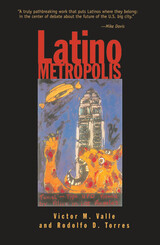
A readable look at culture and politics in Los Angeles through a Latino lens.
Los Angeles: scratch the surface of the city’s image as a rich mosaic of multinational cultures and a grittier truth emerges-its huge, shimmering economy was built on the backs of largely Latino immigrants and still depends on them. This book exposes the underside of the development and restructuring that have turned Los Angeles into a global city, and in doing so it reveals the ways in which ideas about ethnicity-Latino identity itself-are implicated and elaborated in the process. A penetrating analysis of the social, economic, cultural, and political consequences of the growth of the Latino working-class populations in Los Angeles, Latino Metropolis is also a nuanced account of the complex links between political economy and the social construction of ethnicity.
Lifting examples from recent news stories, political encounters, and cultural events, the authors demonstrate how narratives about Latinos are used to maintain the status quo-particularly the existing power grid-in the city. In media representations of riots, in the recasting (and "whitening") of Mexican food as Spanish-American cuisine, in the community displacement that occurred as part of the development of the Staples Center-in telling instances large and small, we see how Los Angeles and its Latino population are mutually transforming. And we see how an old Latino politics of "racial" identity is inevitably giving way to a new politics of class. Combining political and economic insight with trenchant social and cultural analysis, this work offers the clearest statement to date of how ethnicity and class intersect in defining racialized social relations in the contemporary metropolis.Globalization and Community Series, volume 7Translation Inquiries: University of Minnesota Press


A journey through unexplored spaces that foreground new ways of inhabiting the urban
One of the fundamental dimensions of urbanization is its radical transformation of nature. Today domestic animals make up more than twice the biomass of people on the planet, and cities are replete with nonhuman life. Yet current accounts of the urban remain resolutely anthropocentric. Lively Cities departs from conventions of urban studies to argue that cities are lived achievements forged by a multitude of entities, drawing attention to a suite of beings—human and nonhuman—that make up the material politics of city making.
From macaques and cattle in Delhi to the invasive parakeet colonies in London, Maan Barua examines the rhythms, paths, and agency of nonhumans across the city. He reconceptualizes several key themes in urban thought, including infrastructure, the built environment, design, habitation, and everyday practices of dwelling and provides a critical intervention in animal and urban studies. Generating fresh conversations between posthumanism, postcolonialism, and political economy, Barua reveals how human and nonhuman actors shape, integrate, subsume, and relate to urban space in fascinating ways.
Through novel combinations of ethnography and ethology, and focusing on interlocutors that are not the usual suspects animating urban theory, Barua’s work considers nonhuman lifeworlds and the differences they make in understanding urbanicity. Lively Cities is an agenda-setting intervention, ultimately proposing a new grammar of urban life.
Mark S. Fleisher offers a window into daily life in this neighborhood, particularly through the stories of Mo and Memphis Washington, who fight to sustain a stable home for their children, and of Burpee, a local man who has returned to the North End to rebuild his life after years of crime and punishment in Chicago.
“Outstanding” books for public & secondary school libraries from university presses, American Library Association
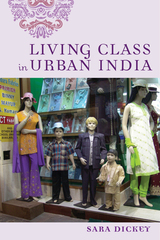
Many Americans still envision India as rigidly caste-bound, locked in traditions that inhibit social mobility. In reality, class mobility has long been an ideal, and today globalization is radically transforming how India’s citizens perceive class. Living Class in Urban India examines a nation in flux, bombarded with media images of middle-class consumers, while navigating the currents of late capitalism and the surges of inequality they can produce.
This book is also freely available online as an open-access digital edition, published with the support of the National Endowment for the Humanities.

Living Rome: Space, Identity, and the Politics of Belonging looks beyond the romanticized image of Rome, towards a kaleidoscopic view of the city shaped by inequalities, socio-political challenges, and acts of resistance and solidarity. In the wake of urban developments related to migration, housing shortages, COVID-19, crime, and other social changes, this volume offers a grounded approach, mapping the contemporary realities of Italy’s capital from a variety of methodological standpoints. Contributors argue that the unseen fringes, both geographically peripheral and those embedded within the very heart of Rome, are crucial for understanding its social dynamics. These ‘hidden’ geographies foster vibrant communities, challenge ideas of home and belonging, and act as key sites of creativity, resistance and everyday life.
Bringing together urban sociologists, anthropologists, geographers, demographers, criminologists, decolonizing and feminist scholars, this study contributes to a growing body of research on the city and its social movements, aiming to inform policy and contribute to a more just and sustainable Rome. Using a variety of methods, from quantitative cartography and policy analysis to (auto)ethnography and creative methodologies, this volume speaks well beyond Rome, to conversations about cities worldwide.
David J. Harding studied sixty adolescent boys growing up in two very poor areas and one working-class area. In the first two, violence and neighborhood identification are inextricably linked as rivalries divide the city into spaces safe, neutral, or dangerous. Consequently, Harding discovers, social relationships are determined by residential space. Older boys who can navigate the dangers of the streets serve as role models, and friendships between peers grow out of mutual protection. The impact of community goes beyond the realm of same-sex bonding, Harding reveals, affecting the boys’ experiences in school and with the opposite sex. A unique glimpse into the world of urban adolescent boys, Living the Drama paints a detailed, insightful portrait of life in the inner city.
Using San Francisco as an illuminating case study, Beitel analyzes the innovative ways urban social movements have organized around issues regarding land use, housing, urban ecology, and health care on the local level to understand the changing nature of protest formation around the world.
Reconciling the passing of New Left Ideals and the emergence of mobilization on a global scale, he assesses the limits of contemporary urban movements as conduits for advancing a radical political program. Beitel argues these limits reflect recurrent problems of internal fragmentation, and the manner in which liberal democratic institutions structure processes of political participation and interest representation.
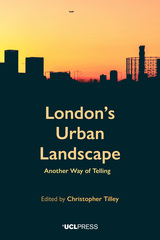
London’s Urban Landscape returns us to the everyday lives of people and the manner in which they understand their lives. The embodied experience of the city is invoked in the descriptions of entangled relationships between people and places and the paths of movement between them.
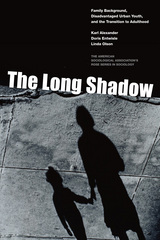
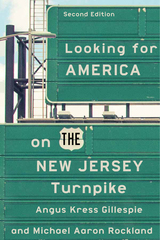
When Angus Gillespie and Michael Rockland wrote Looking for America on the New Jersey Turnpike in 1989, they simply wanted to express their fascination with a road that many commuters regarded with annoyance or indifference. Little did they expect that it would be hailed as a classic, listed by the state library alongside works by Whitman and Fitzgerald as one of the ten best books ever written about New Jersey or by a New Jerseyan.
Now Looking for America on the New Jersey Turnpike is back in a special updated and expanded edition, examining how this great American motorway has changed over the past thirty-five years. You’ll learn how the turnpike has become an icon inspiring singers and poets. And you’ll meet the many people it has affected, including the homeowners displaced by its construction, the highway patrol and toll-takers who work on it, and the drivers who speed down its lanes every day.
2008 — Gold Award in Californiana – California Book Awards – Commonwealth Club of California
2010 — NACCS Book Award – National Association for Chicana and Chicano Studies
City plazas worldwide are centers of cultural expression and artistic display. They are settings for everyday urban life where daily interactions, economic exchanges, and informal conversations occur, thereby creating a socially meaningful place at the core of a city.
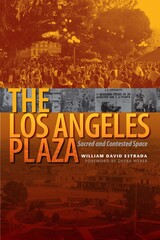
At the heart of historic Los Angeles, the Plaza represents a quintessential public space where real and imagined narratives overlap and provide as many questions as answers about the development of the city and what it means to be an Angeleno. The author, a social and cultural historian who specializes in nineteenth- and early twentieth-century Los Angeles, is well suited to explore the complex history and modern-day relevance of the Los Angeles Plaza. From its indigenous and colonial origins to the present day, Estrada explores the subject from an interdisciplinary and multiethnic perspective, delving into the pages of local newspapers, diaries and letters, and the personal memories of former and present Plaza residents, in order to examine the spatial and social dimensions of the Plaza over an extended period of time.
The author contributes to the growing historiography of Los Angeles by providing a groundbreaking analysis of the original core of the city that covers a long span of time, space, and social relations. He examines the impact of change on the lives of ordinary people in a specific place, and how this change reflects the larger story of the city.
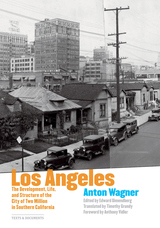
No book on the emergence of Los Angeles, today a metropolis of more than four million people, has been more influential or elusive than this volume by Anton Wagner. Originally published in German in 1935 as Los Angeles: Werden, Leben und Gestalt der Zweimillionenstadt in Südkalifornien, it is one of the earliest geographical investigations of a city understood as a series of layered landscapes. Wagner demonstrated that despite its geographical disadvantages, Los Angeles grew rapidly into a dominant urban region, bolstered by agriculture, real estate development, transportation infrastructure, tourism, the oil and automobile industries, and the film business. Although widely reviewed upon its initial publication, his book was largely forgotten until reintroduced by architectural historian Reyner Banham in his 1971 classic Los Angeles: The Architecture of Four Ecologies.
This definitive translation is annotated by Edward Dimendberg and preceded by his substantial introduction, which traces Wagner's biography and intellectual formation in 1930s Germany and contextualizes his work among that of other geographers. It is an essential work for students, scholars, and curious readers interested in urban geography and the rise of Los Angeles as a global metropolis.
“This fine new translation by Timothy Grundy of Anton Wagner's Los Angeles with Edward Dimendberg's lucidly probing introduction constitutes a major contribution to urban history and our understanding of one of the world's most enigmatic and significant cities.”
—Thomas S. Hines, Research Professor of History and Architecture and Urban Design, UCLA
“Edward Dimendberg has done a remarkable job bringing Anton Wagner's classic study of Los Angeles to a wider readership. This landmark publication will enable many strands of urban scholarship to enter into dialogue for the first time.”
—Matthew Gandy, Professor of Geography, University of Cambridge, and author of Natura Urbana: Ecological Constellations in Urban Space (2022)
“Anton Wagner was a prescient and troubling historical figure. Nearly a century ago, with his camera in hand, he walked Los Angeles in fervent exploration of metropolitan growth. This beautiful and expert book takes Wagner every bit as seriously as he took Los Angeles.”
—William Deverell, Director, Huntington-USC Institute on California and the West
"Anton Wagner’s geographic and ethnographic history of the urbanization of Los Angeles has long been unavailable to English-speaking readers. This early study, accompanied by Edward Dimendberg’s comprehensive introduction, will be of interest to all who, like Reyner Banham, admire its impressive scholarship and firsthand account of a city and ecology already in the throes of dynamic transformation."
—Joan Ockman, Vincent Scully Visiting Professor of Architectural History, Yale School of Architecture
"Encompassing copious photographs, insightful commentary, and thorough reconstruction of Wagner’s life and times, this new translation of Anton Wagner’s Los Angeles provides the missing link in scholarship about the metropolis during the early twentieth century. Its continuing relevance and controversial edge will appeal to urban researchers and college students beyond Southern California."
—Michael Dear, Professor Emeritus of City & Regional Planning, University of California, Berkeley
"Scholars of Los Angeles, or any city, must rejoice at this first proper English-language publication of Wagner's brilliant, if problematic, urban studies masterpiece. The edition is made accessible and relevant by Edward Dimendberg's indispensable prefatory material and contextualization."
—Roger Keil, Professor of Environmental and Urban Change, York University
“Finally translating this fascinating book into English fills an important gap in our historical knowledge of Los Angeles and its interpretation. Edward Dimendberg's invaluable introduction situates Anton Wagner in a comprehensive intellectual context. Of more than merely historical interest, this in-depth picture of Los Angeles in 1933 is essential reading for anyone interested in cities.”
—Margaret Crawford, Professor of Architecture, University of California, Berkeley
“This key text from 1935 for understanding Los Angeles urbanism is finally available in an excellent English translation by Timothy Grundy. Revelatory introductory essays by Anthony Vidler and Edward Dimendberg explain how German geographer (and later Nazi Party member) Anton Wagner was able to map and conceptualize the radical originality of this archetypal American metropolis in ways that deeply influenced Reyner Banham and so many subsequent writers on the city.”
—Robert Fishman, Taubman College of Architecture and Planning, University of Michigan
"Expertly annotated by Edward Dimendberg, Anton Wagner’s book on the growth of Los Angeles, which first appeared in German in 1935, is a landmark study in the history of urbanization. At the same time, it can be read as an example of transnational and comparative history, in which an observer from one country commented on developments in another. This volume will interest historians of the modern city, both in America and in Germany."
—Andrew Lees, Distinguished Professor of History Emeritus, Rutgers University
“Blending his wide knowledge and his acute wit, Edward Dimendberg has meticulously reconstructed the genesis of a forgotten doctoral thesis, which had remained unread for more than eighty years, despite its acknowledgement by Reyner Banham. This pioneering scholarly study of the Southern Californian metropolis is now available for the first time in English, inscribed with subtlety in both its German and its American contexts on the basis of thorough investigations.”
—Jean-Louis Cohen, Sheldon H. Solow Professor in the History of Architecture, Institute of Fine Arts, New York University
"This is the odyssey of a book written and published in 1930s Nazi Germany, forgotten after the war, and rediscovered by Reyner Banham in the ‘70s. Los Angeles is a seminal text of modern architectural history and confronts readers in the present with the paradox of an unknown classic.“
—Wolfgang Schivelbusch, author of The Railway Journey
“Finally, a translation of Anton Wagner’s Los Angeles, with extensive notes and a superb and deeply researched introduction by Edward Dimendberg, has arrived. It turns out that it was worth the wait. This volume is not only an important historic document, but a still-unrivaled portrait of a great city.”
—Robert Bruegmann, Distinguished Professor Emeritus of Art History, Architecture, and Urban Planning at the University of Illinois at Chicago and author of Sprawl: A Compact History
"Scholars of Los Angeles can rejoice that Anton Wagner’s legendary study of early 1930s Los Angeles is at last available in a masterful translation, with a luminous introduction by Edward Dimendberg that captures Wagner’s analytical brilliance as well as his troubling politics and racial views. An essential addition to any library of Southern California."
—Louis S. Warren, W. Turrentine Jackson Professor of Western U.S. History, University of California, Davis
“Anton Wagner’s study provides an invaluable and frequently perceptive window into the evolution of Los Angeles during the early twentieth century, showing how human agency transformed regional resources into a booming major city. The translation is immensely enhanced by Edward Dimendberg’s skillful provision of context, including fascinating intellectual history.”
—Stephen Bell, Professor of Geography and History, UCLA
"Los Angeles: The Development, Life, and Structure of the City of Two Million in Southern California has always had an elusive presence in the conversation about the explosive growth of the Southern California metropolis at the beginning of the twentieth century: an arcane text known to exist, but only accessible to very few. This expert first translation in English almost ninety years after it originally appeared in German is prefaced by a complex and engaging introduction by Edward Dimendberg that situates the original study in a multidisciplinary conversation. It elucidates the many ways this landmark essay on Los Angeles’s urban geography was not only filtered into subsequent scholarship on the city—Reyner Banham’s iconic Los Angeles: The Architecture of Four Ecologies in particular—but also how it resonates with contemporary debates about cities as complex social organisms. This book will be essential reading not only for historians of Los Angeles but for those interested in the theorization of the modern metropolis more broadly. That the volume editor addresses Wagner’s problematic views on race and territorial conquest front and center, within their historic context, only adds to the significance of this undertaking."
—Martino Stierli, The Philip Johnson Chief Curator of Architecture and Design, The Museum of Modern Art, New York
More than just educational institutions, Catholic schools promote the development of social capital—the social networks and mutual trust that form the foundation of safe and cohesive communities. Drawing on data from the Project on Human Development in Chicago Neighborhoods and crime reports collected at the police beat or census tract level in Chicago, Philadelphia, and Los Angeles, Margaret F. Brinig and Nicole Stelle Garnett demonstrate that the loss of Catholic schools triggers disorder, crime, and an overall decline in community cohesiveness, and suggest that new charter schools fail to fill the gaps left behind.
This book shows that the closing of Catholic schools harms the very communities they were created to bring together and serve, and it will have vital implications for both education and policing policy debates.
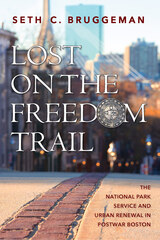
Boston National Historical Park is one of America's most popular heritage destinations, drawing in millions of visitors annually. Tourists flock there to see the site of the Boston Massacre, to relive Paul Revere's midnight ride, and to board Old Ironsides—all of these bound together by the iconic Freedom Trail, which traces the city's revolutionary saga.
Making sense of the Revolution, however, was never the primary aim for the planners who reimagined Boston's heritage landscape after the Second World War. Seth C. Bruggeman demonstrates that the Freedom Trail was always largely a tourist gimmick, devised to lure affluent white Americans into downtown revival schemes, its success hinging on a narrow vision of the city's history run through with old stories about heroic white men. When Congress pressured the National Park Service to create this historical park for the nation's bicentennial celebration in 1976, these ideas seeped into its organizational logic, precluding the possibility that history might prevail over gentrification and profit.
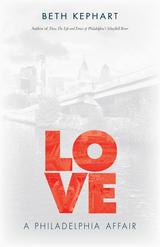
Philadelphia has been at the heart of many books by award-winning author Beth Kephart, but none more so than the affectionate collection Love. This volume of personal essays and photographs celebrates the intersection of memory and place. Kephart writes lovingly, reflectively about what Philadelphia means to her. She muses about meandering on SEPTA trains, spending hours among the armor in the Philadelphia Museum of Art, and taking shelter at Independence Mall during a downpour.
In Love, Kephart shares her loveof Reading Terminal Market at Thanksgiving: “This abundant, bristling market is, in November, the most unlonesome place around.” She waxes poetic about the shoulder-to-shoulder crowds, the mustard in a Salumeria sandwich, and the “coins slipped between the lips of Philbert the pig.”
Kephart also extends her journeys to the suburbs, Glenside and Ardmore—and beyond, to Lancaster County, Pennsylvania; Stone Harbor, New Jersey; and Wilmington, Delaware. What emerges is a valentine to the City of Brotherly Love and its environs. In Love, Philadelphia is “more than its icons, bigger than its tagline.”
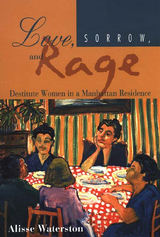
From drug addiction and the spread of AIDS to the growing gap between rich and poor in the U.S., the topics in this book get front-page coverage in daily newspapers across the country. Waterston seeks to understand, to explain, and to solve the human crisis that surrounds us. Towards this end, she challenges us to look at the ways in which our society and the workings of our political, economic, and popular culture contribute to the suffering experienced by our most vulnerable citizens. An important corrective to popular depictions of the urban poor, Love, Sorrow, and Rage provides a penetrating analysis of the causes and consequences of poverty. It offers a deeper understanding of what leads to and perpetuates poverty and of the human complex of love, sorrow, and rage felt by those who experience it.
Love, Sorrow, and Rage will engage readers interested in urban studies, women's studies, social issues and policies, anthropology, sociology, political economy, and New York City life.
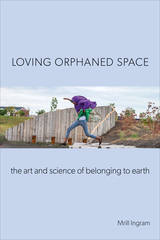
How we relate to orphaned space matters. Voids, marginalia, empty spaces—from abandoned gas stations to polluted waterways—are created and maintained by politics, and often go unquestioned. In Loving Orphaned Space, Mrill Ingram provides a call to action to claim and to cherish these neglected spaces and make them a source of inspiration through art and/or remuneration.
Ingram advocates not only for “urban greening” and “green planning,” but also for “radical caring.” These efforts create awareness and understanding of ecological connectivity and environmental justice issues—from the expropriation of land from tribal nations, to how race and class issues contribute to creating orphaned space. Case studies feature artists, scientists, and community collaborations in Chicago, New York, and Fargo, ND, where grounded and practical work of a fundamentally feminist nature challenges us to build networks of connection and care.
The work of environmental artists who venture into and transform these disconnected sites of infrastructure allow us to rethink how to manage the enormous amount of existing overlooked and abused space. Loving Orphaned Space provides new ways humans can negotiate being better citizens of Earth.

After World War II, Europe witnessed the massive redrawing of national borders and the efforts to make the population fit those new borders. As a consequence of these forced changes, both Lviv and Wrocław went through cataclysmic changes in population and culture. Assertively Polish prewar Lwów became Soviet Lvov, and then, after 1991, it became assertively Ukrainian Lviv. Breslau, the third largest city in Germany before 1945, was in turn "recovered" by communist Poland as Wrocław. Practically the entire population of Breslau was replaced, and Lwów's demography too was dramatically restructured: many Polish inhabitants migrated to Wrocław and most Jews perished or went into exile. The forced migration of these groups incorporated new myths and the construction of official memory projects.
The chapters in this edited book compare the two cities by focusing on lived experiences and "bottom-up" historical processes. Their sources and methods are those of micro-history and include oral testimonies, memoirs, direct observation and questionnaires, examples of popular culture, and media pieces. The essays explore many manifestations of the two sides of the same coin—loss on the one hand, gain on the other—in two cities that, as a result of the political reality of the time, are complementary.
READERS
Browse our collection.
PUBLISHERS
See BiblioVault's publisher services.
STUDENT SERVICES
Files for college accessibility offices.
RECENTLY PUBLISHED




UChicago Accessibility Resources
home | accessibility | search | about | contact us
BiblioVault ® 2001 - 2025
The University of Chicago Press