front cover of The Last Eyewitnesses, Volume 2
The Last Eyewitnesses, Volume 2
The Children of the Holocaust Speak
Jakub Gutenbaum and Agnieszka Latala
Northwestern University Press, 2005
The memoirs of Jews who were children during the Nazi occupation of Poland

This book serves as a memorial to loved ones who do not even have a grave, as well as a tribute to those who risked their lives and families to save a Jewish child. A wide variety of experiences during the Nazi occupation of Poland are related with wrenching simplicity and candor, experiences that illustrate horrors and deprivation, but also present examples of courage and compassion.

These recollections-whether of hiding in forests or camouflaged bunkers, fighting with groups of partisans, enduring the horrors of concentration camps, or living in fear under disguised identities-serve as eloquent testimony to the depth, diversity, and richness of humanity under siege and offer a powerful lesson for future generations. Written by people who remained in Poland after the war, these accounts convey a great immediacy; the authors are not removed from the environment in which these experiences took place. The psychological impact on these child survivors and the difficulties they encountered even after the war are very poignant. The passing years have brought urgency to the publication of these stories, as those who wrote them are the last surviving eyewitnesses of these tumultuous events.
 
[more]

logo for University of Minnesota Press
Late Quaternary Environments of the United States
Volume 2
H.E. Wright Jr., Editor
University of Minnesota Press, 1983

Late Quaternary Environments of the United States was first published in 1983. Minnesota Archive Editions uses digital technology to make long-unavailable books once again accessible, and are published unaltered from the original University of Minnesota Press editions.

In the late 1970s American and Russian scientists met twice in conferences on Quaternary paleoclimates sponsored by the U.S.-U.S.S.R. Bilateral Agreement on the Environment. The conferees agreed to prepare volumes summarizing the current status of research in the two countries. Late-Quaternary Environments of the United States provides a two-volume overview of new and significant information on research of the last fifteen years, since the 1965 publication of Quaternary of the United States,edited by H E. Wright, Jr., and D. G. Frey. The volume on the late Quaternary in the Soviet Union will also be published by the University of Minnesota Press.

Volume 1 of Late-Quaternary Environments of the United States covers the Late Pleistocene, the interval between 25,000 and 10,000 years ago—a time of extreme environmental stress as the world passed from full-glacial conditions of the last ice age into the present interglacial age. The interval of geologic time since the last glacial period—termed the Holocene—is the subject of Volume 2. The complexity of the natural changes occurring in the late Quaternary, and their interrelationships, make it impossible for a single scientific discipline to encompass them. Thus the papers in both volumes come from authors in many research fields—geology, ecology, physical geography, archaeology, geochemistry, geophysics, limnology, soil science, paleontology, and climatology. Many of the hypotheses presented—especially on the dynamic Late Pleistocene environments—are still hotly debated and will require additional testing as scientists strive to reconstruct the changing world of the glacial and postglacial ages.


[more]

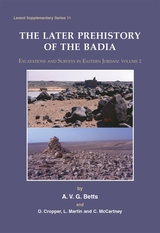
front cover of Later Prehistory of Badia
Later Prehistory of Badia
Excavation and Surverys in Eastern Jordan, Volume 2
A. Betts
Council for British Research in the Levant, 2013

front cover of Letters, Volume 2
Letters, Volume 2
John Barsanuphius and John
Catholic University of America Press, 2006
No description available
[more]

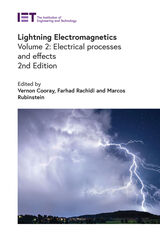
front cover of Lightning Electromagnetics
Lightning Electromagnetics
Electrical processes and effects, Volume 2
Vernon Cooray
The Institution of Engineering and Technology, 2022
Lightning is important for all scientists and engineers involved with electric installations. It is gaining further relevance since climate warming is causing an increase in lightning strikes, and since the rising numbers of renewable power generators, the electricity grid, and charging infrastructure are susceptible to lightning damage. This is the second edition to this comprehensive work.
[more]

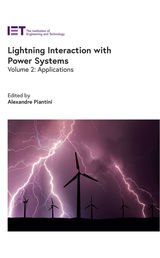
front cover of Lightning Interaction with Power Systems
Lightning Interaction with Power Systems
Applications, Volume 2
Alexandre Piantini
The Institution of Engineering and Technology, 2020
The need to improve the reliability and robustness of power systems and smart grids makes protection of sensitive equipment and power transmission and distribution lines against lightning-related effects a primary concern. Renewable electricity generation capacity has been increasing all over the world, and lightning can cause failures either by hitting the turbines or panels directly or inducing transients on the control systems that lead to equipment failure, malfunction or degradation.
[more]


Send via email Share on Facebook Share on Twitter