
 A SCHOLARLY BOOK REPOSITORY
Ruth Leys’s brilliant, much anticipated history, therefore, is a story of controversy and disagreement. The Ascent of Affect focuses on the post–World War II period, when interest in emotions as an object of study began to revive. Leys analyzes the ongoing debate over how to understand emotions, paying particular attention to the continual conflict between camps that argue for the intentionality or meaning of emotions but have trouble explaining their presence in non-human animals and those that argue for the universality of emotions but struggle when the question turns to meaning. Addressing the work of key figures from across the spectrum, considering the potentially misleading appeal of neuroscience for those working in the humanities, and bringing her story fully up to date by taking in the latest debates, Leys presents here the most thorough analysis available of how we have tried to think about how we feel.

Pro basketball player Rasheed Wallace often exclaimed the pragmatic truth “Ball don’t lie!” during a game. It is a protest against a referee’s bad calls. But the slogan, which originated in pickup games, brings the reality of a racialized urban playground into mainstream American popular culture.
In Ball Don’t Lie!, Yago Colás traces the various forms of power at work in the intersections between basketball and language from the game’s invention to the present day. He critiques existing popular myths concerning the history of basketball, contextualizes them, and presents an alternative history of the sport inspired by innovations. Colás emphasizes the creative prerogative of players and the ways in which their innovations shape—and are shaped by—broader cultural and social phenomena.
Ball Don't Lie! shows that basketball cannot be reduced to a single, fixed or timeless essence but instead is a continually evolving exhibition of physical culture that flexibly adapts to and sparks changes in American society.
"Le Roy Ladurie paints a remarkably contemporary picture of life in the sixteenth century. . . . It's a good story, told with a deft narrative touch."—Michael S. Kimmel, The Nation
"Le Roy Ladurie is a master of the representative detail and uses the Platters' lives as a means to see a whole century 'through a glass, darkly'."—The Independent
"Le Roy Ladurie has not only thoroughly sketched out the Platters' particular brand of gusto, he has also made it seem a defining characteristic of the sixteenth century."—The New Republic
"All [of] the drama and pathos of a Disney film."—Emily Eakin, Lingua Franca
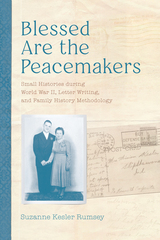
In the summer of 2013, Suzanne Kesler Rumsey discovered hundreds of letters exchanged between her late grandparents, Miriam and Benjamin Kesler. The letters, written between 1941 and 1946, were filled with typical wartime sentiments: love and longing, anguish at being apart, uncertainty about the war and the country’s future, and attempts at humor to keep their spirits up. What is unusual about their story is that Ben Kesler was not writing from a theater of war. Instead, Ben, a member of the Dunkard Brethren Church, was a conscientious objector. He, along with about 12,000 other men, opted to join the Civilian Public Service (CPS) and contribute to “work of national importance” at one of the 218 CPS camps around the country.
In Blessed Are the Peacemakers: Small Histories during World War II, Letter Writing, and Family History Methodology, Rumsey has mined not only her grandparents’ letters but also archival research on CPS camps and historical data from several Mennonite and Brethren archives to recapture the narrative of Ben’s service at two different camps and of Miriam’s struggle to support herself and her husband financially at the young age of seventeen. Ben and Miriam’s life during the war was extraordinarily ordinary, spanning six years of unrecognized and humble work for their country. Ben was not compensated for his work in the camps, and Miriam stayed home and worked as a day laborer, as a live-in maid, as a farmhand, and in the family butcher shop in order to earn enough money to support them both. Small histories like that of her grandparents, Rumsey argues, provide a unique perspective on significant political and historical moments.
Blessed Are the Peacemakers also explores the rhetorical functions of letter writing as well as the methodology of family history writing. Ben and Miriam’s letters provide an apt backdrop to examine the genre, a relatively understudied mode of literacy. Rumsey situates the young couple’s correspondence within ars dictaminis, the art of letter writing, granting new insights into the genre and how personal accounts shape our understanding of historical events.
"By delineating the concepts and personae that were most salient in Chimalpahin's politically-oriented perspective on the past, Schroeder has advanced our understanding of native Mexican political organization and has made a major contribution toward interpreting the work of this Nahua historian." —Anthropos
"In this well-structured volume, Susan Schroeder synthesizes Chimalpahin's detailed information on the Prehispanic kingdoms of Chalco (located in the southern Valley of Mexico) with particular emphasis on their sociopolitical organization. . . . A valuable contribution." —American Antiquity
"This is an important piece of scholarship which makes more accessible to general historians of colonial Mexico an item of Nahuatl literature." —The Americas
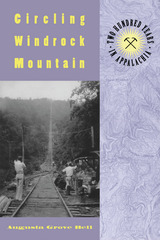
The stories Augusta Bell recounts take us from Oliver Springs—which had its origins in the grist mill Moses Winters built in 1799 and which later became a “boom town” with a fashionable resort hotel—to places like New River Valley, Graves Gap, and Duncan Flats. She depicts the everyday lives of the mountain people as well as the extraordinary events that sometimes shattered those lives—such as the Coal Creek War of 1891–93, in which miners squared off against state militia, and the two mine explosions that came a few years later, sealing up 268 men deep inside the mountain. Bell also tells of happier times, as when the famous Windrock Mine opened above Oliver Springs in 1909.
Tapping a rich lode of folklore and oral tradition, along with other historical sources, Circling Windrock Mountain offers a view of Appalachian life that defies old stereotypes. Far from being static, the communities described here saw an amazing variety of changes to which they adapted with resilience and ingenuity.
The Author: Augusta Grove Bell, a writer who now lives in Charlotte, North Carolina, has been a newspaper reporter and teacher. From 1958 to 1970, she lived in Anderson County, Tennessee, where she worked for the Oak Ridger and wrote feature stories that form much of the basis for this book.
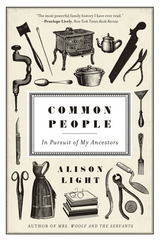
Most of us, however, give up a few generations back. We run into a gap, get embarrassed by a ne’er-do-well, or simply find our ancestors are less glamorous than we’d hoped. That didn’t stop Alison Light: in the last weeks of her father’s life, she embarked on an attempt to trace the history of her family as far back as she could reasonably go. The result is a clear-eyed, fascinating, frequently moving account of the lives of everyday people, of the tough decisions and hard work, the good luck and bad breaks, that chart the course of a life. Light’s forebears—servants, sailors, farm workers—were among the poorest, traveling the country looking for work; they left few lasting marks on the world. But through her painstaking work in archives, and her ability to make the people and struggles of the past come alive, Light reminds us that “every life, even glimpsed through the chinks of the census, has its surprises and secrets.”
What she did for the servants of Bloomsbury in her celebrated Mrs. Woolf and the Servants Light does here for her own ancestors, and, by extension, everyone’s: draws their experiences from the shadows of the past and helps us understand their lives, estranged from us by time yet inextricably interwoven with our own. Family history, in her hands, becomes a new kind of public history.
“Shumway has written a penetrating and provocative account of the making of American civilization as an academic field.”
Gerald GraffUniversity of ChicagoDavid R. Shumway contends that American literature is the product of study - the deliberate invention of a discipline seeking to define the character and legitimate the existence of a specifically American civilization. He traces the various reconstitutions of American literature by examining the discipline’s practices and techniques, discourses and structures, paradigms and unstated assumptions.This genealogy begins around 1890, when American literature as defined by institutions outside the academy, such as magazines and publishing houses, acquired much of the ideology it would display in later phases, including sexism, racism, and class bias. Singular in its treatment of American literary study as a discipline rather than as criticism and in its insistence on the cultural and political work carried on by this discipline, Creating American Civilization will engage literary theorists and historians as well as individuals with an interest in American literature.
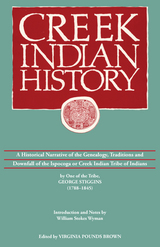
Stiggins writes with firsthand knowledge of the tribes in the central southeast—the Alabamas, Natchez, Abekas, Uchees, and others. He tells of their origins, their towns and chiefs, and their way of life, he traces critical events leading to the Creek War—the battles of Burnt Corn and Fort Mims—and details the roles of the Indian leaders involved. In “Tecumseh and the Age of Prophecy,” he describes how the powerful influence of prophets, such as Josiah Francis and Jim Boy, who incited the Creeks to civil war as the confederacy split into war and peace factions. Stiggin’s account of William Weatherford’s controversial role in the Creek War has special value because Weatherford was Stiggins’s brother-in-law. His descriptions of religious and social aspects of the Creek lifeways make this work prime source material.
William Wyman’s notes and introduction put the Stiggins account into historical perspective and trace its circuitous route to publication. First issued in 1989, Creek Indian History has become an important primary document for the study of Native American history and culture.
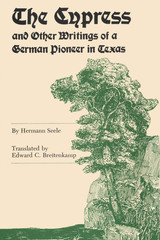
When Hermann Seele anived in New Braunfels in 1845, the raw colony was plagued by poverty, disease, lack of food, and hostile Indians. This personal record of the Germans in Texas shows their evolution from struggling colonists to prosperous citizens.
From his viewpoint of a hardworking yet imaginative pioneer, Seele presents first a history of German immigration and settlement in Texas during the nineteenth century. Next, his autobiographical writings range from a "sentimental recollection" of his first Christmas Eve in Texas to his first day of teaching in New Braunfels, from accounts of the popular singing society to murder and justice along the Comal River. In addition, Seele's romantic novel, The Cypress, is a delightful though improbable tale of a traveling botanist, a chieftain's daughter, and a savage Indian cult.
Hermann Seele—farmer, lawyer, teacher, lay preacher, mayor, state representative, Civil War major, and editor—epitomizes the best of the German immigrants who established their communities as models of respectability and prosperity.
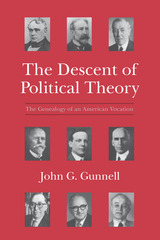
Gunnell reconstructs the evolution of the field by locating it within the broader development of political science and American social science in general. During the behavioral revolution that swept political science in the 1950s, the relationship between political theory and political science changed dramatically, relegating theory to the margins of an increasingly empirical discipline. Gunnell demonstrates that the estrangement of political theory is rooted in a much older quarrel: the authority of knowledge versus political theory is rooted in a much older quarrel: the authority of knowledge versus political authority, academic versus public discourse. By disclosing the origin of this dispute, he opens the way for a clearer understanding of the basis and purpose of political theory.
As critical as it is revelatory, this thoughtful book should be read by any one interested in the history of political theory or science—or in the relationship of social science to political practice in the United States.
Saldívar pursues this goal through an array of oppositional critical and creative practices. He analyzes a range of North American writers of color (Rolando Hinojosa, Gloria Anzaldúa, Arturo Islas, Ntozake Shange, and others) and Latin American authors (José Martí, Roberto Fernández Retamar, Gabriel García Márquez, and others), whose work forms a radical critique of the dominant culture, its politics, and its restrictive modes of expression. By doing so, Saldívar opens the traditional American canon to a dialog with other voices, not just the voices of national minorities, but those of regional cultures different from the prevalent anglocentric model.
The Dialectics of Our America, in its project to expand the “canon” and define a pan-American literary tradition, will make a critical difference in ongoing attempts to reconceptualize American literary history.

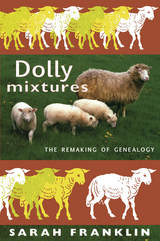
Franklin combines wide-ranging sources—from historical accounts of sheep-breeding, to scientific representations of cloning by nuclear transfer, to popular media reports of Dolly's creation and birth—as she draws on gender and kinship theory as well as postcolonial and science studies. She argues that there is an urgent need for more nuanced responses to the complex intersections between the social and the biological, intersections which are literally reshaping reproduction and genealogy. In Dolly Mixtures, Franklin uses the renowned sheep as an opportunity to begin developing a critical language to identify and evaluate the reproductive possibilities that post-Dolly biology now faces, and to look back at some of the important historical formations that enabled and prefigured Dollys creation.
For more than twenty years, Povinelli has traveled to the social worlds of indigenous men and women living at Belyuen, a small community in the Northern Territory of Australia. More recently she has moved across communities of alternative progressive queer movements in the United States, particularly those who identify as radical faeries. In this book she traces how liberal binary concepts of individual freedom and social constraint influence understandings of intimacy in these two worlds. At the same time, she describes alternative models of social relations within each group in order to highlight modes of intimacy that transcend a reductive choice between freedom and constraint.
Shifting focus away from identities toward the social matrices out of which identities and divisions emerge, Povinelli offers a framework for thinking through such issues as what counts as sexuality and which forms of intimate social relations result in the distribution of rights, recognition, and resources, and which do not. In The Empire of Love Povinelli calls for, and begins to formulate, a politics of “thick life,” a way of representing social life nuanced enough to meet the density and variation of actual social worlds.
By analyzing and cross-referencing the codices, which have been fragmented and dispersed in far-flung archives, the authors attempt to reconstruct Mixtec history. Their synthesis here builds on long examination of the ancient manuscripts. Adding useful interpretation and commentary, Jansen and Pérez Jiménez synthesize the large body of surviving documents into the first unified narrative of Mixtec sacred history.
Archaeologists and other scholars as well as readers with an interest in Mesoamerican cultures will find this lavishly illustrated volume a compelling and fascinating history and a major step forward in knowledge of the Mixtec.
What was the Enlightenment? Though many scholars have attempted to solve this riddle, none has made as much use of contemporary answers as Dan Edelstein does here. In seeking to recover where, when, and how the concept of “the Enlightenment” first emerged, Edelstein departs from genealogies that trace it back to political and philosophical developments in England and the Dutch Republic. According to Edelstein, by the 1720s scholars and authors in France were already employing a constellation of terms—such as l’esprit philosophique—to describe what we would today call the Enlightenment. But Edelstein argues that it was within the French Academies, and in the context of the Quarrel of the Ancients and the Moderns, that the key definition, concepts, and historical narratives of the Enlightenment were crafted.
A necessary corrective to many of our contemporary ideas about the Enlightenment, Edelstein’s book turns conventional thinking about the period on its head. Concise, clear, and contrarian, The Enlightenment will be welcomed by all teachers and students of the period.
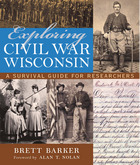
The innovative format of Exploring Civil War Wisconsin makes it easy for Civil War buffs, genealogists, and students to find and effectively use the vast array of historical materials about the Civil War found in archives, military and census records, published firsthand accounts, newspapers, and even on the Internet. This lively, illustrated guide focuses on Wisconsin in the Civil War, but is broadly applicable to Civil War research anywhere. Images of original documents and historic photographs illustrate every chapter, acquainting readers with both the Civil War and its sources. The easy-to-use and informative text is unlike anything else currently on the market.
Throughout the book, boxed features and sidebars provide background information and tips on how to do research. Author Brett Barker explains how to uncover the history of an individual soldier, his regiment, and his role in the Union Army using rosters, military records, pension files, and memoirs. And, he shows how to explore the home front during the war using the census, newspapers, city directories, and government records.
Familial Forms is the first full-length study to examine how literary writers engaged the politics of genealogy that helped define the “century of revolution.” By demonstrating how conflicts over the family-state analogy intersected with the period’s battles over succession, including: the ascent of James I, the execution of Charles I, disputes over the terms of the Interregnum government, the Restoration of Charles II, the Exclusion Crisis, the deposition of James II, the ascent of William and Mary, and Anne’s failure to produce a surviving heir, this study provides a new map of the seventeenth-century politics of family in England. Beginning with a reconsideration of Jacobean patriarchalism, Familial Forms focuses on the work of John Milton, Lucy Hutchinson, John Dryden, and Mary Astell. From their contrasting political and gendered positions, these authors contemplated and contested the relevance of marriage and kinship to government. Their writing illuminates two crucial elements of England’s conflicts. First, the formal qualities of poems and prose tracts reveal that not only was there a competition among different versions of the family-state analogy, but also a competition over its very status as an analogy. Second, through their negotiations of linear and nonlinear forms, Milton, Hutchinson, Dryden, and Astell demonstrate the centrality of temporality to the period’s political battles.
Through close textual analysis of poetry, political tracts, parliamentary records, and nonliterary genealogies, Familial Forms offers a fresh understanding of the seventeenth-century politics of genealogy. It also provides new answers to long-standing critical questions about the poetic form of canonical works, such as Paradise Lost and Absalom and Achitophel, and illuminates the political significance of newly-canonical works by women writers, including Aemilia Lanyer’s Salve Deus Rex Judaeoreum, Hutchinson’s Order and Disorder, and Astell’s A Serious Proposal to the Ladies.
Published by University of Delaware Press. Distributed worldwide by Rutgers University Press.
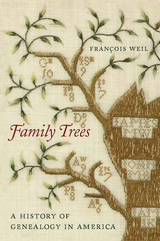
The quest for roots has been an enduring American preoccupation. Over the centuries, generations have sketched coats of arms, embroidered family trees, established local genealogical societies, and carefully filled in the blanks in their bibles, all in pursuit of self-knowledge and status through kinship ties. This long and varied history of Americans’ search for identity illuminates the story of America itself, according to François Weil, as fixations with social standing, racial purity, and national belonging gave way in the twentieth century to an embrace of diverse ethnicity and heritage.
Seeking out one’s ancestors was a genteel pursuit in the colonial era, when an aristocratic pedigree secured a place in the British Atlantic empire. Genealogy developed into a middle-class diversion in the young republic. But over the next century, knowledge of one’s family background came to represent a quasi-scientific defense of elite “Anglo-Saxons” in a nation transformed by immigration and the emancipation of slaves. By the mid-twentieth century, when a new enthusiasm for cultural diversity took hold, the practice of tracing one’s family tree had become thoroughly democratized and commercialized.
Today, Ancestry.com attracts over two million members with census records and ship manifests, while popular television shows depict celebrities exploring archives and submitting to DNA testing to learn the stories of their forebears. Further advances in genetics promise new insights as Americans continue their restless pursuit of past and place in an ever-changing world.
Many blame Michel Foucault for our post-truth and conspiracy-laden society. In this provocative work, Daniele Lorenzini argues that such criticism fundamentally misunderstands the philosopher’s project. Foucault did not question truth itself but what Lorenzini calls “the force of truth,” or how some truth claims are given the power to govern our conduct while others are not. This interest, Lorenzini shows, drove Foucault to articulate a new ethics and politics of truth-telling precisely in order to evade the threat of relativism. The Force of Truth explores this neglected dimension of Foucault’s project by putting his writings on regimes of truth and parrhesia in conversation with early analytic philosophy and by drawing out the “possibilizing” elements of Foucault’s genealogies that remain vital for practicing critique today.
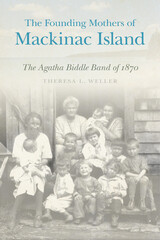
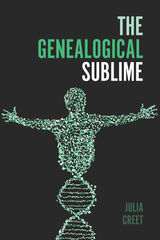
In The Genealogical Sublime, Julia Creet traces the histories of the largest, longest-running, most lucrative, and most rapidly growing genealogical databases to delineate a broader history of the industry. As each unique case study reveals, new database and DNA technologies enable an obsessive completeness—the desire to gather all of the world's genealogical records in the interests of life beyond death. Archival research and firsthand interviews with Church of Jesus Christ of Latter-day Saints officials, key industry players (including Ancestry.com founders and Family Search executives), and professional and amateur family historians round out this timely and essential study.

Genealogy and Literature was first published in 1995. Minnesota Archive Editions uses digital technology to make long-unavailable books once again accessible, and are published unaltered from the original University of Minnesota Press editions.
Traditionalists insist that literature transcends culture. Others counter that it is subversive by nature. By challenging both claims, Genealogy and Literature reveals the importance of literature for understanding dominant and often violent power/knowledge relations within a given society.
The authors explore the ways in which literature functions as a cultural practice, the links between death and literature as a field of discourse, and the possibilities of dismantling modes of bodily regulation. Through wide-ranging investigations of writing from England, France, Nigeria, Peru, Japan, and the United States, they reinvigorate the study of literature as a means of understanding the complexities of everyday experience.
Contributors: Claudette Kemper Columbus, Lennard J. Davis, Simon During, Michel Foucault, Ellen J. Goldner, Tom Hayes, Kate Mehuron, Donald Mengay, Imafedia Okhamafe, Lee Quinby, José David Saldivar, Malini Johar Schueller.
Lee Quinby is professor of English and American studies at Hobart and William Smith Colleges. She is the author of Anti-Apocalypse: Exercises in Genealogical Criticism (Minnesota, 1994).

By shedding light on a long-forgotten epigraphic genre that flourished in North China during the Mongol Empire, or Yuan Dynasty (1271–1368), Genealogy and Status explores the ways the conquered Chinese people understood and represented the alien Mongol ruling principles through their own cultural tradition. This epigraphic genre, which this book collectively calls “genealogical steles,” was quite unique in the history of Chinese epigraphy.
Northern Chinese officials commissioned these steles exclusively to record a family’s extensive genealogy, rather than the biography or achievements of an individual. Tomoyasu Iiyama shows how the rise of these steles demonstrates that Mongol rule fundamentally affected how northern Chinese families defined, organized, and commemorated their kinship. Because most of these inscriptions are in Classical Chinese, they appear to be part of Chinese tradition. In fact, they reflect a massive social change in Chinese society that occurred because of Mongol rule in China.
The evolution of genealogical steles delineates how local elites, while thinking of themselves as the heirs of traditional Chinese culture, fully accommodated to Mongol imperial rule and became instead one of its cornerstones in eastern Eurasia.
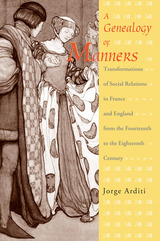
Analyzing courtesy manuals and etiquette books from the thirteenth to the eighteenth century, Arditi shows how the dominant classes of a society were able to create a system of social relations and put it into operation. The result was an infrastructure in which these classes could successfully exert power. He explores how the ecclesiastical authorities of the Middle Ages, the monarchies from the fifteenth through the seventeenth century, and the aristocracies during the early stages of modernity all forged their own codes of manners within the confines of another, dominant order. Arditi goes on to describe how each of these different groups, through the sustained deployment of their own forms of relating with one another, gradually moved into a position of dominance.
Turner shows how Michal Foucault's work contributed to feminists' investigations into the ways that power relates to identity. In the last decades of the twentieth century, feminists were the first to challenge the assumption that a claim to universal identity -- the white male citizen -- should serve as the foundation of political thought and action. Difference matters. Race, ethnicity, class, gender, and sexuality interact, producing a wide array of identities that resist rigid definition and are mutable. By understanding the notion of transhistorical categories -- woman, man, homosexual, and so forth -- feminist and gay male scholars launched queer theoretical work as a new way to think about the politics of gender and sexuality.
A Geneology of Queer Theory probes the fierce debates among scholars and activists, weighing the charges that queer readings of texts and identity politics do not constitute and might inhibit radical social change. Written by a historian, it considers the implications of queer theory for historical inquiry and the distinction between philosophy and history. As such, the book will interest readers of gay/lesbian/bisexual/transgender studies, intellectual history, political theory, and the history of gender/sexuality.
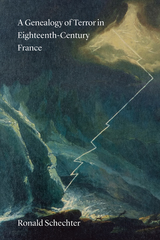
For centuries prior to the French Revolution, the word “terror” had largely positive connotations. Subjects flattered monarchs with the label “terror of his enemies.” Lawyers invoked the “terror of the laws.” Theater critics praised tragedies that imparted terror and pity. By August 1794, however, terror had lost its positive valence. As revolutionaries sought to rid France of its enemies, terror became associated with surveillance committees, tribunals, and the guillotine. By unearthing the tradition that associated terror with justice, magnificence, and health, Schechter helps us understand how the revolutionary call to make terror the order of the day could inspire such fervent loyalty in the first place—even as the gratuitous violence of the revolution eventually transformed it into the dreadful term we would recognize today. Most important, perhaps, Schechter proposes that terror is not an import to Western civilization—as contemporary discourse often suggests—but rather a domestic product with a long and consequential tradition.
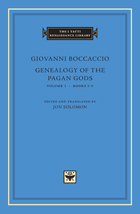
Giovanni Boccaccio’s Genealogy of the Pagan Gods is an ambitious work of humanistic scholarship whose goal is to plunder ancient and medieval literary sources so as to create a massive synthesis of Greek and Roman mythology. The work also contains a famous defense of the value of studying ancient pagan poetry in a Christian world.
The complete work in fifteen books contains a meticulously organized genealogical tree identifying approximately 950 Greco-Roman mythological figures. The scope is enormous: 723 chapters include over a thousand citations from two hundred Greek, Roman, medieval, and Trecento authors. Throughout the Genealogy, Boccaccio deploys an array of allegorical, historical, and philological critiques of the ancient myths and their iconography.
Much more than a mere compilation of pagan myths, the Genealogy incorporates hundreds of excerpts from and comments on ancient poetry, illustrative of the new spirit of philological and cultural inquiry emerging in the early Renaissance. It is at once the most ambitious work of literary scholarship of the early Renaissance and a demonstration to contemporaries of the moral and cultural value of studying ancient poetry. This is the first volume of a projected three-volume set of Boccaccio’s complete Genealogy.
Genealogy of the Pagan Gods by Giovanni Boccaccio (1313–1375) is an ambitious work of humanistic scholarship whose goal is to plunder ancient and medieval literary sources so as to create a massive synthesis of Greek and Roman mythology. The work also contains a famous defense of the value of studying ancient pagan poetry in a Christian world.
The complete work in fifteen books contains a meticulously organized genealogical tree identifying approximately 950 Greco-Roman mythological figures. The scope is enormous: 723 chapters include over a thousand citations from 200 Greek, Roman, medieval, and Trecento authors. Throughout the Genealogy, Boccaccio deploys an array of allegorical, historical, and philological critiques of the ancient myths and their iconography.
Much more than a mere compilation of pagan myths, the Genealogy incorporates hundreds of excerpts from and comments on ancient poetry, illustrative of the new spirit of philological and cultural inquiry emerging in the early Renaissance. It is at once the most ambitious work of literary scholarship of the early Renaissance and a demonstration to contemporaries of the moral and cultural value of studying ancient poetry.
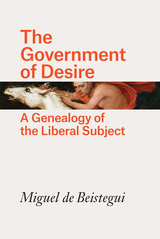
By critically exploring Foucault’s claim that Western civilization is a civilization of desire, de Beistegui crafts a provocative and original genealogy of this shift in thinking. He shows how the relationship between identity, desire, and government has been harnessed and transformed in the modern world, shaping our relations with others and ourselves, and establishing desire as an essential driving force for the constitution of a new and better social order. But is it? The Government of Desire argues that this is precisely what a contemporary politics of resistance must seek to overcome. By questioning the supposed universality of a politics based on recognition and the economic satisfaction of desire, de Beistegui raises the crucial question of how we can manage to be less governed today, and explores contemporary forms of counter-conduct.
Drawing on a host of thinkers from philosophy, political theory, and psychoanalysis, and concluding with a call for a sovereign and anarchic form of desire, The Government of Desire is a groundbreaking account of our freedom and unfreedom, of what makes us both governed and ungovernable.

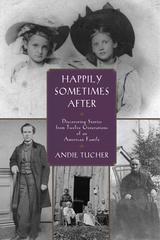
In this beautifully written work, Andie Tucher considers family stories as another way to look at history, neither from the top down nor the bottom up but from the inside out. She explores not just what happened—everywhere from Jamestown to Boonesborough, from the bloody field at Chickamauga to the metropolis of the Gilded Age—but also what the storytellers thought or wished or hoped or feared happened. She offers insights into what they valued, what they lost, how they judged their own lives and found meaning in them. The narrative touches on sorrow, recompense, love, pain, and the persistent tension between hope and disappointment in a nation that by making the pursuit of happiness thinkable also made unhappiness regrettable.
Based on extensive research in archives, local history societies, and family-history sources as well as conversations and correspondence, Happily Sometimes After offers an intimate and unusual perspective on how ordinary people used stories to imagine the world they wished for, and what those stories reveal about their relationships with the world they actually had.
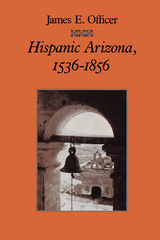
The heart of the work centers on the early nineteenth century. It explores subjects such as the constant threat posed by hostile Apaches, government intrigue and revolution in Sonora and the provincias internas, and patterns of land ownership in villages such as Tucson and Tubac. Also covered are the origins of land grants in present-day southern Arizona and the invasion of southern Arizona by American “49ers” as seen from the Mexican point of view. Officer traces kinship ties of several elite families who ruled the frontier province over many generations—men and women whose descendants remain influential in Sonora and Arizona today.
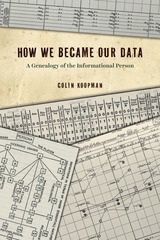
In How We Became Our Data, Colin Koopman excavates early moments of our rapidly accelerating data-tracking technologies and their consequences for how we think of and express our selfhood today. Koopman explores the emergence of mass-scale record keeping systems like birth certificates and social security numbers, as well as new data techniques for categorizing personality traits, measuring intelligence, and even racializing subjects. This all culminates in what Koopman calls the “informational person” and the “informational power” we are now subject to. The recent explosion of digital technologies that are turning us into a series of algorithmic data points is shown to have a deeper and more turbulent past than we commonly think. Blending philosophy, history, political theory, and media theory in conversation with thinkers like Michel Foucault, Jürgen Habermas, and Friedrich Kittler, Koopman presents an illuminating perspective on how we have come to think of our personhood—and how we can resist its erosion.
Adam Sitze meticulously traces the origins of South Africa’s Truth and Reconciliation Commission back to two well-established instruments of colonial and imperial governance: the jurisprudence of indemnity and the commission of inquiry. This genealogy provides a fresh, though counterintuitive, understanding of the TRC’s legal, political, and cultural importance. The TRC’s genius, Sitze contends, is not the substitution of “forgiving” restorative justice for “strict” legal justice but rather the innovative adaptation of colonial law, sovereignty, and government. However, this approach also contains a potential liability: if the TRC’s origins are forgotten, the very enterprise intended to overturn the jurisprudence of colonial rule may perpetuate it. In sum, Sitze proposes a provocative new means by which South Africa’s Truth and Reconciliation Commission should be understood and evaluated.

On a summer day in 1980 in Niederfeulen, Luxembourg, Suzanne Bunkers pored over parish records of her maternal ancestors, immigrants to the rural American Midwest in the mid 1800s. Suddenly, chance led her to the name Simmerl and to the missing piece in the genealogical puzzle that had brought her so far: Susanna Simmerl, Bunkers' paternal great-great-grandmother, who had given birth to an illegitimate daughter in 1856 before coming to America. Finding Susanna was the catalyst for Bunkers' intensely personal book, which blends history, memory, and imagination into a drama of two women's lives within their multigenerational family.
Biondo Flavio (1392–1463), humanist and historian, was a pioneering figure in the Renaissance discovery of antiquity; famously, he was the author who popularized the term “Middle Age” to describe the period between the fall of the Roman Empire and the revival of antiquity in his own time. While serving a number of Renaissance popes, he inaugurated an extraordinary program of research into the history, cultural life, and physical remains of the ancient world.
Italy Illuminated (1453), of which this is the second and final volume, is a topographical work describing Italy region by region. Its aim is to explore the Roman roots of modern Italy. As such, it is the quintessential work of Renaissance antiquarianism.
The idea that journalism should be independent is foundational to its contemporary understandings and its role in democracy. But from what, exactly, should journalism be independent? This book traces the genealogy of the idea of journalistic autonomy, from the press freedom debates of the 17th century up to the digital, networked world of the 21st. Using an eclectic and thought-provoking theoretical framework that draws upon Friedrich Nietzsche, feminist philosophy, and theoretical biology, the authors analyze the deeper meanings and uses of the terms independence and autonomy in journalism.
This work tackles, in turn, questions of journalism’s independence from the state, politics, the market, sources, the workplace, the audience, technology, and algorithms. Using broad historical strokes as well as detailed historical case studies, the authors argue that autonomy can only be meaningful if it has a purpose. Unfortunately, for large parts of journalism’s history this purpose has been the maintenance of a societal status quo and the exclusion of large groups of the population from the democratic polity. “Independence,” far from being a shining ideal to which all journalists must aspire, has instead often been used to mask the very dependencies that lie at the heart of journalism. The authors posit, however, that by learning the lessons of history and embracing a purpose fit for the needs of the 21st century world, journalism might reclaim its autonomy and redeem its exclusionary uses of independence.
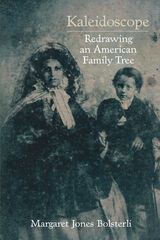
Kaleidoscope is the story of this discovery, and it is the story, too, of the rise and fall of the Chavis fortunes in Mississippi, from the family’s first appearance on a frontier farm in 1829 to ownership of over a thousand acres and the slaves to work them by 1860. Bolsterli learns that in the 1850s, when all free colored people were ordered to leave Mississippi or be enslaved, Jordan Chavis’s white neighbors successfully petitioned the legislature to allow him to remain, unmolested, even as three of his sons and a daughter moved to Arkansas and Illinois. She learns about the agility with which the old man balanced on a tightrope over chaos to survive the war and then take advantage of the opportunities of newly awarded citizenship during Reconstruction. The story ends with the family’s loss of everything in the 1870s, after one of the exiled sons returns to Mississippi to serve in the Reconstruction legislature and a grandson attempts unsuccessfully to retain possession of the land. In Kaleidoscope, long-silenced truths are revealed, inviting questions about how attitudes toward race might have been different in the family and in America if the truth about this situation and thousands of others like it could have been told before.
Given these differences, it is remarkable that both fields found resources for their development in the same tradition of late nineteenth-century German medicine: neuropsychiatry. In Localization and Its Discontents, Katja Guenther investigates the significance of this common history, drawing on extensive archival research in seven countries, institutional analysis, and close examination of the practical conditions of scientific and clinical work. Her remarkable accomplishment not only reframes the history of psychoanalysis and the neuro disciplines, but also offers us new ways of thinking about their future.
Though the Aztec Empire fell to Spain in 1521, three principal heirs of the last emperor, Moctezuma II, survived the conquest and were later acknowledged by the Spanish victors as reyes naturales (natural kings or monarchs) who possessed certain inalienable rights as Indian royalty. For their part, the descendants of Moctezuma II used Spanish law and customs to maintain and enhance their status throughout the colonial period, achieving titles of knighthood and nobility in Mexico and Spain. So respected were they that a Moctezuma descendant by marriage became Viceroy of New Spain (colonial Mexico's highest governmental office) in 1696.
This authoritative history follows the fortunes of the principal heirs of Moctezuma II across nearly two centuries. Drawing on extensive research in both Mexican and Spanish archives, Donald E. Chipman shows how daughters Isabel and Mariana and son Pedro and their offspring used lawsuits, strategic marriages, and political maneuvers and alliances to gain pensions, rights of entailment, admission to military orders, and titles of nobility from the Spanish government. Chipman also discusses how the Moctezuma family history illuminates several larger issues in colonial Latin American history, including women's status and opportunities and trans-Atlantic relations between Spain and its New World colonies.
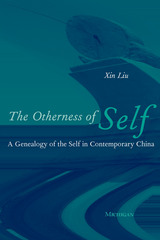

Orr, who has experienced panic attacks herself, kept a diary of her participation as a research subject in clinical trials for the Upjohn Company’s anti-anxiety drug Xanax. This “panic diary” grounds her study and suggests the complexity of her desire to track the diffusion and regulation of panic in U.S. society. Orr’s historical research, theoretical reflections, and biographical narrative combine in this remarkable and compelling genealogy, which documents the manipulation of panic by the media, the social sciences and psychiatry, the U.S. military and government, and transnational drug companies.
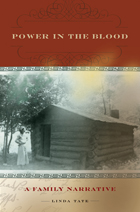
Power in the Blood: A Family Narrative traces Linda Tate’s journey to rediscover the Cherokee-Appalachian branch of her family and provides an unflinching examination of the poverty, discrimination, and family violence that marked their lives. In her search for the truth of her own past, Tate scoured archives, libraries, and courthouses throughout Kentucky, Tennessee, Alabama, Illinois, and Missouri, visited numerous cemeteries, and combed through census records, marriage records, court cases, local histories, old maps, and photographs. As she began to locate distant relatives — fifth, sixth, seventh cousins, all descended from her great-greatgrandmother Louisiana — they gathered in kitchens and living rooms, held family reunions, and swapped stories. A past that had long been buried slowly came to light as family members shared the pieces of the family’s tale that had been passed along to them.
Power in the Blood is a dramatic family history that reads like a novel, as Tate’s compelling narrative reveals one mystery after another. Innovative and groundbreaking in its approach to research and storytelling, Power in the Blood shows that exploring a family story can enhance understanding of history, life, and culture and that honest examination of the past can lead to healing and liberation in the present.
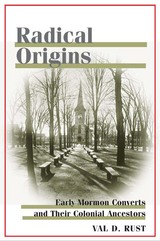
Utilizing a unique set of meticulously compiled genealogical data, Rust uncovers the ancestors of early church members throughout what we understand as the radical segment of the Protestant Reformation. Coming from backgrounds in the Antinomians, Seekers, Anabaptists, Quakers, and the Family of Love, many colonial ancestors of the church(s early members had been ostracized from their communities. Expelled from the Massachusetts Bay Colony, some were whipped, mutilated, or even hanged for their beliefs.
Rust shows how family traditions can be passed down through the generations, and can ultimately shape the outlook of future generations. This, he argues, extends the historical role of Mormons by giving their early story significant implications for understanding the larger context of American colonial history. Featuring a provocative thesis and stunning original research, Radical Origins is a remarkable contribution to our understanding of religion in the development of American culture and the field of Mormon history.
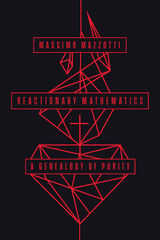
The nineteenth century opened with a major shift in European mathematics, and in the Kingdom of Naples, this occurred earlier than elsewhere. Between 1790 and 1830 its leading scientific institutions rejected as untrustworthy the “very modern mathematics” of French analysis and in its place consolidated, legitimated, and put to work a different mathematical culture. The Neapolitan mathematical resistance was a complete reorientation of mathematical practice. Over the unrestricted manipulation and application of algebraic algorithms, Neapolitan mathematicians called for a return to Greek-style geometry and the preeminence of pure mathematics.
For all their apparent backwardness, Massimo Mazzotti explains, they were arguing for what would become crucial features of modern mathematics: its voluntary restriction through a new kind of rigor and discipline, and the complete disconnection of mathematical truth from the empirical world—in other words, its purity. The Neapolitans, Mazzotti argues, were reacting to the widespread use of mathematical analysis in social and political arguments: theirs was a reactionary mathematics that aimed to technically refute the revolutionary mathematics of the Jacobins. During the Restoration, the expert groups in the service of the modern administrative state reaffirmed the role of pure mathematics as the foundation of a newly rigorous mathematics, which was now conceived as a neutral tool for modernization. What Mazzotti’s penetrating history shows us in vivid detail is that producing mathematical knowledge was equally about producing certain forms of social, political, and economic order.
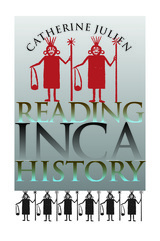
The two historical genres that contributed most to sixteenth- and seventeenth-century Spanish narratives about the Incas were an official account of Inca dynastic genealogy and a series of life histories of Inca rulers. Rather than take for granted that there was an Inca historical consciousness, Julien begins by establishing an Inca purpose for keeping this dynastic genealogy. She then compares Spanish narratives of the Inca past to identify the structure of underlying Inca genres and establish the dependency on oral sources. Once the genealogical genre can be identified, the life histories can also be detected.
By carefully studying the composition of Spanish narratives and their underlying sources, Julien provides an informed and convincing reading of these complex texts. By disentangling the sources of their meaning, she reaches across time, language, and cultural barriers to achieve a rewarding understanding of the dynamics of Inca and colonial political history.
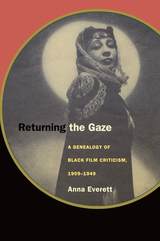
Culling black newspapers, magazines, scholarly and political journals, and monographs, Everett has produced an unparalleled investigation of black critical writing on the early cinema during the era of racial segregation in America. Correcting the notion that black critical interest in the cinema began and ended with the well-documented press campaign against D. W. Griffith’s Birth of a Nation, she discovers that as early as 1909 black newspapers produced celebratory discourses about the cinema as a much-needed corrective to the predominance of theatrical blackface minstrelsy. She shows how, even before the Birth of a Nation controversy, the black press succeeded in drawing attention to both the callous commercial exploitation of lynching footage and the varied work of black film entrepreneurs. The book also reveals a feast of film commentaries that were produced during the “roaring twenties” and the jazz age by such writers as W.E.B. DuBois, Langston Hughes, and Zora Neale Hurston, as well as additional pieces that were written throughout the Depression and the pre– and post–war periods. Situating this wide-ranging and ideologically complex material in its myriad social, political, economic, and cultural contexts, Everett aims to resuscitate a historical tradition for contemporary black film literature and criticism.
Returning the Gaze will appeal to scholars and students of film, black and ethnic studies, American studies, cultural studies, literature, and journalism.


A metaphor for the Swedish migration to America in the mid-nineteenth century, the Sven Svensson family, traced here by historian H. Arnold Barton, a descendant, provides a model for genealogical research with which all persons interested in ancestors can identify and from which anyone can learn.
The field of migration history has taken on new importance as a result of accelerating interest in ethnicity and genealogical research. Though a family history, and in a sense an inner voyage of self-discovery, the search for ancestors told here reveals the broader contours of Swedish and American history in the nineteenth century.
The Search for Ancestors is a microanalysis of those social, economic, and cultural developments that led to the gradual breakup of an ancient way of life in the Swedish countryside and the migration of growing numbers of Swedish peasants across the Atlantic to America.
Barton’s personal odyssey took him to Gowrie, Iowa, the heart of Swedish America, and to the province of Småland in southern Sweden. Research in the Swedish Statistical Central Bureau in Stockholm, contacts with emigration historians in Stockholm, and search in Swedish provincial and national archives, finally gave him the impressive mass of information and statistical data with which to chart his family’s history—over four centuries, back to the 1530s.
A kind of “history with the works showing” or do-it-yourself genealogical kit, the book will be fascinating as well as informative for general readers as well as students of history.
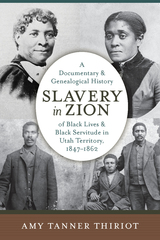
Slavery in Zion has two major parts. The first section provides an introductory history, chapters on southern and western experiences, and information on life after emancipation. The second section is a biographical encyclopedia of names, relationships, and events. Although Slavery in Zion contains material applicable to legal history and the history of race and Mormonism, its most important contribution is as an archive of the experiences of Utah’s enslaved Black people, at last making their stories an integral part of the record of Utah and the American West—no longer forgotten or written out of history.
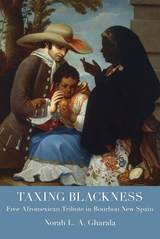
During the eighteenth century, hundreds of thousands of free descendants of Africans in Mexico faced a highly specific obligation to the Spanish crown, a tax based on their genealogy and status. This royal tribute symbolized imperial loyalties and social hierarchies. As the number of free people of color soared, this tax became a reliable source of revenue for the crown as well as a signal that colonial officials and ordinary people referenced to define and debate the nature of blackness.
Taxing Blackness: Free Afromexican Tribute in Bourbon New Spain examines the experiences of Afromexicans and this tribute to explore the meanings of race, political loyalty, and legal privileges within the Spanish colonial regime. Norah L. A. Gharala focuses on both the mechanisms officials used to define the status of free people of African descent and the responses of free Afromexicans to these categories and strategies. This study spans the eighteenth century and focuses on a single institution to offer readers a closer look at the place of Afromexican individuals in Bourbon New Spain, which was the most profitable and populous colony of the Spanish Atlantic.
As taxable subjects, many Afromexicans were deeply connected to the colonial regime and ongoing debates about how taxpayers should be defined, whether in terms of reputation or physical appearance. Gharala shows the profound ambivalence, and often hostility, that free people of African descent faced as they navigated a regime that simultaneously labeled them sources of tax revenue and dangerous vagabonds. Some free Afromexicans paid tribute to affirm their belonging and community ties. Others contested what they saw as a shameful imposition that could harm their families for generations. The microhistory includes numerous anecdotes from specific cases and people, bringing their history alive, resulting in a wealth of rural and urban, gender, and family insight.


Beginning with the Tel Quel group in France in the sixties and seventies, Mowitt's study details how a certain interdisciplinary crisis prompted academics to rethink the conditions of cultural interpretation. Concentrating on three disciplinary projects—literary analysis, film studies, and musicology—Mowitt shows how textuality's emergence called into question not merely the relations among these disciplines, but also the cultural logic of disciplinary reason as such.
At once an effort to define "the text" and to explore and extend the theory of textuality, this book illustrates why the notion of interdisciplinary research has recently acquired such urgency. At the same time, by emphasizing the genealogical dimension of the textual object, Mowitt raises the issues of its "antidisciplinary" character, and by extension its immediate pertinence for the current debates over multiculturalism and Eurocentrism.
The warp and weft of political and social relationships among the medieval elite were formed by marriages made between royal families. Ties of Kinship establishes a new standard for tracking the dynastic marriages of the ruling family of Rus´—the descendants of Volodimer (Volodimeroviči). Utilizing a modern scholarly approach and a broad range of primary sources from inside and outside Rus´, Christian Raffensperger has created a fully realized picture of the Volodimeroviči from the tenth through the twelfth centuries and the first comprehensive, scholarly treatment of the subject in English.
Alongside more than twenty-two genealogical charts with accompanying bibliographic information, this work presents an analysis of the Volodimeroviči dynastic marriages with modern interpretations and historical contextualization that highlights the importance of Rus´ in a medieval European framework. This study will be used by Slavists, Byzantinists, and West European medievalists as the new baseline for research on the Volodimeroviči and their complex web of relationships with the world beyond.
In a book that is bound to ignite controversy, Ruth Leys investigates the history of the concept of trauma. She explores the emergence of multiple personality disorder, Freud's approaches to trauma, medical responses to shellshock and combat fatigue, Sándor Ferenczi's revisions of psychoanalysis, and the mutually reinforcing, often problematic work of certain contemporary neurobiological and postmodernist theorists. Leys argues that the concept of trauma has always been fundamentally unstable, oscillating uncontrollably between two competing models, each of which tends at its limit to collapse into the other.
A powerfully argued work of intellectual history, Trauma will rewrite the terms of future discussion of its subject.
Like the Bouthilliers, the Colberts, the Fouquets, and the Letelliers, the Arnauld family rose to prominence at the end of the sixteenth century by attaching themselves to the king. Their power and influence depended upon absolute loyalty and obedience to the sovereign whose own power they sought to enhance. Dictates of conscience, however, brought all that to an end and put them in conflict with both king and pope. As a result of the religious conversion of Angélique Arnauld early in the seventeenth century, the family eventually adopted a set of religious principles that appeared Calvinist to some ecclesiastical authorities. These "Jansenist" principles were condemned by the papacy and Louis XIV.
The travails of conscience experienced by the Arnauld family, and the resulting religious schism that separated different branches, divided husbands from wives and parents from children. However, neither the historic achievements of individual family members nor the differences of opinion between them could obscure the sense of family solidarity.
The dramatic appeal of this book is underscored by a tumultuous period in French history which coincides with and punctuates the Arnauld family's struggle with the world. We see how this extraordinary family reacted to momentous political and religious developments, as well as the ways in which individual members, by means of their own convictions, helped shape the history of their time.
The Tale of Genji (ca. 1008), by noblewoman Murasaki Shikibu, is known for its sophisticated renderings of fictional characters’ minds and its critical perspectives on the lives of the aristocracy of eleventh-century Japan. Unreal Houses radically rethinks the Genji by focusing on the figure of the house. Edith Sarra examines the narrative’s fictionalized images of aristocratic mansions and its representation of the people who inhabit them, exploring how key characters in the Genji think about houses in both the architectural and genealogical sense of the word.
Through close readings of the Genji and other Heian narratives, Unreal Houses elucidates the literary fabrication of social, architectural, and affective spaces and shows how the figure of the house contributes to the structuring of narrative sequences and the expression of relational nuances among fictional characters. Combining literary analysis with the history of gender, marriage, and the built environment, Sarra opens new perspectives on the architectonics of the Genji and the feminine milieu that midwifed what some have called the world’s first novel.
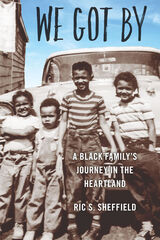
Spanning four generations and assessing the legacies of traumatic events (arrests, murders, suicide) that are inextricable from the racial dynamics of the small community his family called home, this gripping memoir is a heartfelt, clear-eyed, and rare chronicle of Black life in the rural Midwest. Experiencing the burden of racism among people who refused to accept that such a thing existed only made the isolation feel that much worse to Sheffield and his relatives. And yet, they overcame the obstacles and managed to persist: they got by.
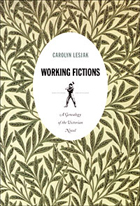
Lesjak demonstrates how the ideological work of the literature of the Victorian era, the “golden age of the novel,” revolved around separating the domains of labor and pleasure and emphasizing the latter as the proper realm of literary representation. She reveals how the utopian works of Morris and Wilde grapple with this divide and attempt to imagine new relationships between work and pleasure, relationships that might enable a future in which work is not the antithesis of pleasure. In Working Fictions, Lesjak argues for the contemporary relevance of the “labor novel,” suggesting that within its pages lie resources with which to confront the gulf between work and pleasure that continues to characterize our world today.
READERS
Browse our collection.
PUBLISHERS
See BiblioVault's publisher services.
STUDENT SERVICES
Files for college accessibility offices.
RECENTLY PUBLISHED





UChicago Accessibility Resources
home | accessibility | search | about | contact us
BiblioVault ® 2001 - 2024
The University of Chicago Press