
 A SCHOLARLY BOOK REPOSITORY
136 start with M start with M
Lies and inaccurate information are as old as humanity, but never before have they been so easy to spread. Each moment of every day, the Internet and broadcast media purvey misinformation, either deliberately or accidentally, to a mass audience on subjects ranging from politics to consumer goods to science and medicine, among many others. Because misinformation now has the potential to affect behavior on a massive scale, it is urgently important to understand how it works and what can be done to mitigate its harmful effects.
Misinformation and Mass Audiences brings together evidence and ideas from communication research, public health, psychology, political science, environmental studies, and information science to investigate what constitutes misinformation, how it spreads, and how best to counter it. The expert contributors cover such topics as whether and to what extent audiences consciously notice misinformation, the possibilities for audience deception, the ethics of satire in journalism and public affairs programming, the diffusion of rumors, the role of Internet search behavior, and the evolving efforts to counteract misinformation, such as fact-checking programs. The first comprehensive social science volume exploring the prevalence and consequences of, and remedies for, misinformation as a mass communication phenomenon, Misinformation and Mass Audiences will be a crucial resource for students and faculty researching misinformation, policymakers grappling with questions of regulation and prevention, and anyone concerned about this troubling, yet perhaps unavoidable, dimension of current media systems.
Misinformation Policy in Sub-Saharan Africa is a single volume containing two research reports by eight authors examining policy towards misinformation in Sub-Saharan Africa.
The volume first examines the teaching of ‘media literacy’ in state-run schools in seven Sub-Saharan African countries as of mid-2020, as relates to misinformation. It explains the limited elements of media and information literacy (MIL) that are included in the curricula in the seven countries studied and the elements of media literacy related to misinformation taught in schools in one province of South Africa since January 2020. The authors propose six fields of knowledge and skills specific to misinformation that are required in order to reduce students’ susceptibility to false and misleading claims. Identifying obstacles to the introduction and effective teaching of misinformation literacy, the authors make five recommendations for the promotion of misinformation literacy in schools, to reduce the harm misinformation causes.
The second report in the volume examines changes made to laws and regulations related to ‘false information’ in eleven countries across Sub-Saharan Africa 2016-2020 from Ethiopia to South Africa. By examining the terms of such laws against what is known of misinformation types, drivers and effects, it assesses the likely effects of punitive policies and those of more positive approaches that provide accountability in political debate by promoting access to accurate information and corrective speech. In contrast to the effects described for most recent regulations relating to misinformation, the report identifies ways in which legal and regulatory frameworks can be used to promote a healthier information environment.
Mis(s) Communication: An Analysis of Stigma and the Miss America Organization explores the 100-year history of the Miss America Organization (MAO) as a site of stigma management. Through five years of ethnographic, archival, and interview-based research, Rebecca J. Meisenbach shows how pageant participation is both valorized and stigmatized—making MAO a key lens for studying stigma as a dynamic, power-laden communication process. The book examines stigma across individual, organizational, and societal levels, focusing on moments like Rule Seven, which once barred nonwhite participants, and the 1968 protest by the New York Radical Women alongside the first Miss Black America pageant. Meisenbach also investigates how contestants navigate stigma tied to intelligence, body image, and the sexualization of women. She analyzes MAO’s 2018 elimination of the swimsuit competition as a stigma management move and its recent shift to a for-profit model under Miss America Opportunity. The book ultimately argues for understanding stigma as communicative and deeply intersectional.
To solve the mystery, Kevin Barnhurst spent thirty years studying news going back to the realism of the 1800s. The usual suspects--technology, business competition, and the pursuit of scoops--are only partly to blame for the fate of news. The main culprit is modernism from the "Mister Pulitzer" era, which transformed news into an ideology called "journalism." News is no longer what audiences or experts imagine. Stories have grown much longer over the past century and now include fewer events, locations, and human beings. Background and context rule instead.
News producers adopted modernism to explain the world without recognizing how modernist ideas influence the knowledge they produce. When webs of networked connectivity sparked a resurgence in realist stories, legacy news stuck to big-picture analysis that can alienate audience members accustomed to digital briefs.
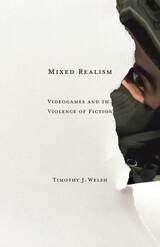
Mixed Realism is about how we interact with media. Timothy J. Welsh shows how videogames, like novels, both promise and trouble experiences of “immersion.” His innovative methodology offers a new understanding of the expanding role of virtuality in contemporary life.
Today’s wired culture is a mixed reality, conducted as exchanges between virtual and material contexts. We make balance transfers at an ATM, update Facebook timelines, and squeeze in sessions of Angry Birds on the subway. However, the “virtual” is still frequently figured as imaginary, as opposed to “real.” The vision of 1990s writers of a future that would pit virtual reality against actual reality has never materialized, yet it continues to haunt cultural criticism. Our ongoing anxiety about immersive media now surrounds videogames, especially “shooter games,” and manifests as a fear that gamers might not know the difference between the virtual world and the real world.
As Welsh notes, this is the paradox of real virtuality. We understand that the media-generated virtualities that fill our lives are not what they represent. But what are they if they are not real? Do they have presence, significance, or influence exceeding their material presence and the user processes that invoke them? What relationships do they establish through and beyond our interactions with them?
Mixed Realism brims with fresh analyses of literary works such as Truman Capote’s In Cold Blood and Mark Z. Danielewski’s House of Leaves, along with sustained readings of controversial videogames such as Super Columbine Massacre and Call of Duty: Modern Warfare 2. Continually connecting the dots between surprising groupings of texts and thinkers, from David Foster Wallace to the cult-classic videogame Eternal Darkness and from Cormac McCarthy to Grand Theft Auto, it offers a fresh perspective on both digital games and contemporary literature.
Tracking the revitalization of the British horror film industry over the past two decades, media expert Steven Gerrard also investigates why audiences have flocked to these movies. To answer that question, he focuses on three major trends: “hoodie horror” movies responding to fears about Britain’s urban youth culture; “great outdoors” films where Britain’s forests, caves, and coasts comprise a terrifying psychogeography; and psychological horror movies in which the monster already lurks within us.
Offering in-depth analysis of numerous films, including The Descent, Outpost, and The Woman in Black, this book takes readers on a lively tour of the genre’s highlights, while provocatively exploring how these films reflect viewers’ gravest fears about the state of the nation. Whether you are a horror buff, an Anglophile, or an Anglophobe, The Modern British Horror Film is sure to be a thrilling read.
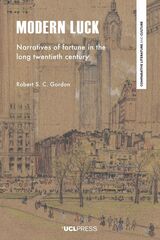
Beliefs, superstitions, and tales about luck are present across all human cultures. Humans are perennially fascinated by luck and by its association with happiness and danger, uncertainty and aspiration. Yet it remains an elusive, ungraspable idea, one that slips and slides over time: all cultures reimagine what luck is and how to tame it at different stages in their history, and our own era is no exception to the rule.
Modern Luck sets out to explore the enigma of luck’s presence in modernity, examining the hybrid forms it has taken on in the modern imagination, and in particular in the field of modern stories. Analyzing a rich and unusually eclectic range of narratives taken from literature, film, music, television, and theatre, from Dostoevsky to Philip K. Dick, Pinocchio to Cimino, Curtiz to Kieslowski, it lays out first the usages and meanings of the language of luck, and then the key figures, patterns, and motifs that govern the stories told about it, from the late nineteenth century to the present day.

How computer animation technologies became vital visualization tools in the life sciences
Who would have thought that computer animation technologies developed in the second half of the twentieth century would become essential visualization tools in today’s biosciences? This book is the first to examine this phenomenon. Molecular Capture reveals how popular media consumption and biological knowledge production have converged in molecular animations—computer simulations of molecular and cellular processes that immerse viewers in the temporal unfolding of molecular worlds—to produce new regimes of seeing and knowing.
Situating the development of this technology within an evolving field of historical, epistemological, and political negotiations, Adam Nocek argues that molecular animations not only represent a key transformation in the visual knowledge practices of life scientists but also bring into sharp focus fundamental mutations in power within neoliberal capitalism. In particular, he reveals how the convergence of the visual economies of science and entertainment in molecular animations extends neoliberal modes of governance to the perceptual practices of scientific subjects. Drawing on Alfred North Whitehead’s speculative metaphysics and Michel Foucault’s genealogy of governmentality, Nocek builds a media philosophy well equipped to examine the unique coordination of media cultures in this undertheorized form of scientific media. More specifically, he demonstrates how governmentality operates across visual practices in the biosciences and the popular mediasphere to shape a molecular animation apparatus that unites scientific knowledge and entertainment culture.
Ultimately, Molecular Capture proposes that molecular animation is an achievement of governmental design. It weaves together speculative media philosophy, science and technology studies, and design theory to investigate how scientific knowledge practices are designed through media apparatuses.

Monsters vs. Patriarchy examines female monstrosity as it appears in horror films from around the world and considers specific political, scientific, and historical contexts to better understand how we construct and reconstruct monstrosity, using an intersectional approach to examine the imposition of gender and racial hierarchies that support national power structures. The authors contend that monstrous female cinematic subjects, including ghosts, witches, cannibals, and posthuman beings, are becoming empowered, using the tools of their monstrification to smash the colonial, white supremacist, and misogynist structures that created them.

The authors use examples from popular culture, including Disney and Marvel Cinematic Universe films, to consider ideas about how the environment responds to people who cause it harm. Brisman and South identify and discuss three dominant and interrelated depictions of the relationship between humans and the environment: first, nature as monstrous or fear inducing; second, nature and the Earth (or parts of it) as abject; and third, the entanglement of nature and the apocalypse, wherein nature is contributing to the end of the world, with an end point sometimes conceptualized as one without humans.
Monstrous Nature and Representations of Environmental Harms argues that such representations have material consequences. The authors make the case for challenging them so that we neither perpetuate them nor retreat into cynicism and defeatism about the future of our planet.

Building on rigorous research by the world-renowned Glasgow University Media Group, More Bad News From Israel examines media coverage of the current conflict in the Middle East and the impact it has on public opinion.
The book brings together senior journalists and ordinary viewers to examine how audiences understand the news and how their views are shaped by media reporting. In the largest study ever undertaken in this area, the authors focus on television news. They illustrate major differences in the way Israelis and Palestinians are represented, including how casualties are shown and the presentation of the motives and rationales of both sides. They combine this with extensive audience research involving hundreds of participants from the USA, Britain and Germany. It shows extraordinary differences in levels of knowledge and understanding, especially amongst young people from these countries.
Covering recent developments, including the Israeli attacks on Lebanon and Gaza, this authoritative and up-to-date study will be an invaluable tool for journalists, activists and students and researchers of media studies.
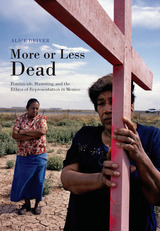
More or Less Dead analyzes how such violence against women has been represented in news media, books, films, photography, and art. Alice Driver argues that the various cultural reports often express anxiety or criticism about how women traverse and inhabit the geography of Ciudad Juárez and further the idea of the public female body as hypersexualized. Rather than searching for justice, the various media—art, photography, and even graffiti—often reuse victimized bodies in sensationalist, attention-grabbing ways. In order to counteract such views, local activists mark the city with graffiti and memorials that create a living memory of the violence and try to humanize the victims of these crimes.
The phrase “more or less dead” was coined by Chilean author Roberto Bolaño in his novel 2666, a penetrating fictional study of Juárez. Driver explains that victims are “more or less dead” because their bodies are never found or aren’t properly identified, leaving families with an uncertainty lasting for decades—or forever.
The author’s clear, precise journalistic style tackles the ethics of representing feminicide victims in Ciudad Juárez. Making a distinction between the words “femicide” (the murder of girls or women) and “feminicide” (murder as a gender-driven event), one of her interviewees says, “Women are killed for being women, and they are victims of masculine violence because they are women. It is a crime of hate against the female gender. These are crimes of power.”

An influential star of British pop for more than three decades, Morrissey is known for his outspoken and often controversial views on class, ethnicity, and sexuality. Among critics and his many fans, he has long been seen as an anti-establishment figure who continues to provoke devotion, argument, and spirited debate.
This is the first collection of academic essays to focus exclusively on Morrissey’s solo career, and this important book offers a nuanced and rich reading of his highly influential creative and cultural output. Covering a broad range of academic disciplines and approaches, including musicology, ethnography, sociology, and cultural studies, these essays will be a must for fans of Morrissey or the Smiths, or those seeking to make sense of the many fascinating complexities of this global icon and controversial figure.
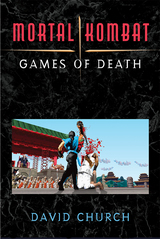
This book traces Mortal Kombat’s history as an American product inspired by both Japanese video games and Chinese martial-arts cinema, its successes and struggles in adapting to new market trends, and the ongoing influence of its secret-strewn narrative world. After outlining the specific elements of gameplay that differentiated Mortal Kombat from its competitors in the coin-op market, David Church examines the various martial-arts films that inspired its Orientalist imagery, helping explain its stereotypical uses of race and gender. He also posits the games as a cultural landmark from a moment when public policy attempted to intervene in both the remediation of cinematic aesthetics within interactive digital games and in the transition of public gaming spaces into the domestic sphere. Finally, the book explores how the franchise attempted to conquer other forms of media in the 1990s, lost ground to a new generation of 3D games in the 2000s, and has successfully rebooted itself in the 2010s to reclaim its legacy.
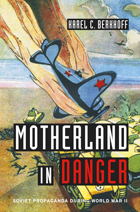
Much of the story about the Soviet Union’s victory over Nazi Germany has yet to be told. In Motherland in Danger, Karel Berkhoff addresses one of the most neglected questions facing historians of the Second World War: how did the Soviet leadership sell the campaign against the Germans to the people on the home front?
For Stalin, the obstacles were manifold. Repelling the German invasion would require a mobilization so large that it would test the limits of the Soviet state. Could the USSR marshal the manpower necessary to face the threat? How could the authorities overcome inadequate infrastructure and supplies? Might Stalin’s regime fail to survive a sustained conflict with the Germans?
Motherland in Danger takes us inside the Stalinist state to witness, from up close, its propaganda machine. Using sources in many languages, including memoirs and documents of the Soviet censor, Berkhoff explores how the Soviet media reflected—and distorted—every aspect of the war, from the successes and blunders on the front lines to the institution of forced labor on farm fields and factory floors. He also details the media’s handling of Nazi atrocities and the Holocaust, as well as its stinting treatment of the Allies, particularly the United States, the UK, and Poland. Berkhoff demonstrates not only that propaganda was critical to the Soviet war effort but also that it has colored perceptions of the war to the present day, both inside and outside of Russia.
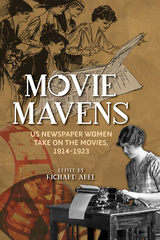
An invaluable collection of rare archival sources, Movie Mavens reveals women's essential contribution to the creation of American film culture.


With incisive analysis, Movie-Made Jews challenges the assumption that American Jewish cinema is a cinema of impoverishment and assimilation. While it’s a truism that Jews make movies, this book brings into focus the diverse ways movies make Jews.
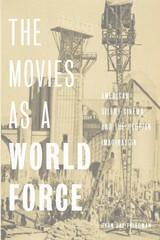

A cultural history of the enduring relationship between film spectatorship and intoxicating substances
Movies under the Influence charts the entangled histories of moviegoing and mind-altering substances from early cinema through the psychedelic 1970s. Jocelyn Szczepaniak-Gillece examines how the parallel trajectories of these two enduring aspects of American culture, linked by their ability to influence individual and collective consciousness, resulted in them being treated and regulated in similar ways. Rather than looking at representations of drug use within film, she regards cinema and intoxicants as kindred experiences of immersion that have been subject to corresponding forces of ideology and power.
Exploring the effects of intoxicants such as caffeine, nicotine, alcohol, marijuana, and psychedelics on film spectatorship, Szczepaniak-Gillece demonstrates how American movie theaters sought to cultivate a dual identity, presenting themselves as both a place of wholesome entertainment and a shadowy zone of illicit behavior. Movies under the Influence highlights the various legislative, legal, and corporate powers that held sway over the darkened anonymity of theaters, locating the convergence of moviegoing and drug use as a site of mediation and social control in America.
As much as substances and cinema are points where power intervenes, they are also settings of potential transcendence, and Movies under the Influence maintains this paradox as a necessary component of American film history. Recontextualizing a wide range of films, from Hollywood to the avant-garde, this book examines the implicit relationship intoxicants suggest between mass media, spectatorship, and governmental regulation and provides a new angle from which to understand cinema’s lasting role in evolving American culture.
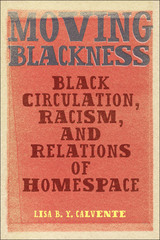
Engaging with theories of anti-Black racism, modernity, coloniality, and the Black diaspora, the book frames storytelling and the circulation of narratives as performances deeply rooted in the everyday lives of Black people across the diaspora. Starting with an examination of the racial construction of movement during colonialism and slavery, the book traces how this history shapes contemporary interactions. With its exploration of how Black circulation transforms movement and space, the book introduces a forward-thinking approach to the Black diaspora, anchored in a politics of identification rather than being confined to the past or a specific location. Moving Blackness argues that the desire for homespace, a yearning for belonging that transcends any particular physical space, fuels this envisioned future, rooted in the historical and material conditions of racism and marginalization.
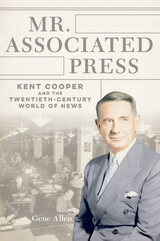
- Finalist for the AEJMC Tankard Book Award
Allen critically assesses the many new approaches and causes that Cooper championed: introducing celebrity news and colorful features to a service previously known for stodgy reliability, pushing through disruptive technological innovations like the instantaneous transmission of news photos, and leading a crusade to bring American-style press freedom--inseparable from private ownership, in Cooper’s view--to every country. His insistence on truthfulness and impartiality presents a sharp contrast to much of today’s fractured journalistic landscape.
Deeply researched and engagingly written, Mr. Associated Press traces Cooper’s career as he built a new foundation for the modern AP and shaped the twentieth-century world of news.

A groundbreaking study of Yorùbá-language print culture in colonial Lagos
Much Matter in a Penny Paper offers the first in-depth exploration of the emergence of an African-language print culture in early twentieth-century Lagos, Nigeria. Focusing on the 1910s and 1920s—a period of rapid experimentation and innovation—Karin Barber examines the rise of Yorùbá-language newspapers and the vibrant civic sphere they helped create.
The 1910s was notable for an upsurge of local Yorùbá-language history books, and during the 1920s entrepreneurial editors and writers launched five Yorùbá-language weeklies in quick succession. These publications drew in readers beyond the educated elite, expanding public discourse and experimenting with new genres of writing. From moralizing pamphlets and dramatic sketches to serialized narratives voiced by women, Yorùbá print producers reimagined oral and written traditions, blending popular songs, anecdotes, and poetic forms into a dynamic new medium.
This book is about not only what was printed but also how and why. It investigates the material practices of print production, the motivations of its creators, and the expectations of its audiences. Drawing on editorials, reader correspondence, and other paratextual commentary, it reveals how Yorùbá writers and readers understood the role of print in capturing the present, preserving the past, projecting the wisdom of the day forward for the benefit of future generations, and generating deep Yorùbá texts rich in poetic energy.
Through detailed portraits of key figures—editors, pamphleteers, and a mysterious oral historian—Barber traces the interconnections between publications and genres, showing how they formed an active bilingual sphere of communication. The interplay between Yorùbá- and English-language media, as well as the creative exploitation of both languages, emerges as a defining feature of this period’s print culture. By treating the Yorùbá print archive as a “transcript of emergence,” this study offers new insights into how cultural innovations take shape. It is essential reading for scholars of African history, media studies, sociolinguistics, and print culture.
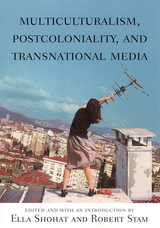
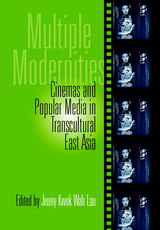
To explore this complexity, the editors have forged links between usually compartmentalized fields (especially media studies, literary theory, visual culture, and critical anthropology) and areas of inquiry-particularly postcolonial and diasporic studies and a diverse set of ethnic and area studies. This book, which links all these issues in suggestive ways, provides an indispensable guide for students and scholars in a wide variety of disciplines. Essays in this groundbreaking volume include Julianne Burton-Carvajal on ethnic identity in Lone Star; Manthia Diawara on diasporic documentary; Hamid Naficy on independent transnational film genres; Robyn Wiegman on whiteness studies; Faye Ginsburg on indigenous media; and Jennifer Gonzßles on race in cyberspace; Ana M. Lopez on modernity and Latin American cinema; and Inderpal Grewal and Caren Kaplan on Warrior Marks and multiculturalism and globalization.
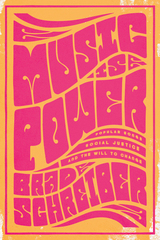
Honorable Mention, Graphis 2021 Design Annual Competition
Popular music has long been a powerful force for social change. Protest songs have served as anthems regarding war, racism, sexism, ecological destruction, and so many other crucial issues.
Music Is Power takes us on a guided tour through the past one hundred years of politically conscious music, from Pete Seeger and Woody Guthrie to Green Day and NWA. Covering a wide variety of genres, including reggae, country, metal, psychedelia, rap, punk, folk, and soul, Brad Schreiber demonstrates how musicians can take a variety of approaches— angry rallying cries, mournful elegies to the victims of injustice, or even humorous mockeries of authority—to fight for a fairer world. While shining a spotlight on Phil Ochs, Gil Scott-Heron, the Dead Kennedys and other seminal, politicized artists, he also gives readers a new appreciation of classic acts such as Lesley Gore, James Brown, and Black Sabbath, who overcame limitations in their industry to create politically potent music
Music Is Power tells fascinating stories about the origins and the impact of dozens of world-changing songs, while revealing political context and the personal challenges of legendary artists from Bob Dylan to Bob Marley.
Supplemental material (Artist and Title List): https://d3tto5i5w9ogdd.cloudfront.net/wp-content/uploads/2020/07/24001955/Music_Is_Power_Supplementary_Artist_Title_List.doc
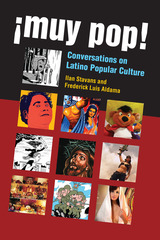
Although investigations of Hispanic popular culture were approached for decades as part of folklore studies, in recent years scholarly explorations—of lucha libre, telenovelas, comic strips, comedy, baseball, the novela rosa and the detective novel, sci-fi, even advertising—have multiplied. What has been lacking is an overarching canvas that offers context for these studies, focusing on the crucial, framing questions: What is Hispanic pop culture? How does it change over time and from region to region? What is the relationship between highbrow and popular culture in the Hispanic world? Does it make sense to approach the whole Hispanic world as homogenized when understanding Hispanic popular culture? What are the differences between nations, classes, ethnic groups, religious communities, and so on? And what distinguishes Hispanic popular culture in the United States?
In ¡Muy Pop!, Ilan Stavans and Frederick Luis Aldama carry on a sustained, free-flowing, book-length conversation about these questions and more, concentrating on a wide range of pop manifestations and analyzing them at length. In addition to making Hispanic popular culture visible to the first-time reader, ¡Muy Pop! sheds new light on the making and consuming of Hispanic pop culture for academics, specialists, and mainstream critics.
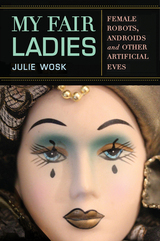
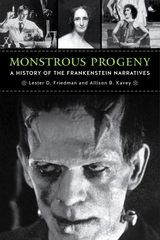
The fantasy of a male creator constructing his perfect woman dates back to the Greek myth of Pygmalion and Galatea. Yet as technology has advanced over the past century, the figure of the lifelike manmade woman has become nearly ubiquitous, popping up in everything from Bride of Frankenstein to Weird Science to The Stepford Wives. Now Julie Wosk takes us on a fascinating tour through this bevy of artificial women, revealing the array of cultural fantasies and fears they embody.
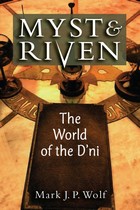
“Myst and Riven is well-written, interesting, on-topic, insightful, and a real pleasure to read.”
—Edward Castronova, Indiana University
Video games have become a major cultural force, and within their history, Myst and its sequel Riven stand out as influential examples. Myst and Riven: The World of the D’ni is a close analysis of two of the most popular and significant video games in the history of the genre, investigating in detail their design, their functionality, and the gameplay experience they provide players. While scholarly close analysis has been applied to films for some time now, it has only rarely been applied at this level to video games. Mark J. P. Wolf uses elements such as graphics and sound, the games’ mood and atmosphere and how they are generated, the geography and design of the digital worlds, and the narrative structures of the games to examine their appeal to both critical and general audiences, their legacy, and what made them great.
Myst and Riven is the inaugural book in the Landmark Video Games series, edited by Mark J. P. Wolf and Bernard Perron, which is the first series to examine individual video games of historical significance.
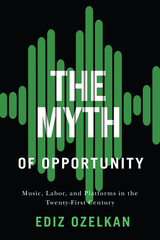
Justin Bieber launched his music career on YouTube in 2007, Lil Nas X’s “Old Town Road” exploded on TikTok in 2019, and Oliver Anthony’s “Rich Men North of Richmond” soared to the top of the Billboard charts just two weeks after its YouTube debut in 2023. These viral successes inspire countless artists to upload music online, fueled by the promise that technology can democratize opportunity, but does this promise hold true? Manufacturing Hope: Music, Platforms, and the Promise of Opportunity critically examines the myth of technology as a great equalizer in the music industry. While platforms like Spotify claim to empower artists, the reality is that rewards remain highly unequal. Through macroeconomic analysis and time series methodology, this book investigates how streaming services have reshaped opportunity from a labor perspective across professions, industries, and regions, offering a comprehensive, empirical view on the true impact of digital platforms on cultural production with a focus on music.
READERS
Browse our collection.
PUBLISHERS
See BiblioVault's publisher services.
STUDENT SERVICES
Files for college accessibility offices.
RECENTLY PUBLISHED



UChicago Accessibility Resources
home | accessibility | search | about | contact us
BiblioVault ® 2001 - 2026
The University of Chicago Press