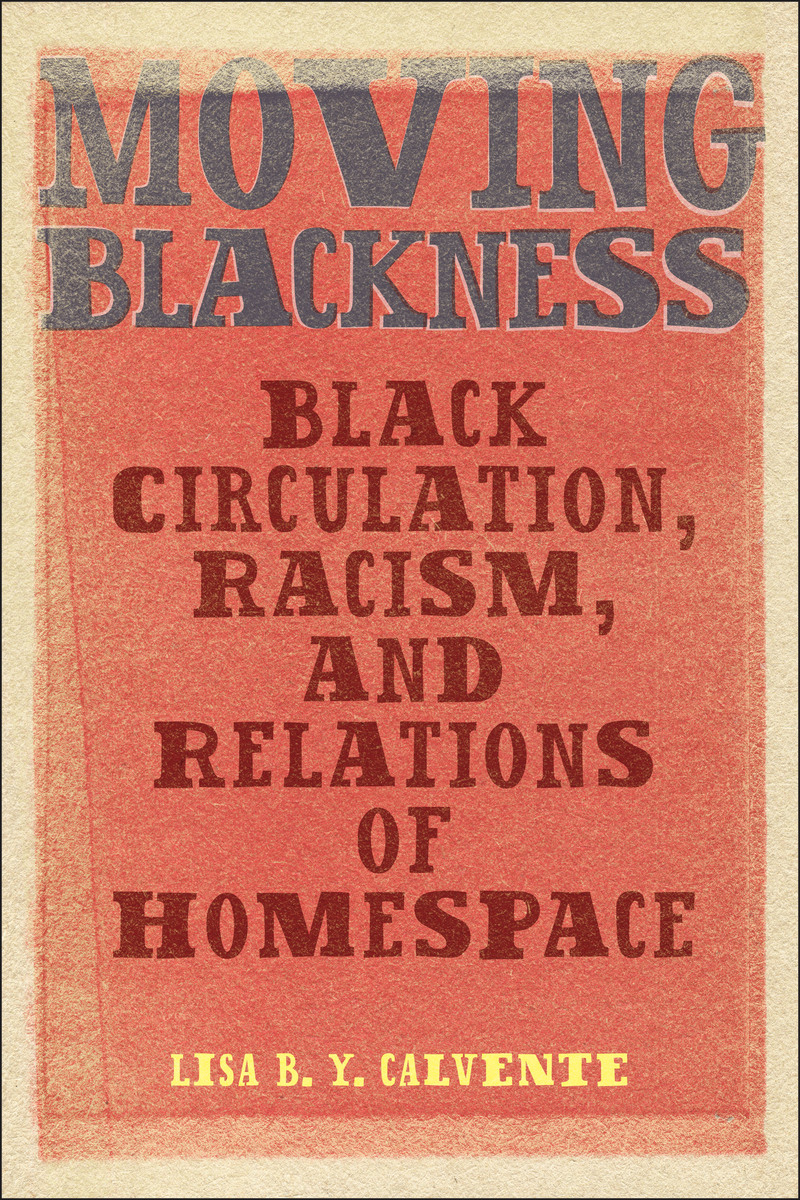
Moving Blackness: Black Circulation, Racism, and Relations of Homespace
Rutgers University Press, 2025
eISBN: 978-1-9788-4067-6 | Paper: 978-1-9788-4064-5 | Cloth: 978-1-9788-4065-2
See other books on: African American & Black | Black Studies (Global) | Race & Ethnic Relations | Racism | Relations
See other titles from Rutgers University Press
eISBN: 978-1-9788-4067-6 | Paper: 978-1-9788-4064-5 | Cloth: 978-1-9788-4065-2
ABOUT THIS BOOK | AUTHOR BIOGRAPHY | TOC
ABOUT THIS BOOK
Moving Blackness: Black Circulation, Racism and Relations of Homespace delves into the intricate connections between communication, culture, power, and racism in relation to blackness. Through a blend of interviews, oral histories, and meticulous archival research, this book sheds light on the multifaceted narratives surrounding Black identity. It explores how these stories circulate, serving as tools of resistance, negotiation, and affirmation of diverse manifestations and representations of blackness. By emphasizing the significance of storytelling as a means through which blackness affirms itself, transcending time and space, the book underscores how communicative embodiments of Black identity enable individuals to persevere within marginalized contexts.
Engaging with theories of anti-Black racism, modernity, coloniality, and the Black diaspora, the book frames storytelling, and the circulation of narratives as performances deeply rooted in the everyday lives of Black people across the diaspora. Starting with an examination of the racial construction of movement during colonialism and slavery, the book traces how this history shapes contemporary interactions. With its exploration of how Black circulation transforms movement and space, the book introduces a forward-thinking approach to the Black diaspora, anchored in a politics of identification rather than being confined to the past or a specific location. Moving Blackness argues that the desire for homespace, a yearning for belonging that transcends any particular physical space, fuels this envisioned future, rooted in the historical and material conditions of racism and marginalization.
Engaging with theories of anti-Black racism, modernity, coloniality, and the Black diaspora, the book frames storytelling, and the circulation of narratives as performances deeply rooted in the everyday lives of Black people across the diaspora. Starting with an examination of the racial construction of movement during colonialism and slavery, the book traces how this history shapes contemporary interactions. With its exploration of how Black circulation transforms movement and space, the book introduces a forward-thinking approach to the Black diaspora, anchored in a politics of identification rather than being confined to the past or a specific location. Moving Blackness argues that the desire for homespace, a yearning for belonging that transcends any particular physical space, fuels this envisioned future, rooted in the historical and material conditions of racism and marginalization.
See other books on: African American & Black | Black Studies (Global) | Race & Ethnic Relations | Racism | Relations
See other titles from Rutgers University Press