
 A SCHOLARLY BOOK REPOSITORY
In the autobiographical essay, Thomas reveals his passion for his homeland and his ever-present hunger for spiritual and natural exploration:
those rocks, I certainly was reminded of the transience of human existence,
and my own in particular. As Pindar put it: “A dream about a
shadow is man.” I began to ponder more the being and nature of God
and his relation to the late twentieth-century situation, which science and
technology had created in the western world. Where did the ancient
world of rock and ocean fit into an environment in which nuclear physics
and the computer were playing an increasingly prominent part? . . .

“Never before has the case been more compellingly made that America’s dependence on a free and abundant water supply has become an illusion. Cynthia Barnett does it by telling us the stories of the amazing personalities behind our water wars, the stunning contradictions that allow the wettest state to have the most watered lawns, and the thorough research that makes her conclusions inescapable. Barnett has established herself as one of Florida’s best journalists and Mirage is a must-read for anyone who cares about the future of the state.”
—Mary Ellen Klas, Capital Bureau Chief, Miami Herald
“Mirage is the finest general study to date of the freshwater-supply crisis in Florida. Well-meaning villains abound in Cynthia Barnett’s story, but so too do heroes, such as Arthur R. Marshall Jr., Nathaniel Reed, and Marjorie Harris Carr. The author’s research is as thorough as her prose is graceful. Drinking water is the new oil. Get used to it.”
—Michael Gannon, Distinguished Professor of history, University of Florida, and author of Florida: A Short History
“With lively prose and a journalist’s eye for a good story, Cynthia Barnett offers a sobering account of water scarcity problems facing Florida—one of our wettest states—and the rest of the East Coast. Drawing on lessons learned from the American West, Mirage uses the lens of cultural attitudes about water use and misuse to plead for reform. Sure to engage and fascinate as it informs.”
—Robert Glennon, Morris K. Udall Professor of Law and Public Policy, University of Arizona, and author of Water Follies: Groundwater Pumping and the Fate of America’s Fresh Waters
Part investigative journalism, part environmental history, Mirage reveals how the eastern half of the nation—historically so wet that early settlers predicted it would never even need irrigation—has squandered so much of its abundant freshwater that it now faces shortages and conflicts once unique to the arid West.
Florida’s parched swamps and supersized residential developments set the stage in the first book to call attention to the steady disappearance of freshwater in the American East, from water-diversion threats in the Great Lakes to tapped-out freshwater aquifers along the Atlantic seaboard.
Told through a colorful cast of characters including Walt Disney, Jeb Bush and Texas oilman Boone Pickens, Mirage ferries the reader through the key water-supply issues facing America and the globe: water wars, the politics of development, inequities in the price of water, the bottled-water industry, privatization, and new-water-supply schemes.
From its calamitous opening scene of a sinkhole swallowing a house in Florida to its concluding meditation on the relationship between water and the American character, Mirage is a compelling and timely portrait of the use and abuse of freshwater in an era of rapidly vanishing natural resources.


Mirages collects, for the first time, the story that was cut from all of Nin’s other published diaries, particularly volumes 3 and 4 of The Diary of Anaïs Nin, which cover the same time period. It is the long-awaited successor to the previous unexpurgated diaries Henry and June, Incest, Fire, and Nearer the Moon. Mirages answers the questions Nin readers have been asking for decades: What led to the demise of Nin’s love affair with Henry Miller? Just how troubled was her marriage to Hugh Guiler? What is the story behind Nin’s “children,” the effeminate young men she seemed to collect at will? Mirages is a deeply personal story of heartbreak, despair, desperation, carnage, and deep mourning, but it is also one of courage, persistence, evolution, and redemption that reaches beyond the personal to the universal.

Ernesto Miranda was an uneducated Hispanic man arrested in 1963 in connection with a series of sexual assaults, to which he confessed within hours. He was convicted not on the strength of eyewitness testimony or physical evidence but almost entirely because he had incriminated himself without knowing it—and without knowing that he didn’t have to. Miranda’s lawyers, John P. Frank and John F. Flynn, were among the most prominent in the state, and their work soon focused the entire country on the issue of their client’s rights. A 1966 Supreme Court decision held that Miranda’s rights had been violated and resulted in the now-famous "Miranda warnings."
Stuart personally knows many of the figures involved in Miranda, and here he unravels its complex history, revealing how the defense attorneys created the argument brought before the Court and analyzing the competing societal interests involved in the case. He considers Miranda's aftermath—not only the test cases and ongoing political and legal debate but also what happened to Ernesto Miranda. He then updates the story to the Supreme Court’s 2000 Dickerson decision upholding Miranda and considers its implications for cases in the wake of 9/11 and the rights of suspected terrorists. Interviews with 24 individuals directly concerned with the decision—lawyers, judges, and police officers, as well as suspects, scholars, and ordinary citizens—offer observations on the case’s impact on law enforcement and on the rights of the accused.
Ten years after the decision in the case that bears his name, Ernesto Miranda was murdered in a knife fight at a Phoenix bar, and his suspected killer was "Mirandized" before confessing to the crime. Miranda: The Story of America’s Right to Remain Silent considers the legacy of that case and its fate in the twenty-first century as we face new challenges in the criminal justice system.

Welsh S. White looks at both sides of the issue, emphasizing that Miranda represents just one stage in the Court's ongoing struggle to accommodate a fundamental conflict between law enforcement and civil liberties, and assessing whether the Court's present decisions (including Miranda) strike an appropriate balance between promoting law enforcement's interest in obtaining reliable evidence and the individual's interest in being protected from overreaching police practices.
Welsh S. White is Professor of Law, University of Pittsburgh School of Law. He is best known for his work on capital punishment and has published and lectured on the death penalty for the past twenty years.
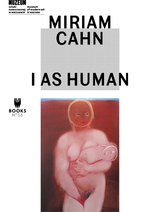
Miriam Cahn: I as Human examines different facets of the artist’s prolific and troubling oeuvre, featuring contributions from art historians, critics, and philosophers including Kathleen Bühler, Paul B. Preciado, Elisabeth Lebovici, Adam Szymczyk, Natalia Sielewicz and .

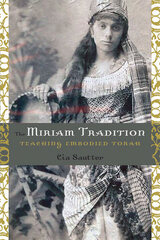
The prevailing ideological movements of the time permeate her family life. Zadek reveals the traumatic impact of eugenics and the fears surrounding the genetic transmission of deafness. She considers the effects of adhering to the oral method of communication in her home when sign language could have given her family the ability to interact with each other more fully. In this environment, Zadek became an astute communicator and learned to adapt to both the hearing and the deaf world, where she was known as “Miriam Hearing Sister.” Her memoir is an elegant literary work that offers an understanding of how biases and stigmas resonate and evolve, and it showcases her loving family of strong women who pushed against stereotypes and have thrived across generations.
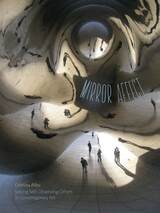
For decades, contemporary artworks with reflective properties have stimulated public forms of spectatorship. According to Cristina Albu, these artworks, which can include elements such as mirrors, live video feedback, or sensors, draw attention to affective interdependence and mechanisms of social control.
In Mirror Affect, Albu provides a historical account of mirroring processes in contemporary art and offers insight into the phenomenological and sociopolitical concerns that have inspired artists to stage processes of affective, perceptual, and behavioral mirroring between art viewers. Beginning with the 1960s, Albu charts the rise of interpersonal modes of art spectatorship. She reveals contemporary artists’ strategic use of reflective and responsive interfaces to instill doubt in visual representation and appeal to active scrutiny of the changing social dynamics. She suggests that the mirroring processes envisioned by contemporary artists such as Joan Jonas, Dan Graham, Lynn Hershman Leeson, Olafur Eliasson, and Rafael Lozano-Hemmer trigger visual disjunctions to upset narcissistic inclinations. They invite viewers to see themselves in relation to others and to ponder their role within complex social systems.
From sculpture and performance to art and technology projects, video art, and installation art, Mirror Affect analyzes forms of interpersonal spectatorship, revising and expanding current historiographies of participatory art.


The Mirror Diary tracks the emergence of an original poetic voice and a learned consciousness amid multiple and sometimes competing influences of complex literary traditions and regional and ethnic histories. Beginning with a literary inquiry into the history of Japanese Americans in Hawai`i and California, Garrett Hongo draws on his own history to consider the mosaic of American identities—personal, cultural, and poetic—in the context of a postmodern diaspora.
Hongo’s essays attest to the breadth of what he considers his cultural inheritance and literary antecedents, ranging from the poets of China’s T’ang Dynasty to American poets such as Walt Whitman and Charles Olson. He explains free-verse prosody by way of John Coltrane’s jazz; praises his contemporaries, poets David Mura, Edward Hirsch, and Mark Jarman; and acknowledges his mentors, Bert Meyers and Charles Wright. In other pieces he engages with controversies and contestations in contemporary Asian American literature, confronts the politics of race and the legacy of Japanese American internment during World War II, offers paeans to the Hawaiian landscape, and addresses immigrants newly arrived in America with a warm welcome. The Mirror Diary is the work of a poet fully engaged with contemporary politics and poetics and committed to the study and celebration of diverse traditions.

In a striking departure from previous scholarship, Scott Lucas shows that modern critics have misconstrued the purpose of the tragic verse narratives of the Mirror, approaching them primarily as uncontroversial meditations on abstract political and philosophical doctrines. Lucas revises this view, revealing many of the Mirror tragedies to be works topically applicable in form and politically contentious in nature.
Lucas returns the earliest poems of A Mirror for Magistrates to the troubled context of their production, the tumultuous reign of the Catholic Queen Mary (1553–1558). As Protestants suffering from the traumatic collapse of King Edward VI's "godly" rule (1547–1553) and from the current policies of Mary's government, the Mirror authors radically reshaped their poems' historical sources in order to craft emotionally moving narratives designed to provide models for interpreting the political failures of Edward VI's reign and to offer urgent warnings to Marian magistrates.
Lucas's study also reveals how, in later poems, the Mirror authors issued oblique appeals to Queen Elizabeth's officers, boldly demanding that they allow the realm of "the literary" to stand as an unfettered discursive arena of public controversy. Lucas thus provides a provocative new approach to this seminal but long-misunderstood collection, one that restores the Mirror to its rightful place as one of the greatest works of sixteenth-century English political literature.
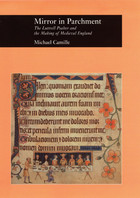
The richly illuminated Luttrell Psalter was created for the English nobleman Sir Geoffrey Luttrell (1276-1345). Inexpensive mechanical illustration has since disseminated the book's images to a much wider audience; hence the Psalter's representations of manorial life have come to profoundly shape our modern idea of what medieval English people, high and low, looked like at work and at play. Alongside such supposedly truthful representations, the Psalter presents myriad images of fantastic monsters and beasts. These patently false images have largely been disparaged or ignored by modern historians and art historians alike, for they challenge the credibility of those pictures in the Luttrell Psalter that we wish to see as real.
In the conviction that medieval images were not generally intended to reflect daily life but rather to shape a new reality, Michael Camille analyzes the Psalter's famous pictures as representations of the world, imagined and real, of its original patron. Addressed are late medieval chivalric ideals, physical sites of power, and the boundaries of Sir Geoffrey's imagined community, wherein agricultural laborers and fabulous monsters play a similar ideological role. The Luttrell Psalter thus emerges as a complex social document of the world as its patron hoped and feared it might be.

In this classic study, Lucien Dällenbach provides the first systematic analysis of this device and its literary and artistic applications from Van Eyck and Velasquez to Gide, Beckett and the French nouveau roman.
Alongside this wealth of examples, Dällenbach constructs his theoretical argument with elegance and clarity, assuming no previous knowledge of arcane and specialized theory, but guiding the reader helpfully through the maze of literary criticism. The result is a new conceptual field, a new grammar of the mise en abyme, and an examination of its function within the work of art and literature.
The highly original study has been acclaimed as one of the most important works of contemporary literary theory. It will be of interest to all students of English and European literature, as well as to students of the visual arts.

In the first of the volume's four parts, the author discusses the reasons--geographic, political, and religious--why Spain has proved a hard country to understand. Hillgarth looks at travelers to Spain, from pilgrims to diplomats, spies, exiles, and foreign residents. In its second part, special attention is devoted to the interaction between Christians, Jews, and Muslims, including Jewish and Muslim exiles and secret Jews within Spain.
In its third section, The Mirror of Spain explores reactions to Spain by those who saw it from the outside, the Italians, Dutch, French, and English. One chapter deals with the English, Scottish, and Irish Catholics, who, like the Jewish and Muslim exiles, played a double role in that they were at once "insiders" and outsiders. Finally, Hillgarth attempts to show how two crucial centuries have affected the way Spain has been seen down to the present.
The Mirror of Spain draws on a wide range of sources in different languages. It relies on documents in the Public Record Office and the British Library, the Archivo General de Simancas and the collections of the colleges founded by exiles in Spain, and on major libraries in Venice and Jerusalem. The volume will be of interest to a broad spectrum of scholars--to medievalists, historians of Spain, scholars of political and literary thought, and all those interested in notions of national identity.
J. N. Hillgarth has taught for many years at the University of Toronto and the Pontifical Institute of Mediaeval Studies. He is a Fellow of the British Academy and has received awards and honors from a wide variety of distinguished institutions in Europe and North America.
Mirror of the Darkest Night is almost an aberration in Mahasweta Devi’s oeuvre. Known for her activism and hard-hitting indictment of social inequalities, she pays close attention to detail in this sparkling novel. It offers a rare glimpse of Devi’s talent for telling the sort of story she normally eschewed—and it’s a cracker of a tale.
Weaving together literary theory, philosophy, and social history, Bartsch traces this complex notion of self from Plato’s Greece to Seneca’s Rome. She starts by showing how ancient authors envisioned the mirror as both a tool for ethical self-improvement and, paradoxically, a sign of erotic self-indulgence. Her reading of the Phaedrus, for example, demonstrates that the mirroring gaze in Plato, because of its sexual possibilities, could not be adopted by Roman philosophers and their students. Bartsch goes on to examine the Roman treatment of the ethical and sexual gaze, and she traces how self-knowledge, the philosopher’s body, and the performance of virtue all played a role in shaping the Roman understanding of the nature of selfhood. Culminating in a profoundly original reading of Medea, The Mirror of the Self illustrates how Seneca, in his Stoic quest for self-knowledge, embodies the Roman view, marking a new point in human thought about self-perception.
Bartsch leads readers on a journey that unveils divided selves, moral hypocrisy, and lustful Stoics—and offers fresh insights about seminal works. At once sexy and philosophical, The Mirror of the Self will be required reading for classicists, philosophers, and anthropologists alike.

The Other Voice in Early Modern Europe - The Toronto Series: Volume 62
Contributors to Misalignment of Exchange Rates address a series of questions about misalignment. Several papers investigate the causes of misalignment and the extent to which observed movements in real exchange rates can be attributed to misalignment. These studies are conducted both empirically, through the experiences of the United States, Great Britain, Japan, and the countries of the European Monetary System, and theoretically, through models of imperfect competition. Attention is then turned to the effects of misalignment, especially on employment and production, and to detailed estimates of the effects of changes in exchange rates on several industries, including the U.S. auto industry. In response to the contention that there is significant "hysteresis" in the adjustment of employment and production to changes in exchange rates, contributors also attempt to determine whether the effects of misalignment can be reversed once exchange rates return to earlier levels. Finally, the issue of how to avoid—or at least control—misalignment through macroeconomic policy is confronted.
In Misbehaving Science, Aaron Panofsky traces the field of behavior genetics back to its origins in the 1950s, telling the story through close looks at five major controversies. In the process, Panofsky argues that persistent, ungovernable controversy in behavior genetics is due to the broken hierarchies within the field. All authority and scientific norms are questioned, while the absence of unanimously accepted methods and theories leaves a foundationless field, where disorder is ongoing. Critics charge behavior geneticists with political motivations; champions say they merely follow the data where they lead. But Panofsky shows how pragmatic coping with repeated controversies drives their scientific actions. Ironically, behavior geneticists’ struggles for scientific authority and efforts to deal with the threats to their legitimacy and autonomy have made controversy inevitable—and in some ways essential—to the study of behavior genetics.

Powell begins with a section on the British, exploring his fascination both with genealogy and with figures like John Aubrey, and writing in depth about writers like Kipling, Conrad, and Hardy. The second section, on America, also opens with discussions of family trees (in this case presidential ones) and includes pieces on Henry James, James Thurber, American booksellers in Paris, Hemingway, and Dashiell Hammett. Personal encounters, and absorbing incidents from the lives of his subjects, frequently fill these pages—as they do even more in the section on Powell's contemporaries—Connolly, Orwell, Graham Greene, and others. Finally, and aptly, the book closes with a section on Proust and matters Proustian, including a marvellous essay on what is eaten and drunk, and by whom, in A la Recherche du Temps Perdu.
"An urbane book, quietly erudite, very sensible, highly civilized, remarkably useful."—Anthony Burgess, Observer
"An acute intelligence and fastidious sense of humor make [Powell] the funniest and most profound living writer of the English language."—Hugh Montgomery-Massingberd, Sunday Telegraph
Anthony Powell was born in London in 1905. He is the author of seven novels, a biography of John Aubrey, two plays, a collection of memoirs, and the twelve-volume novel sequence Dance to the Music of Time.


In Misconceiving Merit, sociologists Mary Blair-Loy and Erin A. Cech uncover the cultural foundations of a paradox. On one hand, academic science, engineering, and math revere meritocracy, a system that recognizes and rewards those with the greatest talent and dedication. At the same time, women and some racial and sexual minorities remain underrepresented and often feel unwelcome and devalued in STEM. How can academic science, which so highly values meritocracy and objectivity, produce these unequal outcomes?
Blair-Loy and Cech studied more than five hundred STEM professors at a top research university to reveal how unequal and unfair outcomes can emerge alongside commitments to objectivity and excellence. The authors find that academic STEM harbors dominant cultural beliefs that not only perpetuate the mistreatment of scientists from underrepresented groups but hinder innovation. Underrepresented groups are often seen as less fully embodying merit compared to equally productive white and Asian heterosexual men, and the negative consequences of this misjudgment persist regardless of professors’ actual academic productivity. Misconceiving Merit is filled with insights for higher education administrators working toward greater equity as well as for scientists and engineers striving to change entrenched patterns of inequality in STEM.
Misconceiving Mothers is a case study of how public policy about reproduction and crime is made. Laura E. Gomez uses secondary research and first-hand interviews with legislators and prosecutors to examine attitudes toward the criminalization and/or medicalization of drug use during pregnancy by the legislature and criminal justice systems in California. She traces how an initial tendency toward criminalization gave way to a trend toward seeing the problem of "crack babies" as an issue of social welfare and public health.
It is no surprise that in an atmosphere of mother-blaming, particularly targeted at poor women and women of color, "crack babies" so easily captured the American popular imagination in the late 1980s. What is surprising is the was prenatal drug exposure came to be institutionalized in the state apparatus. Gomez attributes this circumstance to four interrelated cause: the gendered nature of the social problem; the recasting of the problem as fundamentally "medical" rather than "criminal"; the dynamic nature of t he process of institutionalization; and the specific feature of the legal institutions -- that is, the legislature and prosecutors' offices -- the became prominent in the case.
At one level Misconceiving Mothers tells the story of a particular problem at a particular time and place -- how the California legislature and district attorneys grappled with pregnant women's drug use in the late 1980s and early 1990s. At another level, the book tells a more general story about the political nature of contemporary social problems. The story it tells is political not just because it deals with the character of political institutions but because the process itself and the nature of the claims-making concern the power to control the allocation of state resources.
A number of studies have looked at how the initial criminalization of social problems takes place. Misconceiving Mothers looks at the process by which a criminalized social problem is institutionalized through the attitudes and policies of elite decision-makers.


In many examples of rare erotic fiction, and in other works as well-known as Dream of the Red Chamber, Keith McMahon identifies a sexual economy defined by the figures of the "miser" and the "shrew"—caricatures of the retentive, self-containing man and the overflowing, male-enervating woman. Among these and other characters, the author explores the issues surrounding the practice of polygamy, the logic of its overvaluation of masculinity, and the nature of sexuality generally in Chinese society. How does the man with many wives manage and justify his sexual authority? Why and how might he escape or limit this presumed authority, sometimes to the point of portraying himself as abject before the shrewish woman? How do women accommodate or coddle the man, or else oppose, undermine, or remold him? And in what sense does the man place himself lower than the spiritually and morally superior woman?
The most extensive English-language study of Chinese literature from the eighteenth century, this examination of polygamy will interest not only students of Chinese history, culture, and literature but also all those concerned with histories of gender and sexuality.
"Clark's . . . research methods [are] inventive and her glimpses of U.S. life revealing. . . . And you have to love a social scientist so respectful of Miss Manners."—Clifford Orwin, Toronto Globe and Mail
"Clark offers a thought-provoking and quite interesting etiquette of sympathy according to which we ought to act in order to preserve the sympathy credits we can call on in time of need."—Virginia Quarterly Review

In her second collection of poems, J. Allyn Rosser explores the human condition in all its gloriously valiant pathos. Misery Prefigured dwells on our continual reinventions of self and world and the restless dynamic that vibrates between them.Whether contemplating a failed marriage, a visit from God, or a pearl dropped into a bottle of Prell shampoo, Rosser's wry yet impassioned eye looks hard for a habitable and abiding truth. Alternating between deadpan and dead serious, these poems are often darkly funny, exposing the contradictions inherent in every desire. Misery Prefigured is fueled by a cocky, unsentimental determination to make some consolatory sense of what passes for reality.
The Misfit of the Family is a compelling argument that Balzac must be taken seriously as a major inventor and purveyor of new tools for analyzing connections between the sexual and the social. Lucey’s account of the novelist’s deployment of "sexual misfits" to impel a wide range of his most canonical works—Cousin Pons, Cousin Bette, Eugenie Grandet, Lost Illusions, The Girl with the Golden Eyes—demonstrates how even the flexible umbrella term "queer" barely covers the enormous diversity of erotic and social behaviors of his characters. Lucey draws on the thinking of Michel Foucault and Pierre Bourdieu and engages the work of critics of nineteenth-century French fiction, including Naomi Schor, D. A. Miller, Franco Moretti, and others. His reflections on Proust as Balzac’s most cannily attentive reader suggest how the lines of social and erotic force he locates in Balzac’s work continued to manifest themselves in twentieth-century writing and society.

Dubbed the Margaret Mead of heavy metal, Donna Gaines is a walking, talking oxymoron, a turnpike intellectual. A Misfit's Manifesto is the story of her wild-in-the-burbs odyssey-from overweight yeshiva girl to savvy street-punk sociologist. Isolated, angry, and depressed through most of her adolescence and early adulthood, she found truth and beauty in the least likely places. Wandering the craggy terrain of Rockaway Beach, Queens, Gaines embarked upon a path to enlightenment involving sex, drugs, rock & roll, sociology, cosmetology, True Love, the occult, tattoos, science fiction, pizza, guns, comic books, and surfing-by Web and by sea.
For Gaines, dignity, joy, and communion came not from family, organized religion, or mandatory schooling, but in the sound of doo-wop, surf music, acid rock, then punk, trash metal, and hardcore. "For most of my life," she writes, "music was the only way to connect that wouldn't eventually kill me."
Through all the ripped nights of binge-drinking, pill-popping, and nightclubbing, Gaines became an acclaimed author, scholar, and expert on teen suicide. In an age of conformity and censorship, she defends popular culture as a powerful spiritual force-a vibrant, valid connection to God. A meditation on alienation and engagement, this memoir is an outcast's journey into the black-hole sun, where Divine love and light are found-even in Ramones songs.
This edition includes a scholarly introduction that considers memoir as a sociological as well as literary genre, as a reflexive means of understanding the self in social context while nurturing a sociological imagination. Social memoir, Gaines argues, illuminates problems like alienation, marginality, addiction, and suicide, while making sociology more user-friendly and public. Now this work of dazzling originality and iconoclasm that has inspired misfits everywhere is an ideal text for classroom use, making complex social theory exciting, timely, and relevant for students.
In 1690, a dramatic account of piracy was published in Mexico City. The Misfortunes of Alonso Ramírez described the incredible adventures of a poor Spanish American carpenter who was taken captive by British pirates near the Philippines and forced to work for them for two years. After circumnavigating the world, he was freed and managed to return to Mexico, where the Spanish viceroy commissioned the well-known Mexican scholar Carlos de Sigüenza y Góngora to write down Ramírez's account as part of an imperial propaganda campaign against pirates.
The Misfortunes of Alonso Ramírez has long been regarded as a work of fiction—in fact, as Latin America's first novel—but Fabio López Lázaro makes a convincing case that the book is a historical account of real events, albeit full of distortions and lies. Using contemporary published accounts, as well as newly discovered documents from Spanish, English, French, Portuguese, and Dutch archives, he proves that Ramírez voyaged with one of the most famous pirates of all time, William Dampier. López Lázaro's critical translation of The Misfortunes provides the only extensive Spanish eyewitness account of pirates during the period in world history (1650–1750) when they became key agents of the European powers jockeying for international political and economic dominance. An extensive introduction places The Misfortunes within the worldwide struggle that Spain, England, and Holland waged against the ambitious Louis XIV of France, which some historians consider to be the first world war.

This past decade has witnessed an extraordinary transformation in men's lives. For years, wave after wave of the women's movement, a movement that reshaped every aspect of American life, produced nary a ripple among men. But suddenly men are in the spotlight.
Yet, the public discussions often seem strained, silly, and sometimes flat-out wrong. The spotlight itself seems to obscure as much as it illuminates. Old tired clichTs about men's resistance to romantic commitment or reluctance to be led to the marriage altar seem perennially recyclable in advice books and on TV talk shows, but these days the laughter feels more forced, the defensiveness more pronounced. Pop biologists avoid careful confrontation with serious scientific research in their quest to find anatomical or evolutionary bases for promiscuity or porn addiction, hoping that by fiat, one can pronounce that "boys will be boys" and render it more than a flaccid tautology. And political pundits wring their hands about the feminization of American manhood, as if gender equality has neutered these formerly proud studs. Misframing Men, a collection of Michael Kimmel's commentaries on contemporary debates about masculinity, argues that the media have largely misframed this debate.
Kimmel, among the world's best-known scholars in gender studies, discusses political moments such as the Virginia Military Institute and Citadel cases that reached the Supreme Court (he participated as expert witness for the Justice Department) along with Promise Keepers rallies, mythopoetic gatherings, and white supremacists. He takes on antifeminists as the real male bashers, questions the unsubstantiated assertions that men suffer from domestic violence to the same degree as women, and examines the claims made by those who want to rescue boys from the "misandrous" reforms initiated by feminism.
In writings both solidly grounded and forcefully argued, Kimmel pushes the boundaries of today's modern conversation about men and masculinity.



This groundbreaking collection of LGBTQ prayers, poems, liturgy, and rituals is both a spiritual resource and a celebratory affirmation of Jewish diversity. Giving voice to the private and public sectors of queer Jewish experience, Mishkan Ga'avah is also a commemoration of the fiftieth anniversary of both the Stonewall Riots and the first pride march, reflecting the longtime advocacy of the Reform Movement for full LGBTQ inclusion.

The complete Arvit Service from Mishkan HaLev, as a Visual T'filah™.
This is the Pro version. "Pro" services allow users to edit each element of a prayer slide (including text, images, and more) for an advanced opportunity to customize the Visual T'filahTM. Also available is a basic version.
Once you've purchased your Visual T'filah™, there will be a download link on the order confirmation page. You will also be emailed a link to the file.
Mishkan HaLev: Prayers for S'lichot and the Month of Elul offers two complete services, one for Erev Shabbat during the month of Elul, and a S'lichot service. Like the new machzor, Mishkan HaLev is full of beautiful readings, poetry, meditations, commentary, and translations to ready the heart and the mind to enter the High Holy Days. Fully transliterated.
PowerPoint file download. Versions for Keynote and with editable Hebrew are available. Visual T'filah products are not returnable. Contact info@ccarpress.org for more info.

The complete Arvit Service from Mishkan HaLev, as a Visual T'filah™.
Individual prayers/slides can be removed in order to create a custom service.
Once you've purchased your Visual T'filah™, there will be a download link on the order confirmation page. You will also be emailed a link to the file.
Mishkan HaLev: Prayers for S'lichot and the Month of Elul offers two complete services, one for Erev Shabbat during the month of Elul, and a S'lichot service. Like the new machzor, Mishkan HaLev is full of beautiful readings, poetry, meditations, commentary, and translations to ready the heart and the mind to enter the High Holy Days. Fully transliterated.
This is the "Basic" version of the file, meaning you can remove prayer slides and insert new slides, but the elements of each slide (including text and images) are not editable. To be able to edit and customize the contents of each prayer slide, download the Pro version.
PowerPoint file download. Keynote version available. Visual T'filah products are not returnable. Contact info@ccarpress.org for more info.

The complete S'lichot Service from Mishkan HaLev, as a Visual T'filah™.
This is the Pro version. "Pro" services allow users to edit each element of a prayer slide (including text, images, and more) for an advanced opportunity to customize the Visual T'filah™. Also available is a basic version.
Once you've purchased your Visual T'filah™, there will be a download link on the order confirmation page. You will also be emailed a link to the file.
Mishkan HaLev: Prayers for S'lichot and the Month of Elul offers two complete services, one for Erev Shabbat during the month of Elul, and a S'lichot service. Like the new machzor, Mishkan HaLev is full of beautiful readings, poetry, meditations, commentary, and translations to ready the heart and the mind to enter the High Holy Days. Fully transliterated.
The complete S'lichot Service from Mishkan HaLev, as a Visual T'filah™.
Individual prayers/slides can be removed in order to create a custom service.
Once you've purchased your Visual T'filah™, there will be a download link on the order confirmation page. You will also be emailed a link to the file.
Mishkan HaLev: Prayers for S'lichot and the Month of Elul offers two complete services, one for Erev Shabbat during the month of Elul, and a S'lichot service. Like the new machzor, Mishkan HaLev is full of beautiful readings, poetry, meditations, commentary, and translations to ready the heart and the mind to enter the High Holy Days. Fully transliterated.
This is the "Basic" version of the file, meaning you can remove prayer slides and insert new slides, but the elements of each slide (including text and images) are not editable. To be able to edit and customize the contents of each prayer slide, download the Pro version.
PowerPoint file download. Keynote version available. Visual T'filah products are not returnable. Contact info@ccarpress.org for more info.
The complete Arvit and S'lichot services from Mishkan HaLev, as a Visual T'filah™.
This is the Pro version. "Pro" services allow users to edit each element of a prayer slide (including text, images, and more) for an advanced opportunity to customize the Visual T'filah™. Also available is a basic version.
Once you've purchased your Visual T'filah™, there will be a download link on the order confirmation page. You will also be emailed a link to the file.
Mishkan HaLev: Prayers for S'lichot and the Month of Elul offers two complete services, one for Erev Shabbat during the month of Elul, and a S'lichot service. Like the new machzor, Mishkan HaLev is full of beautiful readings, poetry, meditations, commentary, and translations to ready the heart and the mind to enter the High Holy Days. Fully transliterated.
PowerPoint file download. Versions for Keynote and with editable Hebrew are available. Visual T'filah products are not returnable. Contact info@ccarpress.org for more info.
The complete Arvit and S'lichot services from Mishkan HaLev, as a Visual T'filah™.
Individual prayers/slides can be removed in order to create a custom service.
Once you've purchased your Visual T'filah™, there will be a download link on the order confirmation page. You will also be emailed a link to the file.
Mishkan HaLev: Prayers for S'lichot and the Month of Elul offers two complete services, one for Erev Shabbat during the month of Elul, and a S'lichot service. Like the new machzor, Mishkan HaLev is full of beautiful readings, poetry, meditations, commentary, and translations to ready the heart and the mind to enter the High Holy Days. Fully transliterated.
This is the "Basic" version of the file, meaning you can remove prayer slides and insert new slides, but the elements of each slide (including text and images) are not editable. To be able to edit and customize the contents of each prayer slide, download the Pro version.
PowerPoint file download. Keynote version available. Visual T'filah products are not returnable. Contact info@ccarpress.org for more info.
The complete set of Rosh HaShanah and Yom Kippur services from Mishkan HaNefesh: Machzor for the Days of Awe as a Visual T'filah™.
This is the "Basic" version of the file, meaning you can remove prayer slides and insert new slides, but the elements of each slide (including text and images) are not editable. To be able to edit and customize the contents of each prayer slide, download the Pro version.
Once you've purchased your Visual T'filah™, there will be a download link on the order confirmation page. You will also be emailed a link to the file.
PowerPoint file download. Keynote version available. Visual T'filah products are not returnable. Contact info@ccarpress.org for more info.
The complete set of Rosh HaShanah and Yom Kippur services from Mishkan HaNefesh: Machzor for the Days of Awe as a Visual T'filah™.
This is the Pro version. "Pro" services allow users to edit each element of a prayer slide (including text, images, and more) for an advanced opportunity to customize the Visual T'filah™. Also available is a basic version.
Once you've purchased your Visual T'filah™, there will be a download link on the order confirmation page. You will also be emailed a link to the file.
PowerPoint file download. Versions for Keynote and with editable Hebrew are available. Visual T'filah products are not returnable. Contact info@ccarpress.org for more info.

The complete set of Rosh HaShanah services from Mishkan HaNefesh: Machzor for the Days of Awe as a Visual T'filah™.
Includes the following services:
Rosh HaShanah Evening Service (Arvit)
Rosh HaShanah Morning Service (Shacharit)
Rosh HaShanah Afternoon Service (Minchah)
This is the "Basic" version of the file, meaning you can remove prayer slides and insert new slides, but the elements of each slide (including text and images) are not editable. To be able to edit and customize the contents of each prayer slide, download the Pro version.
Once you've purchased your Visual T'filah™, there will be a download link on the order confirmation page. You will also be emailed a link to the file.
PowerPoint file download. Keynote version available. Visual T'filah products are not returnable. Contact info@ccarpress.org for more info.
The complete set of Rosh HaShanah services from Mishkan HaNefesh: Machzor for the Days of Awe as a Visual T'filah™.
Includes the following services:
Rosh HaShanah Evening Service (Arvit)
Rosh HaShanah Morning Service (Shacharit)
Rosh HaShanah Afternoon Service (Minchah)
This is the Pro version. "Pro" services allow users to edit each element of a prayer slide (including text, images, and more) for an advanced opportunity to customize the Visual T'filah™. Also available is a basic version.
Once you've purchased your Visual T'filah™, there will be a download link on the order confirmation page. You will also be emailed a link to the file.
PowerPoint file download. Versions for Keynote and with editable Hebrew are available. Visual T'filah products are not returnable. Contact info@ccarpress.org for more info.

The complete set of Yom Kippur services from Mishkan HaNefesh: Machzor for the Days of Awe as a Visual T'filah™.
Includes the following services:
Yom Kippur Avodah Service
Yom Kippur Eileh Azkarah Service
Yom Kippur Kol Nidrei Service
Yom Kippur Minchah Service
Yom Kippur N'ilah Service
Yom Kippur Shacharit Service
Yom Kippur Yizkor Service
This is the "Basic" version of the file, meaning you can remove prayer slides and insert new slides, but the elements of each slide (including text and images) are not editable. To be able to edit and customize the contents of each prayer slide, download the Pro version.
Once you've purchased your Visual T'filah™, there will be a download link on the order confirmation page. You will also be emailed a link to the file.
PowerPoint file download. Keynote version available. Visual T'filah products are not returnable. Contact info@ccarpress.org for more info.
The complete set of Yom Kippur services from Mishkan HaNefesh: Machzor for the Days of Awe as a Visual T'filah™.
Includes the following services:
Yom Kippur Avodah Service
Yom Kippur Eileh Azkarah Service
Yom Kippur Kol Nidrei Service
Yom Kippur Minchah Service
Yom Kippur N'ilah Service
Yom Kippur Shacharit Service
Yom Kippur Yizkor Service
This is the Pro version. "Pro" services allow users to edit each element of a prayer slide (including text, images, and more) for an advanced opportunity to customize the Visual T'filah™. Also available is a basic version.
Once you've purchased your Visual T'filah™, there will be a download link on the order confirmation page. You will also be emailed a link to the file.
PowerPoint file download. Versions for Keynote and with editable Hebrew are available. Visual T'filah products are not returnable. Contact info@ccarpress.org for more info.
The complete set services from Mishkan HaNefesh for Youth as Visual T'filah™, including:
- Rosh Hashanah Evening
- Rosh Hashanah Morning
- Yom Kippur Evening
- Yom Kippur Morning
- N'ilah
Beautifully illustrated by the award-winning artist Mark Podwal, this exciting new machzor for youth contains evening and morning services to be used in children's and family services during the High Holy Days. Much in line with the Movement's machzor, it also contains full transliteration, and inspiring alternative readings.
This is the "Basic" version of the file, meaning you can remove prayer slides and insert new slides, but the elements of each slide (including text and images) are not editable. To be able to edit and customize the contents of each prayer slide, download the Pro version.
Once you've purchased your Visual T'filah™, there will be a download link on the order confirmation page. You will also be emailed a link to the file.
Contains 5 Powerpoint files.
PowerPoint file download. Keynote version available. Visual T'filah products are not returnable. Contact info@ccarpress.org for more info.
The complete set services from Mishkan HaNefesh for Youth as Visual T'filah™, including:
- Rosh Hashanah Evening
- Rosh Hashanah Morning
- Yom Kippur Evening
- Yom Kippur Morning
- N'ilah
Beautifully illustrated by the award-winning artist Mark Podwal, this exciting new machzor for youth contains evening and morning services to be used in children's and family services during the High Holy Days. Much in line with the Movement's machzor, it also contains full transliteration, and inspiring alternative readings.
This is the Pro version. "Pro" services allow users to edit each element of a prayer slide (including text, images, and more) for an advanced opportunity to customize the Visual T'filah™. Also available is a basic version.
Once you've purchased your Visual T'filah™, there will be a download link on the order confirmation page. You will also be emailed a link to the file.
Contains 5 Powerpoint files.
PowerPoint file download. Versions for Keynote and with editable Hebrew are available. Visual T'filah products are not returnable. Contact info@ccarpress.org for more info.
The complete Rosh HaShanah Evening service from Mishkan HaNefesh for Youth as a Visual T'filah™.
Beautifully illustrated by the award-winning artist Mark Podwal, this exciting new machzor for youth contains an evening service to be used in children's and family services during the High Holy Days. Much in line with the Movement's machzor, it also contains full transliteration, and inspiring alternative readings.
This is the Pro version. "Pro" services allow users to edit each element of a prayer slide (including text, images, and more) for an advanced opportunity to customize the Visual T'filah™. Also available is a basic version.
Once you've purchased your Visual T'filah™, there will be a download link on the order confirmation page. You will also be emailed a link to the file.
PowerPoint file download. Versions for Keynote and with editable Hebrew are available. Visual T'filah products are not returnable. Contact info@ccarpress.org for more info.
Contains 117 slides.
The complete Rosh Hashanah Evening service from Mishkan HaNefesh for Youth as a Visual T'filah™.
Beautifully illustrated by the award-winning artist Mark Podwal, this exciting new machzor for youth contains an evening service to be used in children's and family services during the High Holy Days. Much in line with the Movement's machzor, it also contains full transliteration, and inspiring alternative readings.
This is the "Basic" version of the file, meaning you can remove prayer slides and insert new slides, but the elements of each slide (including text and images) are not editable. To be able to edit and customize the contents of each prayer slide, download the Pro version.
Once you've purchased your Visual T'filah™, there will be a download link on the order confirmation page. You will also be emailed a link to the file.
Powerpoint File.
PowerPoint file download. Keynote version available. Visual T'filah products are not returnable. Contact info@ccarpress.org for more info.
The complete Rosh HaShanah Morning service from Mishkan HaNefesh for Youth as a Visual T'filah™.
Beautifully illustrated by the award-winning artist Mark Podwal, this exciting new machzor for youth contains a morning service to be used in children's and family services during the High Holy Days. Much in line with the Movement's machzor, it also contains full transliteration, and inspiring alternative readings.
This is the Pro version. "Pro" services allow users to edit each element of a prayer slide (including text, images, and more) for an advanced opportunity to customize the Visual T'filah™. Also available is a basic version.
Once you've purchased your Visual T'filah™, there will be a download link on the order confirmation page. You will also be emailed a link to the file.
PowerPoint file download. Versions for Keynote and with editable Hebrew are available. Visual T'filah products are not returnable. Contact info@ccarpress.org for more info.
Contains 177 slides.
The complete Rosh HaShanah Morning service from Mishkan HaNefesh for Youth as a Visual T'filah™.
Beautifully illustrated by the award-winning artist Mark Podwal, this exciting new machzor for youth contains a morning service to be used in children's and family services during the High Holy Days. Much in line with the Movement's machzor, it also contains full transliteration, and inspiring alternative readings.
This is the "Basic" version of the file, meaning you can remove prayer slides and insert new slides, but the elements of each slide (including text and images) are not editable. To be able to edit and customize the contents of each prayer slide, download the Pro version.
Once you've purchased your Visual T'filah™, there will be a download link on the order confirmation page. You will also be emailed a link to the file.
PowerPoint file download. Keynote version available. Visual T'filah products are not returnable. Contact info@ccarpress.org for more info.
Contains 177 slides.
The complete Yom Kippur Evening service from Mishkan HaNefesh for Youth as a Visual T'filah™.
Beautifully illustrated by the award-winning artist Mark Podwal, this exciting new machzor for youth contains an evening service to be used in children's and family services during the High Holy Days. Much in line with the Movement's machzor, it also contains full transliteration, and inspiring alternative readings.
This is the Pro version. "Pro" services allow users to edit each element of a prayer slide (including text, images, and more) for an advanced opportunity to customize the Visual T'filah™. Also available is a basic version.
Once you've purchased your Visual T'filah™, there will be a download link on the order confirmation page. You will also be emailed a link to the file.
PowerPoint file download. Versions for Keynote and with editable Hebrew are available. Visual T'filah products are not returnable. Contact info@ccarpress.org for more info.
Contains 126 slides.
The complete Yom Kippur Evening service from Mishkan HaNefesh for Youth as a Visual T'filah™.
Beautifully illustrated by the award-winning artist Mark Podwal, this exciting new machzor for youth contains an evening service to be used in children's and family services during the High Holy Days. Much in line with the Movement's machzor, it also contains full transliteration, and inspiring alternative readings.
This is the "Basic" version of the file, meaning you can remove prayer slides and insert new slides, but the elements of each slide (including text and images) are not editable. To be able to edit and customize the contents of each prayer slide, download the Pro version.
Once you've purchased your Visual T'filah™, there will be a download link on the order confirmation page. You will also be emailed a link to the file.
PowerPoint file download. Keynote version available. Visual T'filah products are not returnable. Contact info@ccarpress.org for more info.
Contains 126 slides.
The complete Yom Kippur Morning service from Mishkan HaNefesh for Youth as a Visual T'filahTM.
Beautifully illustrated by the award-winning artist Mark Podwal, this exciting new machzor for youth contains a morning service to be used in children's and family services during the High Holy Days. Much in line with the Movement's machzor, it also contains full transliteration, and inspiring alternative readings.
This is the Pro version. "Pro" services allow users to edit each element of a prayer slide (including text, images, and more) for an advanced opportunity to customize the Visual T'filahTM. Also available is a basic version.
Once you've purchased your Visual T'filahTM, there will be a download link on the order confirmation page. You will also be emailed a link to the file.
ISBN 9780881234039
PowerPoint file download. Versions for Keynote and with editable Hebrew are available. Visual T'filah products are not returnable. Contact info@ccarpress.org for more info.
Contains 155 slides.
The complete Yom Kippur Morning service from Mishkan HaNefesh for Youth as a Visual T'filah™.
Beautifully illustrated by the award-winning artist Mark Podwal, this exciting new machzor for youth contains a morning service to be used in children's and family services during the High Holy Days. Much in line with the Movement's machzor, it also contains full transliteration, and inspiring alternative readings.
This is the "Basic" version of the file, meaning you can remove prayer slides and insert new slides, but the elements of each slide (including text and images) are not editable. To be able to edit and customize the contents of each prayer slide, download the Pro version.
Once you've purchased your Visual T'filah™, there will be a download link on the order confirmation page. You will also be emailed a link to the file.
PowerPoint file download. Keynote version available. Visual T'filah products are not returnable. Contact info@ccarpress.org for more info.
Contains 155 slides.

Mishkan HaSeder Visual T'filah™ provides the complete text, poetry, commentary, and art from Mishkan HaSeder: A Passover Haggadah formatted for the screen. Suitable for both projection and screensharing, the slides feature the familiar layout of the print book in a widescreen digital design. Page numbers on each slide match the print version, with dots indicating how many slides are used for longer readings.
Mishkan HaSeder Visual T'filah™ includes the Haggadah's beautiful new translations by Rabbis Janet and Sheldon Marder in conversation with the book's extraordinary collection of poetry. The running commentary by Rabbis Oren Hayon, Seth Limmer, and Amy Scheinerman draws out the historic background of the seder rituals, builds on the social justice issues of our day, and offers contemporary connections to Passover. The text is complemented by full-color works from acclaimed artist Tobi Kahn.
Mishkan HaSeder Visual T'filah™ features poems by Yehuda Amichai, Ellen Bass, Lucille Clifton, Edward Hirsch, Ross Gay, Emma Lazarus, Denise Levertov, Ada Limon, Grace Paley, Dan Pagis, Adrienne Rich, and many more. It also includes the traditional songs "Adir Hu," "Echad Mi Yodei-a (Who Knows One?)," "Chad Gadya," and "Dayeinu." With both the depth to stimulate experienced seder leaders and accessible explanations for those joining the table for the first time, Mishkan HaSeder sets a new standard in Passover Haggadot.
This is the "Basic" version of the file, meaning you can remove prayer slides and insert new slides, but the elements of each slide (including text and images) are not editable. To be able to edit and customize the contents of each prayer slide, please purchase the Pro version.
Once you've purchased your Visual T'filah™, there will be a download link on the order confirmation page. You will also be emailed a link to the file.
PowerPoint file download. Visual T'filah products are not returnable. Contact info@ccarpress.org for more info.

Mishkan HaSeder Visual T'filah™ provides the complete text, poetry, commentary, and art from Mishkan HaSeder: A Passover Haggadah formatted for the screen. Suitable for both projection and screensharing, the slides feature the familiar layout of the print book in a widescreen digital design. Page numbers on each slide match the print version, with dots indicating how many slides are used for longer readings.
Mishkan HaSeder Visual T'filah™ includes the Haggadah's beautiful new translations by Rabbis Janet and Sheldon Marder in conversation with the book's extraordinary collection of poetry. The running commentary by Rabbis Oren Hayon, Seth Limmer, and Amy Scheinerman draws out the historic background of the seder rituals, builds on the social justice issues of our day, and offers contemporary connections to Passover. The text is complemented by full-color works from acclaimed artist Tobi Kahn.
Mishkan HaSeder Visual T'filah™ features poems by Yehuda Amichai, Ellen Bass, Lucille Clifton, Edward Hirsch, Ross Gay, Emma Lazarus, Denise Levertov, Ada Limon, Grace Paley, Dan Pagis, Adrienne Rich, and many more. It also includes the traditional songs "Adir Hu," "Echad Mi Yodei-a (Who Knows One?)," "Chad Gadya," and "Dayeinu." With both the depth to stimulate experienced seder leaders and accessible explanations for those joining the table for the first time, Mishkan HaSeder sets a new standard in Passover Haggadot.
This is the "Pro" version of the file, meaning that the elements of each slide are editable. A Basic version is also available.
Once you've purchased your Visual T'filah™, there will be a download link on the order confirmation page. You will also be emailed a link to the file.
PowerPoint file download. Visual T'filah products are not returnable. Contact info@ccarpress.org for more info.
This beautiful compilation contains contemplative readings and prayers for many different moments of spiritual need, including illness, surgery, treatment, hearing good news, transitions, addiction, infertility, end-of-life, and more.

The Mishkan T'filah Visual T'filah™ series provides the complete prayers, readings, and commentary from Mishkan T'filah: A Reform Siddur formatted for the screen. Suitable for both projection and screensharing, the slides feature the familiar layout of the print book in a contemporary digital design. Full translation and transliteration are included alongside the Hebrew text. Page numbers on each slide match the print versions, with dots indicating how many slides are used in longer prayers and readings. Photographs, art, and other imagery can be added to each slide to enhance participants' experiences.
Shabbat Visual T'filah™ All Pro is a bundle containing both the Shabbat Evening and Shabbat Morning files. The Shabbat Evening file contains the full Friday evening liturgy along with the Shabbat Torah service, including Mi Shebeirach, for those communities that read the Torah in the evening. The Shabbat Morning file contains the Shabbat morning liturgy including the Torah service. Both Visual T'filah files also include the following closing songs: Adon Olam, Ein Keiloheinu, and Shalom Aleichem.
This bundle contains the Pro versions of the files. "Pro" services allow users to edit each element of a prayer slide (including text, images, and more) for an advanced opportunity to customize the Visual T'filah™. Also available is a Basic version of the bundle.
Once you've purchased your Visual T'filah™, there will be a download link on the order confirmation page. You will also be emailed a link to the file.
PowerPoint file download. Visual T'filah products are not returnable. Contact info@ccarpress.org for more info.

The Mishkan T'filah Visual T'filah™ series provides the complete prayers, readings, and commentary from Mishkan T'filah: A Reform Siddur formatted for the screen. Suitable for both projection and screensharing, the slides feature the familiar layout of the print book in a contemporary digital design. Full translation and transliteration are included alongside the Hebrew text. Page numbers on each slide match the print versions, with dots indicating how many slides are used in longer prayers and readings. Photographs, art, and other imagery can be added to each slide to enhance participants' experiences.
Shabbat Evening Visual T'filah™ comprises the full Friday evening liturgy along with the Shabbat Torah service, including Mi Shebeirach, for those communities that read the Torah in the evening. Includes the following closing songs: Adon Olam, Ein Keiloheinu, and Shalom Aleichem.
This is the "Basic" version of the file, meaning you can remove prayer slides and insert new slides, but the elements of each slide (including text and images) are not editable. To be able to edit and customize the contents of each prayer slide, download the Pro version.
Once you've purchased your Visual T'filah™, there will be a download link on the order confirmation page. You will also be emailed a link to the file.
PowerPoint file download. Visual T'filah products are not returnable. Contact info@ccarpress.org for more info.

The Mishkan T'filah Visual T'filah™ series provides the complete prayers, readings, and commentary from Mishkan T'filah: A Reform Siddur formatted for the screen. Suitable for both projection and screensharing, the slides feature the familiar layout of the print book in a contemporary digital design. Full translation and transliteration are included alongside the Hebrew text. Page numbers on each slide match the print versions, with dots indicating how many slides are used in longer prayers and readings. Photographs, art, and other imagery can be added to each slide to enhance participants' experiences.
Shabbat Evening Visual T'filah™ comprises the full Friday evening liturgy along with the Shabbat Torah service, including Mi Shebeirach, for those communities that read the Torah in the evening. Includes the following closing songs: Adon Olam, Ein Keiloheinu, and Shalom Aleichem.
This is the Pro version. "Pro" services allow users to edit each element of a prayer slide (including text, images, and more) for an advanced opportunity to customize the Visual T'filah™. Also available is a Basic version.
Once you've purchased your Visual T'filah™, there will be a download link on the order confirmation page. You will also be emailed a link to the file.
PowerPoint file download. Versions for Keynote and with editable Hebrew are available. Contact info@ccarpress.org for more info. Visual T'filah products are not returnable.

The Mishkan T'filah Visual T'filah™ series provides the complete prayers, readings, and commentary from Mishkan T'filah: A Reform Siddur formatted for the screen. Suitable for both projection and screensharing, the slides feature the familiar layout of the print book in a contemporary digital design. Full translation and transliteration are included alongside the Hebrew text. Page numbers on each slide match the print versions, with dots indicating how many slides are used in longer prayers and readings. Photographs, art, and other imagery can be added to each slide to enhance participants' experiences.
Shabbat Morning Visual T'filah™ comprises the full Shabbat morning liturgy including the Torah service. The Visual T'filah also Includes the following closing songs: Adon Olam, Ein k'Eloheinu, and Shalom Aleichem.
This is the Pro version. "Pro" services allow users to edit each element of a prayer slide (including text, images, and more) for an advanced opportunity to customize the Visual T'filah™. Also available is a Basic version.
Once you've purchased your Visual T'filah™, there will be a download link on the order confirmation page. You will also be emailed a link to the file.
PowerPoint file download. Versions for Keynote and with editable Hebrew are available. Contact info@ccarpress.org for more info. Visual T'filah products are not returnable.
Includes services for Shabbat, weekdays, and festivals, as well as other occasions of public worship and texts for more than a hundred songs. Mishkan T'filah reflects the full diversity of our Movement.
This volume does not contain transliteration.
This Siddur includes:
- Broad selection of readings, including beloved passages from our Reform liturgical tradition and great poetic writings from throughout Jewish history
- Faithful, elegant translations
- Contemporary, gender-inclusive English
- Theological and stylistic diversity
- Extensive commentaries, source notes and usage guides
- More than 100 contemporary and traditional song texts
- Innovative design in two-page spreads (additional Shabbat services in linear style also included)
- Two-color printing to enhance usability
Includes services for Shabbat, weekdays, and festivals, as well as other occasions of public worship and texts for more than a hundred songs. Mishkan T'filah reflects the full diversity of our Movement.
This Siddur includes:
- Broad selection of readings, including beloved passages from our Reform liturgical tradition and great poetic writings from throughout Jewish history
- Faithful, elegant translations
- Contemporary, gender-inclusive English
- Theological and stylistic diversity
- Full transliteration
- Extensive commentaries, source notes and usage guides
- More than 100 contemporary and traditional song texts
- Innovative design in two-page spreads (additional Shabbat services in linear style also included)
- Two-color printing to enhance usability
Mishkan T'filah for Children Visual T'filah™
A Siddur for Families and Schools
For grades K-2
Edited by Michelle Shapiro Abraham, RJE
Readings and Translations by Michelle Shapiro Abraham
Art by Katie Lipsitt
A beautifully illustrated Visual T'filah™for use in schools and family services.
Comes as 4 individual service files: Shabbat Evening and Morning, Weekday Evening and Morning.
"Pro" services allow users to edit each element of a prayer slide (including text, images, and more) for an advanced opportunity to customize the Visual T'filah™. Also available is a basic version of the set.
Once you've purchased your Visual T'filah™ , there will be a download link on the order confirmation page. You will also be emailed a link to the file.
Mishkan T'filah for Children - Visual T'filah™ - Set of 4 Services:
- Shabbat Evening
- Shabbat Morning
- Weekday Evening
- Weekday Morning
PowerPoint file download. Versions for Keynote and with editable Hebrew are available. Visual T'filah products are not returnable. Contact info@ccarpress.org for more info.
Mishkan T'filah for Children Visual T'filah™
A Siddur for Families and Schools
For grades K-2
Edited by Michelle Shapiro Abraham, RJE
Readings and Translations by Michelle Shapiro Abraham
Art by Katie Lipsitt
A beautifully illustrated Visual T'filah™ for use in schools and family services.
Set of 4 individual service files: Shabbat Evening, Shabbat Morning, Weekday Evening and Weekday Morning.
These are the "Basic" versions of the files, meaning you can insert and remove slides, but the contents of each slide are not editable. To be able to edit the elements of each slide, download the Pro version.
Once you've purchased your Visual T'filah™, there will be a download link on the order confirmation page. You will also be emailed a link to the file.
Mishkan T'filah for Children - Visual T'filah™ - Shabbat Evening, Shabbat Morning, Weekday Evening, Weekday Morning
PowerPoint file download. Keynote version available. Visual T'filah products are not returnable. Contact info@ccarpress.org for more info.

Mishkan T'filah for Children Visual T'filah™
A Siddur for Families and Schools
For grades K-2
Shabbat Evening
Edited by Michelle Shapiro Abraham, RJE
Readings and Translations by Michelle Shapiro Abraham
Art by Katie Lipsitt
A beautifully illustrated Visual T'filah™ for use in schools and family services.
This is the "Basic" version of the file, meaning you can remove prayer slides and insert new slides, but the elements of each slide (including text and images) are not editable. To be able to edit and customize the contents of each prayer slide, download the Pro version.
Once you've purchased your Visual T'filah™, there will be a download link on the order confirmation page. You will also be emailed a link to the file.
Mishkan T'filah for Children—Visual T'filah™—Shabbat Evening
PowerPoint file download. Keynote version available. Visual T'filah products are not returnable. Contact info@ccarpress.org for more info.

Mishkan T'filah for Children Visual T'filahTM
A Siddur for Families and Schools
For grades K-2
Shabbat Evening
Edited by Michelle Shapiro Abraham, RJE
Readings and Translations by Michelle Shapiro Abraham
Art by Katie Lipsitt
A beautifully illustrated Visual T'filahTM for use in schools and family services.
"Pro" services allow users to edit each element of a prayer slide (including text, images, and more) for an advanced opportunity to customize the Visual T'filahTM. Also available is a basic version.
Once you've purchased your Visual T'filahTM, there will be a download link on the order confirmation page. You will also be emailed a link to the file.
ISBN 978-0-88123-446-6
PowerPoint file download. Versions for Keynote and with editable Hebrew are available. Visual T'filah products are not returnable. Contact info@ccarpress.org for more info.

Mishkan T'filah for Children Visual T'filah™
A Siddur for Families and Schools
For grades K-2
Shabbat Morning
Edited by Michelle Shapiro Abraham, RJE
Readings and Translations by Michelle Shapiro Abraham
Art by Katie Lipsitt
A beautifully illustrated Visual T'filah™ for use in schools and family services.
This is the "Basic" version of the file, meaning you can insert and remove slides, but the contents of each slide are not editable. To be able to edit the elements of each slide, download the Pro version.
Once you've purchased your Visual T'filah™ , there will be a download link on the order confirmation page. You will also be emailed a link to the file.
Mishkan T'filah for Children—Visual T'filah™—Shabbat Morning
PowerPoint file download. Keynote version available. Visual T'filah products are not returnable. Contact info@ccarpress.org for more info.

Mishkan T'filah for Children Visual T'filah™
A Siddur for Families and Schools
For grades K-2
Shabbat Morning Unlocked
Edited by Michelle Shapiro Abraham, RJE
Readings and Translations by Michelle Shapiro Abraham
Art by Katie Lipsitt
A beautifully illustrated Visual T'filah™ for use in schools and family services.
"Pro" services allow users to edit each element of a prayer slide (including text, images, and more) for an advanced opportunity to customize the Visual T'filah™. Also available is a basic version.
Once you've purchased your Visual T'filah™, there will be a download link on the order confirmation page. You will also be emailed a link to the file.
PowerPoint file download. Versions for Keynote and with editable Hebrew are available. Visual T'filah products are not returnable. Contact info@ccarpress.org for more info.
Mishkan T'filah for Children Visual T'filah™
A Siddur for Families and Schools
For grades K-2
Weekday Evening
Edited by Michelle Shapiro Abraham, RJE
Readings and Translations by Michelle Shapiro Abraham
Art by Katie Lipsitt
A beautifully illustrated Visual T'filah™ for use in schools and family services.
Available as 4 individual services: Shabbat Evening and Morning, Weekday Evening and Morning. Individual service is available for $200 each and each VT can be made editable for a $50 upgrade. Purchase all 4 services together and for only $500, editable for only $150 more.
This is the "Basic" version of the file, meaning you can remove prayer slides and insert new slides, but the elements of each slide (including text and images) are not editable. To be able to edit and customize the contents of each prayer slide, download the Pro version.
Once you've purchased your Visual T'filah™, there will be a download link on the order confirmation page. You will also be emailed a link to the file.
PowerPoint file download. Keynote version available. Visual T'filah products are not returnable. Contact info@ccarpress.org for more info.
Powerpoint file download.
Mishkan T'filah for Children Visual T'filah™
A Siddur for Families and Schools
For grades K-2
Weekday Evening
Edited by Michelle Shapiro Abraham, RJE
Readings and Translations by Michelle Shapiro Abraham
Art by Katie Lipsitt
A beautifully illustrated Visual T'filah™ for use in schools and family services.
"Pro" services allow users to edit each element of a prayer slide (including text, images, and more) for an advanced opportunity to customize the Visual T'filah™. Also available is a basic version.
Once you've purchased your Visual T'filah™, there will be a download link on the order confirmation page. You will also be emailed a link to the file.
PowerPoint file download. Versions for Keynote and with editable Hebrew are available. Visual T'filah products are not returnable. Contact info@ccarpress.org for more info.
Mishkan T'filah for Children Visual T'filah™
A Siddur for Families and Schools
For grades K-2
Weekday Morning
Edited by Michelle Shapiro Abraham, RJE
Readings and Translations by Michelle Shapiro Abraham
Art by Katie Lipsitt
A beautifully illustrated Visual T'filah™ for use in schools and family services.
This is the "Basic" version of the file, meaning you can remove prayer slides and insert new slides, but the elements of each slide (including text and images) are not editable. To be able to edit and customize the contents of each prayer slide, download the Pro version.
Once you've purchased your Visual T'filah™, there will be a download link on the order confirmation page. You will also be emailed a link to the file.
PowerPoint file download. Keynote version available. Visual T'filah products are not returnable. Contact info@ccarpress.org for more info.
Powerpoint file download.
Mishkan T'filah for Children Visual T'filah™
A Siddur for Families and Schools
For grades K-2
Weekday Morning Unlocked
Edited by Michelle Shapiro Abraham, RJE
Readings and Translations by Michelle Shapiro Abraham
Art by Katie Lipsitt
A beautifully illustrated Visual T'filah™ for use in schools and family services.
"Pro" services allow users to edit each element of a prayer slide (including text, images, and more) for an advanced opportunity to customize the Visual T'filah. Also available is a basic version.
Once you've purchased your Visual T'filah™, there will be a download link on the order confirmation page. You will also be emailed a link to the file.
PowerPoint file download. Versions for Keynote and with editable Hebrew are available. Visual T'filah products are not returnable. Contact info@ccarpress.org for more info.
A lightweight edition combining weekday and Shabbat services. Perfect for meetings, conferences, kallot, and retreats.
Mishkan T’filah: Siddur for Shabbat Evening is a comprehensively revised twentieth-anniversary edition of the prayer book for Friday night. Since its publication in 2007, under the leadership of Rabbi Elyse Frishman, Mishkan T’filah: A Reform Siddur has reinvigorated worship and become a beloved part of the Jewish landscape.
This new edition includes the complete Kabbalat Shabbat and Arvit services, along with the Torah service for communities that read Torah on Friday nights as well as an appendix of favorite songs. This lightweight yet durable hardcover features updated translations, full transliteration, additional liturgical texts, and a refreshed and streamlined layout. A wealth of new readings have been added to the left-hand pages, alongside indispensable classics. Gender-neutral and nonbinary options ensure that all worshipers can feel welcome. Songs that have become integral to Reform services in the past twenty years are conveniently placed next to prayers. Mishkan T’filah: Siddur for Shabbat Evening will rejuvenate your Shabbat experience.
An innovative approach to services in the house of mourning. Includes thoughtful readings and commentary from traditional and contemporary sources. Easy-to-transport paperback format. Available in large print for those with vision impairments.
Also includes Festival liturgy.
Edited by Rabbi Paula Feldstein
Art by Mark Podwal
Complete Siddur
With original art based on the Hebrew alef-bet, this fully illustrated siddur is for students in grades 3–5. Includes a Shabbat Evening and Shabbat Morning Service for families, and a Weekday Evening and Weekday Morning Service for schools, with a Torah service. Also included is a selection of songs.
This is a collection of "Basic" files (formerly known as, meaning you can remove prayer slides and insert new slides, but the elements of each slide (including text and images) are not editable. To be able to edit and customize the contents of each prayer slide, download the Pro versions.
Once you've purchased your Visual T'filah™, there will be a download link on the order confirmation page. You will also be emailed a link to the file.
Mishkan T'filah for Youth—Visual T'filah™—Complete Siddur
PowerPoint file download. Keynote version available. Visual T'filah products are not returnable. Contact info@ccarpress.org for more info.
Edited by Rabbi Paula Feldstein
Art by Mark Podwal
Complete Siddur, includes:
- Shabbat Evening
- Shabbat Morning
- Weekday Evening
- Weekday Morning
- Holidays and Festivals
With original art based on the Hebrew alef-bet, this fully illustrated siddur is for students in grades 3-5. Includes a Shabbat Evening and Shabbat Morning Service for families, and a Weekday Evening and Weekday Morning Service for schools, with a Torah service. Also included is a selection of songs.
"Pro" services allow users to edit each element of a prayer slide (including text, images, and more) for an advanced opportunity to customize the Visual T'filah™. Also available is a basic version.
Once you've purchased your Visual T'filah™, there will be a download link on the order confirmation page. You will also be emailed a link to the file.
Mishkan T'filah for Youth—Visual T'filah™—Complete Siddur
PowerPoint file download. Versions for Keynote and with editable Hebrew are available. Visual T'filah products are not returnable. Contact info@ccarpress.org for more info.

A complete Havdalah service, with content and images from Mishkan T'filah for Youth.
This is a "Basic" file, meaning you can remove prayer slides and insert new slides, but the elements of each slide (including text and images) are not editable. To be able to edit and customize the contents of each prayer slide, download the Pro version.
Mishkan T'filah for Youth—Visual T'filah™—Havdalah Service
PowerPoint file download. Keynote version available. Visual T'filah products are not returnable. Contact info@ccarpress.org for more info.

A complete Havdalah service from Mishkan T'filah for Youth.
"Pro" services allow users to edit each element of a prayer slide (including text, images, and more) for an advanced opportunity to customize the Visual T'filah™. Also available is a basic version.
PowerPoint file download. Versions for Keynote and with editable Hebrew are available. Visual T'filah products are not returnable. Contact info@ccarpress.org for more info.
READERS
Browse our collection.
PUBLISHERS
See BiblioVault's publisher services.
STUDENT SERVICES
Files for college accessibility offices.
RECENTLY PUBLISHED



UChicago Accessibility Resources
home | accessibility | search | about | contact us
BiblioVault ® 2001 - 2026
The University of Chicago Press