
 A SCHOLARLY BOOK REPOSITORY
42 start with M start with M

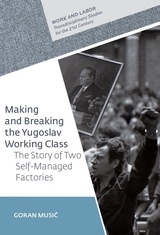
Workers' self-management was one of the unique features of communist Yugoslavia. Goran Musić has investigated the changing ways in which blue-collar workers perceived the recurring crises of the regime. Two self-managed metal enterprises, one in Serbia another in Slovenia, provide the frame of the analysis in the time span between 1945 and 1989. These two factories became famous for strikes in 1988 that evoked echoes in popular discourses in former Yugoslavia. Drawing on interviews, factory publications and other media, local archives, and secondary literature, Musić analyzes the two cases, going beyond the clichés of political manipulation from the top and workers' intrinsic attraction to nationalism.
The author explains how, in the later phase of communist Yugoslavia, growing social inequalities among the workers and undemocratic practices inside the self-managed enterprises facilitated the spread of a nationalist and pro-market ideology on the shop floors. Yet rather than being a mass taken advantage of by populist leaders, the working class Musić presents is one with agency and voice, a force that played an important role in shaping the fate of the country. The book thus seeks to open a debate on the social processes leading up to the dissolution of Yugoslavia.

This social, cultural, and political history of Slavic Muslim women of the Yugoslav region in the first decades of the post-Ottoman era is the first to provide a comprehensive overview of the issues confronting these women. It is based on a study of voluntary associations (philanthropic, cultural, Islamic-traditionalist, and feminist) of the period.
It is broadly held that Muslim women were silent and relegated to a purely private space until 1945, when the communist state “unveiled” and “liberated” them from the top down. After systematic archival research in Bosnia, Croatia, Serbia, and Austria, Fabio Giomi challenges this view by showing: • How different sectors of the Yugoslav elite through association publications, imagined the role of Muslim women in post-Ottoman times, and how Muslim women took part in the construction or the contestation of these narratives. • How associations employed different means in order to forge a generation of “New Muslim Women” able to cope with the post-Ottoman political and social circumstances. • And how Muslim women used the tools provided by the associations in order to pursue their own projects, aims and agendas. The insights are relevant for today’s challenges facing Muslim women in Europe. The text is illustrated with exceptional photographs.T


Mămăligă, maize porridge or polenta, is a universally consumed dish in Romania and a prominent national symbol. But its unusual history has rarely been told. Alex Drace-Francis surveys the arrival and spread of maize cultivation in Romanian lands from Ottoman times to the eve of the First World War, and also the image of mămăligă in art and popular culture. Drawing on a rich array of sources and with many new findings, Drace-Francis shows how the making of mămăligă has been shaped by global economic forces and overlapping imperial systems of war and trade.
The story of maize and mămăligă provides an accessible way to revisit many key questions of Romanian and broader regional history. More generally, the book links the history of production, consumption, and representation. Analyses of recipes, literary and popular depictions, and key vocabulary complete the work.
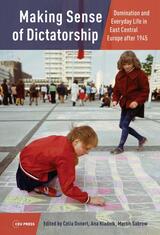
How did political power function in the communist regimes of East Central Europe after 1945? Making Sense of Dictatorship addresses this question with a particular focus on the acquiescent behavior of the majority of the population until, at the end of the 1980s, their rejection of state socialism and its authoritarian world.
The authors refer to the concept of Sinnwelt, the way in which groups and individuals made sense of the world around them. The essays focus on the dynamics of everyday life and the extent to which the relationship between citizens and the state was collaborative or antagonistic. Each chapter addresses a different aspect of life in this period, including modernization, consumption and leisure, and the everyday experiences of “ordinary people,” single mothers, or those adopting alternative lifestyles.
Empirically rich and conceptually original, the essays in this volume suggest new ways to understand how people make sense of everyday life under dictatorial regimes.

The life of Töhötöm Nagy (1908–1979), Jesuit, Mason, and secret service agent, offers fascinating insights into interwar Hungary, the Catholic Church and Vatican diplomacy, Freemasonry, and the activities of communist state security service.
As a young Jesuit Nagy was one of the leaders of a successful Catholic youth movement in interwar Hungary. After World War II he played an important role acting as an intermediary between the Vatican, the Red Army, and the Hungarian Catholic Church. After being sent to South America, he was attracted by liberation theology, but left the Society of Jesus, joined the Freemasons, and did social and philanthropic work in the slums of Buenos Aires. However, in the late 1960s he agreed to work for the Hungarian state security service in return for his repatriation. This latter period is reconstructed from the files of the Historical Archives of State Security in Budapest. Éva Petrás writes with empathy but with a sense of distance of the courage and restless energy of her subject. Her discussion of the limits of free choice and Nagy’s intense struggle to live a meaningful life make this biography breathtaking.

The chapters in this book represent successive phases of one story – that of Mariupol, formerly Ukraine’s tenth largest city, and the second largest in the Donbas region. The author, a young Slovak academic, conducted her ethnographic fieldwork in this coastal town between November 2018 and August 2021. She was one of the last academics to do research in Mariupol before its invasion and eventual occupation by Russia.
During these years, Hana Jošticová was overwhelmed by acts of mobilization and resistance that went in opposite directions: support for a Western direction of Ukraine’s future, and support for the status quo that the victory of the Euromaidan seemed to threaten.
She noted the sequence of events presented in the media and through the lens of individual frames and narratives. Her book is a collection and interpretation of memories and testimonies from both sides: those who actively resisted Russian influence; and those who sparked their own revolution, the ‘Russian Spring.’ Her focus is on self-mobilized individuals who resorted to action outside of established organizational structures spontaneously, autonomously, without resources and guarantees of safety. Her evidence indicates that popular support for the Russian Spring had less to do with Russia than with the social, economic, or cultural characteristics of the Donetsk region.
Years of immersive research convinced the author that individuals are as important as masses, ideas are as powerful as material resources, and beliefs and emotions are as critical as weapons.


The Meaning of Liberalism provides a new perspective on the continuing debate about how liberalism should be defined and what it means in countries with an established parliamentary system, particularly in the new democracies of Central and Eastern Europe.
The key question this book addresses is: will the specific experience of communism and its aftermath give birth to a new distinct current of liberal thought, or will it simply enlarge the scope of the Western liberal debate? The authors argue that liberalism cannot be reduced merely to private property and market prices, but needs a very complex set of institutions and corresponding law.
Contributors come from both sides of the former Iron Curtain and they highlight the richness and diversity of liberalism and discuss different perceptions of liberal thinking in the East and West in the post-modern world.


This scathing, at times humorous, and always insightful memoir by exiled Hungarian novelist Sándor Márai, provides one of the most poignant and human portraits of life in Hungary between the German occupation in 1944 and the solidification of communist power in 1948. Both a fervent anti-fascist and anti-communist, Márai draws a vivid portrait of the Hungarian peasantry and middle-class during this period, while delivering a telling indictment of the communist system from which he fled. Witty, aphoristic and psychologically clear-sighted, this memoir depicts the tragedy and pathos of a crucial period in the post-war history of a nation which has been 'central' to both the communists and the post-communist history of our times.

This account of historical politics in Ukraine, framed in a broader European context, shows how social, political, and cultural groups have used and misused the past from the final years of the Soviet Union to 2020. Georgiy Kasianov details practices relating to history and memory by a variety of actors, including state institutions, non-governmental organizations, political parties, historians, and local governments. He identifies the main political purposes of these practices in the construction of nation and identity, struggles for power, warfare, and international relations.
Kasianov considers the Ukrainian case in the context of a global increase in the politics of history and memory, with particular emphasis on a distinctive East-European variety. He pays special attention to the use and abuse of history in relations between Ukraine, Russia, and Poland.

Taking Professor Natalie Zemon Davis’ fascinating biographical studies of three Women on the Margins in the seventeenth century as an inspiration, the author of this book offers three portraits of men who were at the very center of governance in thirteenth-century France, men who strove in the shadow of King Louis IX (Saint Louis) to impose a redemptive regime on the realm. Professor Jordan treats them as individuals, but in a sense they are also types: Robert of Sorbon, a churchman; Etienne Boileau, a bourgeois; and Simon de Nesle, an aristocrat. Robert was the founder of the Sorbonne; Boileau was the prévôt or royal administrator of Paris; and Simon was twice co-regent of the kingdom. Thinking about them and their relations with Louis IX opens up a new and altogether sobering vista for exploring the nature of the king’s rule and the impact of his rule on his subjects.

Religious history and, in particular, the history of the cult of saints and their miracles has recently become one of the most popular fields of historical investigation. Together with continuing interest in the related ecclesiastic motivations and the well organized craft of hagiography, this new interest might be explained by the marvellously rich details of thousands of witness accounts testifying to the miraculous help they received from the saint in times of desparate need. These accounts provide an unparalleled insight into the history of everyday life and into the various hardships, illnesses, hopes dreams and anxieties during the late medieval and early modern period.
Only two records exist on the history of the medieval Hungarian kingdom- the thirteenth century canonization trial of St. Margaret of Hungary and the miracle collections promoting the canonization of St. John of Capistran, the victorious Crusader at Belgrade in 1456, who died thereafter in Ilok (a city located on the periphery of western Christianity in Croatia). Based on a careful study of the widely scattered manuscripts on Capistranean miracles and with the help of a microscopic philological analysis, the author has managed to reconstruct, for the first time, one of the most complex miracle collections in the history of medieval hagiography.
Covering the recording of the first miracle series by the urban notaries of Ilok, the local hagiographer of Ilok Franciscans (John Geszti), the vicar general of the Hungarian province (Stephen Varsányi), and a number of subsequent editions and amplifications of this material recycling into the canonization campaign of St. John of Capistran and the miracles he himself recorded, The Miracles of St. John of Capistran, is an outstanding debut by a representative of a new generation of Central European medievalists.


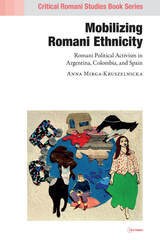
The Roma issue is generally treated as a European matter. Indeed, the Roma are the largest European minority—their presence outside of Europe is a result of various waves of migration over the past four hundred years. Likewise, the stereotypes associated with the Roma—the problematized, stigmatized status of a “Gypsy” as well as the historical and contemporary manifestations of antigypsyism—are also of European origin. This book claims, however, that the perception of Roma being strictly a European issue is flawed, and that re-connecting the Roma issue globally represents an important learning experience and an added value.
The book offers a critical exploration of Romani political activism in Colombia and Argentina, and compares it to that in Spain, narrated from the intimate perspective of Romani actors themselves. By outlining parallel lineages of Romani activism in three countries and on two continents, the author arrives at broad conclusions regarding the nature of ethnic mobilization. Mirga-Kruszelnicka proposes a new synergetic conceptualization of this multidirectional concept as an interplay between political opportunities, mobilizing structures, and frames of identity.
Contributing to the vivid debate about the relationship between the researcher and the researched, the book also includes an original discussion of the positionality of scholars of Romani background.


For five months in 2013–2014, Dušan Pavlović took time off from teaching to accept a senior position in Serbia’s Ministry of Economy. This short period was long enough for him to make a penetrating diagnosis of the economic activity of the postcommunist government. He found that a coterie of tycoons and politicians live off the wealth of the majority of citizens and smaller entrepreneurs, while the economy performs below its capacities. In academic terms, extractive economic institutions create allocative inefficiency.
Vivid, suggestive, and even entertaining accounts depict how privatization is administered and foreign investment projects are handled, and how party members, relatives, and friends are hired into public administration and state-owned companies. They show how the managers of firms that queue for state subsidies resist the systematic screening of their businesses. The principles of Keynesian economics are distorted and misused to conceal deliberate fiscal mismanagement. Huge ill-conceived development projects siphon taxpayers’ money from “non-economic” activities like social services, health, education, science, and culture.
What Pavlović found in Serbia is acutely symptomatic of many other European post-communist regimes of our time, lending his book singular importance.
This volume of essays intends to present diverse aspects of monotheistic kingship during the Middle Ages in two general-theoretical articles and a series of “case studies” on the relationship of religion and rulership. The authors discuss examples of the role of religion—based on both textual and iconic evidence—in Carolingian, Ottonian and late medieval western Europe; in Byzantium and Armenia; Georgia; Hungary; the Khazar Khanate; Poland, and Rus’. Two studies explore the issue in medieval Jewish and Islamic political thought. The editors hope that these special inquiries will engender more comparative studies on the subject.

From the very first weeks of Russia’s large-scale attack on Ukraine in February 2022, Russian soldiers, politicians, and proxy administrators expended considerable effort interacting with monuments on newly occupied territory. Why did the invaders care enough about war memorials to divert scarce resources to destroying, maintaining, or building them amid a massive war? Why did they remove some memorials and spare others? What was the point of commemorating past victories and defeats while bombing Ukrainian cities, and how did commemorative ceremonies in the occupied territories
change over the first year of the war? What was the broader impact of monument-related practices beyond the local settings in which they occurred? And what does the Ukrainian case teach us more generally about how memorials to past wars can be used to justify new conquests? These are some of the questions this book explores, based on fieldwork in occupied Ukraine and online research.

More Nights Than Days is a unique exploration of the experience of children who survived the Holocaust—including Roma and Sinti victims—and the genocides in Cambodia, Rwanda, and Bosnia. Children are among the principal victims of armed conflicts and slaughters; nonetheless, they perceive events through the prism of their unique perspective and have a range of coping techniques adults don't possess.
This overview of writings of ninety-one child survivors bears evidence from a wide range of human ruthlessness. The author presents little-known texts along with famous memoirs and autobiographical fiction, with abundant quotations. Many of these are not only compelling as historical testimony, but poetic and stirringly expressive. Yudit Kiss has not written a historical study or literary criticism of the children’s books. She explores, instead, what the authors went through and what they felt and understood about their experience. An accessible and captivating reading, this volume presents a close-up, human size dimension of the destruction. The books written by child survivors also describe the resources and means that helped them to remain human even in the deepest well of inhumanity, offering precious lessons about resistance and resilience.M
The writer and journalist Moritz Gottlieb Saphir (1795–1858) was born to an Orthodox Jewish family in a Hungarian village and studied in a yeshiva but spent his professional life in the cities of Germany and Austria. He was one of the most popular authors and cultural figures in Central and Western Europe in the 19th century, which can be also seen from the fact that Alexandre Dumas, Sr. published a collection of his writings in French complete with a long essay expressing his admiration for Saphir. Together with his friends Heinrich Heine and Ludwig Börne, Saphir was the first Jewish author to achieve international fame. Like them, he converted to the Lutheran faith, but he never denied his Jewish origins and wrote appreciatively of Jewish food traditions.
His literary and journalistic innovations included publishing the first modern newspapers in Berlin, Munich and Vienna, developing a new style of humorous writing, introducing the journalistic genre of the feuilleton to Austria, authoring the first extended prose poem in the German language and writing the first study of vernacular Ashkenazi Jewish cuisine, as well as the first review of a Jewish cookbook and restaurant. Although due to censorship he had to largely eschew political subjects, he courageously fought for press freedom and against anti-Jewish prejudice. Although perhaps not a great writer, he was an important and intriguing figure of European cultural history who certainly doesn’t deserve the neglect his work has suffered since the early 20th century.
András Koerner’s book is the first modern monograph of him, which in addition to a detailed presentation of his eventful, interesting life and an examination of his personality, identity and work also includes the first-ever extensive annotated anthology of him in English.
Catherine Horel has undertaken a comparative analysis of the societal, ethnic, and cultural diversity in the last decades of the Habsburg Monarchy as represented in twelve cities: Arad, Bratislava, Brno, Chernivtsi, Lviv, Oradea, Rijeka, Sarajevo, Subotica, Timișoara, Trieste, and Zagreb. By purposely selecting these cities, the author aims to counter the disproportionate attention that the largest cities in the empire receive.
With a focus on the aspects of everyday life faced by the city inhabitants (associations, schools, economy, and municipal politics) the book avoids any idealization of the monarchy as a paradise of peaceful multiculturalism, and also avoids exaggerating conflicts. The author claims that the world of the Habsburg cities was a dynamic space where many models coexisted and created vitality, emulation, and conflict. Modernization brought about the dissolution of old structures, but also mobility, the progress of education, the explosion of associative life, and constantly growing cultural offerings.

READERS
Browse our collection.
PUBLISHERS
See BiblioVault's publisher services.
STUDENT SERVICES
Files for college accessibility offices.
RECENTLY PUBLISHED



UChicago Accessibility Resources
home | accessibility | search | about | contact us
BiblioVault ® 2001 - 2026
The University of Chicago Press