
 A SCHOLARLY BOOK REPOSITORY
12 start with M start with M
Macroeconomic policy involves government action intended to influence the overall operation of the economy and to deal with such important public problems as economic growth, inflation, unemployment, and recession. In this first comprehensive treatment of presidential management of such policy for any presidency, authors James E. Anderson and Jared E. Hazleton focus on four tasks: developing and maintaining an information and decision-making system; coordination of policies in different macroeconomic areas; building support or consent for presidential policies; and administrative leadership. Drawing extensively upon presidential documents and interviews with Johnson administration officials, the authors pay particular attention to fiscal, monetary, wage-price, and international economic (especially balance of payments) policies during Johnson’s terms.
The authors use the concept of the subpresidency, as defined by Redford and Blisset in Organizing the Executive Branch: The Johnson Presidency (University of Chicago Press, 1981), to show how Johnson managed the macro-economic institutions of the council of Economic Advisors, the Bureau of the Budget (now the Office of Management and Budget), the Department of the Treasury, and the Federal Reserve Board in pursuit of his economic goals. What emerges is a vivid portrait of an activist president.
In evaluating management of macroeconomic policy in the Johnson administration, the authors focus on how presidential policies are developed and adopted rather than on the substance of the policies themselves. They conclude that the Johnson administration competently managed policy development during its presidential years.
This book is a volume in the Administrative History of the Johnson Presidency Series sponsored by the LBJ School of Public Affairs at the University of Texas at Austin, the first two volumes of which were published by the University of Chicago Press. Managing Macroeconomic Policy: The Johnson Presidency was funded in part by the National Endowment for the Humanities.
Managing "Modernity" engages a variety of intellectual perspectives in the social sciences. The theoretical approach represents a conscious effort to overcome the contentious debates in political science and sociology among proponents of historical institutionalism, cultural analysis, and rational-choice theory. The substantive argument draws on, and partially integrates, concepts and findings from comparative politics, economic sociology, industrial relations, organization theory, business management, and the political economy of Japan and Russia.
In light of ongoing debates over the significance and impact of "globalization," the eclectic and integrative approach in Managing "Modernity" offers a fresh and provocative contribution that will interest scholars and graduate students across a variety of disciplines and subfields. It offers compelling insights to anyone generally concerned with the social forces that facilitate or hinder the diffusion of ideas and institutions across national boundaries.
Rudra Sil is Janice and Julian Bers Assistant Professor in the Social Sciences, Department of Political Science, University of Pennsylvania.
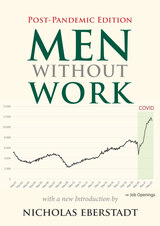
The grim truth: over six million prime-age men were neither working nor looking for work. Conventional unemployment measures ignored these labor force dropouts, but their ranks had been rising relentlessly for half a century. Eberstadt’s unflinching analysis was, in the words of The New York Times, “an unsettling portrait not just of male unemployment, but also of lives deeply alienated from civil society.”
The famed American work ethic was once near universal: men of sound mind and body took pride in contributing to their communities and families. No longer, warned Eberstadt. And now—six years and one catastrophic pandemic later—the problem has not only worsened: it has seemingly been spreading among prime-age women and workers over fifty-five.
In a brand new introduction, Eberstadt explains how the government’s response to Covid-19 inadvertently exacerbated the flight from work in America. From indiscriminate pandemic shutdowns to almost unconditional “unemployment” benefits, Americans were essentially paid not to work.
Thus today, despite the vaccine rollouts, inexplicable numbers of working age men and women are sitting on the sidelines while over 11 million jobs go unfilled. Current low rates of unemployment, touted by pundits and politicians, are grievously misleading. The truth is that fewer prime-age American men are looking for readily available work than at any previous juncture in our history. And others may be catching the “Men Without Work” virus too.
Given the devastating economic impact of the Covid calamity and the unforeseen aftershocks yet to come, this reissue of Eberstadt’s groundbreaking work is timelier than ever.

Prior to the millennium, economists and policy makers argued that free trade between the United States and Mexico would benefit both Americans and Mexicans. They believed that NAFTA would be a “win-win” proposition that would offer U.S. companies new markets for their products and Mexicans the hope of living in a more developed country with the modern conveniences of wealthier nations. Blending rigorous economic and statistical analysis with concern for the people affected, Mexican Women in American Factories offers the first assessment of whether NAFTA has fulfilled these expectations by examining its socioeconomic impact on workers in a Mexican border town.
Carolyn Tuttle led a group that interviewed 620 women maquila workers in Nogales, Sonora, Mexico. The responses from this representative sample refute many of the hopeful predictions made by scholars before NAFTA and reveal instead that little has improved for maquila workers. The women’s stories make it plain that free trade has created more low-paying jobs in sweatshops where workers are exploited. Families of maquila workers live in one- or two-room houses with no running water, no drainage, and no heat. The multinational companies who operate the maquilas consistently break Mexican labor laws by requiring women to work more than nine hours a day, six days a week, without medical benefits, while the minimum wage they pay workers is insufficient to feed their families. These findings will make a crucial contribution to debates over free trade, CAFTA-DR, and the impact of globalization.
Forty-five prominent scholars engage in self-critical, state-of-the-art reflection on international studies to stimulate debates about successes and failures and to address the larger question of progress in the discipline. Written especially for the collection, these essays are in hardcover in the form of an easy-to-use handbook, and in paperback as a number of separate titles, each of which consists of a particular thematic cluster to merge with the range of topics taught in undergraduate and graduate courses in international studies.
The themes addressed are realism, institutionalism, critical perspectives, feminist theory and gender studies, methodology (formal modeling, quantitative, and qualitative), foreign policy analysis, international security and peace studies, and international political economy.
This collection provides an accessible and wide-ranging survey of the issues in the field as well as an invaluable bibliography, and will undoubtedly determine the shape of future research in international studies for the millennium.
Paperbacks for course adoption:
Realism and Institutionalism in International Studies
Michael Brecher and Frank P. Harvey, Editors
Conflict, Security, Foreign Policy, and International Political Economy:Past Paths and Future Directions in International Studies
Michael Brecher and Frank P. Harvey, Editors
Evaluating Methodology in International Studies
Frank P. Harvey and Michael Brecher, Editors
Critical Perspectives in International Studies
Frank P. Harvey and Michael Brecher, Editors
Contributors are: Steve J. Brams, Davis B. Bobrow, Michael Cox, Robert W. Cox, Bruce Bueno de Mesquita, Joseph M. Grieco, Ernst B. Haas , Peter M. Haas, Kal J. Holsti, Ole R. Holsti, Patrick James, Robert O. Keohane, Edward A. Kolodziej, Louis Kriesberg Robert T. Kudrle, David A. Lake, Yosef Lapid, Russell Leng , Jack S. Levy, L. H. M. Ling, Zeev Maoz, Lisa L. Martin, John J. Mearsheimer, Manus I. Midlarsky, Linda B. Miller, Helen Milner , Michael Nicholson, Joseph Nye, V. Spike Peterson , Jan Jindy Pettman, James Lee Ray , James Rosenau, Harvey Starr, J. David Singer, Steve Smith, Christine Sylvester, J. Ann Tickner, John Vasquez, Yaacov Y. I. Vertzberger, R. B. J. Walker, Stephen G. Walker , Jonathan Wilkenfeld, Oran Young, Marysia Zalewski, and Dina A. Zinnes.
Michael Brecher is R. B. Angus Professor of Political Science, McGill University, and former president of the International Studies Association.
Frank P. Harvey is Professor of Political Science and Director, Center for Foreign Policy Studies, Dalhousie University.
Beginning with the rise of the growth paradigm in the 1940s and 1950s and continuing through the present day, The Mismeasure of Progress is the first book on the myriad thinkers who argued against growth and the conventional way progress had been measured and defined. For growth critics, questioning the meaning and measurement of growth was a necessary first step to creating a more just, equal, and sustainable world. These critics argued that focusing on growth alone would not resolve social, political, and environmental problems, and they put forth alternate methods for defining and measuring human progress.
In today’s global political scene—marked by vast inequalities of power and wealth and made even more fraught by a global climate emergency—the ideas presented by these earlier critics of growth resonate more loudly than ever. Economic growth appealed to many political leaders because it allowed them to avoid addressing political trade-offs and class conflict. It sustained the fiction that humans are somehow separate from nonhuman “nature,” ignoring the intimate and dense connections between the two. In order to create a truly just and equitable society, Macekura argues, we need a clear understanding of our collective needs beyond growth and more holistic definitions of progress that transcend economic metrics like GDP.
Some of the papers in this volume evaluate a variety of policy rules based on monetary aggregates, nominal income, commodity prices, and other economic variables. Others analyze price behavior and inflation, particularly the short-run behavior of prices. Still others examine the monetary transmission mechanism—the channel through which the central bank's actions affect spending on goods and services—with a special focus on the reduction in bank lending that must accompany a reduction in reserves.
This new research will be of special interest to central bankers and academic economists.

For five months in 2013–2014, Dušan Pavlović took time off from teaching to accept a senior position in Serbia’s Ministry of Economy. This short period was long enough for him to make a penetrating diagnosis of the economic activity of the postcommunist government. He found that a coterie of tycoons and politicians live off the wealth of the majority of citizens and smaller entrepreneurs, while the economy performs below its capacities. In academic terms, extractive economic institutions create allocative inefficiency.
Vivid, suggestive, and even entertaining accounts depict how privatization is administered and foreign investment projects are handled, and how party members, relatives, and friends are hired into public administration and state-owned companies. They show how the managers of firms that queue for state subsidies resist the systematic screening of their businesses. The principles of Keynesian economics are distorted and misused to conceal deliberate fiscal mismanagement. Huge ill-conceived development projects siphon taxpayers’ money from “non-economic” activities like social services, health, education, science, and culture.
What Pavlović found in Serbia is acutely symptomatic of many other European post-communist regimes of our time, lending his book singular importance.

The emphasis is on politics within and also between multilateral institutions, analysing the relations – both competitive and collaborative – between, for example, the World Bank and UNDP. NGOs are also shown to be important actors, and the role they have played in recent years is critically assessed. The book concludes with some emerging trends: the ‘privatisation’ of the system, regionalisation, and ‘the politics of protest’.
Bøås and McNeill do not simply take the policies of multilateral institutions at face value, but ask how and why these policies came into existence. They seek to promote critical, but informed, engagement both with the member states of multilateral institutions and the institutions themselves.
READERS
Browse our collection.
PUBLISHERS
See BiblioVault's publisher services.
STUDENT SERVICES
Files for college accessibility offices.
RECENTLY PUBLISHED





UChicago Accessibility Resources
home | accessibility | search | about | contact us
BiblioVault ® 2001 - 2026
The University of Chicago Press