
 A SCHOLARLY BOOK REPOSITORY
15 start with M start with M
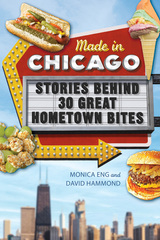
A BookRiot Most Anticipated Travel Book of 2023
Italian beef and hot dogs get the headlines. Cutting-edge cuisine and big-name chefs get the Michelin stars. But Chicago food shows its true depth in classic dishes conceived in the kitchens of immigrant innovators, neighborhood entrepreneurs, and mom-and-pop visionaries.
Monica Eng and David Hammond draw on decades of exploring the city’s food landscape to serve up thirty can’t-miss eats found in all corners of Chicago. From Mild Sauce to the Jibarito and from Taffy Grapes to Steak and Lemonade, Eng and Hammond present stories of the people and places behind each dish while illuminating how these local favorites reflect the multifaceted history of the city and the people who live there. Each entry provides all the information you need to track down whatever sounds good and selected recipes even let you prepare your own Flaming Saganaki or Akutagawa.
Generously illustrated with full-color photos, Made in Chicago provides locals and visitors alike with loving profiles of a great food city’s defining dishes.
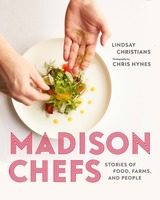
Farm-to-table is a cliché, but its roots among the farmers and chefs of south-central Wisconsin are deep, vibrant, and resilient. From brats and burgers to bibimbap, Madison’s food scene looks substantially different than it did just a decade ago. Though the city has always been ahead of the locavore movement, a restaurant boom in the 2010s radically changed the dining landscape. Even when individual eateries close or chefs move on, their ideas, connections, and creativity have lasting power. Much larger cities have been unable to match the culinary variety, innovation, and depth of talent found in Wisconsin’s state capital.
Lindsay Christians’s in-depth look at nine creative, intense, and dedicated chefs captures the reason why Madison’s food culture remains a gem in America’s Upper Midwest. This beautifully illustrated book will leave you salivating—or making reservations.
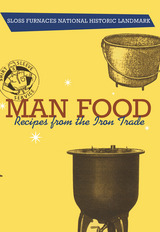
The secret history of manly eating in the Heart of Dixie
Man Food: Recipes from the Iron Trade is a flavorful tribute to Alabama’s industrial soul and culinary heart. Born from the legendary Sloss Furnaces in Birmingham—once the beating heart of the Magic City’s iron industry—this cookbook blends Southern tradition, foundry grit, and backyard hospitality into one unforgettable volume.
Collected from the pages of Pig Iron Rough Notes, a magazine once circulated among Alabama’s ironworkers, these recipes reflect the lives of men who forged metal by day and cooked with cast iron by night. Inside, you’ll find dishes like Brunswick Stew, Catfish Chowder, and Bean Hole Beans—hearty meals rooted in Alabama’s outdoors, work camps, and family kitchens.
With colorful stories, vintage illustrations, and a deep appreciation for cast-iron cooking, Man Food celebrates the “Gentlemen Cooks” of the South—men who knew that good food and good company were just as important as hard work. Whether you're a native Alabamian, a history buff, or a lover of Southern foodways, this book offers a delicious slice of Alabama culture.
Fire up your skillet, pour a cup of camp coffee, and taste the legacy of the Iron Trade—Alabama style.
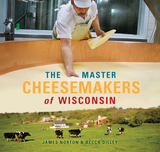
Certification as a Master Cheesemaker typically takes almost fifteen years. An applicant must hold a cheesemaking license for at least ten years, create one or two chosen varieties of cheese for at least five years, take more than two years of university courses, consent to constant testing of their cheese and evaluation of their plant, and pass grueling oral and written exams to be awarded the prestigious title.
James Norton and Becca Dilley interviewed these dairy artisans, listened to their stories, tasted their cheeses, and explored the plants where they work. They offer here profiles of forty-three active Master Cheesemakers of Wisconsin, as well as a glossary of cheesemaking terms, suggestions of operations that welcome visitors for tours, tasting notes and suggested food pairings, and tasty nuggets (shall we say curds?) of information on everything to do with cheese.
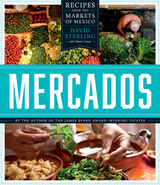
Part travelogue, part cookbook, Mercados takes us on a tour of Mexico’s most colorful destinations—its markets—led by an award-winning, preeminent guide whose passion for Mexican food attracted followers from around the globe. Just as David Sterling’s Yucatán earned him praise for his “meticulously researched knowledge” (Saveur) and for producing “a labor of love that well documents place, people and, yes, food” (Booklist), Mercados now invites readers to learn about local ingredients, meet vendors and cooks, and taste dishes that reflect Mexico’s distinctive regional cuisine.
Serving up more than one hundred recipes, Mercados presents unique versions of Oaxaca’s legendary moles and Michoacan’s carnitas, as well as little-known specialties such as the charcuterie of Chiapas, the wild anise of Pátzcuaro, and the seafood soups of Veracruz. Sumptuous color photographs transport us to the enormous forty-acre, 10,000-merchant Central de Abastos in Oaxaca as well as tiny tianguises in Tabasco. Blending immersive research and passionate appreciation, David Sterling’s final opus is at once a must-have cookbook and a literary feast for the gastronome.
Macías conducted numerous interviews for Mexican American Mojo, and the voices of little-known artists and fans fill its pages. In addition, more famous musicians such as Ritchie Valens and Lalo Guerrero are considered anew in relation to their contemporaries and the city. Macías examines language, fashion, and subcultures to trace the history of hip and cool in Los Angeles as well as the Chicano influence on urban culture. He argues that a grass-roots “multicultural urban civility” that challenged the attempted containment of Mexican Americans and African Americans emerged in the neighborhoods, schools, nightclubs, dance halls, and auditoriums of mid-twentieth-century Los Angeles. So take a little trip with Macías, via streetcar or freeway, to a time when Los Angeles had advanced public high school music programs, segregated musicians’ union locals, a highbrow municipal Bureau of Music, independent R & B labels, and robust rock and roll and Latin music scenes.
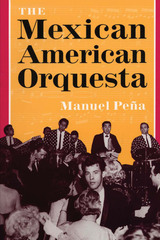
The Mexican American orquesta is neither a Mexican nor an American music. Relying on both the Mexican orquesta and the American dance band for repertorial and stylistic cues, it forges a synthesis of the two. The ensemble emerges historically as a powerful artistic vehicle for the expression of what Manuel Peña calls the "dialectic of conflict." Grounded in ethnic and class conflict, this dialectic compels the orquesta and its upwardly mobile advocates to waver between acculturation and ethnic resistance. The musical result: a complex mesh of cultural elements—Mexican and American, working- and middle-class, traditional and contemporary.
In this book, Manuel Peña traces the evolution of the orquesta in the Southwest from its beginnings in the nineteenth century through its pinnacle in the 1970s and its decline since the 1980s. Drawing on fifteen years of field research, he embeds the development of the orquesta within a historical-materialist matrix to achieve the optimal balance between description and interpretation. Rich in ethnographic detail and boldly analytical, his book is the first in-depth study of this important but neglected field of artistic culture.
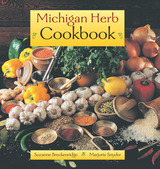
If you're interested in cooking with herbs and want to use the best of Michigan and the Midwest's seasonal foods, then this is the cookbook for you.
The recipe section is written for both the novice and the more experienced cook. Each recipe has helpful information about serving suggestions and menu ideas. Scattered throughout the book are handy tips related to foods, herbs, and cooking. In addition, Michigan Herb Cookbook includes a section on herb growing and designing in which planting, growing, freezing, drying, and storage tips for over thirty herbs are explained in detail.
You will find over 150 recipes in the book's seven chapters. More than half are low-fat, and there are many vegetarian favorites. Also, a chapter devoted to condiments and "little extras" contains various herb blend, vinegar, chutney, pesto, and sauce recipes, such as Sun-Dried-Tomato Pesto and Roasted Red Pepper Sage Sauce.
Suzanne Breckenridge, formerly a ceramics and cooking instructor, is now a food stylist and caterer. Marjorie Snyder is a freelance food writer, a cooking teacher at a junior college, and cofounder and president of the Madison Wisconsin Herb Society.
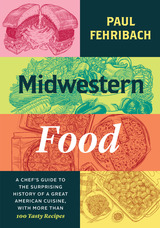
Celebrated chef Paul Fehribach has made his name serving up some of the most thoughtful and authentic regional southern cooking—not in the South, but in Chicago at Big Jones. But over the last several years, he has been looking to his Indiana roots in the kitchen, while digging deep into the archives to document and record the history and changing foodways of the Midwest.
Fehribach is as painstaking with his historical research as he is with his culinary execution. In Midwestern Food, he focuses not only on the past and present of Midwestern foodways but on the diverse cultural migrations from the Ohio River Valley north- and westward that have informed them. Drawing on a range of little-explored sources, he traces the influence of several heritages, especially German, and debunks many culinary myths along the way.
The book is also full of Fehribach’s delicious recipes informed by history and family alike, such as his grandfather's favorite watermelon rind pickles; sorghum-pecan sticky rolls; Detroit-style coney sauce; Duck and manoomin hotdish; pawpaw chiffon pie; strawberry pretzel gelatin salad (!); and he breaks the code to the most famous Midwestern pizza and BBQ styles you can easily reproduce at home. But it is more than just a cookbook, weaving together historical analysis and personal memoir with profiles of the chefs, purveyors, and farmers who make up the food networks of the region.
The result is a mouth-watering and surprising Midwestern feast from farm to plate. Flyover this!

Elizabeth Zanoni provides a cutting-edge comparative look at Italian people and products on the move between 1880 and 1940. Concentrating on foodstuffs—a trade dominated by Italian entrepreneurs in New York and Buenos Aires—Zanoni reveals how consumption of these increasingly global imports affected consumer habits and identities and sparked changing and competing connections between gender, nationality, and ethnicity. Women in particular—by tradition tasked with buying and preparing food—had complex interactions that influenced both global trade and their community economies. Zanoni conveys the complicated and often fraught values and meanings that surrounded food, meals, and shopping.
A groundbreaking interdisciplinary study, Migrant Marketplaces offers a new perspective on the linkages between migration and trade that helped define globalization in the late nineteenth and early twentieth centuries.
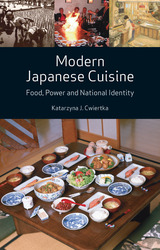
Katarzyna J. Cwiertka demonstrates that key shifts in the Japanese diet were, in many cases, a consequence of modern imperialism. Exploring reforms in military catering and home cooking, wartime food management and the rise of urban gastronomy, Cwiertka shows how Japan’s numerous regional cuisines were eventually replaced by a set of foods and practices with which the majority of Japanese today ardently identify.
The result of over a decade of research, Modern Japanese Cuisine is a fascinating look at the historical roots of some of the world’s best cooking and will provide appetizing reading for scholars of Japanese culture and foodies alike.
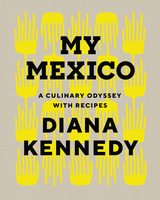
By universal acclaim, Diana Kennedy is the world’s authority on the authentic cuisines of Mexico. For decades, she has traveled the length and breadth of the country, seeking out the home cooks, local ingredients, and traditional recipes that make Mexican cuisines some of the most varied and flavorful in the world. Kennedy has published eight classic Mexican cookbooks, including the James Beard Award-winning Oaxaca al Gusto. But her most personal book is My Mexico, a labor of love filled with more than three hundred recipes and stories that capture the essence of Mexican food culture as Kennedy has discovered and lived it. First published in 1998, My Mexico is now back in print with a fresh design and photographs—ready to lead a new generation of gastronomes on an unforgettable journey through the foods of this fascinating and complex country.
READERS
Browse our collection.
PUBLISHERS
See BiblioVault's publisher services.
STUDENT SERVICES
Files for college accessibility offices.
RECENTLY PUBLISHED






UChicago Accessibility Resources
home | accessibility | search | about | contact us
BiblioVault ® 2001 - 2026
The University of Chicago Press