
 A SCHOLARLY BOOK REPOSITORY
27 start with M start with M
The international bestseller that has helped millions of students, teachers, and lifelong learners use proven approaches to learn better and remember longer.
“We have made Make It Stick a touchstone for our instructors … to gain a real advantage for our learners as they tackle some of the toughest work in the world.” —Carl Czech, former Senior Instructional Systems Specialist/Advisor, US Navy SEALs
Are you tired of forgetting what you learn? This groundbreaking book, based on the latest research in cognitive science, offers powerful strategies to boost memory and learning.
To most of us, learning something “the hard way” means wasted time and effort. Good teaching, many believe, should be tailored to the different learning styles of students and should use strategies that make learning easier. Make It Stick turns fashionable ideas like these on their head. Drawing on recent discoveries in cognitive psychology and a ten-year collaboration among some of the world’s leading experts on human learning and memory, the authors explain what really drives successful learning. With clear, real-world examples, they show how we can confidently hone our skills and learn more effectively.
Many common study habits simply don’t work. Underlining, highlighting, rereading, cramming, and single-minded repetition of new skills create the illusion of mastery, but gains fade quickly. Science shows that more durable learning comes from self-testing, introducing certain difficulties in practice, waiting to re-study new material until a little forgetting has occurred, and interleaving the practice of one skill or topic with another. Make It Stick breaks down these proven approaches in compelling ways and offers concrete techniques for becoming more productive learners.
Full of eye-opening and inspiring stories for students, educators, and parents, Make It Stick is an indispensable guide for all those interested in the challenge of lifelong learning and self-improvement.

A Chronicle of Higher Education “Top 10 Books on Teaching” Selection
To most of us, learning something “the hard way” implies wasted time and effort. Good teaching, we believe, should be creatively tailored to the different learning styles of students and should use strategies that make learning easier. Make It Stick turns fashionable ideas like these on their head. Drawing on recent discoveries in cognitive psychology and other disciplines, the authors offer concrete techniques for becoming more productive learners.
“If you want to read a lively and engaging book on the science of learning, this is a must.”
—Hazel Christie, Times Higher Education
“Many educators are interested in making use of recent findings about the human brain and how we learn…Make It Stick [is] the single best work I have encountered on the subject. Anyone with an interest in teaching or learning will benefit from reading this book.”
—James M. Lang, Chronicle of Higher Education

Americans have access to some of the best science education in the world, but too often black students are excluded from these opportunities. This essential book by leading voices in the field of education reform offers an inspiring vision of how America’s universities can guide a new generation of African Americans to success in science.
Educators, research scientists, and college administrators have all called for a new commitment to diversity in the sciences, but most universities struggle to truly support black students in these fields. Historically black colleges and universities (HBCUs) are different, though. Marybeth Gasman, widely celebrated as an education-reform visionary, and Thai-Huy Nguyen show that many HBCUs have proven adept at helping their students achieve in the sciences. There is a lot we can learn from these exemplary schools.
Gasman and Nguyen explore ten innovative schools that have increased the number of black students studying science and improved those students’ performance. Educators on these campuses have a keen sense of their students’ backgrounds and circumstances, familiarity that helps their science departments avoid the high rates of attrition that plague departments elsewhere. The most effective science programs at HBCUs emphasize teaching when considering whom to hire and promote, encourage students to collaborate rather than compete, and offer more opportunities for black students to find role models among both professors and peers.
Making Black Scientists reveals the secrets to these institutions’ striking successes and shows how other colleges and universities can follow their lead. The result is a bold new agenda for institutions that want to better serve African American students.
The essays in Making Mark Twain Work in the Classroom reaffirm the importance of Twain in the American literature curriculum from high school through graduate study. Addressing slavery and race, gender, class, religion, language and ebonics, Americanism, and textual issues of interest to instructors and their students, the contributors offer guidance derived from their own demographically diverse classroom experiences. Although some essays focus on such works as A Connecticut Yankee in King Arthur’s Court and The Innocents Abroad, most discuss the hotly debated Adventures of Huckleberry Finn, viewed alternately in this volume as a comic masterpiece or as evidence of Twain’s growing pessimism—but always as an effective teaching tool.
By placing Twain’s work within the context of nineteenth-century American literature and culture, Making Mark Twain Work in the Classroom will interest all instructors of American literature. It will also provoke debate among Americanists and those concerned with issues of race, class, and gender as they are represented in literature.
Contributors. Joseph A. Alvarez, Lawrence I. Berkove, Anthony J. Berret, S.J., Wesley Britton, Louis J. Budd, James E. Caron, Everett Carter, Jocelyn Chadwick-Joshua, Pascal Covici Jr., Beverly R. David, Victor Doyno, Dennis W. Eddings, Shelley Fisher Fishkin, S. D. Kapoor, Michael J. Kiskis, James S. Leonard, Victoria Thorpe Miller, Stan Poole, Tom Reigstad, David E. E. Sloane, David Tomlinson

For many college students, studying the hard sciences seems out of the question. Students and professors alike collude in the prejudice that physics and molecular biology, mathematics and engineering are elite disciplines restricted to a small number with innate talent. Gregory Light and Marina Micari reject this bias, arguing, based on their own transformative experiences, that environment is just as critical to academic success in the sciences as individual ability. Making Scientists lays the groundwork for a new paradigm of how scientific subjects can be taught at the college level, and how we can better cultivate scientists, engineers, and other STEM professionals.
The authors invite us into Northwestern University’s Gateway Science Workshop, where the seminar room is infused with a sense of discovery usually confined to the research lab. Conventional science instruction demands memorization of facts and formulas but provides scant opportunity for critical reflection and experimental conversation. Light and Micari stress conceptual engagement with ideas, practical problem-solving, peer mentoring, and—perhaps most important—initiation into a culture of cooperation, where students are encouraged to channel their energy into collaborative learning rather than competition with classmates. They illustrate the tangible benefits of treating students as apprentices—talented young people taking on the mental habits, perspectives, and wisdom of the scientific community, while contributing directly to its development.
Rich in concrete advice and innovative thinking, Making Scientists is an invaluable guide for all who care about the future of science and technology.
Grounding this manifesto in background factors contributing to current “crises” in the humanities, Smith advocates for a 21st century doctoral education responsive to the changing ecology of humanistic scholarship and teaching. She elaborates a more expansive conceptualization of coursework and dissertation, a more robust, engaged public humanities, and a more diverse, collaborative, and networked sociality.
Man's Quest for Political Knowledge was first published in 1964. Minnesota Archive Editions uses digital technology to make long-unavailable books once again accessible, and are published unaltered from the original University of Minnesota Press editions.
Considering the importance of political science as an academic subject in our time, it is surprising that more attention has not been given, until now, to the history of political study and teaching. As Professor Anderson's book makes clear, an understanding of this history throws light on questions significantly related to basic problems of contemporary political science.
By placing in their historical context pertinent developments in ancient times, Professor Anderson shows how the study and teaching of politics may flourish under certain conditions and falter or fail under others. Throughout the book he demonstrates the truth of what Aristotle said about the study of politics: "In this subject as in others the best method of investigation is to study things in the process of development from the beginning."
In early chapters the author examines three literate societies of the ancient Near East—Mesopotamia, Egypt, and Israel. He then discusses, in the major section of the book, the accomplishments of the Greeks, who, with their many self-governing city-states and their secular attitude toward politics, opened up the study of politics in a realistic way. Here he gives Aristotle the most prominent role and finds Plato less important than most scholars might expect. Finally, he traces the decline of the political study and teaching in the Hellenistic period and in the time of the Roman Empire.
The volume will be of particular interest not only to political scientists but to historians, philosophers, and classical scholars.
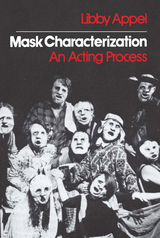
Behind the mask, Appel notes, the student is free to create a personality; paradoxically, because the mask hides the self, it enables the student to probe more deeply into himself.
“This book describes, defines, and discusses the mask characterization process, providing the theory behind the exercises and the step-by-step procedure in the organic development of the character from the masks,” Appel notes. The manual is divided into two parts: “The Instructor’s Guide” and “The Actor’s Guide.” There is also an introductory chapter, “The Class Structure,” which explains mask characterization procedures in the classroom, and a sample class schedule may be found in the back of the manual.
This book adds a new dimension to actor training and learning. It is essential to aspiring actors seeking new ways to create honest dramatic characterizations.

How Cold War urgency, academic ambition, and federal power converged to make math the cornerstone of American education policy.
The Math Mafia by Emily T. Hamilton is a historical account of mathematics education reform in twentieth-century America and how that movement played a role in shaping the broader contours of national education policy. Hamilton contends that a cohesive and well-organized community of advocates was instrumental in the rise of standardized testing and curriculum reforms, as well as federal involvement in classrooms, especially during the Cold War. By positioning mathematics as central to national strength and security, these reformers established math education as a key area of federal focus.
The “mafia” at the center of Hamilton’s story includes mathematicians, educators, and researchers from universities, as well as members of government-funded organizations such as the National Science Foundation and various educational psychology circles. Prominent figures such as Edward Begle, who led the School Mathematics Study Group during the “new math” movement, played key roles. Other influential participants include federal education officials, advocates from professional organizations such as the National Council of Teachers of Mathematics, and cognitive scientists, who contributed both research and theoretical frameworks that informed curriculum design and assessment methods.
The Math Mafia offers historians, educators, policymakers, and other interested readers a compelling perspective on the legacy of the math education reforms on federal education policy in the United States and is a welcome contribution to ongoing discourse around “teaching toward the test,” educational equity, school performance, and other hot-button issues in US education today.
College and university faculty in the arts (visual, studio, language, music, design, and others) regularly grade and assess undergraduate student work but often with little guidance or support. As a result, many arts faculty, especially new faculty, adjunct faculty, and graduate student instructors, feel bewildered and must “reinvent the wheel” when grappling with the challenges and responsibilities of grading and assessing student work.
Meaningful Grading: A Guide for Faculty in the Arts enables faculty to create and implement effective assessment methodologies—research based and field tested—in traditional and online classrooms. In doing so, the book reveals how the daunting challenges of grading in the arts can be turned into opportunities for deeper student learning, increased student engagement, and an enlivened pedagogy.
In the face of the continuing discourse of crisis in US education, The Meaningful Writing Project offers readers an affirming story of writing in higher education that shares students’ experiences in their own voices. In presenting the results of a three-year study consisting of surveys and interviews of university seniors and their faculty across three diverse institutions, authors Michele Eodice, Anne Ellen Geller, and Neal Lerner consider students’ perceptions of their meaningful writing experiences, the qualities of those experiences, and instructors’ perspectives on assignment design and delivery.
This study confirms that meaningful assignments offer students opportunities to engage with instructors, peers, and texts and are relevant to past experiences and passions as well as to future aspirations and identities. Meaningful writing occurs across majors, in both required and elective courses, and beyond students’ years at college. Additionally, the study makes clear that faculty across the curriculum devote significant care and attention to creating writing assignments that support student learning, as they understand writing performance to be a developmental process connected to overall cognitive and social development, student engagement with learning, and success in a wide variety of disciplines and professions.
The Meaningful Writing Project provides writing center directors, WPAs, other composition scholars, and all faculty interested in teaching and learning with writing an unprecedented look into the writing projects students find meaningful.

Paul Lockhart’s Mathematician’s Lament outlined how we introduce math to students in the wrong way. Measurement explains how math should be done. With plain English and pictures, Lockhart makes complex ideas about shape and motion intuitive and graspable, and offers a solution to math phobia by introducing us to math as an artful way of thinking and living.
In conversational prose that conveys his passion for the subject, Lockhart makes mathematics accessible without oversimplifying. He makes no more attempt to hide the challenge of mathematics than he does to shield us from its beautiful intensity. Favoring plain English and pictures over jargon and formulas, he succeeds in making complex ideas about the mathematics of shape and motion intuitive and graspable. His elegant discussion of mathematical reasoning and themes in classical geometry offers proof of his conviction that mathematics illuminates art as much as science.
Lockhart leads us into a universe where beautiful designs and patterns float through our minds and do surprising, miraculous things. As we turn our thoughts to symmetry, circles, cylinders, and cones, we begin to see that almost anyone can “do the math” in a way that brings emotional and aesthetic rewards. Measurement is an invitation to summon curiosity, courage, and creativity in order to experience firsthand the playful excitement of mathematical work.
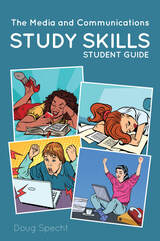
All the tips, ideas and advice given to, and requested by, MA students in Media and Communications, are brought together in an easy-to-use accessible guide to help students study most effectively.
Based upon many years of teaching study skills and hundreds of lecture slides and handouts this introduction covers a range of general and generic skills that the author relates specifically towards media and communications studies. As well as the mechanics of writing and presentations, the book also shows how students can work on and engage with the critical and contemplative elements of their degrees whilst retaining motivation and refining timekeeping skills.
Of course the nuts and bolts of reading, writing, listening, seminars and the dreaded dissertation and essays are covered too. In addition advice on referencing, citation and academic style is offered for those with concerns over English grammar and expression.
Aimed primarily at postgraduate students, there is significant crossover with undergraduate work, so this book will also prove of use to upper level undergraduate readers whether using English as a first or second language.

Teaching medieval history should engage students in the real work of professional medievalists. However, many undergraduate courses rely on instructional strategies that only engage students in rote retention of medieval "stuff" and unsupported writing assignments. With trends in the USA and elsewhere showing declining undergraduate enrollment in the humanities and an increasing number of questions from university administrators regarding the utility of the liberal arts, historians need to reassess how they teach. Project-based learning (PBL) is one approach that may help medieval history instructors offer coursework that is more engaging for today's undergraduate students and provide administrators a clearer picture of the utility of studying the past. The pedagogy of PBL actively engages students in projects reflective of the real work being done by medievalists, allowing instructors to move beyond the traditional narrative found in many undergraduate survey courses. This book provides an overview of PBL theory, methods for incorporating PBL into an undergraduate medieval history course, instructional strategies, scalable assessment formats, and other resources useful for any history classroom.


A joyful and intimate celebration of the beauty and creativity of algebra from one of the foremost math educators of our time.
For many of us, algebra conjures up memories of dull classes spent wondering when we’d ever have to solve a system of equations or factor a polynomial. Indeed, most of the time, if we need to plan a budget or figure out how early to leave the house for work, common sense or a quick, seat-of-the-pants approximation is good enough.
But as mathematician Paul Lockhart argues in The Mending of Broken Bones, once we stop thinking of algebra in terms of its practical applications, we can appreciate it for the beautiful and gratifying subject that it is. In his hands, algebra is the delicate craft of untangling numerical puzzles to reveal the hidden patterns and often surprising behaviors of the numbers themselves. As Lockhart traverses numerical systems, slips into and out of higher-dimensional space, and delights in the intimate connections between algebra and geometry, we come to see the discipline from his viewpoint: not as the mundane exercises of our school years, but instead as an art form whose beauty lies in its elegant simplicity.
Written in Lockhart’s charming and conversational prose, The Mending of Broken Bones is an impassioned and deeply personal celebration of algebra that helps us experience the profound joys of mathematical discovery.
Each issue consists of articles at the cutting edge of research, theory, pedagogy, and other matters related to academic service-learning, campus-community partnerships, and engaged, public scholarship in higher education that extend the knowledge base and support and strengthen researchers’ and practitioners’ work. We also publish review essays of newly-released books pertinent to service-learning and community engagement.
Each issue consists of articles at the cutting edge of research, theory, pedagogy, and other matters related to academic service-learning, campus-community partnerships, and engaged, public scholarship in higher education that extend the knowledge base and support and strengthen researchers’ and practitioners’ work. We also publish review essays of newly-released books pertinent to service-learning and community engagement.
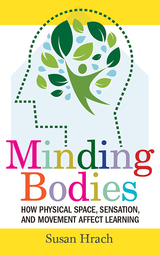
What happens to teaching when you consider the whole body (and not just “brains on sticks”)?
Starting from new research on the body—aptly summarized as “sitting is the new smoking”—Minding Bodies aims to help instructors improve their students’ knowledge and skills through physical movement, attention to the spatial environment, and sensitivity to humans as more than “brains on sticks.” It shifts the focus of adult learning from an exclusively mental effort toward an embodied, sensory-rich experience, offering new strategies to maximize the effectiveness of time spent learning together on campus as well as remotely.
Minding Bodies draws from a wide range of body/mind research in cognitive psychology, kinesiology, and phenomenology to bring a holistic perspective to teaching and learning. The embodied learning approaches described by Susan Hrach are inclusive, low-tech, low-cost strategies that deepen the development of disciplinary knowledge and skills. Campus change-makers will also find recommendations for supporting a transformational mission through an attention to students’ embodied learning experiences.
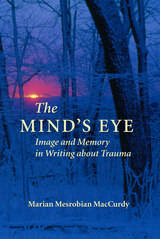
MacCurdy begins by discussing what trauma is, how traumatic memories are stored and accessed, and how writing affects them. She then focuses on the processes involved in translating traumatic images into narrative form, showing how the same patterns and problems emerge whether the writers are students or professionals. Using examples drawn from the classroom, MacCurdy investigates the beneficial effects of the study of trauma on communities as well as individuals, witnesses as well as writers, and explores the implications of these relationships for the world at large, particularly as they pertain to issues of justice, retribution, and forgiveness.
Throughout the volume the author draws on her own experience as teacher, writer, survivor, and descendant of survivors to explain how one can engage student work on difficult subjects without appropriating the texts or getting lost in the emotions generated by them. She further shows how appropriate safeguards can be put in place to protect both teacher and student writer. The end result of such a pedagogy, MacCurdy demonstrates, is not simply better writers but more integrated people, capable of converting their own losses and griefs into compassion for others.

A Choice Outstanding Academic Title of the Year
In Minds on Fire, Mark C. Carnes shows how role-immersion games channel students’ competitive (and sometimes mischievous) impulses into transformative learning experiences. His discussion is based on interviews with scores of students and faculty who have used a pedagogy called Reacting to the Past, which features month-long games set during the French Revolution, Galileo’s trial, the partition of India, and dozens of other epochal moments in disciplines ranging from art history to the sciences. These games have spread to over three hundred campuses around the world, where many of their benefits defy expectations.
“[Minds on Fire is] Carnes’s beautifully written apologia for this fascinating and powerful approach to teaching and learning in higher education. If we are willing to open our minds and explore student-centered approaches like Reacting [to the Past], we might just find that the spark of student engagement we have been searching for in higher education’s mythical past can catch fire in the classrooms of the present.”
—James M. Lang, Chronicle of Higher Education
“This book is a highly engaging and inspirational study of a ‘new’ technique that just might change the way educators bring students to learning in the 21st century.”
—D. D. Bouchard, Choice

From wired campuses to smart classrooms to massive open online courses (MOOCs), digital technology is now firmly embedded in higher education. But the dizzying pace of innovation, combined with a dearth of evidence on the effectiveness of new tools and programs, challenges educators to articulate how technology can best fit into the learning experience. Minds Online is a concise, nontechnical guide for academic leaders and instructors who seek to advance learning in this changing environment, through a sound scientific understanding of how the human brain assimilates knowledge.
Drawing on the latest findings from neuroscience and cognitive psychology, Michelle Miller explores how attention, memory, and higher thought processes such as critical thinking and analytical reasoning can be enhanced through technology-aided approaches. The techniques she describes promote retention of course material through frequent low‐stakes testing and practice, and help prevent counterproductive cramming by encouraging better spacing of study. Online activities also help students become more adept with cognitive aids, such as analogies, that allow them to apply learning across situations and disciplines. Miller guides instructors through the process of creating a syllabus for a cognitively optimized, fully online course. She presents innovative ideas for how to use multimedia effectively, how to take advantage of learners’ existing knowledge, and how to motivate students to do their best work and complete the course.
For a generation born into the Internet age, educational technology designed with the brain in mind offers a natural pathway to the pleasures and rewards of deep learning.

Minnesota History was first published in 1931. Minnesota Archive Editions uses digital technology to make long-unavailable books once again accessible, and are published unaltered from the original University of Minnesota Press editions.
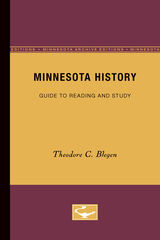
Minnesota History was first published in 1960. Minnesota Archive Editions uses digital technology to make long-unavailable books once again accessible, and are published unaltered from the original University of Minnesota Press editions.
Anyone interested in Minnesota history, whether as a teacher, as a student, or as a general reader, will find this an invaluable guide to reading and study. The book contains an outline of the state's history, questions and suggestions for the student, and lists of reading material for each of the 42 topical sections into which the outline is divided.
The outline covers the entire history of the state from the time of the Indians, before the French and British explorations, to the present. The reading references include accounts written from the seventeenth through the twentieth centuries. The aim in preparing the reading lists was to include any article or book bearing upon the Minnesota story which met the qualifications of good historical writing and fair accessibility. Materials of particular interest or importance to the topic under consideration are so designated, and there are liberal annotations to help the reader in his choice of readings. References which are particularly appropriate for young readers are also specially designated. A number of maps are provided for additional guidance.
This is a complete revision of a book long out of print, Minnesota History: A Study Outline by Theodore C. Blegen.

“What a delight to read David Gooblar’s book on teaching and learning. He wraps important insights into a story of discovery and adventure.”
—Ken Bain, author of What the Best College Teachers Do
College is changing, but the way we train academics is not. Most professors are taught to be researchers first and teachers a distant second, even as scholars are increasingly expected to excel in the classroom. There has been a revolution in teaching and learning over the past generation, and we now have a whole new understanding of how the brain works and how students learn. The Missing Course offers a field guide to the state-of-the-art in teaching and learning and is packed with insights to help students learn in any discipline.
Wary of the folk wisdom of the faculty lounge, David Gooblar builds his lessons on the newest findings and years of experience. From active-learning strategies to ways of designing courses to get students talking, The Missing Course walks you through the fundamentals of the student-centered classroom, one in which the measure of success is not how well you lecture but how much your students actually learn.
“Warm and empirically based, comprehensive but accessible, student-centered and also scientific. We’re so lucky to have Gooblar as a guide.”
—Sarah Rose Cavanagh, author of The Spark of Learning
“Goes beyond critique, offering a series of activities, approaches, and strategies that instructors can implement. His wise and necessary book is a long defense of the idea that a university can be a site of the transformation of self and society.”
—Los Angeles Review of Books
“An invaluable source of insight and wisdom on what it means to work with students. We’ve needed this book for a long time.”
—John Warner, author of Why They Can’t Write

This longitudinal qualitative study follows Morgan and Leo through their undergraduate careers, collecting rich ethnographic data across private, academic, and digital spaces. The resulting theoretical framework conceptualizes multilingual writing as simultaneously strategic, agentive, creative, diffused, contingent, and messy—a phenomenon shaped by dynamic interplay between ephemeral encounters and established practices. Employing chronotopic figuring as a methodological tool, Wang illuminates aspects of multilingual writing often elided in research: fleeting encounters that energize composition, reciprocal relationships that distribute writing labor, unexpected detours that redirect the writing process, and the layering of writing and identity practices across multiple historical trajectories. This approach moves beyond examining writing in isolated moments to trace how meaning emerges across languages, modes, and spacetimes.
Multilingual Writing in Entanglement offers crucial insights into how international students strategically and improvisationally reconfigure their semiotic and rhetorical repertoires to write multilingual lives into meaning. This work is influential for scholars and educators in composition, literacy studies, multilingual education, ESL, and linguistics.
READERS
Browse our collection.
PUBLISHERS
See BiblioVault's publisher services.
STUDENT SERVICES
Files for college accessibility offices.
RECENTLY PUBLISHED



UChicago Accessibility Resources
home | accessibility | search | about | contact us
BiblioVault ® 2001 - 2025
The University of Chicago Press