
 A SCHOLARLY BOOK REPOSITORY
40 start with M start with M
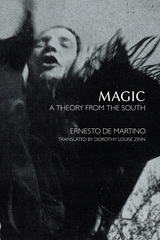
Though his work was little known outside Italian intellectual circles for most of the twentieth century, anthropologist and historian of religions Ernesto de Martino is now recognized as one of the most original thinkers in the field. This book is testament to de Martino’s innovation and engagement with Hegelian historicism and phenomenology—a work of ethnographic theory way ahead of its time.
This new translation of Sud e Magia, his 1959 study of ceremonial magic and witchcraft in southern Italy, shows how De Martino is not interested in the question of whether magic is rational or irrational but rather in why it came to be perceived as a problem of knowledge in the first place. Setting his exploration within his wider, pathbreaking theorization of ritual, as well as in the context of his politically sensitive analysis of the global south’s historical encounters with Western science, he presents the development of magic and ritual in Enlightenment Naples as a paradigmatic example of the complex dynamics between dominant and subaltern cultures. Far ahead of its time, Magic is still relevant as anthropologists continue to wrestle with modernity’s relationship with magical thinking.
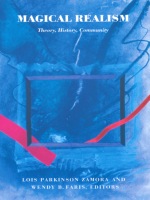
Presenting the first English translation of Franz Roh’s 1925 essay in which the term magical realism was coined, as well as Alejo Carpentier’s classic 1949 essay that introduced the concept of lo real maravilloso to the Americas, this anthology begins by tracing the foundations of magical realism from its origins in the art world to its current literary contexts. It offers a broad range of critical perspectives and theoretical approaches to this movement, as well as intensive analyses of various cultural traditions and individual texts from Eastern Europe, Asia, North America, Africa, the Caribbean, and Australia, in addition to those from Latin America. In situating magical realism within the expanse of literary and cultural history, this collection describes a mode of writing that has been a catalyst in the development of new regional literatures and a revitalizing force for more established narrative traditions—writing particularly alive in postcolonial contexts and a major component of postmodernist fiction.
The Market and Other Orders brings together more than twenty works spanning almost forty years that consider this question. Consisting of speeches, essays, and lectures, including Hayek’s 1974 Nobel lecture, “The Pretense of Knowledge,” the works in this volume draw on a broad range of perspectives, including the philosophy of science, the physiology of the brain, legal theory, and political philosophy. Taking readers from Hayek’s early development of the idea of spontaneous order in economics through his integration of this insight into political theory and other disciplines, the book culminates with Hayek’s integration of his work on these topics into an overarching social theory that accounts for spontaneous order in the variety of complex systems that Hayek studied throughout his career.
Edited by renowned Hayek scholar Bruce Caldwell, who also contributes a masterly introduction that provides biographical and historical context, The Market and Other Orders forms the definitive compilation of Hayek’s work on spontaneous order.
In addition to his groundbreaking contributions to pure economic theory, F. A. Hayek also closely examined the ways in which the knowledge of many individual market participants could culminate in an overall order of economic activity. His attempts to come to terms with the “knowledge problem” thread through his career and comprise the writings collected in the fifteenth volume of the University of Chicago Press’s Collected Works of F. A. Hayek series.
The Market and Other Orders brings together more than twenty works spanning almost forty years that consider this question. Consisting of speeches, essays, and lectures, including Hayek’s 1974 Nobel lecture, “The Pretense of Knowledge,” the works in this volume draw on a broad range of perspectives, including the philosophy of science, the physiology of the brain, legal theory, and political philosophy. Taking readers from Hayek’s early development of the idea of spontaneous order in economics through his integration of this insight into political theory and other disciplines, the book culminates with Hayek’s integration of his work on these topics into an overarching social theory that accounts for spontaneous order in the variety of complex systems that Hayek studied throughout his career.
Edited by renowned Hayek scholar Bruce Caldwell, who also contributes a masterly introduction that provides biographical and historical context, The Market and Other Orders forms the definitive compilation of Hayek’s work on spontaneous order.

This volume explores the social, political, and intellectual contexts in which twentieth-century notions of market failure were developed. Markets can fail to perform in ways that best promote the larger interests of society: this idea is as old as economics itself and is one of the most crucial issues with which economic thinkers have had to grapple. However, while the history of the theory of market failure has received some critical examination, little attention has been paid to the larger contexts in which these theoretical analyses emerged. Contributors to this volume directly examine these contexts to gain a greater understanding of and appreciation for the influence of external ideas and events on the development of economic theories and to stimulate additional scholarship around this important facet of the history of economics.
Contributors. Nahid Aslanbeigui, Roger E. Backhouse, Bradley W. Bateman, Sebastian Berger, David Colander, J. Daniel Hammond, Marianne Johnson, Thomas C. Leonard, Alain Marciano, Steven G. Medema, Guy Oakes, Malcolm Rutherford, John D. Singleton
With Marx’s Dream, Tom Rockmore offers a much-needed alternative view, distinguishing rigorously between Marx and Marxism. Rockmore breaks with the Marxist view of Marx in three key ways. First, he shows that the concern with the relation of theory to practice—reflected in Marx’s famous claim that philosophers only interpret the world, while the point is to change it—arose as early as Socrates, and has been central to philosophy in its best moments. Second, he seeks to free Marx from his unsolicited Marxist embrace in order to consider his theory on its own merits. And, crucially, Rockmore relies on the normal standards of philosophical debate, without the special pleading to which Marxist accounts too often resort. Marx’s failures as a thinker, Rockmore shows, lie less in his diagnosis of industrial capitalism’s problems than in the suggested remedies, which are often unsound.
Only a philosopher of Rockmore’s stature could tackle a project this substantial, and the results are remarkable: a fresh Marx, unencumbered by doctrine and full of insights that remain salient today.
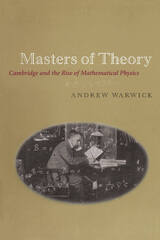
When Isaac Newton published the Principia three centuries ago, only a few scholars were capable of understanding his conceptually demanding work. Yet this esoteric knowledge quickly became accessible in the nineteenth and early twentieth centuries when Britain produced many leading mathematical physicists. In this book, Andrew Warwick shows how the education of these "masters of theory" led them to transform our understanding of everything from the flight of a boomerang to the structure of the universe.
Warwick focuses on Cambridge University, where many of the best physicists trained. He begins by tracing the dramatic changes in undergraduate education there since the eighteenth century, especially the gradual emergence of the private tutor as the most important teacher of mathematics. Next he explores the material culture of mathematics instruction, showing how the humble pen and paper so crucial to this study transformed everything from classroom teaching to final examinations. Balancing their intense intellectual work with strenuous physical exercise, the students themselves—known as the "Wranglers"—helped foster the competitive spirit that drove them in the classroom and informed the Victorian ideal of a manly student. Finally, by investigating several historical "cases," such as the reception of Albert Einstein's special and general theories of relativity, Warwick shows how the production, transmission, and reception of new knowledge was profoundly shaped by the skills taught to Cambridge undergraduates.
Drawing on a wealth of new archival evidence and illustrations, Masters of Theory examines the origins of a cultural tradition within which the complex world of theoretical physics was made commonplace.
Renowned contributors use the late work of this crucial figure to open new speculations on "materiality."
A "material event," in one of Paul de Man’s definitions, is a piece of writing that enters history to make something happen. This interpretation hovers over the publication of this volume, a timely reconsideration of de Man’s late work in its complex literary, critical, cultural, philosophical, political, and historical dimensions.
A distinguished group of scholars responds to the problematic of "materialism" as posed in Paul de Man’s posthumous final book, Aesthetic Ideology. These contributors, at the forefront of critical theory, productive thinking, and writing in the humanities, explore the question of "material events" to illuminate not just de Man’s work but their own. Prominent among the authors here is Jacques Derrida, whose extended essay “Typewriter Ribbon: Limited Inc (2)” returns to a celebrated episode in Rousseau’s Confessions that was discussed by de Man in Allegories of Reading.
The importance of de Man’s late work is related to a broad range of subjects and categories and-in Derrida’s provocative reading of de Man’s concept of "materiality"-the politico-autobiographical texts of de Man himself. This collection is essential reading for all those interested in the present state of literary and cultural theory.
Contributors: Judith Butler, UC Berkeley; T. J. Clark, UC Berkeley; Jacques Derrida, École des Hautes Études en Sciences Sociales and UC Irvine; Barbara Johnson, Harvard U; Ernesto Laclau, U of Essex; Arkady Plotnitsky, Purdue U; Laurence A. Rickels, UC Santa Barbara; and Michael Sprinker.

The authors propose a new understanding of the market structure characterized by a closely interrelated array of quality submarkets. Their comprehensive models ground a unified theory that accounts for demand by both renters and owner occupants, supply by owners of existing dwellings, changes in the stock of housing due to conversions and new construction, and interactions across submarkets.
With its emphasis on artists’ perspectives of aesthetic and social issues, this anthology provides a unique opportunity to enter into the fray of the most hotly contested art issues of the past few decades: the visibility of women artists, sexuality and the arts, censorship, art world racism, the legacies of modernism, artists as mothers, visual art in the digital age, and the rewards and toils of a lifelong career in art. The stellar cast of contributing artists and art writers includes Nancy Spero, Richard Tuttle, David Humphrey, Thomas McEvilley, Laura Cottingham, Johanna Drucker, David Reed, Carolee Schneemann, Whitney Chadwick, Robert Storr, Leon Golub, Charles Bernstein, and Alison Knowles.
This compelling and theoretically savvy collection will be of interest to artists, art historians, critics, and a general audience interested in the views of practicing artists.

AI is inescapable, from its mundane uses online to its increasingly consequential decision-making in courtrooms, job interviews, and wars. The ubiquity of AI is so great that it might produce public resignation—a sense that the technology is our shared fate.
As economist Maximilian Kasy shows in The Means of Prediction, artificial intelligence, far from being an unstoppable force, is irrevocably shaped by human decisions—choices made to date by the ownership class that steers its development and deployment. Kasy shows that the technology of AI is ultimately not that complex. It is insidious, however, in its capacity to steer results to its owners’ wants and ends. Kasy clearly and accessibly explains the fundamental principles on which AI works, and, in doing so, reveals that the real conflict isn’t between humans and machines, but between those who control the machines and the rest of us.
The Means of Prediction offers a powerful vision of the future of AI: a future not shaped by technology, but by the technology’s owners. Amid a deluge of debates about technical details, new possibilities, and social problems, Kasy cuts to the core issue: Who controls AI’s objectives, and how is this control maintained? The answer lies in what he calls “the means of prediction,” or the essential resources required for building AI systems: data, computing power, expertise, and energy. As Kasy shows, in a world already defined by inequality, one of humanity’s most consequential technologies has been and will be steered by those already in power.
Against those stakes, Kasy offers an elegant framework both for understanding AI’s capabilities and for designing its public control. He makes a compelling case for democratic control over AI objectives as the answer to mounting concerns about AI's risks and harms. The Means of Prediction is a revelation, both an expert undressing of a technology that has masqueraded as more complicated and a compelling call for public oversight of this transformative technology.
An eye-opening examination of how power—not technology—will define life with AI.
AI is inescapable, from its mundane uses online to its increasingly consequential decision-making in courtrooms, job interviews, and wars. The ubiquity of AI is so great that it might produce public resignation—a sense that the technology is our shared fate.
As economist Maximilian Kasy shows in The Means of Prediction, artificial intelligence, far from being an unstoppable force, is irrevocably shaped by human decisions—choices made to date by the ownership class that steers its development and deployment. Kasy shows that the technology of AI is ultimately not that complex. It is insidious, however, in its capacity to steer results to its owners’ wants and ends. Kasy clearly and accessibly explains the fundamental principles on which AI works, and, in doing so, reveals that the real conflict isn’t between humans and machines, but between those who control the machines and the rest of us.
The Means of Prediction offers a powerful vision of the future of AI: a future not shaped by technology, but by the technology’s owners. Amid a deluge of debates about technical details, new possibilities, and social problems, Kasy cuts to the core issue: Who controls AI’s objectives, and how is this control maintained? The answer lies in what he calls “the means of prediction,” or the essential resources required for building AI systems: data, computing power, expertise, and energy. As Kasy shows, in a world already defined by inequality, one of humanity’s most consequential technologies has been and will be steered by those already in power.
Against those stakes, Kasy offers an elegant framework both for understanding AI’s capabilities and for designing its public control. He makes a compelling case for democratic control over AI objectives as the answer to mounting concerns about AI's risks and harms. The Means of Prediction is a revelation, both an expert undressing of a technology that has masqueraded as more complicated and a compelling call for public oversight of this transformative technology.

Innovative new approaches for improving GDP measurement to better gauge economic productivity.
Official measures of gross domestic product (GDP) indicate that productivity growth has declined in the United States over the last two decades. This has led to calls for policy changes from pro-business tax reform to stronger antitrust measures. But are our twentieth-century economic methods actually measuring our twenty-first-century productivity?
The Measure of Economies offers a synthesis of the state of knowledge in productivity measurement at a time when many question the accuracy and scope of GDP. With chapters authored by leading economic experts on topics such as the digital economy, health care, and the environment, it highlights the inadequacies of current practices and discusses cutting-edge alternatives.
Pragmatic and forward-facing, The Measure of Economies is an essential resource not only for social scientists, but also for policymakers and business leaders seeking to understand the complexities of economic growth in a time of rapidly evolving technology.
Measuring Wealth and Financial Intermediation and Their Links to the Real Economy identifies measurement problems associated with the financial crisis and improvements in measurement that may prevent future crises, taking account of the dynamism of the financial marketplace in which measures that once worked well become misleading. In addition to advances in measuring financial activity, the contributors also investigate the effects of the crisis on households and nonfinancial businesses. They show that households’ experiences varied greatly and some even experienced gains in wealth, while nonfinancial businesses’ lack of access to credit in the recession may have been a more important factor than the effects of policies stimulating demand.

Mechanical Vibration: Theory and Application presents comprehensive coverage of the fundamental principles of mechanical vibration, including the theory of vibration, as well as discussions and examples of the applications of these principles to practical engineering problems. The book also addresses the effects of uncertainties in vibration analysis and design and develops passive and active methods for the control of vibration. Many example problems with solutions are provided. These examples as well as compelling case studies and stories of real-world applications of mechanical vibration have been carefully chosen and presented to help the reader gain a thorough understanding of the subject.
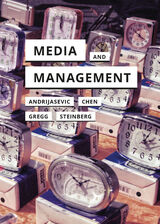
An essential account of how the media devices we use today inherit the management practices governing factory labor
This book argues that management is enabled by media forms, just as media gives life to management. Media technologies central to management have included the stopwatch, the punch card, the calculator, and the camera, while management theories are taught in printed and virtual textbooks and online through TED talks. In each stage of the evolving relationship between workers and employers, management innovations are learned through media, with media formats producing fresh opportunities for management.
Drawing on rich historical and ethnographic case studies, this book approaches key instances of the industrial and service economy—the legacy of Toyotism in today’s software industry, labor mediators in electronics manufacturing in Central and Eastern Europe, and app-based food-delivery platforms in China—to push media and management studies in new directions. Media and Management offers a provocative insight on the future of labor and media that inevitably cross geographical boundaries.
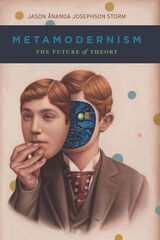
Metamodernism works through the postmodern critiques and uncovers the mechanisms that produce and maintain concepts and social categories. In so doing, Storm provides a new, radical account of society’s ever-changing nature—what he calls a “Process Social Ontology”—and its materialization in temporary zones of stability or “social kinds.” Storm then formulates a fresh approach to philosophy of language by looking beyond the typical theorizing that focuses solely on human language production, showing us instead how our own sign-making is actually on a continuum with animal and plant communication.
Storm also considers fundamental issues of the relationship between knowledge and value, promoting a turn toward humble, emancipatory knowledge that recognizes the existence of multiple modes of the real. Metamodernism is a revolutionary manifesto for research in the human sciences that offers a new way through postmodern skepticism to envision a more inclusive future of theory in which new forms of both progress and knowledge can be realized.
A Dan Josselyn Memorial Publication
This invaluable classic provides the framework for the development of American archaeology during the last half of the 20th century.
In 1958 Gordon R. Willey and Philip Phillips first published Method and Theory in American Archaeology—a volume that went through five printings, the last in 1967 at the height of what became known as the new, or processual, archaeology. The advent of processual archaeology, according to Willey and Phillips, represented a "theoretical debate . . . a question of whether archaeology should be the study of cultural history or the study of cultural process."
Willey and Phillips suggested that little interpretation had taken place in American archaeology, and their book offered an analytical perspective; the methods they described and the structural framework they used for synthesizing American prehistory were all geared toward interpretation. Method and Theory served as the catalyst and primary reader on the topic for over a decade.
This facsimile reprint edition of the original University of Chicago Press volume includes a new foreword by Gordon R. Willey, which outlines the state of American archaeology at the time of the original publication, and a new introduction by the editors to place the book in historical context. The bibliography is exhaustive. Academic libraries, students, professionals, and knowledgeable amateurs will welcome this new edition of a standard-maker among texts on American archaeology.
A diverse and highly regarded group of scholars reference a broad array of literature from around the world as they cover their areas of expertise in the practice and theory of paleoethnobotany—starch grain analysis, stable isotope analysis, ancient DNA, digital data management, and ecological and postprocessual theory.
The only comprehensive edited volume focusing on method and theory to appear in the last twenty-five years, Method and Theory in Paleoethnobotany addresses the new areas of inquiry that have become central to contemporary archaeological debates, as well as the current state of theoretical, methodological, and empirical work in paleoethnobotany.


As midrash--the literature of classical Jewish Scriptural interpretation--has become the focus of new interest in contemporary literary circles, it has been invoked as a precursor of post-structuralist theory and criticism. At the same time, the midrashic imagination has undergone a revival in the larger Jewish community and shown itself capable of exercising a powerful influence and hold on a new type of contemporary Jewish writing. Stern examines this resurgence of fascination with ancient Jewish interpretation from the persepctive of the cultural relevance of midrash and its connection to its original historical and literary contexts.
Military Intervention After the Cold War explores how and why this change took place, looking at how both ideas and actions changed in the post-Cold War period to make military intervention a tool of international security and a defining characteristic of the international system. Although it is often touted as a strategy to rebuild collapsed states, the examples of success are few and far between. Andrea Kathryn Talentino argues that standards of human rights and responsible governance have become part of the definition of international security. She addresses questions that are vital in the post-9/11 world, where weak and collapsed states are recognized as permissive and at times supportive environments for criminal actors.
The specter of terrorism has placed even greater emphasis on the need to understand why military intervention happens and how it could be more effective. With the news full of stories on intervention and nation-building, scholars, graduate and undergraduate students, and readers interested in understanding global interdependence will find Military Intervention After the Cold War an indispensable book.Andrea Kathryn Talentino is an assistant professor of international relations at Tulane University, New Orleans.The author of numerous articles on military intervention and post- conflict rebuilding, she is currently focusing on the link between nation-building and political violence.
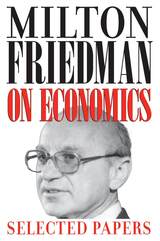
Milton Friedman on Economics: Selected Papers collects a variety of Friedman’s papers on topics in economics that were originally published in the Journal of Political Economy. Opening with Friedman’s 1977 Nobel Lecture, the volume spans nearly the whole of his career, incorporating papers from as early as 1948 and as late as 1990. An excellent introduction to Friedman’s economic thought, Milton Friedman will be essential for anyone tracing the course of twentieth-century economics and politics.
One of the volume’s provocative suggestions is that the old model of area studies—an offshoot of U.S. Cold War strategy that found its anchorage in higher education—is no longer feasible for the diverse and multifaceted experiences that are articulated under the rubric of “Chineseness.” As Rey Chow argues in her introduction, the notion of a monolithic Chineseness bound ultimately to mainland China is, in itself, highly problematic because it recognizes neither the material realities of ethnic minorities within China nor those of populations in places such as Tibet, Taiwan, and post–British Hong Kong. Above all, this book demonstrates that, as the terms of a chauvinistic sinocentrism become obsolete, the critical use of theory—particularly by younger China scholars whose enthusiasm for critical theory coincides with changes in China’s political economy in recent years—will enable the emergence of fresh connections and insights that may have been at odds with previous interpretive convention.
Originally published as a special issue of the journal boundary 2, this collection includes two new essays and an afterword by Paul Bové that places its arguments in the context of contemporary cultural politics. It will have far-reaching implications for the study of modern China and will be of interest to scholars of theory and culture in general.
Contributors. Stanley K. Abe, Ien Ang, Chris Berry, Paul Bové, Sung-cheng Yvonne Chang, Rey Chow, Dorothy Ko, Charles Laughlin, Leung Ping-kwan, Kwai-cheung Lo, Christopher Lupke, David Der-wei Wang, Michelle Yeh

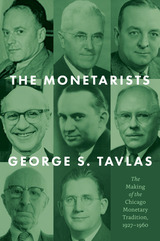
The Chicago School of economic thought has been subject to endless generalizations—and mischaracterizations—in contemporary debate. What is often portrayed as a monolithic obsession with markets is, in fact, a nuanced set of economic theories born from decades of research and debate. The Monetarists is a deeply researched history of the monetary policies—and personalities—that codified the Chicago School of monetary thought from the 1930s through the 1960s. These policies can be characterized broadly as monetarism: the belief that prices and interest rates can be kept stable by controlling the amount of money in circulation.
As economist George S. Tavlas makes clear, these ideas were more than just the legacy of Milton Friedman; they were a tradition in theory brought forth by a crucible of minds and debates throughout campus. Through unprecedented mining of archival material, The Monetarists offers the first complete history of one of the twentieth century’s most formative intellectual periods and places. It promises to elevate our understanding of this doctrine and its origins for generations to come.
Some of the papers in this volume evaluate a variety of policy rules based on monetary aggregates, nominal income, commodity prices, and other economic variables. Others analyze price behavior and inflation, particularly the short-run behavior of prices. Still others examine the monetary transmission mechanism—the channel through which the central bank's actions affect spending on goods and services—with a special focus on the reduction in bank lending that must accompany a reduction in reserves.
This new research will be of special interest to central bankers and academic economists.
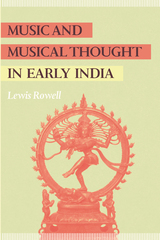
In Indian culture, music forms an integral part of a broad framework of ideas that includes philosophy, cosmology, religion, literature, and science. Rowell works with the known theoretical treatises and the oral tradition in an effort to place the technical details of musical practice in their full cultural context. Many quotations from the original Sanskrit appear here in English translation for the first time, and the necessary technical information is presented in terms accessible to the nonspecialist. These features, combined with Rowell's glossary of Sanskrit terms and extensive bibliography, make Music and Musical Thought in Early India an excellent introduction for the general reader and an indispensable reference for ethnomusicologists, historical musicologists, music theorists, and Indologists.
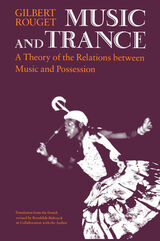
Rouget rigorously examines a worldwide corpus of data from ethnographic literature, but he also draws on the Bible, his own fieldwork in West Africa, and the writings of Plato, Ghazzali, and Rousseau. To organize this immense store of information, he develops a typology of trance based on symbolism and external manifestations. He outlines the fundamental distinctions between trance and ecstasy, shamanism and spirit possession, and communal and emotional trance. Music is analyzed in terms of performers, practices, instruments, and associations with dance. Each kind of trance draws strength from music in different ways at different points in a ritual, Rouget concludes. In possession trance, music induces the adept to identify himself with his deity and allows him to express this identification through dance.
Forcefully rejecting pseudo-science and reductionism, Rouget demystifies the so-called theory of the neurophysiological effects of drumming on trance. He concludes that music's physiological and emotional effects are inseparable from patterns of collective representations and behavior, and that music and trance are linked in as many ways as there are cultural structures.
Music Lessons marks the first publication in English of Pierre Boulez’s Collège de France lectures, written while he held the chair of Invention, Technique and Language in Music at the Collège between 1976 and 1995. Representing Boulez’s most significant writings from the period, the lectures offer a sustained intellectual engagement with one of the dominant figures of twentieth-century music, a consummate composer-conductor who remained central to the conversation around contemporary music until his death in 2016. Boulez explores, among other topics, the process through which a musical idea is realized in a full-fledged composition, the complementary roles of craft and inspiration and the degree to which the memory of other musical works can influence and change the act of creation. Boulez also gives a penetrating account of problems in classical music that are still present today, such as the conservatism of a musical community fixated on the repertory of the past. Woven into the discussion are stories of his own compositions and those of fellow composers whose work he engaged with in his many roles as teacher, thinker, and conductor: from Stravinsky to Stockhausen and Varèse, from Bartók to Berg, Debussy to Mahler and Wagner, and all the way back to his beloved J. S. Bach.
Including a foreword by semiologist Jean-Jacques Nattiez, who was for years close to the composer, this edition is also enriched by an illuminating preface by Jonathan Goldman. With an authoritative translation retaining Boulez’s fierce convictions, cutting opinions and signature wit, Music Lessons is an essential and entertaining volume.
Robert Wannamaker's monumental two-volume study explores the influential music and ideas of American composer, theorist, writer, performer, and educator James Tenney. Delving into the whole of Tenney's far-ranging oeuvre, Wannamaker provides in-depth, aurally grounded analyses of works linked to the artist's revolutionary theories of musical form, timbre, and harmonic perception.
Volume 1, Contexts and Paradigms, chronologically surveys Tenney's creative development and output. Wannamaker begins each section with biographical, aesthetic, and technical context that illuminates a distinct period in Tenney's career. From there, he analyzes a small number of pieces that illuminate the concerns, characteristics, and techniques that emerged in Tenney's music during that time. Wannamaker supplements the text with musical examples, graphs, and diagrams while also drawing on unpublished material and newly available primary sources to flesh out each work and the ideas that shaped it.
A landmark in experimental music scholarship, The Music of James Tenney is a first-of-its-kind consideration of the experimental music titan and his work.
Robert Wannamaker's monumental two-volume study explores the influential music and ideas of American composer, theorist, writer, performer, and educator James Tenney. Delving into the whole of Tenney's far-ranging oeuvre, Wannamaker offers close, aurally grounded analyses of works linked to the artist's revolutionary theories of musical form, timbre, and harmonic perception.
Written as a reference work, Volume 2, A Handbook to the Pieces, presents detailed entries on Tenney's significant post-1959 experimental works (excepting pieces covered in volume 1). Wannamaker includes technical information, an analysis of intentions and goals, graphs and musical examples, historical and biographical context, and thoughts from Tenney and others on specific works. Throughout, he discusses the striking compositional ideas found in Tenney's music and, where appropriate, traces an idea's appearance from one piece to the next to reveal the evolution of the composer's art and thought.
A landmark in experimental music scholarship, The Music of James Tenney is a first-of-its-kind consideration of the experimental music titan and his work.
In nineteen essays dealing with musical theories from the twelfth to the twentieth century, two recurring themes emerge. One is the need to understand the historical circumstances of the writing and reception of theory, a humanistic approach that gives theory a place within social and intellectual history. The other is the advantages of applying contemporaneous theory to the music of a given period, thus linking theory to the history of musical styles and structures. The periods given principal attention in these essays are the Renaissance, the years around 1800, and the twentieth century.
Abundantly illustrated with musical examples, Music Theory and the Exploration of the Past offers models of new practical applications of theory to the analysis of music. At the same time, it raises the broader question of how historical knowledge can deepen the understanding of an art and of systematic writings about that art.
Providing ways to link literary and nonliterary narratives, González Echevarría examines a variety of archival writings—from the chronicles of the discovery and conquest of the New World to scientific travel narratives and records of criminal confessions—and explores the relationship of these writings to novels by authors such as García Márquez, Borges, Barnet, Sarmiento, Carpentier, and Garcilaso de la Vega. Moving beyond demonstrating that early forms of creative narrative had their geneses in the sixteenth-century authoritative discourse of the Spanish Empire, González Echevarría shows how this same originating process has been repeated in other key moments in the history of the Latin American narrative. He shows how the discourse of scientific discovery was the model for much nineteenth-century literature, as well as how anthropological writings on the nature of language and myth have come to shape the ideology and form of literature in the twentieth century. This most recent form of Latin American narrative creates its own mythic form through an atavistic return to its legal origins—the archive.
This acclaimed book—originally published in 1990—will be of continuing interest to historians, anthropologists, literary theorists, and students of Latin American culture.
In The Mythology of Work, Peter Fleming examines how neoliberal society uses the ritual of work—and the threat of its denial—to maintain the late capitalist class order. Work becomes a universal reference point, devoid of any moral or political worth, transforming our society into a factory that never sleeps. Blending critical theory with recent accounts of job-related suicides, office-induced paranoia, fear of relaxation, managerial sadism, and cynical corporate social responsibility campaigns, Fleming paints a bleak picture of a society in which economic and emotional disasters greatly outweigh any professed benefits.
READERS
Browse our collection.
PUBLISHERS
See BiblioVault's publisher services.
STUDENT SERVICES
Files for college accessibility offices.
RECENTLY PUBLISHED



UChicago Accessibility Resources
home | accessibility | search | about | contact us
BiblioVault ® 2001 - 2026
The University of Chicago Press