
 A SCHOLARLY BOOK REPOSITORY
16 start with M start with M
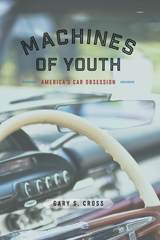
Machines of Youth traces the rise, and more recently the fall, of car culture among American teens. In this book, Gary S. Cross details how an automobile obsession drove teen peer culture from the 1920s to the 1980s, seducing budding adults with privacy, freedom, mobility, and spontaneity. Cross shows how the automobile redefined relationships between parents and teenage children, becoming a rite of passage, producing new courtship rituals, and fueling the growth of numerous car subcultures. Yet for teenagers today the lure of the automobile as a transition to adulthood is in decline.Tinkerers are now sidelined by the advent of digital engine technology and premolded body construction, while the attention of teenagers has been captured by iPhones, video games, and other digital technology. And adults have become less tolerant of teens on the road, restricting both cruising and access to drivers’ licenses.
Cars are certainly not going out of style, Cross acknowledges, but how upcoming generations use them may be changing. He finds that while vibrant enthusiasm for them lives on, cars may no longer be at the center of how American youth define themselves. But, for generations of Americans, the modern teen experience was inextricably linked to this particularly American icon.

The life story of a daredevil who became a war hero will fascinate adventurous young readers with its tales of survival.
At age thirteen, following the death of his father, young Eddie dropped out of school and joined the workforce. Through a combination of smarts, hard work, and perseverance, Rickenbacker would grow up to become an automobile mechanic, a race car driver, a fighter pilot, an entrepreneur, a war hero, a business executive, and a staunch advocate for hard work and personal responsibility.
Along the way he lived on the line between recklessness and courage. He survived dozens of accidents, coming close to death more than once. During the earliest years of American automobile racing, Rickenbacker was “the most daring and withal the most cautious driver” on the circuit. How could he have been both daring and cautious? This book invites young readers to decide for themselves as they follow Rickenbacker on his many hair-raising adventures.
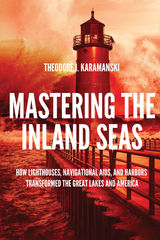
Karamanski explores both the navigational and sailing tools of First Nations peoples and the dismissive and foolhardy attitude of early European maritime sailors. He investigates the role played by commercial boats in the Underground Railroad, as well as how the federal development of crucial navigational resources exacerbated sectionalism in the antebellum United States. Ultimately Mastering the Inland Sea shows the undeniable environmental impact of technologies used by the modern commercial maritime industry. This expansive story illuminates the symbiotic relationship between infrastructure investment in the region's interconnected waterways and North America's lasting economic and political development.
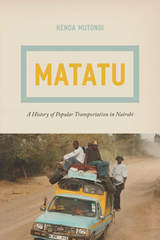
As Mutongi shows, matatus offer a window onto the socioeconomic and political conditions of late-twentieth-century Africa. In their diversity of idiosyncratic designs, they reflect multiple and divergent aspects of Kenyan life—including, for example, rapid urbanization, organized crime, entrepreneurship, social insecurity, the transition to democracy, and popular culture—at once embodying Kenya’s staggering social problems as well as the bright promises of its future. Offering a shining model of interdisciplinary analysis, Mutongi mixes historical, ethnographic, literary, linguistic, and economic approaches to tell the story of the matatu and explore the entrepreneurial aesthetics of the postcolonial world.
Michigan Railroads and Railroad Companies is an invaluable reference manual for everyone interested in regional transportation history, the history of railroading, and Michigan history in general. It contains complete, cross-referenced listings for every company formed to operate a railroad in the state of Michigan. In addition to the comprehensive entries for major lines, Graydon Meints has included details about the many small, common-carrier steam and electric companies, logging roads, and numerous other primitive and contemporary rail systems. This encyclopedic reference guide also contains information on the so-called "paper railroads," companies that were projected but which never laid a foot of track.
Michigan Railroads is divided into three parts. One includes alphabetical entries for the actual and intended railroad companies themselves, the date and purpose for their organization, and a brief history from their origins to their dispositions. Included in this portion of the work are a number of railroad "family trees" showing the corporate antecedents of the largest of the rail lines operating in the state today. Another contains a chronology of significant corporate events; it works as a useful finding aid for accessing source data contained in the first section. A third contains a statewide county-by-county listing of railroads, both paper and real.
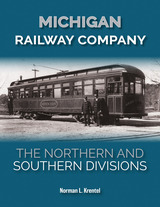
This also explores how electric railway history is intertwined with the state of Michigan. The interurban electric rail system supported automobile manufacturing, allowing for the shipment of parts supplies, and finished automobiles through Michigan, Indiana, Ohio, and Kentucky. Major auto plants like REO and Oldsmobile had rail sidetracks served by Michigan Railway’s interurban freight trains. Electric railway history is thus an essential, previously overlooked factor in Michigan’s industrial development.

From its incorporation in 1847 in Wisconsin Territory to its first run in 1851—twenty miles between Milwaukee and Waukesha—to its later position of far-flung power, the Chicago, Milwaukee, St. Paul &Pacific Railroad Company had a vivid history. By 1948, the Milwaukee Road had more than 40,000 employees and maintained more than 10,000 miles of line in twelve states from Indiana to Washington.
Also in 1948, August Derleth's popular and well-crafted corporate history celebrated the strength and status of this mighty carrier. On February 19, 1985, the railroad became a subsidiary of Soo Line Corporation and its identity vanished overnight. Nonetheless, it remains a romantic memory, and Derleth's book remains the only complete history of this innovative and dynamic railroad.

“A naturally gripping adventure tale.”—Publishers Weekly
“Powerful and intensely focused.”—Booklist
“Tracy's satisfying narrative constitutes the first modern account. A finely detailed maritime history.”—Kirkus Reviews
In 1825, the Kent, an East Indiaman, set sail from England for India with a crew and nearly 600 men, women, and children on board. North of Spain, the ship was slammed by a ferocious gale, and while a sailor was inspecting the hold for damage, his lantern ignited a cask of spirits. A fire quickly erupted, and even with the desperate expedient of opening hatches and flooding the ship, the fire burned out of control. As night wore on, the ship became an inferno, with the flames moving toward stores of gunpowder. At this point, everyone on board knew that they would perish, and they began preparing for their ghastly deaths. Despite the raging tempest a sailor climbed one last time to the top of the Kent’s mainmast and—miraculously—a sail was sighted on the horizon. It was the Cambria, a small brig on its way to Mexico. The Cambriaspied the burning Kentand through determination and dogged seamanship in towering seas, the little brig closed the doomed vessel. Launching their boats, the Kent’s and Cambria’s crews were able to transfer nearly all of the children, women, and men to the brig and pull away before the Kent exploded. Dangerously overloaded, the Cambriamade the Cornish coast three days later.
In The Miracle of the Kent: A Tale of Courage, Faith, and Fire, award-winning historian Nicholas Tracy reconstructs this extraordinary tale through records left by the participants, revealing how those aboard the Kent faced their deaths, and their reactions to being offered a second chance. The story of the Kentis both a page-turning adventure and an inspirational homage to the capacity of the human spirit.
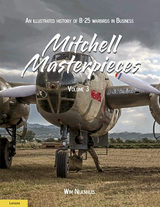
After the Second World War, the B-25 got a role in civil aviation. Many airplanes were stripped of their armament and other military equipment and often came through auctions in the civilian market. They came in private hands and were deployed for transportation of personnel or goods, for training, fire fighting, agricultural spraying of other purposes. Some were converted into a luxury business plane and some were used in the film industry.
This book should serve as a general view of the companies, organisations and owners and the B-25s they flew. Moreover, the book would not be complete if no attention was paid to the civilian B-25s in the various museums and the warbird circuit. All this is described in detail and provided with about 750 pictures, many of which are in full colour.

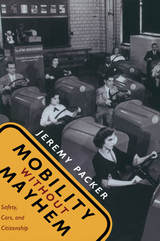
Packer focuses on cultural figures that have been singled out as particularly dangerous. Women drivers, hot-rodders, bikers, hitchhikers, truckers, those who “drive while black,” and road ragers have all been targets of fear. As Packer debunks claims about the dangers posed by each figure, he exposes biases against marginalized populations, anxieties about social change, and commercial and political desires to profit by fomenting fear. Certain populations have been labeled as dangerous or deviant, he argues, to legitimize monitoring and regulation and, ultimately, to curtail access to automotive mobility. Packer reveals how the boundary between personal freedom and social constraint is continually renegotiated in discussions about safe, proper driving.
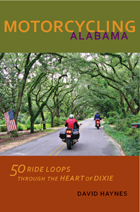
A much-needed guidebook for one of the most beautiful states to explore on two wheels.
David Haynes offers fifty ride loops of between 75 and 150 miles in length throughout every region of the state. The start and stop points for each ride are identical and easy to locate. This handy guide, which is designed to fit in a tank bag, features both streetbike and dual-sport rides. Also included are detailed, color-coded maps of the routes and turn-by-turn directions. Stunning full-color photographs accompany each ride description, highlighting scenes and points of interest along the way. There are introductory chapters on motorcycle safety, gear, and the use of global positioning devices, as well as pointers on motorcycle camping.
Motorcycle touring is one of the fastest-growing outdoor recreational pursuits in the country. For both the in-state and out-of-state motorcycle enthusiast, Motorcycling Alabama is a valuable and complete guide to a state rich in diverse types of scenery and with many unsung treasures yet to be discovered.
Published in cooperation with the Barber Vintage Motorsports Museum, Birmingham.

READERS
Browse our collection.
PUBLISHERS
See BiblioVault's publisher services.
STUDENT SERVICES
Files for college accessibility offices.
RECENTLY PUBLISHED



UChicago Accessibility Resources
home | accessibility | search | about | contact us
BiblioVault ® 2001 - 2026
The University of Chicago Press