
 A SCHOLARLY BOOK REPOSITORY
35 start with N start with N
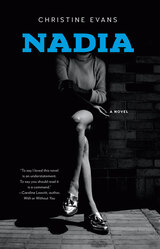
Nadia moves between the competing perspectives of two survivors of the 1990s Balkan Wars who have escaped to London, only to discover that the war has followed them there. Nadia is a young refugee who just wants to forget the past—until Iggy starts temping at her London office. Afraid he may be a sniper from the war she fled, Nadia starts seeing threats everywhere, alongside unsettling visions of her lost girlfriend, Sanja. As her volatile connection with Iggy unravels, Nadia is forced to face the ethically shaky choices she made to escape the war, her survivor guilt, and her disavowed queer sexuality.
Christine Evans's novel takes us to the recent past of a war that broke apart a European country and that presciently foreshadowed the rise of ethno-nationalism in the West. Tense, suspenseful, and mordantly funny, Nadia tracks the complex ways in which a past marked by political violence can shadow and disrupt the present.
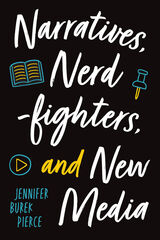
For decades, we’ve been warned that video killed the radio star, and, more recently, that social media has replaced reading. Nerdfighteria, a first-of-its-kind online literary community with nearly three million members, challenges these assumptions. It is the brainchild of brothers Hank and John Green, who provide literary themed programming on their website and YouTube channel, including video clips from John, a best-selling author most famous for his young adult book, The Fault in Our Stars. These clips not only give fans personal insights into his works and the writing process writ large, they also provide unique access to the author, inspiring fans to create their own fan art and make connections with one another.
In the twenty-first century, reading and watching videos are related activities that allow people to engage with authors and other readers. Whether they turn to The Fault in Our Stars or titles by lesser-known authors, Nerdfighters are readers. Incorporating thousands of testimonials about what they read and why, Jennifer Burek Pierce not only sheds light on this particular online community, she also reveals what it tells us about the changing nature of reading in the digital age. In Nerdfighteria, we find a community who shows us that being online doesn’t mean disinterest in books.

The Center for Fiction 2025 First Novel Prize, Winner
At the age of twenty-nine, tired of trying to get along with members of his crew and tired of the money going into somebody else’s pocket, Natch begins working for himself, climbing and cutting down trees in the foothills of north Georgia. He has his truck, ropes, climbing gear, and a rotating selection of secondhand saws he finds at pawn shops and flea markets. He is free to work as he pleases. And he believes he is fine with his life as it is, living alone in an old hunting cabin at the end of a dirt lane, enjoying his habits, exploring his vices, and living, as he puts it, “like some wild thing let loose on the world.”
Then he meets Asha, an alluring woman who works the nightshift at a convenience store. He finds himself needing her in a way that he has never needed anyone before. Among her charms are her passions for reading and belly dance and her ambition to put herself through school to become a therapist. She believes her studies will cure her of the familial dysfunctions she faced as a child and eventually enable her to help others.
When Asha discovers that she is expecting a child, the young couple struggles to convert the excitement of their early days together into a more steadfast companionship. Over the seasons of her pregnancy, Asha discovers that the freedom of their hardscrabble existence is overshadowed by the constant threat of misfortune and injury, and she finds herself timorous to bring a child into a setting where chainsaws are everywhere, where constant fires burn the bones of felled trees, a world of endless struggle in which finding more work means finding more danger.
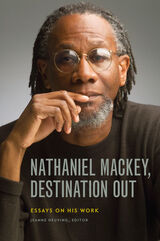
This collection is organized through broad topics in order to provide entrances into his challenging work: myth, literature, and seriality; music, performance, and collaboration; syncretism, synopsis, and what-saying. It engages Mackey’s spiritual and esoteric disposition along with his attention to what Amiri Baraka called the “enraged sociologies” of Black music. In his manifesto “Destination Out,” Mackey describes his work as “wanting to bid all givens goodbye” and as “centrifugal.” It is also centripetal, manifesting a reflexive interiority that creates itself through recurring forms.
Contributors: Maria Damon, Joseph Donahue, Rachel Blau DuPlessis, Norman Finkelstein, Luke Harley, Paul Jaussen, Adalaide Morris, Fred Moten, Peter O’Leary, Anthony Reed
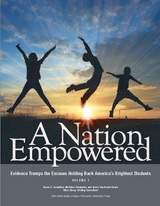
Volume 1 and 2 of A Nation Empowered: Evidence Trumps the Excuses Holding Back America's Brightest Students equips students, families, and educators with facts to refute biased excuses. A Nation Empowered shifts the impetus from conversation to action. Empowerement galvanizes determination with evidence. Volume 1 portrays the determination of students, educators, and parents to strive for excellence. Volume 2 reveals the evidence that trumps the excuses that hold bright students back.

Volume 1 and 2 of A Nation Empowered: Evidence Trumps the Excuses Holding Back America's Brightest Students equips students, families, and educators with facts to refute biased excuses. A Nation Empowered shifts the impetus from conversation to action. Empowerement galvanizes determination with evidence. Volume 1 portrays the determination of students, educators, and parents to strive for excellence. Volume 2 reveals the evidence that trumps the excuses that hold bright students back.

While readers will be able to identify Iowa’s snakes and lizards through its species accounts, identification keys, and beautiful photographs and illustrations, this book is intended to be more than a field guide. What makes it truly unique is the comparison of historic data collected by Iowa herpetologists in the 1930s and 1940s with data collected by the author, along with James L. Christiansen and others, since 1960. Custom maps show the reader how species’ distributions have changed over time.

While readers will be able to identify Iowa’s turtles through its species accounts, identification keys, and beautiful photographs and illustrations, this book is intended to be more than a field guide. What makes it truly unique is the comparison of historic data collected by Iowa herpetologists in the 1930s and 1940s with data collected by the authors, along with James L. Christiansen and others, since 1960. Custom maps show the reader how species’ distributions have changed over time. This book contains Iowa-specific data found nowhere else and is essential to all who study turtles in the Midwest.

In this reflective account of life in the tropics, Alexander Skutch offers readers both his observations and his interpretations of what he has experienced. In the many chapters about birds and their behavior, he describes a dove that defends its nest with rare courage, castlebuilders who create elaborate nests of interlaced twigs, oropendolas that cluster long woven pouches in high treetops, and an exceptionally graceful hummingbird who fails to pay for its nectar by pollinating the flowers that yield it. Skutch also describes curious plants and their flowers, including a birthwort that holds its pollinating flies captive and fern fronds that twine high up trunks in the rain forest.
With penetrating clarity, Skutch considers the significance of all this restless activity: he examines the origins of beauty and our ability to appreciate it, the foundations of tropical splendor, the factors that help us feel close to nature or alienated from it, and the possibility of consciousness and emotion in animals. He also addresses the quandary of the biologist contemplating painful experiments on animals rather than learning by direct observation, and he asserts that our capacity to care for the world around us is the truest criterion of our evolutionary advancement.
Skutch brings a thoughtful, unequaled voice to the description of the world he has grown to know and understand, a world considered forbidding by most northerners and still largely unexplored.
Nearly 30 million acres of the Northern Forest stretch across New York, Vermont, New Hampshire, and Maine. Within this broad area live roughly a million residents whose lives are intimately associated with the forest ecosystem and whose individual stories are closely linked to the region’s cultural and environmental history. The fourteen engaging essays in Nature and Culture in the Northern Forest effectively explore the relationships among place, work, and community in this complex landscape. Together they serve as a stimulating introduction to the interdisciplinary study of this unique region.
Each of the four sections views through a different lens the interconnections between place and people. The essayists in “Encounters” have their hiking boots on as they focus on personal encounters with flora and fauna of the region. The energizing accounts in “Teaching and Learning” question our assumptions about education and scholarship by proposing invigorating collaborations between teachers and students in ways determined by the land itself, not by the abstractions of pedagogy. With the freshness of Thoreau’s irreverence, the authors in “Rethinking Place” look at key figures in the forest’s literary and cultural development to help us think about the affiliations between place and citizenship. In “Nature as Commodity,” three essayists consider the ways that writers from the nineteenth and early twentieth centuries thought about nature as a product and, thus, how their conclusions bear on the contemporary retailing of place.
The writers in Nature and Culture in the Northern Forest reveal the rich affinities between a specific place and the literature, thought, and other cultural expressions it has nurtured. Their insightful and stimulating connections exemplify adventurous bioregional thinking that encompasses both natural and cultural realities while staying rooted in the particular landscape of some of the Northeast’s wildest forests and oldest settlements.

In 1925 Earl May began broadcasting KMA Radio-960 from Shenandoah, Iowa, to boost his fledgling seed business. The station aired practical information designed to help with the day-to-day activity in midwestern farmhouse kitchens. Before long KMA was a trusted friend throughout the wide listening area, offering inspiration, companionship, and all manners of domestic counsel. Hosting the daily radio programs—Home Hour, the Stitch and Chat Club, and the KMA Party Line—and the live cooking demonstrations that drew thousands to the KMA auditorium was a changing roster of personable, lively women who quickly became known as the KMA Radio Homemakers.
Now, in Neighboring on the Air, we can hear the voices of the KMA homemakers and sample their philosophy and—best of all—cooking. Through recipes, biographies, and household advice we get to know such enduring women as "The Little Minister," the Reverend Edythe Stirlen, and Leanna Driftmier and the whole Kitchen-Klatter family, part of the longest-running homemaker program in the history of radio. Learn how to make Sour Cream Apple Pie from "The Farmer's Wife," Florence Falk; Varnished Chicken from the first long-term KMA Radio Homemaker, Jessie Young; and E.E.E. Missouri Dessert (nobody can remember what the "E.E.E." stands for) from the indomitable host of the Edith Hansen Kitchen Club. This endearing scrapbook of people, places, and foods charts the continuing adventure of the KMA homemakers as they broadcast into the 1990s. Neighboring on the Air is an enchanting piece of Americana. Anyone interested in cooking, cultural history, or the Midwest will want to own and use this book.
In this ferment of social upheaval and technological change, the moderns found what we would today term “the network,” though they did not have the vocabulary for it that we do now, to be a versatile model for their aesthetic experiments in representing social space and social relations. Whether they used the figuration of the network as a kind of formal experiment to negotiate the tensions between dispersal and unity, fragment and totality, or took the network as a subject in itself, as seen when dealing with crowds or public spaces, the network was a way for writers and artists to conceptualize and explore their rapidly changing society. Through readings of the works of Randolph Bourne, Jean Toomer, Anita Loos, John Dos Passos, and Nathanael West, Networks of Modernism positions the network as the defining figure of American modernist aesthetics and explores its use as a conceptual tool used to think through the rapid changes in American society.
Chicagoan Helen Price, a dying woman, recounts her life while driving toward an oncology appointment. She attempts to take her own life, survives, then dies under tragic circumstances.
In death, Helen bequeaths the family home to her only son, gay playwright Norman Price. Father to an adopted Chinese child, and recently broken up with his partner, Norman’s life is in crisis. Helen also bequeaths a series of tapes to Nate Feldman, a Vietnam draft dodger ensconced in the far reaches of Canada, and the son of Helen’s former boss, Theodore Feldman. Nate’s return to America to claim the tapes occasions confronting a history of animus between father and son, but also the nature of the relationship between Helen Price and Theodore Feldman.
Told from moving cars, the journeys of Norman Price and Nate Feldman converge toward unexpected mysteries and revelations that uncover not so much lies as understandings of life that no longer hold under the scrutiny of the present
A writer of wide experience, Ruth Suckow nevertheless remained focused on small-town life; one could even call her the Jane Austen of small-town America. Many of her characters were the “sparrows of Iowa,” ordinary folks whom she made extraordinary by writing about them. In her 1942 novel about the little community of New Hope, written during the desperate days of World War II, life is marked by unusual optimism, openness, mutual care, trust, communal spirit, democracy, and above all light.
Life in New Hope recaptures a feeling of youth that would seem overly idealistic if it were not for Suckow's unflinching realism. As seen through the eyes of its Edenic main characters—Clarence Miller, son of the town's banker and chief booster, and Delight Greenwood, daughter of the Congregational minister who serves New Hope during the two years of the novel—the town itself is the protagonist. Death, crime, and heartbreak intervene, but a sense of freedom and possibility, “where all were to share equally in the boundlessness of light and hope,” always illuminates the town. This sunlit novel, with its blend of romance and reality, reintroduces a regional writer whom H. L. Mencken called “unquestionably the most remarkable woman …writing stories in the republic.”
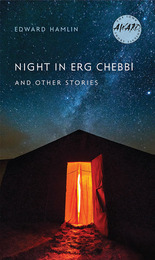
By turns innocent and canny, the characters of Night in Erg Chebbi and Other Stories must learn to improvise—quickly—when confronted with stark choices they never dreamed they’d have to make. Lyrical, immaculately constructed and deeply felt, these nine stories take us far beyond our comfort zones and deep into the wilds of the human heart.

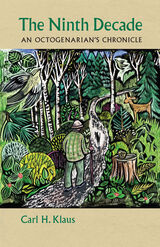
The multi-year scope of his chronicle reveals the numerous physical and mental problems that arise during octogenarian life and how eighty-year-olds have dealt with those challenges. The Ninth Decade is a unique, first-hand source of information for anyone in their sixties, seventies, or eighties, as well as for persons devoted to care of the aged. Though the challenges of octogenarian life often require specialized care, The Ninth Decade also shows the pleasures of it to be so special as to have inspired Lillian Hellman’s paradoxical description of “longer life” as “the happy problem of our time.”

no swaddle reads as a sort of meditation on theme, its repeated form mirroring the spiraling nature of indecision and reconsideration of the same major question alongside its continuous struggle to name. In the end, this grappling with elements of grief and shame becomes a way of moving toward greater agency and fulfillment.
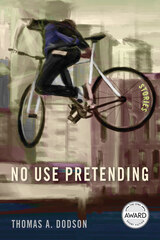
The characters in these stories have been forced into conditions of life that they find unbearable, and the stories chart their often tragically misguided attempts to relieve their suffering via connections with other people or through the pursuit of addictive attachments (to opiates in one story, to sleep in another).
This collection encompasses diverse genres, from ecologically informed realism to a Kafkaesque fairy tale, from fabulist “weird fiction” to an episode from The Odyssey that becomes a meditation on what distinguishes human beings from animals. These stories invite the reader to reconsider moral and ideological certainties, to take a fresh look at such issues as fracking and drone warfare. In one story, a petroleum engineer discovers that one of his wastewater wells may be causing earthquakes, and in another the pilot of an Air Force drone seeks to reconcile his conflicting roles as protector and executioner, husband and soldier. The scientist and the serviceman are both presented with problems that have no easy or obvious solutions, situations that force them to confront the messy, compromising complexity of being human.
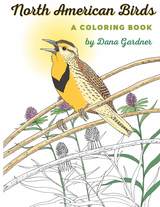
The birds are arranged in order of their evolutionary history so that you can see the relationships among species and families. Some of them, like the northern cardinal, are familiar backyard friends; some, like the mountain quail and American bittern, are wary denizens of brushlands and marshes; and some, like the great horned owl, are seldom seen in daylight. One, unfortunately, is extinct—the bright and raucous Carolina parakeet, which once ranged widely in huge noisy flocks. All are waiting for you to bring them to life with your own vibrant colors.
Gyorgyi Voros focuses on three governing metaphors in Stevens' poems—Nature as house, Nature as body, and Nature as self. She argues that Stevens' youthful wilderness experience yielded his primary subject—the relationship between human beings and nonhuman nature—and that it spurred his shift from a romantic to a phenomenological understanding of nature. Most important, it prompted him to reject his culture's narrow humanism in favor of a singular vision that in today's terms would he deemed ecological.
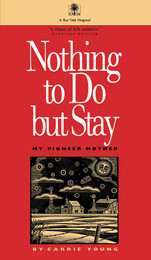
Carrine Gafkjen was, as her daughter remembers, at once the most liberated and unliberated of women. If she had considered the subject at all she would have thought it a waste of time. She firmly believed in destiny; what fate planned for her she dealt with head-on.
In the early 1900s the twenty-five-year-old Gafkjen boarded a train from Minneapolis to claim a homestead for herself on the western North Dakota prairies. She lived alone in her claim shack, barred her door at night against the coyotes, existed on potatoes and salt, and walked five miles to the nearest creek to wash her clothes. A decade later she had, by her own ingenuity, doubled her landholdings and became a secure women of property. Then, at an age when most other women would have been declared spinsters, Carrine Gafkjen married Sever Berg and had six children.
Nothing to Do but Stay tells the story of this uncommon woman with warmth and good humor. It gives testimony to the lasting spirit of our pioneer heritage and, in these uncertain times, to the staying power of family and tradition. This book will appeal to all those with an interest in the settlement of the West, the history of the Great Plains, women's studies, and the perseverance of the early-twentieth-century farmers.
The first collection of critical essays to focus specifically on the fiction produced by American novelists of the Depression era, The Novel and the American Left contributes substantially to the newly emerging emphasis on twentieth-century American literary radicalism. Recent studies have recovered this body of work and redefined in historical and theoretical terms its vibrant contribution to American letters. Casey consolidates and expands this field of study by providing a more specific consideration of individual novels and novelists, many of which are reaching new contemporary audiences through reprints.
The Novel and the American Left focuses exclusively on left-leaning fiction of the Depression era, lending visibility and increased critical validity to these works and showing the various ways in which they contributed not only to theorizations of the Left but also to debates about the content and form of American fiction. In theoretical terms, the collection as a whole contributes to the larger reconceptualization of American modernity currently under way. More pragmatically, individual essays suggest specific authors, texts, and approaches to teachers and scholars seeking to broaden and/or complicate more traditional “American modernism” syllabi and research agendas.
The selected essays take up, among others, such “hard-core"” leftist writers as Mike Gold and Myra Page, who were associated with the Communist Party; the popular novels of James M. Cain and Kenneth Fearing, whose works were made into successful films; and critically acclaimed but nonetheless “lost” novelists such as Josephine Johnson, whose Now in November (Pulitzer Prize, 1936) anticipates and complicates the more popular agrarian mythos of Steinbeck’s The Grapes of Wrath.
This volume will be of interest not only to literary specialists but also to historians, social scientists, and those interested in American cultural studies.
In Novel Subjects, Leah Milne offers a new way to look at multicultural literature by focusing on scenes of writing in contemporary works by authors with marginalized identities. These scenes, she argues, establish authorship as a form of radical self-care—a term we owe to Audre Lorde, who defines self-care as self-preservation and “an act of political warfare.”
In engaging in this battle, the works discussed in this study confront limitations on ethnicity and nationality wrought by the institutionalization of multiculturalism. They also focus on identities whose mere presence on the cultural landscape is often perceived as vindictive or willful. Analyzing recent texts by Carmen Maria Machado, Louise Erdrich, Ruth Ozeki, Toni Morrison, and more, Milne connects works across cultures and nationalities in search of reasons for this recent trend of depicting writers as characters in multicultural texts. Her exploration uncovers fiction that embrace unacceptable or marginalized modes of storytelling—such as plagiarism, historical revisions, jokes, and lies—as well as inauthentic, invisible, and unexceptional subjects. These works ultimately reveal a shared goal of expanding the borders of belonging in ethnic and cultural groups, and thus add to the ever-evolving conversations surrounding both multicultural literature and self-care.
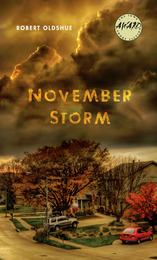
In the first story, an elderly couple is told that delivery of their Thanksgiving dinner has been canceled due to an impending blizzard. Unwilling to have guests but nothing to serve them, they make a run to the grocery, hoping to get there and back before the snow, but crash their car into the last of their neighbors. In “The Receiving Line,” a male prostitute tricks a closeted suburban schoolteacher only to learn that the trick is on him. In “The Woman On The Road,” a twelve-year-old girl negotiates the competing demands of her faith and her family as she is bat mitzvahed in the feminist ferment of the 1980s. The lessons she learns are the lessons learned by a ten-year-old boy in “Fergus B. Fergus,” after which, in “Summer Friend,” two women and one man renegotiate their sixty-year intimacy when sadly, but inevitably, one of them gets ill. “The Home Of The Holy Assumption” offers a benediction. A quadriplegic goes missing at a nursing home. Was she assumed? In the process of finding out, all are reminded that caring for others, however imperfectly—even laughably—is the only shot at assumption we have.
In upstate New York, a November storm is one that comes early in the season. If it catches people off-guard, it can change them in the ways Oldshue’s characters are changed by different but equally surprising storms.
READERS
Browse our collection.
PUBLISHERS
See BiblioVault's publisher services.
STUDENT SERVICES
Files for college accessibility offices.
RECENTLY PUBLISHED





UChicago Accessibility Resources
home | accessibility | search | about | contact us
BiblioVault ® 2001 - 2025
The University of Chicago Press