
 A SCHOLARLY BOOK REPOSITORY
37 start with N start with N
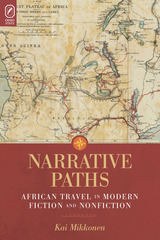
Narrative Paths contributes to debates in narratology and rhetorical narrative theory about the fiction–nonfiction distinction. With chapters on a wide range of modernist authors—from Pierre Loti, André Gide, Michel Leiris, and Georges Simenon to Blaise Cendrars, Louis-Ferdinand Céline, Joseph Conrad, Graham Greene, Evelyn Waugh, and Isak Dinesen (Karen Blixen)—Mikkonen’s study also contributes to postcolonial approaches to these authors, examining issues of representation, narrative voice, and authority in narratives about colonial Africa.
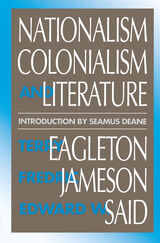
The three essays constituting this volume were originally published as individual pamphlets by the Field Day Theatre Company, in Derry, Northern Ireland. Each deals with the question of nationalism and the role of cultural production as a force in understanding and analyzing the aftermath of colonization. The authors’ diverse perspectives are demonstrated by the essays’ respective titles: Eagleton, Nationalism: Irony and Commitment; Jameson, Modernism and Imperialism; and Said, Yeats and Decolonization. The essays have implication beyond their immediate topics, bearing upon questions of feminism, decolonization, and modernism to illuminate problems that belong to other groups and regions.
A compelling reclamation of the place of aesthetics in postcolonial literature
Literature though it may be, postcolonial literature is studied and understood largely—and often solely—in social and political terms. In neglecting its aesthetic dimension, as this book forcefully demonstrates, we are overlooking not only an essential aspect of this literature but even a critical perspective on its sociopolitical function and value. In Native Intelligence, Deepika Bahri focuses on postcolonial literature’s formal and aesthetic negotiations with sociopolitical concerns.
How, Bahri asks, do aesthetic considerations contest the social function of postcolonial literature? In answering, her book takes on two tasks: First, it identifies the burden of representation borne by postcolonial literature through its progressive politicization. Second, it draws on Frankfurt School critical theory to reclaim a place for aesthetics in literary representation by closely engaging works of Rohinton Mistry, Salman Rushdie, and Arundhati Roy. Throughout, Bahri shows how attention to the aesthetic innovations and utopian impulses of postcolonial works uncovers their complex and uneven relationship to ideology, reanimating their potential to make novel contributions to the larger project of social liberation.
This new study offers a general reassessment of H. G. Wells as a writer and thinker. It concentrates upon the close relationship between Wells’ developing philosophy and his literary techniques. The early chapters examine Wells’ treatment of such subjects as confinement and escape, sex, the nature of human identity, the relationship of individual to race, human progress, and the importance of education. At the same time, the describe the emotional topography that Wells created as a mean of vivifying his ideas, a topography constructed from image complexes largely based upon the analogy between individual and racial evolution.
The major contribution of the book comes in its later chapters, which deal with Wells’ metaphysical assumptions and his approach to his craft. His views on free will and strength of will were intimately related to his methods of literary composition. The important later chapters detail this relationship, while describing some of Wells’ characteristic literary devices, such as the intentional violations of certain novelistic conventions or the sly borrowing from and alluding to contemporary works of literature in what amounted to a covert polemic.
On the whole, this study argues for a coherent and consistent, though developing, philosophy operating throughout Wells’ career and manifested in experimental literary works which, while not always successful, were consistently inventive and intelligently crafted in the service of Wells’ principle aim, the education of the human species to a command of its own destiny.

The nineteenth century began with reverence for nature and ended with the apotheosis of art. In this wide-ranging excursion through the literature, visual arts, and natural sciences of the era from Wordsworth to Wilde, Carl Woodring traces shifting ideas and attitudes concerning nature, art, and the relations between the two.
The veneration of nature as aesthetic model and ethical norm was gradually eroded not least by the study of biology, which revealed organic nature to be wasteful and murderous. Darwin’s work verified the growing perception of nature as amoral by stressing the role of chance in natural selection, a further blow to trust in natural law. Once nature was not worth imitating, art by the century’s close could be an end to itself, free of responsibility to the natural.
The author examines individual works by Romantic and Victorian poets; narrative prose from James Hogg and Mary Shelley to Conrad, James, and Stevenson; painters from Wilkie through the Pre-Raphaelites to Whistler—all within such general contexts as the picturesque, the sublime, natural theology, romantic irony, romantic Hellenism, realism, photography, aestheticism, arts and crafts, art nouveau, and decadence. Although Woodring focuses on events, movements, and creative minds in England, he also draws upon a range of seminal figures from the Continent and the United States: Alexander von Humboldt, Delacroix, Thomas Cole, and Hawthorne are prominent examples. Nature into Art will fascinate scholars and amateurs of movements in literature, art, science, and cultural history in the Western world after 1780.
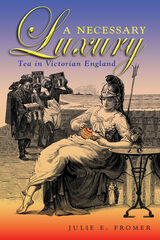
In A Necessary Luxury: Tea in Victorian England, Julie E. Fromer analyzes tea histories, advertisements, and nine Victorian novels, including Alice’s Adventures in Wonderland, Wuthering Heights, and Portrait of a Lady. Fromer demonstrates how tea functions within the literature as an arbiter of taste and middle-class respectability, aiding in the determination of class status and moral position. She reveals the way in which social identity and character are inextricably connected in Victorian ideology as seen through the ritual of tea.
Drawing from the fields of literary studies, cultural studies, history, and anthropology, A Necessary Luxury offers in-depth analysis of both visual and textual representations of the commodity and the ritual that was tea in nineteenth-century England.
In Necessary Nonsense, Massey explores a range of literary and philosophical subjects, from Immanuel Kant to Lewis Carroll—parsing the ways in which nonsense permeates their writing and dialectics—including an exploration of the inability of those who suffer from Asperger's syndrome to distinguish between metaphor and nonsense, and an investigation of the neural signature of the nonsense words and phrases that occur during the transition from waking to sleep. Massey argues that while nonsense may be the “archenemy of reason,” it is also tied to the intrinsic nature of reason; the two, simply put, cannot exist without each other. Through a stunning array of exploratory topics, Massey concludes that we all live under a canopy of nonsense.
Honorable Mention, American Council for Irish Studies Donald Murphy Prize for Distinguished First BookThe Necromantics dwells on the literal afterlives of history. Reading the reanimated corpses—monstrous, metaphorical, and occasionally electrified—that Mary Shelley, Robert Browning, Charles Dickens, W. B. Yeats, Bram Stoker, and others bring to life, Renée Fox argues that these undead figures embody the present’s desire to remake the past in its own image. Fox positions “necromantic literature” at a nineteenth-century intersection between sentimental historiography, medical electricity, imperial gothic monsters, and the Irish Literary Revival, contending that these unghostly bodies resist critical assumptions about the always-haunting power of history. By considering Irish Revival texts within the broader scope of nineteenth-century necromantic works, The Necromantics challenges Victorian studies’ tendency to merge Irish and English national traditions into a single British whole, as well as Irish studies’ postcolonial efforts to cordon off a distinct Irish canon. Fox thus forges new connections between conflicting political, formal, and historical traditions. In doing so, she proposes necromantic literature as a model for a contemporary reparative reading practice that can reanimate nineteenth-century texts with new aesthetic affinities, demonstrating that any effective act of reading will always be an effort of reanimation.
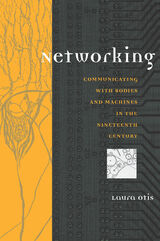
The interdisciplinary sweep of this book is impressive. Otis focuses simultaneously on literary works by such authors as George Eliot, Bram Stoker, Henry James, and Mark Twain and on the scientific and technological achievements of such pioneers as Luigi Galvani, Hermann von Helmholtz, Charles Babbage, Samuel Morse, and Werner von Siemens.
This unique juxtaposition of physiology, engineering, and literature reveals the common thoughts shared by writers in widely diverse fields and suggests that our current comparisons of nerve and computer networks may not only enhance but shape our understanding of both neurobiology and technology.
Highly accessible and jargon-free, Networking will appeal to general readers as well as to scholars in the fields of interdisciplinary studies, nineteenth-century literature, and the history of science and technology.
Laura Otis is Associate Professor of English, Hofstra University. In 2000, she was awarded a MacArthur Foundation Fellowship for her interdisciplinary studies of literature and science. Her previous books include Membranes: Metaphors of Invasion in Nineteenth-Century Literature, Science, and Politics and Organic Memory: History and the Body in the Late Nineteenth and Early Twentieth Centuries.
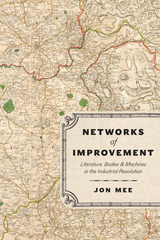
Working against the stubbornly persistent image of “dark satanic mills,” in many ways so characteristic of literary Romanticism, Jon Mee provides a fresh, revisionary account of the Industrial Revolution as a story of unintended consequences. In Networks of Improvement, Mee reads a wide range of texts—economic, medical, and more conventionally “literary”—with a focus on their circulation through networks and institutions. Mee shows how a project of enlightened liberal reform articulated in Britain’s emerging manufacturing towns led to unexpectedly coercive forms of machine productivity, a pattern that might be seen repeating in the digital technologies of our own time. Instead of treating the Industrial Revolution as Romanticism’s “other,” Mee shows how writing, practices, and institutions emanating from these industrial towns developed a new kind of knowledge economy, one where local literary and philosophical societies served as important transmission hubs for the circulation of knowledge.
Ninety-six letters to the Tatler and the Spectator, representing what is probably the largest extant body of unpublished material relating directly to the two journals, appeared for the first time in print in this book.
The original letters were not published in the Tatler or the Spectator, but they were preserved by the editors and eventually found their way into the Marlborough and the Tickell collections. They have been prepared for publication and edited, with notes and an introduction, by an authority in the field of early periodicals.
The letters will be of especial interest to students of early eighteenth-century England, for few literary forms more clearly reflect the times in which they are written than the letter, particularly the letter to the editor. A wide range of writers is represented—the inarticulate and the witty, the serving maid and the gentleman. Subject matter is equally diverse, including such topics as women's petticoats, free thinking, the state lottery, the nuisance of a smoking wife, cock-throwing, and Platonic love.
Why the letters were not published in the Tatler or the Spectator is a matter for conjecture. Some of them were apparently used by Addison or Steele as topics for essays. Occasionally a letter was received or rewritten by the editors and printed in an altered form. Whatever the reason for their survival, these letters will be of value to students of language and literary journalism, social conditions, and popular philosophy.
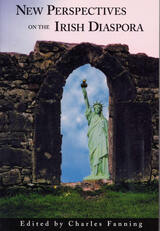
In New Perspectiveson the Irish Diaspora, Charles Fanning incorporates eighteen fresh perspectives on the Irish diaspora over three centuries and around the globe. He enlists scholarly tools from the disciplines of history, sociology, literary criticism, folklore, and culture studies to present a collection of writings about the Irish diaspora of great variety and depth.
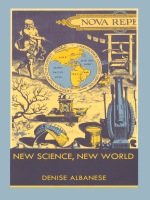
Albanese reads the inaugurators of the scientific revolution against the canonical authors of early modern literature, discussing Galileo’s Dialogue on the Two Chief World Systems and Bacon’s New Atlantis as well as Milton’s Paradise Lost and Shakespeare’s The Tempest. She examines how the newness or “novelty” of investigating nature is expressed through representations of the New World, including the native, the feminine, the body, and the heavens. “New” is therefore shown to be a double sign, referring both to the excitement associated with a knowledge oriented away from past practices, and to the oppression and domination typical of the colonialist enterprise. Exploring the connections between the New World and the New Science, and the simultaneously emerging patterns of thought and forms of writing characteristic of modernity, Albanese insists that science is at its inception a form of power-knowledge, and that the modern and postmodern division of “Two Cultures,” the literary and the scientific, has its antecedents in the early modern world.
New Science, New World makes an important contribution to feminist, new historicist, and cultural materialist debates about the extent to which the culture of seventeenth-century England is proto-modern. It will offer scholars and students from a wide range of fields a new critical model for historical practice.
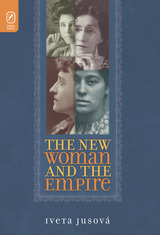
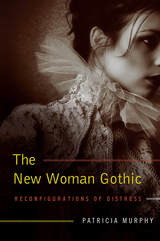
The controversial and compelling figure of the New Woman in late Victorian fiction has garnered extensive scholarly attention, but rarely has she been investigated through the fascinating lens of the Gothic. Yet the presence of sinister Gothic elements is so widespread in the generally realisitic British novels that the term "New Woman Gothic" readily comes to mind. Drawing from and reworking Gothic conventions of Romantic and later literature, the New Woman version is marshaled during this tumultuous cultural moment of gender anxieties either to defend or revile the complex individual who sought improvements in educational, marital, and professional realms.
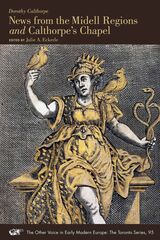
This first print edition of two extant manuscripts by Dorothy Calthorpe (1648–1693) introduces a new seventeenth-century woman writer to the growing canon of early modern female authors. The edition provides transcriptions of the manuscripts and Calthorpe’s will, as well as a hefty apparatus that features a comprehensive introduction to Calthorpe, her family, and her work; a glossary of persons who figured in her writing and her life; and two genealogical charts. Calthorpe’s writings (including both prose and verse and ranging from Petrarchan love poems to roman à clef and devotional verse), and the thoughtfully constructed and illustrated volumes in which her texts appear, demonstrate the rich intellectual life of a previously unknown female writer and provide a compelling example of Restoration manuscript production.
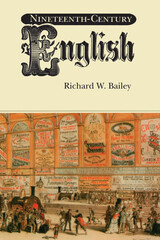

Winifred Bryan Horner argues that an understanding of the changes that occurred in the content of nineteenth-century courses in logic, rhetoric, and belles lettres taught in Scottish universities provides important critical insight into the development of the twentieth-century American composition course, as well as courses in English literature and critical theory.
Because of the inaccessibility of primary materials documenting the changes in courses taught at Scottish universities, the impression remains that the nineteenth century represents a break with the traditional school curriculum rather than a logical transition to a new focus of study. Horner has discovered that the notes of students who attended these classes—meticulously transcribed records of the lectures that professors dictated in lieu of printed texts—provide reliable documentation of the content of courses taught during the period. Using these records, Horner traces the evolution of current traditional composition, developed in the United States in the first part of the twentieth century, from courses taught in nineteenth-century, northern Scottish universities. She locates the beginning of courses in English literature and belletristic composition in the southern schools, particularly Edinburgh.
Horner’s study opens new vistas for the study of the evolution of university curricula, especially the never before acknowledged influence of belletristric rhetoric on the development of the North American composition course.
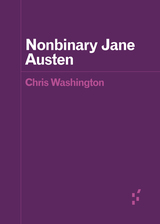
A bold and provocative analysis of Jane Austen as an early gender abolitionist
Chris Washington reads Jane Austen differently than we have classically understood her: rather than the doyen of the cisheteronormative marriage plot, the author theorizes how Austen envisions a nonbinary future that traverses the two-sex model of gender that we can supposedly see solidifying in the eighteenth century. Instead, Washington argues, Austen leverages the generic restraints of the novel to write a disguised autofiction in which Austen imagines herself as transgender and works to abolish gender exclusivity altogether. In doing so, she establishes a politics that ushers in a future beyond the cisheteronormative binary, one built on plurality and possibility.
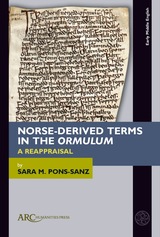
The Ormulum has been, from the onset, at the very centre of the philological investigation of the impact that Anglo-Scandinavian interaction in the Early Middle Ages had on the English lexicon. However, previous works have focused mainly on the identification of the Norse-derived terms in the text, with different interpretations arising from the varying reliability of the extant evidence. This study moves the field forward not only by re-assessing the over five hundred terms that have so far been identified as Norse-derived on the basis of the newly developed Gersum typology, but also by exploring the level of integration of the terms into Orrm’s language and the extent to which his use of these terms can be said to be as idiosyncratic as other aspects of his text.
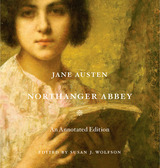
“Jane Austen lovers worldwide will cherish these books...Prepare yourself for a major treat.”
—Christian Science Monitor
If adventures will not befall a young lady in her own village, she must seek them abroad (or in a good book).
Despite being the first novel she completed in full, Jane Austen’s Northanger Abbey was published posthumously in 1817—a fitting fate for a story about late discoveries. Catherine Morland is Austen’s youngest, most impressionable heroine, a connoisseur of Gothic novels with a tendency to confuse fact with fiction. This extraordinary, annotated edition will appeal to casual readers, “Friends of Jane,” and everyone eager to fall under a great book’s spell.
For beginners and experts alike—immerse yourself in Jane Austen’s world: For the modern reader, our annotations provide clear explanations and illuminating context for period language and references. For the enthusiast, they offer fresh, exciting analysis—a passionate friend in the margins.
A work of art—the ideal gift: Perfect for gifting, collecting, and cherishing, this grand hardcover (9” x 9.5”) brims with hundreds of full-color illustrations that vividly recreate Austen’s Bath—its fashions, carriages, libraries, and estates.
The story: Seventeen-year-old Catherine Morland is dreamy, naïve, and fond of Gothic novels. Though a tomboy in her youth, she is “in training for a heroine” when we meet her. When she’s invited to stay with the wealthy Allen family in Bath, her overactive imagination leads her to badly misinterpret events and places. As she learns to live outside the pages of her favorite books, Catherine matures and realizes her place in the world—finding true love in the process.
Notorious Facts examines the sensationalistic confounding of persons and principles in the public life of Romantic England (1780–1830). Its purview is limited to five decades straddling the late eighteenth and early nineteenth centuries, but its trajectory, moving from a politics rendered in personal terms to a politics of personality, describes a shift still in process today. The study’s chapters draw on a motley body of literature (pamphlets, secret histories, and the like) that at first glance seems uncharacteristic of what literary historians call the English Romantic period. Viewed in the context of something called late Georgian England, these texts seem more indigenous, but if the canonical revisionism of the last few decades should teach us anything, it is that a Romanticism encompassing all romanticisms ideally excludes nothing.
In its heroic Enlightenment sense, publicity is concerned with exposing the workings of power for all to see. A good deal may be inferred about publicity in Romantic England from primary texts in which this salutary function is at once espoused and subverted. These texts—the mostly nameless or pseudonymous authors of the age’s pamphlet literature are the heroes and villains of the piece—almost invariably claim to speak from a disinterested conception of publicity while putting its methods of critical exposure to wholly self-interested purposes. This study examines well-known authors of the period like Jeremy Bentham, Samuel Taylor Coleridge, and William Hazlitt, as well as pamphleteers like John Horne Tooke, Philip Withers, and Nathaniel Jefferys. Other figures include authors of secret history like Thomas Ashe, Mary Anne Clarke, Lewis Goldsmith, and Joseph Haslewood in addition to notorious figures in their own right such as the Prince and Princess of Wales, Mrs. Fitzherbert, and the Reverend Edward Irving. Among the topics treated are treasonous libel, royal scandal, secret history, and celebrity.
Published by University of Delaware Press. Distributed worldwide by Rutgers University Press.

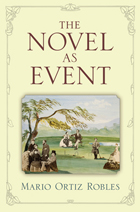
"The Novel as Event brilliantly does two things: presents a strikingly new theory of the way novels have effect in the social world, and also presents original readings of five major Victorian novels as demonstrations of the way that theory may be exemplified in practice. No other book that I know of does either of these two things in at all the same way."
---J. Hillis Miller, University of California, Irvine
"I have no doubt that this book will become an important part of a renewed questioning of a certain unchallenged historicism prevalent in Victorian novel studies from the beginning."
---Kevin McLaughlin, Brown University
The Novel as Event is a timely reconsideration of the historical role of the Victorian novel from the perspective of its performativity. In a highly original application of the work of Jacques Derrida, Paul de Man, Pierre Bourdieu, Judith Butler, and other readers of J. L. Austin, Mario Ortiz Robles argues that the language of the novel is paramount and that the current emphasis on the representational and physical aspects of the novel tends to obscure this fact. He provides brilliant original readings of five major Victorian novels: Dickens's Our Mutual Friend, Brontë's Jane Eyre, George Eliot's Middlemarch, Thackeray's Vanity Fair, and Collins's The Woman in White, illustrating that it is impossible to fully grasp the cultural power of the novel, from its role in the cultivation of manners and the conduct of courtship to the consolidation of bourgeois ideology and the construction of the subject, without an adequate account of the performativity of its language. By considering the novel as a linguistic event, Ortiz Robles offers a new explanatory model for understanding how novels intervene materially in the reality they describe, and, in doing so, he seeks to reinvigorate critical debate on the historicity of the realist novel and current methods of cultural criticism. The Novel as Event serves as a well-timed corrective to the narrow historicist approach to the materiality of the novel that currently holds sway.
Mario Ortiz Robles is Assistant Professor of English at the University of Wisconsin, Madison.
Cover art: "Untitled page from Constance Sackville West Album." Courtesy of George Eastman House, International Museum of Photography and Film.
Published by Bucknell University Press. Distributed worldwide by Rutgers University Press.

2020 Choice Outstanding Academic Title
Marcie Frank’s study traces the migration of tragicomedy, the comedy of manners, and melodrama from the stage to the novel, offering a dramatic new approach to the history of the English novel that examines how the collaboration of genres contributed to the novel’s narrative form and to the modern organization of literature. Drawing on media theory and focusing on the less-examined narrative contributions of such authors as Aphra Behn, Frances Burney, and Elizabeth Inchbald, alongside those of Samuel Richardson, Henry Fielding, and Jane Austen, The Novel Stage tells the story of the novel as it was shaped by the stage.
Published by Bucknell University Press. Distributed worldwide by Rutgers University Press.
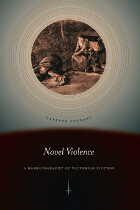
Victorian novels, Garrett Stewart argues, hurtle forward in prose as violent as the brutal human existence they chronicle. In Novel Violence, he explains how such language assaults the norms of written expression and how, in doing so, it counteracts the narratives it simultaneously propels.
Immersing himself in the troubling plots of Charles Dickens, Anne Brontë, George Eliot, and Thomas Hardy, Stewart uses his brilliant new method of narratography to trace the microplots of language as they unfold syllable by syllable. By pinpointing where these linguistic narratives collide with the stories that give them context, he makes a powerful case for the centrality of verbal conflict to the experience of reading Victorian novels. He also maps his finely wrought argument on the spectrum of influential theories of the novel—including those of Georg Lukács and Ian Watt—and tests it against Edgar Allan Poe’s antinovelistic techniques. In the process, Stewart shifts critical focus toward the grain of narrative and away from more abstract analyses of structure or cultural context, revealing how novels achieve their semantic and psychic effects and unearthing, in prose, something akin to poetry.
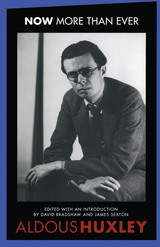
Over the course of his career, British writer Aldous Huxley (1894-1963) shifted away from elitist social satires and an atheistic outlook toward greater concern for the masses and the use of religious terms and imagery. This change in Huxley's thinking underlies the previously unpublished play Now More Than Ever.
Written in 1932-1933 just after Brave New World, Now More Than Ever is a response to the social, economic, and political upheavals of its time. Huxley's protagonist is an idealistic financier whose grandiose schemes for controlling the means of production drive him to swindling and finally to suicide. His fate allows Huxley to expose the evils he perceives in free-market capitalism while pleading the case for national economic planning and the rationalization of Britain's industrial base.
This volume contains the full text of Now More Than Ever, which was believed to be lost until 1976, when a copy was found at the Harry Ransom Humanities Research Center of the University of Texas at Austin. A "thinker's play" that has never been produced on stage, it is the last previously unpublished piece of Huxley's major writings and immensely important to understanding his development as a writer. The editors of this volume have annotated the play for contemporary readers. Their introduction sets the play in the context of Huxley's intellectual life.
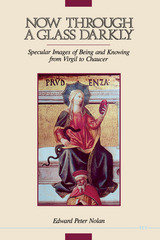
Now through a Glass Darkly brings both traditional medievalist and postmodernist approaches to bear in its attempt to understand both the powers and the limits of verbal art. Nolan explores the ways medieval writers and their Roman predecessors used formal and thematic mirrors to examine the implications of alterity in the face of similarity, arguing that these preoccupations were as central to the medieval sensibility as they are to our own. Now through a Glass Darkly frames several of the key issues in the current debate over the continued viability (or not) of the inherited canon of Western culture, such as the question whether there is any meaning at all to be rescued from such notions as “coherence” or “tradition” in Western literature.
Now through a Glass Darkly will appeal to the educated generalist interested in the relationships between literature and its surrounding intellectual and cultural contexts as well as to those more specifically interested in medieval poetry and poetics. For medievalists and those who work at the intersection of critical theory and medieval literature, Now through a Glass Darkly will be of critical importance.
READERS
Browse our collection.
PUBLISHERS
See BiblioVault's publisher services.
STUDENT SERVICES
Files for college accessibility offices.
RECENTLY PUBLISHED





UChicago Accessibility Resources
home | accessibility | search | about | contact us
BiblioVault ® 2001 - 2025
The University of Chicago Press