
 A SCHOLARLY BOOK REPOSITORY
7 start with N start with N
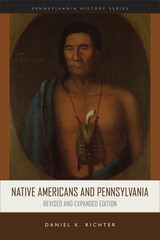
Engagingly written, deeply researched, and thoroughly revised to reflect the most recent interdisciplinary scholarship, this new edition of Native Americans and Pennsylvania focuses on Indigenous actors, voices, and landscapes, while tracing interconnections among local, continental, and global trends.
The story begins thousands of years before there was such a thing as “Pennsylvania.” William Penn did not paint his colony on a blank canvas. Colonists adapted ancient patterns of trade and cultural interaction created by the ancestors of Lenape, Conestoga, and Haudenosaunee peoples and convinced themselves they had made them their own. In the process, Pennsylvanians developed moral justifications for the expropriation of Indigenous land, pernicious doctrines about racial superiority, and brutal mechanisms of vigilante violence that profoundly influenced later United States government policies.
Those policies kept Pennsylvania in the foreground of national Native American issues long after the Commonwealth expelled the majority of its Indigenous population to far-flung diasporic homes: forced cultural assimilation at off-reservation boarding schools in the nineteenth century, cultural revitalization and political activism in the twentieth, and struggles with cultural institutions over the repatriation of human remains and controversies over who has the right to claim Indigenous identity in the twenty-first.
In the series Pennsylvania History
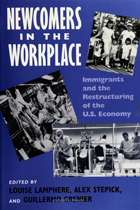
Newcomers in the Workplace documents and dramatizes the changing face of the American workplace, transformed in the 1980s by immigrant workers in all sectors. This collection of excellent ethnographies captures the stench of meatpacking plants, the clatter of sewing machines, the sweat of construction sites, and the strain of management-employee relations in hotels and grocery stores as immigrant workers carve out crucial roles in a struggling economy.
Case studies focus on three geographical regions—Philadelphia, Miami, and Garden City, Kansas—where the active workforce includes increasing numbers of Cubans, Haitians, Koreans, Puerto Ricans, Laotians, Vietnamese, and other new immigrants. The portraits show these newcomers reaching across ethnic boundaries in their determination to retain individualism and to insure their economic survival.
In the series Labor and Social Change, edited by Paula Rayman and Carmen Sirianni.
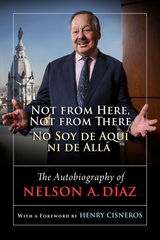
Raised in the squalor of a New York tenement until he was 10 years old, Nelson Díaz saw his life change when his family moved to a brand-new high-rise project in West Harlem in the 1950s. That experience, along with lessons learned as the only Latino law student at Temple University, would drive him throughout his life as a lawyer and activist, fighting for the expansion of rights for all Americans.
“No soy de aquí ni de allá” is a mantra for Puerto Ricans who feel like foreigners wherever they are and who seek a place for themselves. In his inspiring autobiography, Not from Here, Not from There, Díaz tells the story of his struggles and triumphs as his perspective widened from the New York streets and law school classrooms to the halls of power in Philadelphia and Washington, DC. Whether as a leader in economic development, a pioneer in court reform, or a champion of fair housing, Díaz has never stopped advocating for others. Díaz was happy to be the first Latino to “do something,” but he never wanted to be the last. This story of an outsider who worked his way to the inside offers powerful lessons on finding a place in the world by creating spaces where everyone is welcome.
Nothing to Read compares the information gathering and voting behavior of residents in Pittsburgh and Cleveland during the 1992 campaign season. Comparable in demographics and political behavior, the only significant difference between the two cities was the availability of local newspapers. Using a research design that combines elements of the opinion survey and the laboratory experiment, the author exploited this situation to produce an unusually sound and thorough examination of media effects on voters.
The results are startling. First and foremost, Nothing to Read reasserts the role of the newspaper in the dissemination of information acquisition. It is the only media source that can rival television in the electoral arena, and it is often more important to voters as a source for local information, including information about U.S. House races. Nothing to Read also shows that voters are more active in seeking out information than typically postulated. Indeed, many voters even differentiate between media sources for information about Senate and House contests and sources for the presidential campaign. Within limits, the electorate is clearly not a passive news audience. Nothing to Read provides a wealth of information on such related topics as the relationship between partisanship and media influence, the interplay between media exposure and interpersonal political conversations and other social interaction, and newspapers' effect on coattail voting. A unique book, Mondak's important study lays a solid foundation for all future work on the relationship between American media and politics.
Jeffery J. Mondak is Associate Professor of Political Science, University of Pittsburgh.
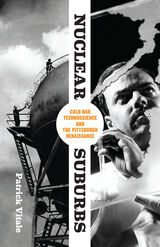
From submarines to the suburbs—the remaking of Pittsburgh during the Cold War
During the early Cold War, research facilities became ubiquitous features of suburbs across the United States. Pittsburgh’s eastern and southern suburbs hosted a constellation of such facilities that became the world’s leading center for the development of nuclear reactors for naval vessels and power plants. The segregated communities that surrounded these laboratories housed one of the largest concentrations of nuclear engineers and scientists on earth. In Nuclear Suburbs, Patrick Vitale uncovers how the suburbs shaped the everyday lives of these technology workers.
Using oral histories, Vitale follows nuclear engineers and scientists throughout and beyond the Pittsburgh region to understand how the politics of technoscience and the Cold War were embedded in daily life. At the same time that research facilities moved to Pittsburgh’s suburbs, a coalition of business and political elites began an aggressive effort, called the Pittsburgh Renaissance, to renew the region. For Pittsburgh’s elite, laboratories and researchers became important symbols of the new Pittsburgh and its postindustrial economy. Nuclear Suburbs exposes how this coalition enrolled technology workers as allies in their remaking of the city.
Offering lessons for the present day, Nuclear Suburbs shows how race, class, gender, and the production of urban and suburban space are fundamental to technoscientific networks, and explains how the “renewal” of industrial regions into centers of the tech economy is rooted in violence and injustice.
READERS
Browse our collection.
PUBLISHERS
See BiblioVault's publisher services.
STUDENT SERVICES
Files for college accessibility offices.
RECENTLY PUBLISHED





UChicago Accessibility Resources
home | accessibility | search | about | contact us
BiblioVault ® 2001 - 2026
The University of Chicago Press