
 A SCHOLARLY BOOK REPOSITORY
8 start with N start with N
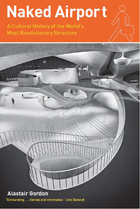
From global politics to action movies to the daily commute, Gordon shows how the airport has changed our sense of time, distance, and style, and ultimately the way cities are built and business is done. He introduces the people who shaped and were shaped by this place of sudden transition: pilots like Charles Lindbergh, architects like Le Corbusier, and political figures like Fiorello LaGuardia and Adolf Hitler. Naked Airport is a profoundly original history of a long-neglected yet central component of modern life.
“This charming history documents why airports have always been such intriguing places. Gordon wittily deconstructs air terminal architecture. . . . Here is a book with more than enough quirky details to last a long layover.”—People
“[A] splendid cultural history.”—Atlantic Monthly
“Gordon, an architecture and design critic, tells his story well, bringing to life some of the main characters and highlighting some of the important issues concerning urbanism and airports.”—Michael Roth, San Francisco Chronicle
“Gordon provides a truly compelling account of how airports had over the course of three-quarters of a century become the locus of not only modern dreams but postmodern nightmares as well. Don’t leave home without it.”—Terence Riley, director of the Miami Art Museum

"A must buy for anyone interested in the Great Lakes."
---Frederick Stonehouse, maritime historian
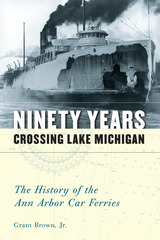
In 1892, the Ann Arbor Car Ferries shook the transportation world by doing what was then deemed impossible---carrying loaded railroad cars by ship across the sixty-two miles of open water between Frankfort, Michigan and Kewaunee, Wisconsin. With passion, acuity, and remarkable detail, Grant Brown describes the nearly 100-year crossings---from their beginnings with James Ashley's bold new idea of car ferrying down to the last fight for survival until the Michigan Interstate Rail Company finally closed in 1982.
Crossing the lake with loaded freight cars was a treacherous task that presented daily obstacles. Knowledgeable people believed it was impossible to secure rail cars from tipping over and sinking the ship. Weather and ice presented two near-insurmountable hurdles, making car ferrying doubly difficult in the winter when nearly all shipping on the Great Lakes shut down. This vivid history gives voice to the ships and their crews as they battled the storms without modern navigational aids or adequate power.
This spirited account of the Ann Arbor car ferries draws on ships' logs from various museums, over 2,000 newspaper articles, annual reports from 1889 through 1976, and interviews with former employees. The result is a living history of the ships, the crews, and their adventures; of the men who built and ran the business; and of the enormous influence the vessels had on the communities they served.
Grant Brown, Jr., worked for S.D. Warren Company, a paper manufacturer, for 37 years. He raced sailboats on Crystal Lake in northern Michigan for ten years while growing up, continued in Boston and St. Louis, and has since returned to living and racing in Frankfort, Michigan. He spent eight years in the U.S. Coast Guard Reserve, where he learned navigation and shipboard procedure.

"A must buy for anyone interested in the Great Lakes."
---Frederick Stonehouse, maritime historian
In 1892, the Ann Arbor Car Ferries shook the transportation world by doing what was then deemed impossible---carrying loaded railroad cars by ship across the sixty-two miles of open water between Frankfort, Michigan and Kewaunee, Wisconsin. With passion, acuity, and remarkable detail, Grant Brown describes the nearly 100-year crossings---from their beginnings with James Ashley's bold new idea of car ferrying down to the last fight for survival until the Michigan Interstate Rail Company finally closed in 1982.
Crossing the lake with loaded freight cars was a treacherous task that presented daily obstacles. Knowledgeable people believed it was impossible to secure rail cars from tipping over and sinking the ship. Weather and ice presented two near-insurmountable hurdles, making car ferrying doubly difficult in the winter when nearly all shipping on the Great Lakes shut down. This vivid history gives voice to the ships and their crews as they battled the storms without modern navigational aids or adequate power.
This spirited account of the Ann Arbor car ferries draws on ships' logs from various museums, over 2,000 newspaper articles, annual reports from 1889 through 1976, and interviews with former employees. The result is a living history of the ships, the crews, and their adventures; of the men who built and ran the business; and of the enormous influence the vessels had on the communities they served.
Grant Brown, Jr., worked for S.D. Warren Company, a paper manufacturer, for 37 years. He raced sailboats on Crystal Lake in northern Michigan for ten years while growing up, continued in Boston and St. Louis, and has since returned to living and racing in Frankfort, Michigan. He spent eight years in the U.S. Coast Guard Reserve, where he learned navigation and shipboard procedure.
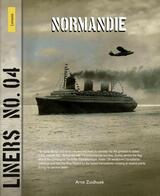
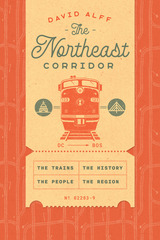
Traversed by thousands of trains and millions of riders, the Northeast Corridor might be America’s most famous railway, but its influence goes far beyond the right-of-way. David Alff welcomes readers aboard to see how nineteenth-century train tracks did more than connect Boston to Washington, DC. They transformed hundreds of miles of Atlantic shoreline into a political capital, a global financial hub, and home to fifty million people. The Northeast Corridor reveals how freight trains, commuter rail, and Amtrak influenced—and in turn were shaped by—centuries of American industrial expansion, metropolitan growth, downtown decline, and revitalization.
Paying as much attention to Canton, Trenton, New Rochelle, and Providence as to New York City, Philadelphia, and Baltimore, Alff provides narrative thrills for history buffs, train enthusiasts, and adventurers alike. What’s more, he offers a glimpse into the future of the corridor. New infrastructural plans—supported by President Joe Biden, famously Amtrak’s biggest fan—envision ever-faster trains zipping along technologically advanced rails. Yet those tracks will literally sit atop a history that links the life of Frederick Douglass, who fled to freedom by boarding a train in Baltimore, to the Frederick Douglass Tunnel, which is expected to be the newest link in the corridor by 2032.
Trains have long made the places that make America, and they still do.
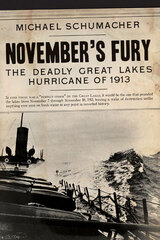
On Thursday, November 6, the Detroit News forecasted “moderate to brisk” winds for the Great Lakes. On Friday, the Port Huron Times-Herald predicted a “moderately severe” storm. Hourly the warnings became more and more dire. Weather forecasting was in its infancy, however, and radio communication was not much better; by the time it became clear that a freshwater hurricane of epic proportions was developing, the storm was well on its way to becoming the deadliest in Great Lakes maritime history.
The ultimate story of man versus nature, November’s Fury recounts the dramatic events that unfolded over those four days in 1913, as captains eager—or at times forced—to finish the season tried to outrun the massive storm that sank, stranded, or demolished dozens of boats and claimed the lives of more than 250 sailors. This is an account of incredible seamanship under impossible conditions, of inexplicable blunders, heroic rescue efforts, and the sad aftermath of recovering bodies washed ashore and paying tribute to those lost at sea. It is a tragedy made all the more real by the voices of men—now long deceased—who sailed through and survived the storm, and by a remarkable array of photographs documenting the phenomenal damage this not-so-perfect storm wreaked.
The consummate storyteller of Great Lakes lore, Michael Schumacher at long last brings this violent storm to terrifying life, from its first stirrings through its slow-mounting destructive fury to its profound aftereffects, many still felt to this day.
READERS
Browse our collection.
PUBLISHERS
See BiblioVault's publisher services.
STUDENT SERVICES
Files for college accessibility offices.
RECENTLY PUBLISHED





UChicago Accessibility Resources
home | accessibility | search | about | contact us
BiblioVault ® 2001 - 2026
The University of Chicago Press