
 A SCHOLARLY BOOK REPOSITORY
30 start with O start with O
After several years abroad, a young man returns to his hometown to seek the man he calls master. This master, a brilliant philosopher, had made the young man into a disciple before sending him out into the world to put his teachings into practice. Returning three years later, the disciple finds his master has abandoned his wife and child and moved into a squalid one-room flat, cutting himself off completely from his former life. Disillusioned and reeling from the discovery, the young man spends an entire night listening to his master’s bitter denunciation of the ideals they once shared. Written in 1960 during Jaccottet’s period of poetic paralysis, the novel seeks to harmonize the best and worst of human nature—reconciling despair, falsehood, and lethargy of spirit with the need to remain open to beauty, truth, and the essential goodness of humankind. Translated by Tess Lewis, Obscurity is Jaccottet’s only work of fiction, one that will introduce new readers to the multifaceted skills of this major poet.
Iconic French novelist, playwright, and essayist Jean-Paul Sartre is widely recognized as one of the most important philosophers of the twentieth century, and his work has remained relevant and thought-provoking through the decades. The Seagull Sartre Library now presents some of his most incisive philosophical, cultural, and literary critical essays in twelve newly designed and affordable editions.
The four essays of varying length assembled in this volume bear witness to Sartre’s preoccupation with philosophers and their work. In these pages he examines Descartes’s concept of freedom; comments on a fundamental idea in Husserl’s phenomenology: intentionality; writes a mixed review of Denis de Rougemont’s monumental Love in the Western World; and provides an extensive critical analysis of the work of Brice Parain, one of France’s leading philosophers of language.
In Of Morsels and Marvels, Condé takes us on a literary journey around places she has travelled to in India, Indonesia, and South Africa. She highlights the tastes and culinary traditions that are fascinating examples of a living museum. Such places, Condé explains, provide important insights into lesser-known aspects of contemporary life. One anecdote illustrates what becomes of the standard Antillean dishes of fish stew and goat curry by two Antilleans who own a restaurant in Sydney, Australia. Cuisine changes not only according to the individual cook but also adapts to foreign skies under which it is created. The author also recounts personal memories of her lifelong relationship with cooking, such as when Adélia, her family’s servant, wrongly blames little Maryse for mixing raisins with fish and using her imagination in the kitchen.
Blending travel with gastronomy, this enchanting volume from the winner of the 2018 Alternative Nobel Prize will delight all who marvel at the wonders of the kitchen or seek to taste the world.
Before Thomas Bernhard became one of the most provocative voices in modern literature, he was a young writer testing the limits of form and subject. Of Seven Fir Trees and the Snow offers an unprecedented look at his evolution, from his earliest published work at nineteen to the emergence of his unmistakable voice. Translated into English for the first time, in these stories, Bernhard moves from stark naturalism to fairy-tale simplicity to the eerie, stripped-down surrealism reminiscent of science fiction. At the same time, he grapples with the fundamental ethical questions that would define his career: how does one navigate personal autonomy in a world fractured by the upheavals of the twentieth century?
Selected and arranged in chronological order by Douglas Robertson, this collection traces Bernhard’s transformation from an ambitious chronicler of Austrian rural life to a writer in dialogue with the broader currents of world literature. A rare glimpse into the making of a literary icon, this volume is essential reading for both longtime admirers and those discovering Bernhard’s singular genius for the first time.
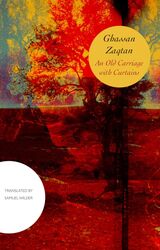
An Old Carriage with Curtains is the third and final book in a masterful trilogy of novels encompassing the history of the people of the Palestinian village of Zakariyya. The novels trace the wandering trajectories and inner lives of characters connected to this village across decades, as well as the vicissitudes of historical change and displacement in the land. Through the return of a middle-aged man to the site of an ancient monastery in the hills near Jericho that he once visited as a boy, the incredibly vivid and surprising stories of Hind, a stage actress and brilliant storyteller, the stories of tortuous routes of checkpoints and bureaucratic blockages, and decades of Occupation, Zaqtan creates a narrative of personal reckoning and reflection.
The vectors of memory and historical reflection interweave in this dreamlike narrative, which delivers a singularly powerful depiction of subjective and collective experience in the face of devastating and sweeping historical change.
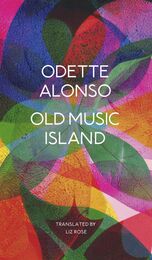
A translated collection from one of the defining poetic voices in Cuban and Mexican literature.
Old Music Island is a sensuous, dreamlike poetry collection by Odette Alonso, a leading voice in contemporary Cuban and Mexican literature. Born in Santiago de Cuba and living in Mexico since 1992, Alonso is an award-winning poet whose work transforms exile, desire, and memory into sites of lyrical and emotional intensity.
These poems move to the rhythm of nostalgia and smoke. The collection begins with a dream of light and song. The intimate encounter, always an island, is surrounded by the sea experience, and an exchange of glances is but a threshold into the vast expanse. Then comes fear, the fuss of hands, brackish tongue, a conflagration. Only those daring to enter will learn the patterns of the tide and the arrhythmia of the heart. The collection is a somatic encounter of tastes, touch, comings and goings, surprise, and seduction.
Translated by Liz Rose, whose work bridges lyric practice, trans theory, and feminist thought, Old Music Island offers an English-language rendering that honors the book’s lush musicality and charged physical presence. This is poetry of fleeting contact and lasting imprint—an invitation to listen closely, and to cross the threshold.

Born in Cameroon and raised in the suburbs of Paris, Nathan feels unmoored, as if he does not belong in France. His mother tells him about his great-grandfather who left Cameroon for New Orleans to seek his fortune shortly after World War II. Nathan travels there to search for the vestiges of his ancestor’s passage in America. To him, New Orleans is the promised land for the Black man.
However, renting a room in a shotgun house in the Tremé district, he discovers a different reality. This storied neighborhood testifies to the strength of a people who have survived slavery, segregation, and the struggle for civil rights with a strong sense of community. But the relentless inequities, capped by Hurricane Katrina and its aftermath, have taken a toll. As Nathan comes to understand this fraught history, he also plumbs his own past, including his sense of abandonment by his father in Cameroon. In this coming-of-age novel, Nathan is coming to be.
The evocative, poetic language of Fabienne Kanor’s novel confers a brutal beauty in incidents of violence and moments of joy, holding the reader in a constant state of tension. Peopled by flawed human beings trying to find their way and grow a life under the constant threat of violence, Old World chronicles the deep trauma and long-term effects of systemic racism in the United States and people’s efforts to rise above it.
A rural area not far from the city of Cluj-Napoca, a former Hungarian province that has been part of Romania since 1920. World War II has ended and the region is under the firm clasp of Stalinist collectivization. In the atmospheric village of Kolozsvár, Omertà unfolds a riveting tale through four poignant perspectives, each peeling back the layers of its central characters’ lives against the backdrop of a tumultuous Eastern Europe in the mid-twentieth century.
Kali, a peasant woman, escapes an abusive marriage to embark on a transformative journey to Kolozsvár, seeking refuge and purpose. She is employed as a maid by Vilmos, a reluctant Communist Party member with an unwavering dedication to his garden. As Vilmos’s botanical brilliance attracts the state’s attention, a clash between personal desires and political obligations ensues. Annush, the third narrator, a lovestruck teenager, becomes entangled in a complex web of emotions, grappling with love, loss, and the evolving landscape of her homeland. The tale deepens with Eleonora, who, seeking solace in a monastery, becomes a casualty of political purges and the suppression of religious faith under Romania’s oppressive regime.
In this epic novel, Romanian-born Hungarian author Andrea Tompa skillfully intertwines these tales, shedding light on the injustices and corruption of a regime that sought to extinguish cultural identities. The lives of Kali, Vilmos, Annush, and Eleonora weave a tapestry of love, resilience, the virtue of roses, and the quiet strength required to endure in the face of political turmoil.
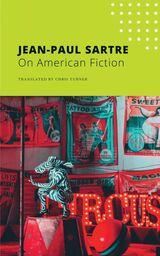
Iconic French novelist, playwright, and essayist Jean-Paul Sartre is widely recognized as one of the most important philosophers of the twentieth century, and his work has remained relevant and thought-provoking through the decades. The Seagull Sartre Library now presents some of his most incisive philosophical, cultural, and literary critical essays in twelve newly designed and affordable editions.
Sartre’s engagement with the literature of his day extended well beyond the works of his French contemporaries. This short volume testifies to his astonishing grasp of the nuances of American fiction, as he analyzes three of the most important twentieth-century writers: John Dos Passos, Vladimir Nabokov, and William Faulkner, whose “humanism,” writes Sartre, “is the only acceptable sort.”
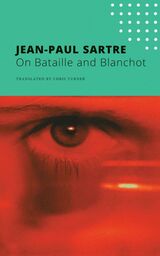
Iconic French novelist, playwright, and essayist Jean-Paul Sartre is widely recognized as one of the most important philosophers of the twentieth century, and his work has remained relevant and thought-provoking through the decades. The Seagull Sartre Library now presents some of his most incisive philosophical, cultural, and literary critical essays in twelve newly designed and affordable editions.
“There is a crisis of the essay,” begins Sartre as he ventures into a long analysis of the work of one of his contemporaries who he argues might save this form: Georges Bataille. From there, Sartre moves on in this compact volume to consider Aminadab, the most important work of another hugely influential philosopher, Maurice Blanchot, through whom, writes Sartre, “the literature of the fantastic continues the steady progress that will inevitably unite it, ultimately, with what it has always been.”
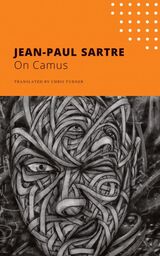
Iconic French novelist, playwright, and essayist Jean-Paul Sartre is widely recognized as one of the most important philosophers of the twentieth century, and his work has remained relevant and thought-provoking through the decades. The Seagull Sartre Library now presents some of his most incisive philosophical, cultural, and literary critical essays in twelve newly designed and affordable editions.
Sartre met Albert Camus in Occupied France in 1943, and from the start, they were an odd pair: one from the upper reaches of French society; the other, a pied-noir born into poverty in Algeria. The love of “freedom,” however, quickly bound them in friendship, while their fight for justice united them politically. But in 1951 the two writers fell out spectacularly over their literary and political views, their split a media sensation in France. This volume holds up a remarkable mirror to that fraught relationship. It features an early review by Sartre of Camus’s The Stranger; his famous 1952 letter to Camus that begins, “Our friendship was not easy, but I shall miss it”; and a moving homage written after Camus’s sudden death in 1960.
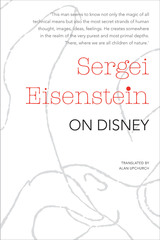
Seagull Books is embarking on a series of translations of key works by Eisenstein into English. On Disney, which was begun in 1940 but was never finished, was part of a series of essays Eistenstein wrote on masters of cinema; for Eisenstein, Walt Disney offered a way to think about how such impulses and animism and totemism survived in modern consciousness and art. This edition presents the original, unfinished essay along with material on Disney that Eisenstein worked on in subsequent years but never succeeded in integrating with the original.
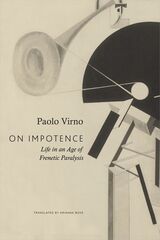
Contemporary life is marked by a paradoxical form of impotence. Whether in love, labor, or political struggle, we often find ourselves locked in a state of frenetic paralysis—unable to act as we wish or to endure what confronts us. This impotence is not born of lack, but of excess: an abundance of skills, capacities, and opportunities that, instead of taking form as coherent actions or speech, stagnate and turn in on themselves. In this thought-provoking meditation, philosopher Paolo Virno examines this strange impotence through the lens of classical thought, drawing especially on Aristotle and Marx.
To overcome this troubling state, Virno calls for a collective search for a shared spiritual and practical exercise aimed at reclaiming agency. He argues that only by learning to renounce renunciation can we cultivate deliberate words and timely decisions.
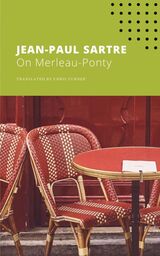
Iconic French novelist, playwright, and essayist Jean-Paul Sartre is widely recognized as one of the most important philosophers of the twentieth century, and his work has remained relevant and thought-provoking through the decades. The Seagull Sartre Library now presents some of his most incisive philosophical, cultural, and literary critical essays in twelve newly designed and affordable editions.
This volume consists of a single long essay that analyzes the work of Maurice Merleau-Ponty (1908–1961), who was the leading phenomenological philosopher in France and the lead editor of the influential leftist journal Les Temps modernes, which he established with Sartre and Simone de Beauvoir in 1945. Written in the wake of Merleau-Ponty’s death, this essay is a moving tribute from one major philosopher to another.
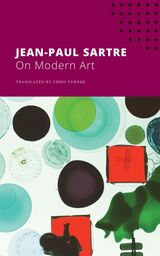
Iconic French novelist, playwright, and essayist Jean-Paul Sartre is widely recognized as one of the most important philosophers of the twentieth century, and his work has remained relevant and thought-provoking through the decades. The Seagull Sartre Library now presents some of his most incisive philosophical, cultural, and literary critical essays in twelve newly designed and affordable editions.
Sartre was a prodigious commentator on contemporary art, as is evident from the short but incisive essays that make up this important volume. Sartre examines here the work of a wide range of artists, including recognized masters such as Alberto Giacometti, Alexander Calder, and André Masson, alongside unacknowledged greats like French painter Robert Lapoujade and German painter-photographer Wols.
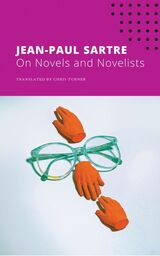
Iconic French novelist, playwright, and essayist Jean-Paul Sartre is widely recognized as one of the most important philosophers of the twentieth century, and his work has remained relevant and thought-provoking through the decades. The Seagull Sartre Library now presents some of his most incisive philosophical, cultural, and literary critical essays in twelve newly designed and affordable editions.
In this collection of brief, insightful essays, we find ourselves face to face with Sartre the literary critic, as he carefully examines the works of renowned French writers such as François Mauriac, Nathalie Sarraute, Jean Giraudoux, and Jules Renard. Most moving is an essay on André Gide, written right after his death, in which Sartre writes, “We thought him scared and embalmed; he dies and we discover how alive he was.”
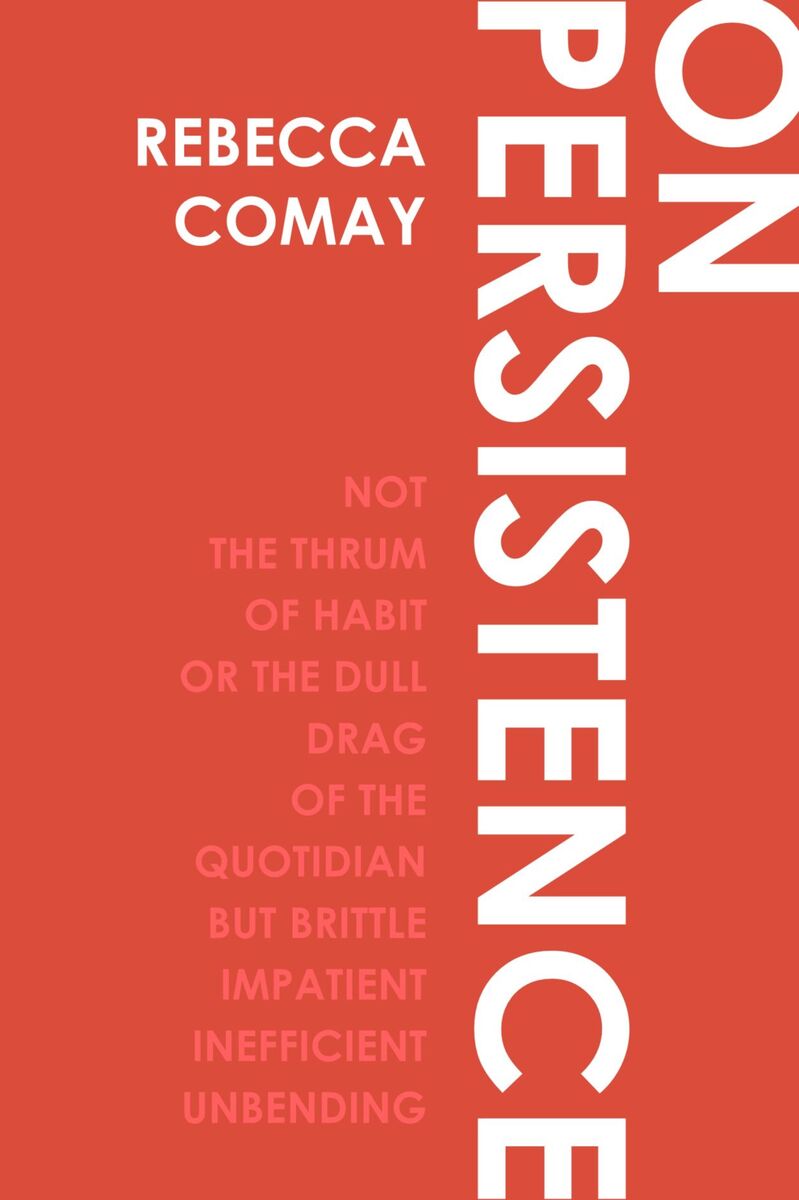
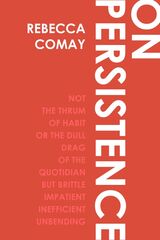
On Persistence is an exploration into the elusive, unruly force of endurance—not as moral virtue or capitalist work ethic, but as a temporal and affective structure that resists assimilation. In these wide-ranging philosophical and literary essays, Rebecca Comay interrogates what it means to persist when progress stalls and resolution fails to arrive. Engaging figures from Freud to Beckett, Proust to Benjamin, Hamlet to Niobe, Comay tracks the strange temporality of suspended life: interminable mourning, unfinished projects, the persistence of the past, the undead stirrings of the death drive. What emerges is a radically different model of time—neither static nor teleological, but a form of interruption that opens space for rethinking agency, grief, resistance, and repair.
On Persistence offers a profound meditation on what it means to endure—and to endure differently—in a time that demands something else of us.
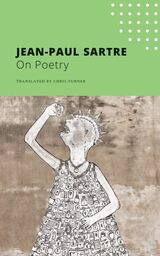
Iconic French novelist, playwright, and essayist Jean-Paul Sartre is widely recognized as one of the most important philosophers of the twentieth century, and his work has remained relevant and thought-provoking through the decades. The Seagull Sartre Library now presents some of his most incisive philosophical, cultural, and literary critical essays in twelve newly designed and affordable editions.
On Poetry includes two long essays in this slim volume. The first explores the Négritude poetry movement by analyzing the work of several Black poets of the time. The second is a meditation on the poetry of renowned French author Francis Ponge (1899–1988), who, influenced by surrealism, developed his unique form of prose poetry.
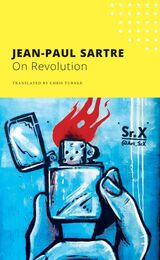
Iconic French novelist, playwright, and essayist Jean-Paul Sartre is widely recognized as one of the most important philosophers of the twentieth century, and his work has remained relevant and thought-provoking through the decades. The Seagull Sartre Library now presents some of his most incisive philosophical, cultural, and literary critical essays in twelve newly designed and affordable editions.
On Revolution consists of a long essay in two parts in which Sartre dwells upon the “myth” of revolution and goes on to analyze revolutionary ideas in fascism and, especially, Marxism. In the second essay, Sartre examines the figure of the artist and his conscience, especially in relation to communism.
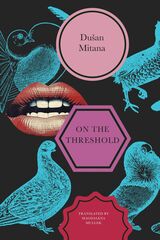
An unhappily married woman is impregnated by her elderly neighbor who lives in a building across the street and with whom she has never had any physical contact. Just as his attention creates life within her, his own life waxes and wanes with her gaze and attention.
A man finds himself trapped in a pub on a sweltering afternoon after refusing to buy a beer with his cigarettes. Guarded by a vigilante bartender and his beer-obsessed patrons, his every attempt at escape is foiled until their life-giving elixir, the beer, runs out.
This collection introduces English-language readers to the work of Dušan Mitana, a cult figure in contemporary Central European literature. In Mitana’s stories, appearing in English for the first time, the rational and the irrational are indistinguishable. His tales infect a banal, quotidian realism with mystical and supernatural distortions. Tinged with Hitchcockian paranoia and full of unexpected turns, the seventeen stories collected here offer a glimpse into Mitana’s trademark absurdist style.
J. M. G. Le Clézio’s On the Wrong Side, a collection of eight short stories, continues the author’s life-long pursuit of granting visibility to the unseen and a voice to the voiceless. Here, the author focuses on the underclasses, primarily children who have been left behind, abandoned, and subjected to unspeakable violence.
In these haunting tales, we encounter Maureez Samson, a mistreated orphan from Rodrigues Island, who, thanks to her exceptional voice, becomes a famous singer and defies all expectations; some young Indians in Darién, a region straddling Panama and Colombia, struggle to raise their young son and save their idyllic land from its invasion and destruction by drug lords; Juanico and Chuche, two slave children who are taken in by the community of Saint Kateri Takakwitha after an arduous and perilous journey; and in Nogales, on the border between Mexico and the United States, the “street rats,” children who cross through the sewers to wreak havoc and perhaps indulge their dreams of life on the other side.
In Le Clézio’s own words, these stories are not simply meant to reveal or describe the plight of the “rejected,” but to “create in the reader a feeling of revolt in the face of the injustice of what is happening to them.”
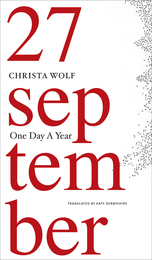
The book is both a personal record and a unique document of our times. With her characteristic precision and transparency, Wolf examines the interplay of the private, subjective, and major contemporary historical events. She writes about Germany after 9/11, about her work on her last great book City of Angels, and also about her exhausting confrontation with old age. One Day a Year is a compelling and personal glimpse into the life of one of the world’s greatest writers.
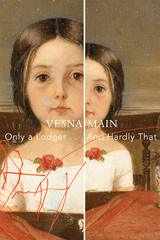
In “The Eye/I,” we meet someone called She, who obsessively tells the story of her childhood and adolescence to an unnamed narrator. “The Acrobat” is a sequence of prose poems, written in the style of magic realism, which tell the story of Maria and her life-changing adolescent encounter with a flying circus performer. The female protagonist of the first section narrates “The Dead,” describing the secret life of a grandfather she never truly knew and his unusual habit of sending family members anonymous parcels of carefully chosen books. In “The Poet,” she examines four family photographs in order to piece together a story of her other grandfather, the husband of Maria. The final section, “The Suitor,” is a first-person narrative told by Mr. Gustav Otto Wagner, an older man who hoped to marry Maria but was ultimately turned down.
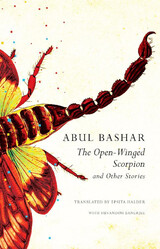
Theodor W. Adorno is recognized as one of the twentieth century’s most prominent social theorists. Though best known for his association with the Frankfurt School of critical theory, Adorno began his career as a composer and successful music critic.
Comprehensive and illuminating, Orpheus in the Underworld centers on Adorno’s concrete and immediate engagement with musical compositions and their interpretation in the concert hall and elsewhere. Here, Adorno registers his initial encounters with the compositions of the Second Viennese School, when he had yet to integrate them into a broad aesthetics of music. Complementarily essays on Bela Bartók, Jean Sibelius, and Kurt Weill afford insight into his understanding of composers who did not fit neatly into the dialectical schema propounded in the Philosophy of New Music. Additionally, essays on recording and broadcasting show Adorno engaging with these media in a spirit that is no less productive than polemical and focused as sharply on their potentialities as on their shortcomings.
Orpheus in the Underworld offers a captivating exploration of Adorno’s musical compositions, shedding new light on his understanding of influential composers and his critical perspectives on recording and broadcasting.
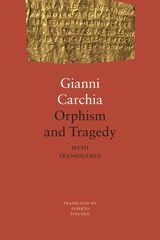
A reimagining of the ancient Greek mystical movement Orphism.
What does it mean to step outside the civic order through poetry? Ever since it first emerged in Greece around the sixth century BC, Orphic doctrine has marked a powerful rupture with the ancient world. Its salvific practices, closely tied to a belief in the soul’s immortality, its resolute rejection of sacrificial ritual and embrace of vegetarianism, and its distinctive conception of time and memory all defined a way of life, the bios orphikos, that was at once poetic and political.
In this brief yet densely layered text, Gianni Carchia returns to Orphism in all its implications. It becomes clear that, for Carchia, Orphism is not merely a historiographical concern, but an aesthetic and political one. If tragedy constitutes one of the central pillars around which the polis was formed, Orphism represents a radically different path—an alternative to the polis itself—by placing the poetic word, in all its autonomous power, at its core. And if the relationship between philosophy and tragedy has long been a central theme in the history of Western thought, Carchia’s reflections here ask a different question: Is the Orphic path still accessible to us today?

In Other Death, we are thrown into the chaotic life of a forty-year-old university lecturer who is experiencing a sudden, complete psychological and existential breakdown. Afternoons disappear and years chop and change in confusion as he wanders the streets searching for work. Homelessness, alcoholism, and hate are on the rise in 1990s Budapest as symptoms of the regime change. Images flash up from other lives: a Boer pointing a shotgun in Johannesburg, bodies heaped up in the downtown area, a Volkswagen campervan parked by an empty phone box in Switzerland. As he encounters new and historic traumas embedded in the lives and the buildings around him, the unnamed narrator struggles to grasp any coherent identity. It’s only when he starts to work as a gallery attendant, observing the interactions between viewer and artwork, light and space, that he embarks on the slow healing routine towards clarity.
In Barnás’s semi-autobiographical novel, meditations on trauma and urban space, image and observation, and spiritual friendships echo the writings of W. G. Sebald and Thomas Bernhard. Like Vertigo meets The Bell Jar, the magnetic language of Other Death draws the reader into the murky workings of a mind severely afflicted.
In this timely book, historian Romila Thapar delves into the complex world of nationalism and its impact on the interpretations of the past and on the discipline of history itself. History, she expounds, is no mere collection of information and chronology, and its purpose extends well beyond storytelling.
Recognizing nationalism as a powerful force that gives rise to various narratives that provide ancestry to communities and shape the direction of societies, Thapar explores how, in India, two conflicting notions of nationalism have evolved and shaped the idea of the nation. Today, one such nationalistic theory claims the victimization of one religious community by another through centuries of “misrule.” Such a claim willfully ignores ample evidence to the contrary to suit a particular political and ideological purpose. Thapar counters such attempts at misrepresentation by citing several historical instances of the nuanced interface and intermingling of cultures, as well as by showing how today’s conflicts have their roots in the British colonial construction of India’s history. She also addresses the recent controversy surrounding the deletions of sections of Indian history textbooks published by NCERT, the Indian educational council, and suggests that the intention is more likely to be the promotion of a particular reading of history that conforms to the ideology of those in power.
Engaging and thought-provoking, Our History, Their History, Whose History? invites readers to question the authenticity of historical narratives touted by one group of nationalists, and it explores the clash between professional historians who study the past to understand our inherited present and fabricators who wield history for political gain.
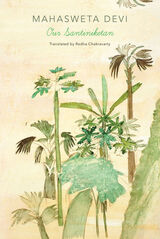
“Like a dazzling feather that has fluttered down from some unknown place. . . . How long will the feather keep its colours, waiting? The ‘feather’ stands for memories of childhood. Memories don’t wait.”
In Our Sanitikentan, the late Mahasweta Devi, one of India’s most celebrated writers, vividly narrates her days as a schoolgirl in the 1930s. As the aging author struggles to recapture vignettes of her childhood, these reminiscences bring to the written page not only her individual sensibility but an entire ethos.
Santiniketan is home to the school and university founded by the foremost literary and cultural icon of India, Rabindranath Tagore. In these pages, a forgotten Santiniketan, seen through the innocent eyes of a young girl, comes to life—the place, its people, flora and fauna, along with its educational environment, culture of free creative expression, vision of harmonious coexistence between natural and human worlds, and the towering presence of Tagore himself. Alongside, we get a glimpse of the private Mahasweta—her inner life, family and associates, and the early experiences that shaped her personality.
A nostalgic journey to a bygone era, harking back to its simple yet profound values—so distant today and so urgent yet again—Our Santiniketan is an invaluable addition to Devi’s rich oeuvre available in English translation.
READERS
Browse our collection.
PUBLISHERS
See BiblioVault's publisher services.
STUDENT SERVICES
Files for college accessibility offices.
RECENTLY PUBLISHED



UChicago Accessibility Resources
home | accessibility | search | about | contact us
BiblioVault ® 2001 - 2026
The University of Chicago Press