
 A SCHOLARLY BOOK REPOSITORY
11 start with O start with O

This book investigates the controversial claim by welfare critics that public assistance programs like Food Stamps and the National School Lunch programs contribute to obesity among the poor. The author synthesizes empirical evidence from an array of disciplines--anthropology, economics, epidemiology, medicine, nutrition science, marketing, psychology, public health, sociology, and urban planning--to test this claim and to test whether other causal processes are at work.
With a lucid presentation that makes it a model for applying research to questions of social policy, the book lays out the different hypotheses and the possible causal pathways within each. The four central chapters test whether "public assistance causes obesity," "obesity causes public assistance," "poverty causes both public assistance and obesity," and "Factor X causes both." The factors in the last category that may relate to both public assistance and obesity include stress, disability, and physical abuse.

This book investigates the social relationships implied in our urban modernity by concentrating on four cities that are in broad strokes representative of the cultural and linguistic heterogeneity of the Iberian peninsula. Each chapter introduces but moves well beyond an identifiable urban area in a given city, noting the cultural obsession implicit in its reconstruction as well as the role of obsession in its artistic representation of the urban environment. These areas are Barcelona’s Eixample district, Madrid’s Linear City, Lisbon’s central Baixa area, and Bilbao’s Seven Streets, or Zazpikaleak. The theme of obsession—which as explored is synonymous with the concept of partial madness—provides a point of departure for understanding the interconnection of both urbanistic and artistic discourses.
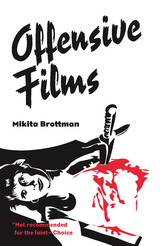
While most critics have been quick to dismiss such films as mere shock-fests (if they even bother to talk about them at all), Brottman argues that these movies tell us quite a bit about who we are as a society, what makes us anxious, and what taboos we truly believe cannot be crossed. Part anthropology, part psychoanalysis, Offensive Films vivisects these movies in order to figure out just what about them is so offensive, obscene, or bizarre. In the end, Brottman proves that these films, shunned from the cinematic canon, work on us in sophisticated ways we often choose to remain unaware of.

In Old Age in a New Age, Baker tell the story of a better way to live in old age. Although each home is different, they share common values: respecting individual choices; empowering staff; fostering a strong community of elders, staff, family members, and volunteers; redesigning buildings from a hospital model to a home (where pets and children are part of everyday life); and honoring people when they die. Her visits to more than two dozen facilities include those associated with the Eden Alternative, Green House, Kendal, and the Pioneer Network. Whether these transformational homes become the norm or the domain of a lucky few is the question that faces the next generation of elders, the baby boomers.

The book clusters the COSPs into three key types: drop-in centers, which provide varied services for their members, including meals, housing assistance, and stigma-free environments; educational programs, which train mental health consumers in recovery skills for themselves and for other consumers; and services based on peer support and mentoring.
Despite their differences, the book shows, the programs share many essential characteristics. Most significantly, they demonstrate the benefits of allowing mental health consumers to operate and govern their own organizations. Also important is their emphasis on equality, mutuality, empowerment, recovery, belonging, and hope in administering services. Such core values, the book suggests, distinguish peer-run programs from the professional services that have long dominated the mental health system.
In contrast to the dry, clinical reports that make up much of the current literature, this book is written "from the inside out" and, for the most part, by the people who developed the programs and who live them every day. It reveals peer-run programs as valuable resources within the mental health system and, indeed, a precious necessity for many consumers.

Some researchers describe how disruptions prompted them to expand the boundaries of their discipline and invent concepts that could more accurately describe phenomena that previously had no name and no scholarly history. Sometimes scholars themselves caused the disruption as they circled back to work they had considered "done" and allowed the possibility of rethinking earlier findings.

Empowering women through education has become a top priority of international development efforts. Erin MurphyGraham draws on more than a decade of qualitative research to examine the experiences of Juanita and eighteen other women who participated in the SAT program. Their narratives suggest the simple yet subtle ways education can spark the empowerment process, as well as the role of men and boys in promoting gender equality.
Drawing on indepth interviews and classroom observation in Honduras and Uganda, MurphyGraham shows the potential of the SAT program to empower women through expanded access and improved quality of secondary education in Latin America and Africa. An appendix provides samples of the classroom lessons.


Faris argues that by combining realistic representation with fantastic elements so that the marvelous seems to grow organically out of the ordinary, magical realism destabilizes the dominant form of realism based on empirical definitions of reality, gives it visionary power, and thus constitutes what might be called a "remystification" of narrative in the West. Noting the radical narrative heterogeneity of magical realism, the author compares its cultural role to that of traditional shamanic performance, which joins the worlds of daily life and that of the spirits. Because of that capacity to bridge different worlds, magical realism has served as an effective decolonizing agent, providing the ground for marginal voices, submerged traditions, and emergent literatures to develop and create masterpieces. At the same time, this process is not limited to postcolonial situations but constitutes a global trend that replenishes realism from within.
In addition to describing what many consider to be the progressive cultural work of magical realism, Faris also confronts the recent accusation that magical realism and its study as a global phenomenon can be seen as a form of commodification and an imposition of cultural homogeneity. And finally, drawing on the narrative innovations and cultural scenarios that magical realism enacts, she extends those principles toward issues of gender and the possibility of a female element within magical realism.
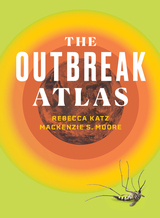
For years the Georgetown University Center for Global Health Science and Security has curated an interactive online tool for professionals that identifies the activities involved across all phases of an outbreak. The Georgetown Outbreak Activity Library (GOAL) captures what needs to get done, when, and by whom. Now, in The Outbreak Atlas, Rebecca Katz and Mackenzie S. Moore have translated this complex material into a book designed for a public audience.
This book provides an overview of outbreak activities alongside compelling case studies and visuals to guide readers through the complexity involved in outbreak preparedness, response, and recovery. It lifts the curtain on the rationale and interconnectedness of outbreak responses across different fields and at various levels, presenting accessible information that ensures a shared understanding of the essential activities to control an outbreak.

For years the Georgetown University Center for Global Health Science and Security has curated an interactive online tool for professionals that identifies the activities involved across all phases of an outbreak. The Georgetown Outbreak Activity Library (GOAL) captures what needs to get done, when, and by whom. Now, in The Outbreak Atlas, Rebecca Katz and Mackenzie S. Moore have translated this complex material into a book designed for a public audience.
This book provides an overview of outbreak activities alongside compelling case studies and visuals to guide readers through the complexity involved in outbreak preparedness, response, and recovery. It lifts the curtain on the rationale and interconnectedness of outbreak responses across different fields and at various levels, presenting accessible information that ensures a shared understanding of the essential activities to control an outbreak.
READERS
Browse our collection.
PUBLISHERS
See BiblioVault's publisher services.
STUDENT SERVICES
Files for college accessibility offices.
RECENTLY PUBLISHED


UChicago Accessibility Resources
home | accessibility | search | about | contact us
BiblioVault ® 2001 - 2026
The University of Chicago Press