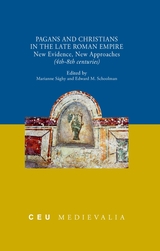
front cover of Pagans and Christians in the Late Roman Empire
Pagans and Christians in the Late Roman Empire
New Evidence, New Approaches (4th–8th centuries)
Marianne Sághy
Central European University Press, 2017
Do the terms 'pagan' and 'Christian,' 'transition from paganism to Christianity' still hold as explanatory devices to apply to the political, religious and cultural transformation experienced Empire-wise? Revisiting 'pagans' and 'Christians' in Late Antiquity has been a fertile site of scholarship in recent years: the paradigm shift in the interpretation of the relations between 'pagans' and 'Christians' replaced the old 'conflict model' with a subtler, complex approach and triggered the upsurge of new explanatory models such as multiculturalism, cohabitation, cooperation, identity, or group cohesion. This collection of essays, inscribes itself into the revisionist discussion of pagan-Christian relations over a broad territory and time-span, the Roman Empire from the fourth to the eighth century. A set of papers argues that if 'paganism' had never been fully extirpated or denied by the multiethnic educated elite that managed the Roman Empire, 'Christianity' came to be presented by the same elite as providing a way for a wider group of people to combine true philosophy and right religion. The speed with which this happened is just as remarkable as the long persistence of paganism after the sea-change of the fourth century that made Christianity the official religion of the State. For a long time afterwards, 'pagans' and 'Christians' lived 'in between' polytheistic and monotheist traditions and disputed Classical and non-Classical legacies.
[more]

front cover of Pandemic Power
Pandemic Power
The Covid Response and the Erosion of Democracy - A Liberal Critique
Muriel Blaive
Central European University Press, 2025
Pandemic Power is a thought-provoking exploration of how the response to the Covid pandemic has undermined our understanding of science, freedom, and democracy. It delivers a searing critique of policies and narratives that have, in fact, fueled the rise of the extreme right in many countries.
[more]

front cover of The Paradoxes of Unintended Consequences
The Paradoxes of Unintended Consequences
István Rév
Central European University Press, 2000
This volume of essays is dedicated to George Soros in honor of his seventieth birthday. The authors come from the different but intersecting worlds of academia, politics and business. The editors have chosen the title The Paradoxes of Unintended Consequences to encourage the contributors to adopt a dialogue-oriented approach and in reference to the example of Giordano Bruno, who was burnt at the stake 400 years ago for holding heretic views which were probably far more backward than the views of those condemning him. The idea behind this approach was that any complex social process or political attempt to change the lives of people will have unintended consequences, usually paradoxical ones. These consequences should force us to reconsider our original theory. The volume also contains a short biography of George Soros and a list of his published works and philanthropic initiatives
[more]

front cover of Parlor and Kitchen
Parlor and Kitchen
Housing and Domestic Culture in Budapest, 1870-1940
Gábor Gyáni
Central European University Press, 2002

Besides Berlin, Budapest was the fastest-growing capital city in Europe at the end of the nineteenth century. Parlor and Kitchen, the work of a microhistorian and historical anthropologist, describes the development of private spaces in this newly emerged metropolis.

Author Gábor Gyáni has chosen two distinct groups of contemporary society: the upper middle class and the working class, to present their homes, domestic culture and attitudes. At the same time the book offers a panoramic view of the everyday life of the entire society, on social segregation and mobility. Behind the visual details the author reveals a great deal about the value systems of the groups of society investigated.

Reconstructing minute details as well as case studies, the author has relied on archival sources, private documents, and statistical data. The text is accompanied by contemporary photographs, maps and blueprints.

This enlightening and interesting volume will be of interest not only to historians, anthropologists and sociologists, but also to the general reader with an interest in urban history.

Gábor Gyáni is founder and editor of the quarterly Budapest Review of Books. He is President of the Hungarian-American Historians' Committee and Secretary of the Urban History Workshop of the Hungarian Academy of Sciences.

A student of the late professor Péter Hanák, Gyáni is active in research into the urban and social history of modern Hungary and the theory and methodology of history writing. 

[more]

front cover of Party Colonisation of the Media in Central and Eastern Europe
Party Colonisation of the Media in Central and Eastern Europe
Péter Bajomi-Lázár
Central European University Press, 2014
This book compares media and political systems in East-Central as well as in Western Europe in order to identify the reasons possibly responsible for the extensive and intensive party control over the media. This phenomenon is widely experienced in many of the former communist countries since the political transformation. The author argues that differences in media freedom and in the politicization of the news media are rooted in differences in party structures between old and new democracies, and, notably, the fact that young parties in the new members of the European Union are short of resources, which makes them more likely to take control of and to exploit media resources.
[more]

front cover of The Passport as Home
The Passport as Home
Comfort in Rootlessness
Andrei S. Markovits
Central European University Press, 2021

A Scholar's Quest for Home and Identity

Experience the remarkable story of a Romanian-born, Hungarian-speaking Jewish professor. From Vienna to Columbia and Harvard, he navigates a life marked by rootlessness, seeking comfort and purpose. His journey unfolds against the backdrop of five decades, two continents, and significant political and cultural changes.

As we follow his pursuit of a home, we gain insight into the critical developments of post-1945 Europe and America. Markovits's emigration experiences, first from Romania to Vienna and later from Vienna to New York, shed light on the challenges he faced.

His journey offers a panoramic view of the forces shaping the latter half of the 20th century. Despite America's flaws, he finds it a beacon of academic excellence, intellectual openness, cultural diversity, and religious tolerance—qualities that Europe lacked.


Explore the complexities of identity, culture, and the universal search for belonging in this captivating narrative.

[more]

front cover of Past for the Eyes
Past for the Eyes
East European Representations of Communism in Cinema and Museums After 1989
Oksana Sarkisova
Central European University Press, 2008
How do museums and cinema shape the image of the Communist past in today’s Central and Eastern Europe? This volume is the first systematic analysis of how visual techniques are used to understand and put into context the former regimes. After history “ended” in the Eastern Bloc in 1989, museums and other memorials mushroomed all over the region. These efforts tried both to explain the meaning of this lost history, as well as to shape public opinion on their society’s shared post-war heritage. Museums and films made political use of recollections of the recent past, and employed selected museum, memorial, and media tools and tactics to make its political intent historically credible. Thirteen essays from scholars around the region take a fresh look at the subject as they address the strategies of fashioning popular perceptions of the recent past.
[more]

front cover of Past in the Making
Past in the Making
Historical Revisionism in Central Europe After 1989
Michal Kopecek
Central European University Press, 2008
Historical revisionism, far from being restricted to small groups of ‘negationists,’ has galvanized debates in the realm of recent history. The studies in this book range from general accounts of the background of recent historical revisionism to focused analyses of particular debates or social-cultural phenomena in individual Central European countries, from Germany to Ukraine and Estonia. Where is the borderline between legitimate re-examination of historical interpretations and attempts to rewrite history in a politically motivated way that downgrades or denies essential historical facts? How do the traditional ‘national historical narratives’ react to the ‘spill-over’ of international and political controversies into their ‘sphere of influence’? Technological progress, along with the overall social and cultural decentralization shatters the old hierarchies of academic historical knowledge under the banner of culture of memory, and breeds an unequalled democratization in historical representation. This book offers a unique approach based on the provocative and instigating intersection of scholarly research, its political appropriations, and social reflection from a representative sample of Central and East European countries.
[more]

front cover of Patrick Leigh Fermor
Patrick Leigh Fermor
Noble Encounters between Budapest and Transylvania
Michael O'Sullivan
Central European University Press, 2018
This book revisits the trajectory of one section of Patrick Leigh Fermor's famous excursion on foot from the Hook of Holland to Constantinople in the 1930s. The highly regarded British travel writer and heroic wartime Special Operations Executive officer walked into Hungary as a youth of 19 at Easter and left Transylvania in August 1934. This intrepid traveler, "a cross between Indiana Jones, James Bond and Graham Greene" as the New York Times obituary put it in 2011, published his experiences half a century later. Between the Woods and the Water, that covers the part of the epic foot journey from the middle Danube to the Iron Gates, has been a bestseller since it was first published in 1986. In the present volume Michael O'Sullivan reveals the identity of the interesting characters in the travelogue, interviewing several of them eyetoeye. The many counts and barons among his 1934 contacts are a proof of Leigh Fermor's lifelong attraction to the aristocracy. Rich with photos and other documents on places and persons both from the thirties and today, the book offers a compelling social and political history of the period and the area. It provides a particular portrait of Hungary and Transylvania when they were on the brink of momentous change.
[more]

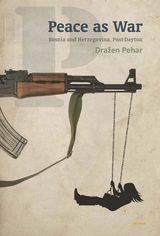
front cover of Peace as War
Peace as War
Bosnia-Herzegovina Post-Dayton
Drazen Pehar
Central European University Press, 2019
The book is about the peace implementation process in Bosnia-Herzegovina viewed, or interpreted reasonably, as a continuation of war by other means. Twenty years after the beginning of the Dayton peace accords, we need to summarize the results: the author shares the general agreement in public opinion, according to which the process is a failure. Pehar presents a broad, yet sufficiently detailed, view of the entire peace agreement implementation that preserves 'the state of war,' and thus encourages the war-prone attitudes in the parties to the agreement. He examines the political and narratological underpinnings to the process of the imposed international (predominantly USA) interpretation of the Dayton constitution and peace treaty as a whole. The key issue is the – perhaps only semi-consciously applied – divide ut imperes strategy. After nearly twenty years, the peace in document was not translated into a peace on the ground because, with regard to the key political and constitutional issues and attitudes, Bosnia remains a deeply divided society. The book concludes that the international supervision served a counter-purpose: instead of correcting the aberration and guarding the meaning that was originally accepted in the Dayton peace treaty, the supervision approved the aberration and imposed it as a new norm under the clout of 'the power of ultimate interpretation.'
[more]

front cover of People in Spite of History
People in Spite of History
Stories Found in an Attorney Archive in the Banat Region
Richard Buxbaum
Central European University Press, 2021

Three generations of a family of lawyers have run a firm founded in 1893 in the small city of Becskerek (today in Serbian Zrenjanin), first part of the Austro-Hungarian Habsburg monarchy, then Hungary, then Yugoslavia, then for a while under German occupation, then again part of Yugoslavia and finally Serbia. In the Banat district of the province of Vojvodina, the multiplicity of languages and religions and changes of place-names was a matter of course.

What is practically unprecedented, all files, folders and documents of the law office have survived. They concern marriages, divorces, births and testaments, as well as expulsions, emigrations, incarcerations and releases of these largely rural and small-town dwellers. Mundane cases reflect times through war, peace, revolution and counter-revolution, through serfdom and freedom, through comfort and poverty. The files also show everyday lives shaped in spite of history. Tibor Várady transforms them into affecting and vivid vignettes, selecting and commenting without sentimentality but with empathy. The law office of the three generations of the Várady family demonstrates that the legal profession permits and in difficult times even requires its members to defend the ordinary men and women against the powers of state and society.
[more]

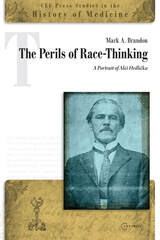
front cover of The Perils of Race-Thinking
The Perils of Race-Thinking
A Portrait of Ales Hrdlicka
Mark A. Brandon
Central European University Press, 2023

Eugenics and scientific racism are experiencing a resurgence, and an understanding of the ideas of Aleš Hrdlička can help combat them. Today, the racial science of the early twentieth century is both untenable and contemptible. This book is about an arch figure of that period: Aleš Hrdlička served as Curator of Physical Anthropology at the prestigious Smithsonian Institution from 1910 to 1941. Although his ideas about race are today considered pseudoscience, the uncomfortable truth is that he was an internationally respected scientist in his own day.

The Perils of Race-Thinking advances a bold new interpretation of modern racial ideology by exploring Hrdlička’s intellectual world. Using previously untapped Czech-language sources, Brandon irrevocably alters the discussion about this important figure by placing Czech nationalism at the center of his racial thinking. Defying disciplinary categories, Perils of Race-Thinking joins critical analysis of this key American anthropologist with an incisive revisionist perspective of interwar Czechoslovakia to unearth transnational racial presumptions lurking behind the worst crimes of the twentieth century.

At the center of Hrdlička’s race beliefs was his commitment to Czech and Slovak unity and independence. From this center, his next level of concern was what he believed to be a millennial racial struggle between Germans and Slavs. On a global scale, he viewed the Slavs, and especially the Soviet Union, as a eugenic bastion of White strength holding off the “rising tide of color.”

Step by step, Perils of Race-Thinking mercilessly dismantles Hrdlička’s racial system and exposes it as mysticism dressed up in the language of science. Convinced that human individuals belonged “naturally” in racial groups, Hrdlička embraced a revolutionary program of reordering the globe according to a harrowing morality of “Darwinist” struggle. Yet despite a lifetime of measuring body parts, even Hrdlička could not decide how many races there were or how to tell them apart.

[more]

front cover of Philanthropy, Conflict Management and International Law
Philanthropy, Conflict Management and International Law
The 1914 Carnegie Report on the Balkan Wars of 1912/13
Stefan Troebst
Central European University Press, 2022

This book centers on the Report of the International Commission to Inquire into the Causes and Conduct of the Balkan Wars, published in Washington in the early summer of 1914 by the Carnegie Endowment for International Peace. The volume was born from the conviction that the full assessment of the significance of the Carnegie Report—one of the first international non-governmental fact-finding missions with the intention to promote peace—requires a deeper exploration of the context of its birth.

The authors examine how the countries involved in the wars handled the inquires of the Carnegie Commission and the role of the report in the remembrance of the wars in the respective states. Although the report considered both the Ottoman Empire and the Balkan nation-states insufficiently civilized to wage wars within the limits of the codes of conduct of international law, this orientalist conclusion can in part be explained by the liberal internationalist strategy of the Carnegie Endowment, and of the commission members’ professional, political, and ethnic background. Overshadowed by the outbreak of World War I, the Carnegie Report’s direct impact on international arbitration or international criminal law was limited, yet—in the authors’ opinion—it ultimately contributed to the further juridification of international relations

[more]

front cover of Physicians, Peasants, and Modern Medicine
Physicians, Peasants, and Modern Medicine
Imagining Rurality in Romania, 1860-1910
Constantin Barbulescu
Central European University Press, 2019
This monograph, a coherent and consistent historical narrative about Romania's modernization, focuses on one section of the country's elites of the late nineteenth century, namely the health professionals, and on the imagery they constructed as they interacted with the peasant and his world. Doctors ventured out of cities and became a familiar sight on dusty country roads in of Moldavia and Wallachia. Beyond a charitable impulse they did so thru patriotism as the rural world became ever more prominent within the national ideology. Furthermore, new health legislation required the district general practitioner (medicul de plasa) to visit the villages in his catchment area twice a month. Based on solid original research, the book describes rural conditions of the time and the efforts aiming to improve peasants' way of life with abundant quotes from doctors' public health reports and memoirs. The book sheds light on a variety of microscale realities of social life in the medical discourse on the peasant and the rural world in the mirror of medical discourse. Themes include general hygiene, clothing, dwellings, nutrition, drinking habits and healing practices of the peasantry, in the eye of medical specialists. Related official measures, laws, regulations, norms about public health are also discussed in the frame of wider modernizing processes.
[more]

front cover of Piroska and the Pantokrator
Piroska and the Pantokrator
Dynastic Memory, Healing and Salvation in Komnenian Constantinople
Marianne Sághy
Central European University Press, 2019
This book is about the Christ Pantokrator, an imposing monumental complex serving monastic, dynastic, medical and social purposes in Constantinople, founded by Emperor John II Komnenos and Empress Piroska-Eirene in 1118. Now called the Zeyrek Mosque, the second largest Byzantine religious edifice after Hagia Sophia still standing in Istanbul represents the most remarkable architectural and the most ambitious social project of the Komnenian dynasty. This volume approaches the Pantokrator from a special perspective, focusing on its co-founder, Empress Piroska-Eirene, the daughter of the Hungarian king Ladislaus I. This particular vantage point enables its authors to explore not only the architecture, the monastic and medical functions of the complex, but also Hungarian-Byzantine relations, the cultural and religious history of early medieval Hungary, imperial representation, personal faith and dynastic holiness. Piroska's wedding with John Komnenos came to be perceived as a union of East and West. The life of the Empress, a "sainted ruler," and her memory in early Árpádian Hungary and Komnenian Byzantium are discussed in the context of women and power, monastic foundations, architectural innovations, and spiritual models.
[more]

front cover of The Poet & the Baroness
The Poet & the Baroness
W.H. Auden and Stella Musulin, a Friendship
Michael O'Sullivan
Central European University Press, 2023

For long periods in history, the Austrian capital found itself on the geographical edge of western civilisation. Yet from the 18th century on, Vienna has been a vibrant centre of European culture. This city is the scene of the formidable meeting of the two outstanding intellectuals that are at the core of this book. 

The warm relationship between W.H. Auden, the celebrated British-American poet (1907–1973), and his fellow expatriate, the Welsh-Austrian journalist, translator and writer Stella Musulin (1915–1996) lasted while Auden resided in the nearby small town of Kirchstetten starting in 1958. It was here that the poet was laid to rest in the autumn of 1973. This book is based on the unpublished letters of Auden to Musulin and her private journals.  

The study of this inspiring material yields new insights into Auden’s last, prolific, creative period and underscores the ‘Austrian Auden.’ In addition, Michael O’Sullivan pays tribute to the closest ‘Austrian’ friend of the poet. Baroness Stella von Musulin was an intellectual whose two books for Faber & Faber are acknowledged as classics: Vienna in the Age of Metternich and Austria: People & Landscape (with a foreword by Auden). The author situates the close relationship of two individuals in the context of Austria’s complex political, social, and cultural history in the Cold War years.

[more]

front cover of The Poet and the Idiot
The Poet and the Idiot
Friedebert Tuglas
Central European University Press, 2007
Estonian literature in its written form is little more than a century old. As Estonia was part of the Russian Empire, then of the Soviet Union, it is something of a miracle that the powerful presence of the Baltic Germans, the periods of Russification, and other more subtle forms of cultural pressure, have not eradicated Estonian as a serious literary language. One of the central figures to credit for this was Friedebert Tuglas. The nine stories, and the essay, featured here were written during the World War One, or in the first years of Estonian independence in the early 1920s. They reflect the troubled spirit of the times, but exhibit the influence of a wide selection of writers, ranging from O. Wilde and M. Gorky, to F. Nietzsche and Edgar Allan Poe. The subject matter of Tuglas' stories represented here ranges from a starving prisoner, via a luckless pharmacist's hallucinations from childhood, a wandering soldier who encounters weird spirits, to a young man sitting in a park, accosted by a devilish lunatic who wants to introduce a new brand of devil worship to the world.
[more]

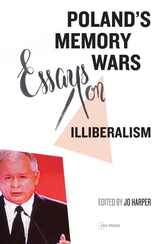
front cover of Poland's Memory Wars
Poland's Memory Wars
Essays on Illiberalism
Jo Harper
Central European University Press, 2018

This volume of essays and interviews by Polish, British, and American academics and journalists provides an overview of current Polish politics for both informed and non-specialist readers. The essays consider why and how PiS, Law and Justice, the party of Jarosław Kaczynski, returned to power, and the why and how of its policies while in power. They help to make sense of how “history” plays a key role in Polish public life and politics.

The descriptions of PiS in Western media tend to rework old stereotypes about Eastern Europe that had lain dormant for some time. The book addresses the underlying question whether PiS was simply successful in understanding its electorate, and just helped Poland to revert to its normal state. This new Normal seems quite similar to the old one: insular, conservative, xenophobic, and statist.

The book looks at the current struggle between one ‘Poland’ and another; between a Western-looking Poland and an inward-looking Poland, the former more interested in opening to the world, competing in open markets, and working within the EU, and the latter more concerned with holding onto tradition.

The question of illiberalism has gone from an ‘Eastern’ problem (Russia, Turkey, Hungary, etc.) to a global one (Brexit and the U.S. elections). This makes the very specific analysis of Poland’s illiberalism applicable on a broader scale.
[more]

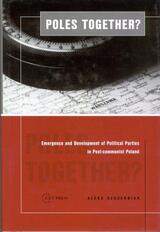
front cover of Poles Together?
Poles Together?
The Emergence and Development of Political Parties in Postcommunist Poland
Aleks Szczerbiak
Central European University Press, 2001

This book fills a gap in the existing literature on how parties and party systems are developing in the new democracies of post-communist Central and Eastern Europe. It provides the first detailed, empirically based examination from a structural and organizational perspective of the new parties and political groupings that have emerged in Poland since the collapse of communism in 1989.

The author develops his argument on the basis of an analysis of five key structural and organizational variables: the internal distribution of power and modes of representation within the parties; the role of the party bureaucracy; the relationship between parties and their electorates; the development of parties as membership organizations; and the relationship between parties and the state.

As the first in-depth, empirically grounded single-country study of party structure and organization in post-communist Eastern Europe, the book provides an opportunity to draw broader conclusions about the process of Central and East European party development and will contribute significantly towards the development of a post-communist political party model. Szczerbiak sheds light on an important aspect of the more general process of post-communist democratization in the region and provides a major contribution to one of the least-explored areas of transition.

[more]

front cover of Police in Transition
Police in Transition
Essays on the Police Forces in Transition Countries
András Kádár
Central European University Press, 2001

The police forces of the transition countries in Central and Eastern Europe have to undergo profound reform to be able to respond to the needs of society; to serve the public and not just the government, and to prove that they can effectively combat crime. This volume is the result of a survey by the Hungarian Helsinki Committee concerning the mode and extent of changes police forces of the post-communist countries have undergone since 1989 – 1990. Information is provided about the relevant tasks, organization, personnel, accountability, and international relations of the national police forces and about the coercive measures they are entitled to use.

Written by internationally acknowledged experts of policing and representatives of human-rights organizations, Police in Transition deals with the questions of transition, European trends in the governance of the police, the relationship between police and criminality, the role of the police in the constitutional framework, the limits of policing, police brutality, civilian oversight of the police and the possibilities of a democratic reform of police forces in Central and Eastern Europe. 

[more]

front cover of Policemen of the Tsar
Policemen of the Tsar
Local Police in an Age of Upheaval
Robert J. Abbott
Central European University Press, 2022

Founded by Peter the Great in 1718, Russia’s police were key instruments of tsarist power. In the reign of Alexander II (1855-1881), local police forces took on new importance. The liberation of 23 million serfs from landlord control, growing fear of crime, and the terrorist violence of the closing years challenged law enforcement with new tasks that made worse what was already a staggering burden. (“I am obliged to inform Your Imperial Highness that the police often fail to carry out their assignments and, when they do execute them, they do so poorly because of their moral corruption…”) This book describes the regime’s decades-long struggle to reform and strengthen the police. The author reviews the local police’s role and performance in the mid-nineteenth century and the implications of the largely unsuccessful effort to transform them. From a longer-term perspective, the study considers how the police’s systemic weaknesses undermined tsarist rule, impeded a range of liberalizing reforms, perpetuated reliance on the military to maintain law and order, and gave rise to vigilante justice.

While its primary focus is on European Russia, the analysis also covers much of the imperial periphery, discussing the police systems in the Baltic Provinces, Congress Poland, the Caucasus, Central Asia, and Siberia.

[more]

front cover of Polish Liberal Thought Before 1918
Polish Liberal Thought Before 1918
Maciej Janowski
Central European University Press, 2004
Based on solid research, this erudite study is a first attempt at presenting a comprehensive analysis of nineteenth-century Polish liberalism. Polish liberal tradition has generally been considered weak or even nonexistent. Janowski, on the other hand, argues that nineteenth-century Poland inherited a strong protoliberal tradition from the nobility-based democracy, and that in the mid-nineteenth century, liberalism was a dominant trend in Polish intellectual life, even if it rarely appeared in its pure form and did not create political movements separating liberal aims from patriotic ones.
[more]

front cover of The Political Brain
The Political Brain
The Emergence of Neuropolitics
Matt Qvortrup
Central European University Press, 2024

We have politics on our mind—or, rather, we have politics in different parts of our brains. In this path-breaking study, Matt Qvortrup takes the reader on a whistle stop tour through the fascinating, and sometimes frightening, world of neuropolitics; the discipline that combines neuroscience and politics, and is even being used to win elections.

Putting the 'science' back into political science, The Political Brain shows how fMRI-scans can identify differences between Liberals and Conservatives, can predict our behaviour with sometimes greater accuracy than surveys, and can explain the biology of uprisings, revolutions, and wars.

Not merely a study of empirical evidence, the book shows how the philosophical theories of, among others, Plato, Aristotle, and Spinoza can be supported by brain scans. Along the way, it also provides an overview of the state-of-the-art knowledge of the organ that shapes our politics. The book shows that if we rely on evolutionary primitive parts of the midbrain—those engaged when we succumb to polarised politics—we stand in danger of squandering the gains we made through the last eight million years.

[more]

front cover of Political Corruption in Transition
Political Corruption in Transition
A Sceptic's Handbook
András Sajó
Central European University Press, 2002

Based on two international conferences at Princeton University and the Central European University, this is a handy guide to the problem of corruption in transition countries, with an important comparative content. Political Corruption in Transition is distinguished from similar publications by at least two features: by the quality of the carefully selected and edited essays ans by its original treatment. Instead of the usual preaching and excommunications, this Skeptic`s Handbook represents down-to-earth realism.

Combines general issues with case studies and original research. The geographic coverage is wide, though it is ideas rather than a geography that drive the volume`s organization.

[more]

front cover of The Political Economy of Protest and Patience
The Political Economy of Protest and Patience
East European and Latin American Trasformations Compared
Béla Greskovits
Central European University Press, 1998

Despite gloomy prophecies, democracy and the market economy seem to be taking root throughout Central and Eastern Europe, although set against a background of a recession deeper and longer than that of the Great Depression. How is this possible? Why did Eastern Europeans protest less about the brutal social consequences of systemic change than the people of Latin America a decade earlier? Why has the region-wide authoritarian or populist turnabout not occurred? Why has democracy in these countries proved to be crisis-proof? In what ways has economic crisis impacted on the politics of the region?

In addressing these questions, Béla Greskovits uses a comparative analysis of the structures, institutions, cultures, and actors shaping both the Eastern European and the Latin American transformations. He argues that structural, institutional, and cultural factors have put a brake on destabilizing collective actions and have paved the way for the emergence of the enduring, low-level equilibrium between incomplete democracy and imperfect market economy which seems set to characterize the Central and Eastern European experience for the foreseeable future.

[more]

front cover of Political Justice in Budapest after World War II
Political Justice in Budapest after World War II
Andrea Peto
Central European University Press, 2015

In Hungary, which fell under Soviet influence at the end of World War II, those who had participated in the wartime atrocities were tried by so called people’s courts. This book analyses this process in an objective, quantitative way, contributing to the present timely discussion on the Hungarian war guilt. The authors apply a special focus on the gender aspect of the trials.

Political justice had a specific nature in Hungary. War criminals began to be brought to trial while fighting was still underway in the western part of the country, well before the Nuremberg trials. Not only crimes committed during the war were tried in the same frame but also post-war ones. As far as the post-war period is concerned, legal proceedings regarding these crimes were most often launched on the basis of Act VII of 1946. This act of law concerned “the criminal law protection of the democratic constitutional order and the republic” and its basic aim was to facilitate the creation of a communist dictatorship and to deal with perceived or real enemies of the regime.

[more]

logo for Central European University Press
Political Visions of Ukraine
Models of a Common Future
Bogdan Kolesnyk
Central European University Press, 2026
For generations raised on the promise of freedom of 1991, the Euromaidan protests in Kyiv in the winter 2013-2014 were a sudden, electrifying chance to make that promise real. But what happens when hope collides with the complicated realities of politics, society, economy, and the competing against notions of history?
Drawing on intellectual discourses from 2013 onwards, this book maps those collisions, reconstructing Ukraine’s “noumenal parliament” — the constellation of voices that have vied to define the nation’s future. Bogdan Kolesnyk explains why Ukraine’s is not a single story but a composite of many, why neither liberal consolidation nor national stories alone provide a sufficient answer, and suggests how justice, reason and republican institutions might be the anchors for plural polity to endure.
In attempting to understand Ukrainian socio-political reality on its own terms from beyond its borders, this book urgently enquires what kind of future is worth fighting for?
[more]

front cover of Politics and Policies in Post-Communist Transition
Politics and Policies in Post-Communist Transition
Primary and Secondary Privatisation in Central Europe and the Former Soviet Union
Károly Attila Soós
Central European University Press, 2011
Discusses the policies, practices and outcomes of privatization in six transition economies: the Czech Republic, Hungary, Poland, Russia, Slovenia and Ukraine, paying particular attention to cross-country differences and to interrelations between the processes of privatisation and the political transition from communism to a new system.The analysis is restricted to the privatisation in those fields where its methods have been strongly different from privatisations in advanced market economies and where differences of privatisation principles and techniques among our six countries were also rather various. This is basically the privatisation of middle-sized and large enterprises, not including banks, non-bank financial companies, natural monopolies and agricultural entities.
[more]

front cover of Politics as a Moral Problem
Politics as a Moral Problem
János Kis
Central European University Press, 2008
In a world where politics is often associated with notions such as moral decay, frustration and disappointment, the feeling of betrayal, and of democracy in trouble, Kis examines theories about the morality of political action. Amending the two classical theses of realism and of indirect motivation in politics, Kis argues for a constrained thesis of realism and a wide thesis of indirect motivation. By these means the place of moral motivation and common deliberation can be identified, and political agents can be held morally accountable. The analysis refers to a broad range of classic and contemporary literature as well as to recent cases from international politics which call for moral judgment. The Appendix is dedicated to Václav Havel’s seminal essay on “The Power of the Powerless,” which sheds light on the diversity of approaches dissident intellectuals have taken to politics.
[more]

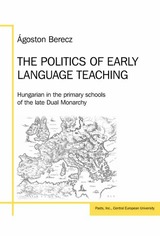
front cover of The Politics of Early Language Teaching
The Politics of Early Language Teaching
Hungarian in the Primary Schools of the Late Dual Monarchy
Ágoston Berecz
Central European University Press, 2014
Disseminating knowledge of the state language to the non-Magyar half of the citizenry was a policy priority of the government of the Hungarian Kingdom between the 1870s and the First World War. Drawing on a wide array of sources, The Politics of Early Language Teaching provides an in-depth look at how Hungarian was taught to ethnic Romanian and German children in the south-eastern tracts of the Habsburg Empire. The monograph covers the ever-harshening legislation from the period, reconsidering the role of state supervision and exploring the contemporary methodological debates as well as taking a closer look at classroom practices. Not only does the book throw much light in comparative mode on one of Europe s great early experiments in linguistic engineering; but it provides many new insights into Dualist Hungary s competing national ideologies and the limits of their efficacy on the ground.
[more]

front cover of The Positive Mind
The Positive Mind
Its Development and Impact on Modernity and Postmodernity
Evaldas Nekrašas
Central European University Press, 2016
This book is a radical reappraisal of positivism as a major movement in philosophy, science and culture. In examining positivist movement and its contemporary impact, I had the following goals. First, to provide a more precise and systematic definition of the notion of positivism. Second, to describe positivism as a trend of thought concerned not only with the theory of knowledge and philosophy of science, but also with problems of ethics, social, and political philosophy, and show that its representatives usually thought that the problems of the latter cannot be solved without solving the former first. Third, to examine the development of positivism as a movement which preserves a certain tradition and hence possesses some coherence, although the forms of this movement changed in different historical circumstances: it was born in the eighteenth century during the Enlightenment, took the form of social positivism in the nineteenth century, was transformed at the turn of the twentieth century with the emergence of empirio-criticism, and became logical positivism (or logical empiricism) in the twentieth century. Fourth, to reveal the external and internal factors of this evolution. Fifth, to disclose the relation of positivism to other trends of philosophy. Sixth, to determine the influence the positive mind had not only upon philosophy, but upon other cultural phenomena, such as the natural and social sciences, law, politics, arts, religion, and everyday life.
[more]

front cover of Post-Communist Mafia State
Post-Communist Mafia State
The Case of Hungary
Bálint Magyar
Central European University Press, 2016
In an article in 2001 the author analyzed the way Fidesz, the party on government for the first time then, was eliminating the institutional system of the rule of law. At that time, many readers doubted the legitimacy of the new approach, whose key categories were the 'organized over-world', the 'state employing mafia methods' and the 'adopted political family'. Critics considered these categories metaphors rather than elements of a coherent conceptual framework. Ten years later Fidesz won a two-third majority in Parliament at the 2010 elections: the institutional obstacles of exerting power were thus largely removed. Just like the party, the state itself was placed under the control of a single individual, who since then has applied the techniques used within his party to enforce submission and obedience onto society as a whole. While in many post-communist systems a segment of the party and secret service became the elite in possession of not only political power but also of wealth, Fidesz, as a late-coming new political predator, was able to occupy this position through an aggressive change of elite. The actions of the post-communist mafia state model are led by the logic of power and wealth concentration in the hands of the clan. But while the classical mafia channeled wealth and economic players into its spheres of interest by means of direct coercion, the mafia state does the same by means of parliamentary legislation, legal prosecution, tax authority, police forces and secret service. The new conceptual framework is important and timely not only for Hungary, but also for other post-communist countries subjected to autocratic rules.
[more]

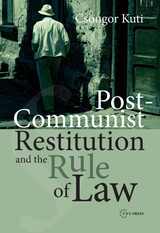
front cover of Post-Communist Restitution and the Rule of Law
Post-Communist Restitution and the Rule of Law
Csongor Kuti
Central European University Press, 2009
Eastern European societies underwent large-scale deprivations of property by the authoritarian regimes, beginning after World War II, largely ending with the last waves of the kolkhoz movement in the early 1960s. Kuti examines property reparations that took place after 1989, from the perspective of constitutional justice, the rule of law, but also from the point of view of identity politics.
[more]

front cover of Post-World War One Plebiscites and Their Legacies
Post-World War One Plebiscites and Their Legacies
Exploring the Right of Self-Determination
Sergiusz Bober
Central European University Press, 2024

Plebiscites, or referendums, are epitomes of direct democracy and the right of self-determination. While direct democracy has always been a key subject in the theory and practice of western liberal democracies, the issue of self-determination has been propelled to the fore by the hegemonistic moves of Russia. By providing a historical analysis of the post-World War One plebiscites, this book deals with enduring, painfully contemporary, and in in any case fundamental, concepts.

The contributors to this edited volume approach the referendums comparatively. After grounding the analysis theoretically, the authors look at detailed aspects of individual cases, with the two plebiscites held in the Danish-German border region of Schleswig in the winter of 1920 as points of departure. They then extend the exploration through the inter-war period and address the effects of border delimitations on everyday life or gender roles in the context of ethnic mobilization. Finally, the book places the post-World War One plebiscites in a long-term perspective. The concluding essays assess, among others, the applicability of plebiscitary solutions to contemporary conflicts, taking into consideration issues of borders, religion, language, identity, and minority rights.

[more]

logo for Central European University Press
The Potential of a Middle Power
Romania's Foreign Policy in Central Asia within the Context of EU Membership
Ana-Maria Anghelescu
Central European University Press

The large member states of the European Union have clear priorities when it comes to EU-level decisions, while the small member states hold veto power when decisions need to be taken unanimously. This book focuses on the potential of middle powers in EU decision-making using the example of Romania's relations with Central Asia. The author examines how Romania's diplomatic activities as a medium-sized member state - and as a newer member - can affect EU foreign policy. Ana-Maria-Andreea Anghelescu conducted a quantitative study of three hard power indices, as well as the soft presence dimension of the Elcano Index of Global Presence. The latter includes tourism, sport, culture, science, education, information, and migration. The statistical results were complemented by qualitative field research in Kyrgyzstan involving all five Central Asian countries.


The volume’s analysis concludes that Romania underperforms in using its robust hard faculties to benefit the country's soft capabilities. Central Asia is a region where the EU must work hard to maintain its influence. By strengthening their presence in the region beyond bilateral partnerships, the EU's middle powers can play a key role in asserting Europe's pragmatic and normative interests.T

[more]

logo for Central European University Press
Power and Knowledge Under Communism
A Political History of Economic and Sociological Research in Hungary
Gyorgy Peteri
Central European University Press, 2026
This book examines the transformation of economic and sociological knowledge under Hungarian state socialism from the late 1940s to the mid-1970s. It argues that the fate of the social sciences was determined less by episodic repression than by successive academic regimes asserting political authority through epistemological criteria and professional ethos. We follow the trajectory of economics from the Stalinist imposition of radical class-relativism, through the erosion of this epistemology during the New Course and the restoration of empirical research and professional communities as sources of policy-relevant knowledge. The post-Stalinist academic order was based on patronage, managed pluralism, and selective purges, culminating in the disciplining of both reform economics and critical sociology. The book demonstrates how limited professional autonomy could coexist with political control—and why such autonomy remained structurally fragile. It offers a historically grounded account of how modern states can govern social knowledge without fully suppressing it.
[more]

front cover of The Power of Words
The Power of Words
Studies on Charms and Charming in Europe
James Kapalo
Central European University Press, 2013
n medieval and early modern Europe, the use of charms was a living practice in all strata of society. The essays in this latest CEU Press publication explore the rich textual tradition of archives, monasteries, and literary sources. The author also discusses texts amassed in folklore archives and ones that are still accessible through field work in many rural areas of Europe.
[more]

front cover of Practices of Coexistence
Practices of Coexistence
Constructions of the Other in Early Modern Perceptions
Marianna D. Birnbaum
Central European University Press, 2017
The essays in this book provide interesting contributions to the ongoing debate concerning the representation of differing cultures, i.e., the “image of the Other” in the early modern period . They deal with images, projections, and perceptions, based on various experiences of coexistence. Although the individual contributions contain sources and references of iconography, this is not just another volume of art history or visual studies. As examples of practices in diverse historical contexts, the book includes a variety of textual material, such as literary productions, rhetorical exercises, dramatic applications, chronicles, epistles, and diary-like historical accounts that express ethnographic sensitivities. Thus, supported by a thorough research apparatus, these studies propose a new cultural history of the early modern coexistence of various communities, as identified in current research by young scholars. Another novel feature of the volume is the deliberate digression of traditional scholars’ focus and the investigation of rarely examined regions and practices. This approach allows the contributors to spotlight their special areas of research and to share a fresh new look at “the Renaissance.”
[more]

front cover of A Pragmatic Alliance
A Pragmatic Alliance
Jewish-Lithuanian political cooperation at the beginning of the 20th century
Vladas Sirutavicius
Central European University Press, 2011
Discusses the political cooperation between Jews and Lithuanians in the Tsarist Empire from the last decades of the 19th century until the early 1920s. These years saw the transformation of both Jewish and Lithuanian political life. Within the Jewish community, the previously dominant integrationists were now challenged both by those who believed that the Jews were not a religious but an ethnic or proto-nationalist group and those who believed that only with the abolition of capitalism and the establishment of a socialist state would Jewish integration be possible. Among the Lithuanians, the emergence of a modern national identity became increasingly prevalent.
[more]

front cover of The Prague Spring, 1968
The Prague Spring, 1968
The National Security Archive Navratíl
Central European University Press, 1998
This is the first ever documented account of a Cold War crisis as seen from both sides of the Iron Curtain. Based on unprecedented access to the previously closed archives of each member-state of the Warsaw Pact, this book offers a unique look at a deeply divisive intra-bloc crisis.
Presented in a highly readable form, the book offers top-level documents from Kremlin Politburo meetings, multi-lateral sessions of the Warsaw Pact leading up to the decision to invade, and even transcriptions of KGB-recorded phone conversations between Leonid Brezhnev and Alexander Dubcek. Once highly classified American documents from the National Security Council, CIA, and other relevant agencies acquired through the U.S. Freedom of Information Act have also been included.
In order to provide a historical and political context, the editors have included an introductory essay for each section of the volume. A chronology, glossary, and bibliography offer further background information for the reader. As members of the commission appointed by Václav Havel to investigate the events of 1967-1970, the editors have a unique Czech-Slovak perspective to offer to foreign audiences.
[more]

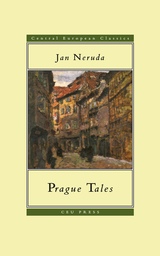
front cover of Prague Tales
Prague Tales
Jan Neruda
Central European University Press, 1996

This is a collection of Jan Neruda's intimate, wry, bittersweet stories of life among the inhabitants of the Little Quarter of nineteenth-century Prague. These finely tuned and varied vignettes established Neruda as the quintessential Czech nineteenth-century realist, the Charles Dickens of a Prague becoming ever more aware of itself as a Czech rather than an Austrian city.

Prague Tales is a classic by a writer whose influence has been acknowledged by generations of Czech writers, including Ivan Klíma, who contributes an introduction to this new translation.

[more]

front cover of Precarious Workers
Precarious Workers
History of Debates, Political Mobilization, and Labor Reforms in Italy
Eloisa Betti
Central European University Press, 2023

The recent vast upsurge in social science scholarship on job precarity has generally little to say about earlier forms of this phenomenon. Eloisa Betti’s monograph convincingly demonstrates on the example of Italy that even in the post-war phase of Keynesian stability and welfare state, precarious labor was an underlying feature of economic development. She examines how in this short period exceptional politics of labor stability prevailed. The volume then presents the processes whereby labor precarity regained momentum— under the name of flexibility— in the post-Fordist phase from the early 1980s, taking on new forms in the Craxi and Berlusconi eras.

Multiple actors are addressed in the analysis. The book gives voice to intellectuals, scholars, politicians and trade unionists as they have framed the concept and debates on precarious work from the 1950s onwards. Views of labor law experts, politicians and public servants are investigated in regard to labor regulations. Positions of the very precarians are explored, ranging from rural women, industrial homeworkers and blue-collar workers to physicians, university researchers and trainees, unveiling the emergence of anti-precarity social movements. The continuous role of women’s associations and feminist groups in opposing labor precarity since the 1950s is prominently exposed.

[more]

front cover of Present Tensions
Present Tensions
European Writers on Overcoming Dictatorships
Kristina Kaiserová
Central European University Press, 2009
An intersection of literary works on the question of how dictatorships are overcome, which emerged from a transnational project convening acclaimed writers. The generations, European countries of origin and artistic directions represented are both an advantage and a challenge reflected by this anthology. A considerable variety of motivations drove participants: putting into words a contemporary biography of persecution, a descendant's feeling of personal historical responsibility, or the artistic curiosity of the "outsider". The anthology is dedicated to the imaginative power of literature, and to Central Eastern and South Eastern Europe in particular. The formerly multicultural setting of these countries suffered the most from European dictatorships and their insufficiently processed legacies. The cultural transfer exhibited here will help reduce prejudices and promote new forms of understanding with Western Europe: it aims to further a diversified but common European culture.
[more]

front cover of Pressed by a Double Loyalty
Pressed by a Double Loyalty
Hungarian Attendance at the Second Vatican Council, 1959-1965
András Fejérdy
Central European University Press, 2017
The Second Vatican Council is the single most influential event in the 20th century history of the Catholic Church. The book analyzes the relationship between the Council and the "Ostpolitik" of the Vatican through the history of the Hungarian presence at Vatican II. Pope John XXIII, elected in 1958, was a catalyst. The pope thought that his most urgent task was to renew contacts with the Church behind the iron curtain. Hungarian participation at the Council was also made possible by the new, pragmatic model in Hungarian church politics. After the crushing of the 1956 Revolution, churches in Hungary thought that the regime would last and were willing to compromise. Vatican II – in the perspective of Hungary – was not primarily an ecclesial event, but it remained closely joined to the negotiations between the Holy See and the Kádár regime: during the Council Hungary became the experimental laboratory of the Vatican's new eastern policy. Was it a Vatican decision or a Soviet instruction? Fejérdy suggests that it was a decision of the Holy See.
[more]

front cover of Privatization in Eastern Europe
Privatization in Eastern Europe
Is the State Withering Away?
Roman Frydman
Central European University Press, 1994
In Eastern Europe privatization is now a mass phenomenon. The authors propose a model of it by means of an illustration from the example of Poland, which envisages the free provision of shares in formerly public undertakings to employees and consumers, and the provision of corporate finance from foreign intermediaries. One danger that emerges is that of bureaucratization. On the broader canvas, mass privatization implies the reform of the whole system, the creation of a suitable economic infrastructure for a market economy and the institutions of corporate governance. The authors point out the need for a delicate balance between evolution - which may be too slow - and design - which brings the risk of more government involvement than it is able to manage. A chapter originating as a European Bank working paper explores the banking implications of setting up a totally new financial sector with interlocking classes of assets. The economic effects merge into politics as the role of the state is investigated. Teachers and graduate students of public/private sector economies, East European affairs; advisers to bankers or commercial companies with Eastern European interests.
[more]

front cover of The Privatization Process in Central Europe
The Privatization Process in Central Europe
Roman Frydman
Central European University Press, 1993
In this work, comprehensive comparative information on five Central European countries has been collected by teams of researchers from both within the region and from the West. Following an introduction to the economic environment in each country, it provides an overview of the privatization process, including an account of the legal framework of ownership, institutions for state regulation, an overview of privatization programmes and the initial transformation of enterprises. A key feature of the book is the authors' access to hitherto unavailable information and their ability to present a vast amount of material in an easily available format. Aimed at policy makers and business people, the work should provide a strong foundation for future research.
[more]

front cover of The Privatization Process in Russia, the Ukraine, and the Baltic States
The Privatization Process in Russia, the Ukraine, and the Baltic States
Roman Frydman
Central European University Press, 1993
In this work, comprehensive comparative information on five former Soviet republics has been collected by teams of researchers from both within the region and from the West. Following an introduction to the economic environment in each country, it provides an overview of the privatization process, including an account of the legal framework of ownership, institutions for state regulation, an overview of privatization programmes and the initial transformation of enterprises. A key feature of the book is the authors' access to hitherto unavailable information and their ability to present a vast amount of material in an easily available format. Aimed at policy makers and business people, the work should provide a strong foundation for future research.
[more]

front cover of Promises of 1968
Promises of 1968
Crisis, Illusion and Utopia
Vladimir Tismaneanu
Central European University Press, 2011
This book is a state of the art reassessment of the significance and consequences of the events associated with the year 1968 in Europe and in North America. Since 1998, there hasn't been any collective, comparative and interdisciplinary effort to discuss 1968 in the light of both contemporary headways of scholarship and new evidence on this historical period. A significant departure from earlier approaches lies in the fact that the manuscript is constructed in unitary fashion, as it goes beyond the East–West divide, trying to identify the common features of the sixties. The latter are analyzed as simultaneously global and local developments. The main problems addressed by the contributors of this volume are: the sixties as a generational clash; the redefinition of the political as a consequence of the ideological challenges posed to the status-quo by the sixty-eighters; the role of Utopia and the de-radicalization of intellectuals; the challenges to imperialism (Soviet/American); the cultural revolution of the sixties; the crisis of 'really existing socialism' and the failure of "socialism with a human face"; the gradual departure from the Yalta-system; the development of a culture of human rights and the project of a global civil society; the situation of 1968 within the general evolution of European history (esp. the relationship of 1968 with 1989). In contrast to existing books, it provides a fundamental and unique synthesis of approaches on 1968: first, it contains critical (vs. nostalgic) re-evaluations of the events from the part of significant sixty-eighters; second, it includes historical analyses based on new archival research; third, it gathers important theoretical re-assessments of the intellectual history of the 1968; and fourth, it bridges 1968 with its aftermath and its pre-history, thus avoiding an over-contextualization of the topics in question.
[more]

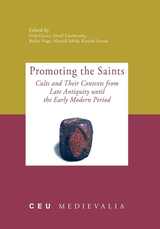
front cover of Promoting the Saints
Promoting the Saints
Cults and Their Contexts from Late Antiquity until the Early Modern Period
Ottó Gecser
Central European University Press, 2010
The studies in this volume concentrate on a complex set of socio-cultural phenomena, the cult of saints, in a variety of regions from Egypt to Poland, with a focus on Italy and Central Europe. The subjects of the contributions range in time from the fourth until the eighteenth century. The diversity of approaches adopted by the contributors—from literary analysis and historical anthropology to archaeology and art history—represents that open and multidisciplinary historical research that characterizes the work of Gábor Klaniczay to whom these essays are dedicated.
[more]

front cover of The Prose of the Mountains
The Prose of the Mountains
Three Tales of the Caucasus
Aleksandre Qazbegi
Central European University Press, 2015

The Prose of the Mountains contains three tales of the Caucasus by Aleksandre Qazbegi, one of the most prescient and gifted chroniclers of the Georgian encounter with colonial modernity. His stories offer an invaluable counterpoint to the predominantly Russian narratives that have hitherto shaped scholarly accounts of the nineteenth-century Caucasus. “Memoirs of a Shepherd” poignantly chronicles the young author’s decision to pass seven years of his life as a shepherd with Georgian mountaineers. “Eliso” (the name of a Chechen girl) offers one of the most searing accounts on record of the forced migration of this people from their homeland to Ottoman lands. Set in the sixteenth century, “Khevis Beri Gocha” (the name of a Georgian village chief) classically chronicles a tragic misunderstanding between a severe father and his loving son.
[more]

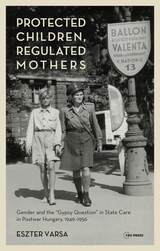
front cover of Protected Children, Regulated Mothers
Protected Children, Regulated Mothers
Gender and the "Gypsy Question" in State Care in Postwar Hungary, 1949–1956
Eszter Varsa
Central European University Press, 2021

Protected Children, Regulated Mothers examines child protection in Stalinist Hungary as a part of twentieth-century East Central, Eastern, and Southeastern European history. Across the communist bloc, the prewar foster care system was increasingly replaced after 1945 by institutionalization in residential homes. This shift was often interpreted as a further attempt to establish totalitarian control. However, this study—based on hundreds of children's case files and interviews with institution leaders, teachers, and people formerly in state care—provides a new perspective. Rather than being merely a tool of political repression, state care in postwar Hungary was often shaped by the efforts of policy actors and educators to address the myriad of problems engendered by the social and economic transformations that emerged after World War II. This response built on, rather than broke with, earlier models of reform and reformatory education. Yet child protection went beyond safeguarding and educating children; it also focused on parents, particularly lone mothers, regulating not only their entrance to paid work but also their sexuality. In so doing, children's homes both reinforced and changed existing cultural and social patterns, whether about gendered division of work or the assimilation of minorities. Indeed, a major finding of the book is that state socialist child protection continued a centuries-long national project of seeking a “solution to the Gypsy question,” rooted in efforts to eliminate the perceived “workshyness” of Roma.
[more]

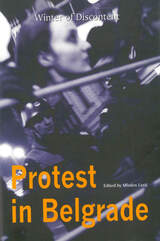
front cover of Protest In Belgrade
Protest In Belgrade
Winter of Discontent
Mladen Lazic
Central European University Press, 1999

Protest in Belgrade addresses one of the most important social movements of this decade - the civil and student peace demonstrations which took place in Belgrade during the winter of 1996/97. The demonstrations, the largest ever in history, were in response to Milošević’s nullifying of the results of local elections in fourteen towns in Serbia which created global media attention and attracted worldwide sympathy.


This in-depth study of a society calling for democracy is based on interviews with over 1000 civilians and students. The book is unique because much of the research was carried out and completed while the demonstrations were still in progress and before the outcome of events was known. A chronology of events is also included.


The book provides an abundance of valuable information for analysts of post-socialist transformation, researchers of social movements and social change, and for all those concerned with the tragic events in Southeast Europe.

[more]

front cover of Psychology and Politics
Psychology and Politics
Intersections of Science and Ideology in the History of Psy-Sciences
Ferenc Eros
Central European University Press, 2019

Psy-sciences (psychology, psychiatry, psychoanalysis, pedagogy, criminology, special education, etc.) have been connected to politics in different ways since the early twentieth century. Here in twenty-two essays scholars address a variety of these intersections from a historical perspective. 
The chapters include such diverse topics as the cultural history of psychoanalysis, the complicated relationship between psychoanalysis and the occult, and the struggles for dominance between the various schools of psychology. They show the ambivalent positions of the "psy" sciences in the dictatorships and authoritarian regimes of Nazi Germany, East European communism, Latin-American military dictatorships, and South African apartheid, revealing the crucial role of psychology in legitimating and "normalizing" these regimes.

The authors also discuss the ideological and political aspects of mental health and illness in Hungary, Germany, post-WW1 Transylvania, and Russia. Other chapters describe the attempt by critical psychology to understand the production of academic, therapeutic, and everyday psychological knowledge in the context of the power relations of modern capitalist societies.

[more]

front cover of The Pãltinis Diary
The Pãltinis Diary
A Paideic Model in Humanist Culture
Gabriel Liiceanu
Central European University Press, 2000

The intellectual resistance to totalitarian regimes can take many forms. This remarkable volume portrays one such story of resistance in Romania during the reign of Ceauşescu: that of Constantin Noica, one of the country’s foremost intellectuals.

Noica was an original thinker belonging to the remarkable intellectual generation of important figures such as Mircea Eliade, E. M. Cioran and Eugene Ionescu, but he chose to stay in Romania after the communist takeover when many others fled. Harassed and jailed for six years, Noica retreated to the mountains and gathered around him some brilliant young minds and future talent to challenge and nurture them in a time when communism denied them the materials of true intellectual importance.

This group of students withdrew to Noica’s retreat for intensive philosophical sessions to debate the works of Kant, Plato, Heidegger and discuss humanistic values. The author of this volume Liiceanu, himself a brilliant philosopher, was Noica’s closest disciple and during every meeting he noted every conversation in a diary which came to be known as The Păltiniş Diary. These conversations were secretly published and quickly devoured by intellectuals in Romania who were prepared to sacrifice part of their food provisions to acquire the book. The Păltiniş Diary sold out within a matter of days and because of Secret Police censorship, was not published again in Romania until 1991 by which time Noica had died and the group had disbanded to help with the reconstruction of post-Ceauşescu Romania.

The Păltiniş Diary is a wonderful homage to an intellectual master and to the power of intellect and freedom. The book will be of interest to philosophers, non-philosophers alike, and to anyone who seeks to grasp the true meaning of survival under totalitarian conditions. 

[more]


Send via email Share on Facebook Share on Twitter