
 A SCHOLARLY BOOK REPOSITORY
47 start with P start with P

Amid the political turmoil of China’s Cultural Revolution, a small group of painters in Beijing defied state control, creating art in secrecy that challenged the ideological constraints of their time. Painting into Being is the first in-depth study of underground art during this period, focusing on the Wuming (No Name) Painting Group, active from 1972 to 1981, in conjunction with other clandestine cultural movements.
Aihe Wang brings a singular perspective to this history as both a former Wuming artist and a Harvard-trained historian and anthropologist. Analyzing nearly one hundred oil paintings against sophisticated theoretical frameworks and intricate historical narratives, she examines how underground artists cultivated individual agency, forged collective solidarity, and subtly resisted authoritarianism. This book also illustrates how Wuming aesthetically engaged with both modern Western art and traditional Chinese art in creating a distinct form of Chinese modernism.
Interweaving history, theory, and lived experience, Painting into Being expands our understanding of modern Chinese history, global modernism, and the power of creative expression within repressive regimes.
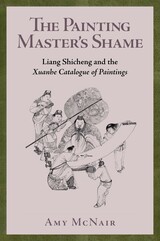
Overturning the long-held assumption that the Xuanhe Catalogue of Paintings was the work of the Northern Song emperor Huizong (r. 1100–1126), Amy McNair argues that it was compiled instead under the direction of Liang Shicheng. Liang, a high-ranking eunuch official who sought to raise his social status from that of despised menial to educated elite, had privileged access to the emperor and palace. McNair’s study, based on her translation and extensive analysis of the text of the Xuanhe Catalogue of Paintings, offers a definitive argument for the authorship of this major landmark in Chinese painting criticism and clarifies why and how it was compiled.
The Painting Master’s Shame describes the remarkable circumstances of the period around 1120, when the catalogue was written. The political struggles over the New Policies, the promotion of the “scholar amateur” ideal in painting criticism and practice, and the rise of eunuch court officials as a powerful class converged to allow those officials the unprecedented opportunity to enhance their prestige through scholarly activities and politics. McNair analyzes the catalogue’s central polemical narrative—the humiliation of the high-ranking minister mistakenly called by the lowly title “Painting Master”—as the key to understanding Liang Shicheng’s methods and motives.

One of the great kingdoms of human history, the Mughal empire is now lost to the relentless sweep of time. But the wealth of art treasures the Mughals left behind is nonetheless a lasting testament to the sumptuousness of their culture. Among the most notable vestiges of their art are the lush miniature paintings of Mughal imperial life, and Andrew Topsfield explores a rich array of these painted works in Paintings from Mughal India.
Between the sixteenth and eighteenth centuries, the Mughal emperors presided over a flourishing cultural renaissance, and these miniature paintings vividly depict the splendor of this period. Topsfield examines the paintings’ unique blend of Indian, Islamic, and Persian styles and analyzes their varied subjects—ranging from hunting, royal banquets, and other scenes of imperial life to legendary tales, mythic deities, and battles. Among the paintings featured in the book’s vibrant reproductions are works created between the reign of Akbar and the fall of Shah Jehanan—an era considered to be the height of Mughal painting—and illustrations from the celebrated Baharistan manuscript of 1595. A fascinating and gorgeously illustrated study, Paintings from Mughal India will be an invaluable resource for all art scholars and anyone interested in the legacy of the Mughal Empire.
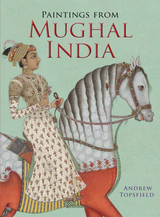
Andrew Topsfield examines these paintings that bear the influence of Indian, Islamic, and Persian styles and portray a variety of subjects, from hunting, royal banquets, and other scenes of imperial life to legends, battles, and mythic deities. Among the paintings featured in the book’s vibrant reproductions are illustrations from the celebrated Baharistan manuscript of 1595 and works created between the reign of Akbar and the fall of Shah Jahan in 1658—an era considered to be the height of Mughal art. For this new edition, Topsfield has made corrections and revisions reflecting new research.
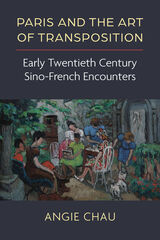
While previous studies of Chinese modernism have focused on how Western modernist aesthetics were adapted or translated to the Chinese context, Angie Chau does the opposite by turning to Paris in the Chinese imaginary and discussing the literary and visual artwork of five artists who moved between France and China: the painter Chang Yu, the poet Li Jinfa, the art critic Fu Lei, the painter Pan Yuliang, and the writer Xu Xu. Chau draws the idea of transposition from music theory where it refers to shifting music from one key or clef to another, or to adapting a song originally composed for one instrument to be played by another. Transposing transposition to the study of art and literature, Chau uses the term to describe a fluid and strategic art practice that depends on the tension between foreign and familiar, new and old, celebrating both novelty and recognition—a process that occurs when a text gets placed into a fresh context.
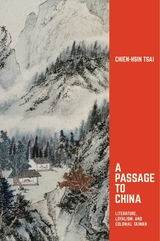
This book, the first of its kind in English, examines the reinvention of loyalism in colonial Taiwan through the lens of literature. It analyzes the ways in which writers from colonial Taiwan—including Qiu Fengjia, Lian Heng, Wu Zhuoliu, and others—creatively and selectively employed loyalist ideals to cope with Japanese colonialism and its many institutional changes. In the process, these writers redefined their relationship with China and Chinese culture.
Drawing attention to select authors’ lesser-known works, author Chien-hsin Tsai provides a new assessment of well-studied historical and literary materials and a nuanced overview of literary and cultural productions in colonial Taiwan. During and after Japanese colonialism, the islanders’ perception of loyalism, sense of belonging, and self-identity dramatically changed. Tsai argues that the changing tradition of loyalism unexpectedly complicates Taiwan’s tie to China, rather than unquestionably reinforces it, and presents a new line of inquiry for future studies of modern Chinese and Sinophone literature.
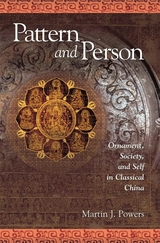
In Classical China, crafted artifacts offered a material substrate for abstract thought as graphic paradigms for social relationships. Focusing on the fifth to second centuries B.C., Martin Powers explores how these paradigms continued to inform social thought long after the material substrate had been abandoned. In this detailed study, the author makes the claim that artifacts are never neutral: as a distinctive possession, each object—through the abstracting function of style—offers a material template for scales of value. Likewise, through style, pictorial forms can make claims about material “referents,” the things depicted. By manipulating these scales and their referents, artifacts can shape the way status, social role, or identity is understood and enforced. The result is a kind of “spatial epistemology” within which the identities of persons are constructed. Powers thereby posits a relationship between art and society that operates at a level deeper than iconography, attributes, or social institutions.
Historically, Pattern and Person traces the evolution of personhood in China from a condition of hereditary status to one of achieved social role and greater personal choice. This latter development, essential for bureaucratic organization and individual achievement, challenges the conventional opposition between “Western” individuals and “collective” Asians.

The post-Cold War era has been difficult for Japan. A country once heralded for evolving a superior form of capitalism and seemingly ready to surpass the United States as the world’s largest economy lost its way in the early 1990s. The bursting of the bubble in 1991 ushered in a period of political and economic uncertainty that has lasted for over two decades. There were hopes that the triple catastrophe of March 11, 2011—a massive earthquake, tsunami, and accident at the Fukushima Daiichi nuclear power plant—would break Japan out of its torpor and spur the country to embrace change that would restart the growth and optimism of the go-go years. But several years later, Japan is still waiting for needed transformation, and Brad Glosserman concludes that the fact that even disaster has not spurred radical enough reform reveals something about Japan's political system and Japanese society. Glosserman explains why Japan has not and will not change, concluding that Japanese horizons are shrinking and that the Japanese public has given up the bold ambitions of previous generations and its current leadership. This is a critical insight into contemporary Japan and one that should shape our thinking about this vital country.
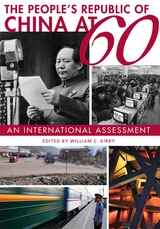
In 2009, to mark the sixtieth anniversary of the People’s Republic of China, the Fairbank Center for Chinese Studies convened a major conference to discuss the health and longevity of China’s ruling system and to consider a fundamental question: After three decades of internal strife and turmoil, followed by an era of reform, entrepreneurialism, and internationalization, is the PRC here for the dynastic long haul?
Bringing together scholars and students of China from around the world, the gathering witnessed an energetic exchange of views on four interrelated themes: polities, social transformations, wealth and well-being, and culture, belief, and practice. Edited and expanded from the original conference papers, the wide-ranging essays in this bilingual volume remain true to the conference’s aim: to promote open discussion of the past, present, and future of the People’s Republic of China.
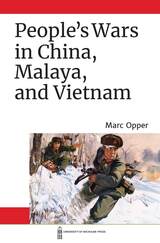
People’s Wars in China, Malaya, and Vietnam explains why some insurgencies collapse after a military defeat while under other circumstances insurgents are able to maintain influence, rebuild strength, and ultimately defeat the government. The author argues that ultimate victory in civil wars rests on the size of the coalition of social groups established by each side during the conflict. When insurgents establish broad social coalitions (relative to the incumbent), their movement will persist even when military defeats lead to loss of control of territory because they enjoy the support of the civilian population and civilians will not defect to the incumbent. By contrast, when insurgents establish narrow coalitions, civilian compliance is solely a product of coercion. Where insurgents implement such governing strategies, battlefield defeats translate into political defeats and bring about a collapse of the insurgency because civilians defect to the incumbent. The empirical chapters of the book consist of six case studies of the most consequential insurgencies of the 20th century including that led by the Chinese Communist Party from 1927 to 1949, the Malayan Emergency (1948–1960), and the Vietnam War (1960–1975). People’s Wars breaks new ground in systematically analyzing and comparing these three canonical cases of insurgency. The case studies of China and Malaya make use of Chinese-language archival sources, many of which have never before been used and provide an unprecedented level of detail into the workings of successful and unsuccessful insurgencies. The book adopts an interdisciplinary approach and will be of interest to both political scientists and historians.

Persian Manuscripts & Paintings from the Berenson Collection presents an in-depth analysis of the little-known Persian manuscripts and paintings collected by the world-renowned art historian, art critic, and connoisseur Bernard Berenson (1865–1959). It focuses on three manuscripts and four detached folios (containing over fifty paintings) from the fourteenth to the seventeenth century produced in Iran and Central Asia (with a later addition in Mughal India).
Fourteen essays are written by an international team of specialists in art history, Persian literature, statistics, conservation, and conservation science. The first two essays introduce Berenson’s collecting of these art works as an individual and as a trend among other collectors. The rest of the essays explain individual works of art. The Timurid Rasaʾil and the Safavid manuscripts Shahnama of Firdawsi and Farhad va Shirin of Vahshi are examined in groups of essays ranging from art historical to literary, statistical, and codicological analysis. The detached folios studied as single essays originate from the famous Great Mongol Shahnama; the 1436 Timurid Zafarnama of Sharaf al-Din ʿAli Yazdi; a Turkman Shahnama; and the dispersed Imperial Mughal Album also known as the Minto, Wantage, and Kevorkian albums. The appendix refers to the materials and techniques of the paintings in the volume.
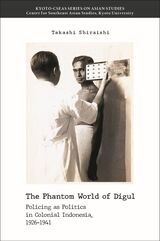
How did the government deploy political policing to achieve its policy objectives? What were the consequences and challenges for Indonesian activists? How was the government able to fashion its policing apparatus as the most potent instrument to achieve peace and order when the Great Depression hit the Indies, nationalist and communist forces were gaining strength in other places of the world, and war was coming both in Europe and Asia? This book answers those questions and more, breaking new ground for our understanding of the history of the Dutch Indies state in the early part of the twentieth century.
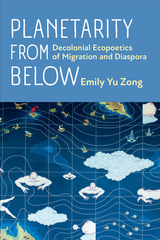
Through short stories, memoirs, speculative fiction, poetry, and documentary films, Zong unpacks a decolonial migrant ecopoetics, revealing a pluralist method of worldmaking—from Australia’s oceanic refugee camps, Indigenous Canadian land, and Chinese migrant worker sweatshops, to climate futures. These migrant ecologies imagine freedom “from below” not simply as individual survival or assimilation but as an unruly and contingent process of shared creativity with animals, waters, minerals, waste, and technology.
Shifting environmental ethics from individual morality to a political ecology of sustaining life in precarity, Zong introduces decolonial knowledges, imaginations, and praxes that help us expand justice and freedom beyond the human, asking how borderland subjectivities can open new possibilities for multispecies flourishing.
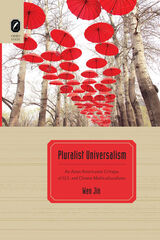
Pluralist Universalism: An Asian Americanist Critique of U.S. and Chinese Multiculturalisms by Wen Jin is an extended comparison of U.S. and Chinese multiculturalisms during the post–Cold War era. Her book situates itself at the intersection of Asian American literary critique and the growing field of comparative multiculturalism. Through readings of fictional narratives that address the issue of racial and ethnic difference in both national contexts simultaneously, the author models a “double critique” framework for U.S.–Chinese comparative literary studies.

The seventeenth-century Hindi classic treasured for its subtle and beautiful portrayal of divine and erotic love’s pleasures and sorrows.
In his Satsai, or Seven Hundred Poems, the seventeenth-century poet Biharilal draws on a rich vernacular tradition, blending amorous narratives about the god Krishna and the goddess Radha with archetypal hero and heroine motifs from older Sanskrit and Prakrit conventions. While little is known of Biharilal’s life beyond his role as court poet to King Jai Singh of Amber (1611–1667), his verses reflect deep knowledge of local north Indian culture and geography, especially the bucolic landscapes of Krishna’s youth in the Braj region (in today’s Uttar Pradesh). With ingenuity and virtuosity, Biharilal weaves together worldly experience and divine immanence, and adapts the tropes of stylized courtly poetry, such as romantic rivalries, clandestine trysts, and the bittersweet sorrow of separated lovers.
Poems from the Satsai comprises a selection of four hundred couplets from this enduring work. The Hindi text—composed in Braj Bhasha, the literary language of early-modern north India—is presented here in the Devanagari script and accompanies a new English verse translation.
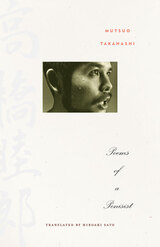
“In the name of / Man, member, / and the holy fluid, / Amen,” begins Mutsuo Takahashi’s epic one-thousand-line erotic fantasy poem, “Ode,” the centerpiece of his groundbreaking collection of queer poetry, Poems of a Penisist. Takahashi’s work, reminiscent of Walt Whitman’s, is a celebration of the male body, treating homosexual desire as something sacred. Stunningly beautiful and passionate, Poems of a Penisist is one of the most important compilations of homoerotic poetry written in the twentieth century.
A stunning modern translation of a Buddhist classic that is also one of the oldest literary texts in the world written by women.
The Therīgāthā is one of the oldest surviving literatures by women, composed more than two millennia ago and originally collected as part of the Pali canon of Buddhist scripture. These poems were written by some of the first Buddhist women—therīs—honored for their religious achievements. Through imaginative verses about truth and freedom, the women recount their lives before ordination and their joy at attaining liberation from samsara. Poems of the First Buddhist Women offers startling insights into the experiences of women in ancient times that continue to resonate with modern readers. With a spare and elegant style, this powerful translation introduces us to a classic of world literature.
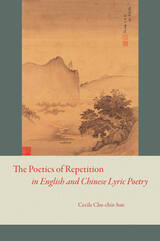
For more than half a century, Chinese-Western comparative literature has been recognized as a formal academic discipline, but critics and scholars in the field have done little to develop a viable, common basis for comparison between these disparate literatures. In this pioneering book, Cecile Chu-chin Sun establishes repetition as the ideal perspective from which to compare the poetry and poetics from these two traditions.
Sun contends that repetition is at the heart of all that defines the lyric as a unique art form and, by closely examining its use in Chinese and Western poetry, she demonstrates howone can identify important points of convergence and divergence. Through a representative sampling of poems from both traditions, she illustrates how the irreducible generic nature of the lyric transcends linguistic and cultural barriers but also reveals the fundamental distinctions between the traditions. Most crucially, she dissects the two radically different conceptualizations of reality—mimesis and xing—that serve as underlying principles for the poetic practices of each tradition.
Skillfully integrating theory and practice, The Poetics of Repetition in English and Chinese Lyric Poetryprovides a much-needed model for future study of Chinese and English poetry as well as lucid, succinct interpretations of individual poems.
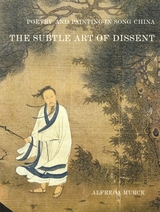
Throughout the history of imperial China, the educated elite used various means to criticize government policies and actions. During the Song dynasty (960-1278), some members of this elite found an elegant and subtle means of dissent: landscape painting.
By examining literary archetypes, the titles of paintings, contemporary inscriptions, and the historical context, Alfreda Murck shows that certain paintings expressed strong political opinions—some transparent, others deliberately concealed. She argues that the coding of messages in seemingly innocuous paintings was an important factor in the growing respect for painting among the educated elite and that the capacity of painting's systems of reference to allow scholars to express dissent with impunity contributed to the art's vitality and longevity.
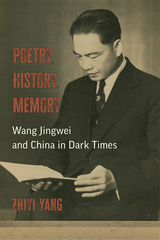
Wang Jingwei, poet and politician, patriot and traitor, has always been a figure of major academic and popular interest. Until now, his story has never been properly told, let alone critically investigated. The significance of his biography is evident from an ongoing war on cultural memory: modern mainland China prohibits serious academic research on wartime collaboration in general, and on Wang Jingwei in particular. At this critical juncture, when the recollection of World War II is fading from living memory and transforming into historical memory, this knowledge embargo will undoubtedly affect how China remembers its anti-fascist role in WWII. In Poetry, History, Memory: Wang Jingwei and China in Dark Times, Zhiyi Yang brings us a long overdue reexamination of Wang’s impact on cultural memory of WWII in China.
In this book, Yang brings disparate methodologies into a fruitful dialogue, including sophisticated methods of poetic interpretation. The author argues that Wang’s lyric poetry, as the public performance of a private voice, played a central role in constructing his political identity and heavily influenced the public’s posthumous memory of him. Drawing on archives (in the PRC, Taiwan, Japan, the USA, France, and Germany), memoires, historical journals, newspapers, interviews, and other scholarly works, this book offers the first biography of Wang that addresses his political, literary, and personal life in a critical light and with sympathetic impartiality.
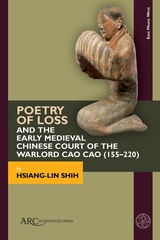
Upon the fall of the Han empire, the warlord Cao Cao (155–220) established a new political domain. The Cao court became known for its accomplished writers, including the warlord himself and two of his sons, Cao Pi (187–226) and Cao Zhi (192–232). Afflicted by sibling rivalry and an epidemic, these poets distinguished themselves by writing about frustration, sorrow, and death.
Yet, as observed in Poetry of Loss, the poets drew on experiences of loss to reinvent the court, its collective memory, and its ways of remembering. While addressing melancholy and nostalgia, they also meditated on such themes as aging, widowhood, and parental loss. In this book, Hsiang-Lin Shih reconstructs a network of courtly texts and uncovers new inter-and-intra textual elements of the works. She shows how writers at the Cao court employed their poetic art to establish, develop, and sustain a community in each difficult moment of their intertwined lives.

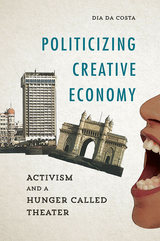
As Da Costa shows, commodification, heritage, and management discussions inevitably creep into performance. Yet the ability of performance to undermine such subtle invasions make activist theater a crucial site for considering what counts as creativity in the cultural politics of creative economy. Da Costa explores the precarious lives, livelihoods, and ideologies at the intersection of heritage projects, planning discourse, and activist performance. By analyzing the creators, performers, and activists involved--individuals at the margins of creative economy as well as society--Da Costa builds a provocative argument. Their creative economy practices may survive, challenge, and even reinforce the economies of death, displacement, and divisiveness used by the urban poor to survive.

As Southeast Asia’s cities continue to swell, this timely volume analyzes urban politics in the region.
Why have some Southeast Asian cities become laboratories of reform while others remain mired in old patterns of patronage politics and substandard public services? This has become an important question now that over half of Southeast Asia’s population lives in urban areas, transforming the politics of the region. Quintessentially urban problems—traffic congestion, sanitation, public transport, housing, and the like—increasingly preoccupy policymakers, while the region’s swelling urban middle classes expect their mayors and city governments to provide ever-better infrastructure and amenities.
Drawing on close case studies of a diverse set of seventeen urban areas across four Southeast Asian countries—Indonesia, Malaysia, the Philippines, and Thailand—this volume offers fresh insights into how the region’s urban politics are changing. It provides a new framework for understanding why some cities are flourishing and others are not. Exploring the factors that shape distinct local governance regimes in these cities, Politics and Governance in Urban Southeast Asia also throws light on how urban residents use community associations, informal networks, and other political mechanisms to access the public services they want and need.
With chapters by writers, scholars, and critics from mainland China, Hong Kong, and the United States, this volume explores the complexity of representing modernity within the Chinese context. Addressing the problem of finding a proper language for articulating fundamental issues in the historical experience of twentieth-century China, the authors critically re-examine notions of realism, the self/subject, and modernity and draw on perspectives from feminist criticism, ideological analysis, and postmodern theory. Among the many topics explored are subjectivity in Chinese cultural theory, Chinese gender relations, the viability of a Lacanian approach to Chinese identity, the politics of subversion in Chinese reportage, and the ambivalent status of the icon of paternity since Mao.
At the same time this book offers a probing look into the transformation that Chinese culture as well as the study of that culture is currently undergoing, it also reconfirms private discourse as an ideal site for an investigation into a real and imaginary, private and collective encounter with history.
Contributors. Liu Kang, Xiaobing Tang, Liu Zaifu, Stephen Chan, Lydia H. Liu, Wendy Larson, Theodore Huters, David Wang, Tonglin Lu, Yingjin Zhang, Yuejin Wang, Li Tuo, Leo Ou-fan Lee
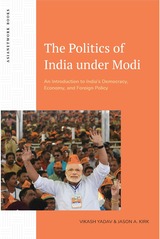
Since the right-wing, Hindu-nationalist government of Narendra Modi’s Bharatiya Janata Party (BJP) came to power at the national level in 2014, and with its consolidation of power in the 2019 general election, India has witnessed a significant realignment of its national politics and a shift toward the right of the political spectrum. The Politics of India under Modi provides a detailed overview of India’s political trends, economic prospects, and international relations in the twenty-first century.
This book is designed as a supplement and update for existing syllabi that trace India’s political economy from the birth of the republic to the quest for economic liberalization and great power status. Undergraduates and scholars interested in India’s foreign policy and political reform will find value in this timely book.
“The subject of this book is extremely compelling and important, as well as timely. BJP rule and the Modi regime, it is now clear, represent some critical turning points in Indian politics, which have yet to be analyzed in depth academically by experts. I see this book as a key first step in this process.”
-Rina Verma Williams, School of Public and International Affairs at the University of Cincinnati
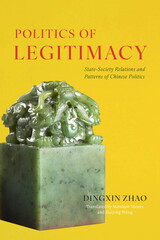
The Chinese communist state has survived massive social changes, including the introduction of capitalist markets, an ongoing explosion of technological innovation, and an unprecedented jump in wealth and education, accompanied by a major cultural transformation. How has China managed to maintain its power even as the ground has so profoundly shifted? In Politics of Legitimacy, Dingxin Zhao argues that state power can be legitimized in three ideal-typical ways: a set of values upheld by the state (ideological legitimacy), recognized political processes such as regular competitive elections (procedural legitimacy), and the state’s capacity to provide public goods (performance legitimacy).
Building on this theoretical framework, Zhao analyzes different aspects of Chinese politics, including the tragic ending of the 1989 pro-democracy movement, the weak development of mass-based nationalism in post-Mao China, the reasons behind China’s economic success, the anti-establishment tendency of the Chinese mass media and social media, and the sources of political tension in China, despite a superb economy. Moreover, Zhao’s innovative framework is widely applicable beyond China, shifting our attention from regime-type categories to the tools and relationships that determine their survival or collapse, and illuminating the current global emergence of conservatism and religious nationalism.
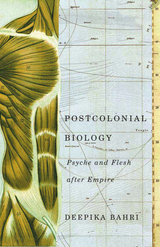
Although the body has been a vast subject for postcolonial studies, few theorists have attempted to go beyond the simple mixing of races in examining the impact of colonialism on the colonized body. However, as Deepika Bahri argues, it is essential to see the postcolonial body in a variety of forms: as capable of transformation not only in psyche and outward behavior but also in flesh and blood.
European colonizers brought new ways of seeing the body in matters as basic as how to eat, speak, sit, shit, or spit. As nations decolonized, these imperialistic ideas remained, becoming part of the global economy of the body. In Postcolonial Biology, Bahri argues that the political challenges of the twenty-first century require that we deconstruct these imperial notions of the body, as they are fundamental to power structures governing today’s globalized world.
Postcolonial Biology investigates how minds and bodies have been shaped by colonial contact, to create deeply embedded hierarchies among the colonized. Moving beyond “North/South” thinking, Bahri reframes the questions of postcolonial bodies to address all societies, whether developed or developing. Engaging in innovative, highly original readings of major thinkers such as Adorno, Horkheimer, Derrida, and Fanon, this book brings an important new focus to the field of postcolonial studies—one that is essential to understanding the ideas and conflicts that currently dominate the global order.
Rastogi creates a narratology for postcolonial disaster fiction and brings concepts from Disaster Studies into the realm of literary analysis.

The large member states of the European Union have clear priorities when it comes to EU-level decisions, while the small member states hold veto power when decisions need to be taken unanimously. This book focuses on the potential of middle powers in EU decision-making using the example of Romania's relations with Central Asia. The author examines how Romania's diplomatic activities as a medium-sized member state - and as a newer member - can affect EU foreign policy. Ana-Maria-Andreea Anghelescu conducted a quantitative study of three hard power indices, as well as the soft presence dimension of the Elcano Index of Global Presence. The latter includes tourism, sport, culture, science, education, information, and migration. The statistical results were complemented by qualitative field research in Kyrgyzstan involving all five Central Asian countries.
The volume’s analysis concludes that Romania underperforms in using its robust hard faculties to benefit the country's soft capabilities. Central Asia is a region where the EU must work hard to maintain its influence. By strengthening their presence in the region beyond bilateral partnerships, the EU's middle powers can play a key role in asserting Europe's pragmatic and normative interests.T
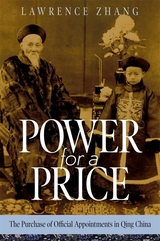
The Qing dynasty office purchase system (juanna), which allowed individuals to pay for appointments in the government, was regarded in traditional Chinese historiography as an inherently corrupt and anti-meritocratic practice. It enabled participants to become civil and military officials while avoiding the competitive government-run examination systems.
Lawrence Zhang’s groundbreaking study of a broad selection of new archival and other printed evidence—including a list of over 10,900 purchasers of offices from 1798 and narratives of purchase—contradicts this widely held assessment and investigates how observers and critics of the system, past and present, have informed this questionable negative view. The author argues that, rather than seeing office purchase as a last resort for those who failed to obtain official appointments via other means, it was a preferred method for wealthy and well-connected individuals to leverage their social capital to the fullest extent. Office purchase was thus not only a useful device that raised funds for the state, but also a political tool that, through literal investments in their positions and their potential to secure status and power, tied the interests of official elites ever more closely to those of the state.
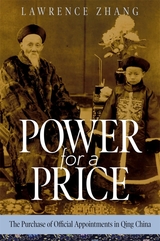
The Qing dynasty office purchase system (juanna), which allowed individuals to pay for appointments in the government, was regarded in traditional Chinese historiography as an inherently corrupt and anti-meritocratic practice. It enabled participants to become civil and military officials while avoiding the competitive government-run examination systems.
Lawrence Zhang’s groundbreaking study of a broad selection of new archival and other printed evidence—including a list of over 10,900 purchasers of offices from 1798 and narratives of purchase—contradicts this widely held assessment and investigates how observers and critics of the system, past and present, have informed this questionable negative view. The author argues that, rather than seeing office purchase as a last resort for those who failed to obtain official appointments via other means, it was a preferred method for wealthy and well-connected individuals to leverage their social capital to the fullest extent. Office purchase was thus not only a useful device that raised funds for the state, but also a political tool that, through literal investments in their positions and their potential to secure status and power, tied the interests of official elites ever more closely to those of the state.

The history of the book in nineteenth-century Japan follows an uneven course that resists the simple chronology often used to mark the divide between premodern and modern literary history.
By examining the obscured histories of publication, circulation, and reception of widely consumed literary works from late Edo to the early Meiji period, Jonathan Zwicker traces a genealogy of the literary field across a long nineteenth century: one that stresses continuities between the generic conventions of early modern fiction and the modern novel. In the literature of sentiment Zwicker locates a tear-streaked lens through which to view literary practices and readerly expectations that evolved across the century.
Practices of the Sentimental Imagination emphasizes both qualitative and quantitative aspects of literary production and consumption, balancing close readings of canonical and noncanonical texts, sophisticated applications of critical theory, and careful archival research into the holdings of nineteenth-century lending libraries and private collections. By exploring the relationships between and among Japanese literary works and texts from late imperial China, Europe, and America, Zwicker also situates the Japanese novel within a larger literary history of the novel across the global nineteenth century.
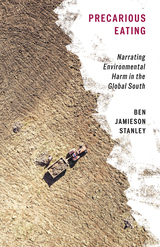
The role of food and hunger in contemporary South African and Indian environmental writing
From GMOs to vegetarianism and veganism, questions of what we should (and shouldn’t) eat can be frequent sources of debate and disagreement. In Precarious Eating, Ben Jamieson Stanley asks how recentering global South representations of food might shift understandings of environmental precarity.
Precarious Eating follows the lead of writers and thinkers in South Africa and India who are tracing the production and consumption of food, exploring ways to reconnect our narratives about climate change, global capitalism, and social justice. Taking up a diverse range of novels, films, scholar/activist writings, intellectual histories, and cookbooks, Stanley connects the ethics of eating to histories of empire and apartheid, uneven globalization, gender and sexuality, and global South experiences of climate change. They shift the lens of environmental humanities from climate-focused paradigms developed in the global North to food-focused environmental culture and activism in the South, addressing topics that range from foraging and farmer suicides to disordered eating and queer intimacy.
By highlighting authors, activists, and environments of the global South, Precarious Eating joins with scholarship from postcolonial, decolonial, Indigenous, and Black studies to underscore how capitalism and empire shape our planetary environmental crisis.
Retail e-book files for this title are screen-reader friendly with images accompanied by short alt text and/or extended descriptions.
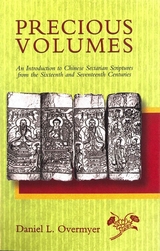
“Precious volumes,” or pao-chüan, were produced by popular sects in the Ming and early Qing dynasties. These scriptures were believed to have been divinely revealed to sect leaders and contain teachings and ritual instructions that provide valuable information about a lively and widespread religious tradition outside mainstream Confucianism, Taoism, and Buddhism. Largely neglected until now, they testify to the imagination and devotion of popular religious leaders.
This book, the most detailed and comprehensive study of pao-chüan in any language, studies 34 early examples of this literature in order to understand the origins and development of this textual tradition. Although the work focuses on content and structure, it also treats the social context of these works as well as their transmission and ritual use.
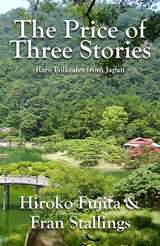
“This delightful compendium of short, savory, and highly tellable tales embodies the beliefs and folkways of rural Japan—specifically the area most impacted by the recent tsunami and nuclear disaster. It adds immeasurably to our insight into that endangered world.”
—Joseph Sobol, Ph.D., director, ETSU Storytelling Graduate Program
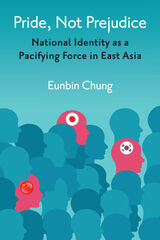
As shown by China’s relationship to Japan, and Japan’s relationship to South Korea, even growing regional economic interdependencies are not enough to overcome bitter memories grounded in earlier wars, invasions, and periods of colonial domination. Although efforts to ease historical animosity have been made, few have proven to be successful in Northeast Asia. In previous research scholars anticipated an improvement in relations through thick economic interdependence or increased societal contact. In economic terms, however, Japan and China already trade heavily: Japan has emerged as China’s largest trading partner and China as second largest to Japan. Societal contact is already intense, as millions of Chinese, Koreans, and Japanese visit one another’s countries annually as students, tourists, and on business trips. But these developments have not alleviated international distrust and negative perception, or resolved disagreement on what constitutes “adequate reparation” regarding the countries’ painful history.
Noticing clashes of strong nationalisms around the world in areas like Northeast Asia, numerous studies have suggested that more peaceful relations are likely only if countries submerge or paper over existing national identities by promoting universalism. Pride, Not Prejudice argues, to the contrary, that affirmation of national identities may be a more effective way to build international cooperation. If each national population reflects on the values of their national identity, trust and positive perception can increase between countries. This idea is consistent with the theoretical foundation that those who have a clear, secure, and content sense of self, in turn, can be more open, evenhanded, and less defensive toward others. In addition, this reduced defensiveness also enhances guilt admission by past “inflictors” of conflict and colonialism. Eunbin Chung borrows the social psychological theory of self-affirmation and applies it to an international context to argue that affirmation of a national identity, or reflecting on what it means to be part of one’s country, can increase trust, guilt recognition, and positive perception between countries.
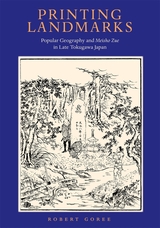
Printing Landmarks tells the story of the late Tokugawa period’s most distinctive form of popular geography: meisho zue. Beginning with the publication of Miyako meisho zue in 1780, these monumental books deployed lovingly detailed illustrations and informative prose to showcase famous places (meisho) in ways that transcended the limited scope, quality, and reliability of earlier guidebooks and gazetteers. Putting into spellbinding print countless landmarks of cultural significance, the makers of meisho zue created an opportunity for readers to experience places located all over the Japanese archipelago.
In this groundbreaking multidisciplinary study, Robert Goree draws on diverse archival and scholarly sources to explore why meisho zue enjoyed widespread and enduring popularity. Examining their readership, compilation practices, illustration techniques, cartographic properties, ideological import, and production networks, Goree finds that the appeal of the books, far from accidental, resulted from specific choices editors and illustrators made about form, content, and process. Spanning the fields of book history, travel literature, map history, and visual culture, Printing Landmarks provides a new perspective on Tokugawa-period culture by showing how meisho zue depicted inspiring geographies in which social harmony, economic prosperity, and natural stability made for a peaceful polity.

Socialist doctrines had an important influence on Korean writers and intellectuals of the early twentieth century. From the 1910s through the 1940s, a veritable wave of anarchist, Marxist, nationalist, and feminist leftist groups swept the cultural scene with differing agendas as well as shared demands for equality and social justice. In The Proletarian Wave, Sunyoung Park reconstructs the complex mosaic of colonial leftist culture by focusing on literature as its most fertile and enduring expression. The book combines a general overview of the literary left with the intellectual portraits of four writers whose works exemplify the stylistic range and colonial inflection of socialist culture in a rapidly modernizing Korea. Bridging Marxist theory and postcolonial studies, Park confronts Western preconceptions about third-world socialist cultures while interrogating modern cultural history from a post–Cold War global perspective.
The Proletarian Wave provides the first historical account in English of the complex interrelations of literature and socialist ideology in colonial Korea. It details the origins, development, and influence of a movement that has shaped twentieth-century Korean politics and aesthetics alike through an analysis that simultaneously engages some of the most debated and pressing issues of literary historiography, Marxist criticism, and postcolonial cultural studies.
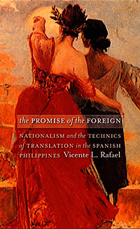
Through close readings of nationalist newspapers and novels, the vernacular theater, and accounts of the 1896 anticolonial revolution, Rafael traces the deep ambivalence with which elite nationalists and lower-class Filipinos alike regarded Castilian. The widespread belief in the potency of Castilian meant that colonial subjects came in contact with a recurring foreignness within their own language and society. Rafael shows how they sought to tap into this uncanny power, seeing in it both the promise of nationhood and a menace to its realization. Tracing the genesis of this promise and the ramifications of its betrayal, Rafael sheds light on the paradox of nationhood arising from the possibilities and risks of translation. By repeatedly opening borders to the arrival of something other and new, translation compels the nation to host foreign presences to which it invariably finds itself held hostage. While this condition is perhaps common to other nations, Rafael shows how its unfolding in the Philippine colony would come to be claimed by Filipinos, as would the names of the dead and their ghostly emanations.
READERS
Browse our collection.
PUBLISHERS
See BiblioVault's publisher services.
STUDENT SERVICES
Files for college accessibility offices.
RECENTLY PUBLISHED




UChicago Accessibility Resources
home | accessibility | search | about | contact us
BiblioVault ® 2001 - 2026
The University of Chicago Press